Feeds:
Posts
Comments

Archive for August, 2010

(Updated July 30, 2024)

Stan Musial hit 12 walkoff home runs during his career with the Cardinals.

Musial hit his first walkoff home run for them at age 21 and his last 20 years later at 41.

Musial’s first walkoff home run was a two-run shot in the 11th inning off Dick Errickson of the Braves, lifting the Cardinals to a 7-5 win on July 14, 1942, at St. Louis.  Boxscore

On June 5, 1962, Musial hit his last game-ending home run, a solo blast with one out in the 11th against Dave Sisler for a 10-9 Cardinals win over the Reds at St. Louis. Boxscore

“I can pick up a bat right away and tell you whether it weighs 33 ounces or 34 ounces,” Musial said to Roger Kahn of Sport magazine. “Every bat has its own kind of feel to it.

“I got a special model,” Musial said. “The handle comes from one they made for Mel Ott. I haven’t got real big hands and I guess Ott didn’t either. But the barrel is big. I took that from one they made for Jimmie Foxx.”

As Kahn noted, Musial “can use a pipe stem handle safe in the knowledge that he will hit the ball with the dynamic part of the bat.”

A snapshot of Musial’s 12 walkoff home runs:

DATE………..FOE………LOSING PITCHER………….FINAL SCORE

7-14-42…….Braves……Dick Errickson……………..7-5 in 11

7-14-46…….Dodgers….Vic Lombardi………………2-1 in 12

8-22-46…….Phillies……Andy Karl…………………..7-6 in 12

8-26-48…….Giants……..Ken Trinkle…………………7-5 in 9

8-28-48……..Giants…….Monty Kennedy…………..5-4 in 12

9-6-50……….Cubs………Paul Minner………………..5-4 in 10

6-17-51………Phillies…..Russ Meyer…………………5-4 in 10

7-6-52………..Pirates…..Murry Dickson…………….6-5 in 9

5-7-59………..Cubs………Don Elston…………………4-3 in 9

8-7-59………..Phillies…..Ruben Gomez……………..3-1 in 9

8-27-60………Pirates……Roy Face…………………..5-4 in 9

6-5-62…………Reds………Dave Sisler………………..10-9 in 11

Read Full Post »

(Updated Nov. 30, 2024)

Stan Musial and Albert Pujols are the only players to hit 400 home runs as Cardinals. Musial hit 475 home runs in 22 seasons (1941-1944 and 1946-1963) with the Cardinals. Pujols hit 469 home runs in 12 seasons (2001-2011 and 2022) with St. Louis.

Pujols was 30 when he hit his 400th home run on Aug. 26, 2010 _ a solo shot against Jordan Zimmerman of the Nationals at Washington.

Musial was 38 when he slugged No. 400 _ and he did it in dramatic fashion.

On May 7, 1959, at St. Louis, the Cubs and Cardinals were deadlocked, 3-3, heading into the bottom of the ninth inning.

Don Elston, a veteran right-hander, was beginning his second inning in relief of Cubs starter Moe Drabowsky. Leading off the ninth for St. Louis was Musial.

Musial had gotten off to a slow start that season. He was hitting .268 with one home run.

Elston was a hard thrower and one of the best relievers in the National League _ he would be named to the all-star team in 1959 _ but Musial was ready. He lined a 1-and-0 fastball over the 400-foot mark in right-center field for a walkoff home run, giving the Cardinals a 4-3 win. His second homer of the season was No. 400 in his career. Boxscore

After the ball cleared the wall, it caromed back onto the field. Center fielder George Altman, unaware of the historic significance of the home run, retrieved the ball and tossed it back among the fans, the Chicago Tribune reported. “We wanted to send that one to the Hall of Fame,” said Cardinals publicist Jim Toomey.

No. 400 put Musial sixth all-time in career home runs. The top five at the time were Babe Ruth (714), Jimmie Foxx (534), Mel Ott (511), Lou Gehrig (493) and Ted Williams (482).

In the book “Voices From Cooperstown,” Musial told author Anthony J. Connor, “That homer swing was something I learned with experience. When I was young, I used to punch the ball around to left and left-center and not try to pull.

“As years passed, I gained confidence and learned to pull the ball when I wanted to go for power. Ralph Kiner came up in the late 1940s and started to hit home runs, more than anyone else, and pretty soon he was getting more money than anyone else. Well, that got me thinking. After 1947, 1948, I started swinging for the fences.”

Read Full Post »

Tony La Russa and Dusty Baker, who feuded as opposing managers, have a long baseball history together.

La Russa and Baker were teammates on the 1971 Atlanta Braves. La Russa also was Baker’s last manager in the big leagues, with the Oakland Athletics in 1986.

After he was fired by the White Sox, La Russa was hired on July 7, 1986, to replace Jackie Moore with the Athletics.

Baker was a 37-year-old part-time outfielder and designated hitter for Oakland. He played in 33 games for La Russa. His best performance for his new manager came on July 18 when he slugged a two-run home run (the 242nd and last of his career) against Mark Clear, walked twice and scored twice in the Athletics’ 6-1 victory over the Brewers. Boxscore

“I was only with Tony for half a year, but we talked baseball all the time,” Baker told Rob Rains in the book “Tony La Russa, Man on a Mission.” “… He told me that one of the biggest mistakes he made was that at the end of my career he should have made me part of his coaching staff in Oakland.”

The biggest contribution Baker made to La Russa’s Athletics was his recommendation that Oakland take a chance on pitcher Dave Stewart, who had been released by the Phillies in May 1986. Baker and Stewart had been teammates on the Dodgers.

Oakland signed Stewart on May 23, 1986, but he languished in the bullpen. When La Russa arrived, along with pitching coach Dave Duncan, he put Stewart in the rotation.

Stewart started La Russa’s first game as Oakland manager, and beat Roger Clemens and the Red Sox in Boston. He went on to post a 9-5 record that season, won 20 or more in each of the next four seasons for La Russa and was the ace on Oakland’s three consecutive pennant-winning teams (1988-90).

Read Full Post »

(Updated July 3, 2020)

On July 3, 1967, the eve of Independence Day in St. Louis, the Cardinals and Reds put on an explosive display using fists instead of fireworks.

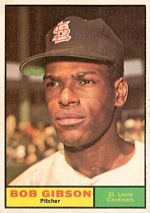
In the first inning, the Reds were humiliated when the Cardinals built a 7-0 lead in support of Bob Gibson.

With two outs, Lou Brock attempted to steal second.

He was unsuccessful, but to the Reds it was an unnecessary attempt to pile on.

“A guy who tries to steal with a seven-run lead has to be nuts … Our club has pride,” Reds shortstop Tommy Helms said to the St. Louis Post-Dispatch. “We don’t like to be shown up.”

When Brock next came to bat, leading off the fourth with the Cardinals still ahead 7-0, reliever Don Nottebart drilled him with a pitch.

Gibson knew what to do next. When Tony Perez led off the Cincinnati fifth, Gibson unleashed a fastball toward Perez’s ear. Perez dived to the dirt to avoid being hit.

In his book “Stranger to the Game,” Gibson said, “My first pitch buzzed past Perez’s ear, which should have been an indication that I wasn’t trying to hit him. If a pitcher is trying to hit a batter, the last place he wants to throw the ball is at the head because it’s the easiest thing to move. When I wanted to hit somebody, I threw slightly behind him because a batter will instinctively jump backwards when he sees the ball coming toward him.”

Added Gibson, “The brushback of Perez was merely a message to lay off Brock.”

Broiling hot

On the next pitch, Perez flied out to right. On his way to the dugout, he crossed in front of the mound and said something to Gibson that the pitcher described as “uncharacteristically nasty.”

Gibson took a few steps toward Perez. So did Cardinals first baseman Orlando Cepeda. This star-studded convergence of future Hall of Famers caused both benches to empty.

No punches were thrown, but just when it appeared order was being restored, the Reds relievers came storming onto the field from the bullpen. They were led by Bob Lee, a hulk who made a beeline for Cepeda.

“Lee started calling me names,” Cepeda said.

Said Lee: “I came in from the bullpen because it looked to me as if Cepeda was going to swing at Perez. I grabbed Cepeda and shoved him out of the way.”

In Cepeda’s biography, “Baby Bull,” Cardinals catcher Tim McCarver said Lee “ran in to where we were standing and said, ‘Cepeda! I want you, Cepeda!’  Then Orlando smoked him. This ignited the worst fight I was ever in.”

Gibson recalled in his autobiography, “As Lee was looking around and ranting, Cepeda tapped him on the shoulder and coldcocked him with a single punch.”

Said McCarver: “Bob Lee sure got more than he wanted when he went after Orlando.”

Lee told a different version. “I didn’t swing at anyone and nobody hit me,” Lee said. “Cepeda took one swing at me. I couldn’t get at him, or I would have put his lights out.”

Out of control

If the words between Gibson and Perez lit the fuse, the altercation between Cepeda and Lee set off the explosion.

According to the book “El Birdos,” Cepeda punched Pete Rose three times in the back of the head.

“Rose was like a wild man after being sucker-punched by big Orlando Cepeda,” the Cincinnati Enquirer reported. “He was swinging in all directions and not missing too often.”

Gibson wrestled with Helms as the fight spilled into a dugout. When Rose and others went to Helms’ rescue, Gibson began grabbing Reds players in the dugout and hurled them, one by one, onto the field. Cardinals outfielder Bobby Tolan, watching from the top dugout step, dived into the pile of brawlers to help Gibson.

“I actually got in some good licks on Rose and Helms,” Gibson said.

Said Cardinals broadcaster Jack Buck: “I’ll never forget the sight. There was Gibson in the Reds’ dugout visibly manhandling about three Reds and tossing them bodily out of the dugout and onto the field.”

When Nottebart grabbed McCarver, Brock “planted a punch” on the Reds pitcher, “leaving his calling card in blood,” the Dayton Daily News reported.

Lou Smith of the Enquirer described the free-for-all as “the wildest this writer witnessed in more than three decades of writing baseball. It was a lulu.”

According to multiple published accounts, it took 20 St. Louis policemen 12 minutes to break up the fights.

When Reds first baseman Deron Johnson saw a policeman confront manager Dave Bristol, Johnson said, “Don’t you draw a stick on him,” the Dayton Daily News reported.

One policeman, Robert Casey, suffered a dislocated jaw in the fracas. “I don’t know whether I was hit by a fist or an elbow,” Casey said.

McCarver said, “Bristol threw a punch and broke Casey’s jaw.”

About 25 players and coaches were treated for wounds, mostly cuts and bruises. Among the injured: Gibson (jammed right thumb), Helms (chipped tooth), Nottebart (facial cuts) and Bristol (gashed leg).

The eyeglasses of Cardinals second baseman Julian Javier were shattered and he had to wear reading glasses the rest of the game. “He said he could see the ground balls, but not the pop flies,” Cardinals manager Red Schoendienst said.

Lee was the only player ejected.

Gibson, who was crafting a perfect game (the first 13 batters were retired, nine on strikeouts) before the fights began, stayed in, lasted 7.2 innings and got the win in a 7-3 Cardinals victory. Boxscore

Gibson said the fight “lit a fire” in the Cardinals and helped propel them to the pennant and the World Series championship that season.

Said Brock: “We hadn’t been going well and that fight really woke us up.”

Read Full Post »

Al Hrabosky was desperate for a final chance to extend his big-league pitching career. He was released by the Braves on Aug. 30, 1982, and as 1983 spring training was about to begin no team had reached out to the left-handed relief pitcher known as the “Mad Hungarian.”

Hrabosky thought he still had something to offer. He had dropped 15 pounds, shaved his Fu Manchu, cut his hair, added a forkball to his mix and conceded that “some of my off-the-field habits need changing.”
He called Roland Hemond, general manager of the White Sox, and asked for a spring-training tryout. Hemond agreed. When Hrabosky arrived, he went to work trying to impress the White Sox manager and pitching coach: Tony La Russa and Dave Duncan.

In the spring of 1983, it was Duncan’s job to determine whether Hrabosky could help the White Sox. After Hrabosky’s first workout, Duncan said to The Sporting News, “He threw the ball pretty good and he’s in good shape.”

It wasn’t enough. La Russa and Duncan eventually decided to open the season with Kevin Hickey and Jerry Koosman as their left-handed relievers. Hrabosky was signed to a contact on April 8 and assigned to the Class AAA Denver Bears. It was his first minor-league assignment in 10 years.

Hrabosky had pitched for the Cardinals from 1970-78 and was a dominant closer for part of that stretch. At Denver, he joined a staff that included two other former Cardinals: right-handers John D’Acquisto and Steve Mura.

Hrabosky appeared in 26 games for Denver and made 15 starts, but he never got the call to Chicago from La Russa and Duncan. Hrabosky finished the Class AAA season with a 7-6 record and 5.82 ERA, giving up 135 hits in 116 innings.

At 34, his professional playing career was done.

Read Full Post »

In July 1960, Bob Gibson and Sandy Koufax were struggling 24-year-old pitchers.

Koufax had a 3-8 record for the Dodgers. Gibson was 1-2 for the Cardinals. Both had been tried as starters and were deemed to be too inconsistent.

After pitching a one-hitter against the Pirates on May 23, 1960, Koufax lost his next four decisions and his ERA rose to 4.64. In a July 4, 1960, start against the Cardinals at St. Louis, Koufax faced six batters, got one out and was lifted.

Gibson opened the 1960 season with the Cardinals, but was sent to the minors in May before he was brought back a month later. On July 6, 1960, Gibson started against the Cubs and gave up four runs in 2.1 innings, raising his ERA for the season to 6.00.

Banished to bullpen

On July 10, 1960, for the only time in their Hall of Fame careers, Gibson and Koufax appeared in the same game as relievers. Their dual relief appearance took place at the Los Angeles Memorial Coliseum on a Saturday afternoon.

Koufax was on a short hook; Gibson was used as a mop-up man.

Ron Kline started for the Cardinals and Stan Williams for the Dodgers but neither was effective.

Koufax entered in the seventh to protect a 7-6 lead. Ken Boyer reached on an error by third baseman Jim Gilliam and Daryl Spencer walked. Out came Koufax, replaced by Ed Roebuck. Boyer stole third and scored on George Crowe’s sacrifice fly, tying the score at 7-7. Koufax was charged with an unearned run.

The Dodgers regained the lead, 8-7, with a run off Bob Duliba in the bottom of the seventh. Duliba gave up three more runs in the eighth. With one out and runners on first and second, the Cardinals turned to Gibson. He struck out Maury Wills looking and retired Roebuck on a groundout. The Dodgers won, 11-7. Boxscore

On the rise

Koufax finished the season with an 8-13 record, appearing in 37 games (26 starts). Gibson went 3-6 in 27 appearances (12 starts).

From then on, whenever they faced one another, it was as starters who were considered the best in the business.

Read Full Post »

Older Posts »