Feeds:
Posts
Comments

Archive for the ‘Broadcasters’ Category

(Updated Aug. 2, 2020)

In considering a career path for 1972, Mike Shannon could have attempted a comeback as a Cardinals player or accepted a position on manager Red Schoendienst’s coaching staff. He also could have become a minor-league manager. Instead, he became a Cardinals broadcaster.

mike_shannon3Shannon, who helped the Cardinals win three National League pennants and two World Series titles in the 1960s as a right fielder and third baseman, had his playing career cut short in 1970 because of a kidney disease. He spent the 1971 season as the Cardinals’ assistant director of promotions and sales.

In May 1971, Shannon told the Los Angeles Times-Washington Post News Service, “Ever since I’ve been working, since I was 19 years old, I’ve been in the St. Louis organization. On and off the field, I’m a Cardinal all the way. The difference now is I’m trying to sell the Cardinals off the field.”

After one season in promotions and sales, Shannon went looking for another role. According to the St. Louis Post-Dispatch, Shannon had bought a 350-acre cattle ranch in central Missouri and was prepared to spend his time doing that if he couldn’t get another position with the Cardinals.

In The Sporting News, columnist Dick Young reported Stan Musial told him Shannon “will try to make a comeback with the Cardinals” as a player in 1972.

A month later, The Sporting News reported “Shannon had been in the picture as a coach” for Schoendienst’s 1972 staff. Years later, Shannon told Dan Caesar of the Post-Dispatch that when he declined the coaching opportunity, “I felt really bad because jobs were really tough to get in baseball, but it just wasn’t the kind of money I needed to get by on with five kids to raise and send to college.”

According to the Post-Dispatch, Cardinals general manager Bing Devine offered Shannon the chance to become manager of the Cardinals’ 1972 Class AAA Tulsa club, replacing Warren Spahn. Shannon later confirmed he rejected the offer.

Instead, Shannon was selected in November 1971 to join Jack Buck and replace Jim Woods on the Cardinals broadcast team for 1972.

Opportunity knocks

In the book “Jack Buck: That’s a Winner,” Buck recalled the position opened for Shannon when Woods, unwilling to make promotional appearances on behalf of the Cardinals and team owner Anheuser-Busch, departed for a job with the Oakland Athletics.

“Woods became ill with a gallbladder attack shortly after he was hired (by the Cardinals), and later didn’t do the things he was expected to do by our bosses,” Buck said. “He thought Anheuser-Busch demanded too much of the broadcasters and (he) didn’t show at appearances they wanted him to make in the community, and didn’t attend luncheons and banquets.

“Woods didn’t like someone telling him he had to be here or there at a certain time, although he knew that was part of the job. He left as soon as he could.”

Swing and miss

Years later, Shannon told Mike Eisenbath of the Post-Dispatch that when he accepted the broadcasting job, “I don’t think I was looking at doing it past one year. I just figured, ‘I think I’ll try this.’ ”

Unpolished, Shannon struggled to adapt to broadcasting.

“Shannon’s delivery at first was about as jagged as a broken beer bottle,” the Post-Dispatch’s Dan Caesar wrote.

Broadcaster Jay Randolph said to the Post-Dispatch, “Shannon was raw, raw, raw. Man, he was chopped meat.” Said broadcaster Ron Jacober: “There were a lot of dissatisfied listeners. I myself wondered how in the world could they have hired this guy. He was just awful.”

Shannon knew it. In 1972, he told the Post-Dispatch, “I have a poor radio voice … I’m not the guy with the golden lungs … I’ll probably be moving out of this business into raising cattle eventually.”

Years later, reflecting on his 1972 broadcast debut, Shannon told the Evansville Courier & Press: “It was like buying a new house. I didn’t know where the bathroom was or where the garage was. I knew nothing about the mechanics.”

Shannon told the Post-Dispatch, “I didn’t become frustrated, but a lot of the listeners may have been.”

That’s a winner

Shannon credited Jack Buck with teaching him on the job.

“My real ace in the hole I had was Jack,” Shannon told the Post-Dispatch. “Good Lord of mercy, I don’t know what I would have done without him. That man helped me so much. I didn’t have to go to broadcasting school. Working with Jack was like having a private tutor on the job training.”

Buck opened his home to Shannon for training sessions.

“We’d have a tape recorder and a stopwatch, and I’d try to coach him on how to do a scoreboard show,” Buck said to the Post-Dispatch.

Shannon became a success and remained a Cardinals broadcaster for parts of six decades. His conversion to broadcasting “turned out to be pure inspiration,” the Post-Dispatch observed. “Shannon has given Cardinals fans years of expertise, laughter, malaprops, insight and frequent doses of uncommon common sense.”

He never tried to be perfect. “Perfection was hung on a cross a long time ago,” Shannon said.

Read Full Post »

In search of a late-night drink at a venerable St. Louis hotel, longtime Cardinals broadcaster Harry Caray nearly was killed when struck by a car.

harry_carayOn Saturday afternoon, Nov. 2, 1968, less than a month after he’d called the World Series between the Cardinals and Tigers, Caray did the broadcast of the Oklahoma State vs. Missouri football game at Columbia, Mo.

Afterward, he drove to St. Louis and, on a whim, decided to stop by and watch the NHL game between the Blues and North Stars. During the hockey game, Caray, who was estranged from his second wife at the time, called a friend and arranged to meet for dinner.

After dinner, unwilling to call it a night, Caray headed to the Chase Park Plaza Hotel, a landmark in St. Louis since the 1920s and a venue for music and shows. It was about 1:15 a.m., Sunday morning, Nov. 3, 1968, when Caray drove up to the hotel in the rain.

A regular at the Chase Park Plaza, Caray, 54, usually left his car with a parking attendant at the entrance, but, because of the rain, there was a backup of vehicles in the hotel driveway.

Impatient, Caray noticed an empty parking spot along the curb on the other side of the street, directly across from the hotel. He parked, exited the car and started to cross the busy street, Kingshighway.

Sent flying

Midway across, Caray told The Sporting News, “I turned to see if anything was coming from my left. The last thing I remember was, ‘Am I OK out here?’ ”

A car driven by Michael Poliquin, 21, a Vietnam War veteran from Overland, Mo., struck Caray. “He was knocked 40 feet in the air,” The Sporting News reported. “His shoes were found 25 feet south of the hotel and he landed 40 feet north.”

Poliquin, who hours earlier had been engaged to be married, told police he saw a pedestrian step into the street in midblock and wasn’t able to stop on the slickened pavement, the Associated Press reported. Poliquin said Caray saw the car at the last moment and jumped in the direction the vehicle was skidding.

In his book “Holy Cow!,” Caray said, “I was lying in the street … in the pouring rain. People started to gather around. Many recognized me; all were afraid to touch me.

“A Goodwill truck came down Kingshighway. The driver saw a body in the street and … stopped his truck. When he saw I was just lying unattended to in the rain, he pulled a few burlap bags from the back of the truck and covered me with them _ keeping me warm and dry _ then just drove away. I think he saved my life.”

Taken to a hospital, Caray was treated for compound fractures of both legs, a broken right shoulder, a broken nose and facial cuts, the Associated Press reported. “I had almost died on the street when the rainwater and blood nearly congested my lungs … I was extremely fortunate they didn’t have to amputate my left leg during surgery,” Caray said.

Police cited the driver of the car for failure to display a license and Caray was cited for crossing a street while not at an intersection, the Associated Press reported.

Party room

Initially, the only visitors permitted in Caray’s hospital room were family members and Robert Hyland, general manager of Cardinals flagship radio station KMOX, according to United Press International. “We can’t keep Harry from talking,” Hyland said. “He’s full of spirit and already tired of being in the hospital. He’s been pestering the doctors to let him go back to work.”

The doctors informed Caray he would need to remain in the hospital until just before Christmas. Caray convinced hospital staff his recovery would progress if he could have lots of visitors.

“My room became headquarters for off-duty nurses, for kids who wanted to talk baseball, for all my friends,” Caray said. “At night they would send martinis down from the restaurant on the top floor, as well as specially prepared meals, so I didn’t have to eat the awful hospital food. After a while, it was like a nightclub in there. It got so I hated to leave.”

Upon Caray’s release, Cardinals owner Gussie Busch offered the broadcaster the use of Busch’s beach house near St. Petersburg, Fla. Caray recuperated there _ under the care of a male nurse, he said _ and was back in the Cardinals’ broadcast booth for the start of the 1969 season.


Read Full Post »

(Updated Jan. 30, 2023)

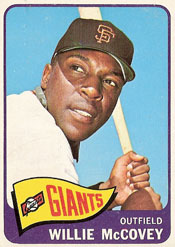
Before Mark McGwire, who played for the Cardinals from 1997-2001, another Big Mac, Willie McCovey of the Giants, hit the longest home run seen in St. Louis.

Cardinals broadcaster Mike Shannon has said the longest home run he has witnessed was hit by McCovey on Sept. 4, 1966, at St. Louis.

Leading off the third inning against Cardinals starter Al Jackson, McCovey hit a changeup that landed in the upper deck above the scoreboard in right-center field at Busch Memorial Stadium. The ballpark opened four months earlier, in May 1966.

Shannon was playing right field for the Cardinals that day and “had a good look” at McCovey’s home run. Shannon said he later asked McCovey (who had 521 career home runs in the major leagues) whether it was the longest ball he’d hit. “I don’t know if it was the longest,” Shannon said McCovey replied, “but it was the hardest.” Boxscore

Cardinals catcher Tim McCarver told writer Roger Angell of The New Yorker magazine, “There’s no doubt in my mind about this. It was as if McCovey had hit it off a tee. It caromed off the upper part of the scoreboard and bounced back onto the field.”

The book “Baseball’s Ultimate Power: Ranking the All-Time Greatest Distance Home Run” had this description of McCovey’s St. Louis home run: “The ball was struck on a line drive trajectory that resulted in a 515-foot journey.”

The Cardinals’ 2005 Busch Stadium commemorative yearbook said many who witnessed McCovey’s blast will continue to regard it as the longest home run in that stadium’s history. “That may be the farthest hit anywhere,” Shannon said. “I’ll never forget it as long as I live.”

In the first inning, with the Cardinals using an infield shift against the left-handed slugger, McCovey bunted for a single. Asked by Jack Hanley of The San Mateo Times whether he got more pleasure from the bunt or from the mammoth home run, McCovey replied, “The more I think about it, the more I’m becoming convinced I get a bigger kick out of the bunt. It’s because, when you do the unexpected, the other fellow is completely surprised and it’s a trifle upsetting. The bunt can win a ballgame as much as a homer.”

(On Sept. 16, 1966, 12 days after his shot in St. Louis, McCovey hit a 505-foot home run off Mets starter Jack Fisher at San Francisco’s Candlestick Park. It’s the longest home run hit at that stadium, according to the San Francisco Examiner. Boxscore)

Until McGwire arrived, Pirates first baseman Willie Stargell came closest to challenging McCovey’s home run for longest hit at Busch Memorial Stadium. On July 4, 1979, Stargell hit a slider from reliever Darold Knowles 510 feet, above and to the right of the scoreboard. Boxscore

“That’s the longest home run I’ve ever seen hit in this ballpark by a left-hander,” Cardinals first baseman Keith Hernandez said to the Associated Press.

Said Stargell: “When I saw it go out, I saw (Knowles) flinging something like his cap. He was disgusted. It was a ball that Darold, I’m sure, got in an area he didn’t want. It was a nice, easy swing. I had no idea it was going that far.”

Nineteen years after Stargell’s shot, McGwire hit what officially is called the longest home run at Busch Memorial Stadium. The 545-foot home run on May 16, 1998, against the Marlins’ Livan Hernandez hit the St. Louis Post-Dispatch sign in center field. For the remainder of the season, a giant Band-Aid marked the spot where the ball dented the sign. Boxscore

“It’s the best ball I’ve ever hit,” McGwire said. “I don’t think I can hit one better than that.”

Read Full Post »

(Updated Sept. 10, 2025)

In the 1950s, Tim McCarver was a standout athlete at Christian Brothers High School in Memphis, receiving football scholarship offers from schools such as Notre Dame and Tennessee, but professional baseball offered an immediate opportunity to earn an income for the catching prospect.

“Money was the deciding factor, plain and simple,” McCarver said in his book “Oh, Baby, I Love It.”

The best baseball offers came from the Yankees, Giants and Cardinals. The scout trying to sign McCarver for the Yankees was Hall of Fame catcher Bill Dickey. According to the St. Louis Post-Dispatch, Dickey said McCarver is “a Yankees-type player.”

“They were my No. 2 and a very close No. 2 to the Cardinals,” McCarver said to the Memphis Commercial Appeal.

McCarver said the Yankees offered a $60,000 signing bonus and Dickey told him, “If you sign with the Yanks, I’ll take you along with me on a two-week fishing trip. We’ll talk about catching inside and out.”

(In the 2003 book “Few and Chosen,” McCarver recalled, “In those days, Catholics could not eat meat on Fridays. Bill Dickey wasn’t Catholic, but he knew we were, and he would come to our house on Fridays with a load of fish he had caught and give it to my folks.”)

Despite Dickey’s efforts, the Cardinals’ offer of a $75,000 signing bonus and a guaranteed annual salary of $6,000 per year for five years convinced McCarver he should sign with them instead of the Yankees.

“I think I was swayed by the fact the Cardinals were only 290 miles away (from Memphis),” McCarver said to the Commercial Appeal. “That influenced me somewhat. Also, the Cardinals had given me a take-it-or-leave-it deal and that scared me to death. I was 17 years old.”

In “Few and Chosen,” McCarver said, “The Cardinals’ strongest pitch to me was that they were in need of a catcher, and I would have the best chance of making the major leagues more quickly with them than I would with the Giants or the Yankees … The Cardinals had Hal Smith, an excellent receiver, but … no promising young catchers in their organization.”

Super scout

With his parents in attendance, along with Cardinals farm director Walter Shannon and scout Buddy Lewis, McCarver signed the contract at his Memphis home on June 8, 1959. The $75,000 bonus was the largest given by the Cardinals, according to the Post-Dispatch.

The Cardinals “outbid at least nine other clubs for McCarver, whose high school batting average was .412,” the Post-Dispatch reported. McCarver also hit .390 for an American Legion team which won state and regional championships.

Buddy Lewis, a former big-league catcher, scouted McCarver for four years and said, “Tim is the best young catcher I’ve ever seen.”

According to the Post-Dispatch, Lewis relentlessly pursued McCarver and “spent many an afternoon at the McCarver home, talking baseball, catching and lastly, but not least, telling the St. Louis Cardinals story.”

(In “Few and Chosen,” McCarver said, “My earliest baseball recollection is the sound of Harry Caray’s voice, broadcasting St. Louis Cardinals games … Football was my favorite sport when I was a kid, but I was a big baseball fan, too. I wasn’t a Cardinals fan, just a baseball fan, but because of Harry Caray you couldn’t help but follow the Cardinals.”)

After signing the deal in the early morning before his father, a police lieutenant, went to work, McCarver said, “I am too excited for words.”

Quick rise

McCarver was sent to the Cardinals’ Class D farm club at Keokuk, Iowa. He made his professional debut in the second game of a doubleheader at Waterloo, Iowa, on June 14, 1959, according to the Daily Gate City newspaper of Keokuk.

Years later, McCarver told the Commercial Appeal the plate umpire in his professional debut was Brent Musburger, the future sportscaster. However, that wasn’t so. The plate umpire was Bob Thompson and the base umpire was Chuck Wahl, research by the Daily Gate City showed. Musburger was the plate umpire a week later, June 21, 1959, in a game McCarver caught for Keokuk at Michigan City, Ind. Musburger was the umpire in 11 games McCarver played for Keokuk, according to the Daily Gate City.

McCarver was hailed as Keokuk’s best catching prospect since Russ Nixon, who hit .385 for Keokuk in 1955 before embarking on a 12-year playing career in the majors. “The fans will love this kid,” Keokuk manager Frank Calo said. “If they think Russ Nixon had it, wait until they see this kid.”

Unfazed by professional pitching, McCarver hit .360 in 65 games for Keokuk. He committed 14 errors.

When Rochester (N.Y.) catcher Dick Rand dislocated a right index finger, McCarver was promoted to the Class AAA International League club to replace him. He hit .357 for Rochester in 17 games and made no errors.

In September 1959, McCarver, 17, was promoted to the Cardinals and joined the team in Milwaukee.

Major-leaguer

On Sept. 10, 1959, his first day in a big-league uniform, McCarver marveled from the dugout at being in the presence of two of his boyhood heroes, Stan Musial of the Cardinals and Hank Aaron of the Braves.

“So when Hank came to bat for the first time that day,” McCarver said, “I leaped from my perch in the Cardinals’ dugout and did what I always did when I listened to the Braves play the Cardinals. ‘Come on, Henry,’ I yelled. ‘Come on, Henry.’ The action seemed natural to me, but some of my teammates weren’t amused.”

In the ninth inning, with two outs, Bill White on second base and the Cardinals trailing by three, manager Solly Hemus sent McCarver to make his major-league debut as a pinch-hitter for pitcher Marshall Bridges.

“So there I was, younger than Musial’s own son, picking up a bat and advancing to the plate,” McCarver said. “As I stepped in to face Don McMahon, a veteran right-handed relief pitcher with a commanding fastball, my knees literally shook with fear.”

McMahon got two strikes on McCarver. Then the teen swung at a curveball and lifted it to right field, where the game-ending catch was made by none other than Hank Aaron. Boxscore

The next day, Sept. 11, 1959, at Chicago against the Cubs, McCarver got his first big-league start at catcher. Batting in the No. 2 spot, he went 0-for-4 against Bob Anderson. The Cardinals’ starting pitcher was Bob Miller, 20. According to The Sporting News, Miller and McCarver formed the youngest battery in big-league history. Boxscore

To put that into comparative perspective, the combined ages of McCarver and Miller was 37 _ younger than the individual ages of two of their teammates, Musial (38) and George Crowe (38).

On Sept. 13, 1959, McCarver, batting leadoff, got his first big-league hit, a single against the Cubs’ Glen Hobbie. Boxscore

(In “Few and Chosen,” McCarver recalled when he was a youth, “It was my sister, Marilyn, who made me a left-handed hitter. I do everything right-handed except hit a baseball and that was Marilyn’s idea.”)

McCarver played in eight games for the 1959 Cardinals, hitting .167 (4-for-24).

Described by The Sporting News as “one of the finest catching prospects the Cardinals have brought up in many years,” McCarver had stints with St. Louis in 1960 and 1961, then spent all of 1962 in the minor leagues before earning the Cardinals’ starting catcher job in 1963.

At spring training in 1963, McCarver, trying to regain his timing after a stint in Army reserves, had a poor batting practice and was criticized by Branch Rickey, the former general manager who returned to the Cardinals as a consultant.

In a 2014 interview with Cardinals Gameday Magazine, McCarver said, “It ticked me off. To this day, it ticks me off. I’m not a big Branch Rickey fan as a result of that. Later in 1963, I was swinging the bat well and he says, ‘Twenty-five McCarvers will win all the pennants in the world.’ ”

In his 1991 book “On the Run,” speedster Maury Wills said John Roseboro of the Dodgers and McCarver were the toughest catchers he saw during his career.


Read Full Post »

In February 1954, Jack Buck was hired to join Harry Caray on the Cardinals broadcast team.

Caray was entering his 10th season as play-by-play voice of the Cardinals when Buck was chosen to join him after calling minor-league games for Rochester in 1953. Buck replaced former catcher Gus Mancuso as Caray’s broadcast partner.

Buck had been given a tryout in 1953, broadcasting a Cardinals-Giants regular-season game from New York. In his book, “That’s a Winner,” Buck said, “What stood out to me that day was how helpful some people were, like the Giants’ announcer, Russ Hodges. He gave me all the information I needed and offered a lot of encouragement.”

In April 1954, two months after Buck got the offer to join Caray on the broadcast team, Milo Hamilton, who had done television work in the St. Louis area for WTVI of Belleville, Ill., was hired “to handle commercials and color on road broadcasts,” meaning Buck’s work in the booth initially was limited to home games.

“(Hamilton) and I split time on the air,” Buck said. “Milo went on the road with Caray for the first half of the season. I did the scoring updates and commercials from the studio. We switched at the all-star break, and I went on the road, but didn’t have a lot to do because the broadcasts definitely were Harry’s. I did a couple of innings a game, and that was it.”

Caray didn’t get along with Buck and Hamilton. “It didn’t take me long to realize that Harry and I not only had different styles of announcing, we had different personalities and lifestyles,” Buck said. “Our relationship got off badly because he didn’t want me to get the job in the first place. He wanted the Cardinals to hire Chick Hearn, who at the time was a broadcaster in Peoria, Illinois (and eventually would become the voice of the NBA Lakers.)

“Harry didn’t get along with Milo any better than he got along with me at the time,” Buck said, “and we knew he wanted to get somebody else on the broadcast with whom he was more friendly. The man he wanted _ and got _ was Joe Garagiola.” (Hamilton was fired after the 1954 season and replaced by Garagiola.)

All three members of the Cardinals’ 1954 broadcast team would receive the Ford C. Frick Award from the National Baseball Hall of Fame for their career achievements. (Buck won the award in 1987; Caray in 1989; and Hamilton, 1992.)

Buck’s first regular-season Cardinals broadcast as an official member of the team was the 1954 season opener on April 13 at St. Louis. The Cubs beat the Cardinals, 13-4, behind the hitting of Clyde McCullough (4-for-5, two RBI) and Randy Jackson (three RBI). Paul Minner earned a complete-game win for Chicago. Among the Cardinals’ few highlights were solo home runs by Wally Moon and Stan Musial. Boxscore

“The most memorable event of my first season in St. Louis came on a Sunday afternoon, May 2, 1954, in a rain-delayed doubleheader against the Giants,” said Buck. “Stan Musial hit five home runs, three in the first game, two in the second, and might have had another with the longest ball he hit all day, but it was to straightaway center and was caught by Willie Mays. Caray was on the air for all five homers, and it was just as well. It used to bother him when he wasn’t on the air when something really big happened.” Game 1 and Game 2

Read Full Post »

(Updated Nov. 3, 2019)

Pitchers Bob Forsch and Ricky Horton were Cardinals teammates for four seasons (1984-87). During that time, the Cardinals won two National League pennants.

Horton turned 25 in 1984, the year he made his major-league debut with the Cardinals. Forsch was 34 that season.

In 15 years with the Cardinals, 1974-88, Forsch pitched two no-hitters and helped St. Louis win the 1982 World Series title.

Forsch died Nov. 3, 2011, at age 61. In retirement, he had been a fixture at the yearly Cardinals Legend Camp at Jupiter, Fla. When I interviewed Horton, now a Cardinals broadcaster, at that camp Jan. 27, 2012, it was evident Forsch’s presence was missed. In honor of his teammate, I asked Horton to share his favorite Bob Forsch story.

Here is how Rick Horton responded:

After a game in Chicago, he and I got on the L train to get back to our hotel after a Cardinal win. We had a bunch of Cardinals fans, who had had a few too many Budweiser products, on the train with us and they were loving Bob, saying, “Bob you’re my favorite player” and they were just going bananas over the fact that they were on the L train with Bob Forsch.

At one point, a guy says to Bob, “We always wondered if your son played baseball.” And Bob said, “I have two daughters. I don’t have a son.” And the guy pointed at me and said, “Isn’t he your son?”

I’ll never forget that. I laughed so hard. Bob laughed so hard.

You couldn’t write a better script, because the next day, honest, was Father’s Day. So I went to the hotel gift shop and bought him a Father’s Day card and had it up in his locker the next day. And I did that for a number of years to follow, treating Bob as my Dad.

In some ways, more aptly, Bob was like an older brother for me, in terms of showing me the way, showing me the right things, keeping me away from the wrong things, encouraging what professionalism is all about. Anybody who played with him knew Bob as a professional.

As well-known as he is, I’d still say he’s the most underrated Cardinals pitcher in the last 75 years. When you look at the Cardinals record books, his name is all over that. He spanned two decades.

The two no-hitters almost condenses him too much, almost makes him to be that guy instead of a guy who was so much more than that. He won a World Series game, pitched in three World Series for the Cardinals and really was the heart and soul of the pitching staff, at least when I was there.

When we lost Bob as a teammate, we lost an awful lot of leadership. And when we lost him this past year, we lost a lot more than that.


Read Full Post »

« Newer Posts - Older Posts »