Feeds:
Posts
Comments

Archive for the ‘Games’ Category

As a Cardinals prospect in 1966, Dick Hughes appeared headed for the scrap heap. A year later, he was the leading winner for the World Series champions.

Hughes’ emergence as a top starter for the 1967 Cardinals seemed about as likely as if another Arkansas native, Dizzy Dean, tried making a comeback with them at age 57.

The 1966 season was Hughes’ ninth in the Cardinals’ system. A right-hander who threw hard but lacked command, he was 28 and going backwards. After starting the season at Class AAA, Hughes was demoted to Class AA in May. Two weeks later, needing roster room for more promising pitchers, St. Louis loaned him to the Toledo Mud Hens, top farm club of the Yankees.

It was the second time the Cardinals had loaned Hughes to another organization, a sure sign he wasn’t rated a serious candidate to reach the majors with them.

Reflecting on his struggles, Hughes told Neal Russo of the St. Louis Post-Dispatch, “A lot of times I figured it was do or die, and a lot of times I halfway died.”

Golden arm

Hughes moved with his family from rural Arkansas to Shreveport, Louisiana, when he was 8. He had poor eyesight _ 20-350 vision in one eye; 20-300 in the other _ and “couldn’t recognize his mother without his glasses,” the Post-Dispatch noted.

His right arm, though, was strong and he threw a baseball with velocity. Cardinals scout Fred Hawn took an interest. When Hughes graduated from high school, he told Hawn he wanted to try college. Hawn helped Hughes get a baseball scholarship to the University of Arkansas and urged him to stay in touch.

Two years later, in 1958, Hughes contacted Hawn, who arranged a tryout in St. Louis. Liking what they saw, the Cardinals gave Hughes a $10,000 signing bonus. He used most of the money to join his father in buying an Arkansas cattle ranch.

Help wanted

Entering St. Louis’ farm system with only a fastball, “I was a wild, strong-armed kid who kept fooling around too much looking for a second pitch,” Hughes recalled to Bob Broeg of the Post-Dispatch.

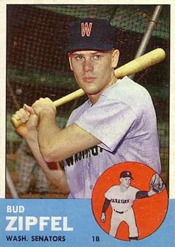
In 1963, his sixth season in the minors, Hughes was loaned by the Cardinals to the Washington Senators, who sent him to pitch for the York (Pa.) White Roses. He did enough (11-5, 2.17 ERA) to rekindle the Cardinals’ interest. They put him with their Class AAA Jacksonville farm club in 1964 and he was effective (9-4, 2.92 ERA), but not impressive enough to get a call to the majors.

Hughes was tempted to quit. “My confidence was shaken,” he told Bob Broeg.

Returned to Jacksonville in 1965, Hughes regressed (7-8, 3.82 ERA). The Cardinals made him available in the minor-league draft, but no team wanted him.

So it was back to the Cardinals’ farm in 1966 _ and that’s when Hughes caught a break. Billy Muffett had become the franchise’s minor-league pitching instructor. He taught Hughes to pitch with a no-windup delivery, which helped his control considerably, and showed him how to throw a hard slider.

The results weren’t immediate. Hughes flopped at Tulsa (1-1, 5.40 ERA), got demoted to Little Rock (2-3, 2.35) and then loaned to Toledo in June 1966.

Holy Toledo!

The Toledo Mud Hens played their games at a converted harness racing track in suburban Maumee, Ohio. The Yankees farm team was managed by Loren Babe, who later would mentor infielder Tony La Russa and encourage him to think like a manager. “I’ve learned something from every manager I played for, but nobody taught me as much as Loren,” La Russa said in the book “Man on a Mission.”

Hughes’ Toledo teammates included pitchers Stan Bahnsen, Paul Toth and Jerry Walker, first baseman Mike Hegan and a heralded shortstop, Bobby Murcer.

“Rescued from Cardinals farm system obscurity,” as the Toledo Blade put it, Hughes found his groove. The no-windup delivery enabled him to consistently throw strikes. The hard slider became a formidable complement to the fastball.

In his first Toledo appearance, Hughes pitched a two-hit shutout against Toronto. Then he struck out 10 in six innings versus Buffalo.

John Hannen of the Toledo Blade called Hughes the “mystery man of the Toledo Mud Hens. The mystery of it all is how a pitcher of Hughes’ caliber was lying around loose on a double-A roster.”

Hughes kept up the good work all summer. He struck out 13 in a win against Columbus and 14 in a two-hitter versus Richmond. Rochester manager Earl Weaver was so impressed that “I tried to get my boss, Harry Dalton, to get Hughes” for the Orioles, he told the Post-Dispatch.

Suddenly, the Cardinals coveted the pitcher they had rejected. On Sept. 5, they sought to call up Hughes. It was the same day as Toledo’s season finale and Hughes was the scheduled starter.

The pitcher who had waited nine years to reach the majors asked the Cardinals to delay the promotion one day so that he could pitch the final game for Toledo. “I felt obligated to pitch this last game,” Hughes told Bill Fox of the Toledo Blade, “and I wanted to do it.”

The game matched Hughes against Jacksonville’s Tom Seaver. Hughes struck out 12 and Seaver fanned 10, but ex-Cardinal Johnny Lewis slugged a two-run home run to win it for Jacksonville.

Hughes finished 9-4 with a 2.21 ERA and 132 strikeouts in 110 innings for Toledo.

In comments to the Post-Dispatch, Cardinals farm director Sheldon Bender called Hughes “one of those guys who has seemed to arrive just about when you’ve given up on him.”

Big-league stuff

Hughes’ first Cardinals appearance came on Sept. 11, 1966, at Pittsburgh. Relieving Al Jackson with the Pirates ahead, 3-2, in the seventh, Hughes “could not have had a much tougher task for his debut,” the Post-Dispatch noted. The Pirates were the best-hitting team in the big leagues and the first batter to face Hughes was Matty Alou, who was leading the majors with a .348 batting mark.

Undaunted, Hughes retired nine of the 10 batters he faced, including Alou twice. He struck out Roberto Clemente and got Willie Stargell to fly out. The only batter to reach base was Bill Mazeroski on a walk. The Cardinals rallied for two runs, making Hughes the winning pitcher. Boxscore

In his next appearance, Hughes earned a save against the Reds. Boxscore

Manager Red Schoendienst gave Hughes a start in the season’s final series against the Cubs and he responded with a three-hit shutout, winning a duel with Ferguson Jenkins. Boxscore

In 21 innings for the 1966 Cardinals, Hughes struck out 20 and was 2-1 with a save and a 1.71 ERA.

“The big thing about Hughes is he throws strikes,” Cardinals pitching coach Joe Becker told the Post-Dispatch, “and, when you throw strikes, you have a chance.”

Ace in the hole

The 1967 Cardinals began the season with a starting rotation of Bob Gibson, Steve Carlton, Ray Washburn, Al Jackson and Larry Jaster. Hughes was a reliever and spot starter.

On May 25 at Atlanta, after Hughes pitched a two-hit shutout against the Braves, he and Al Jackson swapped roles. Boxscore

While in Atlanta, Hughes bought a hunting rifle. In an insensitive and chilling stunt, he “checked out the scope by zeroing in on pedestrians from the window of his hotel room,” according to Bob Gibson in the book “Stranger to the Game.” After that, teammates “started calling me The Sniper and Lee Harvey Hughes because I was lugging the rifle around so much,” Hughes told Neal Russo of the Post-Dispatch in a comment appallingly devoid of self-awareness.

Wins have a way of making people overlook ignorant behavior _ and Hughes did a lot of winning for the Cardinals. After shutting out the Braves, he struck out 13 Reds in eight innings but lost, 2-1, then won five in a row.

“Hughes threw a hard slider that was almost unhittable,” Cardinals first baseman Orlando Cepeda said in his book “Baby Bull.”

In July, a Roberto Clemente shot fractured Bob Gibson’s leg. Nelson Briles moved into the rotation. Briles and Hughes each won seven of nine decisions during Gibson’s absence.

Hughes’ salary for 1967 was $10,000, but general manager Stan Musial twice rewarded him with bonuses _ one for $1,500 and another for $2,500.

Hughes led the 1967 Cardinals in wins (16), complete games (12), shutouts (three) and innings pitched (222.1). Along with a 16-6 record, he had three saves and a 2.67 ERA.

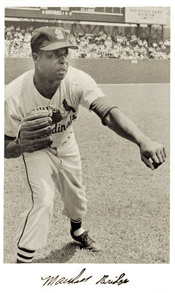
Though the Cardinals lost both games Hughes started in the 1967 World Series against the Red Sox, St. Louis won the championship largely because of Bob Gibson (three wins), Nelson Briles (one win), Lou Brock (12 hits, eight runs scored, seven stolen bases) and Roger Maris (10 hits and seven RBI).

In 1968, Hughes tore muscles in his right shoulder and lost his effectiveness. His final big-league appearance was a brief relief stint in Game 6 of the 1968 World Series versus the Tigers.

Read Full Post »

When Ron Northey ordered a double, it was for extra portions of ice cream, milk and chocolate syrup, not whiskey. Northey had a weakness for chocolate milkshakes. He sampled his favorite drink in just about every lunch counter or malt shop in each big-league city during his playing days in the 1940s and 1950s.

Northey’s diet gave him a physique as thick as a milkshake. His weight usually fluctuated between 200 and 220 pounds on a 5-foot-10 frame, giving him a shape “reminiscent of a fire hydrant,” Don Daniels of the Philadelphia Inquirer noted.

Sportswriters called him Round Ron. Phillies manager Ben Chapman told the Philadelphia Record, “Ron has a waistline that looks like a man who has just swallowed a watermelon.”

Chapman preferred the outfielder look like a cucumber, but, as The Sporting News noted, when “Northey’s waist shrinks so does his hit output.”

A left-handed batter, roly-poly Northey was a menacing hitter, especially in a pinch. He was the first big-leaguer to clout three career pinch-hit grand slams, doing it for the Cardinals in 1947 and 1948 and for the Cubs in 1950.

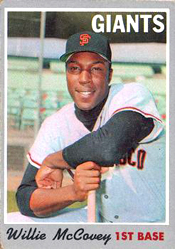
Three others have matched Northey’s feat: Willie McCovey with the Giants (1960, 1965) and Padres (1975); Rich Reese with the Twins (1969, 1970, 1972); and Ben Broussard with Cleveland (two in 2004) and Seattle (2007).

That jingle jangle

Northey was from Pennsylvania’s anthracite coal region. When he was in high school, a coach, Charlie Dunkelberger, took him to Philadelphia to work out for Athletics manager Connie Mack. According to the Pottsville Republican and Herald, Mack helped Northey get an athletic scholarship to Duke.

Batting for the Duke freshman team, Northey was beaned and suffered a punctured ear drum. “Since that day, Ron has had a buzz in his head,” The Sporting News reported.

The continual hum in his ear was so annoying that Northey sometimes slept with a radio on as a soothing distraction, according to The Sporting News.

It didn’t hurt his hitting, though. Northey had a power stroke. He also had an exceptionally strong right throwing arm that kept runners in check.

After a year at Duke, Northey entered the Athletics’ farm system in 1939. Two years later, his contract was sold to the Phillies.

Ready to hit

In his first big-league at-bat, with the 1942 Phillies, Northey walloped a double versus the Braves’ Al Javery. Two years later, he beat Javery with a home run in the 15th inning of a scoreless game. Boxscore and Boxscore

That 1944 season was Northey’s best _ 35 doubles, 22 home runs and 104 RBI. He pounded right-handed pitchers and was vulnerable against left-handers. With the 1946 Phillies, Northey batted .266 with 16 home runs versus right-handers and .159 with no home runs against left-handers.

After working in a stockroom at Sears during the winter, Northey reported late to 1947 spring training because of a salary dispute with the Phillies. Arriving 20 pounds overweight, he landed in Ben Chapman’s doghouse.

Punch, not Judy

After winning the 1946 World Series championship, the Cardinals had a dreadful start to the 1947 season. They lost 10 of their first 12 games, including the last eight in a row. They scored two runs or less in five of those 10 losses.

Harry Walker was deemed a weak link. After he batted .200 with no RBI in 10 games, the Cardinals stepped up efforts to acquire an outfielder with pop.

On May 3, 1947, they traded Walker and pitcher Freddy Schmidt to the Phillies for Northey. As a left-handed pull hitter, Northey’s swing was tailored to take advantage of the short distance (310 feet) down the line from home plate to the right field wall at Sportsman’s Park in St. Louis. Cardinals owner Sam Breadon told the St. Louis Star-Times, “Harry Walker is a fine defensive outfielder, but what we need right now is punch and I think Northey has it.”

The Cardinals, though, didn’t know Walker was close to mastering a revamped swing that would lead to a breakthrough.

Let ‘er rip

Making his Cardinals debut in a May 4 doubleheader at Boston, Northey singled and scored in the opener, a 4-3 Braves victory that extended the St. Louis losing streak to nine. In the second game, he went 3-for-4 with four RBI and three runs scored, sparking St. Louis to a 9-0 triumph. One of the hits was a two-run home run off Mort Cooper, the former Cardinals ace. Boxscore

Cardinals manager Eddie Dyer mostly platooned Northey in right field with Erv Dusak and Joe Medwick. Playing against right-handers, Northey delivered in the clutch, either as a starter or a pinch-hitter.

When the Cardinals played the Phillies for the first time since the trade, Northey’s former teammates heckled him unmercifully from the dugout, The Sporting News reported. As he heard shouts of “Well, well, here’s old Two Ton,” and “Roll out the barrel,” Northey’s neck turned red and “he swung and missed a pitch with a viciousness that shook the ground in the batter’s box.”

Later that season, Northey got his revenge, clouting a walkoff home run onto the Sportsman’s Park roof in right against Dutch Leonard to beat the Phillies. The first of his pinch-hit grand slams came while batting for catcher Del Rice against Doyle Lade of the Cubs at Wrigley Field. Boxscore and Boxscore

Northey was the central figure in a bizarre play at Brooklyn. He crushed a long drive toward the center field stands. As Northey steamed around second, umpire Beans Reardon signaled home run and, according to the Star-Times, said, “What are you running for? It’s a home run.”

Northey slowed to a trot, Another umpire, Larry Goetz, who’d gone into center to follow the ball, saw it strike the tip of the wall and bound onto the field. Goetz signaled the ball was in play. Outfielder Dixie Walker (Harry’s brother) retrieved it and relayed to second baseman Eddie Stanky, who threw to the plate. Northey started to run, but not fast enough. Catcher Bruce Edwards tagged him out.

The Cardinals filed a protest with National League president Ford Frick, saying Northey would have scored if Reardon hadn’t caused him to slow down. Frick ruled in the Cardinals’ favor. The game was declared a tie. All the statistics would count, but not the score. Boxscore

Frick ordered the game to be replayed in its entirety as part of an Aug. 18 doubleheader. The Dodgers won both. The Cardinals finished in second place at 89-65, five behind the Dodgers.

Northey was adept at reaching base for the 1947 Cardinals. His on-base percentages: .391 overall, .459 with runners in scoring position; and .484 as a pinch-hitter. He hit .313 versus right-handers; .154 versus southpaws.

Hot hitting

Meanwhile, Harry Walker went on a tear as soon as he joined the Phillies, getting 10 hits in his first 24 at-bats. He stopped trying to pull pitches and perfected a batting style suggested by Dixie Walker, who urged his sibling to close his stance and spray the ball to all fields.

In 130 games for the 1947 Phillies, Walker batted .371 with 181 hits, including a league-leading 16 triples.

Even with his 5-for-25 effort for the Cardinals added to his season total, Walker easily won the National League batting crown at .363. The runner-up, Bob Elliott of the Braves, hit .317.

Walker also placed second in the National League in on-base percentage at .436. Only the Reds’ Augie Galan (.449) did better.

Getting on base

Northey played two more seasons for St. Louis. He was good again in 1948, hitting .321 overall and .444 as a pinch-hitter. His on-base percentage for the season was .420, including .516 as a pinch-hitter. His first home run of the season was a pinch-hit grand slam against the Pirates’ Elmer Singleton. Boxscore

Harry Walker batted .292 for the 1948 Phillies, was traded to the Cubs after the season and then shipped to the Reds.

Northey hit two grand slams, including one against the Phillies’ Robin Roberts, for the 1949 Cardinals but was hitless as a pinch-hitter.

After the 1949 season, in a classic example of what goes around comes around, the Cardinals sent Northey and infielder Lou Klein to the Reds to reacquire Walker.

Northey’s time with the Reds was short. They dealt him to the Cubs. In a game against the Dodgers at Ebbets Field, he delivered his third pinch-hit grand slam, a shot over the right field screen against Dan Bankhead. Boxscore

Northey also played for the White Sox (1955-57) and scouted for them (1958-60).

Pirates manager Danny Murtaugh, Northey’s friend and former Phillies teammate, made him the hitting coach and he served in that role in Pittsburgh for three seasons (1961-63). The chocolate milkshake fan then took a job in public relations for Pittsburgh Brewing Company, makers of Iron City Beer.

A son, Scott Northey, was a big-league outfielder with the 1969 Kansas City Royals, an American League expansion team.

Read Full Post »

Late in life, Lefty Grove would look back at 1931, the year he won 31 games, including 16 in a row, and two more in the World Series, and what he would remember most was a loss.

The sting of that defeat, at St. Louis against the Browns, never left Lefty. In losing 1-0 at Sportsman’s Park, the run scoring when a reserve outfielder misplayed a fly ball, Grove was deprived of setting an American League record for consecutive wins in a season.

A loss always put Grove in a foul mood and usually prompted a temper tantrum, but that one in St. Louis set off “the greatest of his towering rages,” Arthur Daley of the New York Times wrote.

Grove went berserk, smashing up the locker room.

“I wanted the record but I also wanted the victory,” Grove said to The Sporting News. “I just couldn’t stand to lose.”

Smoke signals

Robert Moses Grove was one of eight children from a miner’s family in Lonaconing, an iron and coal town in western Maryland. At 16, he worked in a mine for two weeks, filling in for a brother. Afterward, Grove told his father he never wanted to go underground again, according to the Baltimore Sun.

Grove instead worked as an apprentice glass blower and also got a job in a railroad shop. He played baseball for a town team and turned pro when he was 20. The 6-foot-3 left-hander overpowered batters for five seasons in the minors, mostly with Baltimore of the International League, before his contract was sold to the Philadelphia Athletics for $100,600.

Grove’s Baltimore roommate, pitcher Tommy Thomas, said to the Boston Globe, “He was so fast that even his low fastballs would rise.”

The nickname, “Lefty,” came naturally, but his A’s teammates usually called him “Mose,” and manager Connie Mack called him “Robert,” though he often mispronounced the last name “Groves.”

Lefty loved to smoke black cigars “the size of fungo sticks,” humorist and writer Will Rogers observed. The mail-order stogies were “made out of oolong weeds (Chinese tea leaves) and a wrapper of oak leaves dipped in tar,” Rogers said. According to Victor O. Jones of the Boston Globe, Grove “was a chain smoker, lighting one cigar from the butt of the other.”

Those dark cigars often reflected his mood. As United Press International noted, Grove had a “smoking fastball, with temper to match.” After a loss, he’d stomp off the field, kick a water bucket, snap at teammates. “Nobody hated to lose more than Lefty Grove,” Red Sox outfielder Dom DiMaggio recalled to the Globe.

A friend, journalist J. Suter Kegg of the Cumberland Evening Times in Maryland, wrote, “The man was unbearable to be around when he lost and even preferred to be alone when he won.”

Grove won a lot. His only losing season during 17 years in the majors was as a rookie in 1925. His career mark of 300-141 gave Grove a .680 winning percentage, still the highest of any of baseball’s 300-game winners.

In a six-year span (1928-33), Grove won 79 percent of his decisions (152-40).

Detroit’s Charlie Gehringer, a left-handed batter who hit .320 but 50 points less against Grove, told author Donald Honig, “It’s hard to believe anyone could throw harder than Lefty Grove … I always could pull Bob Feller but I could never pull Grove until the tail end of his career. I’d go up there telling myself I was going to swing the minute he’d let it go. I’d still hit a ground ball to the third baseman.”

Grove’s best season was 1931. After beating Chicago on Aug. 19 for his 16th consecutive win, Grove was 25-2. He tied Walter Johnson (1912 Senators) and Smoky Joe Wood (1912 Red Sox) for most American League wins in a row.

Grove aimed to break the AL mark and take another step toward the big-league record of 19 in a row (held by Rube Marquard of the 1912 National League Giants) when he faced the St. Louis Browns on Aug. 23.

Blinded by the light

As Arthur Daley noted, “It had seemed a lead-pipe cinch” for Grove to get a 17th consecutive win. The A’s were 84-32; the Browns, 49-68.

Connie Mack chose Grove to start the opener of a Sunday doubleheader at St. Louis. A crowd of 22,000, the Browns’ largest of the season at home, came out to see Grove try for the American League record.

Grove cruised through the first two innings and struck out the first two batters in the third. Then Fred Schulte singled to center and Oscar Melillo, a .300 hitter that season, came to the plate.

Melillo lined the ball to left. Jimmy Moore, filling in for regular left fielder Al Simmons, who was home in Milwaukee receiving treatment for an ankle ailment, peered into the sun as he tried to track the ball. “All the players had difficulty judging balls raised against a cloudless sky and in front of a brilliant sun,” the St. Louis Globe-Democrat noted.

Moore recalled to Harold Kaese of the Boston Globe, “If I’d have stood still, I’d have caught it. If I’d been sitting in a chair, I’d have caught it, but … I moved in two steps. The ball was hit harder than I thought.”

Moore turned around and reached for the ball _ “It just nipped off the end of my glove,” he told the Globe _ but it soared over his head. Melillo was credited with a double, though it was clear to most that Moore had misplayed the ball.

Fred Schulte raced from first to home and slid safely into the plate ahead of the relay throw from shortstop Dib Williams. “Grove slapped his leg in disgust,” the Philadelphia Inquirer reported.

“I should have tackled that St. Louis runner (Schulte) rounding third and nailed his butt to the bag,” Grove told John Flynn of the Inquirer.

That was the only run of the game. St. Louis starter Dick Coffman, who’d lost nine of his first 11 decisions that season, shut out the mighty A’s on three hits, all singles. “That made Grove as mad as anything,” Moore said to the Globe. Boxscore

Raging bull

In Grove’s view, his pitching was worthy of a 17th consecutive win. The Browns don’t score if Moore makes the catch. Even still, he wins if the A’s score twice against an ordinary pitcher. The perceived injustice of it all brought Grove’s anger to a dangerous boil.

The losing pitcher stormed into the locker room, picked up a chair “and smashed it to smithereens,” Arthur Daley reported. “Then he attempted to take the room apart, locker by locker.”

According to the Inquirer, “He shattered lockers, tried to tear doors off hinges, and tore off his uniform and jumped up and down on it.”

The Sporting News reported, “He tore out lockers and smashed benches against the wall. While his silent teammates watched, Grove proceeded to tear up his uniform and glove, rip his shoes and demolish everything in sight.”

In the book “Baseball When The Grass Was Real,” Grove told Donald Honig he “wrecked the place. Tore those steel lockers off the wall and everything else. Ripped my uniform up. Threw everything I could get my hands on _ bats, balls, shoes, gloves, water bucket; whatever was handy.”

A’s center fielder Doc Cramer told Honig that Grove tore his jersey so angrily that the buttons whizzed by him, three lockers away.

According to Arthur Daley, Grove roared, “(Al) Simmons could have caught that ball in his back pocket. What did he have to go to Milwaukee for?”

When Jimmy Moore entered the locker room, Grove “was in the showers, raising hell about (Al) Simmons,” Moore recalled to Harold Kaese. “He was mad (Simmons) wasn’t there … Grove didn’t say anything to me. I didn’t say anything to him. I was just a $7,000 player. He was getting $35,000.”

Adding insult to Grove’s ire, the A’s won Game 2 of the doubleheader, 10-0, belting 17 hits against three Browns pitchers in support of Waite Hoyt. Boxscore

Topping 30

Grove won his next six decisions. Moore scored the winning run in two of those games, including win No. 30. Boxscore and Boxscore

Grove finished the season with a 31-4 record. Only one pitcher, Denny McLain with the 1968 Tigers, has matched that win total since. Moore told Harold Kaese, “Except for me, Grove’s record would have been 32-3, not 31-4.”

The left-hander was 4-1 with an 0.92 ERA versus the 1931 Browns. His career record against the Browns was 42-17.

In the 1931 World Series, Grove was 2-1 against the Cardinals, who prevailed in seven games. Grove won Games 1 and 6. Burleigh Grimes beat George Earnshaw in Game 7.

Grove is the only pitcher with four World Series wins against the Cardinals _ two in 1930 and two in 1931.

Just win, baby

Schoolboy Rowe of the 1934 Tigers won 16 in a row, tying the American League record of Grove, Johnson and Wood.

After his pitching days, Grove operated “Lefty’s Place,” a combination bowling alley and pool room in Lonaconing. When not at work, he liked to hang out at the Republican Club next door.

According to local journalist J. Suter Kegg, “He often left orders with bartenders at the Lonaconing Republican Club to tell out-of-town writers who tried to contact him by telephone that he wasn’t there.”

Recalling the first time he was sent with a photographer to interview Grove, Kegg said, “I was shaking in my shoes and my voice may even have been quivering (but) to my delightful surprise the great portsider was extremely cordial. He broke out a bottle of Canadian whiskey and asked us to join him in a drink.”

In 1972, when Steve Carlton won 15 in a row for the last-place Phillies, Grove said to the Philadelphia Inquirer, “God, that ain’t bad. He’s the franchise.”

For Grove, nothing topped getting a win. As he told James H. Bready of the Baltimore Sun, “The best of it all was the feeling in you after the game went right and you came back in the locker room and got undressed. I used to take my shower and swallow an ounce of whiskey slow and get a rubdown and I’d go off to sleep right there on the table. It was very damn good.”

Read Full Post »

The first manager Mike Matheny played for in the big leagues was nicknamed Scrap Iron. Matheny impressed him by performing like a Man of a Steel.

Matheny, a catcher, reached the majors with the Brewers in 1994 and spent five seasons with them. Phil Garner was manager the entire time.

An infielder for 16 years in the majors, Garner was called Scrap Iron because of his hard-nosed style of play. As a manager, he looked for players who were scrappers, too.

On May 26, 1998, Matheny was batting when Pirates reliever Rich Loiselle lost control of a fastball. Matheny lost sight of the pitch and it struck him square on the left cheek. “It was kind of a numb feeling for a couple of seconds where I didn’t know what had happened,” Matheny recalled to Susan Shemanske of the Racine Journal Times.

Matheny didn’t stagger or fall. He stood stunned for a moment, then “opened his mouth and blood gushed out,” the Associated Press reported.

On-deck batter Jose Valentin rushed over, followed by Garner and team trainers. “He was spitting up blood like it was water,” Valentin said to the Associated Press.

Matheny walked to the dugout unassisted, spitting blood along the way, while a pinch-runner came in for him.

“I got his blood on my batting gloves,” Valentin told Arnie Stapleton of the Associated Press, “and then when I got up to the plate I looked down and saw a pool of blood. There was blood all over the plate. I was trying to kick dirt over it to get that image out of my mind.”

After being checked by medical personnel in the clubhouse and learning his jaw and teeth were intact, Matheny showered before heading to the hospital for stitches to close the wound inside his cheek. Before he left the clubhouse, Matheny stopped by Garner’s office and said, “I can play tomorrow, Skip.”

Scrap Iron smiled. “He’s a throwback,” Garner told the Associated Press. “A man’s man. I hope my daughter marries a guy like him. He’s one tough son of a gun.” Boxscore

The next night, after Matheny took batting practice, he had to get the sutures tightened. Then he tried on the catcher’s mask. It fit over his swollen face. “I might need to adjust the padding, that’s all,” he told the Associated Press.

Garner put Matheny in the lineup and he caught all 10 innings of a 3-2 Brewers victory against the Pirates. Boxscore

In explaining why he didn’t sit out, Matheny said to the Associated Press, “I’m getting paid by the Milwaukee Brewers to play baseball. If I have my health, I have a requirement to do so. I feel an obligation to go out there and play.”

That’s what Garner had come to expect from him. “Matheny is the type of player who will catch a 15-inning game one night and then the next day be back out there taking balls in the dirt before a day game,” Garner said to Dennis Semrau of The Capital Times.

Six years later, in 2004, Garner and Matheny were on opposing teams. Garner was managing the Astros, Matheny was catching for the Cardinals and their clubs were in the playoff series that would determine the National League champion.

Baseball fever

Phil Garner was from the hills of east Tennessee near Knoxville. “My grandmother dipped snuff,” he recalled to Tom Haudricourt of the Milwaukee Journal Sentinel. “That’s the way it was.”

Garner’s grandfather and father were Baptist ministers. “My grandfather was the old fire and brimstone type preacher,” Garner said in a Knoxville News-Sentinel article. “He’d stand up there and tell his congregation, ‘I want to throw all the beer in the river. I want to throw all the wine in the river … Now, let us turn to page 229 and sing together, ‘Shall We Gather at the River.’ ”

Baseball had the blessing of the Garner family and Phil developed a passion for the sport. “I dreamed about baseball when other guys my age were dreaming about the girl next door,” Garner said to Marvin West of the News-Sentinel. “I can remember winter evenings after school when I’d get out in the mud or snow and pretend I was fielding ground balls. I’d pivot and throw the ball against a wall, always trying to be quicker.”

Garner eventually got a partial baseball scholarship to the University of Tennessee, twice earned all-Southeastern Conference honors and signed with the Oakland Athletics. After making his way through the farm system, Garner was called up to the defending World Series champion A’s in September 1973.

“I remember the day I walked into the clubhouse,” he told the News-Sentinel. “Reggie Jackson said, ‘Hey, rookie, what’s happening?’ I didn’t know. Sal Bando called me ‘Shorty’ … but they never laughed at me. They knew I was trying. I learned how to win from those guys but, all along, I had their respect.”

Garner played for managers Dick Williams, Alvin Dark and Chuck Tanner in Oakland. His nickname then was Yosemite Sam because of a droopy moustache like the Looney Tunes cartoon character.

It was after his March 1977 trade to the Pirates (where he was reunited with Tanner) that Garner got nicknamed Scrap Iron. In an April 27, 1977, game at Pittsburgh, Garner singled, stole second and looked up to see the name “Scrap Iron Garner” on the Three Rivers Stadium scoreboard. “That’s the first time I ever saw it,” Garner told Russ Franke of The Pittsburgh Press. Boxscore

Pirates broadcaster Milo Hamilton picked up on the nickname and started using it to describe the ballplayer Pittsburgh sports reporter Bob Smizik called “a poor man’s Pete Rose.”

“There was a time I went after baseball with the attitude of a linebacker,” Garner said to reporter Marvin West. “… I was too eager, too aggressive. I try to play under control but with the same determination.”

Garner reached a peak in 1979 when he hit .293 with 32 doubles and eight triples. He finished the season with a 14-game hitting streak, then got a hit in every playoff and World Series game. Garner batted .417, with a home run against Tom Seaver, in the National League Championship Series versus the Reds, and .500 in the World Series the Pirates won against the Orioles. “That little man has a special place in my heart,” Chuck Tanner told the News-Sentinel.

Belief system

After finishing his playing career in 1988, Garner was a coach on the staff of Astros manager Art Howe for three years. Then Garner’s former teammate, Milwaukee general manager Sal Bando, hired him to manage the Brewers.

“He manages like he played,” Tony La Russa said to the Palm Beach Post.

In a 1993 game between Garner’s Brewers and La Russa’s A’s, reliever Dennis Eckersely was ejected for questioning pitch calls. La Russa defended his pitcher and was tossed, too. As La Russa kept arguing, Garner came out to complain about the delay. La Russa turned his anger on Garner. “He had no business there,” La Russa told the Associated Press. Both benches emptied and several brawls ensued. Garner had made his point, though. He wasn’t going to let La Russa intimidate him. Boxscore

The next year, a rookie, Mike Matheny, caught Garner’s eye. Some thought Matheny would be a backup catcher. He was good with the glove but didn’t hit well. Garner, though, saw a player with poise, intelligence, toughness. He showed Matheny how to hit through the ball instead of at it, and Matheny got better.

“One of the things I really like about him is that he’s a hard worker and he’s bright,” Garner told the Racine Journal Times. “He works on all parts of his game.”

In September 1995, Matheny said to Harry Atkins of the Associated Press, “Phil Garner had a lot of faith in me when nobody else did. He saw some things in my approach at the plate that I might not have noticed. I worked on it in winter ball. I feel myself improving. I’ve been a defensive hitter my whole life, and it showed there for a while. Now I’m more aggressive. I’m seeing the ball longer and things are starting to look better for my career.”

Pennant winners

Their career paths took Garner and Matheny in different directions. After being with the Brewers (1992-99), Garner managed the Tigers (2000-02). Matheny went to the Blue Jays in 1999 and joined the Cardinals a year later. Playing for Tony La Russa, Matheny was a Gold Glove winner on contenting teams.

In 2004, when the Astros entered the all-star break at 44-44, 10.5 games behind the division-leading Cardinals, manager Jimy Williams was fired and replaced by Garner. As the Houston Chronicle noted, Garner “changed what had become a relaxed culture under Williams. Suddenly it wasn’t cool to be cool after losses … Garner stood up to club icons.”

The Astros were 48-26 with Garner as manager, qualified for the playoffs and reached the National League finals against the Cardinals. “What he did was very impressive,” La Russa told the Chronicle. “It’s hard to do that.”

The league championship series went the full seven games, with the Cardinals prevailing. After the Red Sox swept St. Louis in the World Series, Matheny became a free agent and signed with the Giants. Yadier Molina became Cardinals catcher.

In a National League finals rematch in 2005, the Astros turned the tables, winning four of six against St. Louis. Garner became the first Astros manager to win a pennant and reach the World Series.

“I could see he was a leader that was engaged with the players and really challenged them,” club owner Drayton McLane told the Chronicle. “He was the first manager I have seen really communicate with the team.”

Seven years later, when Matheny was managing the Cardinals, he recalled to Joe Strauss of the St. Louis Post-Dispatch a lesson learned from Garner. It happened in April 1994. Matheny was entering the dugout after catching the first inning of his first big-league start when Garner demanded to know why the catcher called a certain pitch. Caught off guard, Matheny was slow to respond. “Don’t let me ever hear you have to hesitate with that answer again,” Garner growled.

From then on, Matheny was ready to explain every pitch he called in a game. As Joe Strauss noted, “Matheny eventually established a reputation for preparation and determination as a player.”

In 2013, Matheny managed the Cardinals to a pennant. Two years later, they had a 100-win season. He’s the last Cardinals manager to achieve either feat.

Read Full Post »

Nothing was wrong with the left arm of Cardinals pitcher Tom Sunkel. He threw pitches with blinding speed. The problem was an eye. He was blind in the left one.

Though his vision was impaired, Sunkel spent the 1939 season with the Cardinals, and what he did showed he had plenty of heart, too. Sunkel pitched a two-hit shutout against the Giants. He won four decisions in a row as a starter. Plus, he swung a potent bat, hitting .321 for the season.

The Giants wanted him and arranged a 1941 trade. In his second game for them, Sunkel spun another two-hit shutout, against the Phillies.

Boyhood accident

Tom Sunkel grew up on a farm in Paris _ Illinois, that is _ about 20 miles northwest of Terre Haute, Ind. Incorporated in 1849, Paris, Ill., likely got its name from the word “Paris” carved into a tree in the center of the village.

When Sunkel was 4, a playmate loaded a popgun with a stick, aimed it and fired. Sunkel put up a hand for protection but the stick streaked between his fingers and pierced his left eye, the Minneapolis Star Tribune reported.

A doctor saved the eye but a traumatic cataract developed, cutting Sunkel’s sight to a little better than half normal, according to the Associated Press.

Despite the restricted vision, Sunkel became a standout amateur baseball player. At 21, he was pitching for a local church team when the Cardinals signed him for their farm system in 1934.

On his path through the minors, Sunkel took a step backward in 1936 when he posted a 6-26 record for a Class B Asheville (N.C.) club managed by Billy Southworth. As other pitching prospects advanced, Sunkel stayed at Class B in 1937, with Decatur (Ill.). It turned out well for him, though. His fastball and curve stymied batters from clubs such as the Moline Plow Boys and Terre Haute Tots. Sunkel totaled 227 strikeouts in 192 innings.

No rescue for Redbirds

Cardinals general manager Branch Rickey visited Decatur in August 1937 to scout Sunkel. The Cardinals were contending with the Cubs and Giants for the National League pennant but they needed starting pitching help. Dizzy Dean hurt his toe in the All-Star Game, altered his pitching delivery and damaged his arm. His brother, Paul Dean, underwent shoulder surgery. Jesse Haines was 44 years old.

St. Louis players were hoping Rickey would acquire proven pitching for the pennant push, but instead he called up Sunkel, 25, from Decatur to fill the void.

Sunkel’s arrival “became a big joke with the other players,” Sid Keener of the St. Louis Star-Times noted. “A pitcher from Decatur was Rickey’s idea of trying to win the 1937 pennant.”

(The Cardinals finished fourth, 15 games behind the champion Giants.)

The rookie was timid _ “I sure was a busher,” he admitted to the Star-Times _ and manager Frankie Frisch used him mostly in relief. Though he didn’t allow a run in six of eight relief appearances for the 1937 Cardinals, including a seven-inning stint versus the Pirates, Sunkel didn’t show enough to stick with the club in 1938. Boxscore

“Just when I figured I had made the grade (with St. Louis), the bottom fell out of everything,” Sunkel said to the Star-Times.

Rickey arranged for Sunkel to pitch for the 1938 Atlanta Crackers, which wasn’t a Cardinals farm club, but retained an option to recall him to St. Louis at any time.

Seeing the light

Sunkel was a success on the mound for Atlanta but it was a troubling season. He had a kink in his left arm the first part of the year. After that, he had a bout of neuritis, an inflammation of the nerves. One night, he was pitching a home game when a burglar broke into his apartment, “leaving the Sunkel family practically flat broke,” the Star-Times reported.

Then the vision in his left eye got dimmer and dimmer.

The traumatic cataract from his childhood injury had worsened considerably. On Aug. 3, 1938, Sunkel told Guy Butler of the Atlanta Journal that the condition of his left eye had deteriorated so much that “I can’t see out of it, but it’s been that way for a month, getting a little worse right along.”

Team trainer Dick Niehaus, a former Cardinals left-handed pitcher, said to the Journal, “I was standing right in front of him. I asked him to close his right eye and look at me. He said he couldn’t see me at all.”

With the club’s permission, Sunkel opted to keep playing. “It’s pretty tough that Tom must pitch under this handicap,” Atlanta catcher-manager Paul Richards said to the Journal. “I don’t want you folks to expect too much of him.”

Sunkel, though, adapted. “I have to guess where the plate is when I throw,” he told the Associated Press.

The results were amazing. Sunkel achieved a 21-5 record, winning his last 13 decisions in a row. For his 20th win, he pitched a one-hitter against Memphis. (Pitcher Hugh Casey got the hit on an infield roller in the third inning.) Sunkel posted a 2.33 ERA in 243 innings and also batted .255 (with 26 hits).

In the Southern Association playoffs, Sunkel won twice, helping Atlanta take the championship. Then he shut out Texas League champion Beaumont in the Dixie Series, winning a duel with Schoolboy Rowe.

Job well done

The Cardinals exercised their option and brought Sunkel to spring training in 1939. They had him examined by eye specialists, who agreed his condition couldn’t be corrected by surgery. “Sunkel calmly accepted the verdict that he would have to battle his way upward with only half the sight of other pitchers,” the Associated Press noted.

Sunkel made the team, but Cardinals manager Ray Blades didn’t use him much in the first part of the season. Then, in July, Sunkel was given some starts. He beat the Phillies for his first big-league win, limiting them to two runs in six innings. He also produced two hits and a sacrifice bunt. Boxscore

“He has developed a new pitching and batting stance, cocking the head slightly to one side so as to take in everything with his one good eye that he would normally see with two,” Ray Gillespie wrote in the Star-Times.

Sunkel told the newspaper, “As long as I’ve got one good eye … I’ll win a lot of games for the Cardinals … I’m big and strong enough to pitch and I’m not afraid of opposing batters. So how’s a little trouble in one eye going to stop me?”

Sunkel’s next win brought him national attention. On a humid afternoon at St. Louis, he held the Giants hitless until Tom Hafey (cousin of ex-Cardinals standout Chick Hafey) singled to right with one out in the eighth. The only other Giants hit was a two-out Billy Jurges single in the ninth. Sunkel produced as many hits as he allowed (two) and also had a walk and a RBI. Boxscore

Wins against the Dodgers and Pirates followed. Boxscore and Boxscore

In 20 games, including 11 starts, for the 1939 Cardinals, Sunkel was 4-4 with a 4.22 ERA. He also totaled nine hits in 28 at-bats.

Keep on going

His was a feel-good story, but results were valued more than sentiment in baseball. Sunkel, 27, gave up nine runs in his last 10 innings with the 1939 Cardinals. They determined he needed more time in the minors.

Sunkel spent 1940 with Columbus and 1941 with Syracuse. In September 1941, the Cardinals dealt Sunkel to the Giants for Jumbo Brown (a 295-pound pitcher) and Rae Blaemire.

Two weeks later, in his second start for the Giants, Sunkel held the Phillies hitless until Johnny Rizzo cracked a single with two outs in the eighth. Sunkel finished with a two-hit shutout, striking out 12. He also had a hit and scored a run. Boxscore

Sunkel was 3-6 for the 1942 Giants. A highlight was pitching 10 innings to beat the Dodgers. Boxscore

He spent most of 1943 in the minors. Then Branch Rickey, who had left the Cardinals, acquired Sunkel for the Dodgers. He pitched his last big-league games for them in 1944.

Sunkel continued to pitch in the minors until 1948. In an American Association playoff game for St. Paul in 1946, he pitched a no-hitter at Louisville. In describing the performance, Tommy Fitzgerald of the Louisville Courier-Journal called Sunkel “the Eiffel Tower of Paris, Ill.”

Read Full Post »

Reggie Smith was a proud, obstinate ballplayer. Gussie Busch was a proud, obstinate team owner. The combination made for a combustible mix.

With the Cardinals in 1976, Smith opted to play without a signed contract because Busch wouldn’t agree to defer part of Smith’s salary. If Smith stayed unsigned, he could play out his option and become a free agent after the season.

Busch, an imperious meddler, would not tolerate what he perceived as defiance. “Get rid of him,” Busch barked to general manager Bing Devine, Smith told the Los Angeles Times.

On June 15, 1976, in a trade they would come to regret, the Cardinals sent Smith, their all-star switch-hitting right fielder, to the Dodgers for catcher Joe Ferguson and prospects Bob Detherage and Freddie Tisdale.

They are the egg men

Carl Reginald Smith was one of eight children raised in a family in Los Angeles County near Compton. His father had an egg delivery service and young Reggie helped him on the truck during weekends.

Smith became a high school baseball and football standout. A quarterback and defensive back, “I felt football was my best sport,” he told the Los Angeles Times.

Baseball, though, provided the best chance for him to earn money and help the family. Big-league clubs showed interest in the shortstop. In 1963, the Houston Colt .45s brought Smith to Dodger Stadium to work out before a game. “I was throwing as hard as possible on the sidelines when one throw got away from me,” Smith recalled to the Los Angeles Times. “Sandy Koufax was hitting fungoes to the outfielders and my throw missed his head by less than three inches. I still break into a cold sweat when I think about it.”

The Twins ended up being the club that signed Smith, 18, in June 1963 and assigned him to Wytheville (Va.) of the Appalachian League. The woman who ran the boarding house for blacks in the segregated town “told me to never go out alone,” Smith recalled to the Times. “I hit a white kid who called me a nigger. I yelled back to people in the stands … I’m lucky I’m not hanging from some tree.”

Smith played shortstop for Wytheville, made 41 errors in 65 games and had more strikeouts (69) than hits (65). The Twins made him available in the minor-league draft and the Red Sox took him. Four years later, Smith began the 1967 season as the Red Sox’s Opening Day second baseman and finished it as their center fielder in the World Series against the Cardinals.

Booed in Boston

Smith won a Gold Glove Award in 1968 and led the American League in doubles. He was tops in the league in total bases and extra-base hits in 1971.

He had one of the best arms in baseball, but his knees ached. The Red Sox wanted to trade Smith for pitching. They offered him to the Cubs for Ferguson Jenkins at the 1972 winter meetings, but the deal fell apart, the Boston Globe reported. Smith then was headed to the Dodgers for Bill Singer, but the Red Sox backed out at the last minute, general manager Al Campanis told the Times.

So Smith was back in Boston in 1973. He produced a .303 batting average, .398 on-base percentage and slugged at a .515 clip, but it was a miserable season for Smith. He confronted teammate Bill “Spaceman” Lee during a game in Milwaukee and called him gutless for not brushing back Brewers batters. Lee challenged him to a fight. Smith had the Spaceman seeing stars. The pitcher was knocked out cold. “He had it coming,” Smith told Frank Dolson of the Philadelphia Inquirer.

In a game at Boston, fans booed Smith when he didn’t run to first on a grounder. They booed him again when a shallow fly fell in front of him for a single. Smith mockingly doffed his cap on the way to the dugout, marched into the clubhouse, changed and went home while the game continued.

“My anger is like a balloon,” Smith told the Los Angeles Times. “Blow it up, let it go all over the place, then it lies on the floor, exhausted.”

The Red Sox put him on the trading block after the season. The Dodgers wanted him, but when the Red Sox demanded either Don Sutton or Andy Messersmith in return “that stopped that,” Al Campanis told The Sporting News.

The Cardinals won the prize, obtaining Smith and Ken Tatum for Rick Wise and Bernie Carbo on Oct. 26, 1973.

A Spike in spikes

Smith was a National League all-star in each of his first two seasons with St. Louis. He led the club in total bases in 1974, and his on-base percentage (.389) and slugging mark (.528) were tops among the regulars. Though sidelined for three weeks of the 1975 season because of back ailments, Smith was the Cardinals’ home run leader (with 19), and again produced quality on-base (.382) and slugging (.488) percentages.

Cardinals players appreciated him in those years. “He gives 100 percent all the time,” second baseman Ted Sizemore told the Los Angeles Times. “He’ll do anything to win.” In the book “The Spirit of St. Louis,” pitcher Rich Folkers said, “Reggie Smith was a good guy … When Reggie was in the lineup, he did real well.”

Bob Gibson saw Smith as a soulmate. In his book “Stranger to the Game,” Gibson said, “My affinity for Reggie Smith was a natural because we were very much alike, both of us maintaining an exterior toughness that really wasn’t what we were about. Smith was a very bright, thoughtful guy who was ready to fight if somebody looked at him wrong. I called him Spike because he reminded me of those spike-collared bulldogs on Saturday morning cartoons.”

Things go wrong

On the advice of agent Tom Reich, Smith requested the Cardinals defer a portion of his 1976 salary. When Gussie Busch said no, Smith opted to play without a signed contract. That meant the Cardinals would renew his pact basically at 1975 terms, but Smith would qualify to become a free agent after the season. “We had no quarrel with the Cardinals over gross salary,” Reich told the Los Angeles Times. “The difficulty was in working out the draft of the deferred arrangement.”

At 1976 spring training, a trade proposal was discussed: Reggie Smith and Ted Sizemore to the Dodgers for shortstop Bill Russell and outfielder Willie Crawford, Al Campanis confirmed to the Times.

When the Cardinals balked at giving up Smith, the trade became a swap of Sizemore for Crawford on March 2.

The 1976 Cardinals were a bad team. Their record entering the June 15 trade deadline was 25-34. Smith, experiencing pain in his left shoulder, struggled to hit. The injury caused him to alter his batting style. He couldn’t hold his hands as high as he wanted on the bat. Smith batted .174 in April and .219 in May. The bright spot was a three-homer game against the Phillies.

With third baseman Hector Cruz and first baseman Keith Hernandez struggling early in the season, manager Red Schoendienst had Smith fill in at third and first. In his book “I’m Keith Hernandez,” Hernandez recalled, “Reggie was a premier player … but he’d spent the last month, since being moved to the infield, sulking and brooding in the clubhouse. Everywhere he went, a dark cloud followed.”

Gussie Busch was fed up. The team was a mess and he viewed Smith as a problem. Busch assumed Smith wasn’t playing hard because of the contract disagreement. He wanted him gone _ just like he had ordered the trades of others who angered him such as Steve Carlton and Jerry Reuss.

“The Cardinals thought Reggie was jaking it,” Tom Reich said to the Los Angeles Times. “There were some words between Reggie and management. Hell, Reggie was playing in a lot of pain.”

Smith told the newspaper, “The Cardinals accused me of malingering to force a trade. I can’t understand them making that kind of statement. I have too much pride to stoop to that sort of thing.”

On June 15, Bing Devine called Al Campanis and offered him Smith. Campanis knew Devine was being forced to deal and had little leverage. Now, instead of Bill Russell, the Dodgers gave up Joe Ferguson, batting .222.

The deal was completed when the Dodgers agreed to the deferred salary arrangement and Smith agreed to sign a two-year contract for 1976-77. “Smith will receive in excess of $100,000 for each season, with a large portion of it deferred,” the Los Angeles Times reported.

Rot at the top

About a month after the trade, the Dodgers came to St. Louis for three games. Smith hit a home run in each. The pitchers were John Denny (solo shot), Pete Falcone (two-run) and Bob Forsch (three-run). “The pitch I threw to Reggie just straightened out,” Forsch told the St. Louis Post-Dispatch. “I was trying to sink it outside … The last time I saw it, it was sinking over the wall in right.” Boxscore Boxscore Boxscore

Smith batted .476 against the 1976 Cardinals. Five of his 10 hits were home runs. After the season, exploratory surgery by Dr. Frank Jobe showed Smith had been playing with a torn rotator cuff, the Los Angeles Times reported.

Smith went on to produce 41 RBI in 57 career games versus the Cardinals and had a .404 on-base percentage against them.

(Joe Ferguson batted .201 for the 1976 Cardinals and was peddled to Houston for Larry Dierker after the season.)

In a five-year stretch from 1977-81, Smith helped the Dodgers win three National League pennants and a World Series title.

Asked about the Dodgers’ success, Smith told the Post-Dispatch in 1977, “It’s something that comes down right from the top, from the man at the head of the organization to everyone on the club. It’s something every team could have if management wanted it.

“I think the Cardinals might have had it in the past, but I don’t think they have it in the organization anymore, and you have to go right to the top man for the reason it’s not there anymore. I think Mr. Busch soured on his players a few years ago in those contract disputes and it’s still having an effect. He took the hard line, and to him the answer to negotiating a contract was to trade the player if the player also took the hard line.

“As a result, it became every player for himself, and pretty soon you no longer had a team but a bunch of individuals.”

Read Full Post »

Older Posts »