Feeds:
Posts
Comments

Archive for the ‘Games’ Category

(Updated Feb. 26, 2022)

Embracing the aloha spirit, the Cardinals accepted an opportunity for a Hawaiian adventure and avoided trouble in paradise.

In April 1997, the Cardinals participated in the first regular-season major-league games played in Hawaii. The three games against the Padres in Honolulu were part of a 10,200-mile Cardinals trip that included stops in Miami and Los Angeles.

“There is a special challenge every season,” Cardinals manager Tony La Russa said to the St. Louis Post-Dispatch. “This will be one of them.”

The risk was worth the reward. The Cardinals won two of the three games in Hawaii, drew large crowds to Aloha Stadium and enjoyed the visit.

“If this isn’t heaven, it’s close to it,” Cardinals outfielder Ron Gant said.

Player approval

The Padres, who in 1996 played the Mets in Monterrey, Mexico, in the majors’ first regular-season series outside the United States or Canada, were seeking to expand their fan base and marketing reach by scheduling a 1997 series in Hawaii.

Initially, the Padres asked the Astros to move a series from San Diego to Honolulu, but the Houston club declined.

The Padres then turned to the Cardinals.

Cardinals management approached catcher Tom Pagnozzi, the club’s union representative, and asked him to put the idea to a vote of his teammates. Pagnozzi said Cardinals players voted almost unanimously to play the Padres in Honolulu rather than San Diego.

“It was not a close vote,” Pagnozzi informed the Post-Dispatch. “It was completely one-sided. That surprised me a lot.”

Said Cardinals general manager Walt Jocketty: “We gave the players the right to say yes or no. We wouldn’t have done it if the players hadn’t agreed to it.”

Jocketty said the Padres “are paying our expenses over what they would have been if we had played in San Diego.”

While in Hawaii, Cardinals players were to get double the usual amount of meal money _ $125 per day.

“Another 100 beans and I’m going to be styling in Hawaii,” Cardinals reliever Dennis Eckersley said.

Cross country trip

After finishing a homestand in St. Louis on Monday, April 14, the Cardinals went to Miami to play three games with the Marlins. After losing the series finale on Thursday afternoon, April 17, the Cardinals boarded a plane in Fort Lauderdale for a 12-hour trip to Honolulu.

The Padres, who finished a road trip in Pittsburgh on Wednesday, April 16, got to Hawaii on Thursday, April 17, a day ahead of the Cardinals.

“Maybe they’re already drinking Mai Tais,” Cardinals pitcher Todd Stottlemyre said.

The Cardinals arrived in Honolulu at 2 a.m. on Friday, April 18. The Padres scheduled a workout at Aloha Stadium for their players that day. The Cardinals told their players to take the day off.

La Russa told the Post-Dispatch he probably would use the off day to visit the U.S.S. Arizona. Players John Mabry, Mark Sweeney and T.J. Mathews went surfing. Third baseman Gary Gaetti tried snorkeling.

According to an article about the trip in the 1997 All-Star Game program, “Cardinals players visited hospitals and military bases during their visit. The Cardinals also spent time fishing, participating in a canned food drive, playing golf and getting to know the people. Naturally, there even was time to sample a Hawaiian staple, the luau.”

Pitching prowess

The Cardinals and Padres were scheduled to play a doubleheader on Saturday, April 19, starting at 4:05 pm on the artificial surface of Aloha Stadium.

In the opener, Cardinals starting pitcher Matt Morris was struck on his right hand by a Tony Gwynn line drive in the first inning.

Morris completed a scoreless first and batted in the second, then departed when he couldn’t grip the ball.

Mark Petkovsek relieved and pitched six scoreless innings. Mathews and Eckersley finished with a scoreless inning apiece and the Cardinals won, 1-0. The run was scored in the sixth when, with two outs, Brian Jordan doubled, swiped third and went home on catcher John Flaherty’s wild throw. Boxscore

“I had a good fastball down in the zone,” Petkovsek told the Honolulu Advertiser. “As we progressed into the game, I used my changeup and curve a little more.”

The Cardinals won the second game, 2-1, behind the three-hit pitching of Alan Benes and a RBI apiece by Sweeney and Mabry. Boxscore

Attendance for the doubleheader was 37,382.

The Cardinals became the first team to sweep a doubleheader with three total runs since the Indians beat the Blue Jays by the same scores on May 17, 1981.

Second bananas

In the 2:05 pm series finale on Sunday, April 20, the Padres won, 8-2, before a crowd of 40,050. The Cardinals’ highlight was Gant’s inside-the-park home run.

Gant circled the bases and belly-flopped across home plate after center fielder Rickey Henderson crashed into the wall while pursuing the drive. “I thought I had a pretty good jump on it, but when you get out toward the wall it seems like you’re going downhill _ and then I stumbled a little bit,” Henderson told the Honolulu Star-Bulletin. Video and Boxscore

Reaction from the Cardinals to the Hawaii experience largely was positive.

“The trip wasn’t really a problem,” La Russa said. “We had plenty of time with the day off. The toughest part of this was playing a doubleheader and then coming back the next day to play when it’s really warm.”

La Russa was surprised the Padres organized the Hawaii weekend, not Major League Baseball (which did endorse it). Thus, the Padres were promoted more heavily and more favorably than the Cardinals.

In his column for the Star-Bulletin, Dave Reardon wrote, “La Russa didn’t like his team being billed as the Washington Capitals to the Padres’ Harlem Globetrotters. Can’t blame him.”

After the finale, the Cardinals went to Los Angeles, had an off day on Monday, April 21, and opened a series against the Dodgers with a 6-4 victory on Tuesday, April 22.

Previously: Before Kolten Wong, Joe DeSa gave Cards Hawaiian punch

Read Full Post »

In a pivotal Easter weekend showdown with the Mets, the Cardinals proved to the reigning World Series champions they wouldn’t be intimidated, even when their best pitcher got a bad break.

Looking to re-establish themselves as contenders, the Cardinals swept a three-game series from the Mets in April 1987.

The glory of that achievement was marred, however, when Cardinals ace John Tudor broke a bone below his right knee in a freak dugout collision with Mets catcher Barry Lyons on Easter Sunday.

“We got a sweep, but the broom broke,” Cardinals trainer Gene Gieselmann said to the St. Louis Post-Dispatch.

With Tudor projected to be sidelined for three months, it appeared the Cardinals’ chances of dethroning the Mets had been damaged.

Instead, the Cardinals pulled together and, with Tudor’s help down the stretch, won their third National League pennant in six years.

Message delivered

In 1986, the Mets had a 108-54 record, finishing 28.5 games ahead of the Cardinals in the NL East, and went on to win the pennant and World Series championship. The Mets won eight of nine games in St. Louis against the Cardinals that season.

The April 17-19 series was the Mets’ first visit to St. Louis in 1987 and the Cardinals wanted to send an early message they wouldn’t be pushovers.

Tudor started the series opener on April 17 and got the win in a 4-3 Cardinals victory. In the fifth inning, with the Mets ahead, 3-2, Tudor started the comeback with a single off Bob Ojeda. Tommy Herr put the Cardinals in front, 4-3, with a two-run single. Ricky Horton pitched three scoreless innings in relief of Tudor for the save. Boxscore

Herr delivered another key blow in the second game of the series on April 18. After the Cardinals got a run in the bottom of the ninth to tie the score at 8-8, Herr hit a grand slam off Jesse Orosco with two outs in the 10th, lifting St. Louis to a 12-8 triumph. Boxscore and video

Fateful foul

The Easter Sunday pitching matchup on April 19 in the series finale was Greg Mathews for the Cardinals against Sid Fernandez.

In the third, with the Cardinals ahead, 1-0, St. Louis slugger Jack Clark lofted a pop fly that carried toward the home team dugout.

Lyons, making his first start of the season in place of Gary Carter, who was getting a day off, gave chase, barreling full steam in pursuit of the ball.

Looking skyward, Lyons kept running hard as he neared the Cardinals’ dugout.

“I thought I had a play on it, but the ball was right in the sun and I couldn’t judge where I was,” Lyons told the Post-Dispatch.

Reckless chase

Tudor and teammates were standing on the first step of the dugout. As his teammates scattered, Tudor reached out to try to prevent Lyons from tumbling down the steps and onto the dugout floor.

“I tried to catch him,” Tudor said. “I don’t know what the hell he was thinking about. He never even broke stride. If I wasn’t there, I don’t know what would have happened to him.

“I got up on the first step, expecting him to slide. Most catchers come in and slide and you can stop them … He never stopped. When I tried to sidestep him, he took me that way. He kind of pinned me. He caught my foot _ and hip _ against the bench. The bottom of my foot was against the bench.”

The collision snapped Tudor’s right tibia bone. Lyons was unhurt. Video

The ball, uncatchable, landed several rows into the stands.

Said Cardinals manager Whitey Herzog: “Nobody thought Barry was coming in. There wasn’t any play. The Easter Bunny couldn’t have caught that ball _ and he can jump.”

Costly win

Tudor was taken to a hospital and his right leg was placed in a cast.

The Cardinals went on to win the game, 4-2, completing the sweep. Boxscore

“You look at the three games they won and I think the deciding factor in all of them was defense,” said Mets outfielder Mookie Wilson. “… They’re probably the best defensive ballclub in baseball. They are going to be a force to be reckoned with.”

A force that would be without Tudor until August.

“Now we’ll see how good I can manage,” Herzog said.

Happy ending

When Tudor returned to the lineup Aug. 1 for a start against the Pirates, the resilient Cardinals were in first place in the NL East at 62-39, four games in front of the Expos and 6.5 ahead of the Mets.

Tudor won eight of nine decisions after he returned, finishing with a 10-2 record for the season.

The last of those wins came on Oct. 2 when Tudor faced Lyons for the first time since Easter. Lyons singled twice in two at-bats against Tudor _ “He hit two changeups that I hung. Bad pitches,” Tudor said _ but the Cardinals won, 3-2. Boxscore

St. Louis finished the regular season atop the NL East at 95-67, three ahead of the runner-up Mets, and clinched the pennant by winning four of seven in the NL Championship Series against the Giants.


Read Full Post »

Desperate for a quality shortstop, the Cardinals turned to Ruben Amaro and gave him his first opportunity to play in the major leagues. Amaro fielded splendidly but didn’t hit well enough and the Cardinals quickly gave up on him.

Amaro played one season for the Cardinals. Traded to the Phillies after the 1958 season, he went on to have a long career as a player, coach and scout.

Though Amaro’s time with the Cardinals was relatively short, it covered a lot of ground, beginning in Mexico and ending in Japan.

Career choice

Born in Mexico in 1936, Amaro was the son of Santos Amaro, a powerful hitter who played baseball in Cuba in winter and in Mexico in summer.

As a teen-ager, Ruben Amaro caught the attention of the Cardinals when he played for the Mexican team in the Central American Games. The Cardinals offered him a contract in 1954.

At the time, Amaro, 18, was considering a career in engineering and his older brother, Mario, wanted to be a doctor, the St. Louis Post-Dispatch reported. Amaro saw baseball as a way to help pay for his brother’s education.

“All the time my father played baseball, he didn’t make much money,” Amaro told Jack Rice of the Post-Dispatch. “Maybe I can. I play baseball, Mario goes to medical school.”

The Cardinals sent Amaro to their Class C team in Mexicali, a city situated on the border of Mexico and the United States. Amaro played two seasons for the Mexicali Eagles, batting .285 in 1954 and .305 with 18 home runs in 1955.

Racial prejudice

Promoted to Class AA Houston in 1956, Amaro “arrived with the reputation of being one of the finest fielders in baseball. Possessing a great arm, sure hands and fine speed, Amaro has not disappointed,” The Sporting News reported.

Playing shortstop, Amaro batted .266 with 64 RBI in 1956.

The Cardinals assigned him to Houston again in 1957. When the club went to Shreveport, La., for a series in May, Amaro wasn’t allowed to play “because of the Louisiana racial law,” The Sporting News reported.

Humiliated, Amaro considered quitting but stuck with it after a talk with his father, according to a biography by the Society for American Baseball Research.

Climbing the ladder

Houston won the 1957 Texas League championship and faced Atlanta, the Southern Association champion, in the Dixie Series.

Though Amaro hit .222 during the season, he provided the key hit in the Dixie Series. His two-run home run off Don Nottebart in the seventh inning lifted Houston to a 3-1 series-clinching victory in Game 6.

In 1958, Amaro was assigned to the Class AAA Rochester Red Wings. St. Louis that season primarily started Eddie Kasko at shortstop. In July, when Kasko’s batting average dropped to .195, the Cardinals benched him and called up Amaro, even though he was batting .200 for Rochester.

Stan lends a hand

Amaro got to St. Louis on July 15 and was named a starter by manager Fred Hutchinson for that night’s game against the Braves. “His name was in the lineup card as soon as his foot was in the door,” the Post-Dispatch reported.

The newspaper cautioned that Amaro “is well known to the Cards as a strong fielder but a weak hitter. His batting is the sorrow of his father, Santos Amaro.”

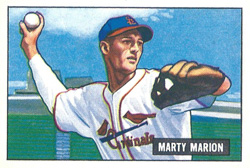
Sports editor Bob Broeg suggested Amaro’s arrival to play shortstop “provides just another chapter in the club’s almost constant trouble at the key defensive position.” With the exception of Marty Marion in the 1940s, the Cardinals “rarely have known satisfaction at a post which ranks second to none in defensive importance,” Broeg wrote.

In his book “Stan Musial: An American Life,” author George Vecsey said the Cardinals issued Amaro a pair of uniform pants at least two sizes too big. When Musial saw the rookie looking awkward in the baggy uniform, he said to clubhouse attendant Butch Yatkeman, “Would you get this young man a pair of pants so he can play like a major leaguer?”

When Amaro stepped onto the Busch Stadium field for the first time, he timidly watched the Cardinals take batting practice. Musial called out to the players, “He’s playing today. Let him have some swings.”

Amaro was forever grateful to Musial for his kindness.

Good glove

At shortstop that night, Amaro went hitless in two at-bats against the Braves’ Joey Jay before being lifted for pinch-hitter Wally Moon, but his fielding impressed.

“After two easy fielding chances, his third was a hard-hit ball that made him range far toward third base and deeply,” the Post-Dispatch observed. “It is a testing place for a shortstop’s arm and he met the test well.” Boxscore

The next night, Amaro got his first big-league hit, a double off future Hall of Famer Warren Spahn. Boxscore

Amaro produced six hits in his first 18 at-bats (a .333 batting average) for the Cardinals, but struggled after that.

In 40 games, including 21 starts at shortstop, Amaro batted .224 for the 1958 Cardinals. He hit .364 (8-for-22) against left-handed pitchers and .167 (9-for-54) versus right-handers.

Strong resume

After the 1958 season, Amaro took part in a series of exhibition games the Cardinals played on a goodwill tour of Japan.

When the club returned home, Amaro was dealt to the Phillies for outfielder Chuck Essegian on Dec. 3, 1958. “I cried when they traded me,” Amaro said.

After a season in the minors, Amaro played for the Phillies from 1960-65. He won a NL Gold Glove Award in 1964. Amaro also played for the Yankees (1966-68) and Angels (1969).

After his playing career, Amaro was a scout, minor-league manager, executive and big-league coach.

His son, Ruben Amaro Jr., a Stanford University graduate, played in the big leagues for eight years (1991-98) as an outfielder with the Angels, Phillies and Indians. He was general manager of the Phillies from 2009-2015.

Read Full Post »

The Cardinals hoped Brian Jordan would spend the 1992 season in the minor leagues and get the at-bats he needed to continue his development as a baseball player. Instead, two games into their season, the Cardinals promoted Jordan and put him into their everyday lineup as the right fielder.

On April 8, 1992, Jordan made his big-league debut and drove in four runs for the Cardinals against the Mets at St. Louis.

Three months later, an overmatched Jordan would be back in the minor leagues.

However, his early-season experience with the 1992 Cardinals wasn’t for naught. Jordan proved he had the potential to succeed in the big leagues. That spurred him to make a fulltime commitment to baseball and end his professional football career.

Getting close

Jordan was selected by the Cardinals as a supplemental pick between the first and second rounds of the June 1988 amateur baseball draft. He split his time in 1989, 1990 and 1991 playing baseball in the Cardinals’ minor-league system and playing football as a defensive back for the NFL Falcons.

In 1991, Jordan batted .264 in 61 games for Class AAA Louisville. When he reported to spring training in 1992, Jordan was hoping to earn a spot on the Cardinals’ Opening Day roster, even though he still was considering playing football for the Falcons that year.

Jordan had a good Grapefruit League season, batting .292 with seven RBI, but with St. Louis planning to go with a starting outfield of Pedro Guerrero in left, Ray Lankford in center and Felix Jose in right, it was determined Jordan should play every day in Louisville.

On April 1, 1992, Cardinals manager Joe Torre told Jordan, 25, he wouldn’t make the Opening Day roster.

“He took it all right,” Torre said to the St. Louis Post-Dispatch. “I told him, ‘You’re really close. You could make the team, but you couldn’t play and we want you to play, to get some at-bats.’ I think he understood. He shook my hand and thanked me for the opportunity.”

Said Cardinals general manager Dal Maxvill: “He’s got an awful lot of confidence. He’s not afraid of anything. You’ve seen him fooled, taking one-hand swings _ and that’s an adjustment he’ll have to make. He knows he has to play every day. If he stayed here, he’d be sitting and that wouldn’t help his development at all.”

Call for help

Five days later, on April 6, 1992, the Cardinals opened the regular season at home against the Mets. Milt Thompson started in right field instead of Jose, who had strained his right hamstring.

The next night, Cardinals first baseman Andres Galarraga broke his right wrist when hit by a pitch from Wally Whitehurst.

With Jose and Galarraga headed for the disabled list, the Cardinals reversed course and called up Jordan. He arrived in St. Louis the morning of April 8 and was put in the lineup for that night’s game against the Mets.

Torre shifted Guerrero from left field to first base and inserted Bernard Gilkey in left field and Jordan in right.

“Jordan is going to contribute a lot and fill in well in the outfield,” said Cardinals third baseman Todd Zeile.

Good game

Torre placed Jordan in the fifth spot in the batting order, behind Guerrero and in front of Gilkey.

In his first big-league at-bat, in the first inning against Sid Fernandez, Jordan struck out on a 2-and-2 fastball.

Two innings later, facing Paul Gibson, Jordan stroked a two-run single off the glove of third baseman Bill Pecota and swiped second.

After Gibson struck him out in the fifth, Jordan contributed a RBI-double off Mark Dewey in the sixth and a RBI-groundout in the eighth. The Cardinals won, 15-7. Boxscore

Learning curve

Torre kept Jordan in the lineup, even though the rookie batted .197 (15-for-76) in April. When Jose came off the disabled list, Jordan got starts in left and center.

After batting .281 (16-for-57) in May, the Cardinals in June gave Jordan a $2.3 million three-year contract, with the stipulation he quit playing football.

After agreeing to the deal, Jordan went into a slump and began to press. It didn’t help that Falcons coach Jerry Glanville kept calling Jordan, trying to convince him to come back to football, according to the Post-Dispatch.

On July 12, the Cardinals returned Jordan to Louisville. He was batting .207 for St. Louis and he had more strikeouts (48) than hits (40).

“He didn’t take it very well,” Torre said of Jordan’s reaction to the demotion. “He was unhappy and mad, but he wasn’t disrespectful. He’s young. He’s impatient … He’s torn and distracted and he has to get himself back on track and get his confidence back. He’s not the same aggressive player we had earlier in the year.”

After several stops and starts, Jordan established himself as the Cardinals’ everyday right fielder in 1995.

In seven years (1992-98) with St. Louis, Jordan batted .291, with 671 hits in 643 games. He became a free agent after the 1998 season and signed with the Braves.


Read Full Post »

Over a two-year period, when he lost far more than he won, Astros pitcher Bob Bruce prevailed in a series of duels with Cardinals ace Bob Gibson.

Bruce was 9-18 in 1965 and 3-13 in 1966 for a combined record of 12-31. Gibson was 20-12 in 1965 and 21-12 in 1966 for a combined record of 41-24. Yet, in the four starts pairing Bruce against Gibson in those two seasons, Bruce was 3-1 with a 1.69 ERA.

In nine years (1959-67) in the majors, primarily with losing Houston clubs, Bruce was 49-71 with a 3.85 ERA. Against the Cardinals, the right-hander was 4-8 with a 2.45 ERA in 20 appearances, including 14 starts.

In a relief appearance versus the Cardinals on April 19, 1964, at Houston, Bruce became the 12th major-league pitcher to strike out three batters on nine pitches, according to the Houston Chronicle. Bruce achieved the feat in the eighth inning, striking out Bill White, Charlie James and Ken Boyer on an assortment of off-speed pitches. In the ninth, after yielding a single to Johnny Lewis, Bruce struck out the side. Boxscore

Tim McCarver, Cardinals catcher, said Bruce was a right-handed version of St. Louis left-hander Curt Simmons.

“Bruce is rough on left-handed batters with his slow stuff,” McCarver said to the St. Louis Post-Dispatch. “He has a good motion like Simmons. He keeps the ball down. He keeps you honest with fastballs on the hands.”

Another Cardinal, Phil Gagliano, said, “Bruce never gives you anything good to hit.”

Though he started multiple games against Cardinals pitchers such as Ernie Broglio, Ray Sadecki and Ray Washburn, the St. Louis opponent Bruce faced the most was Gibson.

Hot stuff

Pitching for the Houston Colt .45s in their first season in the National League, Bruce was paired against Gibson for the first time on July 22, 1962. The Cardinals won, 3-1, on a sweltering Sunday afternoon at Colt Stadium.

With the temperature in the upper 90s, Bruce pitched seven innings, giving up all three runs in the second. Gibson contributed a two-out, RBI-single.

Relying primarily on fastballs and working on three days of rest, Gibson pitched 8.2 innings for the win.

Lindy McDaniel earned the save by getting Billy Goodman to ground out with runners on second and third, two outs, in the ninth.

“I wanted a breaking ball on Goodman and Gibson didn’t have enough left,” Cardinals manager Johnny Keane told the Post-Dispatch when asked why he lifted Gibson. Boxscore

Bruce and Gibson would not be paired against one another as starters for three years. Then Bruce began his stretch of winning three of four against Gibson.

Here’s a look at those games:

Surprise slugger

Bruce held the Cardinals to two runs in eight innings and got the win in a 5-2 Astros victory at St. Louis on June 4, 1965.

Gibson was burned by home runs from a pair of players who were physical opposites. In the sixth, Walt Bond, a 6-foot-7 outfielder, hit a two-run home run into the teeth of a wind blowing in from right field. With two outs in the ninth, Ron Brand, a 5-foot-7 catcher, hit a three-run home run, snapping a 2-2 tie. It was the second of three home runs Brand would hit in an eight-year career in the majors.

Brand had hit Gibson’s first pitch of the at-bat deep but foul. The home run came with the count 1-and-2. “That first pitch was surprise enough,” Brand said. “I hardly ever hit a ball that hard. I never hit two like that in one inning.”

The Cardinals had eight singles off Bruce until McCarver led off the bottom of the ninth with a double. Jim Owens relieved and retired the next three batters, preserving the win for Bruce. Boxscore

Home sweet dome

Bruce pitched a six-hit shutout in a 2-0 victory over the Cardinals at the Astrodome on July 21, 1965. All the St. Louis hits were singles.

Gibson yielded four hits in seven innings, though he injured the little finger on his right hand reaching for a hard grounder by Joe Morgan in the fifth.

With the finger swollen and painful _ the injury later was diagnosed as a torn capsule joint _ Gibson remained in the scoreless game.

Bob Lillis, a former Cardinals infielder, broke the tie that inning with a two-run double, a pop fly to right-center that barely eluded center fielder Curt Flood. “I was a step behind the ball and I might as well have been a day late,” Flood said.

Bruce, described by the Post-Dispatch as “no Humpty Dumpty,” preserved the win by getting McCarver to fly out with two on and two outs in the ninth. Boxscore

Solid Goldfinger

Though his injured finger remained swollen, Gibson limited the Astros to four singles in a 3-1 victory at St. Louis on Aug. 5, 1965.

Gibson, who greeted well-wishers by extending his left hand, said, “The finger doesn’t bother me so much when I throw a fastball, but it really smarts when I throw curves. I bunch the fingers to throw curves and the little finger presses against the next finger on curves.”

McCarver drove in two of the three runs off Bruce without a hit. McCarver hit a sacrifice fly in the fourth and his hard groundout to first in the sixth scored Flood from third.

“I’d like to be able to pitch like Gibson _ even with a sore finger,” Bruce said. Boxscore

Eyeing a win

In his final matchup against Gibson, Bruce held the Cardinals to two hits in eight innings in a 6-1 victory at St. Louis on July 8, 1966. Gibson was lifted after surrendering four runs and eight hits in 4.1 innings.

Bruce entered the game with a record of 1-6 and a 5.98 ERA. An infection in his right eye that threatened his sight had kept him from pitching from April 20 until June 5. After beating Gibson and the Cardinals, Bruce told the Post-Dispatch he still didn’t have satisfactory vision in the eye. Boxscore


Read Full Post »

Struggling to score, the Cardinals opened the 1997 season by losing a franchise-record six in a row.

From April 1-6, the 1997 Cardinals scored a total of 12 runs in losing three to the Expos at Montreal and three to the Astros at Houston. All the games were played indoors.

It was the first time the Cardinals started a season 0-6.

The ugly start put the Cardinals in a hole from which they couldn’t recover. Never getting their record above .500, the 1997 Cardinals finished 73-89.

Expectations had been for a much different outcome.

High hopes

In 1996, Tony La Russa’s first season as St. Louis manager, the Cardinals (88-74) won the National League Central Division title and swept the Padres in the NL Division Series. After getting within a win of clinching the 1996 pennant before losing to the Braves in the NL Championship Series, the Cardinals were supposed to be contenders in 1997.

At a banquet in February 1997, La Russa raised the stakes, predicting the Cardinals would repeat as division champions.

The Cardinals had a successful spring training in Florida, posting a 19-11 record in exhibition games.

“So far, the signs are outstanding _ the way they’ve gone through the drills, the way they’ve competed in the games and the way they’ve related to each other and the coaches,” La Russa said to the St. Louis Post-Dispatch. “The signs are all go.”

After departing Florida, the Cardinals went to Arlington, Texas, and to Baltimore to play exhibition games against the Rangers and Orioles before opening the season on April 1 at Montreal.

In his column for the Post-Dispatch, Bernie Miklasz wrote, “La Russa has had the game face on since, oh, about Dec. 26. It should be a good year. The Cardinals should repeat as Central Division champions.”

Loss #1, April 1, at Montreal

In the bottom of the ninth inning, with the score tied at 1-1, Cardinals reliever Tony Fossas walked pinch-hitter Sherman Obando with the bases loaded, forcing in the winning run and giving the Expos a 2-1 victory. Boxscore

Obando never took a swing in the six-pitch at-bat. “I didn’t see the ball up, so I didn’t swing,” Obando said.

The Cardinals scored their run in the sixth when Delino DeShields scampered home from third on a wild pitch from Jim Bullinger.

Loss #2, April 2, at Montreal

The Expos, behind the pitching of Jeff Juden, Omar Daal and 39-year-old Lee Smith, held the Cardinals to two singles and won, 4-1.

For the second consecutive game, the lone Cardinals run was scored by DeShields advancing from third to home on a wild pitch.

Said La Russa: “I have confidence that good hitters are going to hit.” Boxscore

Loss #3, April 3, at Montreal

The Cardinals blew leads of 2-0 and 4-2, losing 9-4. The Expos raked starter Alan Benes for 10 hits and seven runs in 4.2 innings.

“You can draw any conclusions you want to,” said La Russa. “They just flat outplayed us all three games.” Boxscore

The next day, in Houston, Miklasz met with La Russa before the game and described the manager as looking “as cheerful as your basic werewolf.”

“Those three insipid losses (at Montreal) made baseball’s most famous vegetarian more nauseated than he would by a plate stacked high with pepperoni, sausage and bacon,” Miklasz wrote.

Said La Russa: “We should have been more competitive in each of those three games. There’s no reason why we shouldn’t have done better in how we played _ and the manager should have done a better job.”

Loss #4, April 4, at Houston

Jeff Bagwell’s bases-loaded single off Eric Ludwick in the 11th snapped a 2-2 tie and lifted the Astros to a 3-2 victory.

The Cardinals started a season 0-4 for the first time since 1985.

St. Louis stranded 13 base runners. John Mabry drove in both Cardinals runs. Boxscore

In four games, the Cardinals were batting .167 with runners in scoring position.

“I feel terrific about our club,” La Russa said. “There isn’t anything we didn’t try to do tonight. The effort was there, the intensity, everything.”

Loss #5, April 5, at Houston

The Astros beat the Cardinals, 6-2. With their 0-5 record, the 1997 Cardinals matched the teams of 1902, 1919, 1960 and 1973 for worst start in franchise history.

Wrote Miklasz: “The lineup is as lethal as a Pez dispenser.”

Sid Fernandez started and earned the win in his final appearance of a 15-year major-league career. Ramon Garcia pitched four scoreless innings in relief for the save. Boxscore

“It’s a six-month test … I still like our club a lot,” said La Russa.

Loss #6, April 6, at Houston

Bagwell, hitting for infielder Tim Bogar in the eighth, delivered a two-run, two-out double off John Frascatore, erasing a 2-1 Cardinals lead and carrying the Astros to a 3-2 victory. Boxscore

The three-game sweep gave the Astros more wins against the Cardinals in 1997 than they had in 1996, when they lost 11 of 13 to St. Louis.

Having set the franchise record for most losses to begin a season, the Cardinals limped back to St. Louis for their home opener.

“I think I see guys trying to force things,” La Russa said. “It’s human nature. I hope they do. Otherwise, it means they don’t care.”

Said Cardinals third baseman Gary Gaetti: “It’s hard not to press when you’re really trying to get that first one.”

That’s a winner

After an off-day in St. Louis on April 7, the Cardinals played their home opener on April 8.

Willie McGee, 38, hitting for pitcher Mark Petkovsek, rescued the Cardinals by slashing a home run off Ugueth Urbina with two outs in the bottom of the ninth, giving St. Louis a 2-1 triumph over the Expos. Boxscore

“You couldn’t write a better script,” Mabry said of McGee’s streak-busting blast.

Said La Russa: “This was more dramatic than anything I’ve seen in a movie.”

Previously: Why Cards chose Delino DeShields over Ryne Sandberg

Read Full Post »

« Newer Posts - Older Posts »