Feeds:
Posts
Comments

Archive for the ‘Games’ Category

(Updated July 30, 2017)

Tim Raines played like a Hall of Famer against the Cardinals.

In January 2017, Raines earned election to the National Baseball Hall of Fame in voting by the Baseball Writers Association of America. He was inducted into the Cooperstown, N.Y., shrine on July 30, 2017.

tim_rainesThe switch-hitting outfielder, who played 23 seasons in the big leagues, primarily with the Expos and White Sox, performed well against most teams, though he was especially good versus the Cardinals.
Raines had more career triples (12), walks (107) and RBI (70) against the Cardinals than he did versus any other team. Raines batted .324 against the Cardinals, with 187 hits, 105 runs scored, 68 stolen bases and a .424 on-base percentage.

Overall for his career, Raines batted .294 with 2,605 hits, 808 stolen bases and a .385 on-base percentage. Raines ranks fifth all-time in steals. Rickey Henderson (1,406), Lou Brock (938), 19th century player Billy Hamilton (914) and Ty Cobb (897) are ahead of him.

Deadly speed

Raines showed consistent excellence versus the Cardinals from 1982-85. During that stretch, his batting average against the Cardinals was .314 or better every year and his on-base percentage each season was .417 or higher. In 1982, when the Cardinals won the World Series championship, Raines batted .391 (27-for-69) against them, with an on-base percentage of .494.

One of Raines’ most significant games against the Cardinals occurred during a 7-4 Expos victory on Sept. 18, 1984, at St. Louis. Raines had four stolen bases, giving him 70 for the season. Raines became the first player to have 70 steals or more in four consecutive seasons.

“Coming from a small town (Sanford, Fla.) which nobody has ever heard of and then coming to the major leagues, it makes me proud to be able to do what I’ve done,” Raines said after the game to Rick Hummel of the St. Louis Post-Dispatch.

Raines would finish the 1984 season with 75 stolen bases, leading the National League for the fourth year in a row. He had 71 steals in strike-shortened 1981, 78 in 1982 and 90 in 1983.

(Though Raines also achieved 70 steals in both 1985 and 1986, the Cardinals’ Vince Coleman surpassed him as the NL stolen base leader in those seasons.)

In his book “You’re Missin’ a Great Game,” Whitey Herzog, who managed the Cardinals from 1980-90, called Raines “a great hitter with deadly speed.”

“If you don’t keep him off base, you’re going to get beat, especially when you can’t hold him on,” Herzog told Hummel.

Hard to stop

With Joaquin Andujar pitching and Darrell Porter catching, Raines swiped second base three times and third base once in his four-steals game against the Cardinals.

Raines “took advantage of Andujar’s slow release toward home plate,” Hummel reported.

“He’s got a quick move to first, but he’s got that high leg kick when he comes to the plate,” Raines said of Andujar. “He comes to the plate slow all the time. I’ve always felt that when he’s pitching, I can run.”

Said Andujar: “That guy just flies. It doesn’t matter whether you throw 100 times to first, he will still steal the base.”

After Andujar was relieved by Kevin Hagen, Raines attempted to steal his fifth base of the game but was caught by Porter.

Porter was one of just four catchers to throw out Raines attempting to steal up to that point in the season, according to the Post-Dispatch. The others: Steve Lake (Cubs), Mike Scioscia (Dodgers) and Ozzie Virgil (Phillies). Boxscore

Raines also had a standout season against the Cardinals in 1990, batting .373 (19-for-51) with 13 RBI and a .469 on-base percentage. On Oct. 1, 1990, Raines had five RBI, including a grand slam off Frank DiPino, in a 15-9 Expos triumph over the Cardinals at Montreal. Boxscore


Read Full Post »

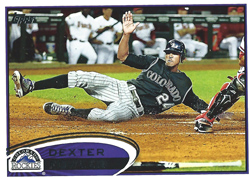
Of the eight career home runs Dexter Fowler has hit against the Cardinals, including one in the postseason, the most dramatic helped the Rockies to a second consecutive late-inning comeback.

dexter_fowlerOn July 7, 2010, Fowler crushed a three-run home run in the eighth inning off Cardinals reliever Jason Motte, tying the score at 7-7 and positioning the Rockies for a win in the ninth.

Six years later, on Dec. 9, 2016, Fowler, a free agent, got a five-year, $82.5 million contract from the Cardinals after helping the Cubs win their first World Series title in 108 years.

Clutch performer

Fowler was in his second full season with the Rockies in 2010 when the Cardinals came to Denver for a three-game series.

In the opener, on July 6, 2010, the Rockies erased a 9-3 Cardinals lead when they scored nine runs in the ninth and won, 12-9. Seth Smith broke a 9-9 tie with a three-run walkoff home run off Ryan Franklin. Fowler doubled and scored in that inning. Boxscore

The next night, the Cardinals led 7-4 in the eighth. The Rockies had runners on first and second, one out, when Cardinals manager Tony La Russa brought in Motte to relieve Trever Miller and face Fowler.

A switch hitter, Fowler batted from the left side against the hard-throwing Cardinals right-hander.

Fastball hitter

After missing the strike zone with his first two pitches, Motte delivered a 97 mph fastball. Fowler swung and missed.

The next pitch was a ball, running the count to 3-and-1.

Motte threw another 97 mph heater and Fowler fouled off the pitch.

“You’re just trying to get a hit and keep the train going,” Fowler said to the Associated Press.

Motte’s payoff pitch was a 98 mph fastball. “That’s his best pitch, so that’s what I was looking for,” Fowler told the Denver Post.

Fowler connected and the ball sailed over the wall for a three-run home run.

It was Fowler’s first home run since April 28.

“That one to Fowler was right down the middle … and he got the barrel on it,” Motte said to the St. Louis Post-Dispatch. “You fall behind (in the count) and you’ve got to throw strikes. You throw strikes, they hit the ball.”

Rocky Mountain high

Fowler’s home run set the stage for a Rockies walkoff win in the ninth.

With his bullpen depleted, La Russa chose Evan MacLane, making his major-league debut, to pitch the ninth.

MacLane, a left-hander, worked the count to 3-and-2 against the leadoff batter, Chris Iannetta. MacLane’s next pitch, a changeup, was drilled for a home run, giving the Rockies an 8-7 walkoff win. Boxscore

Previously: Jason Motte ran table on Cardinals saves in 2012

Read Full Post »

A decision by Red Sox manager Joe Cronin to bypass his ace, Boo Ferriss, in Game 6 of the 1946 World Series against the Cardinals created controversy and second guessing.

boo_ferrissAfter the Red Sox won Game 5, giving them three wins in the best-of-seven Series, Cronin indicated he’d start Ferriss in Game 6. Ferriss had shut out the Cardinals in Game 3 and he had led the Red Sox in wins during the regular season, with 25.

At the last minute, however, Cronin changed his mind and started Mickey Harris in Game 6. The Cardinals beat Harris, evening the Series. Ferriss started the decisive Game 7, but the Cardinals won that, too, earning their third World Series crown in five years.

Cronin was criticized for not starting his best pitcher when the Red Sox had the opportunity to claim the championship with a Game 6 triumph. Few pitchers in 1946 had better credentials than Dave “Boo” Ferriss.

Big winner

Ferriss got his nickname when, as a child, he tried to say the word “brother” and it came out “boo,” according to a biography by the Society for American Baseball Research.

He debuted in the major leagues with the Red Sox in 1945 and posted a 21-10 record.

In 1946, Ferriss was even better. The right-hander won his first 10 decisions and finished the regular season at 25-6, including a 13-0 mark at home.

After the Red Sox and Cardinals split the first two games of the 1946 World Series at St. Louis, Ferriss got the start in Game 3 on Oct. 9 at Boston. Throwing a sinker from a three-quarters sidearm delivery, Ferriss held the Cardinals scoreless for nine innings, limiting them to six hits and a walk in a 4-0 Red Sox triumph.

Stan Musial tried to spark the Cardinals in the first inning when he walked with two outs and stole second base. Noticing Musial taking a big lead off second, Ferriss turned and caught him flat-footed. Holding the ball, Ferriss moved toward Musial, who broke for third. Ferriss threw to third baseman Pinky Higgins, who applied the tag.

In the ninth, Musial tripled with two outs, but Ferriss preserved the shutout by striking out Enos Slaughter. Boxscore

Chance to clinch

The Cardinals evened the Series with a win in Game 4 and Boston went ahead with a win in Game 5. The St. Louis Post-Dispatch and the St. Louis Star-Times reported Ferriss would start Game 6 on Oct. 13 at Sportsman’s Park in St. Louis.

According to the Post-Dispatch, Cronin said, “Don’t worry about any seventh game. There won’t be any.”

Cronin “thinks Ferriss will turn back the Redbirds and clinch the world title in the sixth game. Ferriss is a real hurdle for the Birds,” Post-Dispatch columnist John Wray wrote.

Retired Cardinals ace Dizzy Dean told the Post-Dispatch on the eve of Game 6, “I reckon it’ll be Ferriss for the Sox tomorrow.”

Change of plans

Ferriss, though, would have been pitching on three days’ rest, instead of the usual four, if he had started Game 6. He also would have been matched against Harry Brecheen, who had shut out the Red Sox in Game 2 and was chosen the Cardinals’ Game 6 starter by manager Eddie Dyer.

“Ferriss was set to start,” reported the Detroit Free Press, “but at the last hour” Cronin reconsidered and opted to start Harris.

A left-hander, Harris had started and lost Game 2, but he pitched well, yielding one earned run in seven innings. Harris had a 17-9 record during the regular season.

“Cronin gambled on (Harris) because Sportsman’s Park usually has been a paradise for southpaws,” United Press reported.

However, Harris gave up three runs in 2.2 innings and the Cardinals won Game 6, 4-1. Boxscore

Cardinals clout

After a scheduled off day on Oct. 14, Game 7 was played on Oct. 15 at St. Louis. Described by the Post-Dispatch as “a master of variable speed and control,” Ferriss, starting on five days’ rest, was opposed by Murry Dickson.

In the fifth inning, with the score tied at 1-1, Dickson doubled, scoring Harry Walker from second. Red Schoendienst followed with a single, scoring Dickson and giving the Cardinals a 3-1 lead. After Terry Moore singled, Cronin replaced Ferriss with Joe Dobson.

Ferriss’ line: 4.1 innings, 7 hits, 3 runs, 1 walk, 2 strikeouts.

The Red Sox tied the score with two runs in the eighth, but the Cardinals went ahead in the bottom half when Slaughter made a mad dash from first and scored on a Walker hit off Bob Klinger. Brecheen, who had relieved Dickson, shut down the Red Sox in the ninth, giving the Cardinals a 4-3 triumph and the championship. Boxscore

Decisions, decisions

Cronin caught heat for his decision-making:

_ Sid Keener, St. Louis Star-Times: “Why didn’t Cronin pitch Ferriss in the sixth game and then, if the Red Sox lost that number, Joe Dobson was the top ace up the sleeve?”

_ Herbert Goren, New York Sun: “Cronin’s pitching strategy was questioned in the last two games. How judicious was it to save Ferriss for the seventh game when he was ready for the sixth?”

_ The Sporting News: “Some surprise was expressed over Cronin’s decision to start Harris. Many thought he would lead with Ferriss in the hope of winding up the Series.”

Keener reported Cronin “originally had Ferriss primed and ready” for Game 6, but had “a change of heart” after learning Brecheen was starting.

In defense of Cronin, Ed McAuley of the Cleveland News wrote, “Ferriss’ performance in the (seventh) game confirmed the manager’s suspicion that (Ferriss) needed more than three days’ rest.”

The 1946 season was the pinnacle of Ferriss’ pitching career. He pitched six seasons, all with the Red Sox, and had a 65-30 record.

Previously: The story of Joe DiFabio, original No. 1 pick of Cards

Read Full Post »

(Updated Jan. 4, 2025)

Ralph Branca came close to pitching two no-hitters against the Cardinals within a month. He earned a one-hit shutout in one of those games and he had another one-hitter when he departed with two outs in the ninth inning of the other game.

ralph_brancaOn July 18, 1947, Branca delivered the best performance of his career, retiring the first 21 Cardinals batters in a row and finishing with a one-hitter in the Dodgers’ 7-0 victory at Brooklyn.

A month later, on Aug. 20, 1947, Branca again held the Cardinals to one hit before he was lifted after pitching 8.2 innings. The Cardinals rallied against Hugh Casey, tying the score in the ninth and winning with a run in the 12th at Brooklyn.

Best known for yielding the ninth-inning home run to Bobby Thomson that gave the Giants a pennant-clinching victory over the Dodgers in 1951, Branca was a key figure in the National League rivalry between the Dodgers and Cardinals in the 1940s.

Pennant race

As a youth in Mount Vernon, N.Y., near the Bronx, Branca became a Giants fan, going to their games with his brothers Ed and Jules. In the book, “We Would Have Played For Nothing,” by former baseball commissioner Fay Vincent, Branca said, “My heroes were Mel Ott and Carl Hubbell and Hal Schumacher … I remember sitting in the bleachers in the Polo Grounds and watching (Hubbell’s) screwball … and marveling at it.”

At 17, Branca signed with the Dodgers in 1943 (the Giants didn’t make an offer) and reached the majors with them the next year. The first team he faced was the Giants. Among the batters he retired that day was Mel Ott. Boxscore

On his first Dodgers road trip, Branca, 18, roomed with Paul Waner, 41. Branca recalled to Fay Vincent, “In the morning, he reaches under the bed. He takes out a bottle. They had these round tumblers and he filled it about that high and said, ‘This is my orange juice.’ ”

Branca, 20, started for the Dodgers in pivotal games against the Cardinals during the 1946 pennant stretch.

On Sept, 14, 1946, Branca pitched a three-hit shutout in a 5-0 victory against the Cardinals at Brooklyn, moving the Dodgers within a half game of first place. Boxscore

Branca’s performance in that game was a surprise because the Dodgers weren’t expecting him to last the first inning.

Branca told Fay Vincent, “Leo Durocher, our manager, announces to me I’m to pitch to one man and then he’s going to bring in Vic Lombardi because the Cardinals will load up their team with left-handers. And, of course, I warmed up, and I was going, ‘Sacrificial lamb, my butt.’ I get them out in the first inning on five pitches. I walked off and Leo said, ‘Hey, kid, keep throwing like that. I’m keeping you in.’ ”

Three weeks later, on Oct. 1, 1946, after the Dodgers and Cardinals ended the regular season tied for first place, Branca started the opener of a best-of-three series to determine the NL champion. He gave up three runs in 2.2 innings and took the loss in a 4-2 Cardinals victory at St. Louis. Boxscore The Cardinals won the next game, clinching the pennant, and then four of seven against the Red Sox in the World Series.

A year later, the Dodgers and Cardinals were battling for the 1947 pennant.

Nearly perfect

Branca lost each of his first three decisions against the Cardinals in 1947, but had a 14-7 record entering his July 18 start against them at Ebbets Field.

The game matched Branca against Red Munger. While Branca handcuffed the Cardinals, the Dodgers scored five runs off Munger in the first four innings.

After pitching seven perfect innings, Branca faced Enos Slaughter leading off the eighth. Slaughter hit Branca’s first pitch for a single to right field.

“I couldn’t help but know I was pitching a no-hitter the way they went down, one, two, three, in every inning,” Branca said to the Brooklyn Daily Eagle. “Naturally, I was disappointed when Slaughter got hold of that one in the eighth. It was my fault. I was pressing a little, being too careful. I didn’t get that high fastball … inside quite far enough.”

In its account of the game, the St. Louis Post-Dispatch opined, “The Cardinals looked at the best pitching they’ve seen all season.” Boxscore

Walks haunt

The Cardinals returned to Brooklyn in August for a four-game series with the league leaders. The Dodgers won two of the first three, opening a 5.5-game lead over second-place St. Louis.

Branca started the finale and responded with another gem, holding the Cardinals hitless again for seven innings.

Like Slaughter a month earlier, Whitey Kurowski ended the no-hit bid with a leadoff single in the eighth.

Branca entered the ninth with a 2-0 lead. Though he issued a walk to the first batter, Red Schoendienst, Branca retired Terry Moore and Stan Musial on groundouts, with Schoendienst advancing to third.

Slaughter was up next.

Branca got ahead in the count, 1-and-2. Needing a strike to complete another one-hit shutout, Branca walked Slaughter.

After Branca’s first two pitches to the next batter, Ron Northey, missed the strike zone, manager Burt Shotton yanked his ace and replaced him with Hugh Casey.

Northey greeted Casey with a single, scoring Schoendienst, moving Slaughter to third and cutting the Dodgers’ lead to 2-1.

Kurowski followed with a grounder to Spider Jorgensen. The third baseman booted the ball for an error as Slaughter streaked to the plate with the tying run.

Spike ball

In the 11th, the game took another controversial twist.

Slaughter hit a ground ball to first baseman Jackie Robinson, who that season had broken baseball’s color barrier.

Robinson fielded the ball and raced to the bag. As Slaughter arrived _ “head down in a dash for first,” according to the Post-Dispatch _ he stepped on Robinson’s right foot, spiking him.

Robinson “limped and dropped to the ground,” the Post-Dispatch reported, “but apparently, because of the thickness of his shoe and the mud on Slaughter’s spikes, Robinson suffered no cut.”

To the Dodgers and the Brooklyn crowd, it appeared Slaughter intentionally tried to injure Robinson.

“No one can read Slaughter’s North Carolina mind, but the crowd unanimously decided to believe that he was curious to see how Robinson would look with one leg,” wrote Tommy Holmes of the Brooklyn Daily Eagle.

Robinson told The Sporting News, “All I know is I had my foot on the inside of the bag. I gave Slaughter plenty of room.”

Said Slaughter: “I’ve never deliberately spiked anyone in my life.”

Comeback complete

More drama unfolded in the 12th.

Kurowski hit Casey’s first pitch of the inning into the left-field seats for a home run, giving the Cardinals a 3-2 lead.

In the bottom half of the inning, Robinson led off with a single against Howie Pollet and moved to second on Pete Reiser’s sacrifice bunt.

Cardinals manager Eddie Dyer lifted Pollet, who was working his fifth inning of relief, and replaced him with Red Munger.

Before delivering a pitch, Munger whirled and snapped a throw to shortstop Marty Marion, who tagged a startled Robinson for the second out.

The next batter, Arky Vaughan, grounded out, ending the saga. Boxscore

Despite the setback, the Dodgers went on to win the 1947 pennant, finishing five games ahead of the Cardinals. Branca posted a 21-12 record and 2.67 ERA.

For his 12-year career in the big leagues, Branca had an 88-68 record, including 8-10 against the Cardinals.


Read Full Post »

After pitching coach Dave Duncan transformed Jeff Weaver from a consistent loser into a postseason ace with the 2006 Cardinals, the club wanted him to work similar magic with Kip Wells in 2007. Duncan and Wells were willing. The results, though, were far from the same.

kip_wellsDesperate for starting pitching a month after winning the 2006 World Series championship, the Cardinals, with Duncan’s endorsement, signed Wells, a free agent, on Nov. 28, 2006.

Wells, 29, agreed to a one-year contract for $4 million. The Cardinals projected him in their 2007 rotation, even though he produced one winning season among his last seven in the majors.

A significant factor in their investment was their faith in Duncan, who had a reputation for bringing out the best in pitchers who had struggled or underperformed.

Pitching mentor

Since joining the Cardinals in 1996, Duncan, a former catcher, had helped rejuvenate the careers of several starting pitchers, most notably right-handers, including Andy Benes, Kent Bottenfield, Garrett Stephenson, Darryl Kile, Woody Williams, Jeff Suppan, Chris Carpenter and Weaver.

In 2006, Weaver joined the Cardinals in July after posting a 3-10 record and 6.29 ERA that season with the Angels. Working with Duncan, Weaver gradually improved. He earned three wins for the Cardinals in the 2006 postseason, including the Game 5 World Series championship clincher.

After the season, Weaver and two other Cardinals starting pitchers, Suppan and Jason Marquis, became free agents. Another starter, Mark Mulder, was injured. That left Carpenter and Anthony Reyes as the Cardinals’ only experienced big-league starters.

The Cardinals planned to replenish the rotation by signing free agents. Wells was an immediate target.

Signs of brilliance

Because of a blocked artery in his right shoulder and a foot injury that required surgery, Wells was limited to nine big-league starts in 2006. He was 1-5 with a 6.69 ERA in seven starts for the Pirates before he was traded to the Rangers for pitcher Jesse Chavez on July 31, 2006. Wells made two starts for the Rangers and was 1-0 with a 5.62 ERA.

The Cardinals were familiar with Wells. With the Pirates from 2002-2006 after starting his career with the White Sox, Wells was 2-6 against the Cardinals.

Duncan saw enough skill in Wells as an opponent to determine the right-hander could be a reliable St. Louis starter.

“I always felt like he had great ability and was a very interesting guy to watch,” Duncan said to Derrick Goold of the St. Louis Post-Dispatch. “There were signs of brilliance and sometimes mistakes that were made that weren’t understandable.”

Said Wells: “I definitely relish the opportunity to get some insight, some wisdom (from Duncan) and further my career and my ability.”

All aboard

Reaction to the Cardinals’ signing of Wells largely was positive:

_ Bernie Miklasz, Post-Dispatch columnist: “He looks like another low-risk Dave Duncan specialty: a groundball machine, finally healthy and in need of a mid-career tuneup.”

_ Chris Carpenter, Cardinals pitcher: “Getting Kip Wells is a first step. That was a nice first step.”

_ Walt Jocketty, Cardinals general manager: “We got a guy everyone agrees will be very good if he stays healthy.”

_ Randy Hendricks, Wells’ agent: “If Kip does what we and the Cardinals hope, he will be worth a lot more after 2007. So we are betting on each other and the future.”

The Cardinals made aggressive bids for other free-agent starting pitchers, including Jason Schmidt, Miguel Batista and Vincente Padilla (they offered Schmidt, for instance, a three-year contract for $42 million, the Post-Dispatch reported), but were rejected.

So they planned to convert relievers Braden Looper and Adam Wainwright into starters to join Carpenter, Reyes and Wells in the 2007 rotation.

Hard to watch

Wells had a terrible beginning to his 2007 season, losing eight of his first nine decisions. He was 1-8 with a 6.75 ERA after an excruciating performance against the Dodgers on May 16. In that start, Wells threw 125 pitches in five innings. Boxscore

“The Cardinals’ night in the dentist’s chair ended with a root canal gone awry,” Joe Strauss of the Post-Dispatch noted.

Wells finished with a 7-17 record and 5.70 ERA in 34 appearances, including 26 starts, for the 2007 Cardinals. He yielded 186 hits in 162.2 innings. Wells also gave up the most runs (116) and most walks (78) of any pitcher on the staff.

By midseason, Duncan “had become frustrated by Wells’ ponderous pace, heavy pitch counts and inability to avoid huge innings,” the Post-Dispatch reported. “Wells complained the coaching staff failed to help him improve his mechanics.”

Bat man

Wells turned out to be a better hitter than he was a pitcher for the Cardinals. He batted .321 (17-for-53). He was used once as a pinch-hitter, producing a RBI-single off Astros reliever Dan Wheeler in the ninth inning of a Cardinals victory on June 1 at Houston. Boxscore

After the season, Wells became a free agent and signed with the Rockies. He was their starting pitcher in the 2008 season opener against the Cardinals at St. Louis.

Though he didn’t get a decision, Wells pitched effectively, holding the Cardinals to one run (a Yadier Molina home run) in 5.1 innings. The Rockies won, 2-1, scoring their runs in the eighth inning off reliever Ryan Franklin. Boxscore

Wells played his final big-league season in 2012 with the Padres. His career major-league record: 69-103 with a 4.71 ERA.

Previously: Why Jeff Weaver rates among clutch Cards clinchers

Previously: Why Cards took a chance on Jeff Weaver

Read Full Post »

(Updated July 26, 2022)

Four of the most memorable Cardinals World Series home runs were hit by third basemen: Whitey Kurowski, Ken Boyer, David Freese and Tom Lawless.

In 1942, Kurowski hit a two-run home run in the ninth inning of Game 5 at New York, breaking a 2-2 tie and carrying the Cardinals to a 4-2 victory over the Yankees in the championship clincher.

tom_lawlessIn 1964, Boyer hit a sixth-inning grand slam off Al Downing in Game 4 at New York, lifting the Cardinals to a 4-3 victory over the Yankees and evening the series at 2-2.

In 2011, Freese hit an 11th-inning walkoff home run off Mark Lowe in Game 6 at St. Louis, giving the Cardinals a 10-9 victory over the Rangers and evening the series at 3-3.

Kurowski, Boyer and Freese were Cardinals starters in the years in which they hit their dramatic World Series home runs.

Not so for Lawless, who rarely played during the regular season for the 1987 Cardinals. After three games of the 1987 World Series, slugger Reggie Jackson, working the event for ABC television, told USA Today, “I’m still trying to find out who Tom Lawless is.”

In Game 4, on Oct. 21, 1987, Lawless introduced himself to the nation in a most unexpected manner. He hit a three-run home run off Frank Viola in the fourth inning, carrying the Cardinals to a 7-2 victory over the Twins and evening the series at 2-2.

Lawless had gotten two hits, none a home run, and no RBI during the 1987 regular season. Though Lawless was on the Cardinals’ active roster all season, he appeared in a mere 19 games and batted .080 (2-for-25).

Fat pitch

Lawless, who made three starts (none at third base) during the regular season, got his chance to play in the World Series because of a rib-cage injury to third baseman Terry Pendleton.

Lawless started at third in Game 1 versus Viola and was hitless in three at-bats. Jose Oquendo started at third for the Cardinals in Games 2 and 3.

In Game 4, manager Whitey Herzog returned Lawless to the starting lineup. He batted eighth and played third, with Oquendo moving to right field.

Pitching for the Twins was Viola, who earned 17 wins during the regular season and won Game 1 of the World Series.

According to Cardinals Magazine, after Viola struck out Lawless in the second inning of Game 4, Lawless said to teammate Jack Clark, “Viola is killing me. I can’t hit his change-up.”

Clark advised him to look for a fastball.

In the Cardinals’ half of the fourth inning, with the score tied at 1-1, Tony Pena led off with a walk and moved to third on Oquendo’s single.

Lawless batted next and, with the count 0-and-1, Viola threw a fastball.

“A mediocre fastball,” said Twins manager Tom Kelly.

“It was less than mediocre,” said Viola. “It was a brutal fastball.”

Flipping out

Lawless swung and lifted a high fly toward left field.

Lawless “gazed fondly as the ball headed for the facing behind the wall,” the St. Louis Post-Dispatch reported.

“From the way he hit it and stood there, I thought it must be in the upper deck,” said Herzog.

Keeping his eye on the ball, Lawless, bat in hand, began a slow walk toward first base. When he saw the ball carry just beyond the wall and the umpire signal home run, Lawless flipped the bat into the air and began his jubilant home run trot. Video

On the ABC telecast, broadcaster Al Michaels exclaimed, “Did we really see that?”

Regarding the bat flip, Lawless said, “I just must have blanked out there for a second. This never happened to me before.”

Divine intervention

The home run gave the Cardinals a 4-1 lead and stunned the Twins.

The Minneapolis Star Tribune described it as “a sporting miracle” and “a swing that will forever become a part of World Series lore.”

Lawless said he walked slowly to first while watching the ball because he thought he had hit a sacrifice fly and didn’t want to pass Oquendo on the basepath.

“It’s a big stadium, especially for a little guy like me,” Lawless told the Post-Dispatch. “I’ve hit balls that good before, but they haven’t gone out.” Boxscore

On the rare side

Until then, Lawless had hit only one home run in the big leagues. It occurred on April 25, 1984, for the Reds against Ken Dayley of the Braves at Atlanta. Dayley was a teammate of Lawless on the 1987 Cardinals.

Lawless became the third Cardinals player to hit a World Series home run after having hit none during the regular season that year. The others were pitchers: Jesse Haines in 1926 and Bob Gibson, who did it twice, in 1967 and in 1968.

Before Lawless, the last non-pitcher to hit a World Series home run after having hit none during the regular season that year was outfielder Marv Rickert of the 1948 Braves, according to the Post-Dispatch.

Acknowledging the dreamlike status of his achievement, Lawless said, “I may sleep in my uniform tonight.”

Previously: Les Bell to David Freese: Cardinals 3rd base champions

Read Full Post »

« Newer Posts - Older Posts »