Feeds:
Posts
Comments

Archive for the ‘Games’ Category

(Updated July 1, 2019)

In the most productive month of his Cardinals playing career, Mike Shannon hit home runs off future Hall of Famers Sandy Koufax, Juan Marichal and Gaylord Perry, achieved his lone five-hit game in the big leagues and re-established his status as a reliable everyday player.
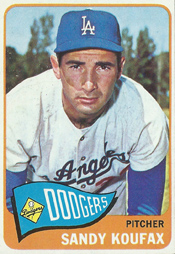
sandy_koufax2In July 1966, Shannon entered the month with a .222 batting average for the season. He exited the month with a season batting mark of .304.

Shannon, the Cardinals’ right fielder, hit .395 (45-for-114) in July 1966, with 17 extra-base hits (seven home runs, eight doubles and two triples), nine walks, 23 RBI and 25 runs scored. His on-base percentage for the month was .435.

Bad habits

The Cardinals opened the 1966 season with a starting outfield of Alex Johnson in left, Curt Flood in center and Lou Brock in right. Johnson struggled to hit for average and was sent to the minor leagues in May. Brock was shifted to left and Shannon took over in right.

However, like Johnson, Shannon also struggled. He hit .197 (13-for-66) in May and .222 (12-for-54) in June.

“Mike was too much of a guess hitter and a guess hitter is a .250 hitter or lower,” Cardinals hitting coach Dick Sisler told The Sporting News.

Said Cardinals manager Red Schoendienst: “Every time someone on the club would hit a home run, Mike would try to hit one farther.”

Solving Sandy

On July 1, 1966, Shannon’s turnaround began against the unlikeliest of opponents. Koufax entered his start for the Dodgers against the Cardinals at Los Angeles with a season record of 14-2 and a 1.56 ERA. His last five decisions against the Cardinals all were wins.

In the seventh inning, with the score at 0-0 and one out, Orlando Cepeda singled. Shannon batted next and worked the count to 3-and-1. “Shannon was the only batter Koufax got behind,” Schoendienst said to the Pasadena Star News.

Koufax told the Los Angeles Times, “With Cepeda on first base and the count 3-and-1 on Shannon, I didn’t want to walk him and put a runner in scoring position, so I had to try to blow one by him.”

The next pitch was a fastball and Shannon hit it for a home run into the seats in left-center at Dodger Stadium.

“The fastball was right down the middle,” Shannon said to the St. Louis Post-Dispatch.

Koufax said, “Outside of that one pitch, I thought I had the best stuff I’ve had this year. My curve was working again.”

Said Shannon: “He worked fastballs in and out to me and I finally got one I could hit off him. I’m glad he didn’t throw me a curve.”

The combination of Shannon’s power and the shutout pitching of Al Jackson carried the Cardinals to a 2-0 victory. It was “a measure of sweet revenge” for Jackson, who had lost 10 of 11 previous career decisions versus the Dodgers, the Los Angeles Times reported. Boxscore

Picking his pitch

In seven games at Los Angeles and San Francisco over the first six days of July, Shannon produced 12 hits in 27 at-bats, including the home runs off Koufax, Marichal and Perry, and a triple off another future Hall of Fame pitcher, Don Drysdale. The home runs against Marichal and Perry occurred on the same day, July 4, with Shannon hitting one in each game of a doubleheader.

Said Perry of Shannon’s blast: “It was a good pitch _ a slider away from him. I pitched against him a lot in the minors and when Mike is hitting good you can’t get him out.”

Shannon’s hot streak continued throughout July.

On July 15, Shannon’s 27th birthday, he had four hits in five at-bats in a game against the Reds at Cincinnati. Boxscore

A week later, on July 22, Shannon was 5-for-5 in a game versus the Cubs at Chicago. Boxscore

“Mike has been picking the good pitches consistently for a change,” said Sisler. “He’s not lunging the way he used to. He’s not trying to pull those outside pitches for home runs. He’s making the pitchers come to him.”

Bob Skinner, a Cardinals reserve outfielder and friend of Shannon, said, “Mike has been looking like an altogether different hitter. He’s hitting more home runs than ever because he’s just meeting the ball instead of swinging like a wild man.”

Shannon finished the 1966 season with a .288 batting average and a career-best 16 home runs. He was converted to a third baseman after the season and started for the 1967 and 1968 Cardinals clubs that won two NL pennants and a World Series title.

Previously: Here’s how Mike Shannon became a Cardinals catcher

Previously: The stormy, unfulfilled Cardinals career of Alex Johnson
Read Full Post »

The Cardinals were a significant part of the baseball career of Jim Hickman. He signed his first professional contract with the Cardinals, played in their farm system for six seasons and ended his big-league playing days with them. Also, Hickman’s two best games in the major leagues came against the Cardinals.

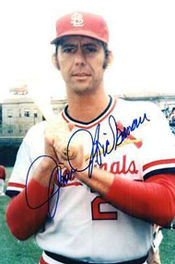
jim_hickmanHickman was an outfielder and first baseman for 13 years in the majors. Best known as a member of the original 1962 Mets and for an all-star season with the 1970 Cubs, Hickman grew up a Cardinals fan and was 18 when he signed with St. Louis in 1956.

“As a kid, I didn’t know there was any other club except the Cardinals,” Hickman told The Sporting News.

Helped by expansion

Displaying power but failing to hit for average, Hickman played in the Cardinals’ system from 1956-61 without getting a call to the big-league club. His best seasons in the Cardinals organization were 1957 when he produced 26 home runs and 113 RBI for Class D Albany (Ga.) and 1959 when he had 22 home runs and 81 RBI for Class AA Tulsa.

“The closest he ever got to the big club was a couple of early spring training camps,” The Sporting News reported. “They gave Jim big uniform numbers reserved for no names … and he didn’t get much of a look.”

After Hickman hit 11 home runs with 57 RBI for Class AAA Portland (Ore.) in 1961, the Cardinals made him available in the National League expansion draft. According to The Sporting News, the Cardinals lost interest in Hickman when they received a scouting report that said he lacked aggressiveness.

Said Hickman: “I know people say I’m not aggressive … I give it all I got.”

Hickman was drafted by the expansion Mets and made his big-league debut with them in 1962. He became one of their everyday outfielders, batting .245 with 13 home runs in 140 games.

Cycle in sequence

In July 1963, Mets manager Casey Stengel experimented with converting Hickman into a third baseman. Hickman was batting .223 entering the Aug. 7, 1963, game between the Cardinals and Mets at the Polo Grounds.

Batting leadoff and playing third base, Hickman became the first Mets player to hit for the cycle. He was 4-for-5 with two RBI and two runs scored in the Mets’ 7-3 victory.

Hickman, a right-handed batter, got his first three hits off starter Ernie Broglio: a single in the first, a double in the second and a RBI-triple in the fourth. In the sixth, Hickman hit a solo home run off Barney Schultz to complete the cycle.

“If this fellow can learn to cut down on his strikeouts, he could be one of the top hitters around,” Stengel said. “He has all the power he needs, but by now he should know that you can’t hit a ball with the bat on your shoulder. You have to swing.” Boxscore

Trio of homers

Two years later, on Sept. 3, 1965, Hickman became the first Mets batter to hit three home runs in a game. He did it against Cardinals starter Ray Sadecki, leading the Mets to a 6-3 triumph at St. Louis.

Batting sixth and playing first base, Hickman, who entered the game with a .212 batting average, was 4-for-4 with four RBI and three runs scored.

A look at his three home runs off Sadecki:

_ Home run #1: Swinging at the first pitch, a high, outside fastball, Hickman hit it 403 feet the opposite way, clipping the pavilion roof in right-center.

_ Home run #2: The count was 3-and-0 when Hickman looked toward third-base coach Don Heffner and was surprised to see he was being given the freedom to swing away.

According to The Sporting News, “Hickman, knowing the Mets have an automatic $10 fine for a missed sign, stepped out of the batter’s box and looked again.”

Heffner shouted to him, “Go ahead. It won’t cost you 10 bucks.”

Sadecki threw a fastball and Hickman pulled it over the left-field wall.

_ Home run #3: On a 1-and-2 count, Hickman swung at a slider down in the zone and golfed it into the left-field bleachers.

When Hickman batted for a fourth time in the game, Nelson Briles was pitching in relief. Asked later whether he was trying for a fourth home run, Hickman replied, “You bet.”

Instead, he produced a single on a groundball that took a bad hop and eluded third baseman Ken Boyer. Boxscore

Nostalgia tour

In 1970, Hickman was named an all-star for the only time. Playing for the Cubs, he produced 32 home runs and 115 RBI and was named NL Comeback Player of the Year by The Sporting News.

On March 23, 1974, the Cubs traded Hickman to the Cardinals for pitcher Scipio Spinks. Eighteen years after he had signed with St. Louis, Hickman finally was getting his chance to play for the Cardinals.

“I’m 36, but I know I still can hit a baseball,” Hickman said. “And I still can half-catch a baseball.”

Used primarily as a pinch-hitter and backup to Joe Torre at first base, Hickman hit .267 with the 1974 Cardinals. He hit two pinch-hit home runs _ off George Stone of the Mets and Danny Frisella of the Braves _ but his batting average as a pinch hitter was .182.

On July 16, 1974, four months after they acquired him, the Cardinals released Hickman, who made it clear he would retire rather than seek a chance with another club.

“This is it,” Hickman said. “So what if I hooked up with another club for the last two months? It would be the same thing after the season ended.”

In a big-league career from 1962-74 with the Mets, Dodgers, Cubs and Cardinals, Hickman batted .252. He had a .242 career mark with 20 home runs in 153 games versus the Cardinals.

Previously: Bob Gibson nearly was unbeatable against Mets

Read Full Post »

An effective combination of quality and depth in the starting rotation enabled the 1941 Cardinals to win their first 12 road games. That streak remains the franchise record for most road wins in a row.

howie_kristEight different Cardinals pitchers accounted for those 12 consecutive road wins. Ten of those wins were achieved by starters, including eight complete-game efforts.
Mort Cooper earned three of the dozen road wins. Lon Warneke and Max Lanier had two apiece. Five Cardinals pitchers each got a win during the road streak: Johnny Grodzicki, Sam Nahem, Howie Krist, Hank Gornicki and Ernie White.

The streak was achieved in two parts _ from April 15-17 and from April 26-May 5 _ in five cities. Of the dozen road wins, three were accomplished at Cincinnati against the Reds, two at Chicago against the Cubs, three at New York against the Giants, two at Philadelphia against the Phillies and two at Boston against the Braves.

Sweeping the champs

The 1941 Cardinals opened the season on April 15 at Cincinnati against the defending World Series champion Reds. Ernie Koy, Enos Slaughter and Johnny Mize each hit a home run and the Cardinals won, 7-3. Warneke, who pitched a complete game, yielded 10 hits, but walked none and was helped by a defense that turned three double plays. Boxscore

In the second game of the series on April 16, Cooper pitched a five-hitter and the Cardinals won, 4-2. With the score tied at 2-2 in the ninth, Jimmy Brown hit a two-run, two-out double off Johnny Vander Meer. Boxscore

Another ninth-inning rally enabled the Cardinals to complete the series sweep on April 17. With the Reds ahead 6-5, Slaughter scored from third base with the tying run on a Bob Logan wild pitch. Marty Marion walked and scored the go-ahead run on a triple by Frank “Creepy” Crespi.

In the bottom of the ninth, reliever Hersh Lyons, making his debut in what would be his only big-league appearance, loaded the bases with one out. Lanier replaced him, induced two groundouts without allowing a run to score and was credited with the win in a 7-6 Cardinals triumph. Boxscore

The Sporting News hailed the Cardinals for a “sensational three-in-a-row start in Cincinnati.”

From there, the Cardinals went to St. Louis for a six-game homestand with the Cubs, Pirates and Reds. The Cardinals won three of those games, giving them a 6-3 record as they embarked on a 14-game road trip to six cities.

Rolling along

The journey began on April 26 at Chicago with a 6-2 Cardinals victory over the Cubs. Lanier started and pitched a two-hitter for the win. Mize and Marion each drove in two runs for the Cardinals. Boxscore

The Cardinals completed the two-game series and earned their fifth consecutive road win with an 8-5 victory over the Cubs on April 27. Cooper got the win, even though he yielded four walks and eight hits, including a three-run home run by Bill “Swish” Nicholson. Slaughter had three RBI and the Cardinals compiled 13 hits. Boxscore

After a day off, the Cardinals began a three-game series at the Polo Grounds in New York.

In the opener on April 29, the Giants scored three runs in the first two innings off Bill McGee. Johnny Grodzicki, making his fourth big-league appearance, relieved, pitched six innings and limited the Giants to a run on three hits. He got the win when the Cardinals rallied and prevailed, 5-4. Boxscore

On April 30, Sam Nahem, acquired a year earlier in the trade that sent slugger Joe Medwick to the Dodgers, made his second Cardinals start, pitched eight innings and got the win in a 6-4 Cardinals triumph over the Giants. Slaughter and Mize each hit a home run. Boxscore

The Cardinals extended their road win streak to eight with a 5-0 victory over the Giants on May 1. Warneke pitched the shutout, even though he surrendered nine hits and a walk. The Giants stranded nine. Brown and Marion each hit a two-run home run for the Cardinals. Boxscore

Fine fiber

Warneke’s gem was the start of a dominant stretch for Cardinals pitchers. In the last five road wins of the streak, the Cardinals yielded a total of four runs.

On May 2 at Philadelphia, the Cardinals beat the Phillies, 4-2. Howie Krist, in his first start of the season, pitched a five-hitter for the win. He held the Phillies scoreless for the first eight innings. Boxscore

The Cardinals got their 10th consecutive road win in a most unexpected manner. Hank Gornicki, 30, made his first big-league start and pitched a one-hitter in a 6-0 Cardinals triumph over the Phillies on May 3. Stan Benjamin broke up the no-hit bid with a single in the sixth. Boxscore

Boston was the next stop for the Cardinals.

On May 4,  the Cardinals beat the Braves, 3-1. Cooper got the win, shutting out the Braves over the last six innings. The Cardinals scored all of their runs in the eighth, with Cooper’s brother and batterymate, Walker, contributing one of the RBI. Boxscore

The 12th consecutive road win for the Cardinals was a 5-1 victory over the Braves on May 5. Ernie White, making his first start of the season, pitched a five-hitter. Slaughter hit a two-run home run for St. Louis. Boxscore

In The Sporting News, Dick Farrington wrote, “When a team can win away from the friendly surroundings of its home playgrounds, it is always considered a rather definite sign of class and fiber.”

Second best

On May 6, the road win streak ended at Boston. The Braves scored all of their runs in the fifth off Grodzicki, making his final appearance of the season for St. Louis, and won, 5-4. The Cardinals had 11 hits and received seven walks, but stranded 13. Boxscore

The 1941 Cardinals finished in second place in the National League at 97-56, 2.5 games behind the Dodgers. The Cardinals were 44-32 on the road and 53-24 at home.


Read Full Post »

Two years after they joined Bob Gibson in forming the foundation of the World Series champion Cardinals’ starting rotation, left-handers Curt Simmons and Ray Sadecki were St. Louis outcasts.

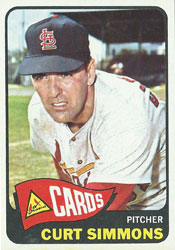
curt_simmons3At least the Cardinals got a significant return, first baseman Orlando Cepeda, for Sadecki, 25, when they traded him to the Giants on May 8, 1966. All the Cardinals got for Simmons was cash.
On June 22, 1966, Simmons, 37, was purchased by the Cubs from the Cardinals for $20,000.

Simmons, unhappy with the way he was being utilized by the Cardinals, looked forward to joining the Cubs’ starting rotation.

The Cardinals, who had tried to get a player in return for Simmons, were willing to move him to open room in their rotation for a pair of promising left-handers, Larry Jaster, 22, and Steve Carlton, 21.

Arm for hire

In 1964, when they won their first World Series title in 18 years, the Cardinals’ top three starters were Gibson (19 wins), Sadecki (20 wins) and Simmons (18 wins). The next year, Gibson won 20, but the win totals of Sadecki (6) and Simmons (9) declined significantly.

During 1966 spring training, the Cardinals tried to trade Simmons.

Initially, Simmons “was available at a modest price in players or cash,” The Sporting News reported.

When Simmons sparkled in spring training, yielding no walks in 25 innings, the Cardinals increased the price for him.

The Orioles showed interest, but “the Cardinals want a promising, young player in return and the Orioles are reluctant to give up anything more precious than cash,” The Sporting News reported.

Seeking starts

The 1966 Cardinals entered the season with more starters than spots in the rotation. Joining Gibson, Sadecki and Simmons were left-handers Jaster and Al Jackson and right-handers Ray Washburn, Tracy Stallard, Art Mahaffey and Nelson Briles.

Sadecki got three starts before he was traded. Simmons also was used sparingly.

Simmons got his first 1966 start on April 13 against the Phillies at St. Louis.

He didn’t get another start until more than a month later, May 17, at Philadelphia. In that game, Simmons yielded three runs and was lifted after three innings. “I had nothing out there,” Simmons said. “You’ve got to pitch guys in rotation. You can’t play checkers with pitchers.”

Simmons waited nearly three more weeks before getting his third start of the season on June 4 versus the Braves.

“It’s frustrating,” Simmons said of the limited number of starts he and other veterans were getting with the Cardinals. “We’re rusting and our market value is going down. If they’re going with the young guys, they ought to hurry up and make up their minds and let us go.”

Referring to Cardinals general manager Bob Howsam, Simmons said, “He’s burying too many good pitchers.”

Few suitors

A St. Louis newspaper reported the Braves were discussing the possibility of trading outfielder Rico Carty to the Cardinals for Simmons. Braves manager Bobby Bragan nixed the deal, telling The Sporting News he was concerned about Simmons’ long-term effectiveness.

In 10 appearances, including five starts, for the 1966 Cardinals, Simmons was 1-1 with a 4.59 ERA. As Simmons had predicted, his market value was diminishing.

With their options dwindling, the Cardinals sent Simmons to the last-place Cubs, who put him in a rotation with Dick Ellsworth, Ken Holtzman and Bill Hands.

In seven years (1960-66) with the Cardinals, Simmons posted a 69-58 record, 3.25 ERA and 16 shutouts.

On June 26, four days after he was acquired, Simmons made his Cubs debut and pitched a five-hit shutout against the Mets at Chicago. Boxscore

Two weeks later, still desperate for pitching, the Cubs signed Robin Roberts, 39, who first had become a teammate of Simmons with the 1948 Phillies, and put him in the starting rotation as well.

Simmons was 4-7 with a 4.07 ERA for the 1966 Cubs. He spent the next season with the Cubs and Angels before retiring as a player.

Previously: Cardinals rolled out welcome mat for Orlando Cepeda

Previously: Art Mahaffey and his short, shaky stint with Cardinals

Previously: Final home opener at Busch I was bust for Cardinals

Read Full Post »

(Updated June 22, 2020)

In his fourth major-league start for the Cardinals, Anthony Reyes delivered a brilliant and frustrating performance.

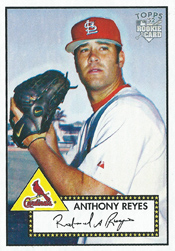
anthony_reyes2On June 22, 2006, Reyes pitched a one-hitter for the Cardinals against the White Sox in Chicago, but lost. The hit he surrendered, a home run by Jim Thome in the seventh inning, carried the White Sox to a 1-0 victory.
“There is no justice that he is the losing pitcher,” Cardinals manager Tony La Russa said to the St. Louis Post-Dispatch.

White Sox coach Joey Cora, who was filling in for suspended manager Ozzie Guillen, said of Reyes’ pitching: “Hall of Fame stuff.”

Changing speeds

Reyes, 24, was called up to the Cardinals from Class AAA Memphis before the game to replace injured Mark Mulder in the rotation. Reyes debuted with the Cardinals in August 2005 and also made two starts for them in May 2006 before being sent to Memphis.

A right-hander, Reyes was facing a White Sox lineup that pummeled Cardinals pitching in the first two games of the series. The White Sox won those games by scores of 20-6 and 13-5.

Using fastballs, changeups and curves, Reyes kept the batters off balance. “He changed speeds, moved the ball in and out,” Cora said to the Chicago Sun-Times. “He was outstanding.”

Good wood

With one out in the seventh and the score at 0-0, Reyes hadn’t yielded a hit. Asked whether he was aware he had a chance for a no-hitter, Reyes told the Associated Press, “I never thought about it.”

Thome, the designated hitter for the White Sox, came to the plate.

“You’re not thinking home run when a guy is pitching like that,” Thome said to the Chicago Tribune. “You’re thinking about a certain pitch and putting good wood on it and getting something started.”

Reyes’ first pitch to Thome was a fastball. The slugger swung and launched a shot into the bleachers.

“The ball was in the middle and I was fortunate to hit it,” Thome said.

Said Reyes: ‘I just missed a little bit over the plate and you can’t really do that up in this league.”

Series star

Reyes pitched the 23rd one-hitter in Cardinals franchise history.

His line for the game: 8 innings, 1 hit, 1 run, 0 walks, 6 strikeouts.

It was the first time the White Sox won with one hit since May 21, 2000, a 2-1 victory versus Toronto.

The Cardinals were kept in check by starter Freddy Garcia. He limited them to four hits _ a David Eckstein double and singles by Scott Rolen, Juan Encarnacion and Aaron Miles _ in eight innings. Bobby Jenks pitched a hitless ninth.

“This was a very tough game to lose,” La Russa said. “We had a chance to win and we didn’t win it.” Boxscore

Reyes made 17 starts for the 2006 Cardinals and was 5-8 with a 5.06 ERA. His gem against the White Sox was his only complete game that season.

In the 2006 World Series, Reyes delivered another surprise. He started and won Game 1 for the Cardinals, holding the Tigers to four hits and two runs in eight innings in a 7-2 St. Louis triumph at Detroit.


Read Full Post »

(Updated Nov. 29, 2024)

The Cubs unwittingly did the Cardinals a favor and helped them achieve their first championship season.

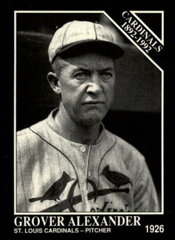
grover_alexanderOn June 22, 1926, the Cubs, at the urging of manager Joe McCarthy, placed pitcher Grover Cleveland Alexander on waivers.

Alexander, 39 and on the back end of a Hall of Fame career, still was effective, but McCarthy had become fed up with the pitcher’s drinking.

Claimed for the waiver price of $4,000, Alexander landed with the Cardinals and played a prominent role in stabilizing their pitching staff and lifting them to their first National League pennant and World Series championship.

Bottoms up

In June 1926, the Cubs were in Philadelphia when Alexander “appeared at the Phillies’ park apparently the worse for wear,” The Sporting News reported.

Said McCarthy: “This isn’t the first time. This is the sixth time in the last 10 days … I absolutely refuse to allow him to disrupt our team and will not have him around in that condition.”

Alexander, who had a 3-3 record and 3.46 ERA in seven starts for the 1926 Cubs, was suspended by McCarthy and sent back to Chicago.

“It’s all right to drink while you can win, but it’s not for losers,” McCarthy said.

When the Cubs placed Alexander on waivers, he was claimed by the Cardinals, Pirates and Reds. The Reds were in first place and the Pirates in second in the National League. The Cardinals, in third place, got Alexander because they were lowest in the standings among the three teams that made claims.

“This must be the Cardinals’ year,” J. Roy Stockton of the St. Louis Post-Dispatch wrote. “Everything is breaking for them.”

Cubs fans were stunned and disappointed by the move because Alexander “has become almost an institution in Chicago,” according to International News Service.

In the Donald Honig book “The Man in the Dugout,” McCarthy said, “He didn’t obey orders. Wouldn’t go along with me.”

Old pals

In joining the Cardinals, Alexander was reunited with his friend, Bill Killefer, a coach on the staff of manager Rogers Hornsby. Killefer was Alexander’s catcher with the Phillies from 1911-17. In December 1917, the Phillies traded Alexander and Killefer to the Cubs. Killefer was the Cubs’ manager from 1921-25.

The Sporting News described Alexander and Killefer as “a couple of Peter Pans who never have taken life very seriously.”

“I’m glad to go to St. Louis,” Alexander told the Chicago Tribune. “Hornsby and Killefer are both great fellows and I think the Cards have a good chance to finish up in the money this season.”

According to the Post-Dispatch, when the Cardinals got Alexander, he called Killefer on the phone and said, “I’m in condition and ready to pitch right now. I hope I can do something to help you boys win a pennant.”

Alexander enhanced a Cardinals rotation that included Flint Rhem, Bill Sherdel and Jesse Haines.

Harry Nelly of the Chicago American wrote, “Before Alexander went to the Cardinals, that team was shy of pitchers. It is a run-making outfit, but often found itself without a proper person to prevent the other side from scoring frequently.”

In The Sporting News, columnist John Sheridan suggested Alexander still had much to offer: “He can lose nine-tenths of his skills and still be a greater pitcher than most of the ice-cream kids that come along in these degenerate days.”

Slyly referring to his drinking problems, the St. Louis Star-Times declared, “There is a great temptation to say Alexander, even out of condition, is a greater pitcher than most other hurlers in the pink.”

Dazzler of a debut

On June 27, 1926, Alexander made his Cardinals debut in the first game of a doubleheader against the Cubs at Sportsman’s Park in St. Louis. A crowd of 37,196 squeezed into the ballpark that seated about 34,000.

“It was the greatest throng that had ever paid to witness a baseball attraction in this city,” The Sporting News reported.

Alexander pitched a four-hitter and got the win in a 3-2 Cardinals triumph in 10 innings. “He had his old half-sidearm delivery. He had a fast-breaking curve and he had a fast one,” The Sporting News reported.

Said Alexander: “Don’t let anybody tell you that this arm hasn’t a few more good ones left in it. I’m tickled to be with the team and Hornsby and Killefer. All Rog has to do is nod his head and I’ll jump through a hoop for him.” Boxscore

Title run

Alexander won nine of his first 14 decisions with the Cardinals before losing his last two. In 23 appearances for the 1926 Cardinals, Alexander was 9-7 with a 2.91 ERA. He pitched 11 complete games and two shutouts.

In the 1926 World Series against the Yankees, Alexander started and won Game 2 and Game 6. He relieved in Game 7, struck out Tony Lazzeri with the bases loaded in the seventh and earned the save by pitching 2.1 hitless innings.

In the book “My Kind of Baseball,” Hornsby explained why he brought in Alexander to face Lazzeri:

“I figured Alex was our best bet. I left my position at second base and walked out to meet him. I wanted to get a close look at him, to see what shape he was in. I also wanted to tell him what the situation was, in case he’d been dozing … He was wide awake when I met him, and his eyes were clear.”

Hornsby said Alexander struck out Lazzeri on a low curve outside. In “Babe Ruth’s Own Book of Baseball,” Ruth said, “The ball that Tony fanned on wasn’t a curve at all. It wasn’t even a fast one. It was a half-speed ball that cut the corner of the plate within a half inch of the spot (catcher) Bob O’Farrell called for … The thing that fanned Lazzeri that day and cost the Yankees a championship was Alexander’s canny control. He was putting that ball right where he wanted it, on every pitch.”

Read Full Post »

« Newer Posts - Older Posts »