Feeds:
Posts
Comments

Archive for the ‘Games’ Category

After losing the first two games of the 1985 National League Championship Series, the Cardinals could have been fazed by the prospect of facing Dodgers pitcher Bob Welch in Game 3. Welch had produced two complete-game wins against St. Louis in the regular season. A loss to him in the third game of the postseason series would push the Cardinals to the brink of elimination.
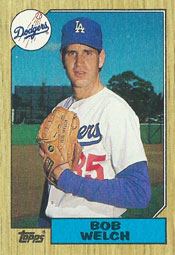
bob_welchInstead, it was Welch who was shaky.

Speedsters Vince Coleman and Willie McGee distracted a jumpy Welch and the Cardinals beat him, sparking a streak of four consecutive wins that propelled them into the World Series.

Welch was a premier pitcher for 17 years in the big leagues with the Dodgers and Athletics. He posted a career record of 211-146. In 1990, he was 27-6 with a 2.95 ERA and earned the American League Cy Young Award while pitching for the pennant-winning Athletics team of manager Tony La Russa and coach Dave Duncan.

In 1985, Welch was 14-4 with a 2.31 ERA in 23 starts for the Dodgers. He averaged less than two walks per nine innings.

The Cardinals, though, jolted Welch out of his comfort zone in the National League Championship Series.

Give the ump a mitt

In the first inning, Coleman lined a single over the head of third baseman Bill Madlock. With the count 1-and-0 on the next batter, McGee, the Dodgers pitched out, but Coleman swiped second anyway. Distracted by Coleman dancing off second, Welch walked McGee.

Tommy Herr came up next and worked the count full. Welch then whirled and attempted a pickoff of Coleman. The throw came closer to hitting umpire Paul Runge than it did to reaching the glove of shortstop Dave Anderson, covering second, and the ball sailed into center field. Coleman scored and McGee raced to third.

“I’m supposed to be able to make this play,” Welch said to the Daily Breeze of Torrance, Calif. “But for some reason I threw the ball to Runge. Too bad he didn’t have a mitt. He could have made the tag.”

Said Coleman to the Springfield (Ill.) State Journal-Register: “I was surprised he threw. The count was 3-and-2 and I wasn’t going to run until he threw to the plate.”

After walks to Herr and Andy Van Slyke, McGee scored on Terry Pendleton’s grounder to second, giving the Cardinals a 2-0 lead.

Sitting on the fastball

In the second inning, the Cardinals continued to apply pressure on Welch. With one out, Coleman singled. Catcher Mike Scioscia tried to pick off Coleman, but the throw eluded first baseman Greg Brock. Coleman advanced to third and scored on McGee’s single. After McGee was nailed attempting to swipe second, Herr smacked a Welch fastball over the right-field wall for a home run, putting the Cardinals ahead, 4-0.

“Welch kept throwing me fastballs,” Herr said to the Daily Breeze. “I fouled three of them off and I was sitting on the fastball when he threw the home run pitch.”

Said Welch: “I never got in a situation where I could use my curve ball. I never got in a situation where I was pitching, period. I just threw it up there.”

(Including the postseason, Herr batted .300 against Welch in his career, with 12 hits in 40 at-bats. Eleven of those hits were singles.)

Herr told the San Diego Union that the reason Welch beat the Cardinals twice during the 1985 regular season was because “he kept Coleman and McGee off base and was able to throw his breaking ball a lot. Today, he had to throw more fastballs with Vince and Willie on base.”

Welch was lifted after 2.2 innings. His line: 6 walks, 5 hits, 4 runs, 2 earned. Harried by the Cardinals, he’d made 20 pickoff throws.

“We weren’t trying to screw Welch up, even though that’s what happened,” said McGee.

Given the 4-0 lead, Cardinals starter Danny Cox and relievers Ricky Horton, Todd Worrell and Ken Dayley held the Dodgers to two runs. St. Louis won, 4-2. Boxscore

The Dodgers never recovered, losing the next three games, including Game 5 on the Ozzie Smith “Go crazy, folks” walkoff home run and Game 6 on Jack Clark’s ninth-inning three-run homer.

Welch finished his career with a 7-8 record and 3.99 ERA against the Cardinals in 18 regular-season appearances, including 15 starts.

Previously: How Bing Devine tried coaxing Kirk Gibson to Cardinals

Read Full Post »

In a showdown of future Hall of Famers, the Padres’ Tony Gwynn prevailed against the Cardinals’ Dennis Eckersley.

tony_gwynnOn June 10, 1997, at San Diego’s Qualcomm Stadium, Gwynn hit doubles in the first and third innings off Cardinals starter Todd Stottlemyre, helping the Padres to a 3-1 lead and extending his hitting streak to 20 games.

In the ninth, the Cardinals scored four runs off closer Trevor Hoffman for a 5-3 lead.

Eckersley was brought in by Cardinals manager Tony La Russa to try for the save. Eckersley and Hoffman ranked among the best closers all-time. What were the odds of both blowing leads in the same inning?

The first batter Eckersley faced, Chris Gomez, singled. With one out, Greg Vaughn also singled. After Eckersley retired Rickey Henderson on a fly out, Gwynn stepped to the plate.

La Russa positioned his outfielders to play deep, near the warning track, willing to concede a single rather than a score-tying extra-base hit.

From the batter’s box, Gwynn searched for holes in the defense. “He was looking out there (to left-center),” Eckersley told the St. Louis Post-Dispatch.

Gwynn sliced a line drive between left fielder Willie McGee and center fielder Ray Lankford. Gomez and Vaughn raced home, tying the score at 5-5.

Gwynn reached second with his career-best third double of the game.

San Diego scored in the 12th and won, 6-5.

“I’m sure Eck would want that pitch back to Gwynn,” La Russa said. “He didn’t get it where he was trying to get it. With a single, we’ve still got a chance, but he hit right where he was trying to hit it. That’s what a Hall of Famer does.”

Said Eckersley: “I just couldn’t get the ball down. Even if it was down, he would have hit a bullet anyway.”

Including the postseason, Gwynn hit .474 (9-for-19) against Eckersley in his career.

“I think people tick (Gwynn) off when they say he can’t drive in runs,” Lankford said. “I think he can do just about anything he wants to do.” Boxscore

Gwynn, 37, enjoyed his most productive season in 1997. He hit .372, earning the last of his eight National League batting titles, and had single-season career highs in hits (220), doubles (49), home runs (17) and RBI (119).

Two years earlier, Ted Williams, the last big-leaguer to hit .400 in a season, advised Gwynn to turn on the inside pitch and drive it, according to the book “Bob Chandler’s Tales from the Padres Dugout.”

Initially reluctant to alter his approach, Gwynn tried Williams’ suggestion in 1997.

“In late June, I hit three home runs over a four-game span by turning on the inside pitch and driving it over the wall,” Gwynn said. “From that time on, I noticed pitchers stopped throwing inside to me and I was able to hit the ball all over. Finally, I understood what Ted meant.”

Three other big performances by Gwynn versus the Cardinals:

_ July 15, 1988: Gwynn had three hits and four RBI, including a two-run single off reliever Ken Dayley in the ninth, lifting the Padres to a 7-3 victory at St. Louis. Boxscore

_ April 18, 1993: In producing five hits in five at-bats in the Padres’ 10-6 triumph at San Diego, Gwynn had three singles off starter Donovan Osborne, a single off Mike Perez and a two-run home run off Omar Olivares. Boxscore

_ Aug. 4, 1999: Gwynn, 39, hit a grand slam off starter Kent Mercker, but the Cardinals won, 7-6, at St. Louis. The grand slam was the third and last of Gwynn’s big-league career. Boxscore


Read Full Post »

(Updated April 2, 2021)

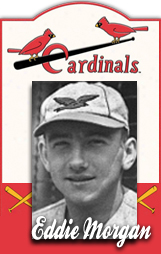
Eddie Morgan of the Cardinals hit a home run on the first pitch he saw in the majors.

eddie_morganHe did it on Opening Day, April 14, 1936, against the Cubs at Sportsman’s Park in St. Louis.
Even before Morgan began his big-league career with a home run, Dodgers manager Casey Stengel had interest in acquiring the rookie after seeing him in spring training games.

Good outfield group

The 1936 Cardinals opened the season with a stellar starting outfield of Joe Medwick in left, Terry Moore in center and Pepper Martin in right. They also had three rookie outfielders _ Lynn King, Lou Scoffic and Morgan _ on the Opening Day roster.

“One thing I don’t have to worry about is my outfield,” Cardinals manager Frankie Frisch said to The Sporting News. “I’ve really got three fine-looking kids in Lou Scoffic, Lynn King and Ed Morgan. The only difficult thing about the outfield situation will be to decide which one of the three we’ll send back to the minors. That’s how good they all are.”

Cardinals ace Dizzy Dean got raked for nine runs in six innings in the season opener against the defending National League champion Cubs at Sportsman’s Park in St. Louis. With the Cubs ahead, 12-3, in the seventh, Frisch tabbed Morgan, 21, to make his big-league debut as a pinch-hitter for reliever Bill McGee.
A left-handed batter, Morgan swung at the first pitch he saw from starter Lon Warneke and hit a drive into the pavilion in right-center for a two-run home run. Boxscore

Soon after, Stengel and the Dodgers approached Cardinals general manager Branch Rickey about a proposed trade. The Cardinals wanted third baseman Joe Stripp. When Stengel asked for Morgan, Rickey declined and the talks ended without a deal.

Morgan, 5 feet 10, 160 pounds, appeared in eight games for the Cardinals, hitting .278 (5-for-18, with four singles and the home run). Unlikely to get much playing time with St. Louis, Morgan was sent to Class AA Columbus (Ohio) on May 9.

In his first at-bat for Columbus on May 10, Morgan hit a home run off Milwaukee’s Joe Heving.

Let’s make a deal

By July, the Cardinals were seeking pitching. The Dodgers still wanted Morgan. When the Dodgers offered George Earnshaw, 36, a right-hander in his last season in the majors, the Cardinals accepted, with both clubs agreeing that Morgan would report to the Dodgers after the conclusion of the Columbus season.

In reporting the trade, The Sporting News called Morgan a “hard-hitting farmhand” and “a left-handed pull hitter of the type the Dodgers need to caress that short right-field wall at Ebbets Field.”

Throughout the summer, Stengel spoke enthusiastically about his plans to play Morgan in September games with the Dodgers, who were out of contention and heading for a seventh-place finish.

Morgan hit .299 in 118 games for Columbus, but, just before the minor-league season ended, he fractured a bone in his lower leg, preventing him from joining the Dodgers in September.

After the 1936 season, Stengel was replaced as manager by Burleigh Grimes, the former Cardinals spitball pitcher. Grimes managed Morgan with the 1935 Bloomington (Ill.) Bloomers. Morgan hit .347 in 112 games for that Cardinals Class B minor-league club.

Expectations were for Morgan to compete for a starting outfield job with the 1937 Dodgers, but he hit .188 in 39 games for them and was returned to the minors in July. He never played in the big leagues again. His lone major-league home run was the one he hit in his first at-bat.

Morgan played in the minor leagues until 1950. In 17 minor-league seasons, he had a .313 batting average and hit 172 home runs.

Read Full Post »

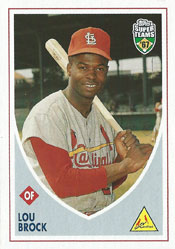
In his first start with the Cardinals, Lou Brock gave them a much-needed lift as well as a sample of what was to come with him in their lineup.

lou_brock9On June 16, 1964, Brock was in the Cardinals starting lineup for the first time since being acquired from the Cubs the day before.

Before getting Brock and pitchers Jack Spring and Paul Toth from the Cubs for pitchers Ernie Broglio and Bobby Shantz and outfielder Doug Clemens on June 15, the Cardinals had lost 16 of their previous 22 games. In a stretch of seven games from June 9 through June 14, St. Louis scored six total runs, losing five times.

The Cardinals lost again the night of the Brock trade. Brock arrived in time to pinch-hit in the eighth inning. Jim Owens, a Houston Colt .45s reliever, struck him out on three pitches.

Cardinals manager Johnny Keane put Brock in the starting lineup the next day.

Sizzling start

Playing right field and batting second, between leadoff batter Curt Flood and Bill White, Brock had a superb start, producing a triple, single, two walks, scoring a run and stealing a base in the Cardinals’ 7-1 victory over the Colt .45s at Houston.

In the fifth inning, with the Cardinals ahead, 2-0, Brock singled to center against starter Bob Bruce and scored on Ken Boyer’s triple. In the sixth, Brock tripled with two outs against Don Larsen.

Brock’s first stolen base for the Cardinals occurred in the eighth. After drawing a walk from Larry Yellen, Brock swiped second, beating the throw from catcher Jerry Grote. Boxscore

“Brock just outruns the ball,” Cardinals coach Vern Benson told The Sporting News.

Igniting the offense

Rejuvenated, the win was the first of four in a row for the Cardinals.

In his first seven starts for St. Louis, Brock batted .393 (11-for-28). He produced two doubles, two triples, a home run, two walks and three RBI in that stretch, scoring five runs and swiping four bases.

Brock was in right field for three of his first five Cardinals starts. After that, Keane kept him in left field for the remainder of the season. Brock made 99 starts in left field and three in right for the 1964 Cardinals.

With Brock sparking the offense, creating RBI opportunities for Boyer and White, the Cardinals went on to win the National League pennant and World Series championship.

Brock hit .348 and had 33 stolen bases for the 1964 Cardinals. In 103 games, he had 146 hits and scored 81 runs. His .387 on-base percentage was tops on the team.

Previously: Bill White: We thought Brock deal was nuts

Previously: Cubs knew Lou Brock was on verge of stardom in 1964

Read Full Post »

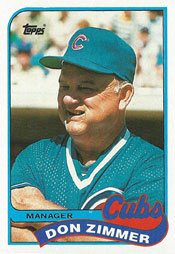
In 14 seasons as a big-league manager, Don Zimmer was at his best in 1989. He won a division title with the Cubs and earned the admiration of his Cardinals counterpart, Whitey Herzog.

don_zimmerIn his book “You’re Missin’ a Great Game,” Herzog said, “The best year of managing I ever saw was Don Zimmer with the Cubs in 1989. Zim’s a great baseball man. For that one year, he could do no wrong. He tried everything _ and everything he tried worked. He called the hit-and-run, he ran squeezes, he pitched out, he ran double steals. He pitched guys on two, three days of rest … People say, ‘Don’t you think he was just lucky?’ It’s like I always say: It’s amazing how lucky you are when you’re good.”

Cardinals-Cubs showdown

Zimmer’s best effort that season may have occurred during a pivotal three-game series between the Cardinals and Cubs in early September at Chicago’s Wrigley Field.

After erasing a 7-2 deficit and winning, 11-8, in the series opener on Sept. 8, the Cardinals moved to within a half-game of the first-place Cubs in the National League East. A win over the Cubs the next day would put the Cardinals in first place for the first time since May 12.

The momentum appeared to be with the Cardinals when they took a 2-1 lead into the eighth inning of the second game of the series on Sept. 9. Then, the game _ as well as the Cardinals’ season _ turned on what transpired in that inning.

In the top half, the Cardinals, with runners on first and second and one out, looked poised to build their lead. Terry Pendleton, a switch-hitter, was the batter. In 1989, Pendleton hit 25 points higher against left-handed pitchers than he did versus right-handers. Still, Zimmer lifted right-hander Les Lancaster and brought in Steve Wilson, a left-hander, to face Pendleton.

Pendleton popped out to second base.

Next up for the Cardinals was right-handed slugger Tom Brunansky. Zimmer pulled Wilson for Jeff Pico, a right-handed reliever.

Brunansky struck out, ending the threat.

Against all odds

In the Cubs’ half of the inning, they got a runner to third base with two outs. A right-handed batter, Luis Salazar was at the plate. The Cardinals pitcher was Dan Quisenberry, a right-hander. Herzog figured Zimmer would send a left-handed batter to pinch hit for Salazar. Herzog was prepared to counter with a left-handed reliever, Ken Dayley.

“He (Zimmer) has got to take a shot. He’s got to force me to make a move and get Dayley in the game,” Herzog said to the St. Louis Post-Dispatch.

Instead, Zimmer stuck with Salazar.

Said Zimmer: “I called him down and said, ‘Have you ever faced Quisenberry before?’ And he said, ‘Yeah, I’ve had good luck with him.’ I took his word for it. You don’t know. I’ll probably look it up and find out he’d never even faced him before.”

Salazar rewarded Zimmer’s confidence by singling to left, driving in the runner, Dwight Smith, from third and tying the score at 2-2.

Said Herzog: “Quiz threw a terrible pitch.”

(Salazar was 3-for-8 in his career versus Quisenberry. He was 1-for-5 against him in 1985 and 2-for-3 in 1989.)

In the 10th, Salazar doubled off Dayley, scoring Andre Dawson from first and giving the Cubs a 3-2 victory. Boxscore

“Yes, Zimmer can manage,” wrote Post-Dispatch columnist Bernie Miklasz. “… He used four relief pitchers and the parade limited the Cardinals to one hit in three innings. Zimmer inserted Luis Salazar at third base in the late innings and Salazar drove in the tying and winning runs.”

Said Zimmer: “This was almost like a World Series and October atmosphere.”

What the heck

Instead of moving into first, the Cardinals dropped 1.5 games behind the Cubs.

In the series finale the next day, Sept. 10, right-hander Greg Maddux was scheduled to start for the Cubs. That morning, Zimmer decided instead to start Wilson, even though the left-hander had pitched in relief the previous day. Maddux was 0-1 with a 7.15 ERA in two starts versus the 1989 Cardinals. Zimmer informed Maddux he would start the following day against the Expos.

Said Zimmer: “I looked at the pitching chart and I said, ‘I know Greg Maddux pitches better against Montreal than St. Louis.’ I feel like a left-hander has a little better chance against St. Louis anyway. I said, ‘The heck with it’ and I changed it around.”

Wilson struck out 10 in five innings and limited the Cardinals to a run. Three relievers combined to hold the Cardinals scoreless, striking out eight. The Cubs won, 4-1. Boxscore

Zimmer used seven relievers in the final two games of the series and they didn’t allow a run.

Reeling, the Cardinals lost their next four in a row and slipped out of contention. They finished in third place. The Cubs won the division title, finishing six games ahead of the runner-up Mets.

Zimmer received the 1989 National League Manager of the Year Award.

Previously: Cardinals go 23 years between 2 straight shutouts of Cubs

Read Full Post »

(Updated June 6, 2020)

When news of the D-Day invasion of France by Allied Forces reached the United States that morning, most of Organized Baseball honored the solemn event by canceling the games scheduled for June 6, 1944, but the Cardinals chose to play an exhibition game.

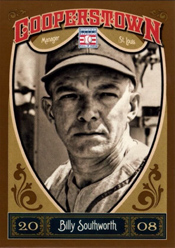
billy_southworth3On D-Day, the United States and its allies crossed the English Channel and launched an offensive that significantly helped lead to the defeat of Nazi Germany in World War II. More than 9,000 Allied soldiers died or were wounded in the effort.

Two National League games _ Phillies vs. Dodgers at Brooklyn and Reds vs. Pirates at Pittsburgh _ were scheduled for Tuesday, June 6, 1944. Both were called off in deference to the D-Day invasion. No American League games had been scheduled for that date.

In addition, four minor-league groups _ Appalachian League, American Association, Eastern League and International League _ called off all games on the June 6 schedule.

Because of the time difference between Europe and the United States, news of the invasion reached America in time for the ballgames that day to be canceled.

The Cardinals decided to honor their commitment to play an exhibition that night in Wilmington, Del., against the Wilmington Blue Rocks, a Phillies affiliate in the Inter-State League.

Long, winding road

It was part of a long, winding road trip for the two-time defending National League champions.

On May 26, 1944, the Cardinals embarked on a 17-game road swing that began in Brooklyn and took them to New York, Boston and Philadelphia before ending at Cincinnati on June 11.

After playing the Phillies at Philadelphia on June 4, the Cardinals weren’t scheduled to play their next regular-season game until June 8 at Cincinnati.

Rather than enjoy off-days, the Cardinals were scheduled to play an exhibition with their minor-league affiliate at Allentown, Pa., on June 5 before going to Wilmington for the June 6 exhibition versus the Blue Rocks.

In the June 5 exhibition at Allentown, the Cardinals put on a power display for the crowd of 3,091. Stan Musial and Danny Litwhiler each hit two home runs and Walker Cooper had one home run in the Cardinals’ 22-4 victory. Cardinals manager Billy Southworth started Freddy Schmidt, who pitched for Allentown in 1942, as a gesture to the local fans, The Sporting News reported. A total of 17 Cardinals played and the others rotated as base coaches so the fans could see all the big-league players.

Musial’s big night was extra special for the Allentown manager, Ollie Vanek, who as a scout had recommended the Cardinals sign Musial.

Down on the farm

The next day, while the nation was gripped by the news of the D-Day invasion, the Cardinals were in Delaware. The Blue Rocks selected a 6-foot-7 left-hander, George Michotte, 20, as their starting pitcher.

“Before the game, the members of both squads lined up on the foul lines and stood in silent prayer in respect of D-Day,” the Wilmington Morning News reported. “The players remained there during the playing of the National Anthem.”

Before a crowd of 3,668, the Cardinals did most of their damage in the seventh. With the score tied at 1-1, Marty Marion opened with a single and George Fallon, a second baseman who hit .199 that season, followed with a two-run home run to left off Michotte. After Johnny Hopp, batting for pitcher Ted Wilks, walked, Augie Bergamo tripled, scoring pitcher Harry Brecheen, who was running for Hopp.

After the Phillies farmhands batted in their half of the seventh, the game was halted by rain.

The 4-1 victory came at a cost to the Cardinals. Third baseman Whitey Kurowski injured his leg and missed the next two regular-season games.

The Cardinals were supposed to leave Philadelphia by train for Cincinnati on June 7, but Leo Ward, Cardinals traveling secretary, could get accommodations for only 14. Southworth and the Cardinals starting players, including pitcher Max Lanier, who was scheduled to start the June 8 game at Cincinnati, boarded the train. The rest of the team waited for another train, which departed Philadelphia at 1:08 a.m. on June 8, and arrived in Cincinnati less than three hours before game time, The Sporting News reported.

The weary Cardinals lost that June 8 game against the Reds by a 2-1 score, but won the remaining three games of the series, including an 18-0 shellacking in a game that featured the big-league debut of 15-year-old Reds pitcher Joe Nuxhall. Boxscore

The Cardinals won 11 of the 17 regular-season games on the trip and went home with a 32-16 record. Having survived their odyssey, they went on to clinch their third consecutive National League pennant.

Previously: How a B-17 nearly clipped Cardinals in World Series

Read Full Post »

« Newer Posts - Older Posts »