Feeds:
Posts
Comments

Archive for the ‘Games’ Category

When it came time to select a team to sign with, the Cardinals were the first choice of teen pitching prospect Ralph Terry. Instead of beginning his baseball career with them, though, Terry ended up with the Yankees.

Terry’s heart may have been with the Cardinals, but he went on to pitch in five World Series with the Yankees and was involved in two of the most dramatic Game 7 finishes.

He also pitched against the Cardinals in the 1964 World Series and narrowly missed having a pivotal role in the crucial Game 4.

A right-hander who pitched 12 seasons in the majors, Terry achieved a 107-99 record, including 78-59 with the Yankees.

Deadly arm

Terry was born in Big Cabin, Okla., and raised in the nearby town of Chelsea in the northeastern section of the state.

According to the New York Times, “As the story goes, Terry first tested his pitching arm on his grandmother’s farm. He started throwing corncobs, then switched to rocks. One day, he killed grandma’s pet rooster with a rock. The next day, she gave him a baseball. After that, he terrorized only schoolboy batters.”

Terry excelled in sports for the Chelsea High School Green Dragons and in amateur baseball leagues.

In November 1953, when he was 17, Terry said he decided to accept an offer from Cardinals scout Fred Hawn, The Sporting News reported. The Yankees continued their pursuit, prompting a series of arguments between Hawn and Yankees scout Tom Greenwade. according to the New York Times.

On Nov. 19, 1953, Greenwade persuaded Terry to choose the Yankees. Greenwade prepared a telegram of acceptance to send to Yankees general manager George Weiss in New York. Terry signed it, but because he was younger than 18, the agreement needed the signature of a parent to be official.

According to J. Roy Stockton of the St. Louis Post-Dispatch, Terry said Greenwade had him sign his mother’s name to the telegram.

Weiss said he received the telegram, saw the signatures of Terry and his mother, and immediately sent back a confirmation of the acceptance, the New York Daily News reported.

“Confirmation by telegraph is an accepted way of doing business,” Weiss told United Press.

Dazed and confused

That night, Terry said, he changed his mind about joining the Yankees. He met with Hawn and Cardinals minor-league manager Ferrell Anderson in Joplin, Mo., and signed a Cardinals contract. Accompanied by Hawn, Terry went home to Chelsea, where his mother also signed the agreement, The Sporting News reported.

According to United Press, Terry’s mother denied she or her son had come to terms with the Yankees.

Terry told the wire service, “I definitely want to play with the Cardinals. I was confused for a time. There was a lot of fast talk on both sides, but I feel I’d be better off with the Cardinals.”

With both the Yankees and Cardinals claiming Terry, baseball commissioner Ford Frick was asked to settle the dispute.

“We’ll welcome any investigation,” Cardinals vice-president Bill Walsingham told the St. Louis Globe-Democrat. “We signed him first.”

To the Post-Dispatch, Walsingham said, “We are sure we are not only within our rights signing Terry, but also that the actions of our scout (Hawn) were entirely honest and above board.”

After meeting with Yankees and Cardinals officials, Frick ruled in favor of the Yankees, saying Terry accepted their terms before signing with the Cardinals.

Referring to Terry apparently forging his mother’s signature on the Yankees telegram at the suggestion of Greenwade, the Post-Dispatch dryly noted Frick’s ruling “surprised some observers,” but Cardinals vice-president John Wilson said, “Although we’re sorry and disappointed to lose Terry, there’s nothing to be done about it.”

Hype and hope

Noting that Greenwade was the scout who signed another prized prospect from Oklahoma, Mickey Mantle, the New York Daily News headline announcing Terry’s arrival with the Yankees declared, “Second Mickey?”

Terry, who turned 18 in January 1954, came to Yankees spring training camp a month later and dazzled manager Casey Stengel.

“I think he’s the greatest pitching prospect I’ve laid eyes on since I’ve been in baseball,” Stengel, 63, said to Dan Parker of the New York Daily Mirror.

Terry, 20, got to the majors with the Yankees in August 1956. They traded him to the Athletics in June 1957 and reacquired him in May 1959.

Goat and hero

In Game 7 of the 1960 World Series at Forbes Field in Pittsburgh, the score was tied at 9-9 when Bill Mazeroski led off for the Pirates in the bottom of the ninth against Terry, working in relief.

After the first pitch, catcher Johnny Blanchard went to the mound and said, “This guy is a high-ball hitter. Get the ball down,” Terry said to the Pittsburgh Post-Gazette.

Mazeroski walloped the next pitch, a slider, for a home run, clinching the championship.

“I knew it was high when I let it go,” Terry told the Post-Gazette. “I thought it might be hit off the wall for a double.” Boxscore and Video

Two years later, Terry again was pitching for the Yankees in the bottom of the ninth in Game 7 of the World Series. With the Yankees ahead, 1-0, at Candlestick Park in San Francisco, Terry, a 23-game winner during the season, faced Willie McCovey with two outs and runners on second and third.

“The first pitch was down the middle and it surprised me and I pulled it foul,” McCovey told the New York Times. “I figured it was a mistake, but the second was another strike.”

McCovey scorched a line drive at second baseman Bobby Richardson. If the ball rose, Richardson said, he would have been in trouble, but instead it started to sink and it landed with a thud into his mitt for the final out. Boxscore and Video.

Terry, who started and won Games 5 and 7 after losing Game 2, was named most valuable player of the 1962 World Series.

“I am a very lucky fellow,” Terry told the New York Times. “You don’t often get another chance to prove yourself in baseball or in life.”

Different story

The Cardinals were desperate for a win in Game 4 of the 1964 World Series at Yankee Stadium. The Yankees won two of the first three games, and a win in Game 4 would put them in a commanding position.

With the Yankees ahead, 3-0, in the sixth inning, the Cardinals had runners on first and second, one out, against starter Al Downing. Dick Groat hit a grounder that had the look of an inning-ending double play. Bobby Richardson gloved the ball, but his toss to shortstop Phil Linz, who was moving toward the bag at second, was late and off target. All runners were safe, loading the bases, and Richardson was charged with an error.

“If Groat gets a clean hit, then I’d have to pull Al Downing and go with Ralph Terry,” Yankees manager Yogi Berra told the Post-Dispatch.

Because Downing had induced a grounder that should have produced an out, Berra felt compelled to let Downing, a left-hander, pitch to Cardinals cleanup hitter Ken Boyer, who batted right-handed.

“Terry still was in the bullpen when Downing threw a waist-high changeup to Boyer,” the Post-Dispatch noted.

Boyer hit it over the fence in left for a grand slam and the Cardinals went on to a 4-3 victory, evening the Series. Boxscore and Video.

If Berra had brought in Terry to face Boyer, it’s impossible to say whether the result would have been different, but Terry did pitch two scoreless innings in the eighth (when he got Boyer to ground into a double play) and ninth.

National Leaguer

That was the last game Terry pitched for the Yankees. He went to the Indians and Athletics before finishing his career with the Mets.

Terry’s first appearance in the National League was a start against the Pirates at Forbes Field on Aug. 11, 1966. Facing Terry for the first time since the World Series home run, Mazeroski flied out in the first, singled in the third and popped out in the fifth. Boxscore

According to Dick Young of the New York Daily News, a month later, when Terry saw his 1960 Yankees manager, Casey Stengel, now retired, in Los Angeles, he said, “Hey, Casey, I got Mazeroski out. I pitched him low.”

Stengel replied, “It’s about time.”

During his stint with the Mets, Terry faced the Cardinals once and it didn’t go well for him.

On Aug. 14, 1966, the Mets led the Cardinals, 3-1, in the bottom of the ninth at St. Louis. With two outs and none on, reliever Jack Hamilton walked Curt Flood and yielded a single to Tim McCarver.

Orlando Cepeda hit a pop foul near the Cardinals’ dugout. The ball tipped off the mitt of Mets catcher Jerry Grote. Instead of a game-ending out, Cepeda got to continue the plate appearance and walked, loading the bases.

Mets manager Wes Westrum brought in Terry to face Mike Shannon. With the count 2-and-2, Terry threw a pitch low and away. Shannon reached out and stroked a two-run single, tying the score at 3-3.

“The ball I hit was a hell of a pitch,” Shannon said. “I don’t know whether the pitch would have been a strike or not, but I couldn’t take the chance.”

The next batter, Charlie Smith, stroked Terry’s first pitch for a single, driving in pinch-runner Bob Gibson with the winning run. Boxscore

Read Full Post »

Adam Wainwright may be the last pitcher to produce a pinch-hit for the Cardinals.

With the designated hitter being used in the National League for the first time in 2022, it may be a while before the Cardinals pick a pitcher to be a pinch-hitter. Even if a pitcher was needed to bat, the odds would be against him getting a hit after a long layoff as a batter.
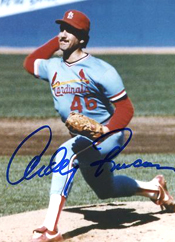
According to researcher Tom Orf, the last time a Cardinals pitcher got a hit as a pinch-hitter was April 8, 2017, when Wainwright did it in a game against the Reds at St. Louis.

Late in the game, Wainwright did “significant lobbying” for a chance to pinch-hit, Cardinals manager Mike Matheny said to Rick Hummel of the St. Louis Post-Dispatch.

In the eighth inning, with one out, none on, and the Cardinals ahead, 9-3, Matheny sent Wainwright to bat for pitcher Jonathan Broxton. Wainwright singled to left against Drew Storen. Boxscore

Explaining why hitting was “something serious” to him, Wainwright told Derrick Goold of the Post-Dispatch, “You can win one or two games a year if you get a key hit, a key bunt.”

Big thrill

Wainwright, who hit a home run in his first plate appearance in the majors, is the last Cardinals pitcher to produce a RBI as a pinch-hitter, according to Orf.

It happened on June 10, 2016, at Pittsburgh. With the score tied at 3-3 in the 12th inning, the Cardinals had Matt Carpenter on first, two outs, Aledmys Diaz at the plate and Jonathan Broxton on deck.

Because the Cardinals had no more position players on the bench, Pirates manager Clint Hurdle ordered pitcher Juan Nicasio to give an intentional pass to Diaz, moving Carpenter into scoring position. Hurdle decided he’d rather have a pitcher at the plate than Diaz, the Cardinals’ rookie shortstop.

“I really struggle with having Diaz given an opportunity to beat us there when we figured Wainwright would be hitting next,” Hurdle told the Post-Dispatch.

Sent by Matheny to bat for Broxton, Wainwright hit a double to left-center, scoring Carpenter and Diaz and giving the Cardinals a 5-3 lead. The Cardinals scored six runs in the inning and won, 9-3. Boxscore and Video

Asked about Hurdle’s strategy, Wainwright told Rick Hummel, “I get it. I’m a pitcher and the odds are probably a lot less that I’m going to get a hit than Aledmys.”

Wainwright, who had 75 career RBI, called the two-run double as a pinch-hitter “one of the highlights of my career.”

“I’m like a kid in a candy store,” Wainwright said. “Winning the World Series is about the only time I could be happier than I am now.”

For his career with the Cardinals, Wainwright had five hits in 21 at-bats as a pinch-hitter, with three RBI.

His teammate, pitcher Jason Marquis, had six hits as a Cardinals pinch-hitter. Playing for manager Tony La Russa, Marquis was 3-for-9 as a pinch-hitter in 2005 and 3-for-10 in 2006, but he had no RBI.

The last Cardinals pitcher to hit a home run as a pinch-hitter was Gene Stechschulte in 2001. It came against Armando Reynoso of the Diamondbacks in Stechschulte’s first plate appearance in the big leagues.

Take that

Pitcher Bob Gibson had three hits in 11 career at-bats as a Cardinals pinch-hitter. He totaled 144 RBI, three as a pinch-hitter.

Gibson’s first RBI as a pinch-hitter came on Aug. 8, 1965, at St. Louis. Batting for pitcher Barney Schultz, Gibson, 29, doubled to left against Warren Spahn, 44, scoring Mike Shannon from second. Boxscore

Gibson hit .269 (7-for-26) versus Spahn in his career.

Nine months later, on April 17, 1966, the Cardinals played the Pirates at Pittsburgh. In the fifth inning, with Roberto Clemente at bat, Cardinals starter Nelson Briles “hummed a high fastball past Roberto’s left ear” and Clemente “hit the dirt to escape being clipped,” the Pittsburgh Post-Gazette reported.

When Clemente got up, he glared at Briles and then at the Cardinals’ dugout. Gibson yelled at him, “I’d do the same thing to you.”

According to the Post-Gaztette, after the inning ended, Gibson shouted in the direction of Clemente and the Pirates’ dugout, “If you want a piece of me, you know where to come.”

Two innings later, manager Red Schoendienst sent Gibson to bat for reliever Ray Sadecki with the bases loaded. Facing Bob Veale, Gibson singled to right, where Clemente was stationed, and drove in two runs. Boxscore

As the Pirates took the field in the eighth, Gibson went to the clubhouse via the Pirates’ dugout. “No one said a word to him,” the Post-Gazette reported.

(A year later, Clemente hit a ball that struck Gibson, fracturing his leg.)

Gibson hit .538 (7-for-1) versus Veale in his career.

Both Spahn and Veale threw left-handed. A right-handed batter, Gibson hit .222 against left-handers and .199 versus right-handers.

Postscript

One of the most remarkable seasons by a Cardinals pitcher was achieved by Curt Davis in 1939. He had a 22-16 record and hit .381 (40-for-105) that year. As a pinch-hitter in 1939, Davis batted .357 (5-for-14) with no RBI.

Two of the Cardinals’ best-hitting pitchers, Dizzy Dean and Bob Forsch, were hitless as pinch-hitters.

Read Full Post »

A surprising aspect of the Cardinals’ 1982 season was they succeeded without a big contribution from a pitcher considered a key to the starting rotation.

In March 1982, the Cardinals were counting on right-hander Andy Rincon to be a consistent winner.

Instead, he spent much of the season in the minors and wasn’t with the Cardinals when they won the National League pennant and the World Series championship.

Ticketed for majors

Born and raised in California, Rincon played high school baseball in Santa Fe Springs, near Los Angeles, and was a teammate of Mike Gallego.

The Cardinals chose Rincon, 18, in the fifth round of the 1977 June amateur draft.

In 1980, Rincon pitched for Class AA Arkansas, earning 10 wins during the regular season and two in the playoffs for the Texas League champions. After the final game, he left Little Rock to drive home to California.

Cardinals general manager Whitey Herzog, who scouted the Arkansas team, wanted Rincon to join the Cardinals for the final month of the season. Herzog said “it looked like Andy had the best arm in the organization,” interim Cardinals manager Red Schoendienst told the St. Louis Post-Dispatch.

Hoping to contact Rincon before he got to California, the Cardinals alerted authorities in Texas to be on the lookout for him, The Sporting News reported.

Rincon was stopped for speeding in El Paso, Texas, and immediately brought to traffic court. According to the Post-Dispatch, when Rincon gave his name in court, the judge replied, “Oh, you’re the guy we’ve been looking for,” and told him to call the Cardinals.

Herzog informed Rincon to take a flight from El Paso to Philadelphia and join the team there. Rincon paid a $23 traffic fine, parked at the El Paso airport and boarded a plane. “All my stuff is in the car,” he told the Post-Dispatch.

From Philadelphia, the Cardinals went to Chicago and Rincon, 21, made his debut for them there, pitching a five-hitter in a win against the Cubs at Wrigley Field. Boxscore

“Who is he, anyway?” Cubs shortstop Ivan DeJesus asked the Post-Dispatch.

Rincon made three more starts for the 1980 Cardinals and finished 3-1 with a 2.61 ERA.

Bad break

Herzog, who returned to managing the Cardinals in 1981, had Rincon in the starting rotation to begin the season. After four starts, he was 2-1 with a 2.22 ERA. Rincon was the “Cardinals’ best pitcher in the first month of the season,” The Sporting News declared.

On May 9, 1981, in a start at St. Louis, Rincon was cruising to his third win. He shut out the Pirates for seven innings, drove in three runs and had a 13-0 lead.

In the eighth, Phil Garner led off and hit a line drive that struck Rincon in the throwing arm. The ball caromed to third baseman Julio Gonzalez, who fielded it and threw out Garner at first base. Rincon suffered a hairline fracture of the right forearm. Boxscore

Rincon (3-1, 1.77 ERA) was placed on the disabled list. Two days before the players went on strike on June 12, Rincon received medical clearance to resume pitching, The Sporting News reported. “He was throwing the hell out of the ball,” Herzog said. “I couldn’t see anything wrong with him.”

The Cardinals sent Rincon to their Class AAA Springfield (Ill.) farm club so that he could pitch during the strike, but it was too much too soon and he strained his right shoulder.

“Being weak in my forearm put more strain on my shoulder,” Rincon told The Sporting News. “If I’d just backed off and been more patient, things might have been better.”

In eight starts for Springfield, Rincon was 1-3 with a 6.55 ERA. Instead of helping the Cardinals after the strike ended in August, Rincon was reassigned to Arkansas and was 0-2 with a 6.75 ERA in two starts there.

“We wanted him to pitch, but he wasn’t worth a damn down there,” Herzog said to the Post-Dispatch.

Cardinals first baseman Keith Hernandez criticized Rincon for not working hard enough to come back from the injury and help the club in 1981, The Sporting News reported.

“He might be right,” Rincon said. “I feel like I did let the guys down.”

Missing out

Despite the setbacks encountered in 1981, Rincon was viewed by Herzog as “the key to the pitching staff” entering 1982 spring training, The Sporting News reported.

After working daily during the winter on a Nautilus machine and in aerobic exercises, Rincon, 23, reported to spring training fit and healthy. “I feel great,” he said. “I want to be the stopper of our staff. I want to pitch the tough games.”

The Cardinals entered the 1982 season with a starting rotation of Rincon, Bob Forsch, Joaquin Andujar, Steve Mura and John Martin.

“Rincon potentially is the Cardinals’ best starting pitcher,” The Sporting News declared.

In his first start of the season, Rincon pitched a three-hitter to beat Ferguson Jenkins and the Cubs at Wrigley Field, but his performances unraveled after that. Boxscore

Lacking command, he had more walks (25) than strikeouts (11). In his last start, against the Dodgers, Rincon “incurred Herzog’s displeasure for failing to hold runners on” and “missing a hit-and-run sign,” The Sporting News reported.

Rincon (2-3, 4.73 ERA) and Martin were sent to the minors, and John Stuper and Dave LaPoint replaced them in the Cardinals’ rotation.

At Class AAA Louisville, Rincon was 5-8 with a 5.09 ERA. When it came time to call up players to help the contending Cardinals, Louisville manager Joe Frazier told Herzog he didn’t think Rincon merited a chance.

“What Frazier said is good enough for me,” Herzog told The Sporting News.

Without Rincon, the Cardinals went on to win their first World Series championship in 15 years.

Still trying

Rincon never got back to the majors.

At spring training with the Cardinals in 1983, Herzog became unhappy with the number of runners stealing bases against Rincon and wanted him to change his pitching delivery. “I could steal on him, and I’m 51 years old,” Herzog told the Post-Dispatch.

Eric Rasmussen, 31, edged Rincon for the final pitching spot on the Cardinals’ Opening Day roster.

Rincon reported to Louisville, experienced elbow pain and was limited to 31 innings pitched in 1983. Granted free agency after the season, he signed with the Pirates and spent 1984 in their farm system, pitching a no-hitter for Hawaii.

Rincon went to spring training with the Orioles in 1985, but, when his arm didn’t respond, he went home. He sat out the 1985 and 1986 seasons, had shoulder surgery late in 1986, and was sidelined again in 1987.

In 1988, Rincon pitched in Mexico, then joined Fresno, an unaffiliated Class A club that had become a refuge for former big-leaguers seeking comebacks.

Cardinals scout Fred McAlister saw Rincon pitch at Fresno and signed him to a minor-league contract for 1989. “It’s a chance,” Rincon told the Post-Dispatch. “That’s all I want.”

Assigned back to Class AA Arkansas, from where he first made the leap to the majors nine years earlier, Rincon, 30, ended his playing days with a 1-0 record and 4.21 ERA in 11 relief appearances in 1989.

Read Full Post »

Wide receiver Charley Taylor and quarterback Sonny Jurgensen were in sync, able to connect in a city often associated with disconnection. So when they botched a play in a key game against the St. Louis Cardinals, it was unusual and costly.

With the Washington Redskins, Taylor was “the man who had given more headaches to cornerbacks than any pass catcher to play the game,” according to the Washington Post.
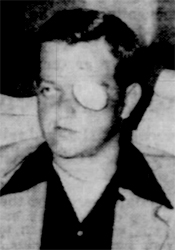
His ability to consistently rack up receptions made him one of the franchise’s most popular players. As Sports Illustrated noted, “It would have surprised hardly anyone at a Georgetown dinner party to hear Henry Kissinger, with his mouth full of caviar canapes, discoursing about the grace of Charley Taylor.”

A player who held the NFL record for career receptions (649) when he retired after the 1977 season, Taylor competed in 22 games versus the Cardinals. He caught 78 passes against them, but it was one he didn’t catch that became perhaps the most noteworthy.

Multiple skills

Charley Taylor was born and raised in Grand Prairie, Texas, an aircraft manufacturing hub located 14 miles west of Dallas. His mother, Myrtle, was a chef, butcher and restaurant owner and his stepfather, James, built airplane parts, according to the New York Times.

A local grocer, R.B. Clarke, who had connections to Arizona State University, arranged for Taylor to meet the school’s football coach, Frank Kush, who offered a scholarship.

Taylor excelled as a running back at Arizona State and hoped to be drafted by the NFL’s Dallas Cowboys so he could play near home. When a college roommate informed him he was taken by Washington with the third overall pick in the first round of the 1964 draft, “I actually rolled over in bed and started crying because I wanted to go to Dallas so bad,” Taylor told the Associated Press.

Swift and sure-handed, Taylor excelled at running back for Washington his rookie season in 1964, rushing for 755 yards, catching 53 passes and scoring 10 touchdowns in 14 games.

About midway through the season in 1966, coach Otto Graham moved Taylor from running back to wide receiver. Taylor initially resisted the move but discovered the position change “gives me the opportunity to do what I do best _ catch the ball and run with it,” Taylor told the Associated Press.

Taylor and Bobby Mitchell gave Washington a pair of elite receivers as targets for quarterback Sonny Jurgensen. All three were destined for election to the Pro Football Hall of Fame

Taylor said Mitchell and assistant coach Ray Renfro, a Browns receiver when Graham quarterbacked them, were influential in his transformation.

“They knew I had the knack for catching the ball,” Taylor said to the Associated Press. “What they had to teach me was to run patterns. That’s the difficult thing _ reading defenses and running good patterns.”

Taylor led the NFL in receptions in 1966 (72) and 1967 (70).

Mitchell, who also had started his NFL career as a running back before shifting to receiver, told Sports Illustrated, “Charley would always get the double coverage. I had some big days because people said Charley Taylor wasn’t going to beat them.”

All mixed up

Taylor, 33, and Jurgensen, 40, were in their 11th season together when Washington (4-2) faced the Cardinals (6-0) on Oct. 27, 1974, at Busch Memorial Stadium in St. Louis.

Though the Cardinals defeated Washington in the second week of the season and were atop the NFC East Division, Taylor said, “We still feel Dallas is the team we have to beat.”

Pinned to a bulletin board in the Cardinals’ locker room, Taylor’s quote was viewed as “an affront to our pride,” Cardinals defensive tackle Bob Rowe told the St. Louis Post-Dispatch.

Taylor was matched in the game against cornerback Roger Wehrli, another future Pro Football Hall of Famer. When the Cardinals drafted Wehrli out of Missouri in the first round in 1969, it was partly because it was thought he had the speed to cover receivers such as Taylor.

On the game’s opening drive, Washington advanced to the Cardinals’ 48-yard line before Jurgensen attempted a pass. On first-and-10, he called for Taylor to run an out pattern to the sideline.

Taylor ran the route correctly, but Wehrli had him covered. Taylor adjusted, turning up field, but Jurgensen didn’t adjust his pass. He threw before Taylor broke free of Wehrli.

“I was throwing the ball away,” Jurgensen told the Post-Dispatch.

Instead, he threw it into the hands of Wehrli, who moved forward, rather than follow Taylor, when he saw Jurgensen release the ball. “I just kept coming and there was no one there but me,” Wehrli told the Post-Dispatch.

Wehrli streaked 53 yards down the sideline, converting an interception into a touchdown for the first time in his NFL career. His only other interception return for a touchdown was in 1979 against Tommy Kramer of the Minnesota Vikings. Wehrli totaled 40 interceptions, all for the Cardinals.

St. Louis won the game, 23-20, improving to 7-0 and moving three games ahead of Washington in the division standings. Video and Game Stats

“The Cardinals made the big plays,” Jurgensen said to the Post-Dispatch. “Now they’re in the driver’s seat. It was a key game. We had to have it, and they got it.”

St. Louis and Washington each finished 10-4 in the regular season and each lost in the first round of the playoffs.

Taylor remains the Washington franchise leader in career touchdowns scored (90) _ 11 rushing and 79 receiving.

Of his 79 touchdown catches, 53 came on throws from Jurgensen, 21 from Billy Kilmer, two each from Randy Johnson and Jim Ninowski and one from Joe Theismann. The touchdown pass to Taylor was the first of Theismann’s NFL career.

Read Full Post »

In his quest to pitch for the Cardinals, Bob Slaybaugh lost an eye, but not his determination.

On March 24, 1952, Slaybaugh was pitching batting practice at Cardinals spring training when he was struck in the head by a line drive. He suffered severe damage to his left eye and it had to be surgically removed.
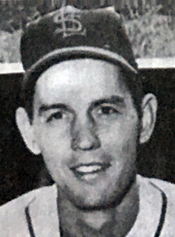
A couple of months later, Slaybaugh was pitching again.

Promising prospect

Robert Slaybaugh was born and raised in the village of Hartville, Ohio, located about halfway between Akron and Canton. According to census records and his obituary, the family name was spelled Slabaugh. At some point, either intentionally or inadvertently, a “y” was added to the spelling of his last name.

Known as Bob or Bobby, Slaybaugh was stricken by rheumatic fever as a youth and had to use a wheelchair for a time, according to baseball-reference.com.

A left-handed pitcher who stood 5 feet 9, Slaybaugh developed into a pro prospect and was signed by the Cardinals. In his first season, 1950, he was 6-17 with a 4.85 ERA for Goldsboro, N.C., a Class D farm team. He returned to Goldsboro in 1951, became the ace (17-10, 2.33 ERA) and led the league in strikeouts (224 in 219 innings, according to the St. Louis Post-Dispatch).

The Cardinals rewarded Slaybaugh with an invitation to attend big-league spring training at St. Petersburg, Fla., in 1952. 

Described by the St. Petersburg Times as a “quiet, likeable, team-type player,” Slaybaugh roomed at the Bainbridge Hotel with another pitcher, Gary Blaylock.

“Residents along lower Second Avenue South became accustomed to seeing the two stroll toward the Bainbridge each evening after games, so absorbed in replaying the contest that they stopped from time to time to demonstrate by gestures what had occurred,” the St. Petersburg Times observed.

Slaybaugh got into two Cardinals exhibition games, pitching two innings against the Senators and three versus the Braves. He allowed one run, showing Cardinals manager Eddie Stanky enough to convince him “he was only a year or two away” from being ready for the majors, the St. Petersburg Times noted.

“Right back at me”

On March 24, 1952, it was Slaybaugh’s turn to pitch batting practice during morning drills for rookies and prospects. Jim Dickey, a power-hitting first baseman at the Class A level, stepped in from the left side of the plate. Slaybaugh threw a pitch on the outside corner.

“I was expecting it to be pushed down the left field line as usual,” Slaybaugh told Helen Popa for The Sporting News. “Instead, it shot right back at me. I watched it all the way and threw my gloved hand in front of my face for protection, but at the same moment I jerked my head. The ball tipped one of my gloved fingers and hit the left side of my face.”

Slaybaugh “dropped as though shot,” the St. Petersburg Times reported.

According to The Sporting News, “the line drive shattered the left cheekbone and forced the left eyeball partly out of the socket.”

Stanky and Don McGranaghan, a vacationing New York state police officer, rushed Slaybaugh to a hospital in McGranaghan’s car, Bob Broeg reported in the St. Louis Post-Dispatch.

“With a towel, Stanky literally held the eye in place,” according to Broeg.

Stanky told The Sporting News, “In the car on the way to the hospital, he talked about baseball. No whimper out of him, and the pain must have been terrific. He told me that, if they had to operate, for me to be sure to tell the surgeons that he had rheumatic fever when he was young, so they could be careful about the effect of anesthetic on the heart.”

Significant damage

A St. Louis ophthalmologist, Dr. S. Albert Hanser, happened to be vacationing in nearby North Reddington Beach. A police escort raced him to the hospital, according to the St. Petersburg Times.

Dr. Hanser joined St. Petersburg ophthalmologist Dr. Bernard Bell in treating Slaybaugh. They performed “a delicate operation” in an effort to save the left eye, the Associated Press reported.

In addition to the damaged eye, Dr. Hanser said Slaybaugh suffered a fracture of the left cheekbone, a fracture of a group of bones near the eye and multiple fractures of the nasal bones, the St. Louis Globe-Democrat reported.

Cardinals owner Fred Saigh called Slaybaugh’s parents in Ohio, informed them of their son’s injury and arranged for them and another son to travel by plane to St. Petersburg the next day, The Sporting News reported.

After a week in the St. Petersburg hospital, Slaybaugh, accompanied by his mother, took a flight to St. Louis on March 31 for further treatment at a hospital there. That same day, Jim Dickey, who hit the line drive, was assigned by the Cardinals to their Rochester farm team. He’d never make it to the majors.

On April 4, Slaybaugh’s damaged eye was removed in “an emergency operation,” the Associated Press reported. Dr. Hanser, who performed the operation, said, “A rupture at the rear of the eyeball forced the removal.”

Passing grade

Sometimes, good can come amid tragedy. While recuperating from his eye operation in the St. Louis hospital, Slaybaugh met a nurse, Joy, and she became his wife, according to The Sporting News.

In late April, Slaybaugh was cleared to practice with the Cardinals at Sportsman’s Park.

“When I first started working out, I was ready to give up,” he told The Sporting News. “I couldn’t do anything right. I was confused by distances and was just plain scared, but Eddie Stanky and the players kept encouraging me and gradually I started feeling better.”

In mid-May, Slaybaugh was discharged from the hospital. He made a brief visit home to Ohio, then reported to the Cardinals’ Omaha farm team, managed by George Kissell.

Ray Oppegard, business manager of the Omaha team, said, “(Slaybaugh) still thinks he can pitch and so do we and our doctors.”

Kissell wasn’t so sure. Asked in May by the Des Moines Tribune whether he’d let Slaybaugh pitch in a game, Kissell said, “Too dangerous. A one-eyed person has no depth perception.”

When Slaybaugh arrived in Omaha, he said to Kissell, “I didn’t come here to sit on the bench. Let me pitch.”

According to The Sporting News, Kissell set up a program to help determine Slaybaugh’s chances of playing again. He had Slaybaugh throw on the sideline. After several good sessions, Slaybaugh was allowed to stand behind the pitcher during batting practice to get used to batted balls again.

After that, Slaybaugh progressed to pitching in bunting practice, then batting practice.

“At first, he threw the ball only to the inside corner so that he knew when it was hit it wouldn’t come back at him,” Kissell told The Sporting News. “Now he throws all over the plate.”

Kissell then put Slaybaugh through fielding practices. “He had his players drive grounders straight at Slaybaugh and to both sides,” the Des Moines Tribune reported. “Then he tested him with line drives.”

Finally, Slaybaugh got to bat in batting practice. When he passed all the tests to Kissell’s satisfaction, it was time to play in games.

Quite a comeback

On June 22, in his first game since losing the eye, Slaybaugh allowed one run in 6.1 innings of relief against Colorado Springs.

His next appearance, on June 29, was a start against Des Moines in the first game of a doubleheader. Slaybaugh responded with a four-hit shutout in a 1-0 Omaha victory in seven innings.

“That shows you what determination and courage will do,” Des Moines manager Harry Strohm told the Des Moines Tribune.

Slaybaugh called it “the biggest game of my life.”

He pitched 31 innings for Omaha in 1952 and posted a 2-2 record, according to baseball-reference.

The next year, he was 2-9 for Columbus (Ga.) and Winston-Salem. On May 1, he tried to pitch for the first time without an eye patch, placing a strip of tape over the left optic. In the fifth inning, the artificial eye fell to the ground. “Unflustered, Bobby picked it up and stuck it in his pocket,” The Sporting News reported.

The 1954 season was Slaybaugh’s last as a pro. After brief stints with Columbus (Ga.) and Lynchburg (Va.), the Cardinals asked him to report to Winnipeg, Canada. “Instead, he went home and obtained a job as a bookkeeper with a produce firm,” according to The Sporting News.

Read Full Post »

Gene Mauch, who drew comparisons with Eddie Stanky, got to play for him a brief while with the Cardinals.

On March 26, 1952, the Cardinals claimed Mauch for $10,000 after he was placed on waivers by the Yankees.

Mauch began the 1952 season with the Cardinals as a utility infielder but was released in May. A few months later, he began a more prominent career as a manager.

The Natural

The Dodgers signed Mauch, 17, in 1943 out of Fremont High School in Los Angeles.

A year later, at the Dodgers’ wartime spring training camp at Bear Mountain, N.Y., Mauch, 18, impressed manager Leo Durocher and earned the shortstop job.

“He’s a natural,” Durocher, the former Cardinals shortstop, told the Brooklyn Daily Eagle. “He does everything right by instinct.”

Pee Wee Reese, who took over for Durocher as Dodgers shortstop in 1940, was in military service in 1944, opening an opportunity for Mauch. “Durocher regards Mauch as a better shortstop prospect than Reese was at Mauch’s age,” the Brooklyn Daily Eagle reported.

On April 18, 1944, Mauch was the Dodgers’ Opening Day shortstop against the Phillies. Boxscore

Joining Mauch in the infield were first baseman Howie Schultz, a 6-foot-6 basketball player; second baseman Luis Olmo, an outfielder; and third baseman Gil English, a utilityman appearing in a big-league game for the first time in six years. English was an upgrade from Dixie Walker, an outfielder who flopped in a tryout at third base in spring training.

Years later, Mauch told the Atlanta Constitution, “It must have been the worst infield of all time.”

Mauch started the Dodgers’ first five games, made no errors but hit .133 and was returned to the minors. In May 1944, Mauch entered the Army Air Corps and served until the spring of 1946.

On the move

When Mauch resumed his baseball career, he embarked on an odyssey as a utility player with the Dodgers, Pirates, Cubs and Braves.

Atlanta Constitution columnist Furman Bisher told the story of the time the Braves’ bus got stuck under a low overpass on the way to a game. The embarrassed driver was unsure what to do. Mauch suggested he let the air out of the tires and back out. The driver did.

Mauch spent most of the 1951 season with the Braves’ Class AAA team in Milwaukee, hitting .303 and posting a .445 on-base percentage. Milwaukee manager Charlie Grimm told The Sporting News, “Every big-league scout I have talked with this season tells me Mauch is good enough to be the regular shortstop on almost any big-time club except the Yankees and Dodgers.”

Naturally, it was the Yankees who took Mauch in the Rule 5 draft in November 1951. Looking to be the backup to shortstop Phil Rizzuto, Mauch batted .077 in spring training.

The Cardinals, in Eddie Stanky’s first season as manager, were seeking a reserve infielder to replace Stan Rojek. They claimed Mauch on waivers from the Yankees near the end of spring training at St. Petersburg, Fla., where both clubs trained.

On their way from Florida to St. Louis to open the 1952 season, the Cardinals played a series of exhibition games. At Lynchburg, Va., on April 9, Mauch drove in the winning run against the Phillies.

Mauch, 26, made his Cardinals regular-season debut on April 17 when he was sent to run for Steve Bilko. Boxscore

Pinch-running became Mauch’s primary role with the Cardinals. He appeared in seven games, four as a pinch-runner, two as a substitute shortstop and one as a pinch-hitter. In four plate appearances for the Cardinals, he had no hits and a walk. In two fielding chances at shortstop, he made one putout and one error.

In May 1952, the Cardinals acquired Virgil Stallcup from the Reds to be their backup shortstop and asked waivers on Mauch.

Chance to lead

According to the Associated Press, the Cardinals were planning to send Mauch to one of their minor-league teams, Rochester or Columbus, if no one claimed him, but the Braves did. Mauch spent the rest of the 1952 season with the Braves’ farm club in Milwaukee and hit .324.

After the season, Mauch’s former Dodgers teammate, Dixie Walker, left his job as manager of the minor-league Atlanta Crackers, a Braves farm team in the Class AA Southern Association, to become a Cardinals coach on Stanky’s staff.

Crackers owner Earl Mann sought a player-manager to replace Walker. While attending the 1952 World Series between the Dodgers and Yankees in New York, Mann met with Braves general manager John Quinn, who recommended Mauch.

According to the Atlanta Constitution, Quinn labeled Mauch an Eddie Stanky-type.

“He’s always thinking on the field, talks baseball all the time, and is one of the sharpest young students of baseball in the game,” Quinn said. “I feel confident that Mauch is ready to take a shot as a manager in double-A ball.”

Mann called Mauch at home in Los Angeles, invited him to Atlanta for an interview and hired him. “That’s where my future is in baseball _ managing,” Mauch told the Atlanta Constitution.

Mann said, “He has everything I’ve been looking for in a manager: youth, aggressiveness, personality.”

Told Mauch was described as a Stanky-type, Eddie Stanky replied to the Atlanta Constitution, “I’m not sure that’s an asset, but I’m sure you’ve got a good man. I can vouch for him as a student of baseball.”

Making his mark

Mauch had no connection to Atlanta or the South, so he arrived as a mystery man to Crackers fans. Columnist Furman Bisher wrote, “The selection of Mauch exploded on Atlanta with much the same surprising effect as if the Prohibition candidate had won the presidency.”

It didn’t take long for him to get noticed. Mauch, 27, led the 1953 Crackers to an 84-70 record. One of his top players was outfielder Chuck Tanner, who, like Mauch, became a successful big-league manager.

According to the Atlanta Constitution, Mann invited Mauch to return in 1954, but Mauch declined. “We may have had some success on paper, but I wasn’t satisfied because I didn’t think I measured up to what I thought I should as a manager,” Mauch told the Philadelphia Inquirer.

The Crackers sent Mauch to the Pacific Coast League’s Los Angeles Angels, a Cubs farm team, and he resumed playing. He returned to the majors as a Red Sox utility player in 1956 and 1957, then went back to managing. He managed the Red Sox’s farm team at Minneapolis in 1958 and 1959.

In 1960, Mauch was 34 when he got his first job managing in the majors with the Phillies. The man who hired him, general manager John Quinn, was the one who recommended Mauch for the Atlanta job when Quinn was with the Braves.

A smart instigator, Mauch turned out to be a lot like Stanky. Mauch managed in the big leagues for 26 seasons with the Phillies, Expos, Twins and Angels but never won a pennant.

Throughout his playing career, Mauch had several managers who either had played for or managed the Cardinals. Those influencers included Leo Durocher (1944 Dodgers), Ray Blades (1946 St. Paul), Jimmy Brown (1947 Indianapolis), Frankie Frisch (1949 Cubs), Billy Southworth (1950 Braves) and Eddie Stanky (1952 Cardinals).

In 1980, when Whitey Herzog became Cardinals general manager, he tried to hire Mauch to manage the Cardinals, but was turned down.

Read Full Post »

« Newer Posts - Older Posts »