Feeds:
Posts
Comments

Archive for the ‘Games’ Category

The Cardinals intended for Chris Sabo to replace Todd Zeile as their first baseman, but the plan fizzled when Sabo’s back gave out.
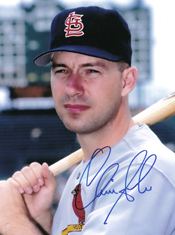
On June 8, 1995, the Cardinals signed Sabo after he was released by the White Sox. A third baseman, Sabo was sent to the Cardinals’ Louisville farm club to learn to play first base so he could be brought back to the majors and fill multiple roles.

About a week later, on June 16, 1995, Sabo was called up to the Cardinals amid a massive shakeup. On the day he arrived, manager Joe Torre was fired and Zeile was traded to the Cubs.

Interim manager Mike Jorgensen put Sabo into the lineup at first base, but his time with the Cardinals lasted only a few games.

Cincinnati kid

Sabo won the National League Rookie of the Year Award in 1988 when he produced 40 doubles and 46 stolen bases as third baseman for the Reds.

A son of a plumber from Detroit, Sabo became a Cincinnati favorite. Nicknamed “Spuds” for a resemblance to the dog Spuds McKenzie in beer commercials, Sabo wore goggles, a buzz cut and a K-mart wardrobe, and drove a well-used 1982 Ford Escort.

In 1990, Sabo had 38 doubles, 25 home runs and 25 steals for the champion Reds. In the Reds’ World Series sweep of manager Tony La Russa’s favored Athletics, Sabo hit .563 with two home runs and fielded flawlessly at third.

After the 1993 season, Sabo became a free agent, rejected an offer from the Mets and signed a one-year contract for $2 million with the Orioles because he viewed them as a contender.

The Orioles opened the 1994 season with a left side of the infield featuring Cal Ripken Jr. at shortstop and Sabo at third, but it didn’t last. Sabo hit .228 in April and went on the disabled list in May because of a bad back. His replacement, Leo Gomez, hit .325 in May and held the job.

Used primarily in the outfield and as designated hitter, Sabo played in 68 games for the Orioles, hit .256 and departed for free agency after the season.

New role

The Cardinals considered signing Sabo to be their third baseman, the St. Louis Post-Dispatch reported, but traded for Scott Cooper of the Red Sox instead. When no other teams showed interest, Sabo, 33, thought about returning to the University of Michigan to finish the work he started on a degree 14 years earlier, the Chicago Tribune reported.

Sabo’s plans changed on April 10, 1995, when the White Sox gave him a one-year contract at $550,000 to be their designated hitter. John Kruk was the first choice of White Sox general manager Ron Schueler to be designated hitter, the Tribune reported, but when Kruk, a free agent, opted to retire, Schueler selected Sabo.

Sabo plays with “intensity and has fire in his eyes,” Schueler said.

Said Sabo: “I’ve never been very level-headed. I have quite a temper. It’s the only way I’ve been able to get where I have. I get fiery. I don’t have a world of talent. So I fire up to help myself.”

Sabo preferred to play third base, but the White Sox had a Gold Glove winner, Robin Ventura, there.

What a Kruk

The White Sox opened the 1995 season with Sabo batting in the cleanup spot between slugger Frank Thomas and Ventura. In May, Kruk changed his mind about retirement and signed with the White Sox, who intended to make him the designated hitter.

Miffed, Sabo told The Cincinnati Post he’d return to the Reds “for a song.”

“I plan on being with the Reds again before I’m done, one way or the other,” Sabo told The Post.

Kruk, 34, joined the White Sox on May 24, 1995. The Tribune’s Paul Sullivan described him as having “the physique of Babe Ruth, the batting eye of Tony Gwynn and the sarcastic wit of David Letterman. He chain-smoked cigarettes, didn’t watch his weight and proudly wore the same T-shirt day after day.”

The White Sox released Sabo on June 5. In 20 games for them, he hit .254 with one home run.

Team in turmoil

Three days later, on June 8, 1995, the Cardinals signed Sabo and indicated he would be used as a utility player for them after he went to Louisville and learned to play first base.

“We know he can play third and the outfield,” said Cardinals manager Joe Torre. “If he can play first, it will add to his versatility. If he’s healthy, he’s a threat with the bat. He can hit the homer and he pulls the ball. He plays well defensively.”

Sabo hit .393 in nine games as Louisville’s first baseman.

Promoted to the Cardinals, he never got to play for Torre. With the Cardinals’ record at 20-27, general manager Walt Jocketty fired Torre on the morning of June 16 before trading Zeile. Though Zeile hit .291 with 22 RBI in 34 games, he was dealt after accusing management of reneging on a contract agreement.

With Zeile gone, Sabo became the first baseman and was assigned uniform No. 18, the same previously worn by Mike Shannon and Andy Van Slyke. In his Cardinals debut on June 16 against the Giants at St. Louis, Sabo batted fifth in the order between Ray Lankford and Scott Cooper. He made a fielding error in the second inning, leading to a run, but had a run-scoring single in the fifth. Boxscore

Sabo played in four more games for the Cardinals, making another start at first, one at third and two pinch-hit appearances. He had a two-run double versus Dodgers rookie Hideo Nomo on June 19. Boxscore

During batting practice one day, Sabo developed back spasms. He went on the disabled list on June 29, 1995, and remained sidelined for six weeks. “I don’t think there’s a lot of fuel left in the tank,” Cardinals coach Gaylen Pitts told Larry Harnly of The State Journal-Register of Springfield, Ill.

In August 1995, the Cardinals sent Sabo to their St. Petersburg farm club in the Florida State League to get in condition for a possible return to the majors in September. Instead, after Sabo hit .231 in 14 games for St. Petersburg, the Cardinals released him because “he didn’t dominate that league like you’d think he would,” Jocketty said.

In 13 at-bats for St. Louis, Sabo had two hits and three RBI.

As he predicted, Sabo returned to the Reds and played his final major-league season with them in 1996.

In 2018, Sabo was named head baseball coach at the University of Akron.

Read Full Post »

(Updated Dec. 8, 2024)

When Whitey Herzog became Cardinals manager, he replaced a friend who had been his roommate and teammate with the Mets.

On June 8, 1980, the Cardinals fired manager Ken Boyer and hired Herzog to succeed him.
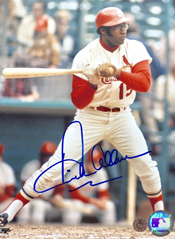
Boyer, an all-star and Gold Glove Award winner as Cardinals third baseman in the 1950s and 1960s, was their manager since April 1978. Herzog managed the Royals to three consecutive division titles before being fired after the 1979 season.

In 1966, the Mets had Boyer as their third baseman and Herzog as a coach. In his book, “White Rat: A Life in Baseball,” Herzog said he and Ken Boyer shared a New York apartment with Yankees players Roger Maris and Clete Boyer, Ken’s brother.

“When the Mets were on the road, Clete and Roger had the place, and when the Yankees were on the road, Kenny and I took it over,” Herzog said.

After Boyer was fired by the Cardinals, he told a St. Louis Post-Dispatch reporter, “Wish Whitey Herzog good luck. I hope they can turn it around.”

The comment was relayed to Herzog, who said, “I appreciate that. We are very good friends.”

Time for a change

After Herzog left the Royals, Cardinals general manager John Claiborne called him occasionally to seek his opinions on players. Claiborne and Herzog had worked together for Bing Devine with the Mets.

At one point in their conversations, Herzog said, Claiborne asked whether he’d want to become a paid consultant to the Cardinals. “I told him I didn’t want to get tied up with something like that, but I’d be happy to give him my opinions when he asked for them,” Herzog said.

The 1980 Cardinals hit the skids early and Claiborne and club owner Gussie Busch determined Boyer needed to go.

On Saturday, June 7, 1980, Herzog said he got a call from Busch’s attorney, Lou Susman, who asked him to meet Busch in St. Louis the next morning. Meanwhile, Claiborne headed to Montreal, where the Cardinals were playing, to inform Boyer he was fired. Claiborne intended to get to Montreal on Saturday night and meet with Boyer the next morning, but a rainstorm canceled the connecting flight and Claiborne had to spend the night in Chicago.

On the morning of June 8, 1980, Herzog went to Busch’s estate at Grant’s Farm and Claiborne took a flight from Chicago to Montreal, where the Cardinals and Expos were to play a Sunday afternoon doubleheader.

Herzog met with Busch and Susman, and was offered a one-year, $100,000 contract to manage the Cardinals. When Herzog objected to the length of the contract, Busch countered with a three-year deal through the 1982 season. Herzog accepted and Busch made plans to announce the hiring in a news conference late in the afternoon.

(In a 2016 interview with Cardinals Yearbook, Herzog said he was headed out the front door after learning the contract offer was for one year. According to Herzog, Busch then said, “Come back here. You’re right. The ballplayers have long-term contracts; you should have one, too.”)

At Montreal, the Cardinals lost Game 1 of the doubleheader, dropping their record to 18-33 and giving them 21 losses in their last 26 games.

Boyer was in the clubhouse, making out the lineup card for Game 2, when he looked up and was surprised to see Claiborne enter. “I thought for certain he had come here to discuss possible trades,” Boyer told the Montreal Gazette.

Instead, Claiborne told Boyer he was fired. “This is something you want to talk about to a man face to face, not over the telephone,” Claiborne said.

Claiborne offered Boyer another job within the organization, but Boyer said he wanted time to think it over.

“Boyer was on his way to St. Louis by the second inning of the second game,” the Gazette reported.

Coach Jack Krol filled in as manager for Game 2, and the Cardinals lost again.

Mourning in Montreal

In the locker room, after getting swept in the doubleheader, most Cardinals said they were sorry Boyer was gone and exonerated him of blame for the team’s record. Boyer was 166-191 as Cardinals manager.

In comments to the Post-Dispatch, first baseman Keith Hernandez said the 1980 Cardinals were “the worst team I’ve been on since I’ve been in the major leagues. The worst. We are bad. The manager is only as good as his horses and we don’t have the horses. I’m going to miss Ken Boyer.”

Second baseman Tommy Herr said, “There’s a lack of professionalism among certain players as far as guys running groundballs out, 100 percent all-out effort.”

Cardinals catcher Ted Simmons and pitcher Bob Forsch were two of the players most upset by Boyer’s firing, according to the Post-Dispatch. “Old Cardinals die hard,” Simmons said.

Pitcher John Fugham told The Sporting News, “Unfortunately, there were not 25 people on this team as intense as Kenny Boyer was. Therein lies the problem.”

Vern Rapp, who two years earlier was fired while the Cardinals were in Montreal and replaced as manager by Boyer, was a coach with the 1980 Expos. Asked his reaction to Boyer’s firing, Rapp told the Post-Dispatch, “I feel sorry for anybody it happened to. I know how it feels. It’s not a good feeling.”

Oh, brother

At the news conference at Grant’s Farm introducing him as Cardinals manager, Herzog said, “I’m going to take this dang team and run it like I think it should be run. I don’t think I’ve ever had trouble with players hustling. I understand that’s been a problem here. I think you’ll see the Cardinals running out groundballs.”

Asked whether the Cardinals needed a leader to emerge from within the team, Herzog said, “I don’t need a team leader. I’m the leader.”

Said Busch: “My type of manager, without any argument.”

Born and raised in New Athens, Ill., Herzog described himself as a “very opinionated, hardheaded Dutchman.”

At birth, he was named Dorrell Norman Elvert Herzog. His mother said she intended to name him Darrell, but the name got misspelled. In New Athens, where he excelled at basketball as well as baseball, everyone called him Relly. In the New Athens High School yearbook, it was noted, “He likes girls even more than basketball.” As a professional ballplayer, he got nicknamed Whitey because of his light blonde hair.

Herzog had two brothers _ Therron, who everyone called Herman, and Codell, who everyone called Butzy.

When Herzog was named Cardinals manager, Butzy, who “never played baseball in his life,” told Whitey what lineup he should use to help the Cardinals improve.

“I may play his lineup,” Whitey said.

“He better,” Butzy told the Post-Dispatch, “or we’ll have a fight.”

Whether or not it was with Butzy’s help, the Cardinals went on to win three National League pennants and a World Series championship during Whitey’s 11 years as their manager.

Asked about the style of baseball that became known as Whiteyball, Herzog told Cardinals Magazine, “Whiteyball was nothing more than using speed and playing good, sound, fundamental baseball. And your players have to buy in to it.”

Herzog told Cardinals Yearbook, “We changed the way the Cardinals played baseball. We went back to the old Gashouse Gang philosophy.”

Read Full Post »

(Updated Dec. 28, 2024)

Dick Allen capped one of his best performances for the Cardinals by hitting a grand slam against the pitcher who got traded with him to St. Louis.

On June 2, 1970, Allen had seven RBI for the Cardinals in their 12-1 victory over the Giants at St. Louis.

Allen had a run-scoring single and a two-run home run versus Giants starter Gaylord Perry. The grand slam came against Jerry Johnson, who was traded with Allen and Cookie Rojas by the Phillies to the Cardinals in October 1969 for Curt Flood, Tim McCarver, Joe Hoerner and Byron Browne.

On May 19, 1970, the Cardinals dealt Johnson to the Giants for pitcher Frank Linzy. Johnson was making his fifth appearance for the Giants when he faced Allen for the first time.

New look

Looking to shake up the Cardinals, who lost six of their last seven, manager Red Schoendienst changed the batting order for the series opener versus the Giants at Busch Memorial Stadium.

Schoendienst had been featuring a top five of Jose Cardenal, Julian Javier, Lou Brock, Dick Allen and Joe Torre. Against Perry and the Giants, Schoendienst went back to the batting order he used to open the season, with Brock in the leadoff spot, followed by Cardenal, Allen and Torre. Joe Hague batted fifth, and Javier dropped to the seventh spot, behind Ted Simmons.

“The big reason for the change is getting Allen back up there to No. 3 where he can hurt people even more,” Schoendienst told the Associated Press.

To the St. Louis Post-Dispatch, Schoendienst explained, “I like to bat Cardenal second, especially against right-handers, because he has good bat control and can hit that outside pitch to right. and I want to be sure Allen gets to bat in the first inning.”

Played on a damp Tuesday night, the game attracted a crowd of 11,111, a number the Post-Dispatch described as “a poker player’s dream.”

Eight future Hall of Famers were in the lineups: Willie Mays, Willie McCovey and Gaylord Perry for the Giants, and Lou Brock, Joe Torre, Ted Simmons, Steve Carlton and Allen for the Cardinals. On the bench were three more: Schoendienst and pitchers Juan Marichal of the Giants and Bob Gibson of the Cardinals.

Carlton pitched a four-hitter and would have had a shutout if not for McCovey’s home run, a 420-foot drive into the bleachers in right-center. “I told myself to throw him a really nasty slider, but I hung it,” Carlton told the Post-Dispatch.

Carlton also contributed three singles. “That was just a little cream topping,” Carlton said.

Power source

Allen was in top form from the start.

In the first inning, Allen’s single versus Perry scored Cardenal from second.

In the fifth, Allen, a right-handed batter, sliced a Perry slider over the wall in right for a two-run homer. The ball “landed in the runway behind the right-field fence,” according to the Post-Dispatch. Impressed by Allen’s ability to drive the ball the opposite way, Cardinals coach George Kissell told the Post-Dispatch, “He hits them to right like a left-handed golfer.”

Allen had astonishing power, even though his right hand was weakened three years earlier when pieces of glass from a broken headlight on a car he was pushing severed nerves in his palm.

“I worked hard to get that hand so that I could use it again,” Allen told Dick Young of the New York Daily News. “I got a job as a bricklayer’s helper. For nothing. A friend of mine gave me the job. He wanted to pay me. He kept throwing money at me and I kept throwing it back. I wanted to work for nothing. It made me keep thinking of why I was doing it. I asked him for a slow bricklayer, though.”

Run producer

Allen and Perry faced one another frequently. Allen would finish his career with 30 hits and 31 strikeouts versus the spitball specialist.

Jerry Johnson was a different story. He was Allen’s teammate with the Phillies in 1968 and 1969, and for a brief time with the 1970 Cardinals. Johnson began the 1970 season in the minors, got called up to the Cardinals on May 1 and was 2-0 with one save in seven relief appearances for them before he was traded.

In the seventh inning, Johnson relieved Perry and deprived Allen of another RBI, striking him out on a slider with a runner on third and none out.

An inning later, Allen came up against Johnson with the bases loaded and hit a fastball into the seats in left-center for his fifth grand slam in the big leagues. He’d hit three more grand slams before his career was done. Boxscore

The home run would be the only base hit Allen would get in 12 career at-bats versus Johnson.

Allen had one other game with seven RBI. It occurred Sept. 29, 1968, for the Phillies against the Mets at Shea Stadium in New York. Allen hit a two-run home run versus Tom Seaver, a solo shot off Cal Koonce and a grand slam against Ron Taylor, the former Cardinal.

Read Full Post »

The 1970 Cardinals found the closer they needed, but, following a familiar pattern, gave up on him too soon.

On May 29, 1970, St. Louis got Ted Abernathy from the Cubs for infielder Phil Gagliano.
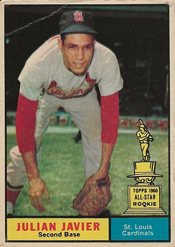
A right-hander, Abernathy, 37, threw underhanded with a delivery described as submarine style.

At 6 feet 4, he was a formidable presence when he whipped his right arm down low to the ground and sent the ball zipping toward the plate.

The Cardinals needed quality relief and Abernathy provided it. He made 11 appearances for them and was 1-0 with a save and 2.95 ERA.

Inexplicably, a month after the Cardinals acquired Abernathy, general manager Bing Devine dealt him to the Royals for pitcher Chris Zachary, who was assigned to the minors.

Abernathy went on to pitch in 36 games for the 1970 Royals and was 9-3 with 12 saves and a 2.59 ERA for them. He joined Wayne Granger (Reds), Dave Giusti (Pirates), Joe Hoerner (Phillies) and Mudcat Grant (Athletics and Pirates) as premier relievers dealt by Devine during his second stint with the Cardinals.

In 1970, when the Cardinals ranked last in the league in saves (20) and their team leader was Chuck Taylor (eight), Granger, Giusti, Hoerner and Grant had a combined record of 32-16 with 94 saves.

Adapt and adjust

Abernathy threw overhand until he injured his right shoulder as a high school freshman and switched to a sidearm delivery.

After signing with the Senators in 1952, Abernathy made his major-league debut with them in 1955.

Near the end of the 1956 season, Abernathy hurt his right elbow. Trying to compensate for the pain, he put pressure on his shoulder and damaged it again. Weakened, Abernathy was 2-10 with a 6.78 ERA for the Senators in 1957.

Except for two appearances for the Senators in 1960, Abernathy spent the next five seasons (1958-62) in the minors. After undergoing shoulder surgery in 1959, he adopted the submarine delivery.

In 1963, Abernathy, 30, made it back to the majors with the Indians and experienced a career rebirth. With his arm strength restored and his submarine delivery perfected, Abernathy became a durable, effective big-league reliever.

“His delivery was sweeping so low it swept him to the top as a relief pitcher,” the St. Louis Post-Dispatch noted.

Late bloomer

Abernathy was the National League leader in saves twice (31 for 1965 Cubs and 28 for 1967 Reds). He also led the league in games pitched three times (84 for 1965 Cubs, 70 for 1967 Reds and 78 for 1968 Reds).

Relying on a sinking fastball, curve and knuckleball he used as a changeup, Abernathy thrived on work. The more often he pitched, the better the results.

“If I don’t have to work more than a couple of innings, I can go for seven or eight days in a row, take a rest, and do it again,’ Abernathy told The Sporting News.

In 1970, during his second stint with the Cubs, Abernathy began the season as the setup reliever to closer Phil Regan.

On May 16, 1970, Abernathy relieved Cubs starter Ken Holtzman in the ninth inning of a game at St. Louis. With the Cubs ahead, 3-1, Abernathy was brought in to face slugger Dick Allen with the bases loaded and two outs.

With the count at 2-and-1, Abernathy needed to throw a strike, but his pitch sailed toward Allen. Though he tried to turn away, the ball struck Allen in the back of the head.

“I was surprised Allen didn’t get out of the way,” Abernathy told the Post-Dispatch. “I yelled to him, but I guess he didn’t hear me.”

Allen’s advancement to first allowed the runner from third to score, carrying the Cardinals to within a run at 3-2, but Regan came in and got Joe Torre to line out to center, ending the game. Boxscore

Come and gone

Two weeks later, the Cubs traded Abernathy to the Cardinals. Though Abernathy had a 2.00 ERA and a save in 11 games for the 1970 Cubs, manager Leo Durocher had lost confidence in him.

“The Cardinals were the only team who wanted Abernathy,” Durocher told the Chicago Tribune. “They needed relief pitching and were willing to take the chance. Maybe he’ll help them. I don’t know. All I know is that every time I put him in a game this year he was getting bombed.”

Before the Cardinals acquired Abernathy, five pitchers, Chuck Taylor, Tom Hilgendorf, Jerry Johnson, Sal Campisi and Billy McCool, earned saves for them in 1970. A week before Abernathy arrived, the Cardinals got another closer candidate, Frank Linzy, from the Giants.

“What they’re doing, of course, is indulging in a bit of wishful thinking when they claim anything in sight with a toeplate,” Bob Broeg wrote in the Post-Dispatch.

On May 30, 1970, Abernathy made his Cardinals debut at St. Louis against the Dodgers and pitched 3.1 innings in relief of starter Santiago Guzman. Boxscore

Abernathy got a save a week later in a game Bob Gibson won against the Padres at St. Louis. Boxscore

On June 27, 1970, in his last Cardinals appearance, Abernathy worked out of a bases-loaded jam he inherited and got the win versus the Phillies at St. Louis. Boxscore

Four days later, he was traded to the Royals.

Royal gift

“I was pitching well for the Cardinals,” Abernathy said. “At least I thought I was pitching pretty well. I asked Bing Devine (about the trade) and he told me, ‘That’s baseball. You move around.’ ”

When Abernathy reported to the Royals, he said to manager Bob Lemon, “I need work.” Lemon replied, “You came to the right place.”

Abernathy pitched five times in his first six days with the Royals and was 3-0 with a save and 0.96 ERA. In his first 9.1 innings, he allowed a run and struck out 13.

Lemon, an ace for the Indians when Abernathy debuted in the American League 15 years earlier, knew how to utilize his reliever. Abernathy was 5-3 with four saves in July, 2-0 with four saves in August and 2-0 with four saves in September. Right-handed batters hit .202 against him.

Abernathy was the second productive player the Royals got from the Cardinals in 1970. A month earlier, they obtained second baseman Cookie Rojas.

“We appreciate the Cardinals,” Royals general manager Cedric Tallis said to the Post-Dispatch. “They treated us as equals, not as just another expansion club, the way everybody else did.”

Abernathy’s combined 1970 record with the Cubs, Cardinals and Royals was 10-3 with 14 saves and a 2.60 ERA.

Abernathy pitched for the Royals again in 1971 and 1972, ending his 14 years in the majors with a 63-69 record and 149 saves.

Read Full Post »

(Updated Sept. 12, 2025)

Opening the way to a pipeline of talent, second baseman Julian Javier was the first player from the Dominican Republic to play for the Cardinals.

On May 27, 1960, the Cardinals acquired a pair of Pirates prospects, Javier and reliever Ed Bauta, for starting pitcher Vinegar Bend Mizell and infielder Dick Gray.
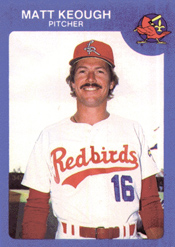
Making the leap from the minor leagues to the Cardinals’ lineup, Javier became the third player born in the Dominican Republic to play in the major leagues. Before him were Ozzie Virgil of the 1956 Giants and Felipe Alou of the 1958 Giants.

Javier was the Cardinals’ second baseman for 12 years and contributed to three National League pennants and two World Series titles. Dominican Republic natives who followed him to the Cardinals included Albert Pujols, Joaquin Andujar, Pedro Guerrero and Tony Pena.

Opportunity knocks

Javier was born and raised in San Francisco de Macoris, Dominican Republic. Located in the northeast section of the Caribbean island country, his hometown is one of the world’s largest producers of cocoa beans. A son of a truck driver, Javier had seven siblings.

In 1956, when he was 19, Javier attended a Pirates tryout camp in the Dominican Republic and was offered a contract by scout Howie Haak. Javier signed for $500, The Sporting News reported.

“We didn’t know about bonuses then,” Javier said in 1967. “Today, I would ask for $50,000.”

Javier began the 1960 season, his fifth in the Pirates’ farm system, with their Columbus, Ohio, club. The Pirates had a future Hall of Famer, Bill Mazeroski, as their second baseman and were planning to convert Javier to shortstop, the St. Louis Post-Dispatch reported.

When the 1960 Pirates got off to a fast start, winning 12 of their first 15 games, general manager Joe Brown began looking for ways to keep the team in contention. To bolster the starting pitching, he made Javier available for trade.

Infield shift

In 1960, Alex Grammas, 34, moved from shortstop to second base for the Cardinals to make room for Daryl Spencer, who was acquired from the Giants. Shortstop was Spencer’s preferred position, but Grammas “did not adjust too well to second base,” The Sporting News reported.

“I think Grammas is more at home at shortstop,” Cardinals manager Solly Hemus told the St. Louis Globe-Democrat.

On May 9, 1960, Hemus said Grammas would go back to shortstop and Spencer would shift to second “to tighten our defense.”

The switch “caught Cardinals brass by surprise” and Spencer “felt he was being made a scapegoat,” according to The Sporting News.

Cardinals general manager Bing Devine sought a better solution. He wanted to acquire a young middle infielder, either a second baseman or a shortstop, who would provide long-term stability.

According to Bob Broeg of the Post-Dispatch, the Cardinals pursued Reds shortstop prospect Leo Cardenas, “the tall, skinny kid who looks as though he might be another Marty Marion.” Rejected, the Cardinals’ focus turned to Javier.

Help wanted

Cardinals director of player procurement Eddie Stanky, a former second baseman, scouted Javier and recommended him. Stanky said Javier was “one of the best prospects in the minors” and “his speed was second only to that of Vada Pinson of the Reds,” The Sporting News reported.

“He’s one of the fastest right-handed batters I’ve ever seen,” Stanky said to the Post-Dispatch.

The Cardinals weren’t the only club interested. The Phillies wanted a second baseman, too, and were talking to the Pirates about a swap of pitcher Don Cardwell for Javier. According to the Pittsburgh Post-Gazette, the Phillies scouted Javier for 10 days, but “the scout reported back to the front office that Javier struck out too often and had a tendency to become injured.”

After the Phillies dealt Cardwell to the Cubs for second baseman Tony Taylor, the Cardinals offered Vinegar Bend Mizell to the Pirates for Javier. Pirates general manager Joe Brown viewed Mizell, 29, as a good fit to join a rotation with Bob Friend, Vern Law and Harvey Haddix. Mizell was 1-3 for the Cardinals in 1960, but he had five seasons of double-digit win totals in his previous six with them.

“We are sacrificing a future for the present because in Mizell we have a known quantity,” Brown said.

The Pittsburgh Press noted, “Javier wouldn’t have made it with the Pirates for two or three years, but the team needed pitching help now.”

Javier, 23, hit .288 for Columbus in 1960 and Devine called him “an outstanding glove man as well as an improving hitter,” the Globe-Democrat reported.

“We consider this a major addition to the Cardinals’ regular lineup now and for the future,” said Devine.

Bob Broeg of the Post-Dispatch concluded, “It took courage to give up a player of some reputation for one with none at the major-league level.”

Hot start

On May 28, 1960, Javier made his debut in the majors at second base for the Cardinals against the Giants at St. Louis. He had six putouts, three assists and helped turn a double play. Batting eighth, Javier singled twice versus Billy O’Dell. Boxscore

Hemus used Javier’s arrival to make other moves. Spencer shifted back to shortstop and Grammas was benched. Bill White went from center field to first base, replacing Stan Musial, and Curt Flood took over in center.

With White and Javier solidifying the right side of the infield, and Flood in center, the Cardinals improved. On the day they got Javier, the Cardinals were 15-20. After the trade and the moves to upgrade the defense, they were 71-48.

“Javier knows how to make the tough double play,” Hemus told the Post-Dispatch. “He makes the club solid. Not many balls are falling in with him and Curt Flood out there. Those two have helped make our pitching better.”

In the book “Few and Chosen,” Cardinals catcher Tim McCarver said Javier’s skill at turning double plays earned him the nickname “Phantom.”

“Runners never got to his legs,” McCarver said. “Javier was rarely on the bag. His timing was perfect and his hands and feet were so quick, you often couldn’t even see the exchange (of the ball).”

In addition to showing good range in the field on grounders and pop-ups, Javier hit safely in 10 of his first 11 games. In his third game, on May 30 at Los Angeles, he hit his first big-league home run, leading off the fourth versus Clem Labine of the Dodgers. Boxscore

On June 3, Javier hit two triples versus the Giants’ Mike McCormick at San Francisco, “amazing everybody with his breathtaking speed,” The Sporting News observed. Boxscore

Four days later, on June 7, Javier’s wife came from the Dominican Republic to St. Louis and saw her husband play in the majors for the first time. Javier raked the Phillies for three singles. Boxscore

Stellar career

The 1960 Cardinals finished at 86-68, nine games behind the champion Pirates, who were 95-59. Mizell, in his last good season, was 13-5 for the 1960 Pirates.

Javier hit .237 with eight triples and 19 stolen bases for the 1960 Cardinals. His 15 sacrifice bunts led the league. Though he also made the most errors among National League second basemen, Javier was named to the Topps all-rookie team.

In 12 seasons with St. Louis, Javier batted .258 with 1,450 hits, twice led National League second basemen in putouts and twice was named an all-star, including 1963 when he was part of a Cardinals starting infield with Bill White, Dick Groat and Ken Boyer.

In Game 7 of the 1967 World Series, Javier’s three-run home run versus Jim Lonborg of the Red Sox was a key blow in the Cardinals’ championship clincher.

Javier was traded to the Reds for pitcher Tony Cloninger in March 1972. As a utility player, he helped the Reds win the pennant in his last season in the majors.

Read Full Post »

A stint with the Cardinals enabled Matt Keough to share a championship season with his father.

A right-hander who pitched in the majors for nine years, Keough endured an epic losing streak and survived being struck in the temple by a foul ball.

His father, Marty Keough, was a big-league outfielder who became a scout for the Cardinals. Marty scouted for the Cardinals from 1980 to 2018. Matt’s uncle, Joe Keough, also was an outfielder in the majors.

In September 1985, Matt Keough returned to the big leagues with the Cardinals after two seasons in the minors. Matt and Marty were in the same organization for the first time. While Marty was looking for talent to keep the Cardinals successful, Matt was looking to help them win a division title.

Changing positions

Matt Keough was a baseball standout at Corona del Mar High School near Newport Beach, Calif., just as his father Marty was years earlier in Pomona, Calif. A prized prospect of the Red Sox, Marty played 11 years in the majors.

In 1973, Matt, 18, signed with the Athletics after he was chosen in the seventh round of the amateur baseball draft. In his first three seasons (1974-76) in the minors, he played shortstop and third base. His manager in each of those years was Rene Lachemann, a future Cardinals coach.

Lachemann was a Keough booster. Though Keough threw well, he was an inconsistent hitter. When he struggled to hit at spring training in 1977, the Athletics made him a pitcher. “To me, it was make or break,” Keough told The Sporting News.

At Class AA Chattanooga in 1977, Keough led Southern League pitchers in strikeouts (153). He made the jump from Class AA to the majors in September.

Hitting the skids

The next year, Keough was named to the 1978 American League all-star team managed by the Yankees’ Billy Martin. In the All-Star Game at San Diego, Keough relieved Jim Palmer in the third inning and gave up a single to the Cardinals’ Ted Simmons, loading the bases with two outs, before escaping the jam by getting Rick Monday to fly out. Boxscore

A season of promise ended badly when Keough lost his last four decisions and finished at 8-15.

His personal losing streak carried over to the 1979 season. Keough lost his first 14 decisions, giving him 18 consecutive losses over two seasons. His 0-14 record in 1979 tied Joe Harris of the 1906 Red Sox for most losses to start a season. Keough’s 18 consecutive losses were one short of the league record of 19 in a row by Bob Groom of the 1909 Senators and John Nabors of the 1916 Athletics.

The skid ended on Sept. 5, 1979, when Keough got the win against the Brewers at Oakland, pitching a five-hitter before 1,772 spectators, including his uncle Joe. Boxscore

“I’m 1-0 now,” Keough said. “That’s how I’m looking at it. Everything else is behind me.”

Keough finished the 1979 season at 2-17.

Different approach

In the winter after the 1979 season, Keough played in Puerto Rico for a team managed by his former minor-league mentor, Rene Lachemann, who worked to restore the pitcher’s confidence.

Another positive development for Keough was a management change in Oakland. Two years after managing Keough in the All-Star Game, Billy Martin was named Athletics manager in 1980 and his sidekick, Art Fowler, became pitching coach.

“The main thing with Martin and Fowler is the confidence they give you,” Keough told the Minneapolis Star-Tribune. “They make you believe.”

According to some American League hitters, including Reggie Jackson and Jim Rice, Martin and Fowler also taught Keough to throw a banned pitch, the spitball.

Keough called the accusations “sour grapes.” Fowler said, “It’s nothing but a little sinker. They just turn the fastball over a little and throw strikes.”

In explaining the pitch to Gannett News Service, Keough said, “Fowler can take you down to that bullpen and show you how to throw the fastball without seams.”

Keough was 16-13, with 20 complete games, for the 1980 Athletics, and the starting staff made the cover of Sports Illustrated the following spring.

Going backward

Keough won his first six decisions of 1981 before feeling pain in his right shoulder. Some suggested Martin overworked him, but Keough said he hurt the shoulder when he slipped on the mound in Baltimore. Keough was 10-6 in 1981 and 11-18 in 1982.

In 1983, Martin returned to New York to manage the Yankees, who made a deal to acquire Keough. Experiencing persistent shoulder pain, Keough was 3-4 with a 5.17 ERA for them.

After the season, Keough agreed to go to the minor leagues in 1984 to try to develop a knuckleball. He was assigned to the Class AA Nashville team because the pitching coach was knuckleball master Hoyt Wilhelm.

After posting a 6.75 ERA in seven starts for Nashville, Keough was diagnosed with a partial tear of the rotator cuff and put on the disabled list. He underwent arthroscopic surgery in October 1984 and the Yankees released him.

Comeback trail

On April 23, 1985, the Cardinals signed Keough to a minor-league contract and sent him to extended spring training in Florida. In 19 innings, Keough had a 1.93 ERA and the Cardinals assigned him to Class AAA Louisville.

Keough, 30, had a 3.35 ERA in 19 starts for Louisville manager Jim Fregosi. “He’s gotten better and better since he’s been with us,” Fregosi told the Louisville Courier-Journal. “I really think he can pitch in the big leagues again.”

Cardinals manager Whitey Herzog said, “He always had a good spitball at Oakland.”

On Sept. 9, 1985, the Cardinals, in first place by a half game ahead of the Mets, called up Keough from Louisville. He made his Cardinals debut that night, pitching four scoreless innings in relief of Kurt Kepshire in a 3-1 win over the Cubs at St. Louis. Boxscore

Five days later, Keough relieved Kepshire again and pitched two scoreless innings against the Cubs in a 5-4 Cardinals win at Chicago. Boxscore

Herzog yanked Kepshire from the rotation and gave Keough a start on Sept. 19 against the Phillies, but he gave up five runs before being lifted in the third inning and the Phillies won, 6-3. Boxscore

“I was pitching 2-and-1 and 2-and-0 on everybody and I usually don’t do that,” Keough told the St. Louis Post-Dispatch.

Keough’s last appearance for the Cardinals came Sept. 24 when he worked two scoreless innings in relief of Ricky Horton in a game the Cardinals won, 5-4, versus the Pirates. Boxscore

Keough was 0-1 with a 4.50 ERA as a Cardinal, but in three relief stints he allowed no runs and struck out eight in eight innings.

Checkered past

The 1985 Cardinals went on to win the National League pennant. Keough was ineligible to pitch in the postseason because he joined the club too late, but the Cardinals gave him a championship ring. Granted free agency, he signed with the Cubs and split the 1986 season, his last in the majors, with them and the Astros.

Keough made one appearance against the Cardinals. Filling in for scheduled starter Dennis Eckersley, who developed back spasms, Keough pitched four innings, gave up a two-run single to Ozzie Smith and took the loss in a 4-3 Cardinals win over the Cubs at St. Louis on June 5, 1986. Boxscore

Like his father Marty, who finished his playing career in Japan in 1968, Matt went to Japan and pitched for four years (1987-90) with the Hanshin Tigers.

Keough, who had a big-league career record of 58-84, tried a comeback with the Angels at spring training in 1992. While seated in the dugout during a game at Scottsdale, Ariz., Keough was hit in the temple by a foul ball off the bat of the Giants’ John Patterson. Marty Keough, scouting the game for the Cardinals, watched as medical personnel attended to his son. Matt developed a blood clot in his brain and needed surgery.

Keough recovered and went on to scout for the Angels and Rays. He also served as special assistant to the general manager of the Athletics.

In April 2005, Keough was involved in a car accident in California, injuring a pedestrian. He pleaded guilty to felony charges of driving under the influence after he crashed his vehicle into another at a red light, pushing the vehicle into a man walking his bike across the street, police said to the Orange County Register. The injured man was admitted to a hospital.

In December 2007, Keough was arraigned on charges he was binge drinking at a bar in violation of his probation, authorities told the Orange County Register. The arrest came less than a week after Keough was released from the Newport Beach lockup, where he spent seven weeks as a jail trustee washing patrol cars and cleaning the facility after he was caught violating parole.

Read Full Post »

« Newer Posts - Older Posts »