Feeds:
Posts
Comments

Archive for the ‘Games’ Category

Surviving a scare from the last batter he faced in the game, Jack Crimian earned his first major-league win for the Cardinals in his hometown of Philadelphia.
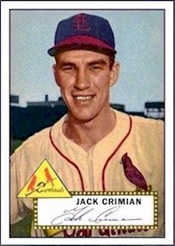
Crimian reached the big leagues with the Cardinals in 1951, pitched in two seasons for them and also played for the Athletics and Tigers.

A right-hander, Crimian was a relief specialist with the Cardinals, but had his most successful season as a starter in the minor leagues.

Willing to work

After graduating high school in Philadelphia, Crimian was signed by the hometown Phillies. In 1944, his first season in the Phillies’ minor-league organization, Crimian earned 18 wins. He joined the Army in 1945 and served as a paratrooper. A year later, he returned to the Phillies’ farm system and was chosen by the Cardinals in the November 1946 minor-league draft.

In 1951, Crimian’s fifth season as a Cardinals minor leaguer, he thrived as a reliever for Columbus manager Harry Walker.

Crimian worked in 30 of Columbus’ first 50 games, developing a reputation as a “rubber-armed pitcher,” according to The Sporting News.

“Crimian is a big-league relief pitcher,” said Charlie Grimm, manager of the Braves’ Milwaukee farm team. “I’ll not miss him when the St. Louis Cardinals call him up.”

On Walker’s recommendation, the Cardinals promoted Crimian on July 1, 1951, as they were about to embark on a three-week road trip. “Harry told me Jack was one of those guys you can use every day for a couple of innings and have him go at top speed,” said Cardinals manager Marty Marion. “That’s what we need.”

Frustrating the Phillies

Crimian, 25, made his major-league debut for the Cardinals on July 3, 1951, against the Reds at Cincinnati. Relieving Harry Brecheen in the sixth inning, Crimian faced two batters, yielding a walk to Dixie Howell and a three-run double to Barney McCosky. Boxscore

The highlight of Crimian’s stint with the Cardinals came two weeks later, on July 15, 1951, in the first game of a doubleheader against the Phillies at Shibe Park in Philadelphia.

With the score tied at 3-3, Crimian relieved Brecheen and held the Phillies scoreless in the sixth, seventh and eighth innings, working around a leadoff triple by Granny Hamner in the seventh. The Cardinals scored twice in the seventh and twice in the eighth, taking a 7-3 lead into the bottom of the ninth.

With one out, Del Ennis hit a home run against Crimian, cutting the Cardinals’ lead to 7-4. After Hamner grounded out, Jimmy Bloodworth walked and Del Wilber doubled, putting runners on second and third and bringing the potential tying run to the plate.

Dick Sisler, a former Cardinal, was the batter. After working the count to 2-and-1, he hit a pitch from Crimian over the right-field wall. If the ball landed fair, it would have been a three-run home run, tying the score, but it curved into foul territory.

Unwilling to let Crimian throw another pitch to Sisler, Marion brought in Al Brazle to finish the job. Brazle’s first pitch was a curveball and Sisler watched it bend across the plate for strike three, preserving the win for Crimian. Boxscore

A week later, on July 24, 1951, Crimian made his first appearance at Sportsman’s Park in St. Louis and Sisler again played a central role. With the Cardinals leading the Phillies, 8-5, Crimian relieved Brecheen with two on and two outs in the eighth and struck out Sisler. The Cardinals scored a run in the bottom of the eighth and Crimian retired the Phillies in order in the ninth, earning a save. Boxscore

On the move

Crimian made 11 appearances, all in July, for the 1951 Cardinals and was 1-0 with a 9.00 ERA before he was returned to the minors.

In 1952, Crimian was called up to the Cardinals in June, pitched in five games, posted a 9.72 ERA and was demoted.

Playing for Walker at Rochester in 1953, Crimian was 13-5 with a 2.86 ERA, but the Cardinals didn’t call. On Dec. 2, 1953, the Cardinals sent Crimian and $100,000 to the Reds for shortstop Alex Grammas.

According to the Dayton Daily News, Walker spoke to Reds manager Birdie Tebbetts about Crimian and said there’s “no reason why he can’t relieve successfully in the majors.”

The Reds, though, never gave Crimian a chance. On April 8, 1954, the Reds sold Crimian’s contract to the Toronto Maple Leafs, an unaffiliated minor-league club owned by Jack Kent Cooke. The Maple Leafs manager was Luke Sewell, who managed the St. Louis Browns to the 1944 American League pennant and a berth in the World Series against the Cardinals.

Back in the bigs

Crimian earned 30 saves for the Maple Leafs in 1954. During the summer, the Yankees expressed interest in acquiring him, “but Cooke wouldn’t part with Crimian in midseason,” The Sporting News reported.

In 1955, Sewell put Crimian in the starting rotation because he “wasn’t getting enough work to stay sharp” as a reliever.

“I have trouble keeping a fine touch if I don’t get enough work,” Crimian said.

Crimian posted a 19-6 record and 2.10 ERA, earning International League pitcher of the year honors.

The pitching-poor Athletics of the American League took notice. On Oct. 12, 1955, the Athletics acquired Crimian from the Maple Leafs for pitcher Marion Fricano and $60,000.

“If they give this fellow a chance to learn the hitters, he can’t miss,” Sewell said. “He’s got the best control I’ve seen in any pitcher.”

Crimian spent the 1956 season with the Athletics and was 4-8 with a 5.51 ERA in 54 appearances. His highlight came on Sept. 4, 1956, when he won a start against the Indians and outdueled Herb Score, a 20-game winner. Boxscore

In December 1956, the Athletics traded Crimian to the Tigers. He pitched in four games for them in 1957, including on April 18 when Indians rookie Roger Maris hit his first major-league home run, a grand slam, against Crimian in the 11th inning at Detroit. Boxscore

Read Full Post »

(Updated June 15, 2023)

Joe Gibbon grew up as a Cardinals fan in Mississippi, passed up a career in basketball for baseball and pitched in the major leagues for 13 seasons.

Gibbon spent his big-league career in the National League with the Pirates (1960-65 and 1969-70), Giants (1966-69), Reds (1971-72) and Astros (1972).

A left-hander who threw sidearm and possessed a sinking fastball, Gibbon was used as a starter and reliever. He had a record of 61-65 with 32 saves and a 3.52 ERA in the majors. Gibbon was 38-46 with a 3.98 ERA as a starter and 23-19 with a 2.73 ERA as a reliever.

Against the Cardinals, Gibbon was 3-9 with three saves and a 5.05 ERA, giving up 155 hits in 117.2 innings. Curt Flood batted .531 in 49 at-bats versus Gibbon, but Lou Brock hit .159 in 44 at-bats.

In the book “We Played the Game,” Cardinals catcher Tim McCarver, comparing the pitching motions of National League left-handers, said, “Sandy Koufax came over the top, so he wasn’t as frightening as left-handers like Joe Gibbon and (Pirates teammate) Fred Green.”

In his book, “Baseball for Brain Surgeons and Other Fans,” McCarver explained why he thought Gibbon was intimidating for a left-handed batter to face: “On his delivery, he’d drop his arm to first and our rear ends would follow. It was impossible to stay in against him. I said, ‘I’m going to stand away from the plate and I’ll take anything inside,’ but when I moved off the plate, he’d cleverly follow me with his sinker. I still couldn’t extend my arms. I’d lose all sense of where I was in the box.”

Hoops talent

Gibbon was born and raised in Hickory, Mississippi, a town named after President Andrew Jackson, who earned the nickname “Old Hickory” because of his toughness as an Army general.

Gibbon followed the Cardinals as a youth and his favorite player was Stan Musial, according to the Society for American Baseball Research. Gibbon listened on radio to the broadcast of Game 7 of the 1946 World Series when Harry Walker of the Cardinals drove in Enos Slaughter with the winning run against the Red Sox. Walker would become one of Gibbon’s managers in the big leagues.

At 6 feet 4, Gibbon was talented in baseball and basketball, excelling in both sports at the University of Mississippi. In the 1956-57 NCAA Division I basketball season, Gibbon was second in the nation in scoring, averaging 30 points and 14.1 rebounds a game. Grady Wallace of South Carolina averaged 31.2 points and he and Gibbon finished ahead of Seattle’s Elgin Baylor (29.7) and Kansas’ Wilt Chamberlain (29.6).

Gibbon was drafted by the NBA Boston Celtics but signed with the baseball Pirates in 1957. In 1959, his third season in the Pirates’ farm system, Gibbon was 16-9 with a 2.60 ERA for Class AAA Columbus, Ohio, gaining him a spot in the majors with the 1960 Pirates.

Rookie success

After earning two wins in relief in April 1960 for the Pirates, Gibbon’s first win as a big-league starter came against the Cardinals on May 19 at Pittsburgh.

Matched against 19-year-old Ray Sadecki, who was making his major-league debut for the Cardinals, Gibbon pitched six scoreless innings before yielding a run in the seventh and another in the eighth. The second run was scored by Musial, who walked in a pinch-hit appearance the first time he faced Gibbon.

Gibbon pitched 7.1 innings, allowing two runs, striking out seven and getting the win in an 8-3 Pirates triumph over the Cardinals. Boxscore

The Pirates won the 1960 National League pennant and Gibbon contributed with a 4-2 record. In the 1960 World Series against the Yankees, Gibbon made two relief appearances, surrendering a three-run home run to Mickey Mantle in Game 2 Boxscore and pitching a scoreless inning in Game 3. The Pirates won the championship in Game 7.

Birthday blast

In 1961, Gibbon earned 13 wins for the Pirates, but against the Cardinals he was 0-3 with a 7.71 ERA.

On Aug. 9, 1961, the Cardinals’ Julian Javier broke up a scoreless game with a grand slam against Gibbon in the eighth inning at Pittsburgh. Javier, a former Pirates prospect playing on his 25th birthday, hit an outside fastball down the right-field line and over the wall at Forbes Field. Boxscore

Six years later, on June 29, 1967, Gibbon started for the Giants against the Cardinals at St. Louis. The Giants scored 11 runs in the top of the first against Bob Gibson and Nelson Briles, but Gibbon couldn’t take advantage of the gift. He gave up two runs in the bottom half of the inning without getting an out and was lifted for a reliever. Boxscore

Read Full Post »

(Updated April 13, 2020)

Don Newcombe was as tough on the Cardinals with a bat as he was with pitches.

Newcombe was a hard-throwing, hard-hitting pitcher who spent his prime years with the Dodgers.

At 6-4, 220 pounds, Newcombe was an imposing figure on the mound, where he threw right-handed, and at the plate, where he hit left-handed.
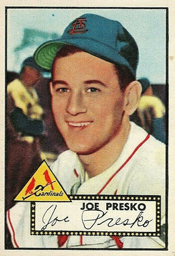
In 10 years in the major leagues, Newcombe had a 149-90 record and hit .271 with 15 home runs. Against the Cardinals, Newcombe was 23-11 and hit .299 with six home runs.

In 1955, when he was 20-5 for the champion Dodgers, Newcombe “toyed with the Cardinals as though they were a sandlot team,” the St. Louis Post-Dispatch reported. Newcombe was 4-0 with a 1.75 ERA and batted .524 with seven RBI versus the 1955 Cardinals.

Newcombe “is downright unbelievable these days,” marveled the Post-Dispatch. “The way he’s going, the only question is whether he can throw as hard as he can hit, or hit as hard as he can throw.”

Rookie vs. Redbirds

Newcombe, 22, made his major-league debut for the Dodgers against the Cardinals on May 20, 1949, at St. Louis and it was a hard-luck initiation.

With the Cardinals ahead, 3-2, Newcombe relieved Rex Barney to open the bottom of the seventh inning. The St. Louis Star-Times, getting its first glimpse of the rookie, described him as “bull-shouldered” and a “massive mountain man.”

Newcombe struck out the first batter, Chuck Diering, on three pitches _ two fastballs and a curve _ and Red Schoendienst followed with a lined single to right.

Next up was Stan Musial. Newcombe fooled him with a low, outside pitch, causing Musial to check his swing, but the ball met his bat and was blooped into shallow left for a single, moving Schoendienst to second.

Newcombe overpowered the next batter, Eddie Kazak, who topped the ball to short so weakly Pee Wee Reese had no play.

The infield single loaded the bases for Enos Slaughter, who drove Newcombe’s first pitch deep down the left-field line for a bases-clearing double. Newcombe was relieved by Erv Palica and the Cardinals won, 6-2. Boxscore

“I had good stuff,” Newcombe said to The Brooklyn Daily Eagle. “My arm felt good and loose, too.”

According to a Saturday Evening Post article reported on in The Sporting News, when Newcombe struck out Diering, “the Negro fans in the right field stands at Sportsman’s Park went wild. White fans resented this _ cheers for the visiting Negro player and hoots for the hometown Cardinals. So when the Cardinals began pounding away at Newcombe, the white fans gave him the business.”

Three months later, on Aug. 24, 1949, in what The Brooklyn Daily Eagle called “quite possibly the most important single game the Dodgers will have this season,” Newcombe pitched a shutout and drove in three runs in a 6-0 victory over the Cardinals at Brooklyn. The win moved the Dodgers within a game of the first-place Cardinals. Boxscore

Newcombe is “the closest thing to a real blow-’em-down pitcher the National League has seen since Mort Cooper was at his best,” declared the Post-Dispatch.

Solved by Stan

The Dodgers won the 1949 pennant, finishing a game ahead of the Cardinals. Newcombe posted a 17-8 record, pitched 244.1 innings and won the National League Rookie of the Year Award.

In the 1994 book “We Played the Game,” Newcombe said as a rookie, “I had the talent and desire _ and I was cocky. I knew I was good, as good or better than the white guys who were trying to keep me from being there.”

Newcombe led the National League in winning percentage in 1955 (20-5, .800) and 1956 (27-7, .794), and was 4-0 versus the Cardinals in each season.

The Cardinal who hit Newcombe the hardest was Musial. Newcombe gave up more home runs (11) to Musial than to any other batter. Musial hit .349 against him.

In “We Played the Game,” Newcombe said, “I pitched toward batters’ weaknesses. Except for Stan Musial and Hank Aaron, they all had weaknesses, even Willie Mays.”

On June 21, 1956, during a season when Newcombe won both the Cy Young Award and the National League Most Valuable Player trophy, Musial hit a pair of two-run home runs and a single against him, but the Dodgers won, 9-8, with a four-run rally in the bottom of the ninth. Boxscore

Newcombe and Carl Erskine were the pitchers when Musial hit for the cycle against the Dodgers on July 24, 1949, at Brooklyn. Musial tripled against Newcombe and had a single, double and home run off Erskine. Boxscore

In his 1964 autobiography, “Stan Musial: The Man’s Own Story,” Musial said, “Newk had as great control for a hard thrower as any pitcher I ever faced. I hit him good, but he had a good fastball and curve.”

Read Full Post »

Joe Presko pitched for the Cardinals at a time when the Dodgers dominated the National League.

Presko was with the Cardinals from 1951-54, a period when the Dodgers won two National League pennants and twice finished in second.
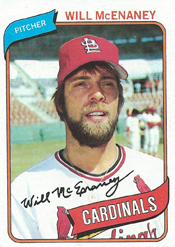
Those Dodgers teams were immortalized in the Roger Kahn book “The Boys of Summer” and featured players such as Roy Campanella, Gil Hodges, Pee Wee Reese, Jackie Robinson and Duke Snider.

Presko was 24-36 with a 4.70 ERA in his four seasons with St. Louis, but those numbers look better when excluding his performances against the Dodgers. Presko was 2-11 with a 6.33 ERA versus the Dodgers and 22-25 against the rest of the National League.

Big talent

Presko, a 5-foot-9 right-hander with a boyish appearance, didn’t play organized baseball until his senior year in high school in Kansas City, Mo., according to the St. Louis Post-Dispatch. Because he threw hard, he got the attention of Yankees scout Bill Essick, who concluded Presko was too small to play professional baseball.

After graduating high school, Presko was playing for a drug store team in Kansas City when the Cardinals got a tip to give him a look, The Sporting News reported. Scout Runt Marr liked what he saw and signed him.

Presko rapidly rose through the Cardinals’ minor-league system, producing win totals of 16 in 1948, 14 in 1949 and 16 again in 1950.

Cardinals manager Marty Marion kept him with the big-league club after spring training in 1951. “He has a fastball that breezes right by you if you guess it’s a curve,” said Marion. “He throws everything with the same motion, seemingly the same speed.”

On May 3, 1951, Presko got a win in his major-league debut with four innings of one-hit relief against the defending National League champion Phillies. Presko yielded a solo home run to the second batter he faced, Eddie Pellagrini, and retired the next 11 in a row. Boxscore

Referring to him as Little Joe, the Post-Dispatch reported Presko “won the admiration of his teammates.”

In his second Cardinals appearance, Presko got a save with two scoreless innings against the Dodgers. Boxscore

Hot streak

Marion moved Presko into the starting rotation and after losses to the Giants and Reds on the road he made his first appearance before the home crowd in St. Louis on May 17, 1951, in a start against the Phillies.

Described by Bob Broeg of the Post-Dispatch as looking “more like a bat boy than a major-league pitcher,” Presko outdueled Phillies ace Robin Roberts and pitched a complete game in a 2-1 Cardinals victory.

“He throws as hard as any little man I ever saw _ and just by flicking his wrist,” said Cardinals pitcher Harry Brecheen.

Said Cardinals catcher Del Rice: “It was a pleasure catching him. His fastball is sneaky because he throws with such an easy motion. He’s got good control and he works with you as you move your target, hitting your glove outside or inside, high or low, and comes side-armed whenever you give him the sign.” Boxscore

Presko won five consecutive decisions between May 17 and June 8 for the 1951 Cardinals. Broeg, who began referring to the baby-faced rookie as “Baby Joe,” declared him “the nicest gift from the Cardinals’ farm system since Red Schoendienst came up six years ago.”

Presko’s winning streak ended on June 14, 1951, when Hodges hit a two-run home run with two outs in the ninth, lifting the Dodgers to a 2-1 victory. Boxscore

Hodges would remain a nemesis, hitting four home runs against Presko in his career.

Arm ailment

In late June 1951, Presko developed a sore arm and a month later it was discovered he’d torn tendons in the right shoulder. He sat out the last two months, finishing the season at 7-4 with a 3.45 ERA.

Presko returned to the Cardinals in 1952 and achieved one of his career highlights on June 10 when he pitched a 10-inning shutout against the Dodgers at St. Louis.

After Presko retired the Dodgers in the top of the 10th, he felt a twinge in his right shoulder and was told by player-manager Eddie Stanky he was done for the night. When Stanky batted for Presko to lead off the bottom of the 10th, he was booed.

“Everyone knows there’s nothing I like better than winning, but I just couldn’t take a chance of hurting Joe Presko,” Stanky said. “I took him out because of his shoulder. He’s had his arm hurt once before and I don’t want it to happen again.”

After Stanky grounded out, Solly Hemus was hit by a pitch from Chris Van Cuyk and Schoendienst followed with a game-winning triple, enabling Presko to earn the win. Boxscore

Presko lost six of his last seven decisions in 1952 and finished at 7-10 with a 4.05 ERA. He was 6-13 in 1953 and 4-9 in 1954. One of the highlights of his final St. Louis season in 1954 was a win versus the Dodgers with a scoreless inning of relief on April 28. Boxscore

After spending 1955 with the Cardinals’ farm club at Omaha, Presko was taken by the Tigers in the Rule 5 draft of unprotected players. He pitched briefly for the Tigers in 1957 and 1958.

Read Full Post »

After endangering his life and his baseball career, reliever Will McEnaney sought to make a comeback with the Cardinals.

On Feb. 19, 1979, the Cardinals signed McEnaney to a minor-league contract and invited him to their spring training camp.

His fall from World Series hero with the Reds to major-league castoff was both rapid and stunning.

Reds manager Sparky Anderson twice entrusted McEnaney with clinching a World Series championship and both times he delivered. McEnaney got the save in Game 7 of the 1975 World Series against the Red Sox and did it again in Game 4 of the 1976 World Series sweep of the Yankees.

From those dizzying heights, McEnaney’s partying lifestyle spun out of control until he crashed his car into a house on a winter night.

Championship performances

McEnaney was born and raised in Springfield, Ohio, near Dayton, and caught the attention of a Reds scout while pitching in an amateur summer league.

A left-handed pitcher, he was chosen by the Reds in the eighth round of the 1970 draft and made his major-league debut with them in 1974.

In 1975, McEnaney, 23, had his best season, posting a 5-2 record with 15 saves and a 2.47 ERA for the National League champion Reds. In the seven-game World Series, he made five appearances totaling 6.2 innings and had a 2.70 ERA.

In Game 7, with the Reds ahead, 4-3, in the ninth, McEnaney came in and retired three consecutive batters _ Juan Beniquez, Bob Montgomery and Carl Yastrzemski _ to seal the win and clinch the Reds’ first World Series title since 1940. Boxscore

McEnaney was 2-6 with seven saves and 4.85 ERA in 1976, but the Reds returned to the World Series and he again was stellar on the big stage. He pitched 4.2 scoreless innings over two appearances against the Yankees and earned saves in Game 3 and the decisive Game 4. Boxscore

After playing a prominent role in the success of the Big Red Machine, McEnaney was surprised and disheartened when two months later, on Dec. 16, 1976, he and slugger Tony Perez were traded to the Expos for pitchers Woodie Fryman and Dale Murray.

One reason the Reds dealt McEnaney is “they didn’t care for his lifestyle,” Si Burick of the Dayton Daily News reported.

Troubled times

Facing an array of personal problems and demons, McEnaney was 3-5 with three saves and a 3.95 ERA for the 1977 Expos.

In March 1978, he was traded to the Pirates and was demoted to the minors two months later. When the Pirates told him they didn’t intend to put him on their major-league roster in 1979, McEnaney requested and received his release, forfeiting the last year of a guaranteed $90,000 contract.

“Will carried the weight of the world on his shoulders and seemed about to crack up,” Burick wrote in his Dayton Daily News column.

In the predawn hours of Dec. 7, 1978, two months after the Pirates released him, McEnaney was injured in a one-car crash in Springfield, Ohio. The Ohio Highway Patrol said McEnaney’s Mercedes went out of control on a curve and slammed into a house, the Dayton Daily News reported. McEnaney was cited for reckless driving.

He sliced a tear duct gland in the accident and underwent eye surgery.

“I almost lost my sight, or my life,” McEnaney said to Hal McCoy of the Dayton Daily News. “I was going 50 mph when I slid into that house. Right then I had a direct conversation with God and He said He would give me one more chance. It was time to straighten up my act, quit fooling around and take baseball seriously.”

Regarding a carousing lifestyle, McEnaney said, “I had a problem … a deep problem.”

Feeling groovy

Cardinals general manager John Claiborne was willing to give McEnaney, 27, a chance to rebuild his career.

When he reported to spring training at St. Petersburg, Fla., in 1979, McEnaney told Rick Hummel of the St. Louis Post-Dispatch he was committed to changing his ways. “I haven’t been a disciplined person,” McEnaney said. “It’s a heck of a thing to admit to yourself you’ve got a problem.”

McEnaney pitched well in spring training but the Cardinals sent him to their farm club in Springfield, Ill. He had a 2.08 ERA in seven appearances for Springfield when he was called up to the Cardinals in May 1979.

Rejuvenated, McEnaney posted an 0.90 ERA in 11 appearances in June 1979. “I’m in a groove,” he said. “I’d forgotten what it felt like to be in that kind of groove.”

In late June, a man on trial on aggravated murder charges in Hamilton, Ohio, testified in court he sold cocaine to McEnaney, the Dayton Daily News reported. McEnaney told the Post-Dispatch the allegation was “totally false” and Claiborne said, “After talking to Will, I am satisfied he was not involved.”

McEnaney had a 6.60 ERA in 12 appearances in July 1979 and gave up a grand slam to Ray Knight of the Reds on July 19.

A highlight of McEnaney’s season was his performance against the Pirates. He had an 0.93 ERA in five appearances against the 1979 National League champions.

His best outing was on Sept. 6, 1979, when he pitched four scoreless innings to earn a save in an 8-6 Cardinals victory over the Pirates at St. Louis. Eight of the 12 outs McEnaney recorded were groundouts. Boxscore

“I felt confident nobody was going to hit one out of the ballpark because I had excellent location on my pitches,” McEnaney said.

After Willie Stargell made the last out, Cardinals catcher Ted Simmons went to the mound and embraced McEnaney, who also got congratulations from infielders Ken Reitz, Garry Templeton, Ken Oberkfell and Keith Hernandez. Reitz said to McEnaney, “Way to pick us up.”

McEnaney finished with an 0-3 record, two saves and a 2.95 ERA in 45 appearances for the Cardinals in 1979.

In February 1980, McEnaney filed for salary arbitration. After being paid $40,000 in 1979, he wanted $125,000 in 1980. The Cardinals offered $65,000 and an arbitrator ruled in their favor.

A month later, on March 31, 1980, the Cardinals released McEnaney. Hernandez called it “the surprise of the spring.” Outfielder Dane Iorg said, “I thought he had the club made.”

By cutting McEnaney before April 1, the Cardinals had to pay him one-sixth of his salary, about $11,000, rather than the full amount.

“I don’t think I was cut for a lack of ability,” McEnaney said to United Press International. “I think it was guaranteed contracts that sent me on my way.”

McEnaney pitched in the farm systems of the Yankees and Rangers, and in Mexico, but never got back to the big leagues.

Read Full Post »

In 1960, while pursuing a pennant with the Pirates, pitcher Bob Friend twice surrendered game-winning home runs to Stan Musial in a two-week span in the heat of the National League title chase.

Friend was a durable, dependable right-hander for 16 big-league seasons, 15 with the Pirates.

Friend led the National League in ERA (2.83) in 1955, tied for the league lead in wins (22) in 1958 and twice pitched the most innings (314.1 in 1956 and 277 in 1957).

When the Pirates won their first pennant in 33 years in 1960, Friend was 18-12 with a 3.00 ERA and led the staff in starts (37), shutouts (four), innings pitched (275.2) and strikeouts (183).

He might have won 20 if not for the home run heroics of Musial.

Power stroke

On Aug. 11, 1960, the Cardinals opened a five-game series against the Pirates at Pittsburgh. The second-place Cardinals, who were five games behind the Pirates, started Ernie Broglio against Friend in Game 1.

The Pirates scored a run in the fifth, the Cardinals tied the score at 1-1 in the eighth and both starting pitchers still were in the game as it entered the 12th.

Bill White opened the inning with a single. After Ken Boyer flied out, Musial, who had doubled twice in the game, came to the plate.

Friend’s first pitch to him was a fastball and Musial hit it into the upper deck in right for a two-run home run, giving the Cardinals a 3-1 lead.

The Pirates scored a run in the bottom half of the 12th, but Broglio struck out Dick Stuart with the potential tying run at second, securing a 3-2 victory and moving the Cardinals within four games of the Pirates. Boxscore

When Friend got into the clubhouse, he “disgustedly tossed his glove toward his locker,” the Pittsburgh Post-Gazette reported.

“I can’t pitch any better,” Friend said to The Pittsburgh Press. “I tried to get Musial to hit to center field and pitched him over the outside of the plate, but he went right with me. The fastball was on the outside of the plate and yet he pulled it into the seats.”

Friend told the St. Louis Post-Dispatch, “I thought I had as much stuff as I ever had and threw as hard as I did any time this season.”

Musial, typically modest, said, “Bob is a good pitcher, real fast and cagey. I guess I was kind of lucky to tag him the way I did.”

Told the home run was the 424th of his major-league career, Musial replied, “That’s quite a few for a singles hitter.”

Musial visited his hometown of Donora, Pa., during the series and took heat for beating the Pirates. He told the Post-Dispatch, “My old friends kept asking me, ‘What did you have to do that for?’ ”

Behind the pitching of Bob Gibson, the Cardinals won the second game of the series, getting within three of first place, but the Pirates won the last three, pushing their lead to six.

Oldie but goodie

Two weeks later, the first-place Pirates came to St. Louis for a three-game series. The Cardinals were in third place, 8.5 games behind the leaders.

In the series opener, on Aug. 26, 1960, Friend again was matched against Broglio.

In the seventh inning, with the scored tied at 1-1, Musial, hitless in three at-bats, came up with a runner on first and one out.

Friend got ahead on the count, 1-and-2, and tried to jam Musial on the fists with a fastball. The pitch was inside, but low, and Musial hit it to the pavilion roof in right for a two-run home run.

“It was the only ball I hit good during the game,” Musial said.

Said Friend: “Pretty soon I’ll be talking to myself.”

Broglio retired the Pirates in order over the last two innings and Musial’s home run proved the difference in a 3-1 Cardinals triumph. Boxscore

“Like I always say, there’s room in this game for old men who can hit,” said Musial, 39.

For his career, Musial hit .277 with five home runs against Friend.

The Cardinals went on to sweep the series and get within 5.5 games of first place, but the Pirates didn’t falter. Friend played a prominent role down the stretch, winning four of his last five decisions.

Friend, who pitched for the Yankees and Mets in his final season (1966), posted a 197-230 career mark. Versus the Cardinals, he was 19-28 with seven shutouts.

On Aug. 15, 1951, in his rookie season, Friend, 20, pitched his first big-league shutout with a two-hitter against the Cardinals at Pittsburgh. The Cardinals’ two hits came in the second inning on singles by Nippy Jones and Bob Scheffing. Boxscore

Using a sinker and curve, Friend recorded a career-high 11 strikeouts in a win versus the Cardinals on Aug. 20, 1959, at Pittsburgh. Boxscore

Read Full Post »

« Newer Posts - Older Posts »