Feeds:
Posts
Comments

Archive for the ‘Games’ Category

Darold Knowles was the first free-agent player signed by the Cardinals, the club he dreamed of playing for as a youth in Missouri.
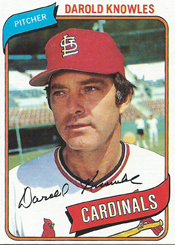
On Jan. 16, 1979, the Cardinals signed Knowles to a two-year contract for $100,000 per season.

Three years after baseball put in a system enabling players to become free agents, the Cardinals finally acquired one.

Free agency for players occurred in 1976 after Cardinals outfielder Curt Flood challenged baseball’s reserve clause in court and arbitrator Peter Seitz ruled pitchers Andy Messersmith and Dave McNally should be free to sign with any teams they wanted after playing a season without contracts.

On July 12, 1976, a new collective bargaining agreement between players and owners created the framework for determining who could become free agents.

Though the Cardinals did pursue Pete Rose and other free agents, they consistently were outbid.

The signing of Knowles, a left-handed reliever, wasn’t a blockbuster, but he was respected, experienced and wanted to play for the Cardinals.

Redbirds rooter

Knowles was born in Brunswick, Mo., a rural community known for producing pecans, and he became a standout amateur player.

The first major-league game he saw as a youth was at St. Louis in the 1950s. “I’ve been a Cardinals fan for as long as I can remember,” Knowles said to the St. Louis Post-Dispatch.

The Cardinals, though, weren’t too interested in Knowles and he signed with the Orioles in February 1961.

Knowles, 23, made his major-league debut for the Orioles in 1965, pitched in five games for them and was traded after the season to the Phillies.

Storybook success

With his mother and father in attendance, Knowles got his first major-league win in his first appearance for the Phillies on April 14, 1966, at St. Louis against the Cardinals.

“I can pitch up here,” Knowles said to the Philadelphia Inquirer. “I’ve got to throw strikes. I don’t consider myself a strikeout pitcher. If I can throw 27 ground balls, I’m happy.”

The Phillies led, 5-3, when Knowles relieved starter Ray Herbert with a runner on first and none out in the fourth. Knowles pitched “six pressure-packed innings” and “constantly worked his way out of trouble,” the Inquirer reported.

After the Cardinals scored in the fifth, pulling within a run at 5-4, Lou Brock led off the seventh with a walk, but was picked off by Knowles.

“We were going to bunt Lou over,” Cardinals manager Red Schoendienst said. “I don’t know what he was doing trying to steal.”

Said Knowles: “I figured that with them one run down, Brock would try to steal sometime. So I decided to throw to first right away. We got Brock and that was the ballgame. It was a big lift for me.” Boxscore

Championship caliber

In addition to the Orioles and Phillies, Knowles pitched for the Senators (1967-71), Athletics (1971-74), Cubs (1975-76), Rangers (1977) and Expos (1978) before joining the Cardinals.

With the 1970 Senators, Knowles was 2-14 with 27 saves and a 2.04 ERA.

Knowles was with the Athletics when they won three consecutive World Series championships (1972-74). He pitched in all seven games of the 1973 World Series versus the Mets, earning saves in Game 1 and Game 7, and totaled 6.1 scoreless innings.

In 1978, when he joined the Expos, Knowles was reunited with manager Dick Williams, who managed the championship Athletics clubs in 1972 and 1973. Knowles was 3-3 with six saves and a 2.38 ERA for the Expos and they wanted to re-sign him in 1979, “but my family and I didn’t like Montreal,” Knowles said.

Knowles, 37, became a free agent and interested the Cardinals, who were seeking a left-hander to join Mark Littell as short-inning relievers.

Old pro

“I feel good and I think I can have four or five more good years,” Knowles said when he signed with the Cardinals. “I’ve never been overpowering, but I’ve been blessed with good control and the ability to keep my pitches low.”

Said Cardinals catcher Ted Simmons: “Knowles knows what he’s doing. He’s been through every kind of situation. Whatever he’s lost with his arm, he can compensate for with his head. He knows how to approach his job, and the approach is 70 percent of the game.”

At first, Knowles did well for the Cardinals, posting a 2-1 record with four saves and a 2.00 ERA in May, but he finished the 1979 season at 2-5 with six saves and a 4.07 ERA.

Knowles, 38, returned to the Cardinals in 1980 for the second year of his contract.

In his second appearance, on April 18, 1980, Knowles was brought in to protect an 8-7 lead against the Pirates with one on and one out in the sixth. He threw a “scroogie changeup” to the first batter he faced, Dave Parker, who hit a home run and put the Pirates ahead, 9-8.

“The ball was low enough, but I didn’t want it over the plate,” Knowles said.

Knowles allowed another run before completing the inning and was the losing pitcher in a 12-10 Pirates triumph. Boxscore

“We were in a position to win this game and I screwed it up,” Knowles said.

Coaching career

On May 9, 1980, Knowles was released soon after the Cardinals acquired left-hander Jim Kaat from the Yankees.

“I didn’t have that much left,” Knowles said to the Society for American Baseball Research. “I didn’t have the good stuff that I had earlier, but it was OK. I wound up playing for my boyhood dream team and loved every minute in St. Louis.”

Knowles finished with a career record of 66-74, 143 saves and a 3.12 ERA.

The next year, the Cardinals hired Knowles as minor-league pitching coach and he served in the role from 1981-88. In 1983, when Cardinals pitching coach Hub Kittle left the club in June to be with his ailing wife, Knowles filled in for him the remainder of the season.

In 1989, Phillies general manager Lee Thomas, the former Cardinals director of player development, hired Knowles to be pitching coach. Serving on the staff of manager Nick Leyva, a former Cardinals coach, Knowles was Phillies pitching coach in 1989 and 1990.
Read Full Post »

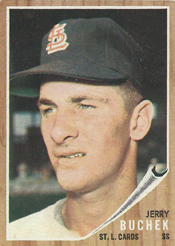
The Cardinals considered hometown shortstop Jerry Buchek the finest baseball prospect in the St. Louis area in 1959 and thought he could be another Marty Marion.

Buchek was a standout athlete at McKinley High School and excelled in amateur baseball leagues in St. Louis.

On Sept. 10, 1959, Buchek, 17, signed with the Cardinals for $65,000.

Cardinals scouts Joe Monahan and George Hasser recommended Buchek, who was pursued by several other major-league organizations.

“In our opinion, he is the best prospect in the area,” Cardinals minor-league director Walter Shannon said to the St. Louis Post-Dispatch.

“He has one of the really outstanding throwing arms in all baseball, an arm like Marty Marion’s was,” Shannon said.

Marion was the shortstop on four pennant-winning Cardinals clubs in the 1940s and was the first National League shortstop to win a Most Valuable Player Award. Marion didn’t hit for power, though, and Buchek did.

“The combination of his ability to field well with ability to hit the ball out of the park makes him desirable,” Monahan said.

Rushed to Wrigley

Buchek spent the 1960 season with Cardinals farm clubs at the Class AA and Class AAA levels and had as many strikeouts (104) as hits (104). The Cardinals assigned him to the Portland Beavers, their Class AAA team in the Pacific Coast League, in 1961.

Soon after he hit home runs in three consecutive games for Portland at Salt Lake City, Buchek, 19, was called up to the Cardinals. He joined them on June 30, 1961, in Chicago, 30 minutes before their afternoon game against the Cubs at Wrigley Field, and was put in the starting lineup by manager Solly Hemus.

In the eighth inning, with the bases loaded and one out, Buchek got his first big-league RBI when he was hit by a pitch from Don Elston. When Bob Lillis followed with a double, clearing the bases, Buchek scored his first run in the majors, helping the Cardinals to an 11-4 triumph. Boxscore

“We shouldn’t expect too much from Jerry Buchek right now,” Hemus cautioned, “but I do believe he’ll lend a little power.”

Plans change

The Cardinals were a mess when Buchek joined them. The win they got in Buchek’s debut gave them a 31-38 record.

Daryl Spencer opened the 1961 season as the Cardinals’ shortstop, but he was traded to the Dodgers on May 30 for Lillis and outfielder Carl Warwick. Lillis took over at shortstop, but was shifted to second base in mid-June. Hemus tried rookie Julio Gotay and veteran Alex Grammas before the Cardinals decided to give Buchek a shot as the shortstop.

On July 5, 1961, five days after Buchek’s debut, the Cardinals fired Hemus and promoted coach Johnny Keane to replace him. Keane continued to play Buchek as the starting shortstop, but the rookie struggled to hit.

Keane’s support of Buchek drew criticism on July 16, 1961, in a game against the Braves at St. Louis. In the fourth inning, with the Braves ahead 3-0, the Cardinals loaded the bases with one out before Buchek bounced into a double play. Two innings later, with two on and two outs, Buchek struck out, ending another Cardinals threat. He also committed an error and the Braves won, 9-1. Boxscore

After the game, Keane defended Buchek and said he’d remain the everyday shortstop.

Four days later, on July 20, 1961, the Cardinals changed their plan. Buchek, batting .128 after 16 starts at shortstop, was sent back to Portland.

Cardinals general manager Bing Devine said he and Keane and the coaches agreed to demote Buchek and call up pitcher Ed Bauta, who had a 9-1 record and 1.95 ERA as a Portland reliever.

“We are confident Buchek will become a great shortstop for us,” Devine said, “but we feel he can benefit just as much by playing daily for Portland.”

Years later, in an interview with Mark Simon for the Society for American Baseball Research, Buchek said, “I got a little nervous playing in my hometown.”

Ups and downs

Buchek played well in his return to Portland and when the Pacific Coast League season ended on Sept. 10 he was brought back to the Cardinals and reinserted into the starting lineup.

On Sept. 11, 1961, in his first game back as the starting shortstop, Buchek made three good plays against the Braves, the Post-Dispatch reported. He ranged to his left to snare a shot by Hank Aaron and made a strong throw to get him at first. He went behind the bag at second to start a double play and he made a “brilliant grab” of a smash by Joe Torre. Boxscore

Eight days later, on Sept. 19, 1961, Buchek made a play Keane said he’d never seen before. In the eighth, with a runner on first and two outs, Charlie Smith of the Phillies hit a fly to shallow center. Outfielder Curt Flood and second baseman Julian Javier collided attempting a catch. The ball bounced off Flood and caromed off Javier’s glove, but Buchek, racing over from the shortstop spot, dived and snared the ball before it reached the ground.

“Buchek deserves a lot of credit for being out there,” said Keane. “He didn’t just stand around.”

Buchek made 14 starts in September and October, but continued to struggle at the plate. He batted .133 for the 1961 Cardinals and made 10 errors in 30 starts at shortstop.

“It would be extremely unwise to expect him to play shortstop regularly next season,” wrote Post-Dispatch columnist Bob Broeg.

Buchek spent all of 1962 and most of 1963 in the minors. He played for the Cardinals from 1964-66, singled against Jim Bouton of the Yankees in his lone World Series at-bat in 1964 and was the Opening Day shortstop in 1966 before being replaced as the starter by Dal Maxvill two months later.

On April 1, 1967, in the first trade made by Cardinals general manager Stan Musial, Buchek was dealt to the Mets as part of a package for infielder Eddie Bressoud, outfielder Danny Napoleon and cash.

Read Full Post »

(Updated Nov. 27, 2021)

Before he gained fame with the Pirates for pitching 12 perfect innings against the Braves and earning two World Series wins versus the Yankees, Harvey Haddix began his career with the Cardinals and was their ace.

A left-hander at 5 feet 9, 160 pounds, Haddix “relied on technique instead of strength,” the Pittsburgh Post-Gazette reported.
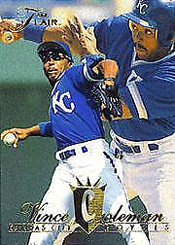
On May 26, 1959, at Milwaukee, Haddix pitched 12 perfect innings, retiring the first 36 batters he faced, but lost when the Braves scored an unearned run in the 13th. Boxscore

The Pittsburgh Press called it “the greatest of all baseball tragedies” and, years later, Marino Parascenzo of the Post-Gazette hailed Haddix as “a little guy with a big heart, big enough to pitch baseball’s greatest game and absorb one of baseball’s greatest disappointments, both in the same day _ and come up smiling.”

A year after his Milwaukee masterpiece, Haddix started and won Game 5 of the 1960 World Series at Yankee Stadium, and he pitched the ninth inning of Game 7 and got the win when Bill Mazeroski hit a walkoff home run for the Pirates. Boxscore

Those feats overshadowed the achievements of his early years with the Cardinals when he had a 20-win season, led the National League in shutouts and was selected to three all-star teams.

Catapult to success

Haddix grew up on an Ohio farm and signed with the Cardinals in 1947 after attending a tryout camp in Columbus. He pitched four seasons in the Cardinals’ system and was 18-6 for Class AAA Columbus in 1950 before serving in the Army.

After military service, the Cardinals brought Haddix to the major leagues. In his debut in a start against the Braves on Aug. 20, 1952, at St. Louis, Haddix got the win, singled, stole a base, drove in a run and scored a run in a 9-2 victory. Boxscore

Haddix was matched in his debut against Braves starter Lew Burdette. Seven years later, Burdette was the opposing pitcher who held the Pirates scoreless for 13 innings while Haddix was perfect for 12.

Haddix “bears a strong resemblance” to teammate Harry Brecheen in “size, pitching technique and ability,” Bob Broeg of the St. Louis Post-Dispatch reported.

Brecheen, nicknamed “The Cat,” earned 128 wins in his Cardinals career and was the 1948 National League ERA leader. Because he appeared to be a younger version of “The Cat,” Haddix got tabbed “The Kitten.”

Years later, according to Broeg, Cardinals outfielder Enos Slaughter said, “You know how much I think about Brecheen. Harvey is even better.”

Big winner

Haddix was 2-2 with a 2.79 ERA in 42 innings for the 1952 Cardinals. He maintained his rookie status in 1953 because he had pitched fewer than 45 innings in the major leagues.

Haddix posted a 20-9 record for the 1953 Cardinals, led the league in shutouts (six) and finished second to Dodgers infielder Jim Gilliam in balloting for the Rookie of the Year Award. Haddix also batted .289 with 11 RBI.

Haddix’s best pitching performance in his 20-win season was a two-hit shutout of the Phillies in a 2-0 Cardinals triumph on Aug. 6, 1953, at St. Louis.

Haddix held the Phillies hitless for eight innings. Richie Ashburn, leading off the ninth, attempted to bunt Haddix’s first pitch, fouled it off and got booed. “That’s what he’s paid to do, try to win,” Haddix said.

With the count 1-and-2 on Ashburn, Cardinals catcher Del Rice called for a slider, but Haddix shook off the sign and threw a curve. Ashburn lined the pitch to right for a single.

“He wouldn’t have hit that curve if I had got it where I wanted it _ down,” Haddix said. “It was high, though, and he should have hit it.”

With one out, Del Ennis bounced a single into left, but Haddix got Granny Hamner to ground into a game-ending double play. Boxscore

Haddix got his 20th win of the season on Sept. 25, 1953, in an 11-2 Cardinals rout of the Cubs at Wrigley Field. Boxscore

He became the first Cardinals pitcher to achieve 20 wins in a season since Howie Pollet was 20-9 in 1949.

Master craftsman

In 1954, Haddix was 18-13 for the Cardinals. From May 8, 1954, to June 23, 1954, Haddix won 10 consecutive decisions and lowered his ERA from 4.17 to 2.85. He allowed one run in the last 36 innings of the streak.

On July 1, 1954, at Milwaukee, Haddix was struck on the left knee by a Joe Adcock liner and was carried off the field on a stretcher. “I never threw the same after that,” he told author Walter Langford.

Haddix was 12-16 for the 1955 Cardinals, but was chosen for the All-Star Game for the third consecutive year. He pitched three innings and retired Ted Williams on a groundout to end the fifth and got Mickey Mantle on a groundout to start the sixth. Boxscore

The next year, Haddix appeared ready to give the Cardinals another good showing. On April 25, 1956, he pitched a two-hit shutout in a 6-0 Cardinals victory against the Cubs at St. Louis. Boxscore

Two weeks later, the Cardinals traded Haddix and pitchers Stu Miller and Ben Flowers to the Phillies for pitchers Murry Dickson and Herm Wehmeier.

In five seasons with St. Louis, Haddix was 53-40 with a 3.65 ERA and 12 shutouts. “He had the misfortune to be the Cardinals’ best pitcher at a time they didn’t have enough,” wrote Broeg.

Haddix went on to pitch for the Phillies (1956-57), Reds (1958), Pirates (1959-63) and Orioles (1964-65). His pitching coach with the Orioles was Brecheen, a reunion of “The Cat” and “The Kitten.”

Haddix was 40 when he pitched his last big-league game and he finished with a career mark of 136-113.

Haddix became a pitching coach for the Mets (1966-67), Reds (1969), Red Sox (1971), Indians (1975-78) and Pirates (1979-84).

With the Mets, Haddix was the first big-league pitching coach for Nolan Ryan and Tom Seaver. When Frank Robinson became the first African-American manager in the big leagues with the 1975 Indians, he chose Haddix to be the pitching coach. In 1979, the Pirates won the World Series championship with Chuck Tanner as manager and Haddix as pitching coach.

In winters, Haddix returned to his Ohio farm near the village of South Vienna. “Haddix was a good rifle shot,” Broeg wrote. “Back home in Ohio, they considered him a hero after a neighbor’s bull went on a rampage and threatened life and property. Haddix delivered a bull’s-eye shot with only a .22-caliber.”

A year before he died at age 68 in January 1994, the Associated Press reported, Haddix, needing an oxygen tank, talked about his smoking habit.

“I was a three-pack-a-day man,” Haddix said. “That was my friend. My wife and kids didn’t travel with me. I could handle the drinking part of it, but not the cigarettes.

“I loved cigarettes, but they finally got to me.”

Read Full Post »

Six months after he damaged his personal reputation, Vince Coleman got a chance to extend his baseball career because he maintained a valued professional reputation.

On Jan. 5, 1994, the Royals traded one problem player, Kevin McReynolds, to the Mets for another, Coleman.
McReynolds was a bust in two seasons with the Royals, who got him from the Mets after the 1991 season, and they were glad to send him back. McReynolds was an underachiever, but, unlike Coleman, he didn’t get in trouble with the law for injuring people.

Coleman disgraced himself when, as a prank, he tossed an explosive device similar to a grenade toward a group of baseball fans, injuring three. He was charged with a felony and the Mets wanted no part of him.

The Royals took a public relations risk in acquiring Coleman, but justified the move because of their need for a premier leadoff batter.

Big trouble

Coleman made his major-league debut with the Cardinals in 1985, established a rookie record with 110 stolen bases, sparked the club to a pennant and won the National League Rookie of the Year Award. He led the league in stolen bases in each of his six seasons with St. Louis (1985-90).

After the 1990 season, Coleman became a free agent and signed with the Mets.

On July 24, 1993, Coleman tossed a M-100, described by authorities as a military device used to simulate grenades, into a Dodger Stadium parking lot where people gathered to seek autographs from players. The M-100, which packed the equivalent power of a quarter-stick of dynamite, exploded and injured a 2-year-old girl, an 11-year-old boy and a 33-year-old woman, according to the Los Angeles Fire Department.

A month later, on Aug. 26, 1993, the Mets cut their connection to Coleman. Club co-owner Fred Wilpon said Coleman “will not play here again as a Met” regardless of the legal outcome of the case.

On Nov. 5, 1993, Coleman pleaded guilty to a reduced charge of possession of an explosive device, a misdemeanor. A one-year jail term was suspended. He was given three years of probation and assigned 200 hours of community service. He also agreed to make restitution to the people he injured.

Limited market

After the plea bargain was reached, the Royals contacted the Mets about a trade, the New York Daily News reported. Felix Jose and Brian McRae were the Royals’ primary leadoff batters in 1993 but both were better suited for other spots in the order. The Royals saw Coleman, 32, as being similar to Willie Wilson, the leadoff man for their pennant-winning clubs in 1980 and 1985.

Until the Royals got interested in Coleman, “I didn’t think we would be able to trade him,” Mets general manager Joe McIvaine said to the Los Angeles Times.

Coleman’s former Cardinals manager, Whitey Herzog, who was in charge of baseball operations with the Angels, explored the possibility of acquiring him, but the Royals were more aggressive.

The Royals wanted the Mets take McReynolds, who was described by Kansas City Star columnist Jonathan Rand as a “sluggish underachiever” and “a player who didn’t seem to care how he looked on the field.”

When he played for the Mets from 1987-91, McReynolds was booed by fans and criticized by media. Before he was dealt to the Royals as part of a package for pitcher Bret Saberhagen, McReynolds, an Arkansas native, said New Yorkers “like to kick someone when they’re down.”

Eager to rid themselves of Coleman, the Mets agreed to take back McReynolds.

Opinions and explanations

Media mocked the trade. A headline in the New York Daily News called it, “Slop Swap,” and the New York Post countered with, “Tradin’ Fools.”

Daily News columnist Vic Ziegel declared the Mets got the best of the deal “because McReynolds will not have to spend the coming season splitting his time between the playing field and visits to his probation officer.”

“The Royals are the last organization in baseball you should have expected to obtain Coleman,” Jonathan Rand observed in the Kansas City Star. “Ever since their drug scandal of 1983, they have bent over backward to avoid problem players, and Coleman has the worst reputation of any player in the major leagues.”

Royals general manager Herk Robinson and vice president of baseball operations George Brett met with Coleman and talked with people who knew him before making the deal.

“We cannot condone Vince’s past conduct off the field, but George and I have spent a lot of time with Vince,” Robinson said. “We’re convinced Vince can be a solid citizen on the field and make a contribution in the community. We strongly believe he deserves an opportunity.”

Coleman “recognizes what he did was stupid and is genuinely sorry about it and highly motivated to resume his career,” Robinson said.

“We were convinced Vince Coleman is not a bad person,” Robinson said. “I think there’s a difference between somebody who’s a bad person and someone who made a mistake.”

Brett told The Sporting News, “If the reports had come back negative, I don’t think we would have made the trade.”

Coleman said, “What I did was wrong and I’m very sorry.”

At home in KC

Cardinals fans saw irony in Coleman landing with the Royals. During the 1985 National League Championship Series, an automatic tarpaulin at Busch Stadium in St. Louis accidently rolled over Coleman’s left leg and chipped a bone. The injury prevented Coleman from playing in the 1985 World Series against the Royals, who won four of seven from the Cardinals.

“I think if he’d have been healthy in the ’85 Series, we would have lost,” Brett said to the Kansas City Star on the day the Royals acquired Coleman.

The Royals opened the 1994 season with two games at Baltimore before playing their home opener on April 8 versus the Indians. Coleman “received a hearty welcome” from the 38,496 in attendance, according to the Kansas City Star.

Cheers grew louder in the fifth inning when Coleman got a single, his first hit as a Royal, and stole second base. In the eighth, Coleman hit a home run against Derek Lilliquist. Boxscore

“It was very special to hear the response from the fans,” Coleman said. “The way they cheered, it was all very motivating. Even when I was in left field, they were shouting encouraging things.”

Coleman batted .240 for the 1994 Royals and ranked second in the American League in both triples (12) and stolen bases (50) in the strike-shortened season.

McReynolds batted .256 with four home runs for the Mets in 1994, his final season as a player.

Read Full Post »

(Updated Jan. 22, 2019)

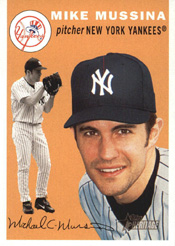
In his lone career appearance against the Cardinals, Mike Mussina gave them an understanding of why he is a Hall of Famer.

On June 15, 2003, Mussina limited the Cardinals to four hits in eight innings and earned the win in a 5-2 Yankees victory at New York.
Mussina, a right-hander who achieved a 270-153 record in 18 seasons with the Orioles and Yankees, was elected to the National Baseball Hall of Fame on Jan. 22, 2019.

Center stage

Mussina posted double-digit win totals in 17 consecutive seasons (1992-2008) and pitched in 537 regular-season games, all but one as a starter. He debuted with the Orioles in 1991, pitched 10 seasons for them and spent his last eight years with the Yankees.

In 2003, Mussina was 17-8 and one of his best performances was his start versus the Cardinals before 54,797 on a Sunday afternoon at Yankee Stadium.

The Yankees were going for a sweep of the three-game series and matched Mussina against Woody Williams.

Mussina retired 10 of the first 11 batters and had a 1-0 lead before the Cardinals scored twice in the fourth. With one out, Albert Pujols hit a home run, tying the score, Tino Martinez walked and, after Scott Rolen flied out to right, Mussina uncorked a wild pitch, moving Martinez to second. Edgar Renteria’s infield single advanced Martinez to third and Kerry Robinson’s single drove him in, putting the Cardinals ahead, 2-1.

Under control

The Yankees went up, 5-2, with a four-run sixth. Robin Ventura hit a two-run double and scored on a single by Hideki Matsui. Ruben Sierra’s double drove in Matsui.

The Cardinals didn’t get another base runner against Mussina after the fourth. He retired the last 13 batters in a row before Mariano Rivera relieved and pitched a scoreless ninth. Boxscore

“If you’re a control pitcher, things can come and go on you rather quickly,” Mussina said to the New York Daily News, “so you try to stay on top of it.”

Asked about being lifted for Rivera after eight innings, Mussina replied, “I had no problem with that. It would have had to be a much bigger lead for me to go back out there.”

Rivera, baseball’s all-time saves leader, also was elected to the National Baseball Hall of Fame on Jan. 22, 2019, the same day as Mussina.

Read Full Post »

(Updated Jan. 22, 2019)

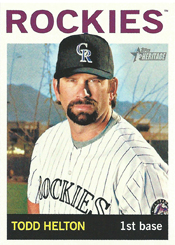
Todd Helton had a flawless game at the plate for the Rockies against the Cardinals, but Mike Matheny produced the most important at-bat.

On April 8, 2003, at Denver, Helton reached base safely seven times. Helton was 4-for-4 with three walks, a double, a home run, three RBI and three runs scored against six Cardinals pitchers. His home run tied the score, 12-12, in the seventh inning, but the Cardinals won, 15-12, when Matheny countered with a three-run home run in the 13th.

Helton, a first baseman, had 2,519 hits and 1,406 RBI in 17 seasons with the Rockies. A left-handed hitter, he had a .316 batting average and a .414 on-base percentage in a big-league career from 1997 to 2013.

Against the Cardinals, Helton had a .281 batting average and .386 on-base percentage and was especially strong versus them in these five seasons:

_ 2000: Batted .400 with 12 RBI and a .543 on-base mark.

_ 2001: Batted .324 with 12 RBI. Six of his 11 hits were home runs.

_ 2003: Batted .500. With 11 hits and seven walks in 29 plate appearances, his on-base mark was .621.

_ 2004: Batted .400 and hit a home run in five of six games.

_ 2009: Batted .421. With eight hits and seven walks in 28 plate appearances, his on-base percentage was .536.

Helton’s most impressive single-game performance against the Cardinals was when he reached base safely in all seven plate appearances.

Lucky seven

Here is a look at each plate appearance:

_ First inning: RBI-single against Jason Simontacchi.

_ Second inning: Drew a walk from Simontacchi with two outs and a runner on third.

_ Fourth inning: RBI-double to left versus Lance Painter.

_ Sixth inning: Led off with a single against Jeff Fassero.

_ Seventh inning: Solo home run versus Dustin Hermanson.

_ Ninth inning: Drew a walk from Russ Springer with two outs and a runner on first.

_ Eleventh inning: Drew a walk from Jose Jimenez with one out and runners on first and third.

Video of all seven plate appearances

Helton became the first big-league player to reach base safely seven times in a game since Sean Casey of the Reds did it in a nine-inning game May 19, 1999, against the Rockies at Denver. Boxscore

“I don’t ever remember getting up seven times in a game, much less getting on seven times,” Helton said to the Denver Post.

Said Rockies hitting coach Duane Espy: “What he did I can’t explain. The guy has the unique ability to hit what is there and leave alone what’s not. He continues to amaze me. He’s the first guy who I have been around when the count is 0-and-2, I am comfortable.”

Mike’s magic

Helton was deprived of an eighth plate appearance because Cal Eldred retired the Rockies in order in the 12th and 13th innings.

Eldred earned the win, his first in the major leagues in three years, because his friend, Matheny, hit his first regular-season home run in 12 months in the top half of the 13th.

With Scott Rolen on second, Eduardo Perez on first and one out, Matheny hit a pitch from Dan Miceli deep to left. Gabe Kapler leaped and appeared to make a catch, but when he fell back against the fence the ball came out of his glove and landed in the seats. Kapler “walked away, looking puzzled at his empty glove,” the Denver Post reported. Boxscore

The home run was Matheny’s first in the regular season since April 26, 2002, at Montreal. For Eldred, who missed most of two seasons because of elbow problems, the win was his first in the major leagues since June 28, 2000.

Matheny and Eldred became friends as Brewers teammates. After Matheny joined the Cardinals, he recommended the club take a chance on Eldred.

“Those two have such a special friendship,” Cardinals manager Tony La Russa told the St. Louis Post-Dispatch. “I don’t think you could have scripted it better.”

Read Full Post »

« Newer Posts - Older Posts »