Feeds:
Posts
Comments

Archive for the ‘Hitters’ Category

(Updated Aug. 16, 2019)

In the season that produced his highest hits total, Cardinals center fielder Curt Flood had his best day as a hitter.

curt_flood6On Aug. 16, 1964, Flood got hits in eight consecutive at-bats in a doubleheader against the Dodgers at Los Angeles. Four of those hits came against Sandy Koufax.

Flood had a chance to tie the big-league record for consecutive hits in a doubleheader, but he made his only out of the day in his final at-bat.

“I’m mighty happy to have gotten eight hits, even though I couldn’t get that last one,” Flood said to United Press International.

Flood became the first National League player with eight hits in a doubleheader since Pirates shortstop Stan Rojek did it against the Dodgers at Pittsburgh in 1948.

Joe Kelley, a left fielder for the Orioles, established the record of nine consecutive hits in a doubleheader on Sept. 3, 1894, against Cleveland.

Entering the day with a .291 batting average, Flood was at .302 after his 8-for-9 performance. He would finish the season with a .311 batting average and a career-best 211 hits, tying him with Roberto Clemente of the Pirates as the 1964 National League hits leader.

With his wife, four children and parents in attendance, Flood batted leadoff in each game of the doubleheader.

Dandy vs. Sandy

In the opener, the Dodgers started Koufax, who that season would lead the National League in ERA (1.74) and winning percentage (.792 with a 19-5 record).

Koufax was dominant against everyone except Flood that day. The left-hander struck out 13 and shut out the Cardinals on seven hits. Flood, though, went 4-for-4 against him. Flood, a right-handed batter, hit .296 (32-for-108) in his career against Koufax.

Here’s what Flood did in Game 1:

_ First inning. Flood led off the game with a double down the left-field line. He was stranded at second when Koufax struck out Lou Brock and retired Dick Groat on a fly out and Ken Boyer on a pop out.

_ Third inning. With two outs and none on, Flood doubled to left, a shot just inside the third-base line. Koufax followed with a strikeout of Brock.

_ Fifth inning. Flood looped a single to right with two outs and none on.

_ Seventh inning. With Julian Javier on first and two outs, Flood lined a single to center, sending Javier to third. Koufax struck out Brock for the third time, ending the threat.

Koufax told the Los Angeles Times, “Flood always is tough … He was hitting good pitches.”

The Dodgers won, 3-0. Boxscore

Igniting the offense

In Game 2, Flood sparked the Cardinals against Larry Miller, a rookie left-hander. Here’s what Flood did in that game:

_ First inning. Flood laced a triple into the right-field corner and scored on Groat’s sacrifice fly.

_ Third inning. With one out and none on, Flood lined a single to center.

_ Fourth inning. With two outs, the bases loaded and Flood at the plate, Dodgers manager Walter Alston replaced Larry Miller with Bob Miller, a former Cardinals right-hander. Flood singled to right, driving in two runs and giving the Cardinals a 4-0 lead.

_ Sixth inning. Flood stroked his eighth consecutive hit, a two-out single to left off right-hander Phil Ortega.

_ Ninth inning. With the Dodger Stadium crowd cheering for him, Flood waited in the on-deck circle to face left-hander Ron Perranoski. According to the Los Angeles Times, “teammate Bill White helpfully threw a broom into the circle, and Bob Gibson needled his buddy by waving a fungo bat.” The attempt to lighten the mood didn’t work. Perranoski struck out Flood.

“Perranoski threw me some sinkers and I missed them,” Flood said to The Sporting News.

The Cardinals won, 4-0, behind the 4-for-5 effort by Flood and the pitching of Curt Simmons. Boxscore

When reporters gathered around Flood’s locker after the game, catcher Tim McCarver, Flood’s friend and teammate, put on an ape mask, grabbed a pencil and pad and joined the throng.

McCarver: “How do you explain how you make monkeys out of the Dodgers pitchers?”

Flood laughed and replied: “I am sore and tired. I should have saved that triple in the first inning of the second game. That ruined me.”

Previously: Sandy Koufax: ‘I still don’t know how to pitch to Curt Flood’

Read Full Post »

(Updated June 4, 2024)

Larry Walker wasn’t looking to leave the Rockies, but the Cardinals convinced him to give them a chance.

larry_walker2On Aug. 6, 2004, Cardinals general manager Walt Jocketty performed a heist, acquiring Walker, 37, from the Rockies for three prospects.

Walker, a three-time National League batting champion and seven-time Gold Glove Award winner, joined an outfield of Jim Edmonds and Reggie Sanders and helped the Cardinals win their first pennant in 17 years.

On Jan. 21, 2020, 16 years after the Cardinals acquired him, Walker was elected to the Baseball Hall of Fame with 76.6 percent of the votes from the Baseball Writers Association of America.

The Rockies had approached Walker about trading him to the Rangers or Marlins. Because Walker was a 10-year veteran who had spent five of those years with the same team, his approval was needed before a deal could be made. He rejected the proposed trades to Texas and Florida.

Players make pitch

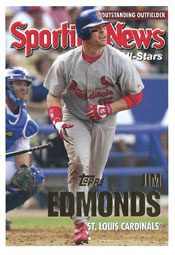
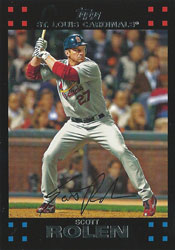
The Cardinals appealed to Walker’s competitive spirit. In a bid to seal the deal, Edmonds and teammate Scott Rolen called Walker, urging him to help them get to the World Series by accepting a trade.

Rolen offered to drop a spot in the batting order in case manager Tony La Russa wanted to bat Walker in the cleanup position Rolen held.

Inspired, Walker gave his OK to the Rockies to complete a trade with St. Louis.

“I think there were some people in Colorado who weren’t certain he would come,” Jocketty said to the St. Louis Post-Dispatch. “He weighed everything and it didn’t take him long. I think he’ll be energized to come here and play with us and I think he’ll energize our club.”

In a July 2018 interview with Cardinals broadcaster Dan McLaughlin, Walker recalled, “It was really a no-brainer. It didn’t take me but a couple of minutes to say yes.”

The Rockies, looking to free payroll in order to rebuild around players such as rookie outfielder Matt Holliday, agreed to a package of minor leaguers: pitchers Jason Burch, Luis Martinez and Chris Narveson. None would play in a big-league game for the Rockies.

MVP caliber

Walker joined Edmonds, Rolen, Edgar Renteria and Mike Matheny in giving the 2004 Cardinals Gold Glove winners at five of the nine fielding positions.

“We put an MVP in the lineup … This was a real impact move,” Rolen said.

Said Sanders: “You look at this lineup and you wonder, ‘How can it get any better?’ And it did.”

The Cardinals were in first place in the National League Central, 10.5 games ahead of the Cubs, on the day of the trade.

La Russa said, “I love the message that the people on top are sending to the players. I think they recognize how hard we’ve been playing and we have the chance to do something really special.”

What a welcome

Walker arrived in St. Louis during the Cardinals’ game with the Mets on Aug. 7, 2004. In the seventh inning, with two runners on base, one out and the score tied at 1-1, La Russa sent Walker to bat for Matheny against Mets starter Kris Benson. Cardinals fans welcomed Walker with a standing ovation and chanted his name.

“One of the most nervous at-bats I’ve had in my career,” Walker said.

On the Cardinals’ telecast, broadcaster Mike Shannon marveled, “Look how excited these people are … They smell World Series.”

Walker struck out, but as he returned to the dugout he received another standing ovation. Video

“I didn’t know what to do,” Walker said. “I thought maybe I should go back and ask if I could have another strike.” Boxscore

Primarily batting in the No. 2 spot in the order _ “I love it,” Walker told Cardinals Magazine. “I didn’t have to worry about driving people in all the time.” _ Walker hit .280 with 11 home runs and 27 RBI in 44 games for the 2004 Cardinals, who won the division title by 13 games over the runner-up Astros.

In the postseason, Walker hit six home runs _ two each in the Division Series, League Championship Series and World Series. Playing in the only World Series of his career, Walker hit .357 but the Cardinals were swept by the 2004 Red Sox. “No excuses,” Walker told Cardinals Magazine. “We got outperformed and we underachieved.”

Walker returned to the Cardinals in 2005, his final big-league season, and hit .289 with 15 home runs and 52 RBI in 100 games.

In a September 2017 interview with McLaughlin, Rolen said, “Larry Walker is the best player I ever played with. There’s nothing he couldn’t do out there. He knew how to run the bases and he knew running the bases was an offensive weapon. You’re on base to score runs.

“He played an unbelievable Gold Glove outfield. Threw the ball and never missed a cutoff. Hit the ball as hard as anybody and moved the ball around.”

In an interview with the Baseball Hall of Fame magazine, “Memories and Dreams,” La Russa said of Walker, “I think he would probably be in the top three of just about every category: Base running, defense, handling the bat.”

Read Full Post »

Tom Lasorda, in his big-league debut, helped Stan Musial achieve a personal best.

tom_lasorda2On Aug. 5, 1954, Musial had seven RBI in a game for the first time in his Cardinals career.

Facing the Dodgers at Ebbets Field in Brooklyn, Musial hit a pair of three-run home runs _ one each off Preacher Roe and Erv Palica _ in consecutive innings. His seventh RBI came on a sacrifice fly against Lasorda.

Musial, 33, was in the prime of a Hall of Fame playing career. Lasorda, 27, was a big-league rookie who had spent eight seasons in the minor leagues. The left-hander would appear in just 26 games in the majors _ eight with the Dodgers and 18 with the Athletics _ but would be elected to the Hall of Fame as a Dodgers manager.

Dodgers nemesis

After grounding out in the first inning, Musial hit the first of his three-run homers in the third against Roe, a left-hander who had debuted with the 1938 Cardinals.

It was Roe who, when asked his approach to pitching to Musial, replied, “I throw him four wide ones, then try to pick him off first base.”

Musial hit .377 with 12 homers and 28 RBI against Roe in his career.

In his autobiography, Musial said of Roe, “At Brooklyn, he became an outstanding pitcher, changing speeds and mixing up a well-controlled curve, screwball and, as the man admitted himself later, a spitter. Because I didn’t want him to load up one of those quick-dipping spitters on me, I always tried to keep him from getting two strikes on me.”

An inning after his home run off Roe, Musial crushed the second of his three-run homers, this time against Palica. Musial hit .429 in his career versus Palica.

Rookie reliever

Lasorda relieved Palica in the fifth. The first big-league batter to face him was Red Schoendienst, who singled. The next batter, Bill Sarni, also singled. Lasorda then struck out Joe Cunningham and got Alex Grammas to ground into a double play.

In the sixth, Lasorda walked the leadoff batter, pitcher Brooks Lawrence. After Rip Repulski flied out, Wally Moon doubled, putting runners on second and third.

Musial then hit a fly ball to left. Sandy Amoros caught it, Lawrence tagged and scored, giving Musial his seventh RBI, and the Cardinals led, 10-2.

With those RBI, Musial became the first player in the majors to reach 100 in 1954. It was his seventh season of 100 RBI. His two home runs were Musial’s 29th and 30th of the season.

Paul Waner, the Hall of Fame outfielder, told The Sporting News, “No telling how many homers Stan could make if he weren’t unselfish.”

The Cardinals won, 13-4. Before then, the Dodgers had won 18 of the last 19 against the Cardinals at Ebbets Field. Boxscore

Lasorda pitched three innings in his debut and yielded three runs. Musial would face Lasorda a total of three times in his career. After the sacrifice fly, his other two plate appearances versus Lasorda resulted in a walk and a strikeout.

In his 22 seasons with the Cardinals, Musial had just one other seven-RBI game. That occurred on June 23, 1961, in a 10-5 Cardinals victory over the Giants at St. Louis. In that game, Musial had a three-run home run off starter Billy O’Dell and a grand slam off Bobby Bolin. Boxscore


Read Full Post »

(Updated July 5, 2018)

The catcher who displaced A.J. Pierzynski as the Giants’ starter before the 2005 season became his manager in 2014.

aj_pierzynskiPierzynski, signed by the Cardinals on July 26, 2014, to help compensate for the loss of injured all-star Yadier Molina, was the Giants’ starting catcher in 2004. The Giants were interested in having him return for 2005. Instead, given a chance for a defensive upgrade that better fit their budget, the Giants signed free-agent Mike Matheny in December 2004 and dumped Pierzynski.

A decade later, Matheny, 43, was the Cardinals’ manager and Pierzynski, 37, joined Tony Cruz as the St. Louis catchers.

The Giants paid a hefty price for Pierzynski when they acquired him from the Twins in November 2003 for pitchers Joe Nathan, Francisco Liriano and Boof Bonser.

Pierzynski produced a career-best 77 RBI with 28 doubles, 11 home runs and a .272 batting average for the 2004 Giants, but he was criticized by teammates and booed by fans. He caught only 23 percent of runners attempting to steal (15 of 66) and was charged with nine passed balls.

Let’s make a deal

After the season, Pierzynski was eligible for arbitration. Because of his hitting, he appeared poised to be awarded a judgment of more than $5 million for 2005. The Giants, unwilling to pay that much for one season, wanted Pierzynski to consider instead a multiyear contract in the $9 million to $10 million range.

When Pierzynski suggested a larger amount, the Giants turned to Matheny, a free agent who earned three Gold Glove awards as the Cardinals’ starting catcher from 2000-2004. The Cardinals hoped Matheny would return to continue to mentor Molina in 2005, but were unwilling to offer Matheny more than $4 million for two years, according to the San Francisco Chronicle and the St. Louis Post-Dispatch.

When the Giants offered a three-year, $10 million deal, Matheny accepted. Pierzynski requested his release, enabling him to become a free agent.

Run saver

Giants general manager Brian Sabean thanked Pierzynski for his contributions, but added, “We’re in a better position in a lot of ways going with Matheny.”

Matheny established the major league record for consecutive errorless games by a catcher (252 games from August 2002 until August 2004). He caught 30 percent (16 of 54) of runners attempting to steal in 2004 nd had just two passed balls.

”There’s no telling how many runs he’s going to save,” Sabean said to the San Jose Mercury News.

Said Matheny: ”As soon as the Giants hit the scene, we realized it could be a really special opportunity. There are a couple teams you want to play for and you’re not sure it will work out. In my case, it did.”

Chirpy personality

Several media reports cited Pierzynski’s personality as a factor in his departure.

_ Henry Schulman of the San Francisco Chronicle: “Pierzynski was a defensive liability and rubbed many in the organization the wrong way, even as pitchers grew to respect his game-calling ability.”

_ Jorge L. Ortiz of the Chronicle: “Pierzynski quickly fell into disfavor because of his chirpy personality and defensive deficiencies.”

_ John Shea of the Chronicle: “Pierzynski never seemed to fit in as a Giant … He slumped early and late and was criticized by multiple anonymous Giants pitchers in an Oakland Tribune report.”

_ Chris Haft of the Mercury News: “Though Giants management had publicly expressed interest in retaining Pierzynski … his difficulty in meshing with teammates did not endear him to the club.”

_ Laurence Miedema of the Mercury News: “Pierzynski was criticized by several unnamed (Giants) pitchers in April and was booed regularly at home.”

_ Bud Geracie of the Mercury News: ‘Sabean’s one-year rental of A.J. Pierzynski … ranks as his worst deal. A.J., we hardly knew ye. And we didn’t like ye.”

Matheny won his fourth Gold Glove Award with the 2005 Giants. Pierzynski signed with the 2005 White Sox and helped them to their first World Series championship in 88 years.

Previously: Why Mike Matheny ended his playing career as a Giant

Previously: The play that defined Mike Matheny as Cardinals Gold Glove

Read Full Post »

Ozzie Smith and Matt Adams, opposites in size, shared at least one common trait: Both were able to drive in key runs for the Cardinals over a stretch of games.

ozzie_smith8Adams in 2014 became the first Cardinals player to deliver game-winning RBI in four consecutive games since Smith did so in 1988, according to the Elias Sports Bureau.

A 6-foot-3, 260-pound first baseman, Adams primarily utilized power to produce his game winners in a stretch from June 13-16, 2014.

In three consecutive Cardinals wins over the Nationals at St. Louis from June 13-15, Adams hit a home run for the winning RBI in each game. The home runs were hit off Jordan Zimmerman, Stephen Strasburg and Doug Fister. The Cardinals won, 1-0, on June 13 Boxscore; 4-1 on June 14 Boxscore; and 5-2 on June 15. Boxscore

Adams snapped a 1-1 tie with a RBI-single off Jacob deGrom for the game-winning hit on June 16 in a 6-2 Cardinals victory over the Mets at St. Louis. Boxscore

Twenty-six years earlier, Smith used a very different combination of productive at-bats for his four consecutive game-winning RBI. A 5-foot-11, 150-pound shortstop, Smith had a bunt, but no home runs, among his game winners in a stretch from Sept. 8-11, 1988. Here’s what he did:

Cardinals 1, Phillies 0, at St. Louis, Sept. 8, 1988

The Cardinals had the bases loaded with two outs in the fifth inning when Smith came to bat against Phillies starter Kevin Gross. With the count at 3-and-2, Smith checked his swing and walked, forcing in Tony Pena from third base with the run. The Phillies appealed, saying Smith had swung and missed at strike three, but third-base umpire Steve Rippley upheld the call of home-plate umpire Fred Brocklander.

Phillies manager Lee Elia said Rippley blew the call.

Cardinals manager Whitey Herzog conceded to the St. Louis Post-Dispatch, “A lot of guys would have punched (Smith) out.” Boxscore

Cardinals 6, Cubs 2, at St. Louis, Sept. 9, 1988

With the Cubs ahead, 1-0, the Cardinals loaded the bases with one out in the sixth. Facing starter Calvin Schiraldi, Smith said he was trying for a sacrifice fly. Instead, he doubled off the right-field wall, driving in Jose Oquendo and Greg Mathews and giving the Cardinals a 2-1 lead.

Deflecting attention away from himself, Smith credited Pedro Guerrero, whom the Cardinals acquired from the Dodgers on Aug. 16, with boosting the offense. Guerrero had three RBI in the game.

“We’re a different team now,” Smith said. “We’re doing a lot more things with our pitching and a lot more with our offense. The addition of one person (Guerrero) has stabilized our offense.” Boxscore

Cardinals 9, Cubs 3, at St. Louis, Sept. 10, 1988

With the score tied at 2-2, Tom Pagnozzi at second and two outs, Smith doubled to center off starter Rick Sutcliffe, giving the Cardinals a 3-2 lead.

“What you’re seeing now is something that didn’t happen in spring training,” Smith said. “We never jelled offensively. We’re settling in now.” Boxscore

Cardinals 3, Cubs 2, at St. Louis, Sept. 11, 1988

In the seventh inning, with the score tied at 2-2, Curt Ford was on third with one out. With Smith at the plate, Herzog called for the squeeze play. Smith executed, dropping a bunt to the right side of the infield. Ford dashed home with the go-ahead run. The only play for pitcher Mike Harkey, who fielded the ball, was to toss to second baseman Ryne Sandberg, covering first, to retire Smith.

“You just hope you get a decent pitch and you can put it in play,” Smith said of the bunt.

Asked about the four consecutive game-winning RBI, Smith told the Post-Dispatch, “It’s good to be in a position to say you got the record game-winning RBI, but the important thing is we won the game.” Boxscore

Smith finished the 1988 season with 51 RBI and was tied with Pena for third on the team, behind Tom Brunansky (79) and Terry Pendleton (53). The Cardinals ranked 11th in the 12-team National League in both RBI (536) and runs (578).

Previously: Intimidation: Ozzie Smith, Will Clark and the Battle at Busch

Read Full Post »

After losing the first two games of the 1985 National League Championship Series, the Cardinals could have been fazed by the prospect of facing Dodgers pitcher Bob Welch in Game 3. Welch had produced two complete-game wins against St. Louis in the regular season. A loss to him in the third game of the postseason series would push the Cardinals to the brink of elimination.

bob_welchInstead, it was Welch who was shaky.

Speedsters Vince Coleman and Willie McGee distracted a jumpy Welch and the Cardinals beat him, sparking a streak of four consecutive wins that propelled them into the World Series.

Welch was a premier pitcher for 17 years in the big leagues with the Dodgers and Athletics. He posted a career record of 211-146. In 1990, he was 27-6 with a 2.95 ERA and earned the American League Cy Young Award while pitching for the pennant-winning Athletics team of manager Tony La Russa and coach Dave Duncan.

In 1985, Welch was 14-4 with a 2.31 ERA in 23 starts for the Dodgers. He averaged less than two walks per nine innings.

The Cardinals, though, jolted Welch out of his comfort zone in the National League Championship Series.

Give the ump a mitt

In the first inning, Coleman lined a single over the head of third baseman Bill Madlock. With the count 1-and-0 on the next batter, McGee, the Dodgers pitched out, but Coleman swiped second anyway. Distracted by Coleman dancing off second, Welch walked McGee.

Tommy Herr came up next and worked the count full. Welch then whirled and attempted a pickoff of Coleman. The throw came closer to hitting umpire Paul Runge than it did to reaching the glove of shortstop Dave Anderson, covering second, and the ball sailed into center field. Coleman scored and McGee raced to third.

“I’m supposed to be able to make this play,” Welch said to the Daily Breeze of Torrance, Calif. “But for some reason I threw the ball to Runge. Too bad he didn’t have a mitt. He could have made the tag.”

Said Coleman to the Springfield (Ill.) State Journal-Register: “I was surprised he threw. The count was 3-and-2 and I wasn’t going to run until he threw to the plate.”

After walks to Herr and Andy Van Slyke, McGee scored on Terry Pendleton’s grounder to second, giving the Cardinals a 2-0 lead.

Sitting on the fastball

In the second inning, the Cardinals continued to apply pressure on Welch. With one out, Coleman singled. Catcher Mike Scioscia tried to pick off Coleman, but the throw eluded first baseman Greg Brock. Coleman advanced to third and scored on McGee’s single. After McGee was nailed attempting to swipe second, Herr smacked a Welch fastball over the right-field wall for a home run, putting the Cardinals ahead, 4-0.

“Welch kept throwing me fastballs,” Herr said to the Daily Breeze. “I fouled three of them off and I was sitting on the fastball when he threw the home run pitch.”

Said Welch: “I never got in a situation where I could use my curve ball. I never got in a situation where I was pitching, period. I just threw it up there.”

(Including the postseason, Herr batted .300 against Welch in his career, with 12 hits in 40 at-bats. Eleven of those hits were singles.)

Herr told the San Diego Union that the reason Welch beat the Cardinals twice during the 1985 regular season was because “he kept Coleman and McGee off base and was able to throw his breaking ball a lot. Today, he had to throw more fastballs with Vince and Willie on base.”

Welch was lifted after 2.2 innings. His line: 6 walks, 5 hits, 4 runs, 2 earned. Harried by the Cardinals, he’d made 20 pickoff throws.

“We weren’t trying to screw Welch up, even though that’s what happened,” said McGee.

Given the 4-0 lead, Cardinals starter Danny Cox and relievers Ricky Horton, Todd Worrell and Ken Dayley held the Dodgers to two runs. St. Louis won, 4-2. Boxscore

The Dodgers never recovered, losing the next three games, including Game 5 on the Ozzie Smith “Go crazy, folks” walkoff home run and Game 6 on Jack Clark’s ninth-inning three-run homer.

Welch finished his career with a 7-8 record and 3.99 ERA against the Cardinals in 18 regular-season appearances, including 15 starts.

Previously: How Bing Devine tried coaxing Kirk Gibson to Cardinals

Read Full Post »

« Newer Posts - Older Posts »