Feeds:
Posts
Comments

Archive for the ‘Hitters’ Category

An incident involving a future Hall of Famer and a former Cardinals pitcher turned the relaxed atmosphere of an exhibition game between the Cleveland Indians and their top farm team into an awkward embarrassment.
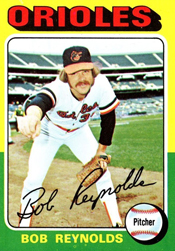
On June 30, 1976, Cleveland’s player-manager, Frank Robinson, went to the mound and slugged Toledo reliever Bob Reynolds before 5,013 stunned spectators at the Mud Hens’ ballpark. (I was one of those in attendance.)

Robinson said Reynolds provoked him. Reynolds said Robinson was the instigator. Either way, the sight of a big-league manager punching one of the franchise’s players during a goodwill game made for a strange, ugly scene.

Hard stuff

A right-handed pitcher, Bob Reynolds was nicknamed Bullet as a high school player in Seattle because of the speed of his fastball. The Giants took him in the first round of the 1966 amateur draft and sent him to Twin Falls, Idaho, to pitch for the Magic Valley Cowboys of the Pioneer League. Reynolds, 19, struck out 147 batters in 86 innings.

Unprotected in the October 1968 expansion draft, Reynolds was chosen by the Expos. At spring training, he showed “a good, live fastball,” Expos catcher Ron Brand told the Montreal Star. “Reynolds makes it hop and sail.”

On March 6, 1969, in the Expos’ first exhibition game, Reynolds retired the Royals in order in the ninth, sealing a 9-8 victory. “I was tickled to death at Reynolds’ poise,” Expos manager Gene Mauch told the Star. “He knows he can throw strikes, and he protected our lead. He really blows smoke past them, doesn’t he? He’s a hard-throwing youngster.”

Preferring he get experience at the Class AAA level, the Expos sent Reynolds to Vancouver, a farm team managed by future Hall of Famer Bob Lemon.

“I was my own worst enemy,” Reynolds told the Rochester Democrat and Chronicle. “I used to lose my head, kick dirt around the mound, throw things. Just blow up when things weren’t going right. I got to be known as a hothead. When you get a tag like that, it’s awfully hard to shake.

“In 1969 at Vancouver, I got so hot after a loss, I was ready to swing at the first person who walked in the clubhouse. Bob Lemon called me in his office, pointed to his big belly and said, ‘You want to hit something? Hit this.’ He calmed me down so much, I came out laughing at myself for my stupidity.”

The Expos called up Reynolds in September 1969. After being told he would make his big-league debut the next day in a start against the Phillies, “I took sleeping pills and everything else I could find, but nothing worked,” Reynolds recalled to the Baltimore Sun. “I was a nervous wreck the next day.”

Reynolds gave up three runs in 1.1 innings and never appeared in the regular season for the Expos again. Boxscore

Traveling man

On June 15, 1971, the Cardinals acquired Reynolds from the Expos for Mike Torrez. “We’d already lost Reynolds because his options had run out and he was frozen on Winnipeg’s roster,” Expos general manager Jim Fanning said to the Montreal Star. “A lot of clubs were interested in him and we decided to take the first good offer. Torrez became available … and we grabbed him.”

Cardinals scout Joe Monahan told the St. Louis Post-Dispatch, “Reynolds should be able to help us … His control has improved since the Expos sent him to Winnipeg because they made him stick to his fastball and slider, and forget about his curve.”

Reynolds made four relief appearances for the 1971 Cardinals and gave up runs in three of those games. As the Post-Dispatch noted, “Reynolds made little noise on the Cardinals scene except when he flapped his arms and gave his crow call. The bird imitation kept the bullpen crew from falling asleep.”

Two months after he joined the Cardinals, Reynolds was dealt to the Brewers. A Brewers instructor, former big-league pitcher Wes Stock, helped Reynolds with his slider. “Stock got me to come over the top with it,” Reynolds told the Rochester Democrat and Chronicle. “I had been coming down the side a little with it and it was a flat slider.”

Reynolds was on the move again the following March when the Brewers sent him to the Orioles, who assigned him to their Rochester farm team. Working mostly in relief, he had a 1.71 ERA and struck out 107 in 95 innings. The Orioles brought him back to the majors in September 1972.

Doggone it

At spring training in 1973, Reynolds suffered a hairline fracture in his right hand and dislocated the little finger when he fell against a wall in his apartment while playing with his dog.

“I can’t blame it on the dog,” Reynolds said to the Baltimore Sun. “It was me who suggested the game in the first place.

“Reminds me of the time I was playing high school basketball and I tried to jazz it up as I went in for a layup. The ball got stuck behind my back and in trying to get straightened out I ran into a wall. Nearly knocked myself cold. Fans thought it was great. Coach didn’t like it too much.”

For the next two years (1973-74), Reynolds was the Orioles’ top right-handed reliever. He had a 1.95 ERA in 1973 and his nine saves tied left-hander Grant Jackson for the team lead. In 1974, Reynolds led the Orioles in games pitched (54) and had a 2.73 ERA.

At the urging of manager Earl Weaver, Reynolds was traded to the Tigers for pitcher Fred Holdsworth in May 1975. Three months later, the Cleveland Indians claimed Reynolds off waivers.

Missing the cut

At Indians spring training in 1976, the final spot on the pitching staff came down to a choice between Reynolds and Stan Thomas. “Bullet is faster, but his ball is straighter,” catcher Ray Fosse told the Akron Beacon Journal. “Thomas’ ball moves more and he has a greater selection of pitches.”

Frank Robinson and general manager Phil Seghi chose Thomas. “It was difficult having to make a decision like this,” Robinson said to the Akron newspaper. “Reynolds has a good attitude. He did everything we asked him to do.”

Reynolds, 29, was assigned to Toledo. Because he had no more options, he would need to remain on the Mud Hens’ roster all season.

The 1976 season was the last for Frank Robinson as a player and his second as a big-league manager. (He would finish with 586 career home runs and get elected to the National Baseball Hall of Fame.) The Indians, who had a streak of seven straight losing seasons, seemed to be improving under Robinson. Their record was 36-33 when they went to play the exhibition game with Toledo.

On the warpath

Among those in the Indians’ starting lineup on a rainy evening for the Toledo game were Boog Powell at first base, Duane Kuiper at second, George Hendrick in left and Rico Carty as the designated hitter. The Mud Hens had the likes of catcher Rick Cerone and first baseman Joe Lis.

Robinson began substituting in the third inning. He sent coach Rocky Colavito, 42, to replace Hendrick in left. Another coach, Jeff Torborg, got to play, too. Robinson put himself in the game as a pinch-hitter in the fifth. Reynolds, who relieved Cardell Camper (a former Cardinals prospect), was on the mound for Toledo.

Reynolds’ first pitch to Robinson went about six feet over his head. “That was no accident,” Robinson told the Associated Press. “I’ve played long enough to know. The first inning he pitched he never threw a ball above the waist and he never threw one above the waist to the batter before me.”

Robinson said to United Press International, “I feel he was trying to intimidate me and show (off) in front of his teammates.”

(“I wasn’t throwing at him,” Reynolds said to Ron Maly of the Des Moines Register. “The ball just got away from me. I was trying to throw a fastball and my spikes were cluttered with mud.”)

The at-bat continued and Robinson hit a fly ball that was caught for an out. As Robinson cut across the diamond to return to the dugout on the third base side, he said to Reynolds, “You got a lot of guts throwing at me in a game like this,” United Press International reported.

According to Robinson, Reynolds replied, “You had a lot of guts sending me down, you (obscenity).”

Robinson rushed toward Reynolds and punched him with a left-right combination. The left struck Reynolds in the teeth and jaw. The right “sent Reynolds to the ground in a sitting position,” The Cleveland Press reported.

Reynolds told the Rochester Democrat and Chronicle that he blanked out “momentarily, maybe for just a second.”

Robinson was ejected and booed by the Toledo fans. Reynolds, spitting blood, insisted on staying in the game. His tongue was cut and his jaw was swollen, according to The Cleveland Press.

“The whole thing could have been avoided,” Toledo manager Joe Sparks said to the Des Moines Register. “The manager of a big-league club should go out of his way to not let something like that happen.”

Robinson told United Press International, “If the circumstances were the same, I would do it again.”

Cleveland won the exhibition game, 13-1. Right fielder Charlie Spikes, who would total three home runs for the Indians in 1976, hit three homers against Toledo. In the seventh inning, Ray Fosse also hit a home run for Cleveland but injured a knee during his trot around the bases. Pitching coach Harvey Haddix, 50, had to come in and complete circling the bases for Fosse.

Robinson went on to manage 17 seasons in the majors with the Indians, Giants, Orioles, Expos and Nationals. Reynolds never got back to the big leagues.
Read Full Post »

Whitey Herzog helped Bud Harrelson hit well enough to stay in the big leagues. What he likely couldn’t have imagined is that the scrawny shortstop of the Mets would become a terror at the plate against Bob Gibson.

In 16 big-league seasons, Harrelson hit .236 and had a modest on-base percentage of .327. Against Gibson, he turned into the reincarnation of Ty Cobb. Harrelson batted .333 versus the Cardinals ace and, with 20 hits and 14 walks, had a .459 on-base percentage.
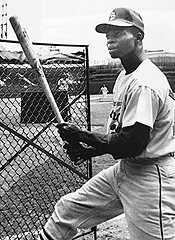
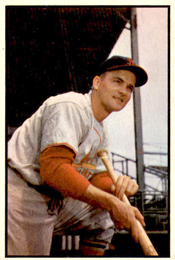
If not for Herzog, a Mets coach who later became Cardinals manager, Harrelson might not have stuck around long enough to do so much damage against Gibson. “Whitey Herzog really taught me what the game is all about here,” Harrelson said to the New York Daily News.

A Gold Glove fielder, Harrelson helped the Mets win two National League pennants and a World Series title.

Making a switch

Signed by the Mets in June 1963, a day after he turned 19, Harrelson got brought up to the majors two years later. His first plate appearance for the 1965 Mets came at St. Louis when he grounded out against the Cardinals’ Ray Washburn. Boxscore

At 155 pounds, Harrelson “looked like a high school shortstop,” the New York Times noted. He fielded like a pro but didn’t hit like one. In 37 at-bats for the 1965 Mets, Harrelson hit .108. Columnist Arthur Daley described him as a “frail little guy” and “a batter of feeble skills.”

Desperate to make himself useful as a hitter, Harrelson, a natural right-hander, took some swings from the left side against a pitching machine at spring training in 1966. Mets director of player personnel Bob Scheffing (a former Cardinals catcher) and minor-league manager Solly Hemus (a former Cardinals player and manager) “noticed his smooth left-handed stroke, and suggested that he continue,” the New York Times reported.

Assigned to Class AAA Jacksonville, managed by Hemus, Harrelson made himself into a switch-hitter, but the results were not immediate. He batted .221 overall, and .210 from the left side, for Jacksonville.

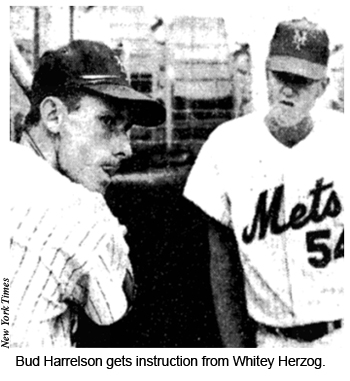
Called up to the Mets in August 1966, Harrelson worked before every game with Herzog, a coach on manager Wes Westrum’s staff, to get better at hitting from both sides. Herzog urged him to “hit that ball like it’s your enemy” and “smash it,” the New York Times reported.

Harrelson told the newspaper, “That half-hour I put into the batting cage is like two hours work for me … but I know I’m knocking on the door. I know I’ve got to make it as a switch-hitter. That’s the way it is.”

Whitey ball

Herzog boosted Harrelson’s confidence and encouraged his scrappy play.

On Sept. 16, 1966, at San Francisco, the score was tied at 3-3 with two outs in the ninth when Harrelson batted from the right side against Giants left-hander Billy Hoeft. A runner, Johnny Lewis (a former Cardinal), was on second.

Harrelson drove the ball over the head of rookie left fielder Frank Johnson, who played shallow, for his second triple of the game, scoring Lewis and giving the Mets a 4-3 lead. “I get to third base, I’m dusting myself off, just happy to be there, and Whitey (Herzog, coaching at third) says, ‘So steal home,’ ” Harrelson told the New York Daily News.

While Harrelson pondered that, the Giants lifted Hoeft and replaced him with Lindy McDaniel, the former Cardinal. On McDaniel’s first pitch to Eddie Bressoud, Harrelson took a normal lead and noticed McDaniel didn’t pay much attention to him. “Herzog told me if McDaniel wasn’t looking at me and I thought I could make it, I should go ahead and try it,” Harrelson said to the San Francisco Examiner.

On McDaniel’s second pitch, Harrelson broke for home as Herzog suggested. McDaniel’s pitch was high and went past catcher Tom Haller to the backstop. Harrelson scored easily with a steal of home, extending the Mets’ lead to 5-3.

The Giants scored a run in the bottom of the ninth, but the Mets prevailed, 5-4, on Harrelson’s dash to the dish. As Newsday noted, “A skinny kid … ran right over the Giants. He just about took their pennant hopes and buried them under home plate with his flashing spikes.” Boxscore

Different strokes

Harrelson became the Mets’ starting shortstop in 1967. “He had to make himself into a ballplayer, and he did it,” Herzog recalled years later to Bernie Miklasz of the St. Louis Post-Dispatch.

Described by Dick Young of the New York Daily News as “a hard-working slap hitter who can fly,” Harrelson took a tip from coach Yogi Berra to use different bats and different grips from each side of the plate.

“Yogi got me to start using a big bat when I hit left-handed,” Harrelson told Dave Anderson of the New York Times. “I use a 36-inch, 35-ounce bat and choke up about four or five inches from the handle. Right-handed, I’m using a light bat that (utility man) Bob Johnson gave to me. It is only 34 inches, 30 ounces. I choke up only about an inch with that one.”

Because batting right-handed was natural to him, resulting in a quicker swing, a lighter bat was sufficient, Harrelson said. From the left side, he became “a sweep contact hitter” who needed the help of a heftier bat, he told Dave Anderson.

“They use a Little League defense against me as a lefty,” Harrelson said to the New York Times. “The outfield plays shallow with the infield in.”

It was as a left-handed batter, his weak side, that Harrelson faced Bob Gibson. All that practicing and experimenting he did paid off.

Bring it on, Bob

The Cardinals won consecutive National League pennants in 1967 and 1968, and were expected to contend again in 1969, but the Mets, who never had experienced a winning season, dethroned them.

On Sept. 23, 1969, the Mets clinched at least a tie for a division title with a 3-2 win versus Gibson and the Cardinals in 11 innings. Batting left-handed, Harrelson had two hits and two walks, and drove in the winning run.

With the score tied at 2-2 in the bottom of the 11th, the Mets had runners on first and second, one out, when Harrelson lined a 1-and-2 pitch from Gibson into center for a single.

“I thought it was gong to be close at the plate,” Mets manager Gil Hodges told Newsday, but Curt Flood’s throw was up the first-base line, enabling Ron Swoboda to score from second. Boxscore

For the 1969 season, Harrelson hit .248 and had an on-base percentage of .341, but against the Cardinals he had a .317 batting mark and reached base in 45.1 percent of his plate appearances. In 17 plate appearances versus Bob Gibson in 1969, Harrelson’s on-base percentage was .625.

In his autobiography, “Stranger to the Game,” Gibson said, “Most of my energy was spent working on and worrying about the guys with the biggest sticks. Although the ping hitters may have put more nicks in me from game to game, I didn’t fear them whatsoever … If I wanted the batter to hit the ball, as I wanted singles hitters to do in most cases, I didn’t see the merit of throwing pitches that weren’t strikes.”

Two years later, on May 7, 1971, Gibson and the Cardinals had a 1-0 lead on Tom Seaver and the Mets at New York’s Shea Stadium when Harrelson led off the bottom of the seventh with a triple to the alley in right-center.

“Maybe he has only four super fastballs in him a game now,” Harrelson said to Newsday of Gibson, “but he’s a great self-analyst. He knows what he’s got and how to use it. He sets you up now instead of blowing you down.”

After Ken Boswell grounded out to first, Dave Marshall batted. “I put down two fingers for a curve and Bob saw only one,” catcher Ted Simmons told Newsday. “That fastball just sailed over my left shoulder.”

The wild pitch enabled Harrelson to scamper home with the tying run. 

“That wasn’t Ted’s fault,” Gibson said to Newsday. “I blew the sign.”

The Mets scored twice in the eighth against Gibson and won, 3-1. Boxscore

In 1973, when the Mets edged the Cardinals for the division title, Harrelson hit .258 overall and .325 against St. Louis.

For his career, Harrelson had more hits versus Steve Carlton (23) and Bob Gibson (20) than he did against any other pitchers.

Read Full Post »

Sandy Koufax played hard ball when Lou Brock opted for small ball.

In a game at Dodger Stadium, Koufax intentionally drilled Brock in the shoulder with a pitch. The Dodgers ace was miffed at Brock because in his previous at-bat he bunted for a base hit and then swiped two bases, leading to a run.

Getting plunked by a Koufax fastball was as painful as one would imagine and knocked Brock out of the Cardinals’ lineup. It also messed with his mind.

“He almost ended my career,” Brock said to the New York Daily News.

Tough to solve

Like many who faced Koufax in his prime, Brock struggled mightily against him. In 1963, Koufax fanned him seven times in 11 at-bats. The next year, when he split the season with the Cubs and Cardinals, Brock hit .143 versus Koufax.

In Brock’s autobiography, “Stealing Is My Game,” his collaborator, Franz Schulze, wrote, “No one was harder on him than the great Koufax … Sandy could turn Lou into a flopping marionette with his curve and fastball.”

Brock, who had been swinging from the heels against Koufax, decided to try a different tactic. He was determined to bunt and use his speed to reach base.

“Brock’s bunting was the only thing that threatened Koufax,” Cardinals pitcher Bob Gibson said in his autobiography, “Stranger to the Game.”

Lighting a fuse

The first time Brock got to test his new approach against Koufax came on May 26, 1965. After Julian Javier led off the game and struck out, Brock stepped in and bunted a pitch toward the mound. A flustered Koufax fielded the ball with his glove and, hurrying, shoveled it wide of first baseman Wes Parker as Brock streaked across the bag with a single.

With Curt Flood at the plate, Brock took off for second and beat catcher Jeff Torborg’s throw. Flood then bounced a grounder into the hole at shortstop. Maury Wills knocked down the ball but couldn’t make a throw. Brock held second as Flood reached first with a single.

Koufax was unhappy. The Cardinals hadn’t gotten a ball out of the infield but he was in a jam. The cleanup batter, Ken Boyer, was up next. Turning up the pressure, Brock and Flood executed a double steal.

With the runners on second and third, one out, Boyer hit a sacrifice fly to center, scoring Brock. The next batter, Dick Groat, grounded out, ending the threat, but Brock had shown the Cardinals a way to get to Koufax.

“I got under his skin by bunting back at him … Koufax couldn’t handle the bunt,” Brock said to Dick Young of the New York Daily News.

In the book “Sixty Feet, Six Inches,” Bob Gibson said, “We were helpless against Koufax until Brock figured out that he could bunt on him. Once he was on first base, he could run on him, too, because Sandy didn’t have a pickoff move.”

Koufax decided he had to do something to dissuade Brock from trying that again.

Sending a message

After the Dodgers tied the score with a run in the second against Curt Simmons, Javier led off the Cardinals’ third and flied out. Brock then came up for the first time since his electrifying performance in the opening inning.

According to author Jane Leavy in her book, “Sandy Koufax: A Lefty’s Legacy,” Koufax took aim at Brock and fired. The ball smashed hard into Brock’s shoulder blade. “So darned hard,” Torborg told Leavy, “that the ball went in and spun around in the meat for a while and then dropped.”

From his perch in the dugout, it sounded like “a thud that had a crack in it,” Cardinals outfielder Mike Shannon recalled to Leavy.

In her book, Leavy wrote, “It was the first time, the only time, Koufax threw at a batter purposefully.”

(Years later, according to Leavy, Koufax said, “I don’t regret it. I do regret that I allowed myself to get so mad.”)

Despite the hurt, Brock went to first base. Then he swiped second.

Brock struck out against Koufax in the fifth, and was replaced in left field by Carl Warwick in the bottom half of the inning.

The Cardinals won, 2-1, with Bob Uecker scoring the tie-breaking run against Koufax, but the cost was high. Brock, their catalyst, was in trouble. Boxscore

Mind over matter

X-rays taken after the game were negative, the St. Louis Post-Dispatch reported, and Brock traveled with the team to Houston. The next day, according to the newspaper, “he could not even lift his bruised left shoulder.”

Brock wasn’t in the lineup the next five games and the Cardinals lost all five. He came back on June 1, but “he couldn’t swing or throw as of old,” The Sporting News reported.

Brock went hitless in his first 17 at-bats after returning to the lineup. Collaborator Franz Schulze noted, “He was just suddenly scared to death of all inside pitches. So he kept retreating in the batter’s box.”

Brock told the New York Daily News, “Because of fear, I was jumping away from anything inside, expecting to be hit again. I was afraid.”

The fear of failure, though, became greater than the fear of pain. Brock forced himself not to flinch when a pitch came close. “I made myself do it,” he said to Dick Young. “I even closed my eyes and stepped into a few.”

When the base hits followed, the fear dissipated.

Brock was tested on June 16 when he was struck on the batting helmet by a pitch from the Pirates’ Frank Carpin. Brock stayed in the lineup. Boxscore

Two weeks later, another Pirates left-hander, Bob Veale, hit Brock in the right forearm with a pitch. “I’ve never been hit harder,” Brock said to the Post-Dispatch. “Veale throws even harder than Sandy Koufax.” Boxscore

The following night, back in the lineup against the Mets’ Frank Lary, Brock doubled, walked, scored a run and stole a base. Boxscore

In his autobiography, Bob Gibson noted, “Much of my reputation as a badass pitcher resulted from the fact that Lou Brock was on my side. There was no other player who irritated the other team as Brock did, and consequently no other who was knocked down quite as often. When somebody on the other team threw at Brock, I considered it my duty to throw at somebody on the other team.”

Brock was hit by pitches a career-high 10 times in 1965, but he played in 155 games, totaling 182 base hits, 107 runs scored and 63 stolen bases.

By the numbers

After being hit by the Koufax pitch in May 1965, Brock never successfully bunted for a hit against him again.

For his career, Brock batted .185 versus Koufax, with more than twice as many strikeouts (28) as hits (12).

Koufax hit batters with pitches 18 times. He plunked Frank Robinson twice. In addition to Brock, the ones Koufax nailed once were Frank Thomas, Billy Williams, Dick Stuart, Bob AspromonteEddie KaskoJim WynnDenis Menke, John Bateman, Tim McCarverBobby Del GrecoBobby Thomson, Elio Chacon, Bob Purkey, Merritt Ranew and Eddie O’Brien.

Koufax was hit by a pitch just once. The Cubs’ Dick Ellsworth did it in the 10th inning of a game at Dodger Stadium on May 4, 1964. With a runner on first and none out, Koufax tried to bunt with two strikes but the curveball hit him on the right foot. The next batter, Maury Wills, got the game-winning hit. Brock played right field for the Cubs that night and was hitless against Koufax. Boxscore

In 19 years in the majors, Brock was plunked 49 times. Two pitchers _ Ryne Duren and Chris Short _ both nailed him twice.

Read Full Post »

When Larry Miggins was a student at Fordham Prep in the Bronx in the early 1940s, he told a classmate he wanted to be a big-league baseball player. The classmate, Vin Scully, told Miggins he wanted to be a big-league baseball broadcaster. The boys ruminated about the possibility of Scully broadcasting a game Miggins played in.

A decade later, in 1952, Miggins was in the big leagues as a rookie reserve left fielder for the Cardinals. Scully was in his third year as a Dodgers broadcaster.
On May 13, 1952, Miggins was in the starting lineup for a game at Brooklyn against the Dodgers. It was the first game he played at Ebbets Field. Scully was the junior member of a three-man broadcasting crew doing the game that day. Red Barber and Connie Desmond were the more experienced broadcasters.

When Miggins struck out in his first plate appearance of the game in the second inning, Scully was not on the air.

Two innings later, though, he was doing the broadcast when Miggins stepped to the plate against Preacher Roe. Scully had the call when Miggins belted a pitch into the seats in left for his first home run in the majors. Boxscore

Decades later, in recalling the moment for an audience at the Ronald Reagan Library in Simi Valley, Calif., Scully said, “It was probably the toughest home run call I’ve ever had because (the dream) came true,” the Ventura County Star reported. “Don’t be afraid to dream.”

Traveling man

A son of Irish immigrants, Larry Miggins was the valedictorian of the class of 1943 at Fordham Prep. He enrolled at the University of Pittsburgh, but in December 1943, when his boyhood favorites, the New York Giants, offered him a contract, he left college and signed with them.

Miggins, 18, played eight games for the Giants’ Jersey City farm club in April 1944, then joined the United States Merchant Marine. He was discharged in time to play the 1946 minor-league season and was in the lineup for Jersey City when Jackie Robinson played his first game in the Dodgers’ system for Montreal. You Tube Audio interview

A 6-foot-4 right-handed batter with power, Miggins slugged 22 home runs in the minors in 1947, but the Giants left him off their big-league winter roster. Rated by Cardinals scouts “as one of the best prospects in the minors, possessing speed and a good arm,” according to The Sporting News, Miggins was selected by St. Louis in the November 1947 draft of unprotected players.

The transaction stunned Miggins, who “always thought he was going to play with the Giants,” the St. Louis Post-Dispatch reported.

Three days before the Cardinals’ 1948 season opener, Miggins was placed on waivers and claimed by the Cubs. According to the Associated Press, he drove to Chicago in a 1931 jalopy, parked at Wrigley Field, and joined the Cubs on their trip to Pittsburgh, where they opened the season against the Pirates.

Miggins, who didn’t play in any of the three games at Pittsburgh, returned to Chicago with the Cubs on April 23 and was summoned to the Wrigley Field office. He was told the Cubs had placed him on waivers and he was reclaimed by the Cardinals. On his way out, the Associated Press noted, he was asked to move his crate from club owner Phil Wrigley’s private parking space.

The Cardinals assigned Miggins to their Class A farm team at Omaha and he hit 26 home runs in 97 games. “Uses his wrists well,” Omaha manager Ollie Vanek told the Omaha World-Herald. “Watches the pitches with keen discrimination and rarely offers at a bad one. He has a follow-through, and a stance. Miggins can hit that low curve, which is one of the hardest things to do in baseball.”

The Irish lad from the Bronx also had “a lilting voice and likes to entertain his teammates with songs,” The Sporting News reported.

Called up to the Cardinals in September 1948, Miggins got into one game, making his big-league debut as a pinch-hitter against the Cubs and scoring after reaching base on an error. Boxscore

Family man

Miggins spent the next three seasons (1949-51) in the minors. With Houston, he hit 21 home runs in 1949 and 27 in 1951.

“Miggins is big and strong and fast, and while his quiet manner and impeccable behavior may give some the impression that he lacks aggressiveness, he has a burning desire to play big-league baseball,” the Post-Dispatch reported.

During the winters, Miggins took college courses and earned a bachelor’s degree from the University of St. Thomas in Houston.

In 1952, Eddie Stanky’s first year as manager, Miggins, 26, made the Cardinals’ Opening Day roster as a backup left fielder and pinch-hitter. He didn’t play much. The highlights were the home run in Brooklyn with Vin Scully at the microphone and a home run against a future Hall of Famer, Warren Spahn of the Braves. Boxscore

“Larry Miggins could do it,” Cardinals owner Fred Saigh said to the St. Louis Globe-Democrat. “He has all the equipment. He’s a wonderful boy, one of the best in our organization, and that’s the trouble. If he could get just a little more determination, he could make it.”

Miggins hit .229 in 96 at-bats for the 1952 Cardinals. He spent the next two seasons in the minors, then left baseball when a Houston judge, Allen B. Hannay, approached him about a government job in probation and parole.

With the judge’s encouragement, Miggins earned a master’s degree in criminology from Sam Houston State and had a long career as a probation and parole officer.

Miggins and his wife, Kathleen, had 12 children, four girls and eight boys. With a touch o’ the blarney, Miggins explained to blogger Bill McCurdy, “Kathleen was hard of hearing. Every night we went to bed as I was turning out the light, I would softly whisper to Kathleen, ‘Are you ready to go to sleep or what?’ She gave me the same answer every time: ‘What?’ “

Read Full Post »

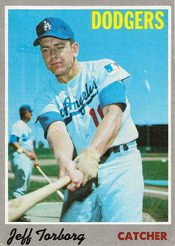
A catcher who earned the trust of Sandy Koufax, Don Drysdale and Nolan Ryan, Jeff Torborg came to the Cardinals to work with a pitching staff led by Bob Gibson.

On Dec. 6, 1973, the Cardinals acquired Torborg from the Angels for pitcher John Andrews. With 10 years of big-league experience and a reputation as a defensive specialist who worked well with pitchers, Torborg, 32, seemed a good fit to back up Cardinals catcher Ted Simmons, 24, in 1974.

Instead, when the Cardinals decided on a different roster configuration, Torborg departed and began a second career as a coach and manager.

Giants fan

As a youth in Westfield, N.J., Torborg was a New York Giants fan. “I remember walking on the field (after attending a game) at the Polo Grounds with my dad and I couldn’t believe I was really there,” Torborg recalled to the Bridgewater (N.J.) Courier-News. “I remember seeing Monte Irvin hit one into the upper deck in the deepest part of left field, and I couldn’t imagine anybody hitting the ball that far.”

Torborg played college baseball at Rutgers and was a power-hitting catcher. After he saw Torborg hit two home runs and a triple in a game against Army, Dodgers scout and former Giants infielder Rudy Rufer said to the Courier-News, “I raced for the nearest phone, called up (general manager) Buzzie Bavasi, and told him Torborg was a prospect we couldn’t afford to miss.”

A right-handed batter, Torborg hit .537 for Rutgers in 1963 and produced 67 total bases in 67 at-bats.

The Dodgers signed him on May 23, 1963, and sent him to their Albuquerque farm club. He arranged to return home to receive his Rutgers diploma on June 5 (he earned a degree in education), got married the next day to a former Miss New Jersey, Susan Barber, and went back to Albuquerque on June 8.

(The Dodgers gave Torborg and his wife a two-week paid honeymoon in Hawaii after the season, according to the Courier-News.)

Higher education

Torborg, 22, made the Opening Day roster of the 1964 Dodgers as a backup to catcher John Roseboro. Don Drysdale dubbed the rookie “Rudy Rutgers” because he looked the part of a clean-cut collegian, the St. Louis Post-Dispatch reported.

Sandy Koufax, a bachelor, had a collection of kitchen appliances he’d received for being a guest on postgame radio shows. One day, in the locker room, he handed Torborg a new electric can opener. According to author Jane Leavy in the book “A Lefty’s Legacy,” Koufax said to the newly married Torborg, “You can use this more than me.”

On days Koufax didn’t pitch, he would hit fungoes to Torborg so that the rookie could acclimate himself to pop-ups behind the plate at Dodger Stadium, Leavy noted. She also explained in her book that Koufax told Torborg to stop jumping up from his crouch after every pitch. “I like the picture of the catcher being quiet behind the plate, staying down, so everything I see is low,” Koufax said.

John Roseboro also would “offer help every chance he had,” Torborg said to the Los Angeles Times. According to The Sporting News, Torborg was grateful to Roseboro for “tutoring him on how to handle low pitches and block the plate.”

Torborg didn’t hit well in the majors but he had his moments. On July 25, 1965, he contributed a two-run single against the Cardinals’ Nelson Briles in a five-run Dodgers fifth inning. Boxscore Five days later, he sparked a Dodgers comeback at St. Louis with a home run against Curt Simmons that went deep over the hot dog stand in left. Boxscore

The highlight of Torborg’s 1965 season came on Sept. 9 at Dodger Stadium when he caught Koufax’s perfect game against the Cubs.

As Koufax crafted his masterpiece, “my heart was beating so loudly it was pounding in my ear,” Torborg said to the Los Angeles Times. Boxscore

All rise

Torborg was Roseboro’s backup for four seasons (1964-67). When Roseboro got traded to the Twins, “I felt I was No. 1,” Torborg told the Los Angeles Times. Instead, the Dodgers acquired Tom Haller from the Giants and made him the starting catcher.

“I got very frustrated,” Torborg said to the Times. “I let myself get overweight and I had back trouble.”

Torborg was the catcher when Don Drysdale beat the Giants on May 31, 1968, for his fifth consecutive shutout, and he caught Bill Singer’s no-hitter against the Phillies on July 20, 1970. Boxscore and Boxscore

Mostly, though, Torborg watched as Haller did the bulk of the Dodgers’ catching from 1968-70. Torborg served so much time on the bench he was nicknamed “The Judge,” according to The Sporting News.

Change of scenery

In March 1971, Torborg was sent to the Angels. He shared catching duties with John Stephenson and Jerry Moses in 1971 and with Art Kusnyer and Stephenson in 1972.

With Bobby Winkles as manager and John Roseboro as a coach for the Angels in 1973, Torborg, 31, finally became a No. 1 catcher.

On May 15, 1973, Torborg caught his third career no-hitter, the first of seven pitched by Nolan Ryan. “He called an outstanding game,” Ryan told The Sporting News. Boxscore

(Since then, Carlos Ruiz of the Phillies and Jason Varitek of the Red Sox each caught four no-hitters, according to MLB.com.)

With the 1973 Angels, Torborg played in a career-high 102 games, but hit .220. As he told Bob Broeg of the Post-Dispatch, “I’m a no-hit catcher in more ways than one.”

After the season, the Angels acquired catcher Ellie Rodriguez from the Brewers and projected him to be the starter in 1974. 

New script

Ted Simmons caught in 152 games, totaling a franchise-record 1,352.2 innings, for the 1973 Cardinals. Hoping to give him more breaks from the grind in 1974, the Cardinals acquired Torborg.

(According to The Sporting News, Nolan Ryan “loved to pitch to” Torborg and “was upset” when he got traded.)

The Cardinals went to 1974 spring training with four catchers on the roster _ Simmons, Torborg, Larry Haney and Marc Hill. According to the 1974 Cardinals media guide, Torborg “has a good chance to be the No. 2” catcher.

Described by The Sporting News as “a proficient receiver with an excellent arm,” Torborg told the publication, “I feel I can help (the Cardinals) a lot even if I’m not playing. I can help the pitchers in the bullpen and I can talk with the pitching coach (Barney Schultz) on the bench.”

Late in spring training, the Cardinals decided that their catcher from the 1960s, Tim McCarver, 32, who was on the roster as a reserve first baseman, would suffice as the backup to Simmons. In an emergency, first baseman and former catcher Joe Torre also could fill in.

Torborg was released, Larry Haney got sent to the Athletics and Marc Hill went to the minors.

“I had a pretty good spring, but the Cardinals ran into a (roster) numbers problem and they let me go,” Torborg told The Sporting News.

Torborg went home to New Jersey. Two months later, in May 1974, the Red Sox brought him to Boston for a tryout after catcher Carlton Fisk injured a knee, but they opted to go with Tim Blackwell as the backup to Bob Montgomery.

At 32, Torborg’s playing days were finished. Among the Hall of Famers he caught were Don Sutton (51 games), Drysdale (49 games), Ryan (41 games) and Koufax (24 games).

Coach and manager

Torborg, who earned a master’s degree in athletic administration from Montclair (N.J.) State, became athletic director and head baseball coach at Wardlaw School in Edison, N.J., but left for a spot on the 1975 Cleveland Indians coaching staff of manager Frank Robinson.

In June 1977, Torborg, 35, replaced Robinson as manager. Years later, he told the Bridgewater Courier-News, “I really wasn’t prepared to manage. I was a young coach who was still very close to the players. I made a lot of mistakes.”

After he was fired in July 1979, Torborg joined the Yankees coaching staff in 1980. He was ready to become head baseball coach at Princeton in 1982 but changed his mind when Yankees owner George Steinbrenner gave him a seven-year contract to stay as a coach.

According to Newsday’s Tom Verducci, Steinbrenner offered Torborg the Yankees general manager job in 1982 but he rejected it because he wanted to remain in a role on the field. Billy Martin, one of several managers Torborg coached for with the Yankees, distrusted him. “He thought I was a pipeline upstairs (to Steinbrenner),” Torborg told Verducci.

After nine seasons (1980-88) as a Yankees coach, Torborg managed the White Sox (1989-91), Mets (1992-93), Expos (2001) and Marlins (2002-2003).

In 1992, Torborg and Mets outfielder Vince Coleman “engaged in an angry and physical confrontation on the field,” the New York Times reported. Coleman was suspended for two days without pay for shoving Torborg and swearing at him after the Mets manager tried to break up Coleman’s argument with an umpire.

According to New York Times columnist George Vecsey, “Coleman has been both a cause and a symbol of the Mets’ slide to the bottom. This is an outfielder with little baseball savvy and bad wheels and an unsavory image.”

Read Full Post »

The 1982 Cardinals had no player hit 20 home runs. One of their best relievers was 43 and had been in the majors since the 1950s. Only one of their pitchers struck out as many as 90 batters.

Yet, the 1982 Cardinals may be the franchise’s greatest team since baseball went to a divisional alignment. Since 1969, the only Cardinals club to finish a regular season with the best record in the National League and win a World Series title was the 1982 team.

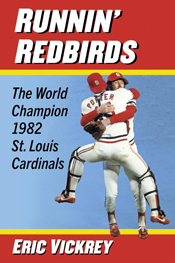
A new book, “Runnin’ Redbirds: The World Champion 1982 St. Louis Cardinals,” provides insights into why that team was so special.

Written by Eric Vickrey, a member of the Society for American Baseball Research, the book is available on Amazon and direct through the publisher, McFarland Books. Until Nov. 27, there is a 40 percent discount (the discount code is HOLIDAY23) for those who order direct from McFarland.

Here is an email interview I did with the author in November 2023:

Q: Hi, Eric. What prompted you to do a book on the 1982 Cardinals?

A: “Growing up in Alton, Illinois, during the 1980s, I fell in love with baseball watching the Cardinals sprint around the bases and play amazing defense. Ozzie Smith, Willie McGee, Vince Coleman and Tommy Herr were my heroes as a kid. Fast-forward to 2020. During the early days of the pandemic, when I was stuck inside and there was no baseball to watch, I started writing player bios for the Society for American Baseball Research. I enjoyed the research and writing process as well as the nostalgia of revisiting the roots of my baseball fandom. I miss the Cardinals’ style of play in the 1980s, which was so different than the game today. I thought it would be interesting to really dig into one season as a longer narrative project. I chose 1982 because it included the arc of Whitey Herzog’s rebuild and the pinnacle of a championship.”

Q: What makes your book different from other books, such as those from Whitey Herzog or Keith Hernandez, about the 1982 Cardinals?

A: “Herzog’s memoir, White Rat, was incredibly insightful, particularly in regard to his roster reconstruction in 1980 and 1981. In typical Whitey fashion, he pulled no punches. Ozzie, Hernandez, Bob Forsch and Darrell Porter also authored books that touched on their experiences in 1982. But there had not been a book that focused primarily on the Cardinals’ 1982 season. In addition to delving into the on-field highlights of that year, Runnin’ Redbirds examines the team in the context of baseball history with some modern analytics sprinkled in. It is also very much a human-interest story. The Cardinals were an eclectic group, and I tell a bit of each player’s story.”

Q: Could you provide an example or anecdote about a 1982 Cardinal who was the most fun or enjoyable for you to interview?

A: “I interviewed Dane Iorg, who was one of the stars of the World Series for St. Louis. In his 17 at-bats against Milwaukee, he recorded nine hits, five of which went for extra bases. If there is such a thing as a clutch player, he was it. I’m sure he has been asked about the 1982 World Series a million times, but to hear the pure joy in his voice while describing the thrill of a championship more than 40 years ago was really cool.”

Q: Since baseball went to a divisional format in 1969, 1982 is the only year in which the Cardinals finished with the best record in the National League and won the World Series title. Do you think then the case can be made that the 1982 group is the last great Cardinals team? 

A: “I think that depends on how you define greatness. I’d consider the 1985, 2004 and 2005 Cardinals great teams even though they fell short of a championship. Anything can happen once you get to the postseason and sometimes a bit of luck swings things in favor of one team. The 1982 Cardinals, for example, benefitted from a rainout in Game 1 of the National League Championship Series when they were trailing the Braves in the fifth inning. Then there was Game 6 of the 1985 World Series, but let’s not go there.”

Q: Who do you think is the most under-appreciated member of the 1982 Cardinals, and why so?

A: “That’s a really tough question because the Cards received contributions from so many players during the course of the season. Unheralded guys like Mike Ramsey, Doug Bair, Ken Oberkfell and Glenn Brummer all made key contributions. But perhaps the most under-appreciated player, relative to his production, is Lonnie Smith. He led the league in runs scored and led the Cardinals in hits, extra-base hits, stolen bases and Wins Above Replacement _ an MVP-level season.”

Q: Could you provide an example of something surprising you learned about the 1982 Cardinals in doing your research and interviewing?

A: “The 1982 Cardinals are most remembered for their speed and defense, and rightly so. But until I dug into the numbers, I never realized how historically dominant the Cardinals’ pitching staff was during the playoff push. They had a stretch in September in which they allowed two earned runs or less in 11 straight games. Only three pitching staffs in the live-ball era have longer streaks, and two of those occurred during the pitching-dominant season of 1968.”

Q: In the postseason, the 1982 team came face to face with prominent Cardinals of the past. In the National League Championship Series, the Braves were managed by Joe Torre and coached by Bob Gibson and Dal Maxvill. In the World Series, the Brewers had players Ted Simmons and Pete Vuckovich. Did that create any drama?

A: “It certainly made things more intriguing. Torre and Gibson were still beloved in St. Louis and got enormous ovations at the start of the NLCS, but Cardinal fans wanted to see them lose. Gibson, on the other hand, said before the series he wanted the Braves to ‘beat the blazes’ out of the Cards. Simmons was another St. Louis icon, and there were many fans who wished he could have been a part of the 1982 team. Now if Garry Templeton had been in the opposing dugout, that may have created some drama.”

Q: Thanks, Eric. To wrap it up, I’m going to list five names from the 1982 Cardinals and ask you to respond, in a sentence or two, with the first thing that comes to mind for you on each. First up: Lonnie Smith?

A: “Lonnie could not seem to crack the Phillies lineup, but Herzog shrewdly traded for him before the 1982 season and what a steal that was. The guy was a winner. He played in five World Series.”

Q: Joaquin Andujar?

A: “Andujar is probably more remembered for his off-the-wall quotes and blowup in the 1985 World Series, but the 1982 team probably doesn’t win it all without him. He was nearly unhittable down the stretch.”

Q: George Hendrick?

A: “Silent George was a solid all-around player and accounted for nearly a third of the Cardinals’ home runs in 1982. One of my favorite anecdotes from Game 7 is that after the last out, Hendrick headed straight for his car and listened to the postgame celebration on his drive home.”

Q: Jim Kaat?

A: “Kitty pitched to Ted Williams during the Eisenhower administration and to Ryne Sandberg during the Reagan administration. He kept reinventing himself and was the quintessential crafty lefty.”

Q: Whitey Herzog?

A: “Pure baseball genius who was not afraid to take risks. An excellent communicator. Every player I talked to who played for him raved about the way he communicated with his players.”

Read Full Post »

« Newer Posts - Older Posts »