Feeds:
Posts
Comments

Archive for the ‘Hitters’ Category

(Updated Oct. 6, 2024)

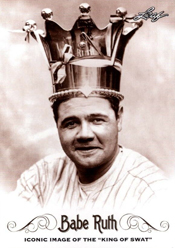
Adding a mix of controversy and comedy with a demonstration of clout, baseball’s greatest showman gave a commanding performance while reaching a milestone before a St. Louis audience.

On Aug. 21, 1931, in a game against the Browns at Sportsman’s Park, Yankees slugger Babe Ruth hit his 600th career home run.

Usually, such a feat would provide enough drama for one day, but not for Babe. Next, he got ejected. Then, he sparked a treasure hunt by offering a reward for his home run ball.

Big blow

Ruth, 36, hit his 599th home run, a ninth-inning grand slam, on Aug. 20 against the Browns at Sportsman’s Park. Boxscore

The next day, a Depression Era crowd of 4,000 came to Sportsman’s Park to see if he could hit No. 600.

Before the game, Ruth informed Browns secretary Willis Johnson he’d like to have the ball if he hit the milestone home run, the St. Louis Globe-Democrat reported.

In the third inning, with a runner on first, Ruth did his part. He hit a pitch from George Blaeholder high and deep to right, “a gorgeous, virile blow” that “stirred the sopranos to violent shrilling,” the New York Daily News noted.

The ball carried over the pavilion roof and struck a parked car on Grand Avenue, according to the Associated Press.

“The din had just subsided” when Lou Gehrig “duplicated the Bambino’s feat,” the Daily News reported. According to the St. Louis Post-Dispatch, Gehrig’s ball bounced off the roof and into the street.

Prize money

Four innings later, with the Yankees ahead, 8-1, Browns cleanup batter Red Kress hit a three-run home run to left against Hank Johnson.

Ruth, playing left field, claimed a spectator in the bleachers interfered with the ball while it was in play. When Ruth persisted with his argument, umpire Roy Van Graflan ejected him. It was the 10th of Ruth’s 11 career ejections as a player, but only the second time the gate attraction had been tossed since 1924.

Done for the day, Ruth’s thoughts were on his home run ball. When he got to the clubhouse, he sent word to the press box, asking that radio stations relay his request for the ball to be returned to him. Ruth said he would reward the finder with $10 and a new baseball.

Ruth was drawing a salary of $80,000 in 1931 _ when asked after signing the contract whether he believed he deserved to be making more money than President Herbert Hoover, Babe supposedly replied, “’I had a better year than he did.” _ but a $10 offer for a baseball was a good deal during the depths of economic depression.

Three St. Louis radio stations (KMOX, KWK and WIL) carried Browns home games in 1931, so when Ruth’s request went on the airwaves it reached a wide audience.

Kid stuff

When a 10-year-old newsboy, Tom Collico of North Grand Avenue, showed up at the Sportsman’s Park press gate with a ball, Willis Johnson, the Browns’ secretary, took him to meet Ruth.

According to Dick Farrington of The Sporting News, “Babe greeted the kid like a father. He fished around and handed the boy a $10 bill and in another few minutes had a brand new ball for him.”

While Collico was meeting with writers in the press box, another boy arrived at the gate and said he had the Ruth home run ball. According to The Sporting News, the boy was brought to Ruth, who gave him $10 and a new ball, too.

“Babe doesn’t know which of the balls he purchased was the one he hit,” The Sporting News noted.

Ruth guessed one of the balls was Gehrig’s home run. Boxscore

Ruth finished the season with 46 home runs, the 12th and last time he led the American League in that category.

Against the Browns in 1931, he hit .383 with eight home runs, including four at Sportsman’s Park.

For his career, Ruth batted .351 with 96 home runs versus the Browns. He hit 58 regular-season home runs at Sportsman’s Park. He also hit six there against the Cardinals _ three in Game 4 of the 1926 World Series Boxscore and three in Game 4 of the 1928 World Series. Boxscore

Read Full Post »

(Updated Sept. 12, 2021)

Three future Hall of Famers converged on center stage for a climactic scene in a Cardinals classic. On the mound, Bob Gibson. Behind the plate, Ted Simmons. In the batter’s box, Willie Stargell.

On Aug. 14, 1971, Gibson got his lone no-hitter when he struck out Stargell for the last out.

Finishing a no-hitter is a formidable task under any circumstance, but for Gibson the degree of difficulty was heightened. Stargell was leading the majors in home runs and RBI.

Simmons, in his first full season as Cardinals catcher, had an intriguing role in the drama. He earned respect with his bat, but took pride in his catching, too. Being involved in a Gibson no-hitter would help secure Simmons’ reputation.

Pride still matters

Gibson earned his second National League Cy Young Award in 1970. At 35, he looked as dominant as ever at the start of the 1971 season, winning three of his first four decisions. The only loss in that stretch was in extra innings to the Cubs’ Ferguson Jenkins.

Trouble soon followed. In his last April start, Gibson got shelled in a loss to the Mets’ Tom Seaver. In May, Gibson was 1-3 with a 5.21 ERA. He tore a thigh muscle late in the month and didn’t pitch from May 30 through June 20. When he returned, he lost two June starts, dropping his record to 4-7 with a 4.31 ERA.

Losing none of his intensity and focus, Gibson told The Sporting News, “I get paid for winning,” and he set his sights on earning the money.

Gibson was 5-2, including consecutive shutouts of the Phillies and Mets, with a 1.95 ERA in seven starts in July.

“Pride keeps him going,” teammate Joe Torre told The Sporting News. “He’s the greatest competitor I ever saw.”

On Aug. 4, with Simmons catching, Gibson struck out nine, including Willie Mays twice, and beat Gaylord Perry and the Giants for his 200th career victory. Boxscore

Overpowering stuff

Ten days later, Gibson was the starter against the Pirates on a Saturday night at Three Rivers Stadium in Pittsburgh.

The Cardinals knocked out Pirates starter Bob Johnson in the first inning and also pounded relievers Bob Moose and Bob Veale. Gibson contributed three RBI. Simmons had four hits, a RBI and scored three times. Torre also had four hits and a RBI, and scored twice.

On the mound, Gibson was in command.

“This was the first time in my life I ever was overpowered by anyone,” Pirates center fielder Al Oliver said to the St. Louis Post-Dispatch. “I never was able to get my bat around in time.”

Pirates second baseman and future Hall of Famer Bill Mazeroski told the Associated Press, “Gibson was throwing them right where he wanted. He hit the outside corner every time. I broke two of my bats.”

Simmons told the Baseball Hall of Fame yearbook in 2021, “I can remember specifically thinking in the fourth inning that I was watching something that was pretty special … The slider was just so wicked. Complete and total command of a fastball that he could ride and sink, four-seam and two-seam.”

When the Cardinals scored three runs in the eighth to take an 11-0 lead, the outcome wasn’t in doubt. The focus was on whether the Pirates would get a hit. Gibson never had pitched a no-hitter at any level, amateur or professional.

“In the last two innings, I was bearing down extra hard,” Gibson told The Sporting News. “I was trying not to make any bad pitches. Even when I was falling behind in the count, I was being careful not to groove any pitches. I was throwing sliders and curves on 3-and-2 counts.”

Despite his best efforts, Gibson made a mistake to Dave Cash. With two outs in the eighth, Gibson said he hung a slider. Cash hit a high bouncer to third. For a moment, Joe Torre couldn’t see it in the lights.

“It scared the heck out of me, man,” Torre told the Baseball Hall of Fame yearbook in 2021. “I’m thinking, ‘I’m going to whiff this thing,’ but it didn’t happen. I was able to make the play.”

Stretching on tiptoes, he snared the ball and fired a throw to first to nip Cash.

Friend or foe?

“By the ninth inning, I was so nervous my knees were actually knocking,” Gibson said in his book “Stranger to the Game.”

The first batter was Vic Davalillo, a former Cardinal who started in right field instead of Roberto Clemente. Gibson got him to ground out to shortstop Dal Maxvill.

Al Oliver followed and grounded out to second baseman Ted Kubiak.

Willie Stargell was all that stood between Gibson and a no-hitter _ and he stood like a giant from the left side of the plate.

“His weight shifting rhythmically from one foot to the other, his bat moving in circles like an airplane propeller, Stargell creates a feeling of menace as he waits for the pitch,” Newspaper Enterprise Association reported.

At that point in the season, Stargell had 39 home runs and 101 RBI. No one else in the majors had more.

Stargell also had hit four home runs in his career versus Gibson then.

(The final career numbers for Stargell against Gibson: .290 batting average, .388 on-base percentage, five home runs, 20 walks and 41 strikeouts. According to baseball-reference.com, Stargell struck out more times versus Gibson than he did against any other pitcher. Gibson and Phil Niekro were the only pitchers to issue as many as 20 walks to Stargell.)

In “Stranger to the Game,” Gibson said, “Aside from former teammates, the only opposing player I ever really made friends with was Willie Stargell. I don’t have a good excuse for this, except that Stargell’s personality left me no choice. I was just fortunate he didn’t spread around the league that I was a nice guy or something. I couldn’t have that.”

Caught looking

Increasing the tension with every pitch, Gibson got ahead in the count, 1-and-2, on Stargell. On the next one, “I was looking for a fastball,” Stargell told The Sporting News.

Instead, with his 124th pitch of the game, Gibson threw a slider.

Stargell watched it go into Simmons’ mitt and heard umpire Harry Wendelstedt call, “Strike three!”

“That last pitch to Stargell really exploded,” Cardinals manager Red Schoendienst said to The Sporting News.

Stargell said the slider “cut over the plate at the last instant.” Boxscore and Video

“You can tell all those people who have been saying that Gibson was washed up that they should have been at the plate with a bat in their hands,” Stargell said.

Jack Buck, calling the ninth inning on the KMOX radio broadcast, said after the completion of the no-hitter, “If you were here, it would have made you cry.” Audio broadcast of Jack Buck and Jim Woods

Gibson’s no-hitter was the first in a big-league game in Pittsburgh since 1907 when rookie Nick Maddox of the Pirates did it against the Dodgers at Exposition Park. No big-leaguer pitched a no-hitter at Forbes Field, the Pirates’ home from 1909-69.

Gibson finished the season with a 16-13 record, 3.04 ERA, 20 complete games and five shutouts, his most since his most dominant season in 1968.

Read Full Post »

(Updated July 31, 2025)

Whitey Herzog had Jose Oquendo as his secret weapon when he managed the Cardinals. Tony La Russa had his own version, Miguel Cairo.

On Aug. 10, 2001, Cairo signed with the Cardinals after he was placed on waivers by the Cubs.

Intelligent and versatile, Cairo played multiple positions and helped the Cardinals reach the playoffs. He was similar to Oquendo, who got nicknamed “Secret Weapon” because of the many ways he helped Herzog’s teams in the late 1980s.

In commenting about Cairo’s attributes, La Russa told the St. Louis Post-Dispatch, “Oquendo is a very good comparison.”

Making the rounds

Born and raised in Venezuela, Cairo was 16 when he signed with the Dodgers. A right-handed batter, he played in the farm systems of the Dodgers and Mariners before making his debut in the majors with the Blue Jays when he was 21.

In November 1996, the Blue Jays dealt Cairo to the Cubs. His first multi-hit game in the majors came against the Cardinals. Boxscore

The Devil Rays chose Cairo in the November 1997 expansion draft and he was the starting second baseman in the franchise’s first regular-season game. Boxscore

“Defensively, he’s as good as I’ve seen,” Devil Rays third baseman and future Hall of Famer Wade Boggs told The Sporting News.

Possessing smooth hands, speed and athleticism, Cairo was the Devil Rays’ second baseman in their first three seasons. He said it was a thrill when he and a fellow Venezuelan, shortstop Ozzie Guillen, formed the Devil Rays’ keystone combination in 2000.

Released in November 2000, Cairo signed with the Athletics, who dealt him to the Cubs in March 2001.

Smart pickup

Cairo opened the 2001 season in the minors but was called up to the Cubs in May. He helped fill in for injured third baseman Bill Mueller and also backed up Eric Young at second base.

Cairo hit .285 in 66 games for the 2001 Cubs, but was placed on waivers when Mueller was close to returning from the disabled list.

When the Cardinals claimed him, they were in third place in their division, trailing the front-running Cubs by seven games.

The Cardinals envisioned Cairo, 27, as a player who could provide infield depth and a right-handed bat off the bench.

“I’m a utility player for the Cardinals,” Cairo told the Post-Dispatch. “I know my role. I’m ready.”

While the Cubs nosedived, with records of 13-16 in August and 10-12 in September, and dropped from contention, the Cardinals got hot. They were 20-10 in August and 17-5 in September, finishing in a tie for first with the Astros and qualifying for the playoffs.

Pitcher Woody Williams, acquired in August from the Padres for Ray Lankford, was a major factor in the Cardinals’ surge, posting a 7-1 record in 11 starts, but Williams also credited the performance of Cairo.

“To tell you the truth, when I got here, it didn’t seem like anybody was heading in the right direction,” Williams told the Post-Dispatch. “I was shocked. It changed when Miguel got here. He’s been the lucky horseshoe.”

Cairo hit a three-run, game-winning home run against the Phillies on Aug. 18. It was his first career home run as a pinch-hitter. Boxscore

A month later, Cairo had three doubles in a win versus the Pirates, even though he didn’t enter the game until the fifth inning. Boxscore

Cairo hit .333 for the 2001 Cardinals, including .429 in September. He hit .368 as a pinch-hitter. His overall batting average against left-handers was .538.

The 2001 Cardinals used Cairo at five positions: left field and all four infield spots.

“We could tell from watching him with the Cubs that he knew the game,” La Russa said to the Chicago Tribune. “Since we’ve gotten him, we’ve been even more impressed. He has a nice stroke, can hit all over the park and knows when to be aggressive or take a pitch.”

La Russa told the Post-Dispatch, “What you don’t know until you are around him is that he’s really an intelligent player.”

Mutual respect

Cairo made valuable contributions to the Cardinals again in 2002. He hit .322 as a pinch-hitter and was second in the National League in pinch-hits (19).

He played seven positions for the 2002 Cardinals: left field, right field, designated hitter and all four infield spots.

In the postseason, Cairo hit .529. He entered Game 2 of the National League Division Series versus the Diamondbacks after third baseman Scott Rolen was injured and drove in the winning run in the ninth inning. Boxscore and Video at 3:06.41 mark

In Game 3, Cairo was 3-for-3 with two RBI and reached base four times. Boxscore

Cairo hit .385 in the National League Championship Series against the Giants and had a home run versus Kirk Rueter in Game 1. Boxscore

La Russa, a former utility infielder before turning to coaching and managing, became a role model for Cairo.

“Miguel will be an outstanding coach like Jose Oquendo is,” La Russa predicted to the Post-Dispatch. “You watch how active he is during the game. He’s conversing with guys. He’s seeing things and making comments. He’s really helpful.”

Cairo said, “I like to learn about the game. When I’m not playing, I like to see what happens in certain situations. I like to see how Tony handles it. I watch him a lot when he manages.”

After hitting .245 for the 2003 Cardinals, Cairo became a free agent and signed with the Yankees. Released in August 2007, he rejoined the Cardinals and hit .444 for them as a pinch-hitter.

Cairo also played for the Mariners (2008), Phillies (2009) and Reds (2010-12). He produced 1,044 hits in 17 seasons in the majors.

After the 2012 season, Cairo became a special assistant to Reds general manager Walt Jocketty. It was Jocketty who brought Cairo to the Cardinals in 2001.

In 2021, when La Russa returned to managing with the White Sox, he chose Cairo to be the team’s bench coach.

Cairo became White Sox manager at the end of August 2022 when La Russa took a leave of absence. The White Sox were 18-15 with Cairo as manager.

In July 2025, Cairo replaced Dave Martinez as manager of the Nationals.

Read Full Post »

Matty Alou had the perfect audience to appreciate a daring dash around the bases.

On Aug. 7, 1971, Alou used skill, imagination and nerve to produce the winning run for the Cardinals in a victory versus the Dodgers at St. Louis.

With the score tied at 2-2, Alou batted with one out and none on in the 10th inning. He reached base on a bunt single, then made a fearless sprint from first to home while the Dodgers botched every attempt to catch him.

Alou’s aggressive baserunning was reminiscent of Enos Slaughter, who scored the winning run for the Cardinals on a mad scramble from first to home in Game 7 of the 1946 World Series.

Twenty-five years later, Slaughter and several of his contemporaries were in St. Louis for a reunion of the 1946 World Series teams and were at the ballpark to witness Alou’s performance.

Making it happen

After sweeping the Giants, the Cardinals (62-50) were seven games behind the division-leading Pirates (69-43) as they entered a three-game series with the Dodgers at Busch Memorial Stadium.

The opening game, played on a Saturday night, featured left-handed starting pitchers Claude Osteen of the Dodgers and Steve Carlton of the Cardinals. The Dodgers went ahead, 2-0, with a pair of runs in the sixth, but the Cardinals tied the score in the seventh on a RBI apiece by Jim Beauchamp and Jerry McNertney.

When the game moved to the bottom of the 10th, Pete Mikkelsen, a former Cardinal, came in to pitch. He struck out the first batter, Julian Javier, before Alou, batting .325, stepped to the plate.

Batting left-handed, Alou executed a drag bunt between first base and the mound. Another former Cardinal, first baseman Dick Allen, fielded the ball, but Alou eluded his tag attempt and reached base safely.

Meeting over

Cleanup batter Joe Torre was up next, but Mikkelsen was focused on Alou. He gathered second baseman Jim Lefebvre and shortstop Maury Wills for a conference between the mound and second to discuss whether to try a pitchout on the first pitch.

As the group gabbed, Alou realized no one had called timeout, so he bolted for second. “I thought I could beat them to the base,” Alou told the Los Angeles Times.

Dodgers manager Walter Alston said, “There’s an umpire at every base. All you’ve got to do is call time.”

Though caught by surprise, Lefebvre got to the bag before Alou did. “The consensus among the Dodgers was Alou would have been out by 10 feet if Mikkelsen had made a good throw,” the St. Louis Post-Dispatch reported.

Instead, Mikkelsen hurried a high toss to Lefebvre. As Lefebvre reached for it, the ball went off the top of his glove and into center field. Alou kept running and headed to third on Mikkelsen’s error.

“I went to third because I know on the AstroTurf the ball would go a long way,” Alou explained to the Los Angeles Times.

However, Alston noted, “The ball only went 15 feet.”

Bold move

Lefebvre got to the ball, but failed to field it cleanly while trying to keep an eye on Alou.

“When I saw Lefebvre couldn’t pick the ball up, I thought I could score,” Alou told the Los Angeles Times.

Alou sped for the plate and arrived ahead of Lefebvre’s throw to catcher Joe Ferguson, giving the Cardinals a 3-2 triumph. Boxscore

“I’ve never seen anything like that,” Alston told the Post-Dispatch, “and I never want to see it again.”

Dom DiMaggio, center fielder for the Red Sox team that opposed the Cardinals in the 1946 World Series, said, “They were running fools then, like Alou now.”

In baseball, though, a bum one day can be a hero the next. Sure enough, the day after his role in the Dodgers’ lapse, Lefebvre got redemption, hitting a three-run home run against Jerry Reuss and helping the Dodgers recover for a 4-2 victory. Boxscore

Alou finished with 192 hits, 85 runs and a career-high 74 RBI for the 1971 Cardinals.

Read Full Post »

With the sort of name once found in dime store novels, Pickles Dillhoefer made quite an impression as a Cardinals catcher.

At 5 feet 7, 154 pounds, Pickles was a gherkin who played a position filled with hulks. What he lacked in size he made up for in spirit. Aggressive and energetic, Dillhoefer was popular with teammates and fans.

An example of his fiery approach occurred on Aug. 4, 1921, when he came to the defense of a fallen teammate in a game against the Giants.

Sadly, six months later, soon after one of the happiest events of his life, Dillhoefer experienced a tragic twist of fate.

On the move

William Martin Dillhoefer was born and raised in Cleveland. The first four letters of his surname led to him being called Pickles by boyhood pals, according to the Society for American Baseball Research. The nickname followed Dillhoefer into baseball.

Dillhoefer reached the big leagues with the Cubs as a backup catcher in 1917 and made his debut in a game against the Cardinals. Boxscore

After the season, the Cubs swapped Dillhoefer, Mike Prendergast and $55,000 to the Phillies for Bill Killefer and future Hall of Famer Grover Cleveland Alexander. Dillhoefer played in eight games for the 1918 Phillies before enlisting in the Army during World War I.

Discharged, he was packaged in a trade on Jan. 21, 1919. The Phillies sent third baseman Milt Stock, pitcher Dixie Davis and Dillhoefer to the Cardinals for pitcher Gene Packard and infielders Doug Baird and Stuffy Stewart.

Handy man

Frank Snyder was the Cardinals’ Opening Day catcher in 1919, with Dillhoefer and Verne Clemons the backups. When the Cardinals dealt Snyder to the Giants in July 1919, Clemons became the starter.

Sometimes, when Dillhoefer wasn’t playing, manager Branch Rickey used him as a coach on the baselines. Dillhoefer possessed a “foghorn voice and peppery coaching tactics,” the St. Louis Star-Times noted.

A right-handed batter with little power, Dillhoefer made 24 starts at catcher for the Cardinals in 1919 and 57 in 1920.

The Star-Times described Dillhoefer as “a brainy player noted for his aggressiveness.”

According to the St. Louis Post-Dispatch, “Dillhoefer was one of the most popular players in St. Louis. He had such a fighting spirit, boundless enthusiasm and excellent baseline coaching qualities. He was considered one of the club’s best assets on the field and at the box office.”

Playing rough

On Thursday afternoon, Aug. 4, 1921, when the Giants and Cardinals played at Sportsman’s Park in St. Louis, the catchers were Frank Snyder, the former Cardinal, and Dillhoefer.

The Cardinals broke a scoreless tie in the sixth inning. Joe Schultz led off with a single, advanced to second on Milt Stock’s sacrifice bunt and scored on a Rogers Hornsby single.

In the eighth, Schultz collapsed when hit behind the left ear by a pitch from Art Nehf. The plunking apparently was unintentional because Nehf’s “groan of regret could be heard in the press box,” the Post-Dispatch reported.

Cardinals rushed from the dugout to attend to Schultz. “After two or three minutes, he was able to sit up and take a drink,” according to the Post-Dispatch.

Dillhoefer barked at the Giants, accusing Nehf of trying to brush back Schultz. He warned them to be ready to duck when it was their turn to bat.

Those were fighting words to Frank Snyder. He approached Dillhoefer, threw down his mask and glove, and “began swinging rights and lefts,” the Post-Dispatch reported.

Snyder landed at least one punch to Dillhoefer’s face, according to the New York Daily News.

Snyder was 6 feet 2 and 185 pounds, five inches taller and more than 30 pounds heavier than his counterpart, but Dillhoefer “waded right in and was holding his own” until umpire Ernie Quigley got between the two men.

Quigley “locked his arm around Snyder and pushed him halfway across the diamond,” the Post-Dispatch reported. “Either Quigley is very strong, or Snyder did not want to fight any more, for Quigley wheeled him around the field like a toy wheelbarrow.”

Snyder and Dillhoefer were ejected. As Schultz was helped to the dugout, “several policemen appeared on the scene, half a dozen Cardinals held the enraged Dillhoefer, and the crowd yelled at Snyder,” the Post-Dispatch reported.

According to the Star-Times, Snyder “tried to climb into the stands” to reach the hecklers, and was escorted by two policemen to the dugout.

Angered by something a spectator said, Giants outfielder Casey Stengel started a fight and was ejected. “In the excitement,” the Post-Dispatch noted, “half a dozen bottles and several seat cushions were thrown in the general direction of the Giants’ dugout.”

After play resumed, Cardinals rookie starter Bill Pertica completed a six-hit shutout. Boxscore

Heartbreaking turn

Dillhoefer made 42 starts for the 1921 Cardinals and was in their plans for the next season.

On Jan. 14, 1922, Dillhoefer married teacher Massie Slocum in her hometown of Mobile, Ala. After a honeymoon in New Orleans, they were returning to St. Louis when Dillhoefer became ill. He was admitted to St. John’s Hospital in St. Louis on Jan. 19 and was diagnosed with typhoid fever.

According to the Mayo Clinic, typhoid fever is caused by salmonella typhi bacteria. Contaminated food and water or close contact with an infected person cause typhoid fever.

Dillhoefer, 28, still was in the hospital when he died on Feb. 23, barely a month after his wedding.

“I can hardly believe Dilly is gone,” manager Branch Rickey told the Star-Times from the Cardinals’ spring training camp in Orange, Texas.

“I knew he was a very sick man, but it is a big shock to learn of his death. Dillhoefer endeared himself to me and all the players. He wasn’t very big as catchers go, but he made up for lack of size by possessing a lion heart.”

Two days after his death, Dillhoefer was buried in Mobile. Among the pallbearers were Rickey, Cardinals players Verne Clemons, Bill Sherdel and Milt Stock, and Cardinals scout Charley Barrett, the Associated Press reported.

The St. Louis Browns, who held spring training in Mobile, were represented at the funeral by manager Lee Fohl, coach Lefty Leifield and catchers Hank Severeid and Pat Collins.

According to the Society for American Baseball Research, Dillhoefer’s widow remained a teacher and never remarried. She died in 1985, 63 years after her wedding, and was buried beside her husband.

Read Full Post »

In his 11 seasons with the Braves and Dodgers, shortstop Rafael Furcal reached the playoffs nine times, but never got to a World Series. When the chance came to join the Cardinals, Furcal sensed they might get him where he wanted to go.

On July 31, 2011, the Cardinals acquired Furcal from the Dodgers for outfielder Alex Castellanos. As a player with 10 years or more of big-league service, including at least five with the same team, Furcal’s permission was needed to make the deal.

Furcal gave his approval, and both he and the Cardinals benefitted. Taking over the leadoff spot in the batting order and providing consistent defense, Furcal reached the World Series for the only time, helping the 2011 Cardinals win the championship.

Premier player

Born and raised in the Dominican Republic, Furcal was 22 when he debuted in the majors with the Braves in 2000. He won the National League Rookie of the Year Award, finishing ahead of Cardinals pitcher Rick Ankiel.

In 2003, Furcal turned an unassisted triple play against the Cardinals. He also achieved double-digit totals that season in doubles (35), triples (10) and home runs (15) and was named to the National League all-star team for the first time.

Furcal had a career-high 46 steals in 2005 and again got to double digits in doubles (31), triples (11) and home runs (12). 

After six seasons (2000-2005) with the Braves, he became a free agent and joined the Dodgers. In 2006, Furcal had a career-high 196 hits and scored 100 runs for the fourth consecutive year.

Furcal twice opposed the Cardinals in the playoffs, with dissimilar results. He hit .091 against them in the 2000 National League Division Series and .500 in the 2009 Division Series.

Time is right

In 2008, Furcal had back surgery. He twice was on the disabled list in 2010 and spent two more stints there with the Dodgers in 2011.

Soon after he came off the disabled list for the second time in July 2011, the Cardinals sent scouts Marty Keough and Bill Gayton to follow him for a week.

“One of the more animated players in the clubhouse, Furcal also was the Dodgers’ offensive spark when healthy,” the Los Angeles Times noted.

The Cardinals were in the market for a shortstop to replace Ryan Theriot, who went into a batting slump in July 2011.

The scouts liked what they saw from Furcal. The Dodgers, who wanted to create an opening for shortstop prospect Dee Gordon, were willing to deal.

Furcal told the St. Louis Post-Dispatch, “It’s part of my dream to win a World Series ring. I think it’s time to do it.”

Contributing to the cause

Post-Dispatch columnist Bernie Miklasz endorsed the trade, calling Furcal a “winning player.”

The Cardinals hoped Furcal would play as well for them as he had against them. He hit .344 versus the Cardinals in his career.

On the day of the deal, the Cardinals (57-50) were in second place in their division, 1.5 games behind the Brewers. With Furcal’s arrival, Theriot shifted to second and shared playing time with Skip Schumaker.

In September, Furcal contributed to the Cardinals’ successful surge.

On Sept. 9, in the opener of a three-game series versus the Braves at St. Louis, Furcal had three walks, a hit and scored two runs, including the tying one in the ninth, in a 4-3 Cardinals victory. Boxscore

Two weeks later, on Sept. 19, Furcal had three hits, including two doubles, and scored a run, helping the Cardinals beat Phillies ace Roy Halladay for the first time. The 4-3 win moved the Cardinals to within 2.5 games of the Braves for the wild-card spot. Boxscore

The Cardinals were 18-8 in September and got into the playoffs. Furcal had 50 hits in 50 regular-season games for them and scored 29 runs.

“You saw how much better our club was when he was on our team,” Cardinals general manager John Mozeliak said to the Post-Dispatch. “He really solidified our defense up the middle.”

In a January 2012 interview, Cardinals broadcaster and former pitcher Rick Horton told me, “Defense matters. It’s an absolute fact that if you can’t catch the ball better than the rest, you’re going to lose games you shouldn’t lose … The Cardinals became better up the middle when they had Furcal at shortstop.”

Making an impact

Furcal had a prominent role in each of the Cardinals’ decisive games of the 2011 postseason.

In the finale of the National League Division Series versus the Phillies, Furcal led off the game with a triple against Roy Halladay and scored on Skip Schumacher’s double. Chris Carpenter pitched a shutout and the Cardinals won, 1-0. Boxscore

When the Cardinals clinched the pennant with a win in Game 6 of the National League Championship Series against the Brewers, Furcal hit a home run. Boxscore

Furcal batted leadoff in every game of the Division Series and League Championship Series, and in the first six games of the World Series versus the Rangers.

For Game 7 of the World Series, manager Tony La Russa put Theriot in the leadoff spot and dropped Furcal to seventh. Furcal responded with two hits. He also was hit by a pitch with the bases loaded in the fifth, scoring Albert Pujols from third.

The Cardinals won, 6-2, and were World Series champions. Boxscore

Knockout blow

Eligible to become a free agent, Furcal signed a two-year, $14 million contract with the Cardinals in December 2011.

He was selected to the National League all-star team in 2012 and was the starting shortstop. In the fourth inning against the Rangers’ Matt Harrison, Furcal tripled and scored on Matt Holliday’s single. Boxscore

Furcal’s season ended on Aug. 30, 2012, when he suffered a ligament tear in his right elbow. Pete Kozma replaced him and helped the Cardinals return to the playoffs.

At spring training in 2013, Furcal injured the elbow again while making a sidearm throw. He had Tommy John surgery to repair the torn ligament and was sidelined the entire season.

Furcal briefly played for the Marlins in 2014.

In 14 big-league seasons, Furcal batted .281 with 1,817 hits and 314 stolen bases. Highlights video

Read Full Post »

« Newer Posts - Older Posts »