Cardinals manager Eddie Dyer preferred to put Pirates slugger Ralph Kiner on base, representing the potential winning run, rather than give him a chance to hit a walkoff home run.
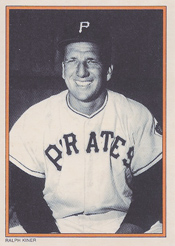 On Sept. 3, 1950, with the score tied in the bottom of the 10th inning of a game between the Cardinals and Pirates at Pittsburgh, Dyer ordered pitcher Harry Brecheen to give an intentional walk to Kiner with the bases empty and two outs.
The unorthodox strategy backfired when the next batter, rookie Gus Bell, hit a double, scoring Kiner and giving the Pirates a 12-11 victory.
Home run king
The Cardinals carried a four-game losing streak into the Sunday afternoon series finale against the last-place Pirates at Forbes Field.
Kiner hit two home runs. The first was a solo shot against Red Munger in the opening inning. The second home run, a two-run clout versus Cloyd Boyer in the eighth, gave the Pirates a 9-8 lead.
In his first four seasons (1946-49) in the majors, Kiner led the National League in home runs in 1946 (23) and 1949 (54), and tied with Johnny Mize of the Giants for the top spot in 1947 (51) and 1948 (40). Kiner was on his way to winning the league’s home run crown again in 1950.
Comeback Cardinals
Bill Howerton of the Cardinals led off the top of the ninth with a home run into the upper deck in right against Junior Walsh, tying the score at 9-9.
Brecheen, usually a starter, relieved for the Cardinals in the bottom of the ninth and retired the Pirates in order.
In the top of the 10th, the Cardinals scored twice versus Bill Werle. With one out and none on, Red Schoendienst doubled, Stan Musial drove him in with a single and Enos Slaughter tripled, scoring Musial and extending the Cardinals’ lead to 11-9.
Dare to differ
Brecheen retired the first batter, Clyde McCullough, in the bottom of the 10th, but the next two, Pete Castiglione and Bob Dillinger, each hit a home run, tying the score at 11-11. For Castiglione, the home run was his third of the season and for Dillinger it was his first since the Pirates acquired him from the Athletics in July.
After the back-to-back home runs, Brecheen knocked down the next batter, Danny O’Connell, with his first pitch to him. O’Connell grounded out for the second out of the inning.
The next batter was Kiner. The only way he could beat the Cardinals was to hit a home run, but Dyer thought the risk was so high it was worth issuing an intentional walk.
Among the factors influencing Dyer’s thinking:
_ Kiner batted right-handed and Brecheen was a left-hander.
_ Brecheen already had given up two home runs in the inning and thus was vulnerable against Kiner.
“The fact it violated tried and true baseball strategy doesn’t bother us a bit,” columnist Bob Burnes wrote in the St. Louis Globe-Democrat. “We’ve always felt too many managers called too many plays in routine fashion purely because that’s the way the pattern said it should be.”
What did bother Burnes is the slumping Cardinals appeared to have lost confidence. “It was a desperation play, one dictated by something almost akin to panic,” Burnes said.
Take that!
As Kiner watched Brecheen lob four pitches wide of the plate, the fans booed.
With Kiner on first, cleanup hittter Gus Bell batted next. Bell had tripled twice and singled. Though a left-handed batter, Bell hit .320 versus left-handers in 1950.
Bell belted a pitch from Brecheen high and deep to right. The ball “appeared headed into the stands for a home run,” the Pittsburgh Press reported, but it hit high on the screen.
Right fielder Enos Slaughter gave chase and fell. The ball caromed about 35 yards from the screen, the Globe-Democrat reported, giving Kiner time to hustle from first base to home. Bell stopped at second with a double as Kiner crossed the plate with the winning run. Boxscore
The teams combined for 30 hits, including 20 for extra bases.
Each team hit three triples. The Pirates had five home runs and the Cardinals had three.
The Cardinals wasted a big performance from Stan Musial, who had four hits and two walks. Playing near his hometown of Donora, Pa., Musial had a two-run home run and scored four times.
Kiner went on to hit 47 home runs in 1950. Only eight came against left-handers.
Brecheen finished the 1950 season with a 3.55 ERA in 23 starts for the Cardinals and a 10.50 ERA in four relief appearances.
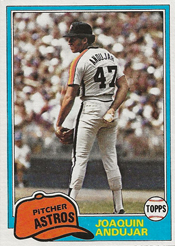 In 1980, the Astros agreed to trade Andujar to the defending World Series champion Pirates for first baseman and outfielder Bill Robinson. The deal was to be completed just before the start of 1980 spring training, but it fell through when the Astros refused to renegotiate Robinson’s contract.
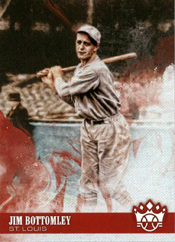 The Cardinals beat the Cubs, 8-7, in 20 innings on Aug. 28, 1930, at Wrigley Field in Chicago.
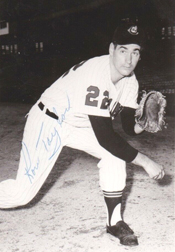 On April 11, 1962, the first time he played in a major-league game, Taylor got the start against the Red Sox at Boston’s Fenway Park, pitched 11 shutout innings and lost when he gave up a walkoff grand slam to Carroll Hardy in the 12th.
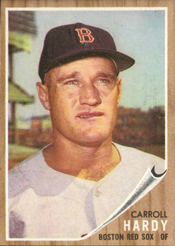 An accomplished athlete from Sturgis, South Dakota, Hardy had a tryout with the baseball Cardinals after he graduated from high school and got a contract offer from them, according to the
  On Aug. 27, 1990, Cardinals pitcher Frank DiPino and catcher Tom Pagnozzi were found not guilty of misdemeanor charges of disorderly conduct. The jury of three women and three men deliberated for 30 minutes before returning the verdicts.
 After the game, Mathews, DiPino and Pagnozzi went to The Waterfront, a floating restaurant tied to moorings at Pete Rose Pier in Covington. The high-end steak and seafood place had stunning views of the Cincinnati skyline, a lively bar scene and a 1980s “Miami Vice” vibe.
 On Aug. 16, 1990, during a game between the Astros and Cardinals at Busch Memorial Stadium in St. Louis, Guerrero got upset with Darwin for throwing a pitch too close to him.
 RetroSimba