Feeds:
Posts
Comments

Archive for the ‘Hitters’ Category

Don Pavletich achieved two special personal milestones versus the Cardinals, but one of his worst moments also occurred in a game against them.

A catcher and first baseman, Pavletich played 12 years in the major leagues for the Reds, White Sox and Red Sox. The 1965 Topps card pictured here incorrectly listed him as a pitcher.

In 1962, while with the Reds, Pavletich got his first major-league hit. A few weeks later, he got his first major-league RBI. Both feats came in games against the Cardinals.

Two years later, Pavletich had a prominent, but unwanted, role versus the Cardinals when his error led to a Reds loss in the thick of the 1964 National League pennant race.

Hot prospect

Born in Milwaukee and raised in nearby West Allis, Wisconsin, Pavletich was Croatian-American. All four of his grandparents immigrated to the United States from Croatia, according to the Society for American Baseball Research.

In high school and summer leagues, Pavletich was coached by Steve Belich, who had prepared another West Allis standout, Harvey Kuenn, for the majors.

A powerful right-handed batter, Pavletich, 18, signed with the Reds in August 1956 and made his major-league debut for them in his hometown of Milwaukee on April 20, 1957. A month later, Pavletich began a two-year hitch in the Army.

After hitting .295 with 22 home runs as a catcher and first baseman for manager Cot Deal at minor-league Indianapolis in 1961, Pavletich opened the 1962 season with the defending National League champion Reds as a backup to catcher Johnny Edwards and first baseman Gordy Coleman.

On April 29, 1962, in the first game of a doubleheader at St. Louis, the Cardinals led, 9-1, in the fourth inning when Reds manager Fred Hutchinson replaced Edwards with Pavletich.

In the fifth, Pavletich got his first big-league hit, a single versus Larry Jackson. Pavletich went on to hit .400 (6-for-15) in his career against Jackson. Boxscore

The next time Pavletich faced the Cardinals, on June 5, 1962, at St. Louis, he started at first base and hit a two-run single versus Curt Simmons in the third inning for his first RBI in the big leagues. Boxscore

Pavletich did some of his best hitting against some prominent left-handers, including Dick Ellsworth (.409), Denny Lemaster (.389), Warren Spahn (.364), Johnny Podres (.364) and Simmons (.318).

Costly miscue

On Sept. 19, 1964, the Cardinals and Reds, trying to catch the first-place Phillies in the final two weeks of the season, played a doubleheader at Cincinnati. The Cardinals were jolted in the opener when Frank Robinson hit a three-run walkoff home run against Bob Gibson in the ninth. Boxscore

In the second game, with the pressure on the Cardinals to avoid being swept, the pitchers were left-handers Billy McCool, making his first career start for the Reds, and Ray Sadecki for St. Louis. The catchers were a pair of Milwaukee natives, Pavletich and the Cardinals’ Bob Uecker.

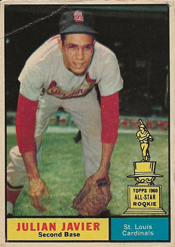
In the second inning, with one out and the game scoreless, the Cardinals’ Bill White and Julian Javier each singled, putting runners on second and first.

As the next batter, Mike Shannon, struck out, White and Javier attempted a double steal. Pavletich’s throw sailed over the head of third baseman Chico Ruiz and into left field. White and Javier both scored on the error and those were the game’s only runs. Boxscore

The 2-0 victory kept the Cardinals in second place, 5.5 games behind the Phillies, and proved to be a difference-maker. The Cardinals clinched the pennant on the last day of the season, finishing a game ahead of both the Reds and Phillies.

Power hitter

At spring training in 1966, Pavletich made a bid to unseat Edwards, a three-time National League all-star, as the Reds’ starting catcher. When Edwards suffered ligament damage to the middle finger of his right hand when struck by a foul ball in an exhibition game on April 9, Pavletich was ready to take over.

After watching Pavletich hit his fifth home run of the spring training season, Edwards told the Dayton Daily News, “Every time I see him swing that bat, my finger feels better.”

With Edwards sidelined, Pavletich opened the 1966 season as the Reds’ catcher. On April 17, in his third consecutive game as starting catcher, Pavletich injured his left foot while rounding first base after hitting a double. He stayed in the game, but awoke the next morning with pain in his foot so intense “he nearly collapsed when he got out of bed,” the Dayton Journal-Herald reported.

Pavletich strained ligaments in the foot and couldn’t play. Edwards, wearing a metal splint on his injured finger, replaced him and remained the starting catcher.

Veteran vs. phenom

In August 1967, Johnny Bench made his major-league debut with the Reds and was their starting catcher the last month of the season.

Six months later, the Reds traded Edwards to the defending World Series champion Cardinals to clear the way for Bench to be their catcher in 1968.

“Bench was conceded the starting position at the start of spring training,” the Cincinnati Enquirer reported.

Pavletich, 29, wasn’t ready to give in to Bench, 20. Rising to the challenge, Pavletich hit seven home runs with 19 RBI in Reds spring training games in 1968 and was named the Opening Day starting catcher.

“I must say I’m most pleased by Pavletich’s home run hitting,” Reds manager Dave Bristol said.

Convinced the Reds were a contender, Pavletich said, “I know the Cardinals are a great club and definitely are the club to beat, but I feel we have it on them in two important departments _ pitching and bench strength.”

Pavletich started at catcher in the first five games of the 1968 season before he hurt his right arm swinging at a pitch in Chicago. With Pavletich sidelined for a month, Bench took over as starting catcher and never looked back, building a Hall of Fame career.

Pavletich batted .254 in his big-league career, including .264 in 50 games versus the Cardinals.

Read Full Post »

Convinced center fielder Jim Edmonds would depart for free agency, the Angels were willing to deal him for the right offer.

On March 23, 2000, the Cardinals capitalized on the opportunity, trading pitcher Kent Bottenfield and second baseman Adam Kennedy to the Angels for Edmonds.

Bottenfield and Kennedy filled two holes in the Angels’ lineup, but Edmonds provided much more to the Cardinals.

With Edmonds producing Gold Glove-caliber defense in center and a power bat from the left side, the Cardinals became perennial contenders. They qualified for the postseason in six of the eight years Edmonds played for them, won two National League pennants (2004 and 2006) and earned a World Series championship (2006) for the first time in 24 seasons.

Angels fan

Edmonds grew up in the California town of Diamond Bar, 27 miles from where the Angels played in Anaheim. He was an Angels fan and admired Rod Carew.

Edmonds was about to turn 18 when he was chosen by the Angels in the seventh round of the 1988 amateur draft. An eye test revealed he had 20-15 vision, meaning he could see things at 20 feet that people with normal vision could see only at 15 feet, the St. Louis Post-Dispatch reported. Five years later, in September 1993, Edmonds made his major-league debut with the Angels.

Carew, a Hall of Famer and seven-time American League batting champion, was the Angels’ hitting coach and he and Edmonds bonded. In 1995, Edmonds had a breakout year, hitting .290 with 33 home runs and 107 RBI for the Angels. He twice won an American League Gold Glove Award (1997-98).

In 1999, Edmonds missed most of the season after tearing the labrum in his right shoulder while weightlifting. He had surgery in April and didn’t play until August.

Edmonds hit .250 with five home runs in 55 games for the 1999 Angels. He also was criticized for having a care-free attitude and lacking dedication. “Let’s just say he never would have been voted the most popular player on the team,” the Orange County Register reported.

Desire to deal

At spring training in 2000, Edmonds was heard telling Angels teammates about the clubs he expected to get offers from when he planned to enter free agency after the season.

Angels general manager Bill Stoneman was willing to trade Edmonds, but found his market value limited. The Yankees wanted Edmonds but wouldn’t part with the two players Stoneman sought, pitcher Ramiro Mendoza and second baseman Alfonso Soriano, the Post-Dispatch reported.

Talks between the Cardinals and Angels about a deal involving Edmonds stalled, the Los Angeles Times reported. According to the Post-Dispatch, the Angels wanted a pitching prospect, Rick Ankiel or Chad Hutchinson, but the Cardinals were unwilling.

Later, Bob Gebhard, an assistant to Cardinals general manager Walt Jocketty, was scouting Edmonds in Arizona and told Stoneman the Cardinals might be willing to include Kennedy with Bottenfield for Edmonds.

Stoneman called Jocketty and the deal was made.

“It became apparent we might be able to fill two needs,” Stoneman said. “It made so much sense that we had to do it.”

Bottenfield, an 18-game winner for the 1999 Cardinals, gave the Angels a potential staff ace. Stoneman was in the Expos’ front office when Bottenfield began his pro career with them.

“He could throw to a dime and hit it,” Stoneman said. “He understands pitching and has great control.”

The Orange County Regster concluded, “He might never win 18 games again but he is still so far above anything else in the Angels’ rotation at the moment that it doesn’t matter.”

Kennedy, a first-round selection by the Cardinals in the 1997 amateur draft, made his major-league debut with them in August 1999. The Angels projected him as their second baseman in 2000.

High marks

While the Angels viewed Bottenfield and Kennedy as solutions, the Cardinals saw them as players who didn’t fit their plans. Bottenfield was expendable because the Cardinals wanted to open a spot in the starting rotation for Garrett Stephenson, who allowed one earned run in 15 spring training innings. Concerned about Kennedy’s defense, the Cardinals had acquired Fernando Vina from the Brewers during the winter to play second base.

According to the Post-Dispatch, the Cardinals “didn’t think Kennedy would ever be their everyday second baseman” and “they doubted whether Bottenfield was more than a one-year wonder.”

Acquiring Edmonds enabled the Cardinals to move J.D. Drew from center to right and use Eric Davis as a role player.

“We added a player who is a major-league plus as a defensive outfielder with a major-league plus throwing arm, a guy who has been a productive major-league hitter,” said Cardinals manager Tony La Russa. “It seems to me we really helped our club.”

Said Jocketty: “He plays hard every day and he’ll sacrifice his body to play hard. That’s something St. Louis fans will enjoy. He’s as close to a five-tool outfielder as you will find.”

Post-Dispatch columnist Bernie Miklasz praised the Cardinals for making a deal “to stabilize the outfield and upgrade the offense.”

Return on investment

In May 2000, Edmonds agreed to a $57 million, six-year contract extension with the Cardinals, keeping him from becoming a free agent after the season.

Though he set a franchise record by striking out 167 times, Edmonds led the 2000 Cardinals in home runs (42), RBI (108), runs (129) and walks (103). He hit .295 with an on-base percentage of .411 and a slugging percentage of .583. The center fielder also won the first of six consecutive Gold Glove awards with the Cardinals.

Bottenfield, 31, went 7-8 with a 5.71 ERA for the Angels before they dealt him to the Phillies in July 2000 for another ex-Cardinal, outfielder Ron Gant.

Kennedy, 24, became the Angels’ second baseman in 2000 and was with them for seven seasons. In 2002, he hit three home runs in the pennant-clinching Game 5 of the American League Championship Series versus the Twins and helped the Angels prevail against the Giants for their only World Series crown. He returned to play for the Cardinals in 2007 and 2008.

Edmonds hit 241 home runs as a Cardinal. Only Stan Musial (475), Albert Pujols (445) and Ken Boyer (255) hit more as Cardinals.

Read Full Post »

In assessing Joe McEwing’s value to the club as a utility player, the Cardinals placed a premium on productivity instead of popularity.

On March 18, 2000, the Cardinals traded McEwing to the Mets for reliever Jesse Orosco.

The deal was disliked by Cardinals fans who rooted for McEwing when he unexpectedly emerged as an overachieving underdog to become the team’s second baseman in 1999.

Nicknamed “Super Joe” for his all-out hustle, McEwing established a Cardinals rookie record with a 25-game hitting streak in 1999. The feat earned him another tag, “Little Mac,” in relation to his slugging teammate, Mark McGwire, who was “Big Mac.”

Though McEwing endeared himself to the Cardinals, sentiment was shoved aside the following spring when he struggled in a bid to earn a role as a utility player.

Job search

McEwing, chosen by the Cardinals in the 28th round of the 1992 amateur draft, was in his seventh season in their farm system when he earned a call to the big leagues in September 1998.

Placido Polanco was the Cardinals’ Opening Day second baseman in 1999, but McEwing eventually emerged from the bench to replace him. A right-handed batter, McEwing hit .275 with 28 doubles for the 1999 Cardinals, splitting time between second base and the outfield.

After the 1999 season, the Cardinals acquired second baseman Fernando Vina from the Brewers and made him their leadoff batter in 2000. McEwing, 27, went to spring training as a candidate for a utility role.

The competition for bench spots was intense. McEwing hit .143 in spring training and was outperformed by fellow utility players Shawon Dunston, Craig Paquette and Polanco.

When left-handed reliever Scott Radinsky developed elbow trouble, the Cardinals went searching for a replacement and made the swap of McEwing for Orosco.

“It would have been tough for Joe to make the club based on what we’ve seen this spring and the other candidates,” Cardinals general manager Walt Jocketty told the St. Louis Post-Dispatch.

When McEwing left the Cardinals’ clubhouse in Jupiter, Fla., he wrote on a message board, “I love you guys, Joe Mac.”

Fond farewell

Most were sorry to see McEwing depart.

Cardinals manager Tony La Russa said he planned to keep a pair of McEwing’s cleats in his office “to remind me of what a professional ballplayer is supposed to be.”

Jocketty said when he got home after making the trade he found a McEwing baseball card belonging to his son, Joey, on a table. “I’m not popular with my son,” Jocketty told the Post-Dispatch.

Columnist Bernie Miklasz called McEwing “one of my favorite St. Louis athletes ever” and wrote, “Trading Joe McEwing is like being mean to a kitten.”

Miklasz concluded, “I didn’t want to admit it at first, but this trade makes sense.”

Warranty expires

Orosco, who turned 43 a month after joining the Cardinals, was a standout with the Mets in 1986 when they were World Series champions. In 1999, he pitched in 65 games for the Orioles.

He told the Post-Dispatch he was glad to be with the Cardinals. “Hopefully, I’m the piece to that puzzle that they needed in the bullpen,” Orosco said.

Before becoming a Cardinal, Orosco pitched in 1,090 major-league games and never was on the disabled list.

“Maybe he’s just got elastic bands for rotator cuffs,” said Cardinals pitcher Paul Spoljaric.

Turns out, the elastic was ready to snap.

Orosco pitched in three April games for the Cardinals, hurt his elbow and went on the disabled list. He returned in June, pitched in three more games, went back on the disabled list, had surgery to repair a torn elbow tendon and was done for the season.

Orosco faced a total of 16 batters for the Cardinals. He became a free agent after the season, signed with the Dodgers and continued to pitch in the majors until 2003 with the Twins at age 46. His 1,252 games pitched, including six with the Cardinals, are a major-league record

Switching sides

With Melvin Mora and Kurt Abbott in utility roles for the Mets, McEwing began the 2000 season in the minors. In mid-May, he got called up to the Mets and was in their lineup as an outfielder for all three games of a series May 26-28 against the Cardinals at St. Louis.

“I’m excited to come back,” McEwing told the Post-Dispatch before adding, “I’m a Met now. I’m happy to be a Met.”

Helped by McEwing and another ex-Cardinal, Todd Zeile, the Mets swept the three-game series. McEwing was 4-for-12 with one RBI and was warmly greeted by Cardinals fans. Zeile was 5-for-13 with three home runs and seven RBI and was booed.

After teasing McEwing about the fan reactions, Zeile told the New York Daily News, “I get excited to play back here. With every at-bat, the fans booed me a little louder and it motivated me a little more. I don’t think there’s any animosity though.”

McEwing hit .222 for the 2000 Mets, who won the pennant by prevailing against the Cardinals in the National League Championship Series.

McEwing played five season (2000-2004) with the Mets before finishing his career in the majors with the Royals (2005) and Astros (2006). He played every position in the majors except pitcher and catcher.

Read Full Post »

(Updated April 13, 2025)

Joe Torre reported to Cardinals spring training prepared to be their catcher, got switched to third base two weeks before the season opened and ended up playing a similar number of games at both positions.

In March 1970, the Cardinals asked Torre to change positions after third baseman Mike Shannon was diagnosed with a kidney ailment. Torre, 29, hadn’t played third base since he was “a fat kid in high school back home in Brooklyn,” the St. Louis Post-Dispatch reported.

Torre, who got to camp weighing 228 pounds, went on a diet, lost 25 pounds and was able to perform with the agility needed at third base.

Torre as Twiggy

Torre’s weight loss wasn’t dictated by the club. He did it on his own and before he was asked to play third base.

The motivation for the weight loss was twofold:

_ He would turn 30 during the 1970 season and knew he had to work more diligently to stay in shape.

_ He also knew there was a chance he could be shifted to first base when catcher Ted Simmons, the Cardinals’ top prospect, completed a military commitment and joined the club in May.

Torre followed a diet developed by Dr. Irwin Stillman of Brooklyn. The Stillman Diet emphasized drinking large quantities of water, eating foods high in protein and avoiding carbohydrates and fats.

In his book, “Chasing the Dream,” Torre explained, “Every time you eat a hardboiled egg and then have two or three glasses of water, it’s like swallowing a sponge and filling it up. That’s the idea. You’re full.”

The Stillman Diet was controversial but it worked for Torre.

“I was the kind of guy who thought nothing of eating candy, soft drinks, banana cream pies and junk like that,” Torre said. “I really watched what I ate after the diet and learned to reduce my portions.”

Change in plans

On March 18, 1970, the Cardinals disclosed Shannon’s kidney ailment and said he’d be unavailable to play for a while.

Manager Red Schoendienst initially considered using one of his utility infielders, Cookie Rojas or Phil Gagliano, to play third, the Post-Dispatch reported, but neither was the run producer Shannon had been for the Cardinals.

Another utility player, Carl Taylor, was regarded a good hitter and, though he primarily played first base and outfield, he had caught in 29 games as a rookie for the 1968 Pirates.

According to the Post-Dispatch, the scouting report on Taylor as a catcher was “he has a strong arm,” but “he has problems getting the ball away properly.”

Schoendienst decided to test Taylor at catcher and Torre at third base.

“I’m going to give that combination every chance to make it in the last two weeks of exhibition games,” Schoendienst said. “If Carl can do it behind the plate, I believe Joe will do all right at third.”

Said Torre: “If I can get enough work there, I think I can do it.”

Hot corner lessons

Torre received a crash course on how to play third from coaches George Kissell and Vern Benson as well as Ken Boyer, a five-time Gold Glove Award winner who was in camp as manager of the Cardinals’ Arkansas farm club.

“I can use all the instruction I can get,” Torre said.

The Post-Dispatch reported, “For 15 minutes, Kissell had Torre fielding grounders hit to either side of him. Later, Phil Gagliano joined Kissell in hitting grounders and Torre began to wish he were an octopus.”

In a 2014 interview with Cardinals Yearbook, Torre recalled, “George Kissell worked miracles with helping me understand what it should be like playing third.”

In his book, “Chasing the Dream,” Torre said, “George Kissell turned me into a third baseman.”

The experience also helped Torre become a Hall of Fame manager.

“I learned one of my many lessons from George,” Torre said. “As a manager, you have to find a way to communicate with people _ to correct and suggest things _ without having them resent you for it.”

Let’s try this

While the experiment with Torre at third base was succeeding, the experiment with Taylor at catcher wasn’t doing as well.

“I never was supposed to be a Bill Dickey,” Taylor told the Post-Dispatch. “They know my glove is not what brought me up here.”

On Easter Sunday, with a week remaining in spring training, Schoendienst returned Torre to catcher and put Taylor on the bench.

“You just have to have a good defensive catcher, someone who has been catching a lot,” Schoendienst said.

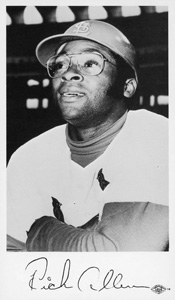
The manager’s next move was to shift Dick Allen from first base to third. Allen was the Phillies’ third baseman from 1964-67 before he hurt his hand and changed positions.

After watching Allen work out at third, Schoendienst said, “Allen has been throwing a lot better from third base than he has in the six years I’ve seen him.”

Said Allen: “I don’t care where I play. I’ll do whatever the manager wants me to do … I just hope I can throw well enough to suit everybody.”

Though the Cardinals opened the season with Torre at catcher, Allen at third and Joe Hague at first base, Schoendienst said the experiments of spring training were valuable because, “We know now that Torre can play third base good enough.”

Fine fit

Allen returned to first base when Shannon came back to the lineup in mid-May. When Shannon struggled to hit, Schoendienst benched him, played Torre at third and started Simmons at catcher.

Though Shannon eventually got back in the lineup, his kidney condition deteriorated and, when he stopped playing in August 1970, Torre became the third baseman.

Torre played 90 games at catcher (88 starts) and 73 games at third base (72 starts) for the 1970 Cardinals. At spring training in 1971, Kissell continued giving Torre a tutorial on playing third.

“We spent hours on the back field, starting at 8 in the morning,” Torre recalled to Cardinals Yearbook in 2014. “He put me through maneuvers I never even dreamed of to help me learn reactions at third base.”

Torre was the Cardinals’ third baseman in 1971, when he won the National League Most Valuable Player Award, and 1972 before moving to first base in 1973 to make way for smooth-fielding Ken Reitz.

Read Full Post »

(Updated July 15, 2020)

A routine physical exam at spring training revealed a serious medical problem for third baseman Mike Shannon.

On March 18, 1970, the Cardinals disclosed Shannon, 30, had glomerulonephritis, a defect of the filtering function of the kidney.

Both of Shannon’s kidneys were affected, Cardinals team physician Dr. Stan London told The Sporting News.

Through medication, Shannon was able to play in 55 games for the Cardinals in 1970, his last season as a player.

Timely test

Shannon’s future with the Cardinals was in question when he got to spring training in 1970, but not because of his health.

Outfielder Curt Flood, who was traded by the Cardinals to the Phillies in October 1969, refused to report and filed an antitrust lawsuit against Major League Baseball. The Cardinals agreed to compensate the Phillies by sending them another player, possibly Shannon, according to columnist Dick Young in The Sporting News.

Shannon “apparently was” of interest to the Phillies, the St. Louis Post-Dispatch reported. As general managers Bing Devine of the Cardinals and John Quinn of the Phillies were discussing a deal, a urine sample taken during a spring training physical revealed Shannon’s kidney problem.

If Shannon was going to play in 1970, it likely wouldn’t be until July or August, Dr. London said. “Mike might have to miss the entire season,” Dr. London added.

Shannon was stunned to learn he had a kidney disease. He was batting .304 in spring training games and said he had been feeling fine.

“I had no idea at all I had such a condition,” Shannon told the Post-Dispatch. “I had no warning.”

Shannon was grateful the physical exam had been thorough and that Dr. London had made the diagnosis.

“If I had gone on and played, I might really have damaged the kidney,” Shannon said. “I might never have played again. It might have taken my life.”

Dr. London confirmed, “His condition could have been aggravated by his playing baseball.”

Speedy recovery

On March 20, 1970, Shannon left training camp in Florida and returned to St. Louis. He was admitted to a hospital two days later.

The Cardinals assigned instructors George Kissell and Ken Boyer to work with catcher Joe Torre on how to play third base. Manager Red Schoendienst planned to try utility player Carl Taylor at catcher until Ted Simmons completed a military commitment in May. After watching Taylor catch in spring training, Schoendienst changed his mind. He shifted first baseman Dick Allen to third, replacing Shannon, put Joe Hague at first base and kept Torre at catcher.

At the hospital, Shannon was prescribed medication to treat his kidney ailment. Years later, he told Dan Caesar of the Post-Dispatch, “Basically they said, ‘Either this works, or banzai, goodbye.’ ”

Cardinals broadcaster Jack Buck said when he visited Shannon, “I looked at him and did not know the man. His head was like a basketball.”

Buck added, “A lot of people thought he was going to die.”

On April 16, 1970, Shannon was discharged from the hospital and continued being treated at home, the Post-Dispatch reported. “We are conservatively optimistic,” Dr. London said.

Shannon told the Post-Dispatch, “Fortunately, I was healthy enough to make it. The good Lord looked down and said, ‘I’ll get you next time.’ I was a fortunate man.”

Shannon adapted well to the medication and was given approval to return to baseball earlier than anticipated. On May 3, 1970, Shannon took part in batting and fielding drills with the Cardinals at Busch Memorial Stadium in St. Louis.

As for a prognosis on his health, Shannon said, “It will be up to the Man upstairs. He’s running the show. Let’s face it.”

Asked about being sidelined for about seven weeks, Shannon said, “I’ll trade a few weeks for the rest of my life any time.”

Brief comeback

On May 14, 1970, Shannon made his first official appearance of the season when he batted for outfielder Leron Lee in the eighth inning of a game against the Pirates at St. Louis. Shannon, who received a standing ovation, flied out to Willie Stargell in left. Shannon stayed in the game at third base and cleanly fielded a grounder hit by leadoff batter Jose Pagan in the ninth. Boxscore

The next night, Shannon started against the Cubs at St. Louis and got a bunt single versus reliever Phil Regan. Boxscore

Shannon remained in the lineup but struggled to hit. On May 30, 1970, Schoendienst benched Shannon, who was batting .132, moved Torre to third and started Simmons at catcher.

Shannon eventually returned to the starting lineup but he lacked power. His last game as a major-leaguer was Aug. 12, 1970. Two days later, the Cardinals placed him on the disabled list for the rest of the season. Dr. London said tests revealed Shannon’s kidney condition had deteriorated.

In 55 games, including 45 starts at third base, Shannon hit .213 with no home runs for the 1970 Cardinals. Torre (72 starts) and Allen (38) were the Cardinals’ primary third basemen. Torre also started 88 games at catcher and Allen made 78 starts at first base.

On Feb. 12, 1971, the Cardinals said Shannon wouldn’t be back as a player. After spending the 1971 season in the Cardinals’ sales and promotion department, Shannon embarked on a successful second career as a broadcaster for the club rather than pursue opportunities to be a coach or manager.

Read Full Post »

If Walt Jocketty had gotten what he wanted, Larry Walker would have spent most of his career, not just the last two seasons, with the Cardinals.

Walker, a three-time National League batting champion who was elected to the Baseball Hall of Fame on Jan. 21, 2020, played his first six seasons in the majors with the Expos and became a free agent in October 1994, the same month Jocketty replaced Dal Maxvill as Cardinals general manager.

Jocketty was looking for opportunities to improve the Cardinals, who were 53-61 in strike-shortened 1994, and wanted to sign Walker.

The Rockies made the most lucrative offer and Walker signed with them in April 1995.

Nine years later, Jocketty finally got his man, acquiring Walker in a trade with the Rockies in August 2004. Walker finished his career with the Cardinals, helping them reach the postseason in 2004 and 2005.

Opening at first

In December 1994, Walker, who threw right and batted left, had surgery on his right shoulder. The right fielder’s agent, Jim Bronner, said Walker would wait until March 1995 or later to sign because he wanted to show teams his shoulder was healed, the St. Louis Post-Dispatch reported.

Jocketty wanted Walker to be the Cardinals’ first baseman, replacing Gregg Jefferies, who became a free agent, according to the Post-Dispatch.

“Walt Jocketty says if he has time and money to sign only one free agent it would be a hitter to replace Gregg Jefferies rather than a pitcher,” the Post-Dispatch reported on Feb. 5, 1995. “His sights still are set on Larry Walker.”

A week later, as the Cardinals and all other major-league teams prepared to open spring training camps with replacement players while the big-leaguers remained on strike, Jocketty was in pursuit of Walker.

“He’s still the best player out there,” Jocketty said. “I think we’ve got as good a chance as anybody.”

Coors vs. Busch

Whatever amount Jocketty offered, it wasn’t enough to top the Rockies, who gave Walker a four-year contract for a guaranteed $22.49 million on April 8, 1995, according to the Associated Press.

The next day, with Walker out of the picture, the Cardinals acquired third baseman Scott Cooper from the Red Sox and planned to move Todd Zeile from third to first.

On April 26, 1995, Walker made his regular-season Rockies debut in the inaugural game played at Coors Field in Denver and produced three doubles and three RBI in a 14-inning victory against the Mets. Five inches of snow fell in the Denver area during the morning and the game, played at night in temperatures in the mid-30s, took 4 hours and 49 minutes to complete. Boxscore

Walker’s first game against the Cardinals since signing with the Rockies occurred on May 29, 1995, at Busch Memorial Stadium in St. Louis. The high-priced slugger went 0-for-6 and got razzed by some of the spectators after his last plate appearance. Boxscore

“One of the things about this type of deal is you get to hear a lot more imaginative things from the fans,” Walker told the Rocky Mountain News. “They were chanting, ‘Oh for six.’ They didn’t know the half of it.”

Walker’s hitless night extended his skid to 0-for-24 over his last six games.

The next night, Walker was benched by manager Don Baylor. He returned to the lineup for a day game, May 31, 1995, and snapped the slump with a two-run double and a solo home run against Cardinals starter Mark Petkovsek. The homer was a majestic shot which carried into the sixth row of the center-field bleachers, according to the Post-Dispatch. Boxscore

Petkovsek “made two bad pitches to Walker,” said Cardinals manager Joe Torre. “You’d like to make bad pitches to smaller guys, though.”

Said Walker: “I wasn’t sure if I should turn left or right the first time I got a hit because all I had been doing lately was turning to the right and going back to the dugout. That home run really messed me up, having to touch all four bases.”

Read Full Post »

« Newer Posts - Older Posts »