Feeds:
Posts
Comments

Archive for the ‘Hitters’ Category

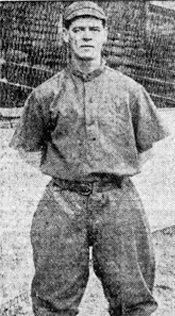
While learning to be a California cowboy, 11-year-old Bill Howerton vaulted from a horse, landed awkwardly and injured an ankle. His left leg was never the same.

Howerton walked with a limp, earning the nickname Hopalong, but eventually developed into a baseball talent, reaching the big leagues with the Cardinals.

A left-handed batter with power, Howerton got the most starts in center field for the 1950 Cardinals, joining an outfield of future Hall of Famers Stan Musial and Enos Slaughter.

Home on the range

Howerton was born and raised in California’s Santa Barbara County. Though often listed as being from the town of Lompoc, Howerton was born in unincorporated Las Cruces, “a spot in the road that has subsequently disappeared” to make way for highway construction, according to the Lompoc Record.

A son of a ranch foreman, Howerton was riding herd in the saddle when he leaped off his horse to close a corral gate, injuring his left ankle. A bacterial or fungal infection set in and doctors informed the youth he had osteomyelitis, an inflammation of bone or bone marrow, The Pittsburgh Press reported.

Howerton underwent four operations. Doctors drilled into the ankle bone to scrape the marrow, according to the St. Louis Post-Dispatch. Howerton spent nine weeks in a hospital and used a wheelchair and crutches for two years, the Pittsburgh and St. Louis newspapers reported.

After he recovered, Howerton attended Santa Ynez Valley High School in Solvang, Calif. He played baseball and showed skill as a pitcher. At 16, his parents separated and Howerton helped his mother operate a gas station, according to the Post-Dispatch. He also worked in a brick factory as a press operator, maintaining the machinery that shapes and molds raw materials into bricks.

Baseball became Howerton’s passion. He joined a semipro team, the Lompoc Merchants, played shortstop and earned a partial scholarship to Saint Mary’s College of California. In 1941, he hit .600 and didn’t make an error for the college team, according to the Santa Barbara News-Press.

Accepting an offer from Red Sox scout Earl Sheely, Howerton was assigned to a farm club in Scranton, Pa.

Baseball and romance

In 1943, his first season at Scranton, Howerton was moved from infield to outfield because the stiffness in his ankle prevented him from shifting quickly enough to field grounders to his left, International News Service reported.

After a home game that year, Howerton, 21, was having a late-night snack at Tony Harding’s Diner on Lackawanna Avenue in downtown Scranton. The place was known for baking its hamburger buns extra large to accommodate the fat burgers. Murals on the wall behind the counter depicted classic Lackawanna Railroad passenger trains. According to the Scrantonian Tribune, night owls at the diner often “stayed for breakfast while waiting for the morning paper with the baseball scores and racing results.”

It was there that Howerton met Betty McConnell. They married that year, forming a lifelong bond.

His commitment to the Red Sox wasn’t nearly as strong. After three seasons in their farm system, Howerton quit because of poor pay, saying he earned more operating a bulldozer for his father-in-law’s construction business in Scranton, the Post-Dispatch reported.

When the Cardinals’ Columbus (Ohio) farm team offered him a pay hike to resume his baseball career, a trade with the Red Sox was arranged and Howerton, 24, became a member of the St. Louis system in July 1946.

Columbus manager Hal Anderson “went to work on Howerton’s batting,” Russ Needham of the Columbus Dispatch reported. “The way he held his bat gave (Howerton) a loop in his swing. He could hit the tar out of a low pitch or one (that was) belt-high, but the pitchers were giving him few of those. Instead they’d pitch him around the shoulders, which forced him to loop with the bat to get his swing level as he met the ball.”

After eliminating the loop and learning to lay off high pitches, Howerton put up big numbers for Columbus _ .299 batting average, 25 home runs, 114 RBI in 1948; .329 batting mark, 21 homers, 111 RBI in 1949. He also developed a reputation as a steady outfielder.

The 1949 Cardinals, battling the Dodgers for first place, figured Howerton could help in the pennant stretch. He was called up to the majors in September.

Howerton contributed to a key win against the Dodgers in the first game of a doubleheader on Sept. 21, 1949, at St. Louis. Scoreless in the bottom of the ninth, the Cardinals had runners on first and second, none out, when Howerton turned a bunt into a single, loading the bases. Joe Garagiola followed with a hit, giving the Cardinals a 1-0 win. Boxscore

Though the Dodgers won the second game, the split kept the Cardinals in first place, 1.5 games ahead of Brooklyn, with eight to play. In the end, the Dodgers played better, winning the pennant with a 97-57 record and finishing a game ahead of the Cardinals (96-58).

Opportunity knocks

Howerton, 28, began the 1950 season primarily as a Cardinals pinch-hitter. On May 1 at St. Louis, the Dodgers led, 2-1, when the Cardinals put runners on first and second, two outs, in the bottom of the ninth. Catcher Del Rice was due up, but manager Eddie Dyer wanted a left-handed batter to face knuckleball specialist Willie Ramsdell.

“Can you hit a knuckleball, kid?” Dyer asked Howerton.

Howerton replied, “I can hit anything.”

Dyer liked that answer. Though he had other left-handed batters available, such as Joe Garagiola, Solly Hemus and Harry Walker, Dyer sent Howerton to the plate. He drilled a single to right, scoring Enos Slaughter from second with the tying run and moving Red Schoendienst to third. Ramsdell uncorked a wild pitch to the next batter, enabling Schoendienst to scamper home with the winning run. Boxscore

Howerton’s timely hitting convinced Dyer to start him against right-handers. Though Howerton made starts at all three outfield positions, he primarily platooned with Chuck Diering in center.

“Even now, with his left ankle stiff and the left leg thinner in circumference than the right, Howerton runs with a hopalong limp,” Bob Broeg reported in The Sporting News. “Still, he’s among the faster Cardinals and, next to Musial, has the best long ball power among the Redbirds.”

Howerton hit .281 for the 1950 Cardinals, with 59 RBI in 313 at-bats. He totaled 20 doubles, eight triples and 10 home runs.

Keep on truckin’

Marty Marion replaced Eddie Dyer as Cardinals manager and figured Howerton for a bench role in 1951. On June 15, Pirates general manager Branch Rickey sent Wally Westlake and Cliff Chambers to the Cardinals for Howerton, Joe Garagiola, Howie Pollet, Ted Wilks and Dick Cole.

Howerton got to play center in a Pirates outfield with Ralph Kiner and Gus Bell. “Howerton is a complete outfielder,” Pirates manager Billy Meyer told The Pittsburgh Press. “He’s a corking hitter, a fine outfielder and owns an arm that commands respect.”

The next year, though, the Pirates wanted to make room in the outfield for a hometown prospect, 19-year-old Bobby Del Greco. Howerton was odd man out.

In May 1952, he was acquired by the Giants, who were seeking outfield depth after Willie Mays entered military service. “I’m glad to have him,” Giants manager Leo Durocher told the New York Daily News. “He does everything well and I know he can handle center field. He can run and throw and he’ll hit pretty good, too.”

About a month later, though, Howerton was back in the minors for good.

He had one more big season (32 home runs, 106 RBI for Oakland of the Pacific Coast League in 1953) before going into the trucking business.

Read Full Post »

Ted Simmons was feeling groovy during the summer of 1975. Long mane flowing, he swung free and easy from both sides of the plate, hitting for high average, driving in runs and making consistent contact.

Big-league baseball, though, wasn’t hip to the grooves Simmons made in his bats, even though the Cardinals catcher claimed the alterations were done to preserve the lumber, not enhance his hitting.

Simmons paid a price for not knowing the rules. Umpires nullified a home run he hit against the Padres, deeming he used an illegal bat.

Hot hitter

After hitting .271 over the first two months of the 1975 season, Simmons surged. He hit .370 for the month of June and did even better in July. When the Cardinals went to San Diego for a series against the Padres after the all-star break, Simmons was hitting .326 for the season, with a .400 on-base percentage and .511 slugging mark.

“Ted is just about a batting title away from being recognized as the best hitter in the league,” Cardinals pitcher John Curtis told the St. Louis Post-Dispatch. “He has received not nearly the recognition he deserves, and maybe a batting (title) is what will take care of that.”

During the first game of a Sunday doubleheader at San Diego, when Simmons contributed three hits, a walk and a RBI in the Cardinals’ 3-1 victory, Padres manager John McNamara noticed cuts in some of the baseballs. After Simmons flied out to end the third inning, the ball was brought to the Padres’ dugout. “We could see the lined scraped marks on the ball and we knew they had to have been made by something on the bat,” McNamara later told the Associated Press. Boxscore

That year, big-league baseball introduced a rule banning alteration of the hitting surface of the bat from the tip to within 18 inches of the handle bottom, according to the Associated Press.

Because he wasn’t certain Simmons had broken the rule, McNamara opted not to do anything during Game 1 of the doubleheader. Simmons sat out Game 2.

Bad bat

The next night, July 21, Simmons was back in the lineup at the cleanup spot, and McNamara was on alert. “I told the catcher (Bob Davis) to check out Simmons’ bat when he comes to the plate and see if it’s grooved,” McNamara said to the Associated Press.

In Simmons’ first plate appearance, he drew a walk. Davis informed McNamara the bat was grooved.

When Simmons batted again, leading off the fourth, he clouted a home run to left against Brent Strom. As Simmons rounded the bases, McNamara asked plate umpire Art Williams to check the bat for grooves. Williams did, determined the bat was modified against the rules and called Simmons out as he crossed the plate, nullifying the home run.

Umpire crew chief Ed Vargo confiscated the bat. “The rules say a bat can’t be tampered with 18 inches above the handle,” Vargo said to the Associated Press. “This one has grooves cut in it. It is clearly illegal.”

Noting he made no attempt to hide the bat, Simmons told the Post-Dispatch, “I was not aware of the new rule against grooving. Otherwise, I wouldn’t have grooved the bat.”

According to the Associated Press, Simmons said he used a knife to put grooves in the bat so that it wouldn’t fray. “What I did is actually what players have been doing for the past 50 or 60 years,” he said.

Simmons explained to the Post-Dispatch, “Grooving the bat doesn’t do anything to make the ball go farther or powerize it. The idea is to keep the bats from fraying. When the bats fray, you just throw them away (because) they’re no good anymore. Grooving protects the grains that are farthest from the center from breaking because of the vibration of the contact. Grooving just saves bats.”

Regarding McNamara’s decision to challenge the use of the bat after the home run, Simmons said the Padres manager “deserves credit for doing his homework,” the Post-Dispatch reported.

A notch above

After the ruling, Simmons took heat from the San Diego spectators. As he put it to the Post-Dispatch, “Unfortunately, the fans got uptight and I had to put up with the freaking.”

Swinging a smooth stick in his next plate appearance, Simmons smacked a double, silencing the detractors. His work behind the plate was impressive, too. Making his major-league debut, Harry Rasmussen (who later changed his name to Eric) followed the guidance of his catcher and pitched a shutout for the Cardinals. Boxscore

Though he stopped grooving his bats, Simmons didn’t stop hitting. The lumber may have frayed like shredded wheat from all the hard contact he made. For the month of July, Simmons hit .417 with an on-base percentage of .500 (43 hits and 17 walks in 120 plate appearances).

He hit .313 for August and .324 for September, finishing with a season batting mark of .332. Only Bill Madlock of the Cubs had a higher batting average (.354) in the league that season.

Simmons totaled 193 hits, 100 RBI and fanned a mere 35 times in 581 at-bats. He did that while catching more games (154) than anyone else in the league.

Three weeks after the incident in San Diego, Simmons lent one of his bats to Doug Rader during a Cardinals series at Houston. The Astros third baseman used it to belt a three-run homer against Al Hrabosky, but Simmons countered with a two-run shot and the Cardinals won, 5-4. Boxscore

Asked about Rader homering with a Simmons bat, the Cardinals catcher quipped to the Post-Dispatch, “Rader has done me enough favors by mishandling some of my bouncers to his backhand.”

Read Full Post »

After he was graduated from Miami University in Oxford, Ohio, Walter Alston was ready to become a high school teacher. A knock on his door altered those plans.

Ninety years ago, in June 1935, Alston grabbed an opportunity to play professional baseball, signing a minor-league contract with the Cardinals.

The offer came from Frank Rickey, a Cardinals scout and brother of the club’s general manager, Branch Rickey. The day after Miami’s commencement ceremony, Alston was at home in tiny Darrtown, Ohio, when Frank Rickey surprised him with a rap on the door.

“Want to play pro baseball?” he asked.

In the book “Walter Alston: A Year at a Time,” Alston recalled to author Jack Tobin, “What a question to ask! I’d dreamed about that since I was old enough to throw that little rubber ball against the brick smokehouse out on our first farm.”

Alston went on to spend 10 seasons in the Cardinals’ system. He didn’t make it big as a player _ just one shaky appearance in a major-league game _ but it was the Cardinals who gave him the chance to manage in the minors.

That experience helped launch him into a long and successful career with the Dodgers that led to his election to the Baseball Hall of Fame.

Hard work and patience

Alston was born on a small farm just north of Cincinnati, in Venice, Ohio. (Renamed Ross Township.) His father was a tenant farmer and stonemason. The family moved from farm to farm, wherever work was available, in southwest Ohio.

When Alston was a boy, his parents bought him a black Shetland pony. He named her Night. Alston rode the pony bareback to grade school in Ohio villages such as Camden and Morning Sun.

The family fell into debt when Alston was in seventh grade and moved to the hamlet of Darrtown. Alston’s father found work in nearby Hamilton at a Ford auto plant, producing wheels and running boards for $4 a day.

Alston developed a passion for baseball. His father taught him to throw with velocity. “Put some smoke on the ball,” he’d say. The youngster did it so well he got nicknamed “Smokey” and pitched in high school.

In May 1930, near the completion of his freshman year at Miami, Alston, 18, married his childhood sweetheart, Lela. The Great Depression had devastated the economy and Alston couldn’t afford to stay in college. He and Lela moved in with her parents in Darrtown and he took work wherever he could find it, going from farm to farm to seek pay for day labor. The county gave him a job cutting roadside weeds with a scythe. “That paid a dollar a day and I was happy to have it,” Alston told author Jack Tobin.

Two years later, in the summer of 1932, Alston still was whacking weeds when a local Methodist minister, Rev. Ralph Jones, an education advocate, urged him to return to Miami and earn a degree. According to author Si Burick in the book “Alston and the Dodgers,” Jones said to Alston, “Smokey, you’ve got a good mind. You can be somebody if you go back to college.”

Jones gave Alston $50 to use toward his tuition. Alston re-enrolled at Miami for the 1932 fall semester. “We never could have saved $50 on my dollar a day cutting weeds,” Alston told Jack Tobin. “That $50 … got me back in and paid a good part of my tuition for that year.”

Alston majored in industrial arts and physical education. He also played varsity baseball and basketball. There were no athletic scholarships and money was scarce. In between classes and athletics, Alston worked jobs on campus.

“I took a job driving a laundry truck for 35 cents an hour and I got my lunch free every day in exchange for racking up billiard balls in a pool hall,” he told journalist Ed Fitzgerald. “Summers, the college gave me a job painting dormitories.”

Alston played sandlot baseball for various town teams, too. One of those, the Hamilton Baldwins, had Alston at shortstop and Weeb Ewbank, the future football coach of the Baltimore Colts and New York Jets, in center field.

Cardinals prospect

Alston was taking an exam near the end of his senior year in 1935 when he was told someone was waiting to see him. It was Harold Cook, school superintendent in New Madison, Ohio. Cook was recruiting teachers and offered Alston a salary of $1,350 to come to New Madison. Alston accepted.

A few days later, Frank Rickey showed up at the door. (The Alstons didn’t have a home telephone then.) Rickey had seen Alston play two games _ one at shortstop and one as a pitcher _ for Miami and was impressed. When Alston mentioned he’d made a commitment to teach in New Madison, Rickey explained the minor-league season would be finished by Labor Day, enabling him to return to Ohio for the school year.

Rickey offered no signing bonus. He told Alston, 23, he’d be paid $135 a month to play in the Cardinals’ system that summer. Alston signed on the spot.

The next day, Alston’s wife drove him to Richmond, Ind., where he boarded a bus for St. Louis. Upon arrival, Alston checked into the YMCA downtown. The next morning, he went to the Cardinals’ offices to find out where he was being assigned. The Cardinals told him to come back tomorrow. This went on for a week until, finally, Branch Rickey informed Alston he would play for the Greenwood (Mississippi) Chiefs of the East Dixie League.

Cardinals scout Eddie Dyer (who, years later, became St. Louis manager) drove Alston from St. Louis to Mississippi in a roadster. Player-manager Clay Hopper put Alston at third base and he hit .326 in 82 games.

Every fall and winter for the next 14 years, Alston taught high schoolers _ six years at New Madison and eight at Lewiston, Ohio _ in order to make ends meet after spending spring and summer in the minors. He taught industrial arts, general science and biology, and coached basketball before leaving in March for spring training.

The teaching experience later helped him as a manager. “Like students, ballplayers can’t all be treated the same,” Alston told Si Burick. “Some need encouragement. Some do better if left alone. Others need to be driven. You simply have to study each individual and get him to produce the best that’s in him.”

Darrtown remained Alston’s home. Los Angeles Times columnist Jim Murray described it as “the place where time forgot” and “where the 11 o’clock news is the barber.” Alston built a house at the corner of Apple and Cherry streets. It was the first brick house in Darrtown. “My dad laid all the bricks and mixed the mortar,” he told Sports Illustrated.

In the backyard tool shed, Alston put his industrial arts skills to good use, making most of the furniture for his house. “His bookshelves and chests and spice racks and desks are a wonder of patient, meticulous workmanship,” Sheldon Ocker of the Akron Beacon-Journal reported.

When he wasn’t woodworking, Alston enjoyed skeet shooting, riding his two Honda motorcycles and playing billiards.

After Alston became an established big-league manager, billiards legend Willie Mosconi was a guest at Alston’s Darrtown home, where Alston had a pool table. “I ran 47 balls, which is pretty good for me,” Alston told Gordon Verrell of the Long Beach Press-Telegram. “He shot, made six or seven and missed, and then I ran 10 or 12. I didn’t get another shot. He ran the next 154.”

Alston didn’t mind losing to a master such as Mosconi. Getting defeated by Cardinals pitcher Steve Carlton in 1969 was another matter. “He beat us 1-0 that night at the ballpark and, if that didn’t make me mad enough, he beat me later that night in a game of pool,” Alston told Gordon Verrell. Boxscore

Ready or not

For his second season in the Cardinals’ system in 1936, Alston was assigned to Huntington, W.Va. Player-manager Benny Borgmann taught him to play first base. The club’s shortstop was a skinny teenage rookie, Marty Marion.

For the second consecutive year, Alston hit .326. He also produced 35 home runs and 114 RBI. Scout Branch Rickey Jr., son of the Cardinals’ general manager, was impressed. On Rickey Jr.’s recommendation, Alston was called up to the Cardinals in September and instructed to join the team in Boston.

Alston packed a beat-up cardboard suitcase and took a train to New York City, where he was to make a connection to Boston. At Grand Central Station, he was gawking at the ceilings and the people when he bumped into a woman. “The suitcase hit the floor, broke open and scattered all my clothes and belongings across the floor,” he recalled to Jack Tobin. “There seemed to be hundreds and hundreds of people all racing in a different direction. I was on my hands and knees, trying to pick up my shirts and shorts … and to keep from being trampled.”

A Good Samaritan directed him to a luggage shop nearby. Alston spent most of the $20 he had on a new suitcase and boarded the train to Boston.

When he arrived at the Kenmore Hotel, the team was at the ballpark. The desk clerk told Alston he could go to the dining room and sign for anything he ordered. “One look at the menu convinced me I was in for a hard time,” Alston told Jack Tobin. “I had never heard of half the things and couldn’t pronounce most of the words … Finally I decided on some clams. I’d always heard Boston was famous for them. When they brought them out, I wasn’t sure just how you were supposed to eat them.”

During his month with the Cardinals, Alston pitched batting practice, took infield practice with other rookies and otherwise sat on the bench. A fellow Ohioan, pitcher Jesse Haines, 43, took a liking to Alston, 24, and showed him what to do and how to do it. “No matter what I asked, he knew the answer,” Alston said to Jack Tobin. “Most days he took me to and from the ballpark. He was my buddy.”

Put me in, coach

On the final day of the season, the Cardinals played at home in the rain against the Cubs. Plate umpire Ziggy Sears had a miserable time. Neither team cared for the way he called balls and strikes. Sears ejected Cardinals coach Buzzy Wares and Cubs manager Charlie Grimm for arguing with him.

As the Cardinals came off the field in the seventh, first baseman Johnny Mize made a remark while passing the umpire. Offended, Sears ejected Mize.

Because the Cardinals’ other established first baseman, Rip Collins, had been used as a pinch-hitter a couple of innings earlier, manager Frankie Frisch had to go with his only other first baseman, Alston.

When the Cubs batted against Dizzy Dean in the eighth, Alston was at first, making his big-league debut. Augie Galan led off with a single. Phil Cavarretta followed with a bunt. Third baseman Don Gutteridge fielded cleanly and made an accurate throw to Alston, but the first baseman bobbled the ball. Cavarretta reached safely on the error and Galan stopped at second.

Next up was Billy Herman. He bunted toward Alston. The rookie threw to third, but not in time to nab Galan, and the bases were loaded. All three runners eventually scored, giving the Cubs a 6-1 lead.

In the ninth, the Cardinals scored twice and had a runner on base, with two outs, when Alston batted for the first time. The pitcher was Lon Warneke, a three-time 20-game winner. Alston fouled off a pitch. He ripped another down the line in left but it, too, curved foul near the pole. Then he struck out, ending the game. Boxscore

The next day, the headline in the St. Louis Star-Times blared, “Walter Alston Makes Blunders That Eventually Beat Dizzy Dean, 6-3.”

Follow the leader

The Cardinals put Alston on their 40-man winter roster, but Johnny Mize still was on the team and the club acquired another first baseman, Dick Siebert, from the Cubs. Because of his teaching job, Alston couldn’t report to 1937 spring training until March 15. A couple of weeks later, he was back in the minors.

Alston had a few more good seasons in the Cardinals’ system, but knew he likely wouldn’t be returning to the big leagues. “I had enough power, but … I couldn’t hit the good pitching, just the mediocre pitching,” he told Sports Illustrated.

Branch Rickey asked Alston to become a player-manager in 1940 and he eagerly accepted. Alston managed Cardinals affiliates for three seasons (1940-42). Then Rickey moved to the Dodgers. Alston kept playing for Cardinals farm teams desperate to fill rosters depleted by World War II military service.

In 1944, Alston was released by the Cardinals. He returned to Darrtown, figuring to go fulltime into teaching. Then came another bang on the door. It was the son of the man who operated the Darrtown general store. The boy told Alston there was an urgent long-distance phone call for him at the store. Alston darted the two blocks, grabbed the receiver and heard the voice of Branch Rickey.

“First thing he did was give me a good going over for not having a phone and told me to get one,” Alston said to Jack Tobin. “Then he offered me the manager’s job at Trenton (N.J.) in the Interstate League.”

Alston managed for 10 seasons in the Dodgers’ system. In November 1953, he was chosen to replace Chuck Dressen as Dodgers manager. Working on one-year contracts, Alston managed the Dodgers for 23 years, leading them to seven National League pennants and four World Series titles. He was inducted into the Baseball Hall of Fame in 1983.

As Jim Murray wrote, “He made his profession’s hall of fame not because he could hit or throw a curveball better than anyone else but because he excelled in the far more difficult area of human endeavor.”

Read Full Post »

As Cardinals manager, Branch Rickey either was ahead of his time or hopelessly out of step with the times. Take your pick. Either way, Cardinals owner and president Sam Breadon decided Rickey no longer should be manager.

On May 30, 1925, Breadon changed managers, replacing Rickey with Rogers Hornsby. Rickey remained with the club in a front-office role.

The shakeup turned out to be good for the Cardinals. Player-manager Hornsby led them to their first National League pennant and World Series championship in 1926. Focused on baseball operations, vice president Rickey built the Cardinals into a perennial contender.

On shaky ground

After managing the St. Louis Browns (1913-15), Rickey joined the Cardinals and became their manager in 1919. In his first six years, he piloted the club to three winning seasons: 1921 (87-66), 1922 (85-69) and 1923 (79-74). Then the Cardinals took a big step backwards, finishing 65-89 in 1924 and drawing a mere 272,885 at its home games.

Knowing Breadon was considering a change, Rickey offered to resign during 1925 spring training but reconsidered, according to St. Louis Post-Dispatch columnist John Wray. “I look at this team I have put together and I can visualize it winning the flag,” Rickey told Breadon. “I have the stuff here and I want another chance. I think I deserve it because I assembled all this talent.”

Breadon wasn’t convinced. In his autobiography, “My War With Baseball,” Hornsby said Rickey sought his help with Breadon. “I went to Breadon and said that Rickey was the smartest man in baseball,” Hornsby recalled. “Breadon suggested I take the job as manager, but I wasn’t interested.”

Before spring training ended, Breadon formerly offered Hornsby the job, but he declined. “I recommended that Breadon keep Rickey,” Hornsby said in his autobiography. “I also told Breadon that if the Good Lord himself were to … manage this club, he couldn’t do any better. It was a lousy team.”

Decision time

The 1925 Cardinals won five of their first eight, then nosedived, losing seven in a row at home before mostly small crowds.

When the Cardinals were in Pittsburgh for a series with the Pirates, Breadon showed up. On Friday, May 29, Hornsby was having breakfast at the Hotel Schenley when traveling secretary Clarence Lloyd approached him and said Breadon wanted to meet. In his autobiography, Hornsby recalled that as he passed by the table of Rickey and coach Burt Shotton, Rickey said to him, “Breadon wants you to manage the team.”

Hornsby replied, “I don’t want to manage. He knows that.”

“Then will you ask Breadon to give me another chance?” Rickey said to Hornsby. “If he won’t, see if you can get him to let Shotton here be the manager.”

Hornsby said, “OK.”

(In addition to coaching, Shotton managed the Cardinals on Sundays, because Rickey promised his mother before signing his first professional contract that he would abstain from baseball activities on Sundays.)

Hornsby met in Breadon’s room and was offered the job. Hornsby said no.

According to the book “Branch Rickey: A Biography” by Murray Polner, Breadon barked back, “I won’t have any goddamned Sunday school teacher running my team. You’re going to run it.”

In his autobiography, Hornsby said he and Breadon had the following exchange:

Hornsby: “You mean, Rickey’s through?”

Breadon: “That’s exactly right _ as manager.”

Hornsby: “What about Shotton as manager?”

Breadon: “I don’t want any Rickey man either.”

It was agreed Hornsby should think over the proposal and inform Breadon of the decision the next day. “I went back down and told Rickey what Breadon had said,” Hornsby recalled in his autobiography. “Rickey didn’t cuss or anything, but he got pretty mad and said he would sell all his stock in the Cardinals.”

According to the Rickey biography, Rickey said to Hornsby, “Judas priest, the man (Breadon) is stabbing me in the back.”

At the ballpark that day, Hornsby slugged a two-run home run, but the Cardinals lost, dropping their record to 13-23. It turned out to be the last game Rickey would manage. Boxscore

Making the switch

According to his autobiography, Hornsby went to Breadon on Saturday, May 30, and told him “the only way I would be interested in becoming manager would be if I could buy Rickey’s stock … Then baseball could be my business for life.” Breadon assured him that would be arranged. The two agreed Hornsby would become player-manager, effective Sunday, May 31. “I expect him to put new fight into the Cardinals,” Breadon told the Associated Press.

In reporting on the managerial switch, James M. Gould of the St. Louis Star-Times wrote, “The pupil succeeds the master.”

Hornsby, 29, became the youngest manager in the National League. He was a few months older than player-manager Bucky Harris, 28, of the American League’s Washington Senators. Other player-managers in the majors in 1925 included Dave Bancroft of the Braves, Ty Cobb of the Tigers, Eddie Collins of the White Sox, George Sisler of the Browns and Tris Speaker of the Indians.

“I feel that with Rickey as vice president and business manager, and Hornsby as playing manager, we have one of the greatest combinations in baseball,” Breadon told the Post-Dispatch.

He also said to the Associated Press, “Rickey is a valuable man and we want to utilize his knowledge of baseball and his great judgment of players. He is a great organizer and a builder, and that is his sphere.”

Breadon’s words, though, didn’t appease Rickey, who resented being ousted as manager. According to Rickey’s biography, he described Breadon’s action as “clumsily brutal.”

According to author Murray Polner, Rickey felt betrayed and considered leaving the Cardinals to become athletic director at Northwestern University, but his wife Jane talked him out of it.

In his book “Mr. Rickey’s Redbirds,” author Mike Mitchell wrote that Rickey later said, “My fault as a manager … was due to my apparent zeal. I discussed the game every day … as if the game coming up was the game of the year.”

With Rickey out and Hornsby taking over effective May 31, coach Shotton was tasked with managing the Cardinals in the May 30 Saturday doubleheader at Pittsburgh, according to “Mr. Rickey’s Redbirds.” The Pirates won both, totaling eight triples in Game 2. Boxscore

Rickey’s reviews

Reaction to the managerial move mostly was favorable:

_ J. Roy Stockton, Post-Dispatch: “The Cardinals should do well under Hornsby. He will not overmanage the team. If there was any just criticism of Branch Rickey’s regime, it was that he burdened the team with too much management. He tried to pitch for the pitchers and to catch for the catchers … He lacked poise when directing his men … He decided on a plan of action and then … he hesitated, pondered over the danger and changed the plan.”

_ Tommy Holmes, Brooklyn Eagle: “Some attribute the failure of the team to Rickey’s attempt to mastermind the Cardinals. He wanted to do all the thinking that was to be done on the team … Branch exercised his managerial authority by requiring the batter to keep in constant touch with his wagging from the bench. A hitter up there with the bases full, to bust it and nothing else, had to strain his neck getting the signal on every ball pitched.”

_ Henry Farrell, United Press: “Rickey had a lot of trick ideas about handling of a ballclub that made some of the older athletes feel like they were being treated like children. He not only had blackboard talks on baseball but he extended his skull practice to include arithmetic and the grammar school arts and sciences.”

_ John B. Foster, Dayton Daily News: “The greatest weakness of (Rickey) was … his lack of playing instinct. He usually managed to change pitchers at the wrong time … Almost every manager in the National League figured upon his doing the wrong thing at the wrong time … Opposing managers figured they would get away with games if they forced Rickey to change pitchers.”

_ The Sporting News: “The elevation of Hornsby to the management was the most popular choice that could have been made for the fans.”

Different approach

Indeed, fans gave Hornsby a big reception when he was led to the plate by St. Louis mayor Victor Miller and presented with several floral pieces before the start of his managerial debut on Sunday, May 31. During the game, the Post-Dispatch noted “a new spirit exhibited by the players” and “a dash that had been missing for some time.” Hornsby contributed two hits, two walks, two runs scored and a RBI in a 5-2 Cardinals victory over the Reds. Boxscore

The next day, Hornsby started Jesse Haines against the Reds. In four starts for Rickey in 1925, Haines was yanked from the games and lost all four. In his first start for Hornsby, he pitched a complete game and won. Boxscore

A week later, Hornsby bought 1,167 shares of Rickey’s Cardinals stock at $43 a share, a total investment of $50,181, the St. Louis Globe-Democrat reported. As author Mike Mitchell noted, “Upset about being removed as manager, Rickey made an emotional and short-sighted decision.”

Meanwhile, Hornsby canceled the daily team meetings and daily morning workouts that had been the norm when Rickey managed. “You can’t drill for two hours and then get out in the afternoon with all your pep and play some more,” Hornsby explained to the Star-Times.

The Cardinals won 15 of their first 19 games with Hornsby as manager and finished at 77-76. Hornsby’s hitting helped, too. In 1925, he was named recipient of the National League Most Valuable Player Award and led the league in batting average, on-base percentage and slugging percentage for the sixth year in a row.

Read Full Post »

Yogi Berra wasn’t kidding when he said, “It ain’t over till it’s over.”

Berra’s playing days certainly appeared to be over in October 1963 when he became manager of the Yankees. “I’ll have enough trouble managing,” he said to the Associated Press in explaining why he was done playing.

More than a year later, though, the St. Louisan was behind the plate, catching for the 1965 Mets in a spring training game against the Cardinals.

Five months earlier, as Yankees manager, Berra’s club lost to the Cardinals in the 1964 World Series. Afterward, Berra was fired and replaced by the Cardinals’ manager, Johnny Keane. The Mets hired Berra to be a player-coach on the staff of the manager he played for the most as a Yankee, Casey Stengel.

Never say never

Berra appeared in a World Series in 14 of 18 seasons as a Yankees player. A three-time recipient of the American League Most Valuable Player Award, he totaled 2,148 hits and 1,430 RBI with the Yankees.

After the 1963 World Series, Yankees manager Ralph Houk was moved to the front office and Berra replaced him, getting a one-year contract for $35,000, a $5,000 cut from his salary as a player. Asked to describe his feelings about the job, Berra told the New York Daily News, “I just hope I can stay in the same shoes as Houk did.” Asked what he’d learned from those who managed him, Berra said, “You can observe a lot just by watching.”

Though the 1964 Yankees won the American League pennant with the best record (99-63) in the majors and reached Game 7 of the World Series, Berra was fired. As the Daily News noted, “It is generally believed the Yankees brass felt Berra had lost disciplinary control of the ballplayers.”

The Yankees offered him a contract to remain as a consultant. Berra accepted, but got them to include an escape clause. A month later, in November 1964, he jumped to the Mets. In addition to coaching, Berra would be added to the playing roster as a catcher and pinch-hitter if he performed well enough at spring training.

Old-timers’ days

On the first day of spring training for the 1965 Mets at St. Petersburg, Fla., observers had flashbacks to another era. Berra took cuts in the batting cage. Pitcher-coach Warren Spahn, the former Braves ace, instructed prospects on the mound. Four-time 1936 Olympic gold medalist Jesse Owens, listed as Mets track coach, led players in conditioning exercises. Former Cardinals manager Eddie Stanky, director of player development, was in uniform, directing infield drills.

As Joseph Durso of the New York Times noted, “The Mets opened their spring training circus while manager Casey Stengel (approaching 75) stood like a ringmaster behind home plate bellowing, ‘Yes, sir, come see the amazing Mets.’ ”

Berra was the main attraction, drawing cheers from onlookers when he put on a catcher’s mitt to warm up a teenage pitcher and then again at batting practice.

A couple of weeks later, on March 14, Stengel selected Spahn (nearly 44) and Berra (nearly 40) to start in a Grapefruit League game against the Cardinals. Philadelphia Daily News columnist Larry Merchant described the pitcher-catcher combination as “the oldest, ugliest battery in captivity.”

When the Cardinals took batting practice, their vice president, Stan Musial, 44, came out in uniform and joined in. Musial, who retired from playing two years earlier, “slammed out a dozen drives,” Cy Kritzer of the Buffalo News reported.

Some of the Mets, including Berra and Spahn, gathered to watch him. After sending a pitch to the bleachers in right, Musial said to them, “You fellows inspire me. If you ancients can make a comeback, maybe I’ll try it, too. I’m only nine months older than you, Spahnie.”

Spahn replied, “Don’t do it, please. This league is rough enough without you to worry about.”

According to the Buffalo News, Stengel chimed in. “You’re a vice president, ain’t you?” he said to Musial. “You can do what you want to do. If you’re aiming for a comeback, we can use you. I’d have some fun in those late innings, sending you and Yogi to pinch-hit.”

Musial replied, “Yogi will hit. Hitting is like swimming. If you learn early enough, you’ll hit long after you’ve lost the rest of your skills.”

When the game began, the sight of Spahn on the mound and Berra behind the plate “was enthusiastically greeted by the Geritol set” that made up most of the crowd of 2,989 at Al Lang Field, the Daily News reported.

Spahn’s first pitch, a fastball that cut across the plate for a strike to Lou Brock, sent “a murmur of approval” through the stands, columnist Red Smith noted.

Brock then beat out a high bouncer over the mound for an infield single and Curt Flood walked on a 3-and-2 pitch. After getting two strikes on the next batter, Bill White, Spahn spun a roundhouse curve from a sidearm delivery, fooling White, who swung and missed for strike three, then stood there and laughed. “The pitch fooled me, too,” Berra told Red Smith. “I didn’t expect it to act like that.”

Spahn worked three innings and allowed three runs. Berra was hitless. He flied out against Bob Gibson and whiffed versus rookie Nelson Briles. “He struck me out with a heck of a quick-dipping sinker,” Berra told the St. Louis Post-Dispatch. “The kid has a real arm.”

Asked by the New York Times what was the hardest thing to do in catching a game for the first time since September 1963, Berra replied, “Bend down.”

Like old times

On April 27, two weeks after the Mets began the 1965 season, Berra was activated to the playing roster while maintaining his coaching duties. In his first week, he made one pinch-hit appearance. Then came one last moment of glory.

A couple of hours before the Mets played the Phillies on May 4 at Shea Stadium, Berra was talking with Newsday’s Joe Donnelly. “Give me a cigarette,” Berra said to the reporter. After inhaling deeply, Berra continued, “Maybe I’ll play tonight.” When Donnelly chuckled, Berra barked, “Why not? Let’s find out.”

Moments later, Berra met with Stengel and asked to catch. Stengel put him in the No. 6 spot in the batting order.

When Berra saw Phillies ace Jim Bunning before the game, he needled him: “I wish you were pitching. If I couldn’t get a hit off you, I’d know I was through.”

The Phillies’ starter instead was Ray Herbert, a pitcher Berra faced often during the 1950s when both were in the American League.

Berra’s first test came on defense in the first inning and he did well, making a tough putout at the plate. With Johnny Callison on third, Alex Johnson hit a chopper that was fielded by pitcher Al Jackson. As Callison charged home, Jackson threw to Berra, “who had the plate guarded beautifully,” Red Foley of the Daily News reported. “Callison stopped short, ducked, then tried to veer around Yogi,” but Berra ‘”was spry enough to pin him with the ball.”

Berra got a standing ovation when he batted with Ed Kranepool on second and Joe Christopher on first, two outs, in the first. Herbert threw a pitch around Berra’s eyes and he lined it to center for a single, his first National League hit.

It also should have been his first National League RBI, but this being the Mets, the hit didn’t deliver a run. Center fielder Cookie Rojas threw to third, where Christopher was tagged out before the slow-moving Kranepool reached the plate.

As the game unfolded, Al Jackson got into a good groove with Berra catching him. The Phillies couldn’t score.

With the Mets ahead, 1-0, in the seventh, reliever Gary Wagner gave up a leadoff single to Berra. “I was going to take him out for a pinch-runner,” Stengel told the Philadelphia Daily News. “I only wanted to catch him five innings.”

Jackson interceded, saying to Stengel, “Leave him in there.”

Berra took second on Ron Swoboda’s single, then scored on Roy McMillan’s single to center. When Swoboda reached second, he applauded while watching Berra cross the plate. “I get such a kick out of it because I think a lot of people decided he was no longer capable of this,” Swoboda told Newsday.

Berra’s run turned out to be the difference in a 2-1 Mets triumph. Jackson pitched a complete game and struck out 11. In the book “Baseball’s Greatest Players,” Jackson said, “Yogi was … a huge asset to me … You looked in for the sign like he had some magic. He did.” Boxscore

Stepping aside

When he tried to catch five days later against the Braves, it was a different story. Berra went hitless, striking out three times, and made an error, dropping a pop fly. “Essentially, his reflexes weren’t up to the major league standards,” the New York Times declared.

Berra knew that this time his playing days really were over, and he called it quits. “It’s hard for me to see the ball,” he confessed to the New York Daily News.

As he told Joe Donnelly, “I always felt when a guy couldn’t hit a fastball, he might as well hang up the bat.”

Berra remained with the Mets as coach until 1972, when he took over as manager after the death of Gil Hodges and led them to a pennant a year later.

Read Full Post »

In a race to determine the slowest runner in the National League, the loser was the commissioner of baseball, and he didn’t even run.

A pair of catchers, Del Rice of the Cardinals and Rube Walker of the Dodgers, were the contestants in what Bob Broeg of the St. Louis Post-Dispatch described as “a snail versus tortoise match race.”

When some of the Cardinals made small, friendly wagers with their Dodgers counterparts on which of the two leadfoots would win, heavy-handed baseball commissioner Ford Frick initiated a gambling investigation.

Frick backed down quickly after baseball writers mocked him in their newspaper stories for being unable to see the difference between harmless fun and scandal.

Slow going

Signed by Cardinals scout Frank Rickey, brother of general manager Branch Rickey, Del Rice was 18 when he began his pro baseball career in the minors in 1941. Rice reached the majors with the Cardinals four years later.

Listed as 6-foot-2, Rice also played one season (1945-46) of pro basketball with the Rochester Royals. His teammates included Red Holzman (the future head coach of the St. Louis Hawks and New York Knicks), Otto Graham (better known as quarterback of the Cleveland Browns) and Chuck Connors (the big-league first baseman who became TV’s “The Rifleman”). Rochester won the National Basketball League (NBL) championship that season. (In 1949, the NBL merged with the Basketball Association of America and became the National Basketball Association, or NBA.)

Like Rice, Rube Walker also was 18 when he became a pro baseball player, signing with the Cubs in 1944 and advancing to the majors with them four years later. Joe Donnelly of Newsday described him as “a large man with a twinkle in his eye and a heart that reached out to people.”

Rice and Walker were good defensive catchers who didn’t hit much. In 17 seasons in the majors, mostly with the Cardinals and Braves, Rice batted .237. Walker hit .227 in his 11 seasons with the Cubs and Dodgers.

Both also were notorious plodders on the base paths. “Neither could outrun me,” Dodgers owner Walter O’Malley, who chain-smoked cigars, said to Dan Daniel of The Sporting News. (Rice managed to steal bases twice in the majors; Walker did it three times.) A good case could be made for either being the slowpoke of the league. Their teammates decided to settle the matter with a footrace.

Amazing race

During warmups before their game on May 17, 1955, at St. Louis, the Cardinals and Dodgers got into some good-natured bantering about who was the slowest man in the league. Rice and Walker were coaxed into having a 50-yard race across the outfield.

(Walker was not the type to back down from a test. According to the New York Times, “he once challenged manager Walter Alston to a billiards match after Alston had taken 130 shots without missing.”)

Members of the teams lined up in two rows _ Cardinals on one side; Dodgers on the other _ forming a lane for Rice and Walker to rumble through, the New York Times reported.

Cardinals manager Eddie Stanky joined some of his players in making bets with Dodgers on who would win, according to the Post-Dispatch. Most of the wagers were for $5. “All told, it was guessed that $45 rested on the outcome,” the St. Louis Globe-Democrat reported.

(Dick Young of the New York Daily News noted that the wagers on the Rice-Walker footrace were pocket change compared with what went on in earlier times. When speedy outfielder Ben Chapman was with the Yankees in the 1930s, he’d routinely race all challengers and usually won. According to Young, “Babe Ruth used to bet hundreds of dollars on every race.” Chapman’s teammate, Dixie Walker, told Young, “The first time, Babe bet against Chapman and lost. After that, Babe always bet on Chapman, and cleaned up.”)

In the St. Louis contest, Rube Walker trudged out to a lead but Rice steamed ahead at the finish and won by a yard. One of the observers, 19-year-old Dodgers rookie Sandy Koufax, recalled to the New York Times years later, “They didn’t go fast enough for a photo finish. It was a study in slow motion.”

Little big man

Walker took his loss in good spirit. “I once was a gazelle,” he told the New York Times. However, baseball commissioner Ford Frick was not amused when he learned wagering was involved. He decided to investigate. According to the Daily News, the wires Frick sent to managers Stanky and Alston read: “You are ordered to submit names and amounts bet by the ballplayers.”

While Frick awaited the reports from the managers, the newspapers ridiculed him for overreacting.

_ Dan Parker, syndicated columnist: “Ford Frick is a man of fine character, but a sense of humor forms no part of it.”

_ Morris McLemore, Miami News: “It would appear Ford Frick might have more to do than worry about the footrace between Del Rice and Rube Walker.”

_ Whitney Martin, Associated Press: “Frick probably feels that from such molehills mountains grow, and that the first thing you know the boys will be … gambling that when they put a penny in a (vending) machine a stick of gum will come out.”

_ Dick Young, New York Daily News: “Frick may have been watching too many ‘Dragnet’ shows.”

Soon after, Frick dropped the investigation, the Jersey Journal reported.

Changes afoot

Stanky, Rice and Walker made headlines for a variety of other reasons in the days following the slowest man contest.

On May 27, 1955, the Cardinals fired Stanky. A week later, they traded Rice to the Braves. (The footrace had nothing to do with either move.)

On June 30, 1955, Walker was carted off the field and sent to a hospital for treatment of a gashed shoulder after Willie Mays ran over him while trying to score. “Walker went down flat on his back, clutching the ball grittily,” the Daily News reported.

(Four years later, in June 1959, Rice suffered a broken left leg in a collision with Mays near home plate. Mays slid hard into Rice, who was straddling the line while awaiting a throw. “It wasn’t his fault,” Rice told the Associated Press. “He had to slide _ that’s baseball _ but he certainly slides hard.”)

After his playing days, Walker coached in the majors for 21 seasons. He was the pitching coach for the 1969 World Series champion Mets. He later was a scout for the Cardinals when Whitey Herzog was their manager.

Rice ended his playing career with the 1961 Angels. He was the first player signed by the American League expansion franchise and was the starting catcher in their first regular-season game. Boxscore

According to the Los Angeles Times, during his stint as an Angels coach in the 1960s, Rice “etched his name into the club’s lore by organizing and winning a golf tournament played in the halls of the team’s Boston hotel (Rice wore golf spikes, glove, hat and pajamas), with the players putting into cocktail glasses.”

After four seasons managing in the minors, Rice was the Angels’ manager in 1972, Nolan Ryan’s first season with the club after being coached by Rube Walker with the Mets.

Read Full Post »

« Newer Posts - Older Posts »