(Updated April 5, 2023)
Dusty Baker was 19 when he debuted in the majors with the Braves against the Astros in 1968.
 Baker was 73 when he managed the Astros to a World Series championship in 2022.
Music man
Johnnie B. Baker was born in Riverside, Calif. When he was a boy, his mother called him Dusty because he often got dust all over himself while playing, according to The New Yorker magazine.
Baker was a gifted athlete with a passion for music. He played the piano as a youth.
“Deep down inside, I don’t think of myself so much as a baseball man as I see myself as a music man, a blues man and much more than that,” Baker said in his 2015 book “Kiss The Sky.”
When he was 10, Baker wanted to stop playing baseball. “I couldn’t figure out what the big deal was playing ball,” Baker recalled to The Sporting News, “but, thankfully, my father wouldn’t let me quit. He kept me going, kept up my interest in playing.”
After he moved with his parents to the Sacramento area, Baker was the lead singer and only black member of a garage band. “I was going to be Hootie and the Blowfish before Hootie,” Baker said.
He excelled in multiple prep sports, including baseball, and was selected by the Braves in the 26th round of the amateur draft in June 1967, a week before he turned 18. The scout who recommended him to the Braves was Bob Zuk, who signed Willie Stargell for the Pirates and Reggie Jackson for the Athletics.
As an 18th birthday present, Baker’s mother bought tickets for him and a friend to the three-day June 1967 Monterey Pop Festival, featuring performances by Jimi Hendrix, the Who, Buffalo Springfield, Jefferson Airplane and Otis Redding, among others.
Turning pro
In a Zoom interview with the Baseball Hall of Fame on April 4, 2023, Baker recalled, “As a kid, I was always a Dodgers fan … I prayed that the Braves would not draft me. I didn’t want to go to the South.”
In August 1967, two months after they drafted him, the Braves brought Baker for a workout at Dodger Stadium and he said he got a warm welcome from the likes of Hank Aaron, Felipe Alou and Joe Torre.
After signing with the Braves that month, Baker reported to their Austin, Texas, farm club. Austin was managed by Hub Kittle, who would become the pitching coach for the 1982 World Series champion Cardinals.
Two of Austin’s most prominent players were Cito Gaston and Walt Hriniak. Like Baker, Gaston would become a Braves outfielder and a big-league manager, leading the Blue Jays to World Series titles in 1992 and 1993. Hriniak would become an influential hitting coach who mentored Hall of Famers Wade Boggs and Frank Thomas, among others.
Baker joined Austin too late in the season to do much, but it was a different story the next year. He hit .342 for the farm club at Greenwood, S.C., in 1968 and was called up to the Braves in September.
Big time
On Sept. 7, 1968, the Astros led the Braves, 2-0, at Atlanta when Baker appeared in a big-league game for the first time, batting for a future Hall of Famer, pitcher Phil Niekro, with one out and the bases empty. Facing Denny Lemaster, Baker grounded out to short.
Baker’s teammates in the game included four future Hall of Famers: players Hank Aaron, Joe Torre and Niekro, plus coach Satchel Paige.
The game had four players who would become big-league managers: Baker, Felipe Alou, Torre and the Astros’ Doug Rader. Boxscore
Baker made the most of his stint with the 1968 Braves. “You see the way he’s hitting the ball in batting practice?” Braves manager Lum Harris said to the Atlanta Constitution.
Baker’s first big-league hit was a single against the Astros’ Mike Cuellar, a former Cardinal. Boxscore His second hit was a single versus future Hall of Famer Juan Marichal of the Giants. Boxscore
“Baker will be a big-league star,” Lum Harris said. “I’d bet on that.”
After the season, Baker returned to California. In his book, he said he was on a street in San Francisco when he had a chance encounter with Jimi Hendrix and smoked a joint with him.
Distinguished career
In 1972, Baker’s first full season with the Braves, Hank Aaron said, “He does everything now but hit with consistent power. He’ll do that. I think he’ll hit between 25 and 30 homers a year in the future.”
Baker hit 20 or more home runs in a season six times, including a career high of 30 with the 1977 Dodgers.
In 19 seasons as a big-league player with the Braves, Dodgers, Giants and Athletics, Baker had 1,981 hits and 1,013 RBI.
Before accepting the Astros job in January 2020, Baker managed the Giants, Cubs, Reds and Nationals. The 2022 World Series title was his first as a manager.
Baker played for 11 managers in the big leagues: Lum Harris, Eddie Mathews, Clyde King and Connie Ryan with the Braves; Walter Alston and Tommy Lasorda with the Dodgers; Frank Robinson and Danny Ozark with the Giants; and Jackie Moore, Jeff Newman and Tony La Russa with the Athletics.
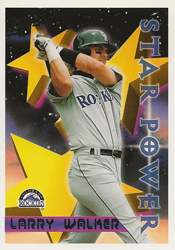 On April 28, 1999, Walker hit three home runs for the Rockies in their 9-7 victory over the Cardinals at Busch Memorial Stadium in St. Louis.
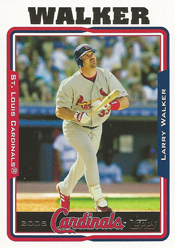 A three-time National League batting champion who spent most of his career with the Expos and Rockies, Walker was elected to the National Baseball Hall of Fame on Jan. 21, 2020, by the Baseball Writers Association of America.
 In 2014, when Jeter came to St. Louis with the Yankees for the last time as a player, he was embraced by Smith in a pre-game ceremony near home plate at Busch Stadium.
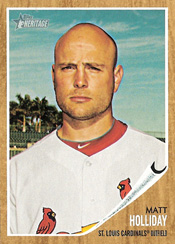 On Jan. 5, 2010, Holliday, a free agent, accepted the Cardinals’ offer of a seven-year contract for $120 million. It was the richest contract given by the Cardinals and it went to a left fielder who had played 63 regular-season games for them.
 One reason Simmons was elected to the National Baseball Hall of Fame in December 2019 was he could hit any kind of pitching, including the best.

