At Florida State, James Ramsey was compared with Tim Tebow, but, like his University of Florida counterpart, the Cardinals prospect learned success in professional baseball requires more than faith.
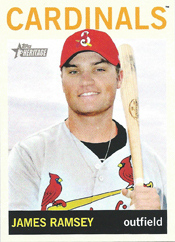 On Jan. 7, 2019, Ramsey was hired to be the hitting coach for the Georgia Tech baseball team.
Seven years earlier, on June 4, 2012, Ramsey was selected by the Cardinals in the first round of the amateur draft.
The Cardinals in 2012 had two first-round picks followed by three supplemental selections before the start of the second round. Pitcher Michael Wacha, outfielder Stephen Piscotty and third baseman Patrick Wisdom made it to the major leagues. Ramsey and catcher Steve Bean did not.
Moving up
Ramsey, an outfielder who batted left-handed, was a standout high school athlete in suburban Atlanta. His father Craig and mother Mary were Florida State alumni and both played sports in college. Craig was a baseball player and Mary played tennis.
James followed his parents to Florida State and excelled at baseball. After his junior season, Ramsey was selected in the 22nd round of the 2011 amateur draft by the Twins, who wanted to convert him into a second baseman, but he rejected their offer of $500,000.
Ramsey spent the summer of 2011 playing in the Cape Cod League on the same team with Piscotty and batted .314.
In 2012, his senior season at Florida State, Ramsey hit .378 with an on-base percentage of .513 and was named Atlantic Coast Conference player of the year. He also earned a degree in finance.
Based on his Cape Cod League performance in 2011 and his Florida State success in 2012, Ramsey raised his ranking as a pro prospect in the 2012 draft.
“He was considered the top senior hitter in the draft,” according to the Tallahassee Democrat.
Skills test
The Cardinals had the 19th pick in the first round as compensation for the Angels’ signing of free-agent first baseman Albert Pujols and also had the 23rd selection. Wacha was their first choice and Ramsey their second.
After 30 total picks were made in the first round, a supplemental round of 30 more picks was held to provide further compensation to clubs losing free agents.
The Cardinals chose Piscotty 36th overall for the loss of Pujols, Wisdom 52nd overall for the loss of Octavio Dotel to the Tigers and Bean 59th overall for the loss of Edwin Jackson to the Nationals.
Scouts were split on whether Ramsey, 6 feet, 190 pounds, should remain an outfielder or move to second base.
Ramsey “doesn’t appear to possess any off-the-chart skills,” the St. Louis Post-Dispatch reported. “He is considered to have above-average speed, but with an average arm and average power.”
After the Cardinals chose him, Ramsey told the Orlando Sentinel, “I am not going to be the sexiest prospect that comes along. I am not going to be the 6-foot-5, 220-pound guy, but I am a winner and that’s the kind of guy they want in their organization.”
Ramsey was captain of his college team and, according to the Post-Dispatch, “Scouts have called Ramsey the Tim Tebow of Florida State baseball for his leadership and strong Christian faith.”
Tebow, the former Florida quarterback, tried professional baseball after his NFL career and batted .244 in the minor leagues. Tebow, 31, entered 2019 still seeking a call to the majors.
Stiff competition
The Cardinals gave Ramsey a $1.6 million signing bonus in June 2012 and assigned him to Class A Palm Beach, where he hit .229 in 56 games as a center fielder.
In 2013, Ramsey played for three teams in the Cardinals’ system, but he primarily was with Class AA Springfield, Mo., whose manager was Mike Schildt. Ramsey’s overall statistics for 2013 included a .256 batting mark, 16 home runs and a .373 on-base percentage.
Ramsey was back with Springfield in 2014 and played again for Schildt, who, four years later, would become manager of the Cardinals.
“I can improve in a lot of facets in my game, but one thing I’ve been trying to focus on is the mental side,” Ramsey said to MiLB.com in May 2014. “If I can be the most relentless competitor everyday when I show up to the field, I’m going to give myself a good chance to succeed.”
Ramsey hit .300 with 13 home runs and a .389 on-base percentage in 67 games for Springfield in 2014, but he was unable to break through to Class AAA because the Cardinals had higher-rated outfield prospects such as Piscotty, Oscar Taveras, Randal Grichuk and Charlie Tilson.
Of those, Tilson was the most like Ramsey. “There’s no question Tilson’s emergence made Ramsey more expendable,” Post-Dispatch columnist Bernie Miklasz observed. “Ramsey’s path to Busch Stadium was clogged.”
Down on the farm
On July 30, 2014, the Cardinals traded Ramsey to the Indians for pitcher Justin Masterson.
Cardinals general manager John Mozeliak called it “dealing from an area of depth,” the Post-Dispatch reported.
Indians general manager Chris Antonetti said Ramsey “has a good approach at the plate with a little bit of power and he’s a guy we think will contribute at the major-league level,” according to the Akron Beacon-Journal.
The Indians gave Ramsey a chance at Class AAA and he hit .243 with 12 home runs for their Columbus club in 2015.
In April 2016, the Indians sold Ramsey’s contract to the Dodgers, who assigned him to a farm team. Four months later, the Dodgers dealt Ramsey to the Mariners, who also kept him in the minors.
On April 9, 2017, Ramsey was released by the Mariners and sat out the season. The Twins signed him in December 2017 and he played for two of their farm teams in 2018 before getting released on June 27, 2018.
At 28, Ramsey’s professional playing career was done without getting a chance to play a big-league game.
Florida State hired Ramsey as an assistant baseball coach in August 2018 and he worked there until getting the Georgia Tech offer.
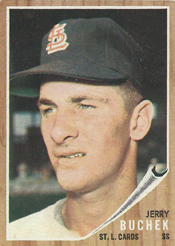 Buchek was a standout athlete at McKinley High School and excelled in amateur baseball leagues in St. Louis.
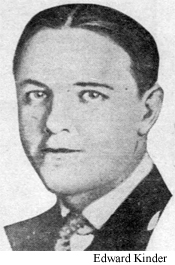
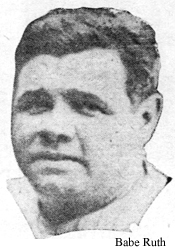 Helen resided in the house with a dentist, Edward H. Kinder. Helen and Babe were separated, but not divorced. Neighbors knew Helen as Mrs. Kinder, and had no idea she was Babe’s wife. Edward’s family thought Helen was Edward’s wife, but Helen and Edward weren’t married.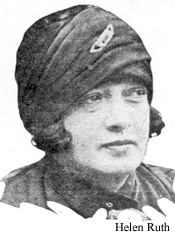
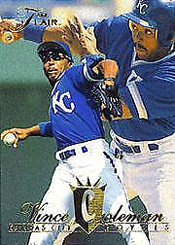 On Jan. 5, 1994, the Royals traded one problem player, Kevin McReynolds, to the Mets for another, Coleman.
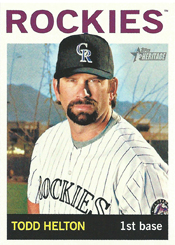 On April 8, 2003, at Denver, Helton reached base safely seven times. Helton was 4-for-4 with three walks, a double, a home run, three RBI and three runs scored against six Cardinals pitchers. His home run tied the score, 12-12, in the seventh inning, but the Cardinals won, 15-12, when Matheny countered with a three-run home run in the 13th.
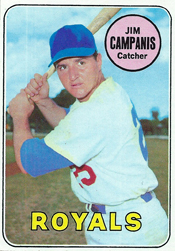 On Dec. 15, 1968, Jim, a catcher, was traded by the Dodgers to the Royals for cash. The Royals also agreed to loan two players to the Dodgers’ minor-league club in Spokane.

