Feeds:
Posts
Comments

Archive for the ‘Hitters’ Category

Desperate to fill the cleanup spot in the order with a potent bat, Cardinals rookie manager Red Schoendienst turned to Curt Flood, a player better known for scoring, not driving in, runs.
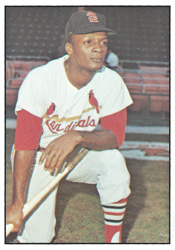
In 1965, Flood was the Cardinals’ No. 4 hitter in the lineup for most of July. It was the only time in 15 major-league seasons Flood batted cleanup. Flood appeared in the cleanup spot as a defensive replacement or pinch-runner four times in 1958 and once in 1959, but didn’t get any at-bats then.

Schoendienst, in his first season as a manager, chose Flood to bat fourth in 1965 because Ken Boyer, bothered by a bad back, wasn’t producing at his usual level and Bill White had an injured foot. Boyer had opened the 1965 season as the cleanup hitter and White largely had taken over the role in June.

Flood had led the Cardinals in runs scored in 1962 (99) and 1963 (112) and was second in 1964 (97), but he never had produced more than 12 home runs and 70 RBI in a season. He appeared to be better suited for one of the top two spots in the order, not the cleanup position usually filled by sluggers.

Mike Shannon and Tim McCarver could have been options to bat cleanup, but Flood was having a better season than either of them.

Schoendienst was rewarded for his faith in Flood.

In 13 games batting fourth for the 1965 Cardinals, Flood hit .345 (19-for-55) with nine RBI. The Cardinals had a 9-4 record with Flood as their cleanup hitter.

Winning combination

On June 30, 1965, White injured his right heel. The injury “has him moving like television’s Chester (Dennis Weaver’s character from “Gunsmoke”) and Grandpa McCoy (Walter Brennan’s character from “The Real McCoys”),” the St. Louis Post-Dispatch reported.

The next night, the first five batters in the Cardinals’ order against the Pirates were: Phil Gagliano, Dick Groat, Lou Brock, Flood and Boyer. Unimpressed, the Post-Dispatch wrote, “The Cardinals presented one of the lightest 3-4 punches in any batting order, Brock and Flood.”

Flood drove in two runs and the Cardinals won, 7-6. Boxscore

In seven games, from July 1 through July 7, Schoendienst kept the top five in his batting order the same. The Cardinals won six of the seven. Batting cleanup, Flood hit safely in all seven games and produced at least one RBI in four. He delivered hits that drove in the winning runs in consecutive games against the Giants July 5-6.

After July 7, over the next five games, Schoendienst used Boyer, White and Tito Francona in the cleanup role and batted Flood third or first. The Cardinals lost three of the five.

Hitting leader

Flood returned to the No. 4 spot on July 16 and remained there for four consecutive games. Flood had hits in all four games and at least one RBI in two. The Cardinals won three of the four, making their record 9-2 in games with Flood as the cleanup hitter.

On July 20, White batted fourth and the Cardinals beat the Phillies. Flood was back in the cleanup spot for the next two games, July 21-22 against the Astros, and the Cardinals lost both.

For the rest of the season, Flood mostly batted in the No. 2 or No. 3 spots. Boyer went back to being the primary cleanup hitter.

The Cardinals, defending World Series champions, finished in seventh place in the National League at 80-81 in 1965. Boyer finished with 75 RBI and White had 73. Both were traded after the season.

Flood won a Gold Glove Award for his fielding and led the 1965 Cardinals in hits (191), RBI (a career-best 83), batting average (.310) and on-base percentage (.366). He did best from the No. 2 spot, batting .360 in 30 games.

Previously: The day Curt Flood got 8 straight hits against Dodgers

Read Full Post »

(Updated Dec. 14, 2023)

After eight years as the center fielder for the Cardinals, Jim Edmonds had no intention of taking a reduced role with the team. If the Cardinals couldn’t commit to him, Edmonds told them, he’d rather play somewhere other than St. Louis.

Concerned Edmonds no longer was durable and convinced they had candidates within the organization to replace him, the Cardinals decided the time was right to part with a player who had been among their most popular and productive.

In December 2007, John Mozeliak made his first trade as Cardinals general manager, sending Edmonds to the Padres for minor-league third baseman David Freese.

The deal sent away a player who had performed a key role in helping the Cardinals win a World Series title in 2006 and brought them a player who would perform a key role in helping them win another World Series championship in 2011.

Special talent

Edmonds, acquired by the Cardinals from the Angels in March 2000, was a central figure in the franchise’s success from 2000 to 2007. In that period, the Cardinals won a World Series crown and two National League pennants and qualified for the postseason six times.

With the Cardinals, Edmonds won the Gold Glove Award six times and was named an all-star three times.

In his eight seasons with St. Louis, Edmonds produced 1,033 hits and batted .285. He had an on-base percentage of .393.

Edmonds hit 241 home runs for St. Louis, placing him fourth all-time among Cardinals. Only Stan Musial (475), Albert Pujols (469) and Ken Boyer (255) hit more. Musial is the lone left-handed batter with more career home runs as a Cardinal than Edmonds.

Also, Edmonds had a .555 slugging percentage for St. Louis. Only six others _ Mark McGwire, Pujols, Johnny Mize, Chick Hafey, Rogers Hornsby and Musial _ have higher slugging percentages as Cardinals than Edmonds.

“If we consider the combination of offense and defense, Edmonds was the best overall center fielder in Cardinals history,” wrote Bernie Miklasz, columnist for the St. Louis Post-Dispatch.

That’s high praise considering the franchise has had standout center fielders such as Curt Flood, Ray Lankford, Willie McGee and Terry Moore.

Time takes toll

In 2007, however, Edmonds showed signs his health and his skills were eroding. He had surgery on his right shoulder and left foot after the 2006 World Series. During the 2007 season, Edmonds was on the disabled list from June 16 to July 18 because of back problems. Late in the season, he had a groin injury and made one start after Sept. 17.

Edmonds played in 117 games in 2007 and batted .252 with 12 home runs and 53 RBI. He hit .198 against left-handers.

In the off-season, Edmonds, 37, heard speculation the Cardinals might reduce his playing time in 2008 and shift him to right field.

“After running down all of those line drives in the gaps, he couldn’t outrun his age,” Miklasz wrote of Edmonds.

Edmonds approached Cardinals management and asked about their plans for him. “Basically, the feedback wasn’t so great, and they couldn’t guarantee anything,” Edmonds said to the Associated Press.

The Cardinals believed Rick Ankiel, the converted pitcher, was ready to take over in center field. “I think Rick Ankiel has emerged as a force,” said Cardinals owner Bill DeWitt Jr. The Cardinals thought their top minor-league prospect, Colby Rasmus, could compete for the center field job, too.

Edmonds, believing he still could be a starter in center, agreed to relinquish the no-trade clause in his contract. He gave the Cardinals a list of teams. His preference was a Southern California club because he had a home in Irvine, Calif.

“I wanted a chance to play every day,” Edmonds said.

California dreaming

The Padres were in the market for a center fielder. Their 2007 starter, Mike Cameron, had become a free agent. San Diego was interested in Japanese League import Kosuke Fukodome, but he signed with the Cubs. Cameron went to the Brewers.

Edmonds became the Padres’ best option. “We felt it was a risk worth taking,” said Padres general manager Kevin Towers.

The Cardinals and Padres agreed to a deal on Dec. 14, 2007. The Post-Dispatch broke the news on its Web site that night. The trade formally was announced the next day, Dec. 15.

“I’m kind of shocked but excited because I get to be in Southern California next to my family and play for a contending team in a beautiful ballpark,” Edmonds said.

Towers predicted to the San Diego Union-Tribune that Edmonds would bat .270 and hit 15 to 20 home runs for the Padres in 2008.

Return on investment

The Cardinals were glad to get a player for Edmonds before he became eligible for free agency after the 2008 season.

Freese, who grew up in St. Louis and graduated from Lafayette High School, had been chosen by the Padres in the ninth round of the 2006 amateur draft. In 2007, playing for the Lake Elsinore Storm of the Class A California League, Freese batted .302 with 96 RBI and scored 104 runs.

Asked his reaction to being traded for Edmonds, Freese said, “It’s been a dream of mine to play for the Cardinals. Now it may become a reality.”

Freese debuted with the Cardinals in 2009 and became their primary third baseman in 2010.

Ankiel was the Cardinals’ primary center fielder in 2008 and Rasmus became the starter in 2009.

Edmonds played in 26 games for the 2008 Padres, batted .178 and was released in May. He spent the rest of the season with the Cubs and hit 19 homers for them.

After sitting out the 2009 season, Edmonds played for the Brewers and Reds in 2010, producing 11 home runs and 23 RBI. He attempted a comeback with the Cardinals the following year at spring training, but announced his retirement on Feb. 18, 2011.

Freese earned a permanent place in Cardinals lore with his postseason performance in 2011. He had 21 RBI _ five in the NL Division Series versus the Phillies, nine in the NL Championship Series against the Brewers and seven in the World Series versus the Rangers.

With the Cardinals on the brink of elimination in the World Series, Freese’s two-run triple with two outs in the ninth inning of Game 6 tied the score and his home run leading off the 11th gave St. Louis the win.

Read Full Post »

Needing a proven right-handed hitter to balance and bolster their lineup, the Cardinals appeared to make the right move when they acquired the player who had been the Cubs’ most consistent run producer of the mid-1970s.

The timing, however, turned out to be terrible.
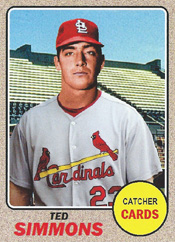
Jerry Morales, an all-star outfielder with the 1977 Cubs, was a bust with the 1978 Cardinals.

On Dec. 8, 1977, the Cardinals got Morales and catcher Steve Swisher from the Cubs in a trade for outfielder Hector Cruz and catcher Dave Rader.

At the time, the Cardinals’ best batters either were switch-hitters (Ted Simmons and Garry Templeton) or left-handed (Lou Brock and Keith Hernandez).

Cardinals right-handed batters collectively hit .217 versus right-handed pitching in 1977.

At the baseball winter meetings in December 1977, Cardinals general manager Bing Devine went shopping for a productive right-handed bat.

Chicago hit man

Morales debuted in the major leagues at age 20 with the 1969 Padres. After five seasons with San Diego, he was traded to the Cubs in November 1973.

Morales became one of the Cubs’ premier players. He led them in RBI in 1974 (82) and 1975 (91) and hit a career-high 16 home runs in 1976.

“He has that knack of driving in the tough runs,” Cubs pitcher Rick Reuschel said.

Morales hit .331 in the first half of 1977 and was selected to the all-star team. “Morales has an unmistakable batting stance,” The Sporting News observed. “He keeps his feet wide apart and holds the bat over his head … This unusual stance, he insists, enables him to wait longer on the pitch.”

Batting in the All-Star Game against Sparky Lyle, Morales was hit on the knee by a pitch.

The knee became sore and bothered Morales the remainder of the season. He also wrenched his back and broke a finger. The injuries took a toll. Morales hit .218 in the second half of the season.

Though his overall batting average that year was a career-best .290, Morales called 1977 “the most disappointing season of my career” because he tailed off so badly after a stellar start.

Mix and match

After the 1977 season, the Cubs signed free-agent slugger Dave Kingman, making Morales expendable.

The Cubs needed a starting catcher. Their general manager, Bob Kennedy, began a “relentless search” for one, according to the Chicago Tribune.

Kennedy, who had been the Cardinals’ director of player development before becoming general manager of the Cubs in November 1976, made Rader his “main target,” the Tribune reported.

With workhorse Ted Simmons at catcher for St. Louis, Rader seldom played and he had asked the Cardinals to trade him.

Cruz also appealed to the Cubs. Though Cruz had flopped as the Cardinals’ right fielder in 1977 (.236 batting average, six home runs, 42 RBI), Kennedy liked him. In 1975, when Kennedy ran the Cardinals’ farm system, Cruz was named Minor League Player of the Year by The Sporting News.

When Kennedy asked the Cardinals for Rader and Cruz, Devine demanded Morales. “We had been trying to get Morales for two or three years,” Devine said.

Said Kennedy: “We didn’t want to give up Morales, but he’s the only guy who had enough value for us to get the catcher we wanted.”

Cardinals nemesis

In its report on the trade, The Sporting News called Morales the Cubs’ “most consistent hitter the last four seasons” and “a good all-round player.”

With the Cubs, Morales had batting averages against the Cardinals of .352 in 1975, .300 in 1976 and .313 in 1977.

“He’s an altogether different kind of hitter in a tight game with a runner on second or third base,” Simmons said. “He’s been one of the five or 10 hitters I’ve least wanted to see up there at bat (against the Cardinals) when it counts.”

Cardinals manager Vern Rapp envisioned an outfield of Morales in right, Brock in left and Tony Scott in center.

When the Cardinals began the 1978 season, the top five in their batting order were Brock, Templeton, Morales, Simmons and Hernandez. In the April 7 season opener against the Phillies, Morales had three singles against Steve Carlton and scored a run in a 5-1 Cardinals victory.

That turned out to be one of his few Cardinals highlights.

Morales had a miserable May, batting .194, and struggled to recover.

In July, The Sporting News reported, “Morales, who was counted on as a big RBI man, had been trying extra hard, as witness a 30-minute extra batting practice session one day and 10 minutes extra before the next game, but continued to be disappointing.”

Morales finished the season with a .239 batting average, four home runs and 46 RBI. He hit .205 against right-handers.

Traveling man

The Cardinals finished 69-93 in 1978. Devine was fired and replaced by former Red Sox assistant general manager John Claiborne. Morales asked to be traded, according to the St. Louis Post-Dispatch. Claiborne was happy to oblige.

“He hit a lot of 385-foot outs at Busch Stadium, but they were still outs,” Claiborne said.

The Cardinals talked with the Red Sox about a trade of Morales for pitcher Bill Lee, who was feuding with manager Don Zimmer, The Sporting News reported.

However, the Tigers, who had been trying to acquire Morales for more than a year, were the most aggressive pursuers.

In Claiborne’s first trade as general manager, the Cardinals sent Morales and pitcher Aurelio Lopez to the Tigers for pitchers Bob Sykes and Jack Murphy.

Morales hit .211 for the 1979 Tigers and was dealt to the Mets. He spent his last three seasons (1981-1983) with the Cubs.

Morales played a lot better against the Cardinals than he did for them. In 115 career games versus St. Louis, Morales hit .327.

From 2002-2004, Morales was a coach on the staff of Expos manager Frank Robinson. He coached again in 2007 and 2008 on the staff of Nationals manager Manny Acta.

Previously: Cardinals made mistake giving up on Jose Cruz

Read Full Post »

(Updated Jan. 28, 2026)

Ted Simmons is the second switch-hitting catcher to earn election to the National Baseball Hall of Fame and the first to have played in the major leagues.

Of the 20 catchers elected to the Hall of Fame at Cooperstown, N.Y., the lone switch-hitters are Simmons and Biz Mackey, who played for Negro League teams over three decades (1920s, 1930s and 1940s). Segregation kept Mackey from playing in the major leagues.
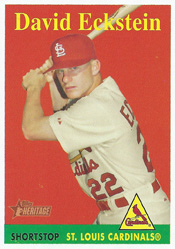
Simmons played for the Cardinals from 1968 to 1980. He also played for the Brewers and Braves in a 21-season career spanning 1968 to 1988.

Swing like Kaline

As a youth in Michigan, Simmons was a natural left-handed batter, but he could throw a baseball effectively with either hand. His older brothers, Jim and Ned, encouraged him to become a switch-hitter.

“They’d throw whiffle balls at me from 30 feet away,” Simmons said in the 1977 book, “The Ted Simmons Story,” written by former Cardinals pitcher Jim Brosnan. “I’d swing hard and hit a few now and then. They’d tell me just to relax and lay the bat on the ball.”

Simmons’ favorite player was Tigers outfielder Al Kaline. A right-handed batter who would amass 3,007 hits in a Hall of Fame career, Kaline had a classic, level swing, a line-drive hitter, rather than the uppercut of a slugger. Simmons worked to develop a swing like Kaline’s.

In his Hall of Fame induction speech, Simmons said, “As a youngster in Detroit, I was a Tigers fan. I grew up idolizing Norm Cash, Rocky Colavito, Frank Lary and Bill Freehan. It was in that era that I discovered my first hero, Al Kaline. He had no idea what a role model he became for me.”

(Simmons, a rookie ineligible for the World Series in 1968, was seated with Cardinals officials in the stands at Tiger Stadium when Kaline hit a home run against the Cardinals in Game 3. Simmons instinctively leapt from his seat in excitement. “I looked over and they were looking at me,” Simmons told Cardinals Magazine. “I was afraid I was going to be released after that game.”)

When Simmons got to the majors, he initially hit better as a left-handed batter against right-handers than he did as a right-handed batter versus left-handers.

In 1971, his first full Cardinals season, Simmons hit .333 against right-handers and .235 versus left-handers.

“The last time I hit left-handed against a left-handed pitcher was in Little League,” Simmons said. “They don’t throw curves in that league. It’s a great advantage for a hitter always to see that curveball break toward him rather than away.”

Simmons strived to become as adept from the right side as he was from his natural left side. Determining that his left arm was the key to giving him a stronger swing from the right side, Simmons worked to build strength in that arm. During the winter after the 1972 season, he exclusively used his left arm to throw footballs, shoot basketballs and swat hockey pucks.

That effort helped Simmons elevate himself into an elite class of baseball hitters.

Select company

While catching nearly every game, Simmons batted .300 from each side of the plate in three seasons: 1973, 1975 and 1977.

His 1975 performance was remarkable for its level of achievement and consistency. He hit .331 against right-handers and .333 versus left-handers.

Simmons batted .287 against right-handers and .281 versus left-handers for his career. His overall batting average was .285. His career slugging percentage was the same from each side of the plate: .437.

In a 2010 article for ESPN.com, Tim Kurkjian reported that just six percent of all non-pitchers in baseball history have been switch-hitters.

“How many of that six percent are even capable of hitting .300?” Simmons said. “Now that six percent goes down to maybe two percent.”

Among all switch-hitters in baseball history, Simmons ranks sixth in RBI (1,389), 10th in total bases (3,793) and 11th in hits (2,472).

Among all catchers all-time, Simmons ranks second in hits (2,472), second in doubles (483) and second in RBI (1,389). The only catcher with more hits (2,844) or more doubles (572) than Simmons is Ivan Rodriguez. The only catcher with more RBI (1,430) than Simmons is Yogi Berra.

Hall of Fame catchers who batted right-handed are: Johnny Bench, Roger Bresnahan, Roy Campanella, Gary Carter, Buck Ewing, Rick Ferrell, Carlton Fisk, Josh Gibson, Gabby Hartnett, Ernie Lombardi, Mike Piazza, Ivan Rodriguez and Ray Schalk.

Hall of Fame catchers who batted left-handed are: Yogi Berra, Mickey Cochrane, Bill Dickey, Joe Mauer and Louis Santop.

The fact Simmons batted both left-handed and right-handed _ and did so while hitting at a caliber better than most other catchers in the Hall of Fame _ makes it crystal clear he deserved election to the shrine.

Read Full Post »

David Eckstein wanted to stay with the Cardinals. For a while, the Cardinals wanted him to stay, too. Instead, the Cardinals ended up with Cesar Izturis at shortstop and Eckstein was exiled to Canada.

A productive and popular Cardinals player, Eckstein was an effective leadoff batter who earned a special spot in franchise lore when he won the World Series Most Valuable Player Award for his performance with the 2006 champions.

After the 2007 season, Eckstein became a free agent, though he hoped to remain with the Cardinals. His departure from St. Louis was an example of the consequences of poor communication and bad decision-making.

Motivated to find a shortstop in a limited market and uncertain of Eckstein’s intentions, the Cardinals turned to Izturis, a free agent, and signed him on Nov. 30, 2007.

With Izturis in the fold, Eckstein no longer fit the Cardinals’ plans and he accepted from the Toronto Blue Jays a less lucrative offer than what St. Louis first proposed.

Waiting game

After four seasons with the Angels, including a World Series title in 2002, Eckstein became a free agent and signed with St. Louis in December 2004. At 5 feet 6 and with the look of a schoolkid, Eckstein appeared to be the ultimate underdog and he won the hearts of Cardinals fans with his hustle and skill.

In 2005, Eckstein batted .294 with 90 runs scored for a Cardinals club that reached the National League Championship Series. The next year, he hit .292 for the 2006 NL champions. In the five-game World Series versus the Tigers, Eckstein batted .364, drove in four runs and scored three.

At spring training in 2007, the Cardinals approached Eckstein and offered him a three-year, $20 million contract, the St. Louis Post-Dispatch reported. Eckstein decided to discontinue contract talks until the season was completed.

It was a decision he would regret.

All talk, no action

Because of injuries, Eckstein was limited to 112 starts at shortstop in 2007. He committed a career-high 20 errors. The year before, he made six miscues.

Eckstein batted .309 for the 2007 Cardinals, but management was alarmed by his lapses on defense. With Eckstein turning 33 before the start of the 2008 season, the Cardinals became concerned about committing to him beyond a year or two.

After the 2007 season, Eckstein told the Post-Dispatch, “I instructed my agent to tell (the Cardinals) of my desire to stay. They knew of my desire.”

The message was delivered, but without details.

“It was never defined by either party what ‘staying in St. Louis’ looked like,” said Cardinals general manager John Mozeliak.

Said Eckstein: “I was not looking for anything specific. I was willing to look at anything.”

While the Cardinals waited for Eckstein to say what he wanted, Eckstein waited for the Cardinals to respond to his expressed desire to stay.

It was a communication breakdown.

As time ticked away, the Cardinals decided it was in their best interests to fill the shortstop spot before their options evaporated.

Playing the field

The Cardinals had trade discussions with the Astros regarding shortstop Miguel Tejada and with the Pirates regarding shortstop Jack Wilson, according to the Post-Dispatch, but nothing developed.

“When you look at the shortstop market, there are not a lot of options,” Mozeliak said.

Izturis emerged as the Cardinals’ top choice.

In 2001, at age 21, Izturis made his major-league debut with the Blue Jays. After the season, he was dealt to the Dodgers and developed into a premier shortstop. In 2003, he led NL shortstops in assists (481). The next year, he batted .288 with 193 hits, led NL shortstops in putouts (234) and earned a Gold Glove Award. Izturis was selected to the NL all-star team in 2005.

In July 2006, Izturis was traded by the Dodgers to the Cubs for pitcher Greg Maddux. He split the 2007 season with the Cubs and Pirates, batting .258, and became a free agent.

The Cardinals signed Izturis to a one-year contract for $2.85 million with incentives. Izturis turned 28 before the start of the 2008 season.

One-year rental

“He’s looking for a challenge,” Mozeliak said. “We wanted somebody ready to take the challenge … One of the things we needed to address in support of pitching was our defense. I think we accomplished that.”

Media reaction to the Izturis signing was mixed.

_ Bernie Miklasz, Post-Dispatch columnist: “The Cardinals like his glove, but others say he’s slipped defensively.”

_Dan O’Neill, Post-Dispatch columnist: “Why do people get bent out of shape about the Cardinals’ signing of Cesar Izturis? It’s not like winning championships with a light-hitting, sharp-fielding shortstop is a foreign concept. For reference, see Dal Maxvill, 1967 and 1968.”

With the door closed to the Cardinals, Eckstein signed a one-year deal with the Blue Jays for $4.5 million.

Izturis, a switch-hitter, batted .263 with 24 stolen bases for the 2008 Cardinals. He hit .304 against left-handers.

Izturis started 110 games at shortstop for the Cardinals _ Brendan Ryan and Aaron Miles also got playing time _ and ranked third among NL shortstops in fielding percentage at .980.

After the 2008 season, Izturis became a free agent and signed with the Orioles for two years at $5 million.

The Cardinals went with Ryan, who was developed in their farm system, at shortstop in 2009.

Previously: Why David Eckstein was perfect fit for Cardinals

Read Full Post »

(Updated Oct. 30, 2022)

The Cardinals took a chance on Jeff Brantley and lost.

Needing a closer, the Cardinals traded a prime prospect, Dmitri Young, to the Reds for Brantley, even though the pitcher had spent most of the previous season on the disabled list.

Cardinals general manager Walt Jocketty made the deal on Nov. 10, 1997, when he got assurances Brantley had recovered fully from surgery to repair injuries to his right shoulder and rotator cuff.

The Cardinals, though, should have been as skeptical as columnist Bernie Miklasz, who, at the time of the trade, wrote in the St. Louis Post-Dispatch, “The Jeff Brantley trade makes me nervous; a 34-year-old pitcher coming off shoulder surgery?”

Brantley flopped with the 1998 Cardinals. Claiming his arm hurt, Brantley pitched poorly, clashed with pitching coach Dave Duncan, was removed from the closer’s role and got traded after the season.

The Cardinals’ misjudgment of Brantley set back the organization in significant ways. The Cardinals had to continue to scramble to find a closer and they had to do so without one of their strongest trade chips. Young, a productive hitter, was given away to a division rival without St. Louis getting full value in return.

Price is right

When closer Dennis Eckerlsey opted for free agency after the 1997 season, the Cardinals went in search of a replacement.

Wanting to avoid getting involved in bidding for free agents, Jocketty looked to make a trade. He was willing to part with Young, a first baseman and outfielder, because the Cardinals had talent at those positions. Mark McGwire was the first baseman and Ron Gant, Ray Lankford and Brian Jordan were the outfielders.

Though Brantley, 34, had not pitched since May 19, 1997, the Cardinals thought he could pitch again like he did when he earned 44 saves for the 1996 Reds.

“We knew we had to act quickly because other clubs were interested in him,” Jocketty said to Rick Hummel of the Post-Dispatch.

Given orders by ownership to cut player payroll, Reds general manager Jim Bowden was eager to deal Brantley, who was under contract for salaries of $2.8 million over each of the next two years.

The Reds had another capable closer, Jeff Shaw, on their roster and he was paid less than Brantley.

The $5.6 million owed Brantley over 1998 and 1999 didn’t dissuade the Cardinals from pursuing a deal for him. “Guys who might be available in free agency would have cost twice as much,” Jocketty said.

Special hitter

When Jocketty offered Young, 24, to the Reds, Bowden accepted.

“This deal was made for financial reasons,” Bowden said to the Associated Press, “and is consistent with our commitment to get younger and cheaper.”

Asked by Jeff Horrigan of The Cincinnati Post about Young, Reds manager Jack McKeon replied, “He has a great attitude and a great upside … We might have something special here.”

Young, a switch hitter, was the top pick of the Cardinals in the 1991 amateur draft. He led the Class AAA American Association in batting average (.333) in 1996, producing 153 hits in 122 games.

Young debuted with the Cardinals in August 1996 and hit a key triple for them that fall in Game 4 of the National League Championship Series against the Braves. In 1997, Young hit .258 in 110 games for St. Louis.

Projecting Young to be best-suited as a designated hitter, Jocketty said, “Dmitri is going to be a very good hitter. He’d be a good American League player.”

Regarding Young’s potential role with the 1998 Cardinals, manager Tony La Russa said, “There was a way to wedge him onto the team, but it was not a good fit.”

The acquisition of McGwire by St. Louis in July 1997 “kind of put a damper” on the Cardinals’ plans for him, Young told Mike Bass of The Cincinnati Post. “I didn’t have a clue what the Cardinals were going to do with me,” Young admitted.

Not the same

Before the deal became official, the Cardinals sent Brantley to Birmingham, Ala., for an examination by Dr. James Andrews. With Cardinals trainer Barry Weinberg witnessing the exam, Andrews declared Brantley physically fit to pitch.

“I didn’t have any doubts that it wouldn’t be a problem,” Brantley told the Post-Dispatch. “I’ve been throwing for over two months.”

Brantley told The Cincinnati Post that Andrews “gave me a 100 percent clean bill of health.”

Brantley was effective at the start of the 1998 season for the Cardinals. On May 11, he had six saves and a 1.93 ERA.

Then danger signs developed.

On May 12, St. Louis led the Brewers, 5-3, in the ninth when Brantley entered and gave up a two-run home run to Jeff Cirillo. Boxscore

On May 22, with the Cardinals ahead of the Giants, 3-1, in the ninth, Brantley yielded a two-run homer to Bill Mueller. Boxscore

Brantley remained the closer _ and it proved costly to the Cardinals.

On the morning of May 30, the Cardinals had a 28-24 record. St. Louis lost nine of its next 10 and 12 of 17. Included in that stretch:

_ May 30, Padres 3, Cardinals 2: Brantley entered in the ninth with the score 2-2. Quilvio Veras beat him with a one-out RBI-single. Boxscore

_ June 4, Dodgers 3, Cardinals 2: Different game, same outcome. Brantley entered in the ninth with the score 2-2. Charles Johnson beat him with a one-out RBI-single. Boxscore

_ June 13, Diamondbacks 7, Cardinals 4: St. Louis led 4-3 with two outs in the eighth when Brantley entered with a runner on third. After Jay Bell walked, Travis Lee slammed a three-run home run and Matt Williams followed with a solo shot. Boxscore

_ June 17, Astros 6, Cardinals 5: After Brantley was handed a 5-2 ninth-inning lead, Craig Biggio was hit by a pitch, Bill Spiers reached on a bunt single, Biggio scored on a sacrifice fly and Jeff Bagwell belted a two-run home run, tying the score. When Carl Everett singled, Brantley was lifted for Curtis King. After a walk, Brad Ausmus’ single scored Everett. Boxscore

Brantley eventually was replaced as closer by Rich Croushore and then by Juan Acevedo. Brantley recorded one save after July 10 and finished the 1998 season with an 0-5 record, 4.44 ERA and 14 saves in 48 appearances. Booed by Cardinals fans, Brantley was especially bad in home games: a 6.38 ERA in 24 appearances at Busch Stadium.

After the season, Brantley was traded to the Phillies in a deal that brought the Cardinals another erratic closer _ Ricky Bottalico.

Read Full Post »

« Newer Posts - Older Posts »