Feeds:
Posts
Comments

Archive for the ‘Hitters’ Category

The last hit of the Hall of Fame career of Frankie Frisch completed a ninth-inning comeback that carried the Cardinals to a walkoff victory and inspired his teammates to carry Frisch off the field.
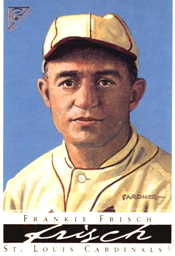
In 1937, Frisch, 40, was manager of the Cardinals. He also was in his last season as a player.

Frisch had been a standout second baseman for the Giants from 1919 to 1926. After he was dealt for Rogers Hornsby, Frisch continued his success with the Cardinals, helping them to four National League pennants and two World Series titles. He became their player-manager in 1933.

As late as 1936, Frisch played 59 games at second base and 22 at third base for the Cardinals, batting .274 with an on-base percentage of .353.

In 1937, however, Frisch seldom appeared in the lineup.

His last game at second base was on May 29, 1937. Over the next two months, he had five at-bats as a pinch hitter. Frisch failed to reach base in any of those plate appearances.

So it was a bit of a surprise when, with the outcome on the line in the Cardinals’ game against the Braves on Aug. 4 at St. Louis, Frisch put himself at the plate as a pinch hitter.

Keep the line moving

The Braves led, 6-2, entering the bottom of the ninth inning of the Wednesday afternoon game before 2,303 spectators at Sportsman’s Park.

Braves starter Lou Fette, who had a 13-3 record, appeared to be in control. The rookie from Alma, Mo., retired two of the first three batters in the ninth. Terry Moore, who had walked, was on first base when Johnny Mize came to the plate, representing the Cardinals’ last hope.

With a four-run lead, the Braves weren’t holding Moore at first. So, he went to second base uncontested while Fette focused on Mize.

Mize singled to right, scoring Moore and cutting the Braves’ lead to 6-3.

Joe Medwick followed with a double to left-center, driving home Mize and making the score 6-4.

Braves manager Bill McKechnie, the former Cardinals skipper, brought in Guy Bush to relief Fette. Bush had a 2.76 ERA.

Don Padgett greeted him with a single to right, scoring Medwick and reducing the Braves’ lead to 6-5.

Don Gutteridge got the Cardinals’ fourth consecutive hit _ a single to left. When Padgett advanced from first to third on the play, drawing the throw from the outfield, Gutteridge alertly took second.

With runners on second and third, Pepper Martin, sent to pinch-hit for Leo Durocher, received an intentional walk, loading the bases.

Stout heart

Mickey Owen was due up next for the Cardinals. A rookie catcher, Owen was the Cardinals’ eighth-place batter. He was 1-for-4 in the game, giving him a .214 batting mark for the season.

Frisch, who was batting .194 and hadn’t produced a hit since May 28, grabbed a bat and stood in at the plate for Owen.

“I felt I was the right man in this spot,” Frisch said to the St. Louis Star-Times. “I believed I could deliver the much-needed hit in the pinch … Why should I put some other man in that spot when I figured I could get a hit myself?”

Frisch, a switch hitter, batted from the left side against Bush, a right-hander. Swinging at the first pitch, Frisch “slashed it down the first-base line like a shot out of a howitzer,” the Star-Times reported.

The ball eluded first baseman Elbie Fletcher and bounded into right field. Padgett scored from third with the tying run and Gutteridge raced from second to the plate with the winning run for a 7-6 Cardinals victory. Boxscore

Frisch’s teammates rushed toward him, lifted him onto their shoulders and carried him triumphantly to the dugout.

“The best pinch-hit I’ve ever seen,” Medwick said.

Frisch, the Star-Times observed, “still packs a pretty stout heart beneath those red birds on his Cardinals uniform shirt.”

The hit gave Frisch 2,880 for his big-league career.

The next day, Frisch batted for the final time. Pinch-hitting in the ninth for Moore, Frisch grounded into a double play in a game the Cardinals lost 4-1 to the Braves.

Frisch finished with a career batting mark of .316 and 1,244 RBI. He was inducted into the National Baseball Hall of Fame in 1947.

Previously: Kolten Wong, Frankie Frisch gave Cards pop at 2nd
Read Full Post »

(Updated on July 31, 2018)

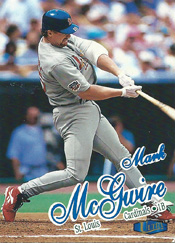
Unwilling to part with Manny Aybar, the Cardinals almost didn’t make the trade for Mark McGwire.

In July 1997, the Cardinals went in search of a power hitter. They had discussions with the Blue Jays about Joe Carter and with the Tigers about Travis Fryman. The slugger they wanted most was McGwire.

For the Cardinals to get him, the Athletics demanded a package that included Aybar, a top pitching prospect.

With the trade deadline of midnight July 31 fast approaching, the Cardinals held firm in their refusal to part with Aybar. As late as 6:30 p.m. on July 31, Cardinals general manager Walt Jocketty said he thought the deal wouldn’t happen.

When the Athletics relented and settled instead for Eric Ludwick, the trade was made. The Cardinals got McGwire for three pitchers: T.J. Mathews, Blake Stein and Ludwick.

Thumbs up

On July 25, after losing to the Marlins at St. Louis, the Cardinals fell to 48-53, six games behind the first-place Astros in the National League Central Division.

Unwilling to concede, the Cardinals determined what they needed most was another run producer in a lineup that included Ray Lankford, Ron Gant and Gary Gaetti.

Two days later, on July 27, McGwire told reporters he strongly would consider a trade to the Cardinals.

McGwire was eligible to become a free agent after the 1997 season, so the Athletics were open to trading him if they could get a good return. Because McGwire was a 10-year veteran who had played five consecutive seasons with his current team, the Athletics needed his approval before they could deal him. That’s why it was significant when McGwire went public with his consent of a possible trade to St. Louis.

Art of the deal

Initially, the Athletics inquired about the availability of two of the Cardinals’ most promising starting pitchers, Alan Benes and Matt Morris.

When Jocketty made it clear neither would be traded, the Athletics set their sights on two prospects in the Cardinals’ minor-league system: Aybar and catcher Eli Marrero.

Jocketty didn’t want to trade them either.

On July 29, Jocketty rated the Cardinals’ chances of acquiring McGwire as 50-50, according to the St. Louis Post-Dispatch.

Looking to keep options open, Jocketty spoke with the Blue Jays about Carter, but they wanted outfielder John Mabry. Jocketty said no.

The Tigers were willing to deal Fryman, but they wanted starting pitcher Todd Stottlemyre. Again, Jocketty said no.

McGwire remained the best option.

The Angels also had pursued McGwire, but when they dropped out of the bidding it left the Cardinals as the lone suitor and gave Jocketty leverage.

Holding firm

With their negotiating hand weakened, the Athletics ended their demand for Marrero _ they also had asked about two other prospects, pitcher Braden Looper and infielder Brent Butler _ but still insisted on Aybar being in the deal. Jocketty wouldn’t budge. “We couldn’t give up Aybar and Mathews,” he said.

Athletics general manager Sandy Alderson indicated to Jocketty the deal could be dead. “At one point,” Jocketty said, “I thought we weren’t going to be able to get it done.”

Faced with the likely prospect of getting nothing in return for McGwire if he departed as a free agent after the season, Alderson relented and took Ludwick instead of Aybar when he realized Jocketty wouldn’t change his stance.

“Sometimes free agency forces your decisions,” Alderson said.

On July 31, 1997, four days after talks began, the deal for McGwire was completed.

It takes a village

“We were determined to get a quality bat in the middle of our lineup and I think we got the best hitter we could,” Jocketty said.

McGwire twice led the American League in home runs and three times was the league leader in slugging percentage.

“He’s probably the greatest power hitter of his time,” said Stottlemyre.

Tony La Russa, who managed McGwire with the Athletics before joining the Cardinals after the 1995 season, was happy to have the slugger on his team again, but cautioned that McGwire alone couldn’t lift the Cardinals into first place.

“The quality of everything else we do has to raise itself a couple of levels for us to win a lot of games,” La Russa said.

For McGwire to be most effective, La Russa said, “we have to get on base in front of (him).”

Bernie Miklasz, Post-Dispatch columnist, acknowledged McGwire “will provide entertainment” and “will be a menacing presence” in the lineup, but expressed concern McGwire would depart as a free agent after the season. The Cardinals would have done better to trade for an emerging talent such as Jose Cruz, 23, of the Mariners, Miklasz wrote.

Slugging and scandal

Asked why he approved the trade, McGwire said, “I decided to do this because I needed a change and I needed a challenge.”

On Aug. 1, McGwire traveled from California to Philadelphia and joined the Cardinals 90 minutes before their game that night with the Phillies.

Put into the cleanup spot between Phil Plantier and Gant, McGwire was 0-for-3 with a walk against Garrett Stephenson and Ricky Bottalico.

On Sept. 16, 1997, the Cardinals signed McGwire to a three-year contract extension through 2000 worth $28.5 million. The deal included an option for a fourth year at $11 million. McGwire went on to hit 24 home runs with 42 RBI in 51 games for the 1997 Cardinals, but they finished 73-89.

McGwire hit 70 home runs with 147 RBI in 1998 and 65 home runs with 147 RBI in 1999, but the Cardinals failed to qualify for the postseason both years.

McGwire and the Cardinals got into the postseason in 2000 and 2001 but didn’t reach the World Series.

In five years with St. Louis, McGwire had 220 home runs and 473 RBI, but the achievements were tainted by his subsequent admission of using banned performance-enhancing drugs.

Previously: Mark McGwire had hot start to 1998 Cardinals season

Read Full Post »

(Updated Oct. 17, 2024)

With a drive to the outfield depths of Sportsman’s Park, Enos Slaughter altered the course of a National League pennant race in favor of the Cardinals.

Slaughter hit a walkoff inside-the-park home run that lifted the Cardinals to an extra-inning victory over the Dodgers and completed a doubleheader sweep of the NL leaders on July 19, 1942.
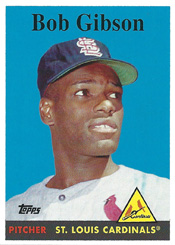
The Dodgers’ top player, center fielder and NL batting leader Pete Reiser, suffered a concussion when he crashed into a concrete outfield wall while pursuing Slaughter’s smash.

The sweep moved the second-place Cardinals to within six games of the Dodgers.

Reiser, who rushed back to the lineup too soon, struggled to hit over the last two months of the season. That was a factor in enabling the rejuvenated Cardinals to overtake the Dodgers at the end of the season and win the pennant.

Musial gets mad

The Dodgers entered the July 19 doubleheader at St. Louis with an eight-game lead over the Cardinals. A Dodgers sweep threatened to demoralize the Cardinals.

In Game 1, the Cardinals led, 7-0, in the fourth inning when Stan Musial batted against rookie Les Webber. A month earlier, Musial had hit a home run off him.

Webber threw an inside pitch that moved Musial off the plate. Musial yelled out to Webber. The next pitch “came dangerously close to Stan’s head,” according to the St. Louis Star-Times.

Angered, Musial uncharacteristically moved toward Webber with his bat in hand. Webber started toward Musial. (“I didn’t know what I was going to do once I got there,” Musial told Cardinals Yearbook in 1991.)

Players from both dugouts poured onto the field, but umpires stepped between Musial and Webber. No punches were thrown and the showdown quickly dissolved. Musial continued his at-bat and grounded out.

Two innings later, Webber batted and was hit by a pitch from Mort Cooper. Led by four RBI from Johnny Hopp, the Cardinals went on to an 8-5 victory. Boxscore

Going all-out

In Game 2, the Cardinals led, 6-2, after three, but the Dodgers scored four in the fifth, tying the score at 6-6. The game went into extra innings.

It was 7:37 p.m. and dusk was arriving when Slaughter led off the bottom of the 11th against Johnny Allen and launched an 0-and-2 pitch deep into center field.

“It’s a line drive directly over my head, and my first thought was that it can be caught,” Reiser told author Donald Honig in the book “Baseball When the Grass Was Real.”

Reiser raced back _ “He was traveling like a bullet,” Dodgers left fielder Joe Medwick told The Brooklyn Daily Eagle _ turned and caught the ball. A split second later, Reiser crashed into the wall, his head banging against the concrete. The ball squirted out of his glove and bounced toward the flagpole.

“It was like a hand grenade had gone off inside my head,” Reiser told Donald Honig.

As Slaughter sped around the bases, Reiser got to his feet, “staggered dizzily after the ball” and threw to the cutoff man, shortstop Pee Wee Reese, according to accounts in both the Star-Times and Daily Eagle. “How I did that I’ll never know,” Reiser told Honig.

In a rare double relay, Reese flipped the ball to second baseman Billy Herman, who was better positioned to make a strong peg to catcher Mickey Owen.

As Slaughter rounded second, he looked up and saw Cardinals manager Billy Southworth, coaching at third, “waving his arms like mad,” Slaughter said.

“I really gave that sprint around the base paths everything I had,” Slaughter told the Star-Times.

Slaughter “slid under the throw in a cloud of dust” for a home run that gave the Cardinals a 7-6 triumph. Boxscore

Eager to return

Dodgers players rushed to Reiser, who was leaning against the outfield wall. Reiser, a St. Louis native, walked off the field, went to the clubhouse, showered and dressed, according to the Star-Times.

Still wobbly, Reiser was taken to a hospital. Dr. Robert Hyland said X-rays revealed Reiser had a concussion, but no fractures.

The next day, July 20, Reiser, against the advice of doctors, left the hospital and went to his parents’ home in St. Louis. After spending the night there, Reiser boarded a noon train on July 21 and went to rejoin his teammates in Brooklyn.

Four days later, on July 25, Reiser was back in the Dodgers’ lineup.

Reiser, who was batting .350 at the time of his injury, was a diminished player afterward. He hit .206 in August and .233 in September.

The Cardinals surged to records of 25-8 in August and 21-4 in September and finished in first place at 106-48, two games ahead of the Dodgers.

Read Full Post »

(Updated Nov. 21, 2024)

In their many duels from 1959-72, Bob Gibson threw brushback pitches to Roberto Clemente to keep him from taking ownership of the plate. The tactic was rooted in a machismo kind of respect, not dislike, and Gibson never hit Clemente with a pitch.

One time, though, Clemente hit Gibson.
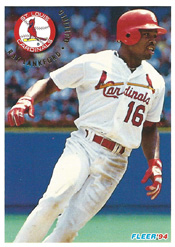
The incident became a prominent part of Cardinals lore.

On July 15, 1967, Clemente hit a ball that struck Gibson and fractured a bone in his right leg.

Unaware of the severity of the injury, Gibson remained in the game and pitched to three more batters before collapsing.

Many predicted the injury, which would sideline Gibson for almost two months, would ruin the Cardinals’ championship hopes.

Instead, the Cardinals pulled together and went on to win the 1967 National League pennant and World Series title.

Back off

Clemente, a career .317 hitter, batted .208 (26-for-125) with 32 strikeouts against Gibson.

In his book “Stranger to the Game,” Gibson said of Clemente, “I always threw at him. He swung way too hard against me, flinging himself at the ball and spinning around in the batter’s box like he was on the playground. I had to demonstrate to him I was no playground pitcher. To that end, I made a point of throwing at least one fastball in his direction nearly every time he came to the plate.”

(In the book “Voices From Cooperstown,” pitcher Robin Roberts said of Clemente, “He was the most unorthodox good ballplayer I ever saw … When he swung, he’d lunge and hit bad balls … He really looked less like a ballplayer than anyone I’ve ever seen … The only thing that made him look sensational was the results … but everything he did was an effort. Nothing was graceful or smooth.”

Gibson said he liked Clemente and learned to laugh at his antics.

“It was virtually impossible to ignore him because he was always talking,” Gibson said. “Usually, it was to complain about how much his back or his shoulder or some other thing was hurting him. Then he would step in the batter’s box and swing so hard that the flagsticks on top of the stadium would bend.”

Just tape it

The Pirates went hitless in the first three innings against Gibson on July 15, 1967, in St. Louis. Clemente, leading off the fourth, hit a ball that rocketed straight toward Gibson and struck him on the shin.

“All my weight is on my right foot on my follow through,” Gibson said to the St. Louis Post-Dispatch. “That’s why I couldn’t get out of the way of the ball. I couldn’t even lift my foot because the weight was on it.”

The force of the blow knocked down Gibson. Trainer Bob Bauman rushed to the mound and sprayed ethyl chloride on Gibson’s leg. “He advised me to take a look,” Gibson said. “I saw what he saw _ a dent in the skin the shape of a baseball.”

Clemente’s smash cracked Gibson’s fibula, a bone in the lower part of the leg.

Gibson, though, didn’t feel much pain. “In this type of injury, there is shock immediately and no pain,” said Cardinals team physician Dr. I.C. Middleman.

Said Gibson: “It was odd that I couldn’t feel where I had been struck, but because I couldn’t feel it I wasn’t particularly worried. I told Doc (Bauman) to put a little tape on it and let me get back to work.”

Now it’s broke

Gibson threw some practice pitches and declared himself fit to continue. “While it was true I didn’t surrender easily to pain or injury, at the time I didn’t fully realize what I was doing,” Gibson said. “I assumed I had picked up a hell of a contusion.”

Pirates slugger Willie Stargell told the Atlanta Constitution, “You could hear the leg pop. I knew something was wrong, but Gibson stayed in.”

When play resumed, Gibson walked Stargell and got Bill Mazeroski to fly out to center. The next batter, Donn Clendenon, worked the count to 3-and-2.

“I tried to put a little extra on the payoff pitch,” Gibson said.

As the pitch sailed outside the strike zone for ball four, Gibson collapsed.

“Initially, the bone had been fractured, but not separated,” Gibson said. “It was only when I came down on it so hard (on the last pitch) _ my motion concentrated a lot of weight and spinning momentum on my right leg _ that it broke cleanly in two. If that hadn’t happened, I might have continued the season uninterrupted.”

Said Middleman: “He has a high threshold for pain. You or I would have been writhing from the pain.”

Setting an example

Gibson was taken to a hospital and his leg placed in a cast. “At the hospital, he didn’t even want a shot,” Middleman told The Sporting News. “All we gave him was a little codeine.”

The Pirates won the game, 6-4, cutting the Cardinals’ lead over the second-place Cubs and Reds to four. Boxscore

After witnessing Gibson’s will and determination, Cardinals pitchers who might have complained about minor ailments or tiredness felt inspired to push forward.

The Cardinals were 36-19 during the time Gibson was sidelined. Nelson Briles and Dick Hughes each won seven of nine decisions during Gibson’s absence; Steve Carlton won five of seven.

When Gibson returned to action on Sept. 7, the Cardinals were 87-53, 11.5 games ahead of the second-place Cubs and Giants.

“I felt a little awkward with all the gushy rhetoric that accompanied the incident,” Gibson said, “but if it provided a constructive example for the ballclub, so be it.”

Gibson, 10-6 when injured, won three of four decisions after his return and finished 13-7. The Cardinals completed the season at 101-60, 10.5 ahead of the runner-up Giants.

In the ensuing World Series against the Red Sox, Gibson made three starts and earned wins in all.

Read Full Post »

In the home of the Big Red Machine, it was a Cardinal, Ray Lankford, who put on an unprecedented display of jaw-dropping power.

Cincinnati’s Riverfront Stadium was the venue for Reds teams that won four National League pennants and two World Series championships from 1970 to 1976. Those teams had sluggers such as Johnny Bench, Tony Perez and George Foster.

Yet, it was Lankford who became the first to hit two home runs in one game into the upper-level red seats in the fourth deck of the Cincinnati stadium.

Lankford achieved the feat on July 15, 1997. By then, the stadium had been renamed Cinergy Field.

Sonic boom

Lankford was in the cleanup spot in the St. Louis batting order against Reds starter Brett Tomko, a rookie right-hander.

In the first inning, with Danny Sheaffer on base, Lankford got a fastball on a 2-and-1 count and drove it 448 feet into the empty red seats in right field, becoming the first Cardinals batter to reach the upper deck since the stadium opened in 1970.

“When you hit a ball like that, it’s just a different feel and a different sound,” Lankford said to The Cincinnati Post. “The ball just jumps, like you’re hitting a golf ball with a bat.”

Reds catcher Joe Oliver told the St. Louis Post-Dispatch, “The crack of the bat was deafening.”

When Lankford came up again in the third inning, three fans scurried into the red seats in right. Batting with the bases empty, Lankford again got a fastball on a 2-and-1 count and propelled it 439 feet into the upper deck.

“Fastballs. Both belt-high. Right down the middle,” Tomko said to the Cincinnati Enquirer.

Said Cardinals manager Tony La Russa: “You’ve got a pitcher with good stuff and a hitter with full extension. That makes for some serious distance.”

Exclusive group

Until Lankford, only one player, Foster, had hit two upper-deck home runs at the stadium in one year, but no one, not even the Cardinals’ Mark Whiten, had hit two in one game. Whiten hit four home runs in a game at Riverfront Stadium on Sept. 7, 1993, but none reached the red seats.

Foster hit the most career upper-deck home runs (six) at the stadium.

Lankford became the sixth visiting player to hit a home run into the red seats. The others: the Expos’ Bob Bailey, the Pirates’ Dave Parker, the Phillies’ Greg Luzinski, the Mets’ Darryl Strawberry and the Rockies’ Dante Bichette.

“I don’t know how to pitch to Lankford,” Reds manager Ray Knight said. “I know one thing, you don’t pitch him anywhere he can get the fat part of the bat on it.”

When Lankford came to bat for the third time, in the fifth inning, Oliver turned to him and said, “I knew you were strong, but this is ridiculous.”

About 30 fans went into the red seats in right, hoping Lankford would launch another up there, but reliever Felix Rodriguez issued an intentional walk to him.

In his last two plate appearances that night, Lankford struck out and walked. Boxscore

At the time of Lankford’s feat, bopper Mark McGwire still was with the Athletics. (McGwire would be traded to the Cardinals two weeks later, on July 31, 1997.)

Asked by the Post-Dispatch whether Lankford’s clouts reminded him of McGwire, whom he had managed in Oakland, La Russa replied, “He reminds me of Ray Lankford.”

Previously: Mark Whiten, Josh Hamilton: Same feat, different path

Read Full Post »

Taking advantage of a pitching staff with the worst earned run average in the National League, the 1937 Cardinals capped a doubleheader sweep of the Phillies by scoring their most runs in an extra inning.

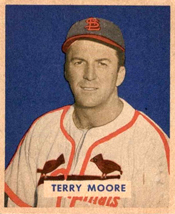
On July 16, 1937, Terry Moore hit a three-run home run to highlight an eight-run 10th inning in an 18-10 Cardinals victory. Boxscore

No Cardinals club has scored more in an extra inning, though the 2017 team came close to matching the feat.

On June 20, 2017, Yadier Molina and Tommy Pham each hit a two-run home run to highlight a seven-run 11th in an 8-1 Cardinals victory over the Phillies. Boxscore

Hitter’s haven

The 1937 Phillies had one of the worst pitching staffs all-time. The Phillies finished the season with a 5.05 team ERA, yielding 868 total runs. Only three of their pitchers posted an ERA better than 5.00: Claude Passeau (4.34), Orville Jorgens (4.41) and Bucky Walters (4.75).

Just before the 1937 Cardinals arrived in Philadelphia, the Phillies blew a 10-4 lead at home, giving up six runs in the ninth, and losing 11-10 to the Giants in 10 innings.

The Friday afternoon doubleheader between the Cardinals and Phillies drew a Ladies Day crowd of about 9,000 in sweltering conditions.

“It was a hot, muggy day,” wrote J. Roy Stockton of the St. Louis Post-Dispatch. “It is funny to hear people in Philadelphia talk about the St. Louis heat. You can breathe in St. Louis. In Philadelphia, when it is hot, the humidity creeps up and stifles you. It was that kind of a day.”

Walters started Game 1 for the Phillies and allowed a solo home run to Moore, a two-run home run to Joe Medwick and a double to Johnny Mize before he was relieved by Jorgens after retiring one batter.

The Cardinals scored five in the first _ four of the runs charged to Walters _ and five in the fifth off Jorgens, cruising to a 10-3 victory. Si Johnson pitched a complete game and earned the win for the Cardinals. Boxscore

It’s raining runs

Moore led off Game 2 by lofting a pop fly to George Scharein, a rookie shortstop. As Scharein made the catch, his cap fell off. When he reached for it, the ball slipped out of his glove. Moore, who hustled into second base, was ruled safe by umpire Bill Stewart.

Phillies fans, who thought Scharein had held onto the ball long enough for the play to be ruled an out, “threw pop bottles from the stands in the direction of Stewart,” the Post-Dispatch reported.

Trailing 6-5, the Cardinals scored five in the eighth _ two off Wayne LaMaster and three against Walters _ for a 10-6 lead, but the Phillies responded with four off Lon Warneke in the bottom half of the inning, tying the score at 10-10.

After Walters held the Cardinals scoreless in the ninth, St. Louis manager Frankie Frisch brought in the Game 1 winner, Si Johnson, to pitch the bottom half of the inning. The Phillies didn’t score and the game went to an extra inning.

In the 10th, the Cardinals scored three off Walters and five against Jorgens for an 18-10 lead.

“Singles, doubles and home runs blossomed quicker than worms on a concrete walk after a rainstorm,” wrote Stan Baumgartner of the Philadelphia Inquirer.

When Johnson sealed the victory with a scoreless 10th, he earned his second win of the day. Walters was the losing pitcher in both games, even though he had “more stuff than he ever showed before,” Stewart, the umpire, told The Sporting News.

Previously: How Cardinals, Reds kept their heads above water

Read Full Post »

« Newer Posts - Older Posts »