Feeds:
Posts
Comments

Archive for the ‘Hitters’ Category

In his most productive game for the Cardinals, Ken Reitz redefined the meaning of the Mendoza Line.
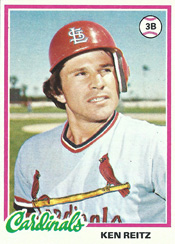
On June 28, 1977, Reitz had a career-high eight RBI against the Pirates in the second game of a Tuesday night doubleheader at St. Louis.

Reitz, the Cardinals’ third baseman, generated those RBI on three hits: a single and two home runs.

The first home run was a grand slam off starter Grant Jackson.

The second was a three-run shot off Mario Mendoza.

Pace setter

An infielder, Mendoza was making his first and only big-league pitching appearance.

As a hitter, Mendoza often had a season batting average of about .200. He eventually became the symbol of the minimum expected of a big-league batter. Today, a .200 batting average commonly is referred to as the Mendoza Line.

As a pitcher, the Mendoza Line is a 13.50 earned run average. That’s what he posted after facing Reitz and the Cardinals.

Let’s play two

In the first game of the June 28 doubleheader, Reitz had a single in four at-bats and the Cardinals won, 6-1.

Cardinals manager Vern Rapp offered to let Reitz sit out the second game _ “He’d been going so hard all season and it was hot,” Rapp explained to the St. Louis Post-Dispatch _ but Reitz wanted to play because the Pirates were starting Jackson, a left-hander. Reitz hit .282 against left-handers in his big-league career and .247 versus right-handers.

Rapp put Reitz in the No. 5 spot in the batting order.

After grounding out in the first inning, Reitz got a RBI-single off Jackson in the third, extending the Cardinals’ lead to 4-2. “The first RBI was the most exciting because it helped us get rolling,” Reitz said.

In the fourth, Reitz, batting with two outs, hit a high, inside pitch off Jackson _ “It was not in the strike zone,” Reitz said _ for the grand slam, putting the Cardinals ahead, 10-2.

“I didn’t even know how many guys were on base when I hit the grand slam because I was concentrating so much at-bat,” Reitz said.

Tough job

With the score 10-3, Pirates manager Chuck Tanner lifted Jackson after six innings. Wanting to rest an overworked bullpen staff, Tanner turned to Mendoza.

“We’ve had him throw batting practice,” Tanner said to United Press International. “We had five games in three days and figured this was a good time to use him.”

Mendoza told the Pittsburgh Press, “My dad used to be a pitcher in the semipros … He said pitching is a tougher life than to be a shortstop.”

Mendoza, a right-hander, pitched a scoreless seventh, getting Keith Hernandez to line out into an inning-ending double play.

In the eighth, Reitz faced Mendoza with runners on first and second, two outs. Mendoza threw a wild pitch, advancing the runners, Roger Freed and Tony Scott, to second and third.

Reitz pulled the next pitch, a breaking ball, down the line. The ball struck the corner of the foul pole for a home run, giving the Cardinals a 13-3 lead. Boxscore

“He’s got a surprisingly good curveball,” Reitz said. “He just threw one too many to me and I happened to hit it down the line. I usually just get doubles off those pitches.”

Reitz was the first Cardinals batter with eight RBI in a game since Augie Bergamo did it in Game 2 of a doubleheader against the Giants on July 4, 1945, at New York.

Reitz would finish the 1977 season with single-season career highs in home runs (17) and RBI (79).


Read Full Post »

During the 1940s, no baseball rivalry was more intense than the one between the Dodgers and Cardinals. The player who perhaps best exemplified that fervor was Joe Medwick.

From 1941-49, seven of nine National League pennants were won by either the Cardinals or Dodgers. Medwick, a power hitter and left fielder, had been a force for the Gashouse Gang Cardinals of the 1930s. After he was traded to the Dodgers in 1940, he helped them win the pennant in 1941.
In 1942, the Dodgers appeared headed to a successful defense of their title. They were 4.5 games ahead of the second-place Cardinals entering a five-game series against St. Louis at Brooklyn’s Ebbets Field.

In the series opener, on June 18, 1942, Medwick set the tone by targeting one of the Cardinals’ most popular players, shortstop Marty Marion, for a skewering.

Medwick’s roughhouse antics sparked a melee between the teams.

Vicious slide

A pair of effective left-handers, Max Lanier of the Cardinals and Larry French of the Dodgers, were the starting pitchers in Game 1.

With the Cardinals ahead, 2-1, Medwick led off the Dodgers’ half of the sixth inning and drew a walk.

Lanier’s pitch to the next batter, Dolph Camilli, eluded catcher Walker Cooper. The ball rolled about five feet from the plate, but Cooper got to it quickly. Medwick broke for second and Cooper threw a laser to Marion, who was covering the bag.

The ball got to Marion well before Medwick reached the base. As Marion prepared to apply a tag, Medwick slid with spikes high and crashed hard into the shortstop.

Medwick “tried to carve his initials on Marion’s Adam’s apple,” said John Kieran of the New York Times.

Medwick’s spikes gashed Marion’s arm.

As Medwick attempted to rise, Marion pushed down Medwick’s spikes with his glove and said something to him.

Medwick came up swinging and motioned for Marion to fight.

Wild fury

As Medwick squared off with Marion, Cardinals second baseman Frank “Creepy” Crespi tackled Medwick from behind and knocked him to the ground.

With Medwick on his back, Cardinals players piled on top of him.

Camilli and Dixie Walker were the first Dodgers to come to Medwick’s rescue.

Camilli grabbed Crespi and put a strangehold on him.

Walker threw a flying block at Cardinals third baseman Whitey Kurowski “that would have delighted the heart of the late Knute Rockne,” The Sporting News reported.

Ump’s delight

The fighting lasted for about two minutes. Though brief, the brawl was “as exciting as has been seen in the National League this season,” the St. Louis Post-Dispatch reported.

Walker injured his ankle in the melee, limped off the field and was removed from the game.

Medwick and Crespi were ejected by umpire Babe Pinelli.

Though Pinelli later blamed Medwick for instigating the incident by sliding with spikes high, the old-school arbiter added, “I like to umpire games like that … There is too little of that in baseball today.”

When play resumed, Camilli walked and the next batter, Johnny Rizzo, was sent sprawling by a brushback pitch from Lanier.

No other incidents occurred, but the free-for-all appeared to benefit the inspired Dodgers. They rallied and beat the Cardinals, 5-2. Boxscore

Afterward, Medwick said Dodgers manager Leo Durocher had told him not to discuss the incident, according to The Brooklyn Daily Eagle.

“I can’t talk,” Medwick said. “That’s my orders … Some time, I’ll tell you my side of that rumpus at second base, but meanwhile Leo is the skipper.”

The Dodgers won four of the five games in the series, extending their lead over the Cardinals to 7.5 games. The Cardinals, however, finished strong and won the pennant with a 106-48 record. The Dodgers ended two back at 104-50.

Read Full Post »

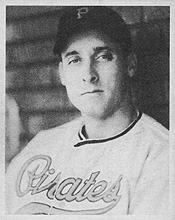
Johnny Rizzo, once a top prospect in the St. Louis system, had his best big-league game against the Cardinals, setting a record that lasted nearly 80 years.

Playing for the Pirates, Rizzo produced nine RBI versus the Cardinals in the second game of a doubleheader on May 30, 1939. That was the single-game record by a Cardinals opponent until Scooter Gennett of the Reds had 10 RBI against St. Louis on June 6, 2017.
Rizzo, a left fielder, achieved his feat with two home runs, two doubles and a single at Sportsman’s Park in St. Louis. He had gone hitless in four at-bats in the opener.

No vacancy

Rizzo, a right-handed batter, played five seasons (1933-37) in the Cardinals organization. He batted better than .300 each year, but never got called up to St. Louis.

In 1937, the Cardinals’ Columbus (Ohio) farm club had two top outfielders: Rizzo and Enos Slaughter.

Rizzo batted .358 with 209 hits in 150 games for Columbus. He had 38 doubles, 18 triples and 21 home runs.

Slaughter batted a league-leading .382 with 245 hits in 154 games for Columbus. He had 42 doubles, 13 triples and 26 home runs.

Both clearly were ready to play in the big leagues in 1938.

The Cardinals had two outfield mainstays: Joe Medwick in left and Terry Moore in center. That left one spot, right field, for either Slaughter or Rizzo. Cardinals executive Branch Rickey opted for Slaughter, rating him a better all-around player than Rizzo.

In October 1937, the Cardinals traded Rizzo to the Pirates for catcher Tom Padden, outfielder Bud Hafey and minor-league first baseman Bernard Cobb. Rizzo “was sought by several other clubs, notably the Cubs, but Rickey saw something in the Pittsburgh (offer) that appealed to him,” The Sporting News reported.

Rizzo had a better rookie season than Slaughter in 1938. Rizzo batted .301 with 23 home runs and 111 RBI for the Pirates. Slaughter batted .276 with eight home runs and 58 RBI for the Cardinals.

Pirates power

A year later, Rizzo was in a slump and his batting average was at .239 heading into the second game of the Memorial Day doubleheader against the Cardinals. A day earlier, Rizzo had hit into a triple play.

Facing starter Clyde Shoun, Rizzo had a RBI-single in the first, popped out to shortstop in the third and hit a three-run home run in the fifth. Rizzo added a single off Mort Cooper in the fifth.

With the score tied at 7-7 in the eighth, the Pirates had runners on second and third, none out, and Arky Vaughan at the plate. The Cardinals opted to give an intentional walk to Vaughan, loading the bases, and pitch to Rizzo.

Rizzo ripped a double off Curt Davis, clearing the bases and giving the Pirates a 10-7 lead. “The ball was hit with such force that it bounded off the wall, away from Joe Medwick and Pepper Martin,” The Pittsburgh Press reported.

In the ninth, Rizzo hit a two-run home run off Bob Bowman, capping a 5-for-6 performance in a 14-8 Pirates victory. Boxscore

Rizzo finished the 1939 season with a .261 batting average, six home runs and 55 RBI. He spent three more seasons (1940-42) in the big leagues with four teams: Pirates, Reds, Phillies and Dodgers.

Previously: Cards rookie Enos Slaughter set torrid extra-hit pace

Read Full Post »

When Jimmy Piersall made his Mets debut in St. Louis, the league and the opponent were new to him, but the ballpark was quite familiar.

On May 24, 1963, a day after he was acquired by the Mets from the Senators in a deal that paired one of the game’s most mercurial characters with baseball’s most inept team, Piersall played against the Cardinals in his first National League game.
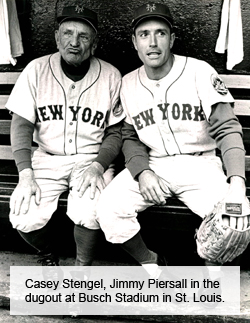
Piersall, batting leadoff and playing center field, was 1-for-4 with a walk against Bob Gibson at Busch Stadium. Piersall’s single drove in a run, but the Cardinals prevailed, 10-4.

Ten years earlier, while in the American League with the Red Sox, Piersall had his most productive game. He had six hits in six at-bats against the Browns in the opener of a doubleheader at Busch Stadium. Boxscore

Piersall, whose struggles with mental illness were detailed in the book and movie, “Fear Strikes Out,” was known as much for on-field antics and feuds with umpires as he was for his sterling outfield play.

When he joined the Mets and their rougish manager, Casey Stengel, in St. Louis, it was a match that attracted attention.

That’s entertainment

The Mets had released first baseman Gil Hodges so that he could become manager of the Senators. Piersall was sent to the Mets in return.

The Mets had opened the 1963 season with Duke Snider, 36, in center field. Snider soon was moved to a corner outfield spot and Jim Hickman, 26, took over in center. Hickman, too, was better at playing right or left. Piersall, 33, was a defensive upgrade.

“Piersall can play center field beautifully, which I hate to say has not been done for us,” Stengel said to The Sporting News.

The Mets were terrible. They had finished 40-120 in their inaugural season, 1962, and they were 16-25 when they got Piersall. Some suspected the move was made to keep fans and media interested in a team that couldn’t compete.

“I know he will be an attraction with the club and with the fans,” Stengel said.

Piersall understood that.

When he arrived at Busch Stadium and met with reporters, Piersall said, “Baseball is like show business. If I don’t hurt the club, I might do anything to entertain the fans. What’s wrong with that?”

Regarding his relationship with Stengel, Piersall told the Associated Press, “I only hope New York is ready for both Casey and me. Casey is one of my biggest boosters, but he baffles me. Case is beautiful, but I don’t always know what he’s talking about.”

As for his new team, Piersall said, “The Mets and their fans are helping to save baseball and they are keeping the writers in business and it is better than being in Russia.”

When photographers gathered to take photos of Piersall and Stengel together in the dugout, Piersall said to his manager, “I better not pose with you, Case, because I’m prettier than you are.”

Making an impression

In the Friday night opener at St. Louis, Piersall went 0-for-3 with a walk in his first four plate appearances against Gibson. In the eighth, with the Cardinals ahead, 8-3, Piersall singled, scoring Choo Choo Coleman. Boxscore

Asked his impressions of Gibson, Piersall said, “Gibson put one pitch right on the very edge of the plate for a strike. I turned to the catcher (Gene Oliver) and remarked, ‘If they keep on doing that in this league, I’ll starve to death.’ ”

Piersall started in center again the next day, May 25, and was 0-for-4 against Ray Sadecki and Harry Fanok.

On Sunday, May 26, Piersall started in the opener of a doubleheader and had three hits _ two singles and a double _ off Cardinals starter Curt Simmons. Piersall also successfully disputed an umpire’s call.

Ed Sudol ruled a ball hit to right by George Altman was trapped, not caught, by Hickman.

Piersall “sprinted from his center field post all the way to first base to exchange a few not too pleasantries with Sudol,” the Associated Press reported.

Crew chief Stan Landes overruled Sudol and called Altman out. Boxscore

Piersall didn’t start the second game. The Mets, suspecting the Cardinals were stealing signs, sent Piersall to the bullpen to watch the Cardinals’ first-base coach. “I couldn’t spot anything,” Piersall said.

In a letter to The Sporting News, a Cardinals fan, John T. Copeland of Piedmont, Mo., wrote, “Piersall hardly saw enough of the game to know the score, much less to discover any sign stealing. He was in arguments with fans during the entire game. I hope the Cards never have to hire a Piersall-type clown to draw crowds.”

Fun while it lasted

Two weeks later, on June 9, the Cardinals were in New York for a Sunday doubleheader with the Mets.

In the opener, the Mets led, 3-2, in the sixth when Piersall hit a two-run double off Simmons. Boxscore

Piersall didn’t start the second game, but he again made his presence known.

Between innings, while Mets catcher Norm Sherry was putting on his gear, Piersall went out to warm up the pitcher. Piersall piled dirt onto the plate before returning to the dugout. As umpire Ed Vargo dusted the dish, Piersall mocked him, making dusting motions with his cap and a towel, the St. Louis Post-Dispatch noted.

Piersall appeared in 40 games for the Mets and batted .194. On June 23, he hit a home run, the 100th of his big-league career, off the Phillies’ Dallas Green and backpedaled around the bases. Released in late July, Piersall returned to the American League with the Angels.

Previously: Cards were victims of historic homers by Gil Hodges

Read Full Post »

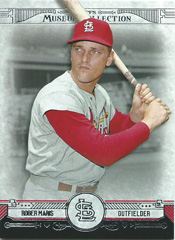
The first home run Roger Maris hit in St. Louis as a Cardinal was worth the wait.

On June 10, 1967, two months into his first Cardinals season, Maris hit a walkoff three-run home run in the 11th inning at Busch Stadium, giving St. Louis a 5-2 victory over the Dodgers.
The home run was Maris’ third for the Cardinals _ the first two occurred at New York and at Pittsburgh _ but was his first in his home ballpark since being acquired by St. Louis from the Yankees in December 1966.

Maris, who six years earlier had established a major-league single-season record with 61 home runs for the Yankees, no longer was a consistent power hitter, but he was a key member of a Cardinals club that would win the World Series championship.

His first Busch Stadium home run enabled the Cardinals to continue a hot streak that one week later would propel them into first place in the National League.

Stormy night

The Cardinals were 3.5 games behind the front-running Reds entering their Saturday night game against the defending NL champion Dodgers. Maris, batting .291, was held out of the starting lineup by manager Red Schoendienst. The Dodgers were starting a left-hander, Jim Brewer, and Maris did much better against right-handers.

Tornado warnings were issued in the St. Louis area that evening and a severe thunderstorm struck downtown St. Louis, delaying the start of the game 64 minutes and creating treacherous conditions in the outfield.

The Dodgers scored twice in the first inning off their nemesis, Larry Jaster, who had pitched five shutouts against them the previous year.

Brewer, primarily a reliever, held the Cardinals scoreless for six innings. “He told me he was tiring a little going into the seventh,” Dodgers manager Walter Alston said to the Pasadena Independent Star-News, “but you couldn’t take him out the way he was going.”

Curt Flood led off the Cardinals’ half of the seventh with a walk and Bobby Tolan lined a home run over the right-field wall, tying the score at 2-2.

Maris entered the game in the ninth as a pinch-hitter for Jaster and popped out to second baseman Ron Hunt. Maris stayed in the game, replacing Alex Johnson in right field, and Joe Hoerner relieved Jaster.

Extra innings

Phil Regan, who came in for Brewer in the eighth, held the Cardinals scoreless for three innings.

In the 11th, Alston brought in Bob Miller to pitch. Miller, a St. Louis native, had made his major-league debut in 1957 with the Cardinals and pitched for them in four seasons.

Tim McCarver led off the 11th against Miller with a double. Dal Maxvill attempted to advance McCarver with a bunt, but Miller fielded the ball and threw out McCarver at third.

With Maxvill at first and one out, Tolan singled.

That brought Maris to the plate against the right-hander.

Easy swing

Maris swung at a 2-and-2 pitch.

“I was just trying to avoid making an out,” Maris said. “I didn’t swing hard. I just wanted to meet the ball.”

Said Dodgers catcher John Roseboro: “That’s the way it looked when he swung. He just dropped his bat in front of the ball.”

Joe Hendrickson of the Pasadena newspaper wrote, “The ball sailed like a rocket over the fence and into the seats.”

Said Maris: “That was my most satisfying hit since coming to St. Louis.” Boxscore

The victory was part of a stretch in which the Cardinals won 15 of 17 and surged to the top of the NL standings.

“This Cardinals team reminds me of my Yankees days,” Maris told United Press International. “The Yankees at one time played for the big hit. The atmosphere is also something like we had in New York. In those days, we’d get some runs behind, but we knew we were going to win it.”

Previously: With last homer, Roger Maris helped Cards clinch title


Read Full Post »

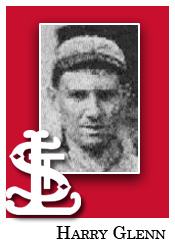
Harry Glenn was 28 and deep into a professional baseball career that included a stint with the Cardinals when he enlisted in the United States Army Air Forces during World War I. Soon after being assigned to the Aviation Mechanic Training School in St. Paul, Minn., Glenn contracted pneumonia and died, a month before the war ended.

Glenn is one of eight players who appeared in the major leagues and died while serving in the United States armed forces in World War I. He is the only one of the eight who played for the Cardinals.

According to the National Baseball Hall of Fame, the others, in alphabetical order, are Tom Burr, Harry Chapman, Larry Chappell, Eddie Grant, Newt Halliday, Ralph Sharman and Bun Troy.

Three Negro League players died while serving in the United States armed forces in World War I. In alphabetical order, they are Ted Kimbro, Norman Triplett and Pearl Franklyn Webster.

Career path

A native of Shelburn, Ind., near Terre Haute, Harry Glenn was 19 when he began his professional baseball career with the Vincennes (Ind.) Alices in 1910.

A left-handed batter and catcher, Glenn was 6-foot-1, 200 pounds. In 1913, the minor-league Akron Giants sold Glenn’s contract to the Cardinals, but he broke a leg soon after and sat out the season, according to the Louisville Courier-Journal.

The Cardinals sent Glenn to the St. Paul (Minn.) Apostles of the American Association in 1914 and he batted .267 in 104 games.

In 1915, Glenn made the Opening Day roster of the Cardinals as a backup to starting catcher Frank Snyder.

The 1915 Cardinals had intended to start the season with Snyder and Mike Gonzalez as their catchers after agreeing to a deal to acquire Gonzalez from the Reds, but the trade hit a snag and Gonzalez was in roster limbo while details were sorted out. That gave Glenn the opportunity to be the Cardinals’ reserve catcher.

In the lineup

On Opening Day, April 14, 1915, against the Cubs at Chicago, Snyder was hit on the right hand by a foul tip off the bat of Heinie Zimmerman and had to leave the game. Replacing Snyder, Glenn made his big-league debut and got his first hit, a single off starter Hippo Vaughn. The Cubs won, 7-2. Boxscore

With Snyder sidelined and Gonzalez still not cleared to join the Cardinals, Glenn started each of the next four games at catcher.

In his first start, April 15 against the Cubs, Glenn had a single, two walks and scored a run, helping the Cardinals to a 4-2 victory. The Cubs stole a base in their only attempt. Boxscore

The next day, April 16, the Cubs were successful in three stolen base attempts against Glenn and Cardinals pitcher Dan Griner. “The fault was evidently not wholly Glenn’s for (manager Miller) Huggins gave Griner … a calling for allowing the men too big a lead,” the St. Louis Star-Times reported. Glenn got his first RBI, but the Cubs won, 4-2. Boxscore

On April 17, the Cardinals won the finale of the four-game series, 7-4, and Glenn contributed two singles. Boxscore

Reds run wild

The Cardinals’ next game was against the Reds at Cincinnati on April 18 and Glenn again started at catcher.

The Reds won, 6-2, and had seven stolen bases against Glenn and Cardinals ace Bill Doak. Boxscore

“After watching the woeful exhibition of Harry Glenn … the Cardinals are more anxious than ever to obtain (Gonzalez),” the St. Louis Post-Dispatch declared.

The Star-Times asked: “Was it the great base running of (the Reds) or was it the poor catching of Glenn?”

While acknowledging the Reds’ rampage “looks especially bad for Glenn,” the Star-Times added, “The big fellow seems to possess all the qualifications for a good receiver and perhaps the finishing touches will come with a little more experience. His arm is as good as any, but he has not mastered the trick of getting rid of the ball with any great rapidity.”

Brief stay

Snyder returned to the Cardinals’ lineup the next day, April 19, and Glenn was relegated to the bench. The deal for Gonzalez was resolved and he made his Cardinals debut on May 6. Glenn got a pinch-hit appearance on May 12 before being demoted to St. Paul.

Glenn batted .313 (5-for-16) with three walks in six games for the 1915 Cardinals, but base runners were successful on all 11 stolen base attempts against him.

With St. Paul in 1915, Glenn batted .296 in 63 games. He also spent the next three seasons, 1916-18, with St. Paul.

Glenn could have continued playing baseball, but with World War I raging, he enlisted in the mechanical branch of aviation late in the summer of 1918, according to The Indianapolis News.

Deadly disease

In October 1918, Glenn became ill and was admitted to a hospital. A victim of an influenza pandemic, Glenn developed pneumonia.

According to the National Institutes of Health, the majority of deaths during the influenza pandemic of 1918-1919 were caused by bacterial pneumonia following influenza virus infection. The pneumonia developed when bacteria invaded the lungs on a pathway created when the virus destroyed cells that line the bronchial tubes and lungs.

Glenn was in the hospital for a week. His father, Thomas, left Indiana on a Thursday to be at his son’s bedside in Minnesota.

“A telegram was received Friday saying he was better and Saturday morning a telegram was received saying he was dead,” The Indianapolis News reported.

According to Stanford University, the influenza pandemic of 1918-1919 killed between 20 million and 40 million people worldwide. More people died of influenza in a single year than in four years of the Black Death Bubonic Plague of 1347-1351.

Glenn was survived by his parents, two sisters and a brother.

On Nov. 11, 1918, almost a month to the day Glenn died, Germany signed an armistice agreement with the Allies, ending the fighting.

Previously: Mike Gonzalez became 1st Cuban manager in majors

Read Full Post »

« Newer Posts - Older Posts »