Feeds:
Posts
Comments

Archive for the ‘Hitters’ Category

Desperate for a quality shortstop, the Cardinals turned to Ruben Amaro and gave him his first opportunity to play in the major leagues. Amaro fielded splendidly but didn’t hit well enough and the Cardinals quickly gave up on him.

Amaro played one season for the Cardinals. Traded to the Phillies after the 1958 season, he went on to have a long career as a player, coach and scout.

Though Amaro’s time with the Cardinals was relatively short, it covered a lot of ground, beginning in Mexico and ending in Japan.

Career choice

Born in Mexico in 1936, Amaro was the son of Santos Amaro, a powerful hitter who played baseball in Cuba in winter and in Mexico in summer.

As a teen-ager, Ruben Amaro caught the attention of the Cardinals when he played for the Mexican team in the Central American Games. The Cardinals offered him a contract in 1954.

At the time, Amaro, 18, was considering a career in engineering and his older brother, Mario, wanted to be a doctor, the St. Louis Post-Dispatch reported. Amaro saw baseball as a way to help pay for his brother’s education.

“All the time my father played baseball, he didn’t make much money,” Amaro told Jack Rice of the Post-Dispatch. “Maybe I can. I play baseball, Mario goes to medical school.”

The Cardinals sent Amaro to their Class C team in Mexicali, a city situated on the border of Mexico and the United States. Amaro played two seasons for the Mexicali Eagles, batting .285 in 1954 and .305 with 18 home runs in 1955.

Racial prejudice

Promoted to Class AA Houston in 1956, Amaro “arrived with the reputation of being one of the finest fielders in baseball. Possessing a great arm, sure hands and fine speed, Amaro has not disappointed,” The Sporting News reported.

Playing shortstop, Amaro batted .266 with 64 RBI in 1956.

The Cardinals assigned him to Houston again in 1957. When the club went to Shreveport, La., for a series in May, Amaro wasn’t allowed to play “because of the Louisiana racial law,” The Sporting News reported.

Humiliated, Amaro considered quitting but stuck with it after a talk with his father, according to a biography by the Society for American Baseball Research.

Climbing the ladder

Houston won the 1957 Texas League championship and faced Atlanta, the Southern Association champion, in the Dixie Series.

Though Amaro hit .222 during the season, he provided the key hit in the Dixie Series. His two-run home run off Don Nottebart in the seventh inning lifted Houston to a 3-1 series-clinching victory in Game 6.

In 1958, Amaro was assigned to the Class AAA Rochester Red Wings. St. Louis that season primarily started Eddie Kasko at shortstop. In July, when Kasko’s batting average dropped to .195, the Cardinals benched him and called up Amaro, even though he was batting .200 for Rochester.

Stan lends a hand

Amaro got to St. Louis on July 15 and was named a starter by manager Fred Hutchinson for that night’s game against the Braves. “His name was in the lineup card as soon as his foot was in the door,” the Post-Dispatch reported.

The newspaper cautioned that Amaro “is well known to the Cards as a strong fielder but a weak hitter. His batting is the sorrow of his father, Santos Amaro.”

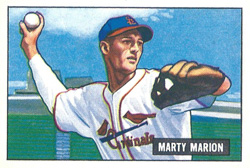
Sports editor Bob Broeg suggested Amaro’s arrival to play shortstop “provides just another chapter in the club’s almost constant trouble at the key defensive position.” With the exception of Marty Marion in the 1940s, the Cardinals “rarely have known satisfaction at a post which ranks second to none in defensive importance,” Broeg wrote.

In his book “Stan Musial: An American Life,” author George Vecsey said the Cardinals issued Amaro a pair of uniform pants at least two sizes too big. When Musial saw the rookie looking awkward in the baggy uniform, he said to clubhouse attendant Butch Yatkeman, “Would you get this young man a pair of pants so he can play like a major leaguer?”

When Amaro stepped onto the Busch Stadium field for the first time, he timidly watched the Cardinals take batting practice. Musial called out to the players, “He’s playing today. Let him have some swings.”

Amaro was forever grateful to Musial for his kindness.

Good glove

At shortstop that night, Amaro went hitless in two at-bats against the Braves’ Joey Jay before being lifted for pinch-hitter Wally Moon, but his fielding impressed.

“After two easy fielding chances, his third was a hard-hit ball that made him range far toward third base and deeply,” the Post-Dispatch observed. “It is a testing place for a shortstop’s arm and he met the test well.” Boxscore

The next night, Amaro got his first big-league hit, a double off future Hall of Famer Warren Spahn. Boxscore

Amaro produced six hits in his first 18 at-bats (a .333 batting average) for the Cardinals, but struggled after that.

In 40 games, including 21 starts at shortstop, Amaro batted .224 for the 1958 Cardinals. He hit .364 (8-for-22) against left-handed pitchers and .167 (9-for-54) versus right-handers.

Strong resume

After the 1958 season, Amaro took part in a series of exhibition games the Cardinals played on a goodwill tour of Japan.

When the club returned home, Amaro was dealt to the Phillies for outfielder Chuck Essegian on Dec. 3, 1958. “I cried when they traded me,” Amaro said.

After a season in the minors, Amaro played for the Phillies from 1960-65. He won a NL Gold Glove Award in 1964. Amaro also played for the Yankees (1966-68) and Angels (1969).

After his playing career, Amaro was a scout, minor-league manager, executive and big-league coach.

His son, Ruben Amaro Jr., a Stanford University graduate, played in the big leagues for eight years (1991-98) as an outfielder with the Angels, Phillies and Indians. He was general manager of the Phillies from 2009-2015.

Read Full Post »

The Cardinals hoped Brian Jordan would spend the 1992 season in the minor leagues and get the at-bats he needed to continue his development as a baseball player. Instead, two games into their season, the Cardinals promoted Jordan and put him into their everyday lineup as the right fielder.

On April 8, 1992, Jordan made his big-league debut and drove in four runs for the Cardinals against the Mets at St. Louis.

Three months later, an overmatched Jordan would be back in the minor leagues.

However, his early-season experience with the 1992 Cardinals wasn’t for naught. Jordan proved he had the potential to succeed in the big leagues. That spurred him to make a fulltime commitment to baseball and end his professional football career.

Getting close

Jordan was selected by the Cardinals as a supplemental pick between the first and second rounds of the June 1988 amateur baseball draft. He split his time in 1989, 1990 and 1991 playing baseball in the Cardinals’ minor-league system and playing football as a defensive back for the NFL Falcons.

In 1991, Jordan batted .264 in 61 games for Class AAA Louisville. When he reported to spring training in 1992, Jordan was hoping to earn a spot on the Cardinals’ Opening Day roster, even though he still was considering playing football for the Falcons that year.

Jordan had a good Grapefruit League season, batting .292 with seven RBI, but with St. Louis planning to go with a starting outfield of Pedro Guerrero in left, Ray Lankford in center and Felix Jose in right, it was determined Jordan should play every day in Louisville.

On April 1, 1992, Cardinals manager Joe Torre told Jordan, 25, he wouldn’t make the Opening Day roster.

“He took it all right,” Torre said to the St. Louis Post-Dispatch. “I told him, ‘You’re really close. You could make the team, but you couldn’t play and we want you to play, to get some at-bats.’ I think he understood. He shook my hand and thanked me for the opportunity.”

Said Cardinals general manager Dal Maxvill: “He’s got an awful lot of confidence. He’s not afraid of anything. You’ve seen him fooled, taking one-hand swings _ and that’s an adjustment he’ll have to make. He knows he has to play every day. If he stayed here, he’d be sitting and that wouldn’t help his development at all.”

Call for help

Five days later, on April 6, 1992, the Cardinals opened the regular season at home against the Mets. Milt Thompson started in right field instead of Jose, who had strained his right hamstring.

The next night, Cardinals first baseman Andres Galarraga broke his right wrist when hit by a pitch from Wally Whitehurst.

With Jose and Galarraga headed for the disabled list, the Cardinals reversed course and called up Jordan. He arrived in St. Louis the morning of April 8 and was put in the lineup for that night’s game against the Mets.

Torre shifted Guerrero from left field to first base and inserted Bernard Gilkey in left field and Jordan in right.

“Jordan is going to contribute a lot and fill in well in the outfield,” said Cardinals third baseman Todd Zeile.

Good game

Torre placed Jordan in the fifth spot in the batting order, behind Guerrero and in front of Gilkey.

In his first big-league at-bat, in the first inning against Sid Fernandez, Jordan struck out on a 2-and-2 fastball.

Two innings later, facing Paul Gibson, Jordan stroked a two-run single off the glove of third baseman Bill Pecota and swiped second.

After Gibson struck him out in the fifth, Jordan contributed a RBI-double off Mark Dewey in the sixth and a RBI-groundout in the eighth. The Cardinals won, 15-7. Boxscore

Learning curve

Torre kept Jordan in the lineup, even though the rookie batted .197 (15-for-76) in April. When Jose came off the disabled list, Jordan got starts in left and center.

After batting .281 (16-for-57) in May, the Cardinals in June gave Jordan a $2.3 million three-year contract, with the stipulation he quit playing football.

After agreeing to the deal, Jordan went into a slump and began to press. It didn’t help that Falcons coach Jerry Glanville kept calling Jordan, trying to convince him to come back to football, according to the Post-Dispatch.

On July 12, the Cardinals returned Jordan to Louisville. He was batting .207 for St. Louis and he had more strikeouts (48) than hits (40).

“He didn’t take it very well,” Torre said of Jordan’s reaction to the demotion. “He was unhappy and mad, but he wasn’t disrespectful. He’s young. He’s impatient … He’s torn and distracted and he has to get himself back on track and get his confidence back. He’s not the same aggressive player we had earlier in the year.”

After several stops and starts, Jordan established himself as the Cardinals’ everyday right fielder in 1995.

In seven years (1992-98) with St. Louis, Jordan batted .291, with 671 hits in 643 games. He became a free agent after the 1998 season and signed with the Braves.


Read Full Post »

What began as the feel-good story of Cardinals spring training dissolved into a feud between comeback hopeful Andy Van Slyke and manager Tony La Russa.

The rift, just as the 1997 Cardinals were launching into their season, was created by miscommunication, overreaction and ego from both sides.

Van Slyke, who had come out of retirement in a bid to earn a job as a Cardinals utility player, batted .545 in spring training in 1997 before being sidelined by a leg injury. He wanted assurances he would have a spot on the active roster when he healed. The Cardinals refused to make that kind of commitment.

That led to a war of words between Van Slyke and La Russa.

Versatile talent

Plagued by recurring back pain, Van Slyke retired after playing the 1995 season with the Orioles and Phillies.

A first-round pick of the Cardinals in the 1979 draft, Van Slyke made his major-league debut with St. Louis in 1983. He played 69 games in the outfield, 30 at third base and nine at first base.

In 1984, Cardinals manager Whitey Herzog again used Van Slyke in the outfield (81 games) and at third base (32 games) and first base (30 games).

Sticking primarily to the outfield, Van Slyke’s best Cardinals seasons were 1985 (25 doubles, 13 home runs, 34 stolen bases) and 1986 (23 doubles, 13 home runs, 21 stolen bases).

On April 1, 1987, the Cardinals traded Van Slyke, catcher Mike LaValliere and pitcher Mike Dunne to the Pirates for catcher Tony Pena. In eight years (1987-94) with the Pirates, Van Slyke won a National League Gold Glove Award five times for his outfield defense and three times was named an all-star.

Comeback candidate

After his retirement, Van Slyke, who continued to reside in St. Louis, spent 1996 as a baseball analyst for ESPN and did a radio show. With his back feeling better, Van Slyke began working out, hoping to play again.

In February 1997, Rick Hummel of the St. Louis Post-Dispatch reported La Russa had invited Van Slyke to Cardinals spring training camp at St. Petersburg, Fla., to compete for a job.

“It’s intriguing,” Van Slyke said. “I’ve always wanted to end my career with a Cardinals uniform on.”

A week later, the Cardinals signed Van Slyke and another utilityman candidate, former Indians slugger Cory Snyder, to minor-league contracts.

Third base training

When Van Slyke, 36, arrived at Cardinals camp, he was given a locker between those of pitcher Dennis Eckersley, 42, and outfielder Willie McGee, 38. “They’re trying to make me feel young,” Van Slyke said.

Cardinals coaches Carney Lansford, an all-star third baseman for La Russa with the Athletics, and Mark DeJohn, a former Tigers infielder, were assigned to work with Van Slyke. The Cardinals wanted to see whether he could be a backup to Gary Gaetti at third base.

“You can’t just take a guy from the outfield and stick him at third base,” Lansford said. “But given the proper amount of time and the right instruction he could have a chance.”

Van Slyke said of playing third base, “I’m better than I was 11 years ago.”

Replied Lansford: “He’s got a long way to go.”

Big bat

What Van Slyke still could do best was hit.

In his first exhibition game, Van Slyke delivered a RBI-single off Reds reliever Jeff Shaw. “That was a professional at-bat, a big-league at-bat,” La Russa gushed.

Van Slyke produced 11 hits in his first 20 at-bats.

“He’s shown that his talent is alive and kicking,” said La Russa.

Said Van Slyke: “My biggest concern was to get a fair shot and I’ve gotten that. Even if I don’t make the team, there will be absolutely no animosity toward Tony or this organization. This organization owes me nothing. I owe the Cardinals and baseball everything.”

On March 22, Van Slyke tore a muscle in his left calf.

Hummel wrote that Van Slyke “would have made the club” if he hadn’t been injured.

Next step

On March 26, needing to set their roster as they prepared to leave Florida, the Cardinals told Van Slyke to remain at training camp and work on getting healthy.

“When I’m ready, there’s only one place I want to play _ and that’s not extended spring training or (Class AAA) Louisville,” Van Slyke said.

La Russa indicated Van Slyke likely would need to accept a minor-league rehabilitation assignment before he could be considered for a spot on the Cardinals’ roster.

“We have to see if he really wants to do this,” La Russa said. “He wants some guarantees, but there are no guarantees in this game. He has to decide if he wants to take his best shot, with no guarantees.”

Go home

On the eve of the Cardinals’ April 1 season opener, Van Slyke, working out in Florida, complained to the Post-Dispatch about his status.

“I’d like to have some communication with (general manager) Walt Jocketty and Tony La Russa,” Van Slyke said. “Communication with this new group is something that needs to be worked on … Right now, a lukewarm response would be great. At least I’d be getting one.”

Van Slyke’s comments irked La Russa, who, after stewing for a couple of days, delivered a salvo.

“That’s just not accurate,” La Russa told Hummel. “I talked to him Wednesday or Thursday before we left (Florida). I think the problem is he’s not hearing what he wants to hear.

“If he wants communication and he needs certainty, he can go home … The Cardinals don’t need to be criticized for handling his situation. He hasn’t had any communication? Well, my communication is to go home. It was all explained to him. If he can’t understand that, then go home. What he said was extremely disappointing. It just shocked me.”

End of the line

With his wife about to deliver a baby, Van Slyke returned to St. Louis and waited. By the end of April, it was clear Van Slyke’s bridges had been burned.

“I don’t think there’s any more interest from their point of view,” Van Slyke said of the Cardinals.

Said La Russa: “There are a lot of things he needs to do before he comes here that he hasn’t shown a willingness to do.”

Van Slyke’s comeback bid had ended.

Previously: How Andy Van Slyke amazed Jose Oquendo

Read Full Post »

Clearly a believer in the Mark Twain adage of “Never let the truth stand in the way of a good story,” Bob Gibson told a terrific tale about the indignity of having Cardinals teammate Dal Maxvill pinch-hit for him. Problem is, it never happened.

Toward the end of an interview published in the March 11, 2017, St. Louis Post-Dispatch, Gibson was asked by Rick Hummel, “Worst experience in baseball?”

The Hall of Fame pitcher responded by spinning a story about the time manager Red Schoendienst called upon Maxvill, the light-hitting shortstop, to bat for Gibson.

“My worst experience in baseball was when Red had Maxvill pinch-hit for me,” Gibson said. “I was so mad. I sat on the bench and Maxie swung and missed a couple of pitches and then he popped up. I walked past Red and said, ‘Don’t ever do that again.’ I took a shower and went home.”

Either Gibson, a noted prankster, was playing a gag on Hummel, or the passage of time clouded the memory of the 81-year-old Cardinals legend.

Don’t blame Dal

The facts: Maxvill was not a successful pinch-hitter, but he never batted for Gibson in either a regular-season or postseason game.

Maxvill made 12 plate appearances as a big-league pinch-hitter, according to the reliable Web site retrosheet.org. He was 0-for-11, with a walk.

Gibson didn’t pitch in any of the 12 games Maxvill appeared as a pinch-hitter.

Maxvill made six pinch-hit appearances _ three in 1962 and three in 1963 _ when Johnny Keane was Cardinals manager. He made two pinch-hit appearances with the 1972 Athletics under manager Dick Williams.

Only four of his 12 pinch-hit appearances took place for the Cardinals when Schoendienst was manager. He had one in 1965, two in 1971 and one with the 1972 Cardinals before he was traded to the Athletics.

No Gibson sub

The four times Schoendienst sent Maxvill to pinch-hit resulted in:

_ Reached on an error as pinch-hitter for pitcher Ray Washburn on June 16, 1965. Boxscore

_ Grounded out to shortstop as pinch-hitter for pitcher Bob Chlupsa on June 4, 1971. Boxscore

_ Walked intentionally as pinch-hitter for pitcher Moe Drabowsky on June 8, 1971. Boxscore

_ Struck out as pinch-hitter for injured shortstop Dwain Anderson on Aug. 15, 1972. Boxscore

Only once did Maxvill pop out as a Cardinals pinch-hitter. That took place in his major-league debut on June 10, 1962, when Maxvill, batting for pitcher Bobby Shantz, hit a pop-up to Giants pitcher Billy O’Dell. Boxscore

This scenario fits

Perhaps Gibson was confusing Maxvill with Dick Schofield.

In 1968, Schofield was Maxvill’s backup at shortstop. Schofield, a .227 career hitter, batted .220 for the 1968 Cardinals.

On April 20, 1968, Schoendienst sent Schofield to bat for Gibson in the ninth inning.

Schofield popped out to third.

Gibson couldn’t have been happy. The Cubs won, 5-1, making Gibson winless in three starts. The Cardinals scored a total of seven runs in those three games.

Though he made 11 pinch-hit appearances for the 1968 Cardinals, Schofield never would bat for Gibson again.

Gibson would go on to have his most magnificent season in 1968, producing a 1.12 ERA and 28 complete games in 34 starts for the National League champions.

Gibson in a pinch

Maxvill has a career .217 batting average; Gibson, .206.

Gibson was more successful than Maxvill as a pinch-hitter.

In 14 career pinch-hit appearances for the Cardinals, Gibson produced three hits, two walks and a sacrifice bunt.

In 13 of those pinch-hit appearances, Gibson batted for a pitcher.

The exception was on May 27, 1966, when Gibson was Schoendienst’s choice to be a pinch-hitter for left fielder Bobby Tolan. Batting with a runner on third, one out and the Cardinals trailing by a run against the Reds, Gibson struck out against reliever Billy McCool. Boxscore

Read Full Post »

Prompted by his wife, Cardinals pitcher Dizzy Dean confronted a critic and initiated an argument that escalated into a brawl inside a crowded hotel lobby.

The principals in what became known as the Battle of Tampa were Dean, teammate Joe Medwick and journalists Jack Miley of the New York Daily News and Irv Kupcinet of the Chicago Daily Times.

Though the fisticuffs were real, the biggest blows may have been those that inflicted bruises to the egos of the participants.

The melee occurred on April 2, 1937, at the Tampa Terrace Hotel after the Cardinals lost to the Reds in a spring training game.

The seeds for the showdown were sown about a month earlier.

Money matters

Holding out for a more lucrative contract offer, Dean didn’t report when the 1937 Cardinals opened spring training camp at Daytona Beach, Fla.

Miley, a columnist, scolded the pitcher. According to The Sporting News, he wrote: “For a guy who was picking cotton for 50 cents a day a few years ago, Diz has an amusing idea of his own importance.”

While Dean stayed with his wife Patricia at their house in Bradenton, Fla., during the contract holdout, journalists camped out in the town, hoping for comments from the colorful Cardinals ace.

In “Diz,” a 1992 biography of Dean, author Robert Gregory wrote that when reporters cornered Dizzy and his wife at a post office, seeking an interview, Patricia “cursed them and stomped to the car, honking the horn every few seconds until he joined her.”

When Dizzy later agreed to pose for news photographers, Patricia kept the cameramen waiting five hours before allowing her husband to cooperate.

Miley went on the attack in his column. According to Gregory, Miley called Patricia “a plump, dominating cotton queen” and described Dizzy as a “hen-pecked, fat-between-the-ears sharecropper.”

Dizzy shrugged off such remarks, Gregory said, but Patricia vowed revenge.

War of words

When the Cardinals played the Reds at Tampa, Patricia spotted Miley at the ballpark. After the game, the Cardinals went to the hotel and, still in uniform, gathered in the lobby, awaiting room keys. Most of the Cardinals carried their spikes to keep from tearing up the lobby carpets.

Dizzy and Patricia were the first from the Cardinals group to get a room key. As they entered the elevator, Patricia saw Miley in the lobby _ just as Miley and Kupcinet emerged from the hotel bar, according to Gregory _ and urged her husband to confront the writer.

In the lobby were 18 Cardinals, about 20 other hotel guests and some hotel employees. Dean stepped out of the elevator and approached Miley. Piecing together accounts written by Miley, Gregory, the St. Louis Post-Dispatch and United Press, here is what happened next:

Dizzy: “Is your name Miley?”

Miley: “Yes.”

Dizzy: “I wish you would not write those things about me. You said some terrible things about me.”

As the conversation continued, 10 of Dizzy’s teammates gathered around him.

Dizzy: “You $125-a-month writers make me sick. Don’t you never mention me and my wife in one of them damned columns of yours again.”

Miley: “That’s a pleasure. I hate to write about bush leaguers anyway.”

Dizzy: “Remember what I told you. I warned you. That’s from the horse’s mouth.”

Miley: “I say it’s from a hillbilly horse’s ass. What are you going to do about it?”

Dizzy: “I’ll show you…”

Hit or miss

Kupcinet, a 6-foot, 195-pound former college quarterback at North Dakota, stepped between Dean and the rotund (5 feet 6, 250-pound) Miley.

“Why don’t you pick on somebody your own size,” Kupcinet said to the pitcher.

Dean replied: “Stay out of my way, you New York Jew.”

Dizzy unleashed a wild punch _ “a ladylike left hook,” Miley called it _ that either missed or grazed Miley’s head.

Mike Ryba, a Cardinals pitcher, reached over Dean’s shoulder and swung his spikes, cracking Miley in the forehead and opening a cut above his right eye. The blow knocked Miley to the floor.

As Kupcinet reached for Dean, Medwick landed a crunching punch to Kupcinet’s left cheekbone.

Kupcinet went sprawling into a potted palm tree “that swooshed backward and started a chain reaction, knocking down floor lamps, plants and four other palms,” Gregory wrote.

Dean scampered for cover under an overturned sofa.

As other players moved in on the fallen writers, Mike Gonzalez, a Cardinals coach, stopped the brawl from continuing.

In the Post-Dispatch, J. Roy Stockton wrote of the spectacle, “Cigar girls and bell boys were very much excited, but no serious harm had been done.”

Tough talk

As Dean strutted back to the elevator, he crowed, “There ain’t no doubt about it _ It’s still the Gashouse Gang.”

Kupcinet shouted at Dean: “I’ll fight you any place, any time you want to. Just name it.”

Miley said to Cardinals manager Frankie Frisch: “What’s the matter, Francis, can’t you control those ballplayers of yours?”

Replied Frisch: “No, I can’t.”

Kupcinet told a colleague, “Dean started the whole trouble, but when the fight started he didn’t get in it himself. They’re the Gashouse Gang all right, but they won’t fight unless they know they’ve got the edge on you.”

Post mortem

The Cardinals paid the hotel for the damages, Gregory reported.

Ford Frick, National League president, said he wasn’t inclined to take action because the fight didn’t occur on the baseball field.

Among media reaction:

_ Joe Williams, columnist for the New York World-Telegram, said of Patricia Dean: “There’s a lady for you, chums. I wouldn’t say she is hard-bitten, but Mr. Miley is lucky she wasn’t in there swinging.”

_ The Sporting News editorialized: “There is no defense for ganging up on a man. Only mobs, hysteria-crazed and cowards adopt that method … The Cardinals players who participated in that hotel scene have put themselves in the position of public scorn.”

A week later, Dizzy told the Associated Press he was “sorry” about the incident. “It’s the first time I ever had any trouble with a sports writer and you can take it from ol’ Diz it will be the last time,” he said.

In October 1937, The Sporting News reported, Miley left the New York Daily News “after a disagreement with Jimmy Powers, sports editor.” Miley joined King Features syndicate and then the New York Post.

Dean was traded to the Cubs in 1938. Kupcinet, still with the Chicago Daily Times, and Dean patched their differences, posed for a Page 1 photo and became friends, Gregory said.

In retelling the story, Dean denied he’d been in the fight and blamed Medwick for instigating it. In response, Medwick, in a letter to the Chicago Daily Times, wrote: “Dean’s right in one respect. He wasn’t in the fight once punches started to fly. He usually does a crawfish act when that happens.”

Kupcinet began writing a celebrity gossip column for the Chicago Daily Times in January 1943. It was widely read and he became an influential figure in Chicago. Kupcinet continued writing the column for the Chicago Sun-Times until the week he died at 91 in 2003.

Previously: How Dizzy Dean survived an armed robbery

Read Full Post »

The first trade made by Stan Musial as general manager brought the Cardinals the infield insurance they needed.

Seeking a player who could fill in for shortstop Dal Maxvill and provide late-inning defensive help at third base for converted outfielder Mike Shannon, Musial turned to a friend, Bing Devine.

Devine, president of the Mets, had been general manager of the Cardinals from 1957 until replaced by Bob Howsam in 1964. Musial succeeded Howsam in January 1967.

On April 1, 1967, the Cardinals acquired infielder Eddie Bressoud, outfielder Danny Napoleon and cash from the Mets for second baseman Jerry Buchek, pitcher Art Mahaffey and infielder Tony Martinez.

Bressoud capped his playing career by earning a World Series ring with the Cardinals.

Roster shuffles

The 1967 Cardinals entered spring training with no reliable backup at shortstop. The options were Buchek, Phil Gagliano and Jimy Williams.

Gagliano had big-league experience, but his best position was second base. Williams was a prospect but had played only 13 games in the majors.

Buchek had been the Opening Day shortstop for the 1966 Cardinals, but his fielding was erratic _ “He just doesn’t cover the ground, field cleanly enough or throw accurately at shortstop,” Bob Broeg wrote in the St. Louis Post-Dispatch _ and by June that year Maxvill regained the starting role.

Buchek seemed best equipped for second base, but the Cardinals had Gagliano to back up starter Julian Javier.

Meanwhile, the 1967 Mets entered spring training with a plan to platoon Bressoud and Chuck Hiller at second base. Bressoud started 110 games for the 1966 Mets: 73 starts at shortstop, 24 at third base, eight at second base and five at first base. “He’s one of the nicest gentlemen you’ll ever meet,” Mets manager Wes Westrum said to The Sporting News. “He’s done everything ever asked of him.”

Devine decided the Mets should have a starter younger than either Bressoud, 34, or Hiller, 32, at second base to pair with shortstop Bud Harrelson, 22.

Buchek, 24, seemed a promising candidate.

Betting on potential

Buchek, a graduate of McKinley High School in St. Louis, received a $65,000 bonus when he signed with the Cardinals as an amateur free agent in 1959. He had a breakout season as starting shortstop for the Cardinals’ Class AAA Atlanta Crackers in 1963, batting .287 with 33 doubles and 92 RBI.

However, in parts of five seasons (1961 and 1963-66) with the Cardinals, Buchek batted .221 and had more strikeouts (158) than hits (127). Devine thought a fresh start with another organization would help Buchek and he knew the Cardinals needed a player like Bressoud.

Bressoud debuted in the big leagues as a shortstop with the 1956 Giants and formed a keystone combination with their second baseman, Red Schoendienst. Two years later, in 1958, Bressoud’s wife Eleanor, 25, died of a brain tumor, leaving him with two sons ages 2 and 3. A year later, Bressoud remarried.

During the baseball off-seasons, Bressoud pursued his education. He earned a bachelor’s degree from UCLA and a master’s in physical education from San Jose State. He supplemented his income by teaching at high schools in the winter.

Acquired by the Red Sox in November 1961, Bressoud hit 40 doubles and 14 home runs for Boston in 1962, 20 home runs in 1963 and 41 doubles and 15 home runs in his lone all-star season, 1964.

With the 1966 Mets, Bressoud batted .225 in 133 games.

New homes

During a March 30, 1967, spring training game between the Mets and Cardinals, Musial and Devine sat together and discussed their rosters. Two days later, the trade was announced.

“Bressoud has a good arm and he gets rid of the ball well. He’s what we really needed, a proven utilityman who can fill in for Maxvill,” said Schoendienst, the Cardinals’ manager.

Buchek, happy to get a chance to be a Mets starter, said, “It would have been another wasted year with the Cardinals.”

With Maxvill providing steady play at shortstop and Shannon driving in runs as the third baseman, Bressoud didn’t play often for the 1967 Cardinals. He went hitless in his first 23 at-bats before getting a single off the Astros’ Larry Dierker.

“It’s been tough,” Bressoud said. “You replay every at-bat. You go home and punish yourself. You try to put up a false front, but if something like this doesn’t bother you, you don’t belong in the game.”

Bressoud hit his only Cardinals home run on Aug. 9 against Don Drysdale of the Dodgers.

Mostly, though, Bressoud served as a sort of player-coach.

“Eddie had some good ideas for me on playing shortstop _ and for playing second base, too,” Maxvill said. “Eddie knew how to play certain hitters and he had me make adjustments.”

Said Cardinals pitcher Bob Gibson: “Eddie Bressoud has a good arm and he’s quick. He gets in front of a lot of balls that other infielders don’t even get to, but he’s not sharp enough at times because he doesn’t play enough.”

Bressoud played in 52 regular-season games, making 18 starts at shortstop, for the 1967 Cardinals and batted .134 (9-for-67). He appeared in two World Series games as a defensive replacement.

In the book “The Original San Francisco Giants,” Bressoud said, ‘Even though I enjoy wearing my World Series championship ring, I don’t think of myself particularly as a Cardinal when I look back on my career.”

After the World Series, Bressoud retired as a player and became head baseball coach at De Anza College in Cupertino, Calif. He also was a scout for the Angels.

Previously: Mike Shannon and the spring training intrigue of 1967

Read Full Post »

« Newer Posts - Older Posts »