Feeds:
Posts
Comments

Archive for the ‘Hitters’ Category

(Updated July 30, 2017)

Tim Raines played like a Hall of Famer against the Cardinals.

In January 2017, Raines earned election to the National Baseball Hall of Fame in voting by the Baseball Writers Association of America. He was inducted into the Cooperstown, N.Y., shrine on July 30, 2017.

tim_rainesThe switch-hitting outfielder, who played 23 seasons in the big leagues, primarily with the Expos and White Sox, performed well against most teams, though he was especially good versus the Cardinals.

Raines had more career triples (12), walks (107) and RBI (70) against the Cardinals than he did versus any other team. Raines batted .324 against the Cardinals, with 187 hits, 105 runs scored, 68 stolen bases and a .424 on-base percentage.

Overall for his career, Raines batted .294 with 2,605 hits, 808 stolen bases and a .385 on-base percentage. Raines ranks fifth all-time in steals. Rickey Henderson (1,406), Lou Brock (938), 19th century player Billy Hamilton (914) and Ty Cobb (897) are ahead of him.

Deadly speed

Raines showed consistent excellence versus the Cardinals from 1982-85. During that stretch, his batting average against the Cardinals was .314 or better every year and his on-base percentage each season was .417 or higher. In 1982, when the Cardinals won the World Series championship, Raines batted .391 (27-for-69) against them, with an on-base percentage of .494.

One of Raines’ most significant games against the Cardinals occurred during a 7-4 Expos victory on Sept. 18, 1984, at St. Louis. Raines had four stolen bases, giving him 70 for the season. Raines became the first player to have 70 steals or more in four consecutive seasons.

“Coming from a small town (Sanford, Fla.) which nobody has ever heard of and then coming to the major leagues, it makes me proud to be able to do what I’ve done,” Raines said after the game to Rick Hummel of the St. Louis Post-Dispatch.

Raines would finish the 1984 season with 75 stolen bases, leading the National League for the fourth year in a row. He had 71 steals in strike-shortened 1981, 78 in 1982 and 90 in 1983.

(Though Raines also achieved 70 steals in both 1985 and 1986, the Cardinals’ Vince Coleman surpassed him as the NL stolen base leader in those seasons.)

In his book “You’re Missin’ a Great Game,” Whitey Herzog, who managed the Cardinals from 1980-90, called Raines “a great hitter with deadly speed.”

“If you don’t keep him off base, you’re going to get beat, especially when you can’t hold him on,” Herzog told Hummel.

Hard to stop

With Joaquin Andujar pitching and Darrell Porter catching, Raines swiped second base three times and third base once in his four-steals game against the Cardinals.

Raines “took advantage of Andujar’s slow release toward home plate,” Hummel reported.

“He’s got a quick move to first, but he’s got that high leg kick when he comes to the plate,” Raines said of Andujar. “He comes to the plate slow all the time. I’ve always felt that when he’s pitching, I can run.”

Said Andujar: “That guy just flies. It doesn’t matter whether you throw 100 times to first, he will still steal the base.”

After Andujar was relieved by Kevin Hagen, Raines attempted to steal his fifth base of the game but was caught by Porter.

Porter was one of just four catchers to throw out Raines attempting to steal up to that point in the season, according to the Post-Dispatch. The others: Steve Lake (Cubs), Mike Scioscia (Dodgers) and Ozzie Virgil (Phillies). Boxscore

Raines also had a standout season against the Cardinals in 1990, batting .373 (19-for-51) with 13 RBI and a .469 on-base percentage. On Oct. 1, 1990, Raines had five RBI, including a grand slam off Frank DiPino, in a 15-9 Expos triumph over the Cardinals at Montreal. Boxscore


Read Full Post »

Of the eight career home runs Dexter Fowler has hit against the Cardinals, including one in the postseason, the most dramatic helped the Rockies to a second consecutive late-inning comeback.

dexter_fowlerOn July 7, 2010, Fowler crushed a three-run home run in the eighth inning off Cardinals reliever Jason Motte, tying the score at 7-7 and positioning the Rockies for a win in the ninth.

Six years later, on Dec. 9, 2016, Fowler, a free agent, got a five-year, $82.5 million contract from the Cardinals after helping the Cubs win their first World Series title in 108 years.

Clutch performer

Fowler was in his second full season with the Rockies in 2010 when the Cardinals came to Denver for a three-game series.

In the opener, on July 6, 2010, the Rockies erased a 9-3 Cardinals lead when they scored nine runs in the ninth and won, 12-9. Seth Smith broke a 9-9 tie with a three-run walkoff home run off Ryan Franklin. Fowler doubled and scored in that inning. Boxscore

The next night, the Cardinals led 7-4 in the eighth. The Rockies had runners on first and second, one out, when Cardinals manager Tony La Russa brought in Motte to relieve Trever Miller and face Fowler.

A switch hitter, Fowler batted from the left side against the hard-throwing Cardinals right-hander.

Fastball hitter

After missing the strike zone with his first two pitches, Motte delivered a 97 mph fastball. Fowler swung and missed.

The next pitch was a ball, running the count to 3-and-1.

Motte threw another 97 mph heater and Fowler fouled off the pitch.

“You’re just trying to get a hit and keep the train going,” Fowler said to the Associated Press.

Motte’s payoff pitch was a 98 mph fastball. “That’s his best pitch, so that’s what I was looking for,” Fowler told the Denver Post.

Fowler connected and the ball sailed over the wall for a three-run home run.

It was Fowler’s first home run since April 28.

“That one to Fowler was right down the middle … and he got the barrel on it,” Motte said to the St. Louis Post-Dispatch. “You fall behind (in the count) and you’ve got to throw strikes. You throw strikes, they hit the ball.”

Rocky Mountain high

Fowler’s home run set the stage for a Rockies walkoff win in the ninth.

With his bullpen depleted, La Russa chose Evan MacLane, making his major-league debut, to pitch the ninth.

MacLane, a left-hander, worked the count to 3-and-2 against the leadoff batter, Chris Iannetta. MacLane’s next pitch, a changeup, was drilled for a home run, giving the Rockies an 8-7 walkoff win. Boxscore

Previously: Jason Motte ran table on Cardinals saves in 2012

Read Full Post »

After leading American League catchers in home runs in 1966, Johnny Romano was a backup to Tim McCarver for the 1967 champion Cardinals.

johnny_romanoOn Dec. 14, 1966, the Cardinals traded pitcher Don Dennis and outfielder Walt Williams to the White Sox for Romano and pitcher Leland White.

Romano spent the entire 1967 season with the Cardinals, who won the National League pennant and World Series title, but he seldom played.

His most important contribution to the Cardinals occurred off the field: It was Romano who provided the tip that enabled Lou Brock, the Cardinals’ catalyst, to end a slump.

Catcher with clout

Romano debuted in the big leagues with the 1958 White Sox. He hit 15 or more home runs in six of seven seasons from 1960-66 with the Indians and White Sox. An American League all-star in 1961 and 1962, Romano achieved career highs in home runs (25) and RBI (81) with the 1962 Indians.

In 1966, Romano produced six home runs and 11 RBI during an eight-game White Sox winning streak from Aug. 3-12.

Asked by The Sporting News to explain his hot hitting, Romano said, “When you play every day, you feel more comfortable at the plate. Timing and confidence are the answers to batting success and you can’t have it if you don’t play.”

A right-handed batter, Romano, 32, finished the 1966 season with 15 home runs and a slugging percentage of .404. He also ranked third among American League catchers in fielding percentage at .993.

The White Sox made him available because they were grooming Duane Josephson, 24, to become their catcher. Romano also clashed with White Sox manager Eddie Stanky, who wanted him to hit behind the runner instead of swinging for the fences.

A proposed trade of Romano to the Red Sox was discussed, but the talks ended when the White Sox sought outfielder Carl Yastrzemski, The Sporting News reported.

New role

The Cardinals wanted a backup catcher who could reduce the workload of McCarver and generate offense against left-handed pitching.

McCarver, who caught in 148 games, had 19 doubles, 13 triples and 12 home runs for the 1966 Cardinals, but his batting average against left-handers (.238) was 50 points lower than against right-handers (.288). His backup, Pat Corrales, batted .181 overall and hit no home runs.

The Cardinals projected Romano as the answer to their need.

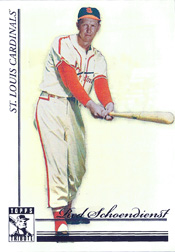
“Romano likes to hit against left-handers (.255 in 1966) and he will give McCarver a chance to rest once in a while,” Cardinals manager Red Schoendienst said.

Said Cardinals general manager Bob Howsam: “Romano should give us some right-handed power.”

Bob Broeg, in the St. Louis Post-Dispatch, concluded “the Cardinals appeared to help themselves … at no sacrifice” when they acquired Romano.

The Sporting News, however, noted Romano “understandably sounded upset when informed that he would be a No. 2 catcher.”

Tough task

At spring training in 1967, the combination of McCarver and Romano received praise.

Coach Joe Schultz said Cardinals catchers “could be the best in the league, offensively and defensively.”

Asked to rank the catching staffs in the National League, Astros manager Grady Hatton said, “I’d have to rate McCarver and Romano as No. 1.”

In its April 1, 1967, edition, The Sporting News again cautioned “Romano isn’t overly delighted with his second-fiddle rating,” but added, “It’s inconceivable that the sturdy right-handed swinger still doesn’t have some thunder left in his big bat.”

When the 1967 season got under way, Romano struggled to adapt to being a reserve. He produced two hits in his first 25 at-bats. “It’s tough when you don’t get to play often,” Romano said.

By June, Dave Ricketts took over as the primary backup catcher and Romano spent most of his time warming up pitchers in the bullpen.

Batting coach

In midseason, the Pirates offered to trade outfielder Manny Mota, catcher Jim Pagliaroni and pitcher Al McBean to the Cardinals for outfielder Curt Flood, pitcher Hal Woodeshick and Romano, but the Cardinals declined, The Sporting News reported.

In July, Brock, the Cardinals’ leadoff batter, went into a hitting funk. As the slump continued, Brock became more rigid at the plate and Romano detected the flaw. “I noticed Lou was locking his elbows before he swung and he was fouling off a lot of good pitches to left field,” Romano said. “I remind Lou every game about locking his elbows.”

Brock “applied Romano’s tip and went on a long-awaited surge,” The Sporting News reported. “Starting July 24, he went on a 24-for-56 binge, a .429 clip, and he hit safely in 13 straight games through Aug. 6.”

With Brock igniting the offense _ he generated 113 runs, 206 hits and 52 stolen bases _ the Cardinals cruised to a championship.

Romano, who batted .121 (7-for-58) with no home runs and two RBI for the 1967 Cardinals, was left off their World Series roster, but he was voted a full World Series share of $8,314.81, according to The Sporting News.

On Oct. 20, 1967, the Cardinals released Romano and he retired.

Read Full Post »

(Updated Sept. 12, 2025)

Johnny Mize, the franchise’s all-time best left-handed power hitter, practically was given away by the Cardinals after he ran afoul of management.

johnny_mize6On Dec. 11, 1941, the Cardinals traded Mize, a first baseman, to the Giants for pitcher Bill Lohrman, catcher Ken O’Dea, first baseman Johnny McCarthy and $50,000.

Though the Cardinals didn’t receive fair value for Mize _ McCarthy never played for the Cardinals, Lohrman earned one win for them and O’Dea primarily was a backup _ the deal didn’t hurt them. Buoyed by the emergence of their all-time best player, outfielder Stan Musial, the Cardinals won three consecutive National League pennants and two World Series titles from 1942-44. Meanwhile, Mize missed three prime seasons (1943-45) while serving in the Navy during World War II.

Still, trading a player who set the franchise standard for slugging by a left-handed batter and who would earn election to the National Baseball Hall of Fame remains one of the most lopsided and controversial in Cardinals lore.

Pace setter

In six years (1936-41) with the Cardinals, Mize produced a .336 batting average and a .419 on-base percentage, but what made him extra special was his power.

Mize remains the Cardinals career leader for:

_ Highest career slugging percentage (.600) by a left-handed batter. Among Cardinals, only right-handed batters Mark McGwire (.683) and Albert Pujols (.617) are ahead of him.

_ Most home runs (43) in a season by a left-handed batter. Only McGwire (70 in 1998 and 65 in 1999) and Pujols (49 in 2006, 47 in 2009 and 46 in 2004) hit more than 43 as Cardinals.

With the Cardinals, Mize also won a NL batting title (.349 in 1939), a NL RBI title (137 in 1940), two NL home run titles (28 in 1939 and 43 in 1940) and three times led the NL in slugging percentage, total bases and extra-base hits.

In the book “Few and Chosen,” seven-time National League home run champion Ralph Kiner said, “The hitter Mize most reminded me of is Stan Musial. I think of him and Musial alike, great (batting) average hitters who used the whole field.”

Bad vibes

After the 1940 season, Mize got crossways with club owner Sam Breadon and general manager Branch Rickey when he held out in a failed effort for a substantial increase to his annual salary of $16,000.

“When you hold out a couple of times against the Cardinals, you know you’re finished with the organization,” Mize told the St. Louis Star-Times. “I sensed the change in attitude toward me during the (1941) season. I was pretty certain I wouldn’t be with the club in 1942.”

Also, with the Cardinals battling the Dodgers in the pennant stretch, Mize was out of the lineup for the final 10 games of the 1941 season because of an arm injury. During his recovery, Mize watched Cardinals games from the grandstand instead of from the dugout. That disappointed Cardinals manager Billy Southworth, who wanted Mize in uniform and on the bench in case needed as a pinch-hitter, according to The Sporting News.

Though Mize still was producing at a high level _ he hit .317 with 39 doubles, 16 home runs and 100 RBI in 126 games for the 1941 Cardinals _ and, at 28, just entering his prime, the Cardinals made it known he was available.

The Cardinals were confident Johnny Hopp or Ray Sanders, both 25, could take over for Mize at first base. Hopp hit .270 for the 1941 Cardinals. Sanders had 40 doubles and 120 RBI for the Cardinals’ Columbus (Ohio) farm team in 1941.

Double dealing

The Dodgers, who won the 1941 pennant and finished 2.5 games ahead of the Cardinals, appeared poised to acquire Mize at the baseball winter meetings.

What the Cardinals wanted most for Mize was cash and a catcher.

Dodgers executive Larry MacPhail offered to deal first baseman Dolph Camilli and catcher Herman Franks for Mize, with the understanding the Cardinals would send Camilli to the Braves for cash, The Sporting News reported.

According to the St. Louis Post-Dispatch, MacPhail “thought he had the Mize situation well in hand.”

However, as the winter meetings neared an end, a hitch developed in the proposed deal and talks stalled. Breadon told Rickey “to waste no further time dickering and to take any fair offer for (Mize),” according to the Post-Dispatch.

The Giants had been trying to get the Cardinals to trade Hopp to them, The Sporting News reported. When Rickey dangled Mize and the Giants agreed to include $50,000, the deal was done.

“Larry MacPhail probably was the most surprised person … when it was announced that Mize had been traded to the Giants,” wrote the Post-Dispatch.

Young and affordable

In response to criticism of the trade, Breadon told the Star-Times, “We haven’t weakened our club at all.”

“It has always been our policy to move up young men and we feel that either Hopp or Sanders will do a fine job,” Breadon said.

Noting that the Mize deal followed the 1930s trades of two other hard-hitting St. Louis first basemen, Jim Bottomley and Rip Collins, the Post-Dispatch opined, “Mize was disposed of by the Cardinals in accordance with their policy of getting rid of veterans when young and promising replacements are available.”

Mize batted .305 with 26 home runs and 110 RBI for the 1942 Giants, who finished at 85-67 and 20 games behind the champion Cardinals (106-48).

Though neither Hopp (.258 batting average, three homers, 37 RBI) nor Sanders (.252, five homers, 39 RBI) produced exceptional numbers, the 1942 Cardinals were boosted by superb pitching and the excellence of Musial (.315 batting average, 32 doubles, 10 triples, 10 homers) in his first full season with the club.

Read Full Post »

(Updated Sept. 15, 2025)

Weakened by injuries that stripped him of his power and reduced his mobility, Roger Maris appeared unwanted and was considering retiring after the 1966 season, five years after he hit 61 home runs for the Yankees and broke Babe Ruth’s major-league record. Unexpectedly, the Cardinals took a chance on him.

roger_maris3On Dec. 8, 1966, in a deal made by Bob Howsam and sealed by Stan Musial, Maris was sent to the Cardinals for third baseman Charlie Smith.

Though Maris was a marquee name, he no longer was a marquee player. His diminished skills, along with a reputation for surliness, caused some to wonder why the Cardinals wanted him.

Damn Yankees

In 1965, Maris, who’d broken the hamate bone in his right hand, hit .239 with eight home runs in 46 games. The hand still was weak when he returned in 1966. Then he injured his left knee in a collision at home plate with Tigers catcher Bill Freehan. Maris hit .233 with 13 home runs in 119 games for the 1966 Yankees.

Unhappy in New York and embarrassed by his declining performance, Maris planned to assess his future during the off-season and make a decision about whether to continue playing.

At 32, Maris was “almost positive” he would retire, according to the book “Roger Maris: Baseball’s Reluctant Hero.”

In November 1966, Yankees general manager Lee MacPhail called Maris and asked about his plans. Maris said he wanted to wait until spring training to declare his intentions, then added, “If you’re going to trade me, tell me now and I’ll send in my retirement papers to you right away.”

MacPhail told Maris the Yankees didn’t intend to trade him.

Let’s make a deal

A month later, at the baseball winter meetings, Howsam, the Cardinals’ general manager, was having lunch when he was approached by Yankees manager Ralph Houk, who had managed the Denver Bears in the 1950s when Howsam was the minor-league club’s top executive.

“I started to kid Ralph and said, ‘Hey, when are we going to make a trade?’ ” Howsam told Neal Russo of the St. Louis Post-Dispatch. “Houk then said, ‘Would you be interested in Maris?’ I told him that I’d have to think it over. When I got on the plane heading back to St. Louis, I figured we might be able to use Maris.”

In St. Louis, Howsam met with Cardinals manager Red Schoendienst and asked him whether he’d like to have Maris on the club. Replied Red: “Who wouldn’t?”

Mike Shannon, the Cardinals’ right fielder, had worked during the off-season on learning to play third base. Howsam and Schoendienst were certain Shannon could make the move to third, opening right field for Maris.

In his book, “Season of Glory,” Houk said, “After the 1966 season, (Maris) told me he wouldn’t come back (to the Yankees). He was going to quit baseball. When Roger left the Yankees, he was pissed off at the world. Then we made the deal with St. Louis.”

Healthy outlook

Maris learned of the trade from a news photographer who showed up at the Maris house in Independence, Mo., to get reaction shots.

Contacted by the Post-Dispatch, Maris said, “I wouldn’t say I’m overjoyed about the trade.”

In an article for the Post-Dispatch, Joe McGuff, a Kansas City journalist who knew Maris well, explained, “Maris is concerned about his physical condition and he doesn’t want to play if he feels he can’t give the Cardinals a good effort … At this stage, pride is more important to Maris than money. It would mean a great deal to Maris to bow out with a big year.”

McGuff added: “If Maris decides to play for the Cardinals, he will be a definite asset. If he is sound physically, he could bring them a pennant.”

Johnny Keane, who had managed the 1964 Cardinals to a World Series championship before becoming Maris’ manager with the 1965-66 Yankees, told Post-Dispatch sports editor Bob Broeg, “If Roger is interested, if he’ll be aroused by this challenge, he could do a big job for the Cardinals.”

Said Schoendienst: “Maris is a real threat. He’ll help in more ways than one. He’s a good outfielder and has good judgment on the bases.”

The reaction in New York, though, was that Maris was through.

In his syndicated column, Red Smith wrote of Maris, “More surprising than yesterday’s deal and the modest price accepted was the fact that the Yankees found a club willing to accept their damaged goods. There was no secret about the guy’s being marked disposable … When Lee MacPhail dropped his name into conversations at the recent winter meetings, people walked away.”

Smith concluded, “He could have owned New York. Now he’s gone and won’t be missed. He was a demigod. Now he is a line in the record book, with an asterisk.”

Cardinal Way

Soon after the trade, Howsam left the Cardinals to join the Reds. Musial, a team vice president, replaced Howsam. In one of his first moves as general manager, Musial invited Maris and his wife Pat to St. Louis for lunch with he and his wife Lil.

When Maris returned home, he received in the mail from Musial a 1967 contract for $75,000, an increase from what the Yankees had paid him.

Maris was in no rush to commit and Musial didn’t pressure him. Impressed, Maris told Musial in early February he’d report to the Cardinals.

At spring training, Maris gained the trust of Cardinals players by working hard and selflessly on the field and interacting happily and humbly off the field. “He meshed well with his new teammates, joining them in barbecues and chatting and joking often with them at the club’s motel,” Neal Russo reported.

In the book “Few and Chosen,” Cardinals catcher Tim McCarver said, “I will admit that when he came to us, most of the players were suspicious and curious. Were we wrong! Roger was a terrific teammate … He was a good guy with a sense of humor, and an outstanding all-around ballplayer.”

With defense, hustle, smart baserunning and solid fundamentals, Maris’ value to the Cardinals transcended statistics. They won two National League pennants and a World Series title in his two seasons with the club. McCarver described him as “the missing piece to the puzzle.”

Maris produced 18 doubles, seven triples, nine home runs, 55 RBI and hit .261 in 125 games in 1967. In the World Series against the Red Sox, Maris hit .385 with a home run and seven RBI.

Maris played in 100 games in 1968 and had 18 doubles, five home runs, 45 RBI and hit .255.


Read Full Post »

Barry Bonds might have broken Hank Aaron’s career home run record as a member of the Cardinals, not the Giants, if he and the Redbirds had been able to agree on a compensation package.

barry_bondsIn December 2006, the Cardinals and Bonds, a free agent, expressed mutual interest in exploring a deal.

Cardinals manager Tony La Russa, who urged the front office to pursue discussions, was fascinated by the possibility of having Bonds and Albert Pujols in the same batting order.

“I was intrigued by the idea,” La Russa said to St. Louis Post-Dispatch reporter Joe Strauss. “… I’m thinking it might be there for (Bonds) in St. Louis … We have an opportunity if he thinks he fits with us.”

For Bonds, who had been with the Giants since 1993, the Cardinals looked appealing for at least two reasons:

_ La Russa had a track record of successfully managing, and protecting, sluggers (Mark McGwire, Jose Canseco) whose reputations had been tainted by suspicion of performance-enhancing drug use.

_ Bonds, 42, never had played on a World Series championship team and he knew his time for doing so was running short. The Cardinals, who won the 2006 World Series title, had qualified for the postseason in six of the previous seven years. The Giants had losing records in each of the previous two seasons.

Bonds “has thought seriously about playing alongside Albert Pujols in St. Louis,” the San Jose Mercury News reported.

La Russa envisioned a 2007 Cardinals batting order of David Eckstein at shortstop, Jim Edmonds in center field, Pujols at first base, Bonds in left field, Scott Rolen at third base, Juan Encarnacion (or Chris Duncan) in right field, Yadier Molina at catcher and Aaron Miles at second base.

Bonds still could produce. In 2006, he had 23 doubles, 26 home runs, 115 walks and 77 RBI in 130 games. With 734 career home runs, Bonds needed 22 more to break Aaron’s record of 755.

Though negotiations didn’t get much beyond a preliminary stage _ the Cardinals wanted Bonds to agree to a deeply discounted salary _ the flirtation between the two parties appeared sincere while it lasted.

Let’s talk

Shortly after he had surgery to remove bone chips from his left elbow, Bonds became a free agent in October 2006. Though many expected him to stay with the Giants, other teams, most publicly the Athletics, were interested.

In a Nov. 11, 2006, column in the Post-Dispatch, Bernie Miklasz scoffed, “Scratch the ridiculous rumors of the Cardinals having an interest in signing Barry Bonds. There’s nothing to it. If the Cardinals make a run at any prominent free-agent hitter, it will be Alfonso Soriano.”

However, a month later, during the baseball winter meetings in Orlando in December 2006, La Russa became convinced Bonds was available and he encouraged the Cardinals to meet with Bonds’ representatives, the Post-Dispatch reported.

The Cardinals met with the Bonds group, including Jeff Borris, the slugger’s agent, and then had internal meetings to discuss the matter. La Russa requested a meeting with Bonds, though it was unclear whether that session occurred.

However, Bonds did meet with Tigers manager Jim Leyland in Orlando. Leyland, who was Bonds’ manager with the Pirates from 1986-1992, “wasn’t acting on behalf of the Tigers,” the Mercury News reported.

“Leyland and La Russa are very close and it’s thought that Leyland might have been gathering a read on Bonds for his good friend,” wrote Andrew Baggarly of the Mercury News.

The interest was serious enough that Cardinals officials considered polling their key players to get their take on the notion of Bonds joining the club, the Post-Dispatch reported.

“Barry Bonds and Albert Pujols, back to back? It’s more than a fantasy league lineup _ and more than a rumor,” the Mercury News told its readers.

Show me the money

When the discussions between the Cardinals and Bonds’ representatives turned to money, it became evident a deal wouldn’t occur.

The Cardinals had offered another veteran free-agent hitter, Luis Gonzalez, a one-year deal at $7.3 million, the Post-Dispatch reported. Bonds was seeking more than $10 million a year.

“It’s not realistic,” La Russa said to Strauss, “because if he comes with us he would only be making pennies.”

“We couldn’t pay him,” La Russa concluded.

Wrote the Mercury News: “Barry Bonds is intrigued with playing under the St. Louis arch, but the money is pointing him someplace else. Bonds isn’t known for leaving cash on the table.”

The San Jose newspaper predicted Bonds “would return to San Francisco if the Cardinals cannot approach the Giants’ offer.”

Pressed by reporters, Cardinals general manager Walt Jocketty snapped, “There’s nothing on with Bonds. I’m sick and tired of people asking that. We don’t have money for Bonds.”

On Dec. 7, 2006, Bonds and the Giants agreed on financial terms. Bonds would receive a $15.8 million base salary in 2007, plus bonus incentives that could increase the package to $20 million.

Messy affair

Naturally, just the idea the Cardinals would consider signing Bonds created controversy among Cardinals fans and media.

Bryan Burwell of the Post-Dispatch opined, “The Cardinals’ brief but unrequited dalliance with Barry Bonds turned out to be just like every other naughty romance: loaded with provocative attraction, potentially perilous consequences, a tinge of remorse, a hint of shame and a ton of relieved hindsight.”

Burwell asked, “Would the most despised man in all of sports suddenly have found a safe and welcome haven in the bosom of Cardinal Nation?”

Miklasz’s take: “The Cardinals and their fans have a history of embracing Mark McGwire and baseball’s steroids culture, so why draw the line at Bonds?”

In his final season, Bonds hit 28 home runs for the 2007 Giants. On Aug. 7, 2007, he hit career home run No. 756 off Mike Bacsik of the Nationals, breaking Aaron’s record. Bonds finished with 762 career home runs.

Previously: Albert Pujols and the start of his NL MVP run

Read Full Post »

« Newer Posts - Older Posts »