Feeds:
Posts
Comments

Archive for the ‘Managers’ Category

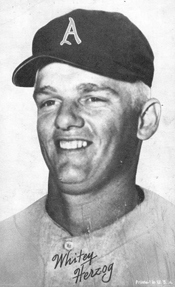
A player with the baseball smarts Whitey Herzog had didn’t need to be told when it was time to quit. It was autumn 1963. Herzog just turned 32, but his prime playing days had past. “His baseball epitaph could read: A Nice Guy Who Couldn’t Hit The Slow Curve,” Detroit columnist Joe Falls noted.

A journeyman outfielder, Herzog squeezed out every bit of talent he had, lasting eight seasons in the majors, mostly with losing teams, before the Tigers removed him from their big-league roster after the 1963 season. The Tigers offered him a role as player-coach at Syracuse, with a promise he’d be considered for a managerial job in their farm system some day, the Detroit Free Press reported. The Kansas City Athletics proposed he join them as a scout.
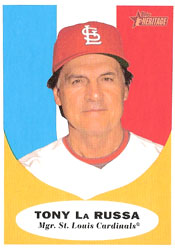
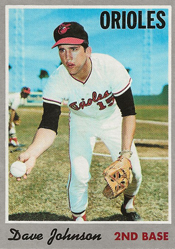
Herzog, though, was through with baseball. He could earn more ($16,000 a year) supervising construction workers for a company back home in Kansas City than he could coaching in the minors or pursuing prospects on the sandlots.

So Herzog took the construction job, but soon found he didn’t like it, mainly because he had little say in selecting the crew he was tasked with supervising. Hoping to trade his hard hat for a ball cap, Herzog asked the A’s if the scouting job still was open. It was, and he was hired to scout amateur players in 1964.

The scouting experience with the A’s, and then the Mets, gained Herzog a reputation as an astute talent evaluator and helped him develop the managing skills that would lead to his eventual election to the Baseball Hall of Fame.

Going pro

As a teen in New Athens, Ill., Herzog was a good basketball player. “Your basic small, scrappy guard,” he said in “White Rat,” his autobiography. Herzog received seven college basketball scholarship offers, but he wanted to play pro baseball. He could run, throw and hit a fastball.

The St. Louis Browns made an offer: no signing bonus, a minor-league salary of $200 a month and a chance to pitch. Herzog said no. Actually, he claimed in his autobiography, he said to Browns scout Jack Fournier, “Now I know why you guys are in last place all the time, if you wanted to sign a wild-ass left-hander like me.”

On the day after he graduated from high school in 1949, Herzog was invited to a Yankees tryout camp in Branson, Mo. The Yankees told him he could make it as an outfielder. Heck, they said, Joe DiMaggio would be retiring just about the time Herzog should be ready for the majors. (What he didn’t know is that another prospect, Mickey Mantle, was signing with the Yankees in 1949, too.) Herzog took the Yankees’ offer of a $1,500 bonus and a minor-league salary of $150 a month.

Years later, Herzog told the Kansas City Star, “If I had gotten more money, it would have been all right, but I was foolish to sign for that kind of a bonus. I could have gone out and broken my leg the first year, and then where would I have been? If I had it to do over, I would have gone to college (on a basketball scholarship) and then signed a baseball contract.”

Tough breaks

Herzog played five seasons in the Yankees’ farm system and served a two-year Army hitch. He never did appear in a regular-season game for the Yankees, but he got to know their manager, Casey Stengel, during 1955 and 1956 spring training and developed a fondness for him. “Of all the managers I’ve ever played for, Casey had the most influence on me,” Herzog said in his autobiography. “Casey took a liking to me, spent a lot of time with me.”

On Easter Sunday in 1956, after attending a church service with Yankees players Tony Kubek and Bobby Richardson, Herzog was called up to Stengel’s hotel suite. “When I got there,” Herzog recalled in his autobiography, “I saw that Casey had already been celebrating Easter with a few drinks. He was rambling on.”

After a while, Stengel blurted out that Herzog was going to the majors _ with the Washington Senators. “Go over there and have a good year,” Stengel told him, “and I’ll get you back.”

As Herzog noted in his book, “I never had that good year, and I never wore the pinstripes in Yankee Stadium. In my heart, though, I was always a Yankee. I never got over the fact that they’d traded me.”

Herzog was with the Senators (1956-58), A’s (1958-60) and Orioles (1961-62) before being traded to the Tigers in November 1962. Going to Detroit meant he’d do a lot of sitting, not playing. Herzog was an outfielder and first baseman, and the Tigers had standouts with Rocky Colavito in left, Bill Bruton in center, Al Kaline in right and Norm Cash at first base. “There was no use kidding myself _ all those guys were better ballplayers than I was,” Herzog told the Kansas City Times.

To pass the time, Herzog told teammates he would keep count of the home runs he hit in batting practice all season.

“I hit my 250th in Detroit in late August,” Herzog told Kansas City journalist Joe McGuff. “(Coach) Bob Swift was pitching that day. I hit my 249th into the upper deck in right field. (Teammate) Gates Brown was standing by the batting cage and I told Gates I was really going to crank up and see if I could hit my 250th on the roof. Sure enough, I did. There was an usher nearby and I asked if he’d mind going up on the roof and getting the ball for me. He found it and brought it back. The ball landed in a big patch of tar. So it looked legitimate. I got it autographed (by teammates) and fixed up and I’ve got it in a trophy case at home.”

In Baltimore, on the day before the 1963 season finale, Herzog hit his 299th batting practice homer. “Everybody on the club knew I was going for my 300th on the last day,” he said, “so they told me I could keep hitting until I got 300. It rained that day and they had to call off batting practice, so I wound up with 299.”

A tiger in batting practice, Herzog was a pussycat in the games that season. He hit no homers and batted .151. “You’ll find no nicer guy on the Tigers than Whitey Herzog,” Joe Falls of the Detroit Free Press informed readers, “and it grieves us to see him struggling so much at the plate.”

Talent hunt

Jim Gleeson left the A’s scouting department to join the coaching staff of Yankees manager Yogi Berra, creating the opening for Herzog to quit the construction job and return to baseball.

Herzog displayed the same desire and determination for scouting amateurs as he had for playing in the pros. In June 1964, he told the Kansas City Star, “Last month, I saw 52 high school and college games. I’ve been averaging about 1,500 miles a week on the road. I’ve been seeing the country.”

Though he was competing with other scouts to sign talent, Herzog earned their respect. The scouts welcomed him into the fraternity and offered their advice on how to succeed.

“The old scouts like Bert Wells of the Dodgers and Fred Hawn of the Cardinals took him under their wing and really helped him,” Herzog’s colleague, Joe McDonald, recalled to Cardinals Yearbook in 2010. “He always talked about them. It’s not easy doing amateur scouting for the first time. You have to find ballparks (and) call the coach in advance to try to determine if the pitcher you want to see is pitching. You have to do all that preliminary work. Whitey did all that, which was a great foundation (to managing), because his evaluating skills matched his strategic ability in game situations. That was the key.”

The best of the 12 prospects Herzog signed in 1964 were Chuck Dobson, who went on to pitch nine seasons in the American League and won 74 games, and catcher Ken Suarez, who played seven seasons in the majors, including 1973 with the Rangers when Herzog managed them.

The one who got away was pitcher Don Sutton, the future Hall of Famer. “I had him in my hotel room, ready to sign an A’s contract for $16,000,” Herzog said in his autobiography. “What a bargain he would have been.”

The deal needed the approval of Charlie Finley, but the A’s owner wouldn’t go over $10,000. “I went out and told Bert Wells of the Dodgers that he ought to sign him,” Herzog said. The Dodgers did and Sutton went on to pitch 23 seasons in the majors, winning 324 games and pitching in four World Series, including three with the Dodgers and one with the Brewers against Herzog’s 1982 Cardinals.

Wise judge

After rejecting an offer to become head baseball coach at Kansas State, Herzog coached for the A’s in 1965 and for the Mets in 1966. He scouted pro talent as a special assistant to Mets general manager Bing Devine in 1967, then was promoted to director of player development. “The people in the organization reached the point where they relied more and more on my judgment about who to sign and who to get rid of,” Herzog said in his autobiography.

After the Mets vaulted from ninth-place finishers in 1968 to World Series champions in 1969, Herzog went to the victory party at Shea Stadium to congratulate manager Gil Hodges. In recalling the moment years later to Cardinals Yearbook, Herzog said, “When he saw me coming, he jumped out of his chair and said, ‘I want to congratulate you. Every time I’ve called you and asked for a ballplayer, you’ve sent me the right one.’ That meant a lot to me.”

Later, when Herzog managed the Royals to three division titles and then led the Cardinals to three National League pennants and a World Series championship, his skill as a talent evaluator often was cited as a significant factor in his success.

“It wasn’t just Whitey’s ability to manage a game,” Jim Riggleman, a coach on Herzog’s St. Louis staff before becoming a big-league manager, told Cardinals Yearbook. “There are other good game managers. It was his ability to evaluate talent. He knew who could play and who was on the last leg.”

Red Schoendienst, who managed St. Louis to two pennants and a World Series title before coaching for Herzog, said to Cardinals Yearbook, “You manage according to what you have. That’s what managing is all about, knowing your ballplayers … Whitey had a lot of practice judging players … He could see the kind of abilities they had and whether they just came out to play or if they were winners … Some guys just know how to win. Those are the guys you want.”

Read Full Post »

In 2025, Tony La Russa was interviewed by Jon Paul Morosi for the Baseball Hall of Fame podcast “The Road to Cooperstown.”

Here are excerpts:

Being a lifelong learner:

La Russa: “The educational emphasis was from my mother … She was insisting on me going to college. (La Russa earned a law degree from Florida State.) The other thing she did, for which I am forever thankful, as early as I can remember, I learned to read. She always made books available, a lot of times they were books about the West, and to this day I have a love affair with books. You’ll never see me without one.

“The other part of learning is the game of baseball, and that was my dad. His brothers, my uncles, they ate it and talked it, and that’s all we ever discussed. I learned about baseball when I was 4, 5, 6 years old and have loved it ever since.”

First language he spoke as a youth in Tampa’s Ybor City section:

La Russa: “Totally Spanish because my dad spoke Spanish … The truth is that as I got ready to go to elementary school, as I was approaching 6 years old, I had to learn to speak English.”

Baseball team or player he followed as a youth:

La Russa: “My dad was a 6-day-a-week hard laborer. I mean, he worked, but on Sunday, during spring training, we’d go see the Reds or White Sox in Tampa, or we’d go to St. (Petersburg) for the Cardinals or Yankees. At that early age, the guy who caught my attention was Mickey Mantle.”

In 1963, La Russa, 18, with the Kansas City Athletics, got his first big-league hit, a triple versus the Orioles’ Steve Barber, who won 20 that year. La Russa’s first big-league RBI came against the Twins’ Camilo Pascual, a 21-game winner in 1963. Boxscore and Boxscore

What it was like being in the majors as a teen:

La Russa: “The players, by and large, were not hard on me at all. That’s when I first met Charlie Lau. He was a backup catcher (and later a coach on La Russa’s White Sox staff.) Guys like … Norm Siebern, Jerry Lumpe. These guys were really careful, especially when we got to big cities, that I didn’t get in trouble.”

Playing for the Atlanta Braves the last part of the 1971 season:

La Russa: “For six weeks I watched Henry Aaron and got to know him. That’s a blessing that’s impossible to describe unless you know Hank. Just a beautiful man … We used to fly commercial back then. One day I’ll never forget, we were flying back from L.A. to Atlanta at night and everybody’s sleeping, and I’m walking down the aisle and Hank is awake and he said, ‘Sit down.’ We talked for the rest of the flight and mostly what we talked about was experiencing the Dodgers and how often they hit him or knocked him on his butt …

“In those days, there wasn’t the protection of the hitter that there is today. These guys today don’t have any idea … If you swung the bat, they’d aim right at your head to try to scare you. The courage of those great sluggers was something special. I just wish that today’s hitters would be more thankful that Major League Baseball is protecting them, because it’s a scary thing when guys are throwing at your head … Hank, they couldn’t scare him and they couldn’t stop him.”

On getting a single (against the Orioles’ Dave McNally) as a pinch-hitter in his first at-bat for the Oakland Athletics, after their move from Kansas City, in 1968 and scoring the winning run as a pinch-runner (for the Cubs’ Ron Santo) in his last big-league appearance in 1973:

La Russa: “I like to use that as an example of just how lousy my (big-league playing) career was … Pinch-hitting. Pinch-running. Those are my highlights and they’re best forgotten.” Boxscore and Boxscore

Toughest challenge he faced when he became a big-league manager with the White Sox in 1979:

La Russa: “When you go into a game and you know you are overmatched. Think about it: In 1979, the managers were legends you knew by their first names. Billy (Martin), Earl (Weaver), Whitey (Herzog), Sparky (Anderson), Gene (Mauch), Chuck (Tanner). What they would contribute to the game versus what I could …

“I used to ask these great men questions. Every one of them but two answered right away … Gene Mauch and Earl Weaver were very honest and told me, ‘Young man, do you know what the longevity of a major-league manager is nowadays?’ I said, ‘No.’ They said, ‘Maybe three years.’ So they said, ‘If you’re still here three years from now and you ask me a question, I’ll answer it, but I’m not going to waste my time with you (now) because I don’t think you’ll be around.’ ”

Advice from former White Sox and Orioles manager Paul Richards, who was White Sox director of player development when La Russa began managing in their organization:

La Russa: “He said two things to me. One, if (the players) don’t trust you, they won’t follow you. So don’t ever, ever not tell them the truth … Paul also said … (because) you have such scrutiny of every move you make, you have a natural instinct sometimes to cover your butt, and he said, ‘Tony, if you do that, you’ll never know if you’re good enough.’ He said, ‘Trust your gut, don’t cover your butt.’ … I can honestly say, maybe because I had a law degree waiting (if managing didn’t work out), I never managed afraid, and it was a big asset.”

On Dave Duncan, the catcher who was La Russa’s teammate with the A’s before becoming pitching coach for most of the clubs La Russa managed:

La Russa: “Dunc early on was always somebody that stood out with his maturity, intelligence, competitiveness, toughness. I mean, he caught Game 7 of the 1972 World Series against the Big Red Machine and that was his only start. The A’s were getting ready to upset The Machine.

(In the bottom of the ninth, with Oakland ahead, 3-2, the Reds had a runner on first, two outs, and switch-hitter Pete Rose at the plate against Rollie Fingers when manager Dick Williams went to the mound.)

“Dick had Vida Blue warming up. He went out there to make the (pitching) change and said, ‘I’m going to turn Pete Rose around, to the right side. Dunc said, ‘Dick, don’t do that. Vida’s a starter. Who knows what you’re going to get. Rollie can get this guy out.’ Dick said, ‘OK.’ ”

Rose flied out and the Athletics were World Series champions. Boxscore

Managing against Dusty Baker:

La Russa: “The only time he and I had big problems was when we were in the same division together. That was Cubs and Cardinals; Reds and Cardinals … I can’t wait to welcome him into the Hall of Fame, which is going to happen very soon.”

On the backup slider Dodgers’ Kirk Gibson hit for a walkoff home run to beat Dennis Eckersley and the A’s in Game 1 of the 1988 World Series:

La Russa: “When we got two strikes on him, you see Dunc (in the dugout) give the sign: Up and away. That two-strike pitch should have been a high fastball. He could have gotten a base hit, but he wouldn’t have hit a home run.” Boxscore

How the A’s recovered to become World Series champions the next year:

La Russa: “Adversity can be the best teacher … The next spring we decided we were going to be on a mission … Talented guys on a mission … Their minds were just zeroed in on (there will be) no regrets.”

Managing the Cardinals to World Series titles in 2006 and 2011:

La Russa: “We got in the (playoffs) the last day of the year both times … We got in (there) in fighting, competitive form … So much of getting to October and winning in October is about head, heart and guts. It’s about taking that talent and never giving in, never giving up … It’s mindset … You’re surrounded in the clubhouse with guys who are tough-minded and … never stop competing. I’m very proud of those clubs.”

On Game 6 of the 2011 World Series when the Cardinals, on the brink of elimination, scored twice in the ninth and twice in 10th before winning in the 11th:

La Russa: “When you get that far, you have such a feeling of confidence and pride … Even at the end, when we were down two in the ninth … we felt confident … Guys were on the top step of the dugout, without any prompting, saying, ‘We can do this.’ … Don’t ever underestimate the importance of how strong your mind is and your will and what you can accomplish.”

On retiring from managing after the 2011 World Series and coming back at age 76 to manage the White Sox in 2021:

La Russa: “I kept hearing I was too old and couldn’t relate, but we won 93 games. We had six winning months … The next year I got cancer and I had to leave in August.”

On the state of big-league baseball today:

La Russa: “I’m not pleased with the game that I see _ the accent on getting the ball in the air, and strikeouts are OK, and getting overwhelmed by pitching …

“Putting the ball in play and hitting where it’s pitched creates rallies. I think it’s easier to win now if you’re playing against a team that has a guy on second base with nobody out, down a run, and guys try to hit two-run homers, and get beat by a run. When the pitching is really good and you’re trying to do the most things (at the plate), that is stupid, right? When the pitching is really good, you better work to get a single, do something to advance the runners, score. Big is not going to beat you. Little is going to give you a chance to win.”

On starting pitchers not being expected to go deep into games:

La Russa: “We got to change that. The game is better when people say, ‘Hey, do you know who’s starting today,’ and they (the starters) get into the last third of the game … We got to stretch them out.”

On being inducted into the Baseball Hall of Fame:

La Russa: “The great Tom Seaver, a friend, told me the day I got in, ‘You know, you’re a coattail Hall of Famer.’ Right away, I said, ‘I know, because the Hall of Fame is for players that have been great.’ To get a manager in there, it’s because of the organization, the scouting, the player development, the players. I said, ‘I understand, Tom.’ Then he told me, ‘You know what an honor it is to be here?’ I said, ‘I think so. Why?’ He said, ‘If you mess this up, I’ll have you deducted faster than you were inducted.’ “

Read Full Post »

When Davey Johnson was a second baseman for the Orioles in the early 1970s, long before the time when analytics became as much a part of the game as balls, bats and gloves, he voluntarily developed computer programs to construct optimized lineups and brought the data to manager Earl Weaver.

“I found that if I hit second, instead of seventh, we’d score 50 or 60 more runs and that would translate into a few more wins,” Johnson told the Baltimore Sun. “I gave it to him (Weaver), and it went right into the garbage can.”
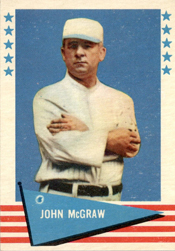
Later, as a big-league manager, Johnson put his computer skills to good use, leading the Mets to a World Series title in 1986 and taking four other clubs (1988 Mets, 1995 Reds, 1996 Orioles and 1997 Orioles) to league playoff finals.

Johnson, however, wasn’t a push-button manager. He relied on instincts as well as calculations. “You’ve still got to allow for your gut feeling,” he told the New York Times.

“You gamble against the odds sometimes,” Johnson said. “If not, you’ll become a statistic in somebody else’s computer.”

A three-time American League Gold Glove Award winner, Johnson played in four World Series, including in 1966 when he became the last batter to get a hit against Sandy Koufax. According to the St. Louis Post-Dispatch, when reminded of that years later, Koufax quipped, “Yeah, that’s why I retired.” Boxscore

With the Braves in 1973, Johnson slugged 43 home runs, breaking the big-league record for a second baseman held by Rogers Hornsby, who hit 42 for the 1922 Cardinals. (Marcus Semien topped Johnson with 45 for the 2021 Blue Jays.) Johnson also played in the same lineup with two home run kings _ Hank Aaron of the Braves and Sadaharu Oh of the Yomiuri Giants.

As a player and as a manager, Johnson was a persistent foe of the Cardinals. He had a career .456 on-base percentage against them, and batted .424 with 11 RBI in 10 games versus St. Louis in 1973. When Johnson managed the Mets, he and Cardinals manager Whitey Herzog dominated the National League East Division in the mid-1980s. From 1985-88, Johnson’s Mets and Herzog’s Cardinals each won two division titles. Johnson was 82 when he died on Sept. 5, 2025.

Facts and figures

Davey Johnson was born while his father, Lt. Col. Frederick A. Johnson, was in the U.S. Army during World War II. Lt. Col. Johnson was serving in an advanced tank corps on the front line in North Africa when he was captured. He spent the rest of the war in prison camps. The officer tried three times to escape. Malnourished, Lt. Col. Johnson weighed 83 pounds when liberated, according to a newspaper report. He retired from the military in 1962, the year his son Davey signed with the Orioles after playing shortstop for Texas A&M and studying veterinary medicine.

While with the Orioles, Johnson earned a degree in mathematics from Trinity University in San Antonio and took graduate courses in computer science at Johns Hopkins University. “When he was a player … he was always asking why,” Orioles executive Frank Cashen told the New York Times. “I think the main influence on him was his mathematics.”

Earl Weaver said to the Baltimore Sun, “Davey was always the type of player that was inquisitive. He always wanted to know what I was trying to do and why I was trying it. That is the type of player who is going to be a successful manager.”

Naturally, his Orioles teammates nicknamed him Dum-Dum. “He was a guy who was always thinking about things,” pitcher Jim Palmer told the Sun. “Very cerebral, maybe even to the point of overanalyzing a situation.”

(According to the Sun, Palmer once said, “Johnson thinks he knows everything about everything.” Told of Palmer’s comment, Johnson laughed and said, “No, actually, I know a little about everything.”)

Frank Cashen recalled to the New York Times, “He was a different sort of cat. In salary negotiations, he was in a class by himself. He’d come in with a stack of computer printouts to prove he should bat someplace else in the lineup, or that he deserved more money. He had all these statistics.”

Or, as Cashen put it to the Sun, “Davey was always single-minded, willing to swim against the tide.”

During Johnson’s playing days with the Orioles (1965-72), personal computers were uncommon. So Johnson got permission to use the computer system at National Brewing, a company run by Orioles owner Jerry Hoffberger.

“When you apply statistics to something like baseball, you’ve got the problem of the number of limited chances,” Johnson said to the New York Times. “If you flipped a coin 10 times, you might get nine heads, but if you flipped it 1,000 times, you’d come close to 500 heads. The Standard Deviation Chart says a 5 percent deviation in 1,000 times is acceptable. One day, Jim Palmer was pitching and he was wild. So I trotted over and told him, ‘Jim, you’re in an unfavorable chance deviation situation. You might as well quit trying to hit the corners and just throw it over the plate.’ He told me to get back to second base and shut up.”

Big bopper

With first-round draft choice Bobby Grich ready to take over at second base, the Orioles traded Johnson to the Braves in November 1972. The Braves got him to replace Felix Millan, who was dealt to the Mets. They hoped Johnson would provide good glovework. They weren’t expecting him to hit with power. Johnson’s highest home run total with the Orioles was 18 in 1971.

However, with the 1973 Braves, Johnson turned into … Hank Aaron. Johnson clouted 43 homers and drove in 99 runs. With 151 hits and 81 walks, he produced an on-base percentage of .370 and had fewer than 100 strikeouts.

The top four home run hitters in the National League in 1973 were the Pirates’ Willie Stargell (44), Johnson (43) and his Braves teammates Darrell Evans (41) and Hank Aaron (40).

The Braves’ ballpark was a home run haven dubbed “The Launching Pad.” Johnson popped 26 homers at home in 1973 and 17 on the road. Aaron told Jesse Outlar of the Atlanta Constitution, “He doesn’t go for any bad pitches. He makes them pitch to him, waits for his pitch. He has a great swing.”

According to Thomas Boswell of the Washington Post, Johnson would “crowd the plate, dare the pitchers to bean him (and) feast on the inside pitch.”

Whether in Atlanta or St. Louis, Johnson was tough on Cardinals pitchers. On June 9, 1973 at Atlanta, he had three hits, including a home run, and a walk, scored three runs and knocked in two. Two months later in a game at St. Louis, Johnson again produced three hits, including a homer, and a walk. He drove in four runs, scored once and stole a base. Boxscore and Boxscore

In April 1975, Johnson and the Braves parted ways. He spent two unhappy seasons playing in Japan, where he clashed with popular manager Shigeo Nasashima and was booed. Returning to the U.S., Johnson finished his playing career with the Phillies (1977-78) and Cubs (1978).

Candid and formidable

After three seasons in the Mets’ system, two as a manager; one as an instructor, Johnson returned to the majors as Mets manager in 1984 and made them contenders. Frank Cashen, who had moved from the Orioles to the Mets, told the New York Times, “Davey makes moves in a game that are so good they are absolutely eerie. Other managers are thinking of the moves they’ll make this inning. Davey is thinking of the moves he’ll make three innings from now.”

As a sign of the respect he had for Johnson, Jim Leyland, a future Hall of Fame manager, called him “McGraw,” in reference to the manager with the most National League wins, John McGraw. Whitey Herzog said to the Post-Dispatch of Johnson, “I always thought he did a pretty good job of running the ballgame.”

Johnson’s managing methods usually worked, but his personality sometimes got him crossways with the front office. As Joseph Durso of the New York Times noted, Johnson “speaks so bluntly that people duck or cringe.”

It’s part of the reason he didn’t stay in one place for too long. He managed the Mets (1984-90), Reds (1993-95), Orioles (1996-97), Dodgers (1999-2000) and Nationals (2011-13).

“Davey Johnson isn’t the easiest guy to get along with,” Tony Kornheiser of the Washington Post wrote. “You wouldn’t want him living next door. He is abrasive and confrontational … Davey tends to manage from the position that he’s smarter than you and everybody else in the room. His history is that he wears out his welcome rather quickly.”

However, Kornheiser concluded, “There may be some discomfort about what Davey is as a manager, but here’s what Davey does as a manager: He wins.”

Mets pitcher Ron Darling, who majored in French and Southeast Asian history at Yale, told the New York Times, “I think of Davey the way I used to think of my father _ always pushing me to do better … He doesn’t walk through the locker room and chat with players about how they’re doing. That’s not his style … Davey expects you to do your job, period … I think there’s calculation in his being aloof. By not telling you what he’s going to do, he gains a little edge on you. If you carry it out far enough, though, it’s a sadistic edge.”

In 2012, 26 years after he managed the Mets to a World Series title, Johnson, nearly 70, still was successful. He led the Nationals to 98 wins, most in the majors. Their reward for that was a playoff matchup against the Cardinals, a team that finished fifth in the National League. In the decisive Game 5, the Cardinals rallied for four runs in the ninth on a pair of two-out, two-run singles from Daniel Descalso and Pete Kozma. Boxscore

Typically direct, Johnson said to the Associated Press, “Not fun to watch … We just need to let this be a lesson … learn from it, have more resolve, come back and carry it a lot farther.”


Read Full Post »

Technically, John McGraw turned down an offer to manage the Cardinals. Actually, though, he was their de facto manager for part of a season.

The question of whether McGraw was or wasn’t the Cardinals’ manager made headlines in August 1900. After manager Patsy Tebeau resigned, Cardinals president Frank Robison said publicly that McGraw, the Cardinals’ captain and third baseman, agreed to be player-manager. McGraw said Robison was mistaken.

A peculiar compromise was reached: A member of the Cardinals’ business staff, Louis Heilbroner, who had no baseball experience, became manager and sat on the bench in that role during games. McGraw made out the lineups, decided which pitchers to use and ran the team on the field.

“It appears McGraw is manager with a scapegoat in the person of Mr. Heilbroner … in case he fails to make the team win,” the St. Louis Republic declared.

Two months later, after the Cardinals went 23-25 in the 48 games managed by the Heilbroner/McGraw tandem, McGraw departed St. Louis for Baltimore. He eventually went on to become manager of the New York Giants, attaining three World Series titles and 10 National League pennants.

McGraw totaled 2,763 wins, though none were credited to him for his role with the Cardinals. Only Connie Mack (3,731) and Tony La Russa (2,902) achieved more wins as managers.

Good times, bad times

Born and raised in Truxton, N.Y., a village 65 miles west of Cooperstown, McGraw was 12 when his mother and four of his siblings died in a diphtheria epidemic. He moved in with a neighbor to escape a father who beat him.

Advancing from local sandlot baseball to the professional ranks, McGraw was 18 when he reached the majors with the 1891 Baltimore Orioles. He began as a utility player before developing into “a brilliant third baseman … who brought a keen, incisive mind to the national game, a fighter of the old school whose aggressiveness inspired his teammates,” according to the New York Times.

Nicknamed Little Napoleon by the press and Mugsy by his foes, McGraw, 26, became player-manager of the 1899 Orioles. In August, his wife, Mary, 22, died of acute appendicitis. After the season, the Orioles, a National League franchise, disbanded, and McGraw went to play for the Cardinals when the club agreed to waive from his contract the reserve clause which bound a player to a team.

Joining a club that featured three future Hall of Fame players _ left fielder Jesse Burkett, shortstop Bobby Wallace and pitcher Cy Young _ McGraw played third base and ignited the offense. His .505 on-base percentage was tops in the league. He totaled 115 hits, 85 walks and was plunked by pitches 23 times. McGraw struck out a mere nine times in 447 plate appearances.

Yet, the 1900 Cardinals were underachievers, losing 15 of 20 games in June. As the St. Louis Republic noted, “Baseball players are nervous, sensitive mortals … Despite all the hot air about … every man … pulling hard to win … it is a cinch that one-third of the team has no use or love for the other two-thirds.”

Big change is coming

The Cardinals staggered into August with a 34-42 record. Manager Patsy Tebeau had seen enough.

Born in north St. Louis near 22nd and Branch streets, Oliver Wendell Tebeau learned baseball on the Happy Hollow diamond beneath Goose Hill and became a member of the Shamrock Club team, earning the Irish nickname Patsy despite a French-Canadian surname. He went on to be a standout first baseman in the majors and managed the Cleveland club before going back to St. Louis.

Tebeau submitted his resignation to Cardinals president Frank Robison in early August 1900. Robison asked Tebeau to reconsider and to at least finish the season as manager, but Tebeau was obdurate. He and Robison agreed to stay mum about the decision until a replacement could be found.

Robison offered the job to McGraw.

On Aug. 19, 1900, the Reds won at St. Louis, 8-5, dropping the Cardinals’ record to 42-50. Afterward, Robison met in his office with seven St. Louis newspaper reporters and told them Tebeau had resigned and McGraw had accepted an offer to replace him. “Mr. McGraw will manage the club in Mr. Tebeau’s place,” Robison said. “He will have full charge of the team on the field.”

Robison also told the reporters that his secretary, Louis Heilbroner, would be business manager, acting as Robison’s representative on road trips.

That night, a St. Louis Republic reporter tracked down McGraw at the Southern Hotel, where he stayed. “I have accepted the management of the St. Louis club,” McGraw told the newsman.

Not so fast

The morning newspapers on Aug. 20 reported McGraw was manager of the Cardinals, but McGraw told the afternoon St. Louis Post-Dispatch a different story. He claimed he rejected Robison’s offer. “I would not be doing myself justice to accept the management of the team at the present time,” McGraw said to the Post-Dispatch. “I would be held responsible for any shortcomings that the team might show, and I do not care to accept this responsibility.”

As the St. Louis Republic saw it, “McGraw is evidently a bit leery of … trying to make a silk purse out of a sow’s (ear), of converting a losing team into a winning one. Though the team is strong enough to win, it is badly disorganized and full of cliques. McGraw is not sure of his ground. He doubts the fidelity of his men.”

To appease McGraw, Frank Robison and his brother, club treasurer Stanley Robison, named Louis Heilbroner as manager but all agreed McGraw would run the team on the field.

“Mr. McGraw has complete charge of the team,” Heilbroner told the St. Louis Republic. “He can … change any player, bench any player, do as he pleases with the men on the field. At least that is my understanding.”

Stanley Robison said to the Post-Dispatch, “McGraw … will have entire charge of the players when on the field. He will place the pitchers and his orders will govern their conduct during the game. Louis Heilbroner … will occupy the manager’s seat on the bench but he will not in any way interfere with McGraw’s orders.”

Most comfortable dressed in a buttoned shirt with collar and cuffs, Heilbroner was 4-foot-9, barely weighed more than 100 pounds and had a “thin, piping voice,” according to the Post-Dispatch. Many of the players he was tasked with managing  had reputations for being roughnecks.

Labeling Heilbroner, 39, as “simply a straw man,” the Republic added, “Everyone knows that Mr. Heilbroner makes not even the ordinary fan’s pretensions to knowing baseball. He is a capital business man, a first-class fellow, but he does not know baseball.”

Home alone

That afternoon, Aug. 20, “not more than 800 enthusiasts” showed up at League Park to see the visiting Reds play the Cardinals, the St. Louis Globe-Democrat reported. According to the Republic, “not enough persons were in the stands to start a game of pinochle.”

Not even McGraw was a spectator. He stayed in the clubhouse, claiming he was “under the weather,” the Globe-Democrat reported, and leaving poor Heilbroner to fend for himself in his debut as manager.

Heilbroner did a sensible thing: He gave the ball to Cy Young. Unfortunately, Young’s pitching didn’t earn any awards that day. He gave up 11 runs and was heckled from the stands before Heilbroner lifted him after six innings.

Young “dressed hurriedly and sought to even up matters in some way,” the Republic reported. “He hied himself to the grandstand and picked out a spectator who had called him a rank quitter … (Young’s) wife was seated beside the individual who roasted him while he was on the rubber. The spectator took Cy’s scolding and slunk away without making a reply.”

The Reds won, 15-7, but as the Post-Dispatch noted, “Mr. Heilbroner is not losing any sleep over the situation. He sat on the players’ bench and seemed to enjoy the game. He does not pretend to know anything about baseball from a playing standpoint (and) virtually admits that he is a figurehead.”

McGraw sat alongside Heilbroner on the bench the next day, Aug. 21, and the Cardinals beat the Reds, 9-8.

One and done

McGraw was one of two future Hall of Fame managers playing for the 1900 Cardinals. The other was his friend, catcher Wilbert Robinson, but Heilbroner remained Cardinals manager until season’s end. The Cardinals finished at 65-75 _ 42-50 with Tebeau and 23-25 with Heilbroner.

(According to John Wray of the Post-Dispatch, Heilbroner wasn’t a pushover during his stint as skipper. After Heilbroner rejected a request from pitcher Jack Powell for a pay advance, “Powell started to stuff Louie into the safe but changed his mind when the little man confronted him with such a barrage of language and threats that Big Jack fell back.”)

Because the Cardinals had waived the reserve clauses in the contracts of McGraw and Wilbert Robinson as incentive to come to St. Louis, both men became free agents after the 1900 season. McGraw returned to Baltimore, becoming part owner and player-manager of the new Orioles franchise in the American League. Robinson went with him.

In July 1902, McGraw jumped from the Orioles to the Giants and had his greatest successes, building a reputation as “the molder of championship clubs, a stickler for discipline and a martinet who saw that his orders were rigidly enforced both on and off the field,” the New York Times noted.

Patsy Tebeau never returned to baseball after leaving the Cardinals. He ran a popular saloon on North Sixth Street in St. Louis, but became despondent after his health deteriorated and his wife left him. He committed suicide at 53.

Outfielder Patsy Donovan replaced Louis Heilbroner as Cardinals manager for the 1901 season.

Heilbroner went on to scout for the Cardinals and St. Louis Browns before operating a respected baseball statistical service. He published the annual Baseball Blue Book of statistics and records. “His statistics did as much to build up the game as any one factor,” the Globe-Democrat reported.

Read Full Post »

After he was graduated from Miami University in Oxford, Ohio, Walter Alston was ready to become a high school teacher. A knock on his door altered those plans.

Ninety years ago, in June 1935, Alston grabbed an opportunity to play professional baseball, signing a minor-league contract with the Cardinals.

The offer came from Frank Rickey, a Cardinals scout and brother of the club’s general manager, Branch Rickey. The day after Miami’s commencement ceremony, Alston was at home in tiny Darrtown, Ohio, when Frank Rickey surprised him with a rap on the door.

“Want to play pro baseball?” he asked.

In the book “Walter Alston: A Year at a Time,” Alston recalled to author Jack Tobin, “What a question to ask! I’d dreamed about that since I was old enough to throw that little rubber ball against the brick smokehouse out on our first farm.”

Alston went on to spend 10 seasons in the Cardinals’ system. He didn’t make it big as a player _ just one shaky appearance in a major-league game _ but it was the Cardinals who gave him the chance to manage in the minors.

That experience helped launch him into a long and successful career with the Dodgers that led to his election to the Baseball Hall of Fame.

Hard work and patience

Alston was born on a small farm just north of Cincinnati, in Venice, Ohio. (Renamed Ross Township.) His father was a tenant farmer and stonemason. The family moved from farm to farm, wherever work was available, in southwest Ohio.

When Alston was a boy, his parents bought him a black Shetland pony. He named her Night. Alston rode the pony bareback to grade school in Ohio villages such as Camden and Morning Sun.

The family fell into debt when Alston was in seventh grade and moved to the hamlet of Darrtown. Alston’s father found work in nearby Hamilton at a Ford auto plant, producing wheels and running boards for $4 a day.

Alston developed a passion for baseball. His father taught him to throw with velocity. “Put some smoke on the ball,” he’d say. The youngster did it so well he got nicknamed “Smokey” and pitched in high school.

In May 1930, near the completion of his freshman year at Miami, Alston, 18, married his childhood sweetheart, Lela. The Great Depression had devastated the economy and Alston couldn’t afford to stay in college. He and Lela moved in with her parents in Darrtown and he took work wherever he could find it, going from farm to farm to seek pay for day labor. The county gave him a job cutting roadside weeds with a scythe. “That paid a dollar a day and I was happy to have it,” Alston told author Jack Tobin.

Two years later, in the summer of 1932, Alston still was whacking weeds when a local Methodist minister, Rev. Ralph Jones, an education advocate, urged him to return to Miami and earn a degree. According to author Si Burick in the book “Alston and the Dodgers,” Jones said to Alston, “Smokey, you’ve got a good mind. You can be somebody if you go back to college.”

Jones gave Alston $50 to use toward his tuition. Alston re-enrolled at Miami for the 1932 fall semester. “We never could have saved $50 on my dollar a day cutting weeds,” Alston told Jack Tobin. “That $50 … got me back in and paid a good part of my tuition for that year.”

Alston majored in industrial arts and physical education. He also played varsity baseball and basketball. There were no athletic scholarships and money was scarce. In between classes and athletics, Alston worked jobs on campus.

“I took a job driving a laundry truck for 35 cents an hour and I got my lunch free every day in exchange for racking up billiard balls in a pool hall,” he told journalist Ed Fitzgerald. “Summers, the college gave me a job painting dormitories.”

Alston played sandlot baseball for various town teams, too. One of those, the Hamilton Baldwins, had Alston at shortstop and Weeb Ewbank, the future football coach of the Baltimore Colts and New York Jets, in center field.

Cardinals prospect

Alston was taking an exam near the end of his senior year in 1935 when he was told someone was waiting to see him. It was Harold Cook, school superintendent in New Madison, Ohio. Cook was recruiting teachers and offered Alston a salary of $1,350 to come to New Madison. Alston accepted.

A few days later, Frank Rickey showed up at the door. (The Alstons didn’t have a home telephone then.) Rickey had seen Alston play two games _ one at shortstop and one as a pitcher _ for Miami and was impressed. When Alston mentioned he’d made a commitment to teach in New Madison, Rickey explained the minor-league season would be finished by Labor Day, enabling him to return to Ohio for the school year.

Rickey offered no signing bonus. He told Alston, 23, he’d be paid $135 a month to play in the Cardinals’ system that summer. Alston signed on the spot.

The next day, Alston’s wife drove him to Richmond, Ind., where he boarded a bus for St. Louis. Upon arrival, Alston checked into the YMCA downtown. The next morning, he went to the Cardinals’ offices to find out where he was being assigned. The Cardinals told him to come back tomorrow. This went on for a week until, finally, Branch Rickey informed Alston he would play for the Greenwood (Mississippi) Chiefs of the East Dixie League.

Cardinals scout Eddie Dyer (who, years later, became St. Louis manager) drove Alston from St. Louis to Mississippi in a roadster. Player-manager Clay Hopper put Alston at third base and he hit .326 in 82 games.

Every fall and winter for the next 14 years, Alston taught high schoolers _ six years at New Madison and eight at Lewiston, Ohio _ in order to make ends meet after spending spring and summer in the minors. He taught industrial arts, general science and biology, and coached basketball before leaving in March for spring training.

The teaching experience later helped him as a manager. “Like students, ballplayers can’t all be treated the same,” Alston told Si Burick. “Some need encouragement. Some do better if left alone. Others need to be driven. You simply have to study each individual and get him to produce the best that’s in him.”

Darrtown remained Alston’s home. Los Angeles Times columnist Jim Murray described it as “the place where time forgot” and “where the 11 o’clock news is the barber.” Alston built a house at the corner of Apple and Cherry streets. It was the first brick house in Darrtown. “My dad laid all the bricks and mixed the mortar,” he told Sports Illustrated.

In the backyard tool shed, Alston put his industrial arts skills to good use, making most of the furniture for his house. “His bookshelves and chests and spice racks and desks are a wonder of patient, meticulous workmanship,” Sheldon Ocker of the Akron Beacon-Journal reported.

When he wasn’t woodworking, Alston enjoyed skeet shooting, riding his two Honda motorcycles and playing billiards.

After Alston became an established big-league manager, billiards legend Willie Mosconi was a guest at Alston’s Darrtown home, where Alston had a pool table. “I ran 47 balls, which is pretty good for me,” Alston told Gordon Verrell of the Long Beach Press-Telegram. “He shot, made six or seven and missed, and then I ran 10 or 12. I didn’t get another shot. He ran the next 154.”

Alston didn’t mind losing to a master such as Mosconi. Getting defeated by Cardinals pitcher Steve Carlton in 1969 was another matter. “He beat us 1-0 that night at the ballpark and, if that didn’t make me mad enough, he beat me later that night in a game of pool,” Alston told Gordon Verrell. Boxscore

Ready or not

For his second season in the Cardinals’ system in 1936, Alston was assigned to Huntington, W.Va. Player-manager Benny Borgmann taught him to play first base. The club’s shortstop was a skinny teenage rookie, Marty Marion.

For the second consecutive year, Alston hit .326. He also produced 35 home runs and 114 RBI. Scout Branch Rickey Jr., son of the Cardinals’ general manager, was impressed. On Rickey Jr.’s recommendation, Alston was called up to the Cardinals in September and instructed to join the team in Boston.

Alston packed a beat-up cardboard suitcase and took a train to New York City, where he was to make a connection to Boston. At Grand Central Station, he was gawking at the ceilings and the people when he bumped into a woman. “The suitcase hit the floor, broke open and scattered all my clothes and belongings across the floor,” he recalled to Jack Tobin. “There seemed to be hundreds and hundreds of people all racing in a different direction. I was on my hands and knees, trying to pick up my shirts and shorts … and to keep from being trampled.”

A Good Samaritan directed him to a luggage shop nearby. Alston spent most of the $20 he had on a new suitcase and boarded the train to Boston.

When he arrived at the Kenmore Hotel, the team was at the ballpark. The desk clerk told Alston he could go to the dining room and sign for anything he ordered. “One look at the menu convinced me I was in for a hard time,” Alston told Jack Tobin. “I had never heard of half the things and couldn’t pronounce most of the words … Finally I decided on some clams. I’d always heard Boston was famous for them. When they brought them out, I wasn’t sure just how you were supposed to eat them.”

During his month with the Cardinals, Alston pitched batting practice, took infield practice with other rookies and otherwise sat on the bench. A fellow Ohioan, pitcher Jesse Haines, 43, took a liking to Alston, 24, and showed him what to do and how to do it. “No matter what I asked, he knew the answer,” Alston said to Jack Tobin. “Most days he took me to and from the ballpark. He was my buddy.”

Put me in, coach

On the final day of the season, the Cardinals played at home in the rain against the Cubs. Plate umpire Ziggy Sears had a miserable time. Neither team cared for the way he called balls and strikes. Sears ejected Cardinals coach Buzzy Wares and Cubs manager Charlie Grimm for arguing with him.

As the Cardinals came off the field in the seventh, first baseman Johnny Mize made a remark while passing the umpire. Offended, Sears ejected Mize.

Because the Cardinals’ other established first baseman, Rip Collins, had been used as a pinch-hitter a couple of innings earlier, manager Frankie Frisch had to go with his only other first baseman, Alston.

When the Cubs batted against Dizzy Dean in the eighth, Alston was at first, making his big-league debut. Augie Galan led off with a single. Phil Cavarretta followed with a bunt. Third baseman Don Gutteridge fielded cleanly and made an accurate throw to Alston, but the first baseman bobbled the ball. Cavarretta reached safely on the error and Galan stopped at second.

Next up was Billy Herman. He bunted toward Alston. The rookie threw to third, but not in time to nab Galan, and the bases were loaded. All three runners eventually scored, giving the Cubs a 6-1 lead.

In the ninth, the Cardinals scored twice and had a runner on base, with two outs, when Alston batted for the first time. The pitcher was Lon Warneke, a three-time 20-game winner. Alston fouled off a pitch. He ripped another down the line in left but it, too, curved foul near the pole. Then he struck out, ending the game. Boxscore

The next day, the headline in the St. Louis Star-Times blared, “Walter Alston Makes Blunders That Eventually Beat Dizzy Dean, 6-3.”

Follow the leader

The Cardinals put Alston on their 40-man winter roster, but Johnny Mize still was on the team and the club acquired another first baseman, Dick Siebert, from the Cubs. Because of his teaching job, Alston couldn’t report to 1937 spring training until March 15. A couple of weeks later, he was back in the minors.

Alston had a few more good seasons in the Cardinals’ system, but knew he likely wouldn’t be returning to the big leagues. “I had enough power, but … I couldn’t hit the good pitching, just the mediocre pitching,” he told Sports Illustrated.

Branch Rickey asked Alston to become a player-manager in 1940 and he eagerly accepted. Alston managed Cardinals affiliates for three seasons (1940-42). Then Rickey moved to the Dodgers. Alston kept playing for Cardinals farm teams desperate to fill rosters depleted by World War II military service.

In 1944, Alston was released by the Cardinals. He returned to Darrtown, figuring to go fulltime into teaching. Then came another bang on the door. It was the son of the man who operated the Darrtown general store. The boy told Alston there was an urgent long-distance phone call for him at the store. Alston darted the two blocks, grabbed the receiver and heard the voice of Branch Rickey.

“First thing he did was give me a good going over for not having a phone and told me to get one,” Alston said to Jack Tobin. “Then he offered me the manager’s job at Trenton (N.J.) in the Interstate League.”

Alston managed for 10 seasons in the Dodgers’ system. In November 1953, he was chosen to replace Chuck Dressen as Dodgers manager. Working on one-year contracts, Alston managed the Dodgers for 23 years, leading them to seven National League pennants and four World Series titles. He was inducted into the Baseball Hall of Fame in 1983.

As Jim Murray wrote, “He made his profession’s hall of fame not because he could hit or throw a curveball better than anyone else but because he excelled in the far more difficult area of human endeavor.”

Read Full Post »

Ticked off with his Cardinals teammates and the plate umpire, Dizzy Dean threw a tantrum instead of his fastball.

On June 4, 1935, at Pittsburgh, the St. Louis ace experienced an unlucky inning against the Pirates. Dean blamed the umpire and the Cardinals fielders. An argument ensued in the dugout and it nearly led to a fight.

When he returned to the mound, a petulant Dean lobbed soft tosses to Pirates batters, inviting them to bash the ball.

The antics reflected poorly on him. A year earlier, Dean was the pride of St. Louis. A 30-game winner during the 1934 season, he won two more, including Game 7, in the World Series. His sulk in Pittsburgh, though, sullied his stature.

Bad breaks

In the Tuesday game against the Pirates, Dean was in command early. With the Cardinals ahead, 2-0, he retired the first two batters in the third. Then Lloyd Waner walked. On a hit-and-run, Waner took off for second and Woody Jensen sliced a grounder to the left side. Because Leo Durocher correctly went to cover second when he saw Waner break from first, Jensen’s grounder rolled through the vacated shortstop spot and into left for a single, the Pirates’ first hit of the game.

It was a tough break for Dean. He walked the next batter, Paul Waner, loading the bases. Up came the cleanup hitter, Arky Vaughan. Dean got two strikes on him, then threw a pitch that cut the corner of the plate and froze Vaughan. Dean thought it was strike three, ending the inning. Plate umpire Cy Rigler ruled it a ball. Dean ranted and stormed around the mound.

On the next pitch, Vaughan bounced a grounder to Burgess Whitehead, filling in for hobbled player-manager Frankie Frisch at second base. It should have been a routine out, allowing Dean to escape the inning unscathed, but Whitehead fumbled the ball for an error, Lloyd Waner scored from third and the bases remained loaded.

Dizzy was seething, but it got worse. Pep Young followed with a short fly that fell just out of the reach of right fielder Jack Rothrock for a double. All three runners scored, giving the Pirates a 4-2 lead.

After retiring Gus Suhr on a pop-up to end the inning, Dean confronted Frisch in the dugout and demanded to know why the manager didn’t come onto the field to support him in his beef with Rigler. According to the St. Louis Globe-Democrat, Frisch replied, “I can’t umpire the game for you. Let’s bear down and win this.”

Boiling point

Dean pitched a scoreless fourth, but when the Cardinals went to bat in the fifth, he resumed barking at Rigler from the dugout. Teammate Joe Medwick said to him, “Lay off Rigler and bear down in there,” the Globe-Democrat reported.

According to biographer Robert Gregory in the book “Diz,” Dean began berating his teammates as a “bunch of lousy, no-good ballplayers.” First baseman Rip Collins roared at Dean, “Shut up,” then told the pitcher the team was fed up with his “crazy shit” and if he didn’t close his “fucking mouth” somebody was going to do it for him. Dean said, “You do it, if you’re man enough and not yellow.”

According to the “Diz” book, Collins was about to swing at Dean when Frisch stepped between them. A few feet away, Medwick warned the pitcher not to say another thing. Dean said, “Fuck you.”

Medwick then picked up a bat and started toward Dean. Pitcher Paul Dean rushed to his brother’s side. Medwick intended to separate them, saying one swing of the bat to the head would get both, according to biographer Robert Gregory.

Pepper Martin and other Cardinals got in between Medwick and the Deans, preventing any violence. Frisch ordered Dizzy to the other end of the dugout.

Soft tosses

While the drama unfolded in view of spectators seated on the first-base side of the field, the Cardinals scored in the fifth, getting within a run at 4-3.

Frisch kept Dean in the game, but Dizzy’s mood hadn’t improved. Looking to spite his teammates, he began to lob pitches to the Pirates in their half of the fifth. “You or I or Lefty the bat boy could have hit what he was throwing,” J. Roy Stockton reported in the St. Louis Post-Dispatch.

As the Globe-Democrat noted, “It looked as if Dizzy’s offerings were coming up as fat as well-fed geese.”

The Pirates pounded him for four runs in the fifth, gratefully taking an 8-3 lead. According to the Post-Dispatch, Cardinals catcher Bill DeLancey “ran out half a dozen times and pleaded with Dizzy to bear down. Durocher halted the game to do the same thing. Rip Collins added his voice (but) Dizzy was disgusted and he would not pitch Dean baseball.”

After Woody Jensen whacked a soft toss for a home run in the sixth, Durocher threw up his hands in disgust. Asked later about the shortstop’s reaction, “Dizzy said he did not care what Durocher did” and implied Durocher was so clueless he “did not know what town he was playing in,” the Globe-Democrat reported.

Frisch and other Cardinals accused Dean of “laying down” on them. Pirates players also said Dean eased up and quit, according to the Globe-Democrat.

Dean was lifted for a pinch-hitter in the seventh. The Pirates won, 9-5. The loss dropped Dean’s record to 6-5, giving him almost as many defeats as he had during his entire 1934 season (30-7). Boxscore

Bruised feelings

In the clubhouse, Frisch called a meeting and warned Dean that a repetition of his behavior would result in a suspension and $5,000 fine. “No one man is bigger than this game,” Frisch told the Globe-Democrat.

Cardinals owner Sam Breadon said to the St. Louis Star-Times, “I’ll stand behind Frisch 100 percent.”

Dean’s reactions swayed from apologetic to defiant.

“I’m sorry … I just flew off my head,” he said to the Post-Dispatch. He also told the newspaper, “I haven’t done nothing to apologize for. The Cardinals ought to apologize to me. I put money in their pockets winning the pennant and World Series. What do I get for it all? Nothing but a lot of abuse.”

To the Globe-Democrat, Dean said, “The best thing the Cardinals can do is to trade me. I’m not going to stand for this kind of stuff … As for Medwick, I’ll crack him on his Hungarian nose.”

Regarding Frisch’s threat of a $5,000 fine, Dean told the newspaper, “It wasn’t $5,000. It was $10,000. Yeah, ten grand. You know what I think? They’re trying to take away a big chunk of the money my contract calls for.”

(In 1935, Dean got an $18,500 salary, plus a $2,500 signing bonus.)

Most viewed Dean as the villain in the incident. A headline in The Pittsburgh Press declared, “Dizzy Likes To Dish it Out But Can’t Take It.” A Cardinals fan, James MacNaughton Jr. of University City, Mo., sent Dean a telegram: “Take off the high hat, put on your ball cap and win games.”

Two days after Dean’s stunt, Frisch used him in relief of Jesse Haines at Pittsburgh. Dean pitched two scoreless innings and “at times looked as fast as the golf greens at Oakmont” where the U.S. Open was being played near Pittsburgh, the Globe-Democrat reported. Boxscore

(Dean found time during the Pirates series to attend a round of the 1935 U.S. Open. He was seen in the gallery following “The Silver Scot,” Tommy Armour, and South African Sid Brews, according to columnist Paul Gallico.)

When the Cardinals returned by train to St. Louis, Dean was greeted at the station by his wife, Patricia, who told columnist Sid Keener, “I can handle Dizzy. I’m going to take him home and talk to him.”

Forgive and forget

Dean’s first appearance in St. Louis since the Pittsburgh episode came in a start against the Cubs on Sunday, June 9, 1935.

As Dean came off the mound after retiring the Cubs in the first, four lemons were thrown at him from the stands. When he went to bat in the second, another 10 lemons were hurled at Dean and he was booed by some of the 14,500 spectators. Dean pushed one of the lemons out the the batter’s box with the end of his bat, then ripped a single, driving in a run.

“Not a boo or jeer was heard after the second inning,” the Post-Dispatch noted.

Dean doubled to the wall in left in the fourth and, when he doubled again in the seventh, driving in another run, he received a “deafening round of applause,” the Star-Times reported.

His pitching (a six-hitter) was as good as his hitting (two doubles, a single, three RBI, two runs scored). The Cardinals won, 13-2, and, as the Globe-Democrat noted, “in the end, it seemed as if every one was cheering” Dean. Boxscore

“I poured ’em all I had,” Dean told the Post-Dispatch.

Asked about the lemons thrown, Dean said it was the work of Cubs fans. “No true St. Louis fan would do such a thing to Dizzy Dean,” he told the Star-Times.

Dean predicted that if he continued to perform well, “St. Louis fans will be throwing roses at me.”

Dizzy went on to post a 28-12 record for the 1935 Cardinals. Though they had a better mark in 1935 (96-58) than they did in their championship season the year before (95-58), the Cardinals placed second to the Cubs (100-54).

Read Full Post »

Older Posts »