Feeds:
Posts
Comments

Archive for the ‘Opponents’ Category

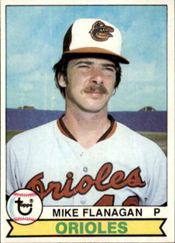
Two years after Mike Flanagan won the American League Cy Young Award, the Orioles were willing to trade him to the Cardinals.

The Orioles made Flanagan the centerpiece of a package they offered to the Cardinals in 1981. In exchange, the Orioles wanted two players the Cardinals were willing to trade, outfielder Sixto Lezcano and shortstop Garry Templeton.

The trade talks between the Cardinals and Orioles began in November 1981 and extended to the baseball winter meetings in December, but despite several attempts to structure a deal, the two sides couldn’t reach an agreement.

Neither club regretted the outcome. The Cardinals traded Templeton and Lezcano to the Padres for a future Hall of Famer, Ozzie Smith, who helped them win the World Series championship in 1982.

Rather than have Templeton at shortstop, the Orioles turned to an internal candidate, Cal Ripken, who, like Smith, developed into a Hall of Famer and helped them win the World Series championship in 1983.

Trade chip

A durable left-hander, Flanagan was 23-9 in 1979 when the Orioles won the American League pennant. Flanagan received 26 of 28 first-place votes in the Cy Young Award balloting.

In September 1981, Flanagan developed tendinitis in his left elbow and missed a turn in the rotation, ending a streak of 157 consecutive starts since 1977. “It’s just an oil change and a 30,000-inning checkup,” he told The Sporting News.

With Flanagan eligible to become a free agent after the 1982 season, the Orioles wanted to get him signed to a multiyear contract in November 1981. When he wouldn’t commit, the Orioles let it be known they were willing to deal him.

As the Baltimore Evening Sun noted, “Rather than take a chance on losing a pitcher of Flanagan’s caliber as a free agent, it is preferable to trade him.”

A player the Orioles wanted was outfielder Sixto Lezcano. Acquired by the Cardinals from the Brewers in December 1980, Lezcano asked to be traded after the 1981 season.

When he was with the Brewers, then an American League team, Lezcano had a .378 on-base percentage in games against the Orioles.

“The Orioles have coveted Lezcano almost since the day he broke in with Milwaukee,” The Sporting News reported, also noting that Orioles manager Earl Weaver “long has been a fan of Lezcano.”

Whitey Herzog, who had the dual role of Cardinals manager and general manager, wanted a pitcher in exchange for Lezcano. Orioles general manager Hank Peters “apparently is willing to part with Mike Flanagan,” according to The Sporting News.

Mix and match

A trade of Lezcano for Flanagan likely would have been made, but the Orioles opted to expand the deal to include Templeton.

Herzog wanted to trade Templeton, who was unhappy in St. Louis, and sought a shortstop in return. The shortstops the Orioles offered were veteran backup Lenn Sakata and rookie Bobby Bonner.

Jim Russo, who resided in St. Louis and scouted the National League for the Orioles, recommended Lezcano and Templeton. Russo was “instrumental in these discussions from the beginning,” the Baltimore Evening Sun reported.

In November 1981, the Baltimore Sun reported the proposed deal was Flanagan, outfielder Gary Roenicke and either Sakata or Bonner for Lezcano and Templeton.

Both sides were intrigued but agreed to suspend talks until the December baseball winter meetings in Hollywood, Fla.

At those meetings, the Baltimore Evening Sun reported, Orioles third baseman Doug DeCinces was added to the offer. The proposed trade was Flanagan, DeCinces, Roenicke and either Sakata or Bonner for Lezcano and Templeton.

The Orioles were willing to include DeCinces because they projected Cal Ripken, who debuted with them in August 1981, to be their third baseman, with either Sakata or Bonner playing shortstop.

The Cardinals, though, were not sold on having either Sakata or Bonner as their replacement for Templeton. A shortstop Herzog liked was Ivan DeJesus of the Cubs. Herzog also asked the Orioles for pitcher Sammy Stewart as a substitute for Flanagan. A right-hander who could start and relieve, Stewart had a 2.32 ERA for the 1981 Orioles. In 26 relief appearances that year, his ERA was 1.58.

“Herzog has a high regard for Flanagan,” the Baltimore Evening Sun reported, “but the pitcher he coveted most … was Sammy Stewart.”

Eager to make a deal, the Orioles tried to accommodate Herzog and the Cardinals. According to the Baltimore Sun, the Orioles, Cardinals and Cubs discussed a three-way trade. The Orioles would send Flanagan, DeCinces and Bonner to the Cubs for DeJesus and pitchers Mike Krukow and Lee Smith. Then the Orioles would swap DeJesus and Sammy Stewart to the Cardinals for Templeton, Lezcano and pitcher Bob Shirley.

“We’ve talked to the Cubs extensively, very extensively,” Hank Peters told the Baltimore Sun.

The Cubs, though, foiled the plan, trading Krukow to the Phillies on Dec. 8 for Keith Moreland, Dickie Noles and Dan Larson.

The Cardinals and Orioles continued to try to find the right combination of players to complete a deal. The Cardinals asked for outfielder John Shelby instead of Roenicke, the Baltimore Evening Sun reported, and the Orioles asked for outfielder Gene Roof.

According to the St. Louis Post-Dispatch, “one possible combination would have had Templeton and Lezcano going to the Orioles for pitchers Flanagan and Steve Stone and either Bonner or DeCinces.”

“Whatever the other teams offer St. Louis, we’ll make a better offer,” Earl Weaver said to the Baltimore Sun. “I’m definitely not against overloading the deal with pitchers if we can get a shortstop who bats .300 and a man who can go get fly balls like Sixto.”

On Dec. 10, the Baltimore Evening Sun reported, “The trade has been restructured so many times that the two teams have talked nine times in the last two days.”

Change in plans

By then, the Padres had entered the picture, and the Cardinals’ interest in the Orioles cooled considerably.

Before the winter meetings ended, the Padres agreed to trade Ozzie Smith and pitchers Steve Mura and Al Olmsted to the Cardinals for Templeton, Lezcano and pitcher Luis DeLeon.

A month later, in January 1982, the Cubs traded Ivan DeJesus to the Phillies for Ryne Sandberg and Larry Bowa, and the Orioles dealt DeCinces to the Angels for outfielder Dan Ford.

Ford became the Orioles’ right fielder in 1982, filling the role the team had envisioned for Sixto Lezcano.

The Orioles opened the 1982 season with Cal Ripken at third base and Lenn Sakata at shortstop. Ripken shifted to shortstop in July.

Mike Flanagan earned 15 wins for the 1982 Orioles.

In 18 seasons in the majors with the Orioles and Blue Jays, Flanagan had a record of 167-143.

Read Full Post »

Led by middle linebacker Sam Huff, the 1961 New York Giants unleashed the full force of their top-ranked defense on the St. Louis Cardinals.

On Oct. 8, 1961, Huff recovered a fumble and returned the ball 12 yards for a touchdown, sparking the Giants to a 24-9 victory in the Cardinals’ home opener at Busch Stadium.

Performing with ferocious flair, Huff epitomized the punishing power of the Giants’ defense and helped define the role of middle linebacker.

In his book, “The Best Game Ever,” author Mark Bowden wrote, “Huff was an outsized character, with enough ambition on and off the field to frighten the faint of heart. He was outspoken, brash and unapologetic … He played football with unmatched ferocity, reveling in the game’s violence.”

Elected to the Pro Football Hall of Fame, Huff played in the NFL for 13 seasons _ eight with the Giants and five with the Washington Redskins. The Giants got to the NFL championship game in six of Huff’s eight seasons with them.

Right fit

Huff was born in a coal mining camp in West Virginia. He became a baseball catcher and football lineman at West Virginia University. According to the Washington Post, the Cleveland Indians signed Huff to a baseball contract, but he chose professional football when the Giants selected him in the third round of the 1956 NFL draft.

As a rookie at Giants training camp, Huff was tried as a lineman on offense and defense, but was overmatched and became a target of criticism from head coach Jim Lee Howell.

In “The Best Game Ever” book, Huff said he regretted his decision to try football instead of baseball and told himself, “I think I’m in the wrong game.”

Huff and another unhappy rookie, kicker Don Chandler, decided to quit. As they were leaving camp, assistant coach Ed Kolman stopped them. According to author Mark Bowden, Kolman told Huff, “Sam, if you leave here, it will be the biggest mistake you’ve ever made in your life. I played this game, and I really believe you can be a star in this league.”

Huff stayed and convinced Chandler to do the same.

Giants defensive coordinator Tom Landry was experimenting with a concept that featured four linemen instead of the standard five. The key was to have a middle linebacker who, as author Mark Bowden described, was “a kind of super-athlete, a man as big as a lineman, quick enough and fast enough to play pass defense, and smart enough to recognize which role to play with every snap of the ball.”

The player Landry wanted for the role was Sam Huff. It turned out to be the perfect choice. Video

We meet again

Five years later, in 1961, Huff was enjoying the star status Ed Kolman had predicted for him. Landry had left to become head coach of the Dallas Cowboys. Allie Sherman, 38, replaced Howell as Giants head coach.

Sherman and the Giants got shocked in their season opener, losing 21-10 to the Cardinals at Yankee Stadium. Both teams were 2-1 when the rematch was held at St. Louis.

The Cardinals’ first three games were on the road and, though they played well, it took a toll. Several players were injured, including running backs John David Crow and Joe Childress, defensive end Joe Robb and defensive back Pat Fischer, and were unavailable for the home opener.

Head coach Pop Ivy started Prentice Gautt at halfback against the Giants, shifted tight end Taz Anderson to fullback and moved flanker Bobby Joe Conrad to tight end, the St. Louis Post-Dispatch reported.

The makeshift offense faced a Giants defense with a fantastic front four of ends Jim Katcavage and Andy Robustelli, and tackles Dick Modzelewski and Rosey Grier. The linebackers: Huff, Cliff Livingston and Tom Scott. The backfield: cornerbacks Erich Barnes and Dick Lynch, and safeties Jimmy Patton and Dick Nolan.

Under pressure

In the first half, the Cardinals produced no first downs, according to the Associated Press. The Giants led, 7-2, at halftime. The Cardinals’ points came when Larry Wilson blocked a Don Chandler punt and the ball bounced through the end zone for a safety.

The outcome was determined by the Giants’ defense within 100 seconds of the second half.

On the second play from scrimmage in the third quarter, Robustelli forced a fumble by quarterback Sam Etcheverry. Livingston recovered and ran five yards to the Cardinals’ 11-yard line. From there, Alex Webster carried on four consecutive plays, the last a one-yard touchdown plunge, and the Giants led, 14-2.

Three plays after the kickoff, Modzelewski knocked the ball loose from Etcheverry. Huff recovered and ran for the touchdown. Just like that, the Giants were ahead, 21-2.

In the book “Giants In Their Own Words,” Huff said, “I got myself up for every game, not just the big ones. It was just a natural competitive spirit. I think we all had it on the Giants’ defense … All of us on defense were close: Robustelli, Grier, Modzelewski, Katcavage. It’s like a platoon in the army. You depend on each other.”

Katcavage told author Richard Whittingham, “We used to tell (Huff) that we did all the work for him to set him up so he could make all those tackles and look good to the press and the fans. We loved to kid him, but Sam was a hell of a ballplayer. He could really diagnose plays, and he was a big factor in why our defense was as good as it was in those days.”

Special unit

Desperate to try anything against the Giants’ defense, Pop Ivy replaced Etcheverry with Ralph Guglielmi, making his first Cardinals appearance since being acquired from the Washington Redskins, but the Giants intercepted him three times.

The Cardinals committed seven turnovers (four interceptions and three fumbles), a total the Post-Dispatch simply called “amazing.” Dick Lynch picked off three passes and Cliff Livingston intercepted the other.

In addition to forcing the Cardinals to make mistakes, the Giants’ defense held them to a total of five first downs and 28 yards rushing.

“Our best defensive performance of the year,” Allie Sherman told the Post-Dispatch. Game stats

The Giants finished the 1961 season ranked No. 1 in team defense. They led the league in takeaways with 54 (the league average was 40) and their 220 points allowed were the fewest of any defense (the league average was 301). The Giants yielded a mere six rushing touchdowns in 14 regular-season games.


Read Full Post »

Baltimore Colts halfback Tom Matte made the longest run of his NFL career the first time he faced the St. Louis Cardinals.

On Oct. 12, 1964, Matte took a handoff from Johnny Unitas and rushed 80 yards for a touchdown, helping the Colts to a 47-27 victory over the Cardinals at Baltimore.

A versatile runner and reliable receiver who could fill in at quarterback, Matte played for the Colts from 1961-72. In 1969, he led the NFL in touchdowns scored, with 13. Eleven of those came on runs and two on receptions.

From Woody to Weeb to Shula

Born in Pittsburgh, Tom Matte was the son of Joe Matte, who played hockey for the minor-league St. Louis Flyers before reaching the NHL with the Chicago Black Hawks.

Playing for head coach Woody Hayes at Ohio State, Tom Matte was a running back as a sophomore and a quarterback his junior and senior seasons.

The Colts chose him in the first round of the 1961 NFL draft, one pick ahead of the Cardinals, who selected Auburn offensive tackle Ken Rice.

In Matte’s first two seasons with the Colts, Weeb Ewbank was the head coach. After Ewbank left to join the New York Jets, Don Shula took over. Matte was the Colts’ leading rusher in 1963, Shula’s inaugural season. Video

Both the Cardinals and Colts got off to strong starts in 1964. The Cardinals had a 3-0-1 record and the Colts were 3-1 heading into their Monday night showdown.

The game had been scheduled for Busch Stadium in St. Louis, but was moved to Baltimore’s Memorial Stadium because the baseball Cardinals were in the World Series against the Yankees and had first priority for use of the ballpark they shared with the NFL team.

On the afternoon of Oct. 12, a few hours before the kickoff to the football game in Baltimore, Tim McCarver hit a three-run home run in the 10th inning at Yankee Stadium, giving the Cardinals a 5-2 victory in Game 5. Needing one more win for the championship, the Cardinals returned to a hero’s welcome in St. Louis, where the World Series would conclude at Busch Stadium.

At Baltimore, the football Cardinals, facing a Colts lineup with the likes of Johnny Unitas, Raymond Berry and Lenny Moore, were hoping to fare as well as the baseball Cardinals did against a Yankees lineup with the likes of Mickey Mantle, Roger Maris and Elston Howard.

Swiss cheese defense

A capacity crowd of 60,213 filled Memorial Stadium for the Colts’ bonus home game.

Behind the exceptional blocking of center Dick Szymanski, guards Jim Parker and Alex Sandusky, and tackles George Preas and Bob Vogel, Colts rushers romped for 266 yards and four touchdowns against a shell-shocked Cardinals defense.

Unitas and running backs Lenny Moore and Tony Lorick scored rushing touchdowns for the Colts, but the most spectacular was Matte’s.

In the first minute of the fourth quarter, the Colts were on their 20-yard line and leading, 37-13, when Unitas called a simple draw play.

Facing the Cardinals for the first time, Matte took the handoff and “galloped like a scared rabbit” through the middle of the defense, the Baltimore Evening Sun noted. Matte credited receiver Raymond Berry with making a key block on defensive back Jimmy Hill.

“We caught them in a blitz with their outside linebacker coming in,” Matte told the Baltimore Evening Sun. “Raymond knocked off the halfback (Hill). Then I just had to outrun them. It was a good feeling to do so.”

The 80-yard run was the longest by a Colts player since 1958.

“I didn’t realize the Baltimore ground game would be as strong as it is,” Cardinals head coach Wally Lemm told the Baltimore Evening Sun.

Winning combination

The Colts’ 47 points were the most scored against the Cardinals since they moved to St. Louis from Chicago in 1960.

The Cardinals played most of the game without left defensive end Joe Robb, who pulled an abdominal muscle when he knocked down a Unitas screen pass in the early minutes. When Robb departed, “Unitas exploited that side of the defense with his stable of runners,” Lemm said to the St. Louis Post-Dispatch.

Cardinals linebacker Bill Koman, a former Colt, had no alibis. “We were not ready, and you have to be when you play the Colts,” Koman said to the Baltimore Evening Sun.

With the robust rushing attack, Unitas didn’t need to pass much. He completed eight throws, including one for a touchdown to Raymond Berry, who wrestled the ball away from Jimmy Hill.

“He’s in a class by himself,” Hill told the Baltimore Sun. “Raymond has the best moves of any end in the business. I almost have to concede him the short pass or he’ll put a good move on me for a quick six. Berry never does the same thing twice. I’ve seen him fake guys down to their knees.”

Rough and ready

The Cardinals’ offense wasn’t much better than their defense. Two of the Cardinals’ touchdowns came late in the fourth quarter after the Colts sent in substitutes.

The Colts’ defensive coordinator was Charley Winner, who two years later would replace Lemm as Cardinals head coach.

“Standing out above all the things that made the Colts a very fine football team last night was the viciousness and consistency of their tackling and charging,” the Baltimore Evening Sun observed. “It was magnificent.”

The Baltimore Sun concurred: “No Colts team, including the two championship ones, ever looked as devastating. It was a brutal game, with the Colts slamming the Cardinals all over the field.”

The Colts were so dominant that they won by 20 points even though the Cardinals were not called for a penalty.

Asked by the Baltimore Sun to describe the turning point, Lemm replied, “When we kicked off to start the game.” Game stats

The Cardinals went on to a 9-3-2 record, finishing in second place to the Cleveland Browns (10-3-1) in the East Division. The Colts (12-2) were champions of the West Division. In the NFL championship game, the Browns beat the Colts, 27-0. The Browns haven’t won a NFL championship since.

Read Full Post »

(Updated Dec. 8, 2024)

Bob Klinger, a good pitcher put into a bad spot by his manager, was involved in one of the most exciting plays in Cardinals lore.

On Oct. 15, 1946, Klinger was the Red Sox pitcher who gave up the winning run to the Cardinals in World Series Game 7.

Though he hadn’t pitched in a month, Klinger was brought into a situation packed with pressure: bottom of the eighth inning, score tied, a championship on the line.

Adding to the degree of difficulty, the first man Klinger, a right-hander, had to face was a fearsome left-handed hitter.

He almost completed the task unscathed, but Enos Slaughter’s daring dash from first base on a Harry Walker hit lifted the Cardinals to victory and made Klinger the losing pitcher.

Rescued by Pirates

Klinger was born in Allenton, Mo., before the small railroad town was annexed by Eureka, Mo., home to the Six Flags St. Louis amusement park.

The Cardinals signed him and he spent nine years in their farm system.

After posting a 16-12 record for Elmira, N.Y., in 1933, Klinger was called up to the Cardinals in September but didn’t get into a game, according to the Society for American Baseball Research. He was on the Cardinals’ roster at spring training in 1934, but was returned to the minors before the season started.

Selected by the Pirates in the Rule 5 draft for $7,500 in October 1937, Klinger, 29, made his major-league debut on April 19, 1938, pitching two scoreless innings of relief and getting the win against the Cardinals at St. Louis. Boxscore

Moved into the starting rotation at the end of May, Klinger had a splendid rookie season (12-5, 2.99 ERA) for the second-place Pirates. Against the Cardinals that year, he was 4-1 with a 1.66 ERA.

Klinger was 62-58 in six seasons with the Pirates before he entered the Navy in April 1944. Discharged in December 1945, Klinger was released by the Pirates before he got to pitch for them again in the regular season. The Red Sox signed him on May 9, 1946, hoping he would bolster their bullpen.

“Klinger has the reputation of being a fireball pitcher,” the Boston Globe reported, “and that is the kind of fellow any club needs … for relief work.”

Title contender

Klinger, 38, joined a smoking hot Red Sox team that won 21 of its first 24 games and cruised to the American League championship.

At a time when most starting pitchers took pride in completing games, Klinger contributed nine saves, tops in the American League in 1946, and was 3-2 with a 2.37 ERA, but his season ended on a downbeat note.

On Sept. 19, against the Browns at St. Louis, Klinger entered in the ninth inning to protect a 5-4 lead, but all four batters he faced reached base and two scored, giving the Browns a victory and Klinger a loss. He didn’t appear in any more games that month. Boxscore

Ten days later, before the Red Sox played their Sept. 29 season finale at home against the Senators, Klinger learned his 2-year-old son was seriously ill “with what was feared to be polio,” the Boston Globe reported. Klinger left immediately to return home to Pacific, Mo.

The Red Sox, who finished 12 games ahead of the second-place Tigers, waited to learn who they would play in the World Series. The Cardinals and Dodgers completed the National League schedule tied for first and needed a best-of-three playoff to determine the champion.

After the Cardinals clinched the pennant on Oct. 3, the World Series opened in St. Louis on Oct. 6. The Cardinals and Red Sox split six games, setting up the finale at Sportsman’s Park.

Trailing 3-1, the Red Sox rallied for two runs in the top of the eighth. Reliever Joe Dobson was lifted for a pinch-hitter during the inning, and Red Sox manager Joe Cronin had two possible replacements warming in the bullpen, Klinger and Earl Johnson, a left-hander.

Controversial choice

With Enos Slaughter, a left-handed batter who led the National League in RBI in 1946, due to lead off the bottom of the eighth, Earl Johnson seemed to some to be the obvious choice, but Cronin opted for Klinger.

“Why bring in Bob Klinger, a National League castoff, to pitch to the Cardinals in the eighth inning of the deciding game with the score tied?,” New York Sun columnist Herbert Goren wrote. “With Slaughter leading the inning, the percentage selection would have been Johnson.”

Others thought Cronin should have used right-hander Tex Hughson, a 20-game winner. Two days earlier, Hughson pitched 4.1 scoreless innings of relief in Game 6. As Sid Keener of the St. Louis Star-Times noted, Hughson held “a higher rating than Klinger in any manager’s book.”

Klinger hadn’t pitched in a game since his shelling against the Browns on Sept. 19, but Cronin apparently chose him because he was the club’s saves leader and had knowledge of National League hitters.

The problem with that logic was hitters were familiar with Klinger, too. Slaughter had a career batting average against Klinger of .338, with 23 hits. Harry Walker, who also batted left, had a career batting average versus Klinger of .300, with nine hits.

Hitting and running

Slaughter greeted Klinger with a sharp single to center. Whitey Kurowski, attempting to bunt Slaughter to second, popped out to Klinger.

Del Rice, a right-handed batter who had one home run for the season, hit “a towering fly to deep, darkest left field,” the Boston Globe reported, but Ted Williams caught it for the second out and Slaughter held at first base.

Harry Walker was up next. The Cardinals called for a hit-and-run. Slaughter started running as Klinger delivered a 2-and-1 pitch and Walker stroked it to the gap in left-center.

“Slaughter turned second base, approaching third base at full speed, and was hell-bent for home,” the St. Louis Star-Times reported.

Center fielder Leon Culberson, who had replaced an injured Dom DiMaggio, gloved the ball and threw to the cutoff man, shortstop Johnny Pesky. With Slaughter steaming toward home, Pesky threw to the plate “a looping toss with no oomph behind it,” the Star-Times noted.

Red Schoendienst, Slaughter’s teammate, recalled to Cardinals Yearbook, “If it had been a better throw, he would’ve gotten Enos.”

Slaughter slid in safely, giving the Cardinals a 4-3 lead. They survived a Red Sox threat in the ninth, clinching their third World Series title in five years. Boxscore and Video

Klinger pitched one more season in the majors, going 1-1 with five saves for the 1947 Red Sox. At 40, he returned to the Cardinals’ system in 1948, pitching for manager Johnny Keane at Houston.

Read Full Post »

For a team that finished out of contention in fifth place, the Cardinals had a lot of players others valued.

On Oct. 10, 1961, seven Cardinals were chosen in the National League expansion draft. No other club lost more players in filling the rosters of the Houston Colt .45s and New York Mets.

“I think it proves we have a lot of good players in our organization,” Cardinals general manager Bing Devine told the St. Louis Globe-Democrat.

Two of the seven selected from the Cardinals went on to become National League all-stars, and another would play in three World Series.

Cash transactions

The expansion draft was held at the Netherland-Hilton Hotel in Cincinnati the day after the Yankees and Reds completed the 1961 World Series at Crosley Field.

The draft was held in two phases:

_ In Phase One, the Colt .45s and Mets drafted players left unprotected by the eight existing National League clubs. The expansion club paid from $50,000 to $75,000 for each player it took. The money went to the club that lost the player.

_ Phase Two was described as a premium draft. Each existing National League club had to offer two players who had been protected from the regular draft. The Colt .45s and Mets each could take four players in the premium draft, but no team could lose more than one player. Each premium player taken cost the expansion club $125,000.

The Cardinals, who finished with an 80-74 record, 13 games out of first in 1961, lost pitcher Bob Miller to the Mets in the premium draft.

Of the six Cardinals chosen in the regular draft, pitcher Craig Anderson, catcher Chris Cannizzaro and outfielder Jim Hickman went to the Mets, and infielder Bob Lillis and outfielders Ed Olivares and Don Taussig went to the Colt .45s.

As compensation, the Cardinals received $525,000 _ $125,000 for Miller, $75,000 each for Anderson, Cannizzaro, Lillis and Taussig, and $50,000 each for Hickman and Olivares.

“The $525,000 will be needed to balance the books on a red ink season at the gate,” the St. Louis Post-Dispatch reported.

Among the available Cardinals not taken in the draft were utility player Red Schoendienst, outfielder Don Landrum and infielder Alex Grammas.

Like Miller, Grammas was made available in the premium draft. After Miller was chosen, the Cardinals were able to protect Grammas, a valued utility player.

“Grammas is important until Jerry Buchek is completely ready to take over at shortstop,” Cardinals manager Johnny Keane told the Globe-Democrat.

As for Landrum, who hit .313 in the Cardinals’ farm system in 1961, Keane said to the Post-Dispatch, “I’ll be glad to have him available as center field insurance in case anything happens to Curt Flood.”

Pitching potential

The players the Cardinals disliked losing in the draft were the two right-handed pitchers, Miller, 22, and Anderson, 23.

Miller “has all the tools to be a real good pitcher,” Keane told the Globe-Democrat. He said Anderson “has a fine potential.”

Solly Hemus, who was replaced by Keane as Cardinals manager in July 1961, had become a Mets coach and advocated for the drafting of the Cardinals pitchers.

As a rookie in 1961, Anderson was 4-3 with a save and a 3.26 ERA in 25 relief appearances for the Cardinals.

Miller, a St. Louis native, was 18 when he signed with the Cardinals on June 20, 1957, after graduating from Beaumont High School. Cardinals scout Joe Monahan rated Miller “the finest pitching prospect in the St. Louis area in all the years I’ve scouted,” The Sporting News reported.

A week after turning pro, Miller made his big-league debut with the Cardinals. Boxscore

Miller was one of two 18-year-olds on the 1957 Cardinals’ pitching staff. The other was Von McDaniel.

In four seasons (1957 and 1959-61) with the Cardinals, Miller was 9-9 with three saves and a 3.83 ERA.

Talent search

The first player selected by the Mets in the regular draft was Giants catcher Hobie Landrith, a former Cardinal. Giants shortstop Eddie Bressoud was the first choice of the Colt .45s. Bressoud finished his career in 1967 as a utility player for the World Series champion Cardinals.

The Reds, Dodgers and Pirates lost six players apiece in the draft. The Giants, Phillies and Cubs each had five players drafted.

Here, in alphabetical order, is a look at what became of the seven players drafted from the Cardinals:

_ Craig Anderson: On May 12, 1962, Anderson won both games of a doubleheader for the Mets against the Braves. Then he lost his next 16 decisions, finishing the season with a 3-17 record. Anderson’s four saves led the Mets’ staff.

_ Chris Cannizzaro: The 1962 Mets used seven catchers, but Cannizzaro played more games than any of them. Cannizzaro threw out 55.6 percent of the runners attempting to steal against him in 1962. Seven years later, Cannizzaro was with another National League expansion team, the Padres, and was their representative on the all-star team.

_ Jim Hickman: He spent five seasons with the Mets and was the franchise’s first player to hit for the cycle and to hit three home runs in a game. With the Cubs in 1970, Hickman was an all-star and hit 32 home runs with 115 RBI. He finished his career with the 1974 Cardinals.

_ Bob Lillis: He started the most games at shortstop for the 1962 Colt .45s. As Astros manager from 1982-85, Lillis had a .514 winning percentage.

_ Bob Miller: He was one of two Bob Millers who pitched for the 1962 Mets. The former Cardinal was 1-12 that season. The other Bob Miller was 2-2. St. Louis’ Bob Miller went on to pitch 17 seasons in the majors for 10 teams. With the 1964 Dodgers, he led National League pitchers in appearances (74). Miller pitched in the World Series for the Dodgers in 1965 and 1966, and for the Pirates in 1971.

_ Ed Olivares: He never got to play for the Colt .45s, or any other team in the majors, after leaving the Cardinals, but his son, Omar Olivares, pitched for the Cardinals from 1990-94. Ed and Omar Olivares were the first father and son to play for the Cardinals.

_ Don Taussig: His one home run for the 1962 Colt. 45s came against the Cardinals’ Larry Jackson and was the winning run in a 4-3 victory. Boxscore

Read Full Post »

The Cardinals’ climax to a year of strangeness was fittingly bizarre.

On Oct. 2, 1981, the Cardinals’ chances of reaching the playoffs evaporated in the ninth inning of a game played in a mostly empty stadium on a night with the feel of winter in Pittsburgh.

After the Cardinals came from behind with a pair of home runs in the top of the ninth to tie the score, the last-place Pirates got a run in the bottom half of the inning against the National League’s best closer and won, 8-7.

The loss dropped the Cardinals 1.5 games behind the first-place Expos with two left to play. The Expos clinched the division title the next day, beating the Mets.

In a year when baseball made a sick joke of the season _ foreshadowing a series of decisions that purposely devalue regular-season excellence and reward mediocrity _ the Cardinals finished the 1981 schedule with the best record in the National League East and were excluded from the farce called the postseason.

Bonehead baseball

After major-league players went on strike in June 1981 and ended the walkout in August, those who run baseball decided to have two regular seasons in 1981. All division leaders at the time the strike began were declared champions of the first season. The second season consisted of games played after the strike. Like with the first season, those who finished in first place in a division went to the playoffs.

It didn’t matter to baseball officials that all teams didn’t play the same number of games in either season, or that some played more road games than home games. Baseball held an expanded playoffs _ with four division champions in each league instead of two _ and hoped the manufactured excitement would make fans forget being spat on by the strike.

The Cardinals (30-20) placed second to the Phillies (34-21) in the East Division in the first season.

With three games remaining in the second season, the Cardinals (27-22) trailed the first-place Expos (28-22) by a half-game. The Cardinals closed with a series at Pittsburgh versus the Pirates while the Expos were at New York against the Mets.

Winter wonderland

The series opener at Pittsburgh’s Three Rivers Stadium was played on a Friday night when the temperature at game time was 39 degrees and the wind chill made it feel like 25.

“A swirling wind made pop-ups adventurous, and intermittent drizzle felt like snowflakes,” the Pittsburgh Press reported.

According to the Pittsburgh Post-Gazette, “The weather conditions were fitting for a Steelers playoff game in late December.”

A mere 2,348 spectators attended in a stadium with capacity for 47,971. It was the smallest attendance for a Pirates game since the stadium opened in 1970.

The brand of baseball the frozen faithful witnessed that Friday night caused shivers, too. The Pirates made four errors, one more than the Cardinals.

“Even on ordinary plays, balls popped out of gloves like in a game of flip,” the Pittsburgh Press noted. “There were more drops than in an eye doctor’s office.”

Blaming the weather, Pirates manager Chuck Tanner said, “Hard gloves and cold hands produce a lot of errors.”

Cardinals catcher Darrell Porter suggested frayed nerves played a factor, too. “I wouldn’t say we’re tight, but we haven’t played like we’re in a pennant race,” Porter said.

Coming back

Trailing 7-2, the Cardinals scored three in the sixth to get within two.

In the ninth, George Hendrick led off with a home run against Rod Scurry, working his third inning of relief, but the next two batters made outs.

Porter was the Cardinals’ last hope. After he fell behind in the count, 1-and-2, Porter pounced on an inside fastball.

“I don’t know if I’ve ever hit a ball better than that,” Porter told the St. Louis Post-Dispatch.

The ball barely stayed inside the foul pole but cleared the wall in right by plenty for a home run, tying the score at 7-7.

“When something like that happens, you think you’re going to win,” Porter said to the Pittsburgh Post-Gazette.

Especially, Porter might have added, when the Cardinals had Bruce Sutter to pitch the bottom of the ninth.

Sutter led the National League in saves for the third consecutive year in 1981.

Walks will haunt

Speedster Omar Moreno led off the ninth for the Pirates and drew a walk. After Tim Foli’s sacrifice bunt moved Moreno to second, Sutter gave an intentional pass to Dave Parker.

Mike Easler batted next. He played in the Cardinals’ farm system in 1976, and he would become the Cardinals’ hitting coach for three years when Tony La Russa was manager.

With the count 2-and-2, Easler sliced a double to left-center, scoring Moreno with the winning run. Boxscore

“Sutter has to pitch low to be effective,” Easler told the Pittsburgh Press. “His pitches dropped a foot. The one I hit did, too, only it was high and dropped right into my swing.”

Flim-flam

In its game story, the Pittsburgh Press declared, “The Pirates didn’t bury the Cardinals. The Cardinals picked up the shovel, dug the hole and jumped in.”

The loss to the Pirates, coupled with the Expos’ 3-0 victory that night, meant the Expos would have to lose their remaining two games for the Cardinals to have a chance to finish atop the division. It didn’t happen. The Expos finished (30-23) a half-game ahead of the Cardinals (29-23).

The Cardinals completed the 1981 schedule with the best overall record in the East Division at 59-43, two games ahead of the Expos (60-48) and 2.5 ahead of the Phillies (59-48).

The Reds had the best overall record in the West Division at 66-42, but, like the Cardinals, didn’t finish atop the division in either season, and didn’t get into the 1981 playoffs.

Incredibly, baseball devised a system in which four National League teams got into the 1981 playoffs, but excluded the two with the best overall records.

Whitey Herzog, who served the dual roles of Cardinals manager and general manager, said baseball’s hierarchy were “dumb dips,” The Sporting News reported.

“This second season is a farce,” Herzog said. “As good as the game was, I can’t believe they messed with it. You wonder why you beat your brains out.”

Since then, baseball has continued to dilute the regular season. Now, a team with the fifth-best record in its league qualifies for the playoffs.

It will get worse. Team owners want to expand the playoffs, following the model from 2020, when 16 teams qualified after the regular season was reduced because of the pandemic. Two of the playoff qualifiers had losing records. Three others, including the Cardinals, who didn’t even play all their scheduled games, got in by finishing two wins over .500.

Read Full Post »

« Newer Posts - Older Posts »