Feeds:
Posts
Comments

Archive for the ‘Opponents’ Category

For many, it no longer paid to watch the Cardinals try to remain in the 1989 division title chase.

On Sept. 14, 1989, the paid attendance to see the Pirates play the Cardinals in a Thursday afternoon game at Busch Memorial Stadium in St. Louis was 1,519.

It was the lowest paid attendance total for a Cardinals game since the stadium opened in May 1966.

The Cardinals’ previous lowest paid attendance figure at Busch Memorial Stadium was 3,380 on Sept. 27, 1972, for a game against the Mets. The Wednesday afternoon game was the regular-season home finale for the Cardinals, who began the day 23 games out of first place at 71-79. Boxscore

In 1989, the Cardinals were supposed to have an off-day on Sept. 14, but a game hastily was scheduled to make up for the previous night when rain halted a scoreless standoff with the Pirates in the sixth inning.

Change of plans

The three-game series with the Pirates should have been a chance for the Cardinals to secure their position in the National League East Division race, but instead it turned out to be a continuation of a slide out of contention.

The Cardinals’ woes began a few days earlier at Wrigley Field in Chicago. The Cardinals (76-63) were 1.5 games behind the Cubs (78-62) entering the three-game weekend series. The Cubs won two of three and the Cardinals returned home to face the Pirates (63-79).

Held to a total of three runs, the Cardinals lost the first two games to the Pirates and went into the Sept. 13 series finale 4.5 games behind the Cubs.

The Wednesday night game matched starting pitchers Doug Drabek of the Pirates and Jose DeLeon of the Cardinals. They waged a scoreless duel before the game was called off because of rain with one out in the top of the sixth. Boxscore

The game, to be replayed entirely, was rescheduled for 12:35 p.m. Thursday, Sept. 14. With little notice of an unscheduled game for a day when many were at work or school, few bought tickets.

In addition to the 1,519 paid attendees, the Cardinals allowed those with ticket stubs from the previous night’s rain-halted game to get in free. The Cardinals said 2,015 people used the free vouchers, bringing the total number of spectators to 3,534.

Stranger things

The few fans were confined to the lower deck of the stadium. The sight of such a small gathering for a Cardinals home game was unsettling to both teams.

“It was almost like a 10 o’clock in the morning game in spring training,” Pirates manager Jim Leyland said to the Pittsburgh Post-Gazette.

Pirates outfielder Andy Van Slyke, a former Cardinal, told the Pittsburgh Press: “I’d have given you my paycheck if you told me I’d have played before 3,500 in Busch Stadium in September with the Cardinals four games out.”

Said Cardinals manager Whitey Herzog: “We’d have done better (in ticket sales) if we’d played the game in Pittsburgh.”

Adding to the weird vibe was the smoke wafting into the stadium from a fire at a burning warehouse nearby. Herzog told the St. Louis Post-Dispatch the scene looked to him “like a graveyard with lights.”

Post-Dispatch columnist Bernie Miklasz noted, “The Cardinals’ season is burning and you could smell it at Busch Stadium.”

Hitting the skids

The game matched pitchers Jeff Robinson, a converted reliever, for the Pirates versus Bob Tewksbury, making his first start as a Cardinal.

The Cardinals led, 2-1, before the Pirates scored three runs in the seventh against relievers Dan Quisenberry and Ken Dayley.

In the ninth, trailing 4-2, the Cardinals scored a run on consecutive doubles by Tim Jones and Ozzie Smith. With Smith on second and one out, Vince Coleman laced a liner, but it was snared by shortstop Jay Bell, who caught Smith venturing too far off second base and turned a game-ending double play. Boxscore

The sweep by the Pirates gave the Cardinals five losses in a row and pushed them 5.5 games behind the Cubs. The Cardinals scored a total of nine runs in those five defeats.

“It’s hard to say when the nail is in the coffin,” Dayley said, “but there isn’t much daylight getting in right now.”

Said Jones: “Luckily, with the way we played, there weren’t 30,000 people in the stands.”

The Cubs (93-69) went on to win the division crown. The Mets (87-75) finished second and the Cardinals (86-76) were third.
Read Full Post »

(Updated Sept. 26, 2024)

Enos Slaughter and the Cardinals tried to intimidate Danny Murtaugh and the Pirates, but the tactic backfired.

On Sept. 5, 1949, at Sportsman’s Park in St. Louis, Slaughter slashed Murtaugh in the chest with his spikes while sliding into second base in an unsuccessful effort to break up a double play.
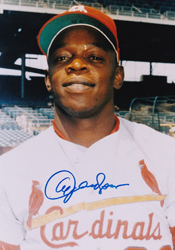
Murtaugh, a former Cardinals prospect, considered the rough contact unnecessary because he had thrown the ball to the first baseman before Slaughter arrived at second.

Slaughter’s spikes-high slide shook the Pirates from a slumber.

Head hunters

On April 27, 1949, during a 7-1 Pirates victory at St. Louis, Cardinals pitchers twice hit leadoff batter Stan Rojek with pitches. The second one, by reliever Ken Johnson, beaned Rojek. The Pirates “thought it was deliberate,” according to The Pittsburgh Press. Boxscore

Rojek was sidelined for a week and the Pirates lost eight of their next nine.

Five months later, when they went to St. Louis for a Labor Day doubleheader, the Pirates (57-71) were 23.5 games behind the first-place Cardinals (81-48).

In the first game of the doubleheader, Slaughter produced a triple, home run and five RBI, carrying the Cardinals to a 9-1 triumph and handing the Pirates their eighth consecutive loss. Boxscore

Rough stuff

In the second inning of the second game, Nippy Jones led off with a single. Slaughter hit a grounder to the second baseman, Murtaugh, who fielded it cleanly but bobbled the ball as he started to throw. The error allowed Slaughter to reach first and moved Jones to third with none out.

Marty Marion batted next and hit a grounder to third baseman Eddie Bockman. As Jones held third, Bockman fired a throw to Murtaugh at second.

Murtaugh caught the ball on the bag for the forceout of Slaughter, pivoted and threw to first baseman Jack Phillips in time to complete the double play. Murtaugh’s throw “barely missed Enos’ head,” the St. Louis Star-Times reported.

Slaughter, who had gone into his slide, raised his feet high and crashed hard into Murtaugh, who was cut “across the right side of his chest,” drawing blood, The Pittsburgh Press reported.

Slaughter got up, dusted himself off, said nothing to Murtaugh and trotted into the Cardinals’ dugout along the third-base line.

Murtaugh “didn’t realize he was bleeding until he put his hands inside his shirt,” The Pittsburgh Press observed.

Sticks and stones

Incensed, Murtaugh shouted at Slaughter in words “too hot to handle or to take without retort,” according to the St. Louis Post-Dispatch.

Slaughter motioned for Murtaugh to come over and fight. Murtaugh tossed his glove aside and moved rapidly toward Slaughter, who advanced onto the field.

Nippy Jones alertly left the third-base bag and clamped his arms around Murtaugh to keep him from pursuing Slaughter. Members of the Cardinals stopped Slaughter from proceeding.

No one was ejected because “nothing more harmful than expressive nouns and adjectives” were exchanged, the St. Louis Star-Times noted.

Murtaugh was given first aid in the dugout and insisted on staying in the game.

The Pirates built a 4-0 lead before the Cardinals fought back, tied the score and forced extra innings.

Sweet revenge

With one out and none on in the 10th, Murtaugh lashed a double into right-center. Ed Fitz Gerald ran for him and scored when Rojek doubled with two outs, giving the Pirates a 5-4 lead.

In the bottom of the 10th, Slaughter led off, singled and moved to second on Marty Marion’s sacrifice bunt, but Vic Lombardi got the next two batters to ground out, sealing the win. Boxscore

Three weeks later, the first-place Cardinals held a 1.5-game lead over the Dodgers when they went to Pittsburgh for a two-game series with the Pirates.

Still steaming from the beaning of Rojek and the spiking of Murtaugh, the Pirates won both games, 6-4 on Sept. 27 and 7-2 on Sept. 29, knocking the Cardinals from first place.

The Cardinals went on to Chicago for a season-ending series with the Cubs, lost two of three and finished in second, a game behind the champion Dodgers.

Cardinals prospect

Murtaugh began his professional career in the Cardinals’ organization, but never played for their big-league club.

In the book “Baseball’s Best Managers,” author Harold Rosenthal wrote, “The beginnings for Danny Murtaugh in baseball were modest. He might just as easily have wound up as a foreman in some phase of shipbuilding had the Cardinals passed up Chester, Pa., in their extensive series of tryout camps. The offer wasn’t much, but the $200 a month looked positively brilliant to young Danny alongside the 34 cents an hour rate he was drawing as a passer in a rivet gang at the Chester shipyards. He had only two alternatives on that job _ catch the red-hot rivet in a cup or in his shirt if he missed.”

Murtaugh spent five seasons (1937-41) in the Cardinals’ farm system.

On June 28, 1941, the Cardinals sold Murtaugh’s contract to the Phillies. Five years later, the Cardinals reacquired Murtaugh, but sent him to their farm club at Rochester, where he batted .322. After the season, the Braves selected Murtaugh in the Rule 5 draft.

Murtaugh finished his big-league playing career with the Pirates. He hit .290 for them in 1948 and .294 in 1950.

In 1957, Murtaugh became the Pirates’ manager. He managed them for 15 seasons and led them to World Series championships in 1960 and 1971.

Read Full Post »

After losing 10 of 11 decisions against the Dodgers, Al Jackson persevered and outdueled Sandy Koufax.

A left-handed pitcher who relied on a sinker for groundball outs, Jackson made his major-league debut in 1959 with the Pirates, spent most of his career with the Mets and had two strong seasons with the Cardinals.
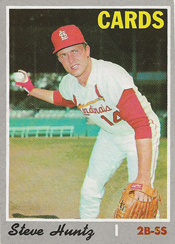
During his first stint with the Mets from 1962-65, Jackson was 1-9 versus the Dodgers. He lost eight consecutive decisions against them before spinning a three-hitter and outdueling Claude Osteen in a 1-0 Mets victory on June 21, 1965, at Dodger Stadium. Boxscore

Two months later, on Aug. 10, 1965, Koufax got his 20th win of the season, striking out 14 Mets and beating Jackson in a 4-3 Dodgers victory at Los Angeles. Boxscore

The Mets traded Jackson and third baseman Charlie Smith to the Cardinals for third baseman Ken Boyer after the 1965 season.

Tough luck

After opening the 1966 season as a reliever, Jackson was moved into the Cardinals’ starting rotation in May, replacing Ray Sadecki, who got traded to the Giants.

The first time Jackson faced the Dodgers as a Cardinal was June 1, 1966, at St. Louis. Although he pitched well, he again took the loss. Jackson held the Dodgers to three hits in seven innings, but Koufax pitched a shutout in a 1-0 Dodgers victory.

Jackson “deserved a better fate, but he was pitted against a master,” the Los Angeles Times observed.

The Dodgers scored an unearned run in the seventh. With one out and none on, Jackson “got a slider too high and too close” to Willie Davis, who hit the pitch into the right-field corner for a triple, the St. Louis Post-Dispatch reported. When right fielder Bobby Tolan’s throw eluded relay man Julian Javier, Davis raced to the plate on the error.

“I’m sure Jackson would like to have that pitch back,” Davis said. Boxscore

The loss dropped Jackson’s career record versus the Dodgers to 1-10.

Beating the best

One month later, on July 1, 1966, at Dodger Stadium, Jackson and Koufax again were matched against one another.

Koufax had a five-game winning streak versus the Cardinals. His season record was 14-2. Jackson had been given an extra day of rest since making his last start five days earlier against the Astros.

The two left-handers held their opponents scoreless through the first six innings. With one out in the seventh, Orlando Cepeda singled and Mike Shannon slugged a home run, giving the Cardinals a 2-0 lead.

Jackson did the rest, pitching a six-hit shutout. Only one Dodgers baserunner, Wes Parker in the first inning, reached second base. Jackson got the Dodgers to ground into three double plays and walked none.

“When I have a good day, I work my infielders pretty hard,” Jackson said.

The game was completed in 1 hour, 53 minutes.

Jackson said “my breaking ball wasn’t working so good” and his fastball initially was “too straight.” A word of advice from pitching coach Joe Becker helped.

Becker “told me to become a pitcher again, instead of a thrower, and I started keeping the ball down,” Jackson said.

In the ultimate compliment, Koufax said, “I had the best stuff I’ve had all year, but Al just pitched better.” Boxscore

Action Jackson

Jackson’s gem changed his luck against the Dodgers. Six of his last eight career decisions versus the Dodgers were wins. Jackson was 2-2 with an 0.92 ERA versus the Dodgers for the 1966 Cardinals and 3-0 against them for the 1967 Cardinals.

Jackson, who was traded back to the Mets after the Cardinals won the 1967 World Series title, finished with a career mark of 7-12 and a 3.41 ERA versus the Dodgers. He was 5-2 against them as a Cardinal; 2-10 as a Met.

Here is the breakdown of Jackson’s Dodgers decisions: 3-0 vs. Don Sutton, 1-0 vs. Claude Osteen, 1-0 vs. Jim Brewer, 1-2 vs. Don Drysdale, 1-5 vs. Koufax, 0-2 vs. Joe Moeller, 0-2 vs. Pete Richert and 0-1 vs. Bill Singer.

Jackson had an overall major-league record of 67-99 with a 3.98 ERA. In two seasons with St. Louis, he was 22-19 with a 2.97 ERA.

In 1966, when he was 13-15 with a 2.51 ERA, Jackson was second on the Cardinals in wins, games started (30), complete games (11) and innings pitched (232.2). He was 12-14 with a 2.61 ERA as a starter; 1-1 with an 0.73 ERA in six relief appearances.

Jackson was 9-4 with a 3.95 ERA in 39 appearances for the 1967 Cardinals. He was 5-3 with a 4.88 ERA in 11 starts; 4-1 with a 2.81 ERA as a reliever.

Read Full Post »

Steve Huntz had impressive timing for a player with unimpressive numbers.

On Aug. 28, 1969, Huntz hit his first major-league home run, giving the Cardinals a 2-1 walkoff victory over the Astros at St. Louis.
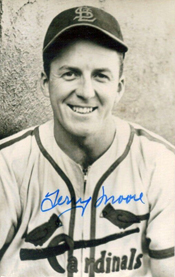
Huntz was an unlikely candidate for such a feat. The rookie infielder entered the game with a season batting average of .186.

Prospect with pop

Huntz began his professional career when he signed with the Orioles as an amateur free agent after three successful varsity seasons at St. Ignatius High School in Cleveland.

In 1964, his first professional season, Huntz had 74 RBI for the Class A Midwest League Fox Cities Foxes. Of his 98 hits, 34 were for extra bases.

Cardinals scouts Jim Belz and Joe Mathes liked what they saw from Huntz. Based on their recommendations, the Cardinals paid $8,000 for the right to select Huntz in the November 1964 minor-league draft.

Huntz broke his leg in 1965 and sat out the season. He came back in 1966, played for Class AA Arkansas and committed 44 errors at shortstop.

After spending the 1967 season with Class AAA Tulsa, Huntz was called up to the big leagues when rosters expanded in September and appeared in three games for the Cardinals.

Huntz, a switch-hitter, was considered a prime candidate to earn a spot with the 1968 Cardinals as a utility player, but he batted .167 in spring training and “displayed limited range at the most critical position as backup man to Dal Maxvill at shortstop,” The Sporting News reported.

The Cardinals kept veteran Dick Schofield as their reserve shortstop and sent Huntz to Tulsa for the 1968 season.

Playing for manager Warren Spahn, Huntz hit .284 with 35 doubles and 74 RBI, helping Tulsa win the 1968 Pacific Coast League championship. Though Huntz committed 41 errors at shortstop, the Cardinals were intrigued by his power.

“He’s an infielder with sting at the plate and there aren’t many prospects like that around,” said Cardinals assistant farm director Fred McAlister.

As for fielding, McAlister said, “Huntz does a good job of moving to his right, bracing himself and gunning the ball. He can’t move to his left the way Dal Maxvill can, but how many men can a shortstop throw out when he fields the ball deep to his left? It’s making the routine plays that’s most important with a shortstop.”

Ups and downs

After the 1968 season, Schofield was traded to the Red Sox for pitcher Gary Waslewski, opening a path for Huntz to be a reserve infielder for the 1969 Cardinals. A headline in The Sporting News declared, “Cards Tap Huntz As New Super Sub.”

Huntz, 23, spent the entire 1969 season with the Cardinals, but struggled from the start. A breakthrough came on July 1, 1969, in a doubleheader against the Mets at St. Louis. Huntz, who had one RBI for the season, started at second base in the opener and drove in a run. Boxscore In the second game, he started at shortstop and drove in three runs with a bases-loaded double against Don Cardwell. Boxscore

Nearly two months later, Huntz got his first big-league home run. He entered the game against the Astros at Busch Stadium in the ninth inning as a replacement for Maxvill, who was lifted in the bottom half of the eighth for pinch-hitter Vic Davalillo.

The Astros led, 1-0, until the Cardinals tied the score in the bottom of the ninth against starter Don Wilson. Vada Pinson led off with a single. Joe Torre followed with a potential double-play grounder, but the ball took a bad hop, caromed off shortstop Denis Menke’s shoulder and went into center field for a single, advancing Pinson to third. A Dave Ricketts sacrifice fly scored Pinson.

Huntz led off the bottom of the 10th and hit a 2-and-1 pitch from Wilson over the right-field wall for the walkoff home run. Boxscore

Cardinals manager Red Schoendienst told the St. Louis Post-Dispatch, “When Steve went up to hit in the 10th, I said, ‘Hit one out of here so we can get going,’ and damned if he didn’t.”

Huntz had one more Cardinals highlight. On Sept. 26, Huntz became the only 1969 Cardinals batter to hit two home runs in a game. Facing the Expos at Jarry Park in Montreal, Huntz hit a two-run home run against Don Shaw and a solo home run versus ex-Cardinal Larry Jaster. Boxscore

“I haven’t exactly been mashing the ball, you know,” Huntz said. “I’ve tried to do the job, but I haven’t performed as well as I thought I would.”

Huntz completed the 1969 Cardinals season with a .194 batting average in 71 games. He had more strikeouts (34) than hits (27) and committed nine errors in 52 games at shortstop.

Moving on

At spring training in 1970, Huntz hit .345, but the Cardinals deemed him overweight and opted to send him to Tulsa. After Huntz told teammates he wouldn’t report to the minors, the Cardinals traded him to the Padres for pitcher Billy McCool on April 2, 1970.

The Padres assigned Huntz to their Class AAA farm club at Salt Lake City. He threatened to quit, but reconsidered after a talk with Padres manager Preston Gomez. “I told him to get in shape and he could be up with us before too long,” Gomez said.

Huntz hit .308 in seven games for Salt Lake City and got called up to the Padres.

On April 28, 1970, in his first Padres at-bat, Huntz hit a home run against the Expos at San Diego. It came against Waslewski, his former Cardinals teammate. Boxscore

Huntz hit 11 home runs for the 1970 Padres. Three of those homers came against future Hall of Famers _ Tom Seaver, Gaylord Perry and Phil Niekro.

Huntz also played for the White Sox in 1971 and again for the Padres in 1975.

Read Full Post »

Taking advantage of clumsy defensive work by the Pirates, Terry Moore achieved an unusual feat for the Cardinals.

On Aug. 16, 1939, Moore hit two inside-the-park home runs in one game, driving in all four runs in a 4-3 Cardinals victory over the Pirates at Forbes Field in Pittsburgh.
Moore was the first player to hit two inside-the-park home runs in one game at Forbes Field, according to the Pittsburgh Press.

First homer

In the opener of the Wednesday afternoon doubleheader at Pittsburgh, Bob Klinger, a second-year right-hander, held the Cardinals scoreless for six innings and the Pirates led, 2-0.

In the seventh, Pepper Martin led off for the Cardinals and reached base when his grounder was fumbled by shortstop Arky Vaughan for an error.

Moore followed with a drive to the gap in left-center. Running hard and trying for a triple, Moore took advantage of what the St. Louis Globe-Democrat described as “a disconnected relay throw” by the Pirates and motored safely to the plate behind Martin with a two-run, inside-the-park home run, tying the score at 2-2.

The Pirates regained the lead, 3-2, in the bottom of the seventh with an unearned run against Cardinals starter Bob Weiland.

Second homer

In the top of the ninth, after Martin singled with one out, Moore drilled a pitch from Klinger to deep left. The ball struck the scoreboard, about halfway up.

Left fielder Johnny Rizzo, a former Cardinals prospect best known for his hitting, “went one way and the ball caromed another,” according to the St. Louis Star-Times.

As Rizzo looked around left-center for the baseball, it rolled toward the left-field foul line, the Globe-Democrat reported.

When he finally spotted the ball, Rizzo “frantically chased” it, the Pittsburgh Press reported. Moore tore around the bases and scored behind Martin with his second two-run, inside-the-park home run of the game, giving the Cardinals a 4-3 lead.

More drama

The Pirates threatened against reliever Bob Bowman in the bottom of the ninth. Pep Young led off with a double and advanced to third on Ray Mueller’s sacrifice bunt. Left-hander Clyde Shoun relieved Bowman and struck out Paul Waner, who was batting for Klinger.

Lloyd Waner, who had entered the game in the top half of the ninth as a defensive replacement in center for rookie Fern Bell, was due up next. Lloyd Waner, like his brother Paul, was destined for induction into the Baseball Hall of Fame and was batting .285 for the season. However, he batted left-handed, and Pirates manager Pie Traynor apparently wanted a right-handed batter to face Shoun with two outs and the potential tying run at third.

Traynor sent Jim Tobin, a pitcher, to bat for Lloyd Waner. Tobin, who was batting .265 for the season, grounded out to first, ending the game. Boxscore

Moore finished the 1939 season with 17 home runs, second on the club to Johnny Mize, who slugged 28.

In 11 seasons with the Cardinals, Moore hit 80 home runs. He hit three inside-the-park home runs, all at Forbes Field. The first occurred on Sept. 7, 1936, leading off the game against Waite Hoyt of the Pirates. Boxscore

Read Full Post »

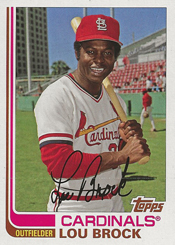
After getting lit up by Dennis Lamp, Lou Brock nearly turned out the lights on the Cubs pitcher.

On Aug. 13, 1979, Brock got his 3,000th career hit, a smash that struck Lamp’s right hand, turning three of his fingers purple.

Brock’s single came on the first pitch after Lamp brushed him back.

“I should thank Lamp for that fastball under the chin,” Brock said to the Chicago Tribune. “It brought me back to reality because it was a pretty close pitch. All the thoroughbred players I know bounce back from that, so I was ready for the next pitch. My concentration was back where it should have been.”

Setting the stage

After batting .221 in 1978, Brock said the 1979 season would be his last as a player. He needed 100 hits to reach 3,000. “I seriously doubted he’d make them,” Bob Broeg of the St. Louis Post-Dispatch wrote. “I hoped a grand guy wouldn’t wind up an embarrassment in the batting order.”

Brock, 40, made an adjustment in his batting stance, keeping his weight on his front foot, and began spraying hits consistently again. He went into the game against the Cubs with a .321 batting average and 2,998 hits.

The Monday night game at Busch Memorial Stadium matched Lamp against Cardinals starter Pete Vuckovich. Cardinals manager Ken Boyer put Brock in the No. 2 spot in the batting order between Garry Templeton and Keith Hernandez.

The Cubs were the ideal opponent for Brock’s attempt at the milestone. They were Brock’s first major-league team before they traded him to the Cardinals in 1964.

In the Cardinals’ clubhouse before the game, Brock’s mood was loose and relaxed, the Post-Dispatch reported. “He’s so even-keel you’d never know what was at stake,” Hernandez said.

Brock and Templeton shadow-boxed. Third baseman Ken Reitz reminded Brock of a bet they made in spring training regarding whether Brock would reach 3,000 hits before Reitz got to 1,000.

Playing before a crowd of 44,457, Templeton led off the Cardinals’ half of the first with a single. Boyer called for a hit-and-run and Brock lined a single to left for hit No. 2,999.

Big hit

Brock’s second at-bat of the game, and his first attempt at hit No. 3,000, came when he led off in the fourth.

“I pictured in my mind a hit up the middle,” Brock said.

The count was 1-and-2 when Lamp unleashed his brushback pitch. The high and tight fastball set up the next pitch, a curve Lamp hoped Brock would miss or hit weakly. “I thought it was a good pitch,” Lamp said.

Instead, Brock drilled the ball, “a line drive that would clean the sawdust off a 2-by-4,” according to Post-Dispatch columnist Tom Barnidge.

Brock told writer Roger Angell, “It was the hardest ball I hit all year.”

The ball pounded into the fingers of Lamp’s throwing hand _ “It felt like having your hand caught in a car door,” he said to The Sporting News _ and caromed across the third-base line. Third baseman Steve Ontiveros retrieved it but had no chance to throw out Brock, who streaked across first base. Video

Crowning achievement

As the crowd roared, club owner Gussie Busch and Stan Musial, the first Cardinal to achieve 3,000 hits, joined Brock and his teammates in a ceremony on the field.

“I’ve always wanted to leave baseball in a blaze of glory,” said Brock, who became the 14th major-league player to achieve 3,000 hits. “I’ve always wanted to orchestrate my own exodus.”

Lamp was removed from the game and replaced by a former Cardinal, Doug Capilla. “My middle and index fingers swelled up and turned purple,” Lamp said.

In the fifth inning, with Ken Oberkfell on second base and two outs, Boyer sent Tony Scott to bat for Brock.

Brock went into the Cubs’ clubhouse to check on Lamp, who was relieved X-rays showed no fractures to his fingers. “I told him not to be afraid to pull the ball next time,” Lamp said. “I guess what this means is that they’ll be sending my fingers to Cooperstown.”

That’s a winner

In the bottom of the ninth, with the score tied at 2-2, Reitz got his 1,000th career hit, a single against Willie Hernandez, but too late to win his bet with Brock. Tommy Herr, making his major-league debut, was sent in to run for Reitz.

After Hernandez hit Oberkfell with a pitch, moving Herr to second, Bruce Sutter relieved and yielded a single to Dane Iorg, loading the bases.

Templeton followed with a flyout to left fielder Dave Kingman. Herr tagged and headed toward the plate. The throw was wide and Herr scored the winning run. Boxscore

Great champion

Among the post-game reactions to Brock’s achievement:

_ Ted Sizemore, Cubs second baseman and former Cardinal: “Lou Brock is the most mentally prepared player I ever saw. He’s a guy who can identify with goals. When he sets his mind to it, he can get it. He’s one of the great champions in the game.”

_ Bob Forsch, Cardinals pitcher: “I think he wanted to do this against the Cubs. I mean, they’re the club that traded him away. There had to be a real sense of satisfaction.”

_Ted Simmons, Cardinals catcher: “You look at Lou’s career and you envy it. I do. I think most players do. I’ve enjoyed every ballgame I’ve ever played with him. What he’s done has been remarkable.”

The Sporting News called the 3,000 hits “a testimony to his ability, pride, determination and competitive spirit.”

In an editorial, the Post-Dispatch concluded, “What truly sets him apart is the self-discipline and fidelity to purpose that made possible the consistency and stamina demanded by such a sports milestone.”

Read Full Post »

« Newer Posts - Older Posts »