Feeds:
Posts
Comments

Archive for the ‘Pitchers’ Category

One of the most memorable and hotly debated plays in Cardinals history always will be the two-run triple by Detroit’s Jim Northrup on a drive that sailed over the head of center fielder Curt Flood in Game 7 of the 1968 World Series.

The contentious question remains: Would Flood have caught the ball if he hadn’t stumbled?

In the top of the seventh inning of the scoreless Game 7 on Oct. 10, 1968, at Busch Stadium, Northrup, a left-handed batter, faced Bob Gibson with Norm Cash on second base, Willie Horton on first and two outs. Northrup lined Gibson’s first offering to center field.

Flood initially broke in for the catch. Realizing his mistake, Flood tried to move back and to his right. As he did, his spikes appeared to catch in the turf. (Some say he slipped on a slick spot in the grass.) He briefly stumbled but didn’t fall. Though he recovered quickly, it was too late to catch the ball, which fell behind him, several yards in front of the warning track.

Both runners scored and Northrup raced to third base. The next batter, Bill Freehan, drove in Northrup with a double, giving the Tigers a 3-0 lead. Detroit went on to a 4-1 victory, winning its first World Series title in 23 years and stunning the defending champion Cardinals, who had taken a 3-games-to-1 lead in the best-of-seven series. Boxscore

Flood, a seven-time Gold Glove Award winner, was labeled the goat because many thought he would have caught Northrup’s liner if not for the slip. Others, though, have said Northrup’s shot was so well-struck it would have eluded Flood regardless of his stumble.

film clip of the play on YouTube shows Northrup hit the ball hard, but it landed in a spot where a center fielder (especially one of Flood’s skill) likely would be able to race back and make a catch.

Because a strong case can be made for either side, the argument likely will endure for as long as baseball has fans.

In his report for the Oct. 29, 1968, edition of The Sporting News, Dick Kaegel described this exchange between reporters and Flood, who sat on the edge of a table and sipped from a bottle of champagne that was intended for a Cardinals celebration:

Did you lose the ball in the crowd?

Yes.

Was the ground still soggy out there?

Yes.

Could you have caught the ball if you hadn’t slipped?

I think so. Yes. Look, I don’t want to make alibis. I should have made the play but I didn’t, and that’s all there is to it.

In the visiting team locker room, Northrup was asked whether Flood should have caught the ball.

“The guys on the bench all said he wouldn’t have caught it even if he hadn’t stumbled,” Northrup said in The Sporting News report. “I couldn’t really say myself.”

In the Associated Press accounts of the game, Flood said, “I couldn’t see it against the shirts (in the crowd). The reason I started in, I just didn’t know where the ball was. A ball hit right at me gives me trouble in day games. If I hadn’t slipped, I might have got it.”

Cardinals manager Red Schoendienst told the Associated Press, “I’m sure he could have caught it if he hadn’t charged in on it.”

In a tribute to Northrup after his passing, longtime Detroit sports columnist Jerry Green of FOXSportsDetroit.com reported Northrup had told him, “Flood never could have caught the ball.”

Denny McLain, ace of the 1968 Tigers staff, said in a June 8, 2011, interview with Drew Sharp of the Detroit Free Press, “I never once bought the argument that (Flood) misplayed the ball like everyone says. There was no way he was catching that.”

Yet, in his autobiography “Nobody’s Perfect,” McLain said, “Curt Flood simply blew it. Now, here’s a super outfielder, but he just couldn’t find the ball.”

In his autobiography “The Way It Is,” Flood barely mentions the play. “I attracted unfavorable attention by missing a catch that might have been easy for me if I had not been completely bushed,” Flood said.

Author Stuart L. Weiss, in his book “The Curt Flood Story” asked, “Why he was ‘bushed’ he did not say … That could have affected him after he started running back and to his right for the ball, but it could not have accounted for his initial misjudgment.”

It had rained in St. Louis the day before Game 7. Flood’s teammates have indicated Flood slipped on a spot still wet from the rain.

“As soon as the ball left the bat, I was confident Flood would track it down, as he had done on so many similar occasions over the years,” Bob Gibson said in his autobiography “Stranger to the Game.” “This time, though, Curt’s first step was toward the infield, and when he realized he had underestimated the hit, he turned sharply, and for a split second lost his footing on the wet grass.”

Cardinals catcher Tim McCarver told journalist William Mead, “The playing conditions that day were very bad in the outfield. Curt broke initially to his right and one or two steps in, and then he got stuck in the mud. When he got stuck, his quickness wasn’t there, and Northrup’s ball, which was well-hit, got past him.”

In comments to the Pittsburgh Post-Gazette after the game, Northrup supported that version. He played center field for the Tigers in Game 7, so he knew about the conditions.

“It was muddy out there,” Northrup said. “Most of the field was dry, but it was muddy in center field because of yesterday’s rain. The sun never hit center field. The grass and dirt didn’t get a chance to dry out.”

Often overshadowed is the fact Northrup had a terrific World Series overall. He hit a grand slam off Larry Jaster in Game 6. In the seven games, Northrup had eight RBI, seven hits, two home runs and four runs scored.
Read Full Post »

(Updated July 20, 2024)

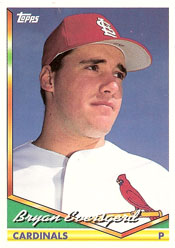
In April 1994, with injuries taking a toll on Cardinals pitchers, manager Joe Torre let two rookies, Frank Cimorelli and Bryan Eversgerd, make their big-league debuts in the same game.

On April 30, 1994, before a Saturday night crowd of 49,927 at Houston’s Astrodome, the Astros jumped on St. Louis starter Allen Watson for a 5-1 lead through four innings.

Cimorelli, 25, a 37th-round pick in the 1989 draft, entered in the fifth and yielded a run after Jeff Bagwell and Ken Caminiti opened the inning with consecutive singles. In the sixth, the Astros scored four runs on RBI-doubles by Steve Finley and Bagwell, and Caminiti’s two-run single, before Cimorelli recorded an out.

Torre replaced Cimorelli with Eversgerd, 25, who signed with the Cardinals as an undrafted free agent in 1989. Eversgerd finished the inning without allowing a run.

Houston went on to a 15-5 victory. Boxscore

When the Cardinals returned to Houston in July, Cimorelli and Eversgerd were involved in one of the franchise’s most embarrassing losses.

On July 18, 1994, at the Astrodome, the Cardinals led 11-0 in the third inning. In the sixth, with the score 11-4, Cimorelli again relieved Watson. The Astros scored 11 runs in the inning _ including four against Cimorelli (who retired one batter) and four against Eversgerd (who faced four batters and retired none).

Houston won, 15-12, and tied a National League record for overcoming the largest deficit. Eversgerd took the loss, though there was plenty of blame to share. Boxscore

“I just pitched the wrong pitchers,” Torre said to the Associated Press. “It’s my fault we lost.”

Cardinals catcher Tom Pagnozzi told the wire service, “I don’t think anyone in the ballpark could have dreamed this. We couldn’t get anybody out. I was involved in a game like this when I was 8 years old, but not in the big leagues.’

Cimorelli pitched in 11 games for the 1994 Cardinals, compiling an 0-0 record, one save and a 8.77 ERA. The save was earned when he pitched three scoreless innings in St. Louis’ 11-4 win over the Rockies on July 1, 1994. It was his only big-league season.

Eversgerd pitched in 40 games for the 1994 Cardinals. He was 2-3 with a 4.52 ERA.

In April 1995, the Cardinals traded Eversgerd, along with pitcher Kirk Bullinger and outfielder DaRond Stovall, to the Expos for pitcher Ken Hill.

Eversgerd pitched for the 1995 Expos (0-0) and 1997 Rangers (0-2).

In January 1998, Eversgerd, a free agent, signed with the Cardinals and ended his big-league playing career with them. He was 0-0 in eight appearances for the 1998 Cardinals.

Eversgerd became a Cardinals minor-league coach in 2001, took a two-year hiatus (2002-03) and returned to the organization in 2004. He was pitching coach at Class AAA Memphis from 2013-17. Among the Cardinals pitching prospects Eversgerd has been credited with helping during his minor-league coaching career: Michael Wacha, Shelby Miller, Seth Maness and Jack Flaherty.

In 2012, Eversgerd received the organization’s George Kissell Award for coaching excellence.

Eversgerd was named Cardinals bullpen coach on Oct. 26, 2017, and remained in that position through the 2022 season. He was the bullpen coach on the staffs of three Cardinals managers: Mike Matheny (2018), Mike Shildt (2018-21) and Oliver Marmol (2022).

Read Full Post »

On May 7, 1940, the Cardinals raked Dodgers starter Hugh Casey for 15 hits, 13 runs and five home runs in seven innings during an 18-2 victory at St. Louis.

The Cardinals also hit two home runs against reliever Max Macon, giving them a total of seven for the game.
The outburst came against the hottest team in the National League. The 1940 Dodgers, managed by Leo Durocher, entered the Tuesday game at Sportsman’s Park with an 11-1 record. The Cardinals were 5-10.

Brooklyn featured a lineup of Dolph Camilli and Dixie Walker, and rookie shortstop Pee Wee Reese.

Casey, 26, was one of their top pitchers. The right-hander recorded 15 wins and a 2.93 ERA for the 1939 Dodgers.

Casey earned complete-game wins against the Giants and Phillies in his first two starts of 1940 before he stumbled against the Reds, yielding eight runs in four innings in Brooklyn’s first  loss.

In the series opener against the Cardinals on Sunday, May 5, Casey entered in relief, pitched a scoreless ninth and earned the save in Brooklyn’s 9-6 victory. Boxscore

Two days later, he was the starting pitcher, bringing a 2-1 record and 3.52 ERA against a Cardinals lineup that included three future Hall of Fame players: Joe Medwick, Johnny Mize and Enos Slaughter. All-star shortstop Marty Marion was unavailable because of a knee injury.

After a scoreless first inning, the Cardinals went to work against Casey. Don Padgett, Stu Martin and Eddie Lake hit solo home runs, and Medwick and Mize each launched a two-run homer. The home run by Lake, a slight second baseman, was the first of his big-league career.

Casey knocked down several Cardinals batters and hit three, the St. Louis Post-Dispatch reported.

Macon, a former Cardinal, relieved Casey in the eighth and yielded five runs, including another homer apiece by Mize and Lake. Boxscore

The Cardinals collected 49 total bases, topping the league mark of 47 established by the Giants in 1931. Their seven total home runs tied a league record shared by five others.

The Associated Press reported Durocher kept Casey in the game for seven innings “to save wear and tear on his other pitchers.”

“It was at his own request” that Casey remained in the game through seven innings, The Sporting News reported.

According to The Brooklyn Daily Eagle, Casey said to Durocher after giving up five runs in the third inning, “Let me keep pitching. I need the work.”

Casey’s performance got the headlines, but the game featured another significant development.

In the ninth inning, the Cardinals sent in Bill DeLancey to replace Padgett at catcher, drawing a big cheer from the few remaining in the announced crowd of 2,298. It was DeLancey’s first big-league appearance since 1935. He was attempting a comeback after more than four years spent in Arizona to overcome a lung ailment, The Sporting News reported.

(DeLancey would appear in 15 games for the Cardinals in 1940, his last big-league season. He died on his 35th birthday, Nov. 28, 1946).

After their sizzling start, the 1940 Dodgers finished in second place at 88-65, 12 games behind the champion Reds and four ahead of the Cardinals (84-69).

Casey was moved to the bullpen in early June and finished the 1940 season with an 11-8 record and 3.62 ERA.

Casey befriended the writer, Ernest Hemingway, pitched for Dodgers pennant winners in 1941 and 1947, earned two wins and a save in the 1947 World Series against the Yankees, and finished a nine-year big-league career with a 75-42 record, 55 saves and a 3.45 ERA.

On July 3, 1951, Casey, 37, died from a self-inflicted shotgun blast to the neck. The suicide occurred seconds after he had assured his wife in a telephone call he was innocent of a charge he fathered a son out of wedlock, according to the Associated Press.

Read Full Post »

The 1973 Cardinals eventually reached first place after losing 12 of their first 13 games of the season.

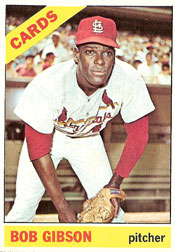
On April 22, 1973, the Cardinals lost both games of a doubleheader, dropping their record to 1-12. Rookie Mike Schmidt’s home run off Bob Gibson with two outs in the bottom of the ninth in Game 2 broke a 1-1 tie and gave the Phillies a sweep. “I never remember being this excited about anything,” Schmidt told the Associated Press. Boxscore
St. Louis’ slow start attracted national attention. An editorial in The Sporting News noted, “There was the Card record _ won 1, lost 12, pct. .077 _ jumping out from the standings like a stink weed at a flower show. Not surprisingly, the critics were in full cry. Their blasts flooded a nightly sports talk show on a St. Louis radio station.”

Noting that the 1951 Giants started 2-12 and recovered to win the pennant, the editorial concluded, “All of which indicates it may be a little early to consign the Redbirds to the wait-til-next-year category.”

Cardinals general manager Bing Devine asked for patience. “This is a young club that will make mistakes,” he said.

St. Louis correspondent Neal Russo wrote, “There were concerns because of the early leaks in the defense, especially the outfield. In three different losses, an outfield failure proved costly. There was concern because the pitching was porous in the early going. And there was concern because of the lack of timely hitting.”

By the end of May, the Cardinals had climbed ahead of the Phillies and into fifth place at 19-25. The Cardinals won eight of their final nine games in May.

They began June by winning their first five. By June 30, the Cardinals reached .500 (37-37) and moved into second place, seven games behind the Cubs. Gibson and Reggie Cleveland each went 4-1 in June. Ted Simmons hit .333 with five home runs during the month. Joe Torre batted .302 with five homers in June.

On July 22, a Sunday afternoon, the Cardinals erased a 4-2 deficit by scoring three runs in the bottom of the eighth against Dodgers reliever Jim Brewer. Simmons tied the score with a two-run single and Bernie Carbo’s RBI-double was the game-winner. The 5-4 victory moved St. Louis (51-45) into first place, a half-game ahead of the Cubs. Boxscore

Russo wrote in The Sporting News, “Excellent pitching and brilliant defense were the keys to the rebounding by a club that had been booed and vilified for the first five weeks of the season.”

Shortstop Mike Tyson, second baseman Ted Sizemore, center fielder Luis Melendez and right fielder Jose Cruz were singled out for steadying the defense.

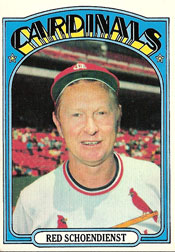
Said manager Red Schoendienst: “Defense makes pitching.”

It appeared the Cardinals, Cubs and Pirates would battle for the division title. On the day the Cardinals moved into first place, the Mets (42-51) were in last place, 7.5 games behind St. Louis.

The Cardinals (56-48) ended July with a two-game lead over the second-place Cubs.

On Aug. 4, at New York’s Shea Stadium, Gibson injured his right knee while running the bases. He required surgery and didn’t pitch again until Sept. 29, when he beat the Phillies.

Without their ace, the Cardinals stumbled, losing 11 of 12 from Aug. 6 to Aug. 18. Yet, on Sept. 11, the Cardinals (72-72) still clung to first place by a half game over the Pirates.

The Mets, however, surged, winning 20 of their final 28. The Cardinals went 13-15 over the same period. A seven-game losing streak, during which they scored a total of 14 runs, from Sept. 7 to Sept. 15 was the Cardinals’ undoing.

Even though St. Louis finished the season with a five-game winning streak, the Mets, who took over first place Sept. 21, won the division championship with an 82-79 mark, 1.5 games ahead of the runner-up Cardinals (81-81).

Russo spoke for many when he wrote, “You could spend all fall and winter replaying those nightmarish giveaways, the games that made the difference between winning and finishing second.”

Read Full Post »

Eight times during his Cardinals career Bob Gibson had three hits or more in a game in which he pitched and earned the win.

Here are the eight games Gibson won while collecting at least three hits:

_ July 8, 1962, Cardinals 15, Mets 1, at New York: Gibson pitched a three-hitter for his 10th win of the season, and went 3-for-5 to improve his batting mark to .300 for the year. One of the hits was a leadoff home run in the third inning off Jay Hook, giving St. Louis a 3-0 lead. Boxscore

_ Sept. 29, 1965, Cardinals 8, Giants 6, at San Francisco: In a matchup of future Hall of Famers, Gibson belted an eighth-inning grand slam against Gaylord Perry.

It was Gibson’s fifth homer of the season, the first grand slam of his professional career and his third hit of the game.

“I knew it was going to the fence, but I didn’t think it was going over,” Gibson told the Associated Press.

With the Cardinals ahead 8-0 entering the bottom of the ninth, the Giants rallied for six runs against Gibson and Curt Simmons. With two on and two out, Hal Woodeshick struck out Willie McCovey on a 3-and-2 curve a foot outside the plate, ending the game and preserving Gibson’s 19th win of the season. Boxscore

_ May 12, 1969, Cardinals 6, Dodgers 2, at St. Louis: Gibson hit three singles, including one with the bases loaded that knocked in two runs in the fourth against Claude Osteen.

His seven-hitter earned Gibson his fourth win of the season. Boxscore

_ Sept. 10, 1969, Cardinals 11, Pirates 2, at Pittsburgh: Gibson stroked four hits, including a double and a single against Steve Blass, and notched his 17th win of the season with a six-hitter in the opener of a doubleheader. Boxscore

_ June 3, 1970, Cardinals 6, Giants 5, at St. Louis: With the score 5-5 in the seventh, Gibson gave the Cardinals the lead with his third hit, a two-out single to right against Frank Reberger that scored Ted Simmons from third.

In pitching an eight-hitter for his fifth win of the season, Gibson retired Willie Mays and Willie McCovey with two on in the ninth. Mays and McCovey went a combined 0-for-9 against Gibson. Boxscore

_ June 26, 1970, Cardinals 7, Phillies 0, at St. Louis: Gibson went 3-for-4 with a RBI and pitched a four-hit shutout for his 10th win of the year. He limited the Phillies to one hit over the last five innings. Boxscore

_ July 1, 1972, Cardinals 6, Phillies 4, at Philadelphia: In the opener of a doubleheader, Gibson hit a double and two singles, and pitched a seven-hitter, leading St. Louis to its fourth consecutive victory and its 11th in its last 12 games. Boxscore

_ Sept. 1, 1974, Cardinals 8, Giants 1, at San Francisco: Gibson, who had lost three of his previous four starts, pitched a seven-hitter and led all St. Louis batters with his three hits. Boxscore

Read Full Post »

Two of the best pitchers in Cardinals history _ Dizzy Dean and Mort Cooper _ each yielded 19 hits in a game, and won.

_ Cardinals 8, Reds 7, May 31, 1936, at St. Louis: Dizzy Dean appeared headed for a loss when Cincinnati took a 7-5 lead into the ninth inning, but the Cardinals scored twice in the ninth and won with a run in the 12th.

Two days after pitching 1.1 innings of relief, Dean went all 12 innings, yielding 19 hits and two walks (he also hit two batters), and improved his record to 9-2. The Reds stranded 13 and had no home runs. Boxscore

_ Cardinals 4, Phillies 3, Sept. 24, 1944, at Philadelphia: In his last regular-season start of the year, Cooper went the route and earned the win when Whitey Kurowski broke a 3-3 tie with a home run off Phillies starter Ken Raffensberger in the 16th inning.

Philadelphia scored single runs in the first, third and fourth before Cooper shut them out over the last 12. Of Philadelphia’s 19 hits, 18 were singles (first baseman Tony Lupien doubled). Boxscore

Cooper’s line: 16 innings, 19 hits, 3 runs, 5 walks, 7 strikeouts.

Raffensberger’s line: 16 innings, 13 hits, 4 runs, 1 walk, 5 strikeouts.

The win improved Cooper’s record to 22-7 _ his third consecutive season with at least 21 wins.

In the 1944 World Series against the Browns, Cooper made two starts and held the American League champions to two runs over 16 innings.

Read Full Post »

« Newer Posts - Older Posts »