Feeds:
Posts
Comments

Archive for the ‘Pitchers’ Category

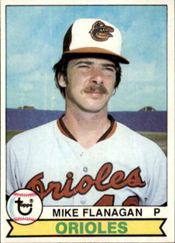
Jerry Johnson had the right stuff, but the wrong timing, in his short, strange stay with the Cardinals.

A right-handed pitcher who grew up rooting for the Cardinals, Johnson was acquired from the Phillies in the trade that brought slugger Dick Allen to St. Louis.

The Cardinals needed quality relief pitching and Johnson provided it, but, after making a mere seven appearances, was dealt to the Giants.

Johnson developed into the Giants’ closer and helped them win a division title.

Position change

A son of an oil rigger, Johnson was raised in Odessa, Texas.

In addition to playing baseball and football, Johnson was a Golden Gloves boxer and won 14 of 15 fights, according to the Wilmington (Del.) News Journal.

After he graduated from high school in 1962, Johnson signed with the Mets and was a third baseman in their farm system. As a hitter, he lacked power and failed to make consistent contact. “I couldn’t hit the curveball,” Johnson told The Sporting News.

According to Bob Broeg of the St. Louis Post-Dispatch, the Mets were prepared to release Johnson in 1963 until his teammate on the Salinas, Calif., farm team, pitcher Dick Selma, spoke up to management.

“How can you release a guy, no matter how poor he looks at the plate, when he can throw harder from third base than I can from the mound?” Selma asked.

The Mets reconsidered and converted Johnson to a pitcher. but, because of subsequent military service and a shoulder injury, it was 1967 before he had a full season of pitching.

With the Class AA Williamsport, Pa., team in April 1967, Johnson, 23, got national attention when he was matched in a start against future Hall of Famer Robin Roberts, 40, who was attempting a comeback with the Phillies’ Reading, Pa., affiliate after 19 seasons in the majors. Johnson won the duel, pitching a shutout in a 1-0 Williamsport win.

Though Johnson had a 2.78 ERA in 26 starts for Williamsport, he was left off the Mets’ 40-man winter roster and picked by the Phillies in the November 1967 minor-league draft.

Living dangerously

During the baseball off-seasons, Johnson was employed as an iron worker on bridges and high rises. “I’ve worked as high as 300 feet above the ground,” he told The Sporting News.

The heavy lifting built muscle, but made it difficult for Johnson to loosen his pitching arm. When he reported to training camp “looking like he should be on muscle beach, rubbing his pectorals with baby oil,” the Phillies told him to find a different off-season job, the Philadelphia Daily News noted.

Johnson began the 1968 season at Class AAA San Diego, posted a 1.95 ERA in 10 starts and was called up to the Phillies in July.

Relying on a fastball and slider, Johnson had early success against the Cardinals. On Sept. 24, 1968, he pitched a complete game in a 2-1 Phillies victory at St. Louis. The hard-luck losing pitcher was Ray Washburn. Boxscore

In 1969, Johnson beat the Cardinals twice in six days. On April 27, he pitched a shutout in a 1-0 Phillies win at Philadelphia. Boxscore He followed with another win on May 2 in a start at St. Louis. Boxscore Washburn was the losing pitcher in each game.

Cardinals manager Red Schoendienst harrumphed to the Post-Dispatch, “A third baseman beat us. From where I watched, he looked nice to hit.”

Cardinals general manager Bing Devine, who was a Mets executive when Johnson became a pitcher in their system, was more impressed than Schoendienst. After the 1969 season, he acquired Johnson, Dick Allen and Cookie Rojas from the Phillies for Curt Flood, Tim McCarver Joe Hoerner and Byron Browne.

Family team

Johnson’s mother was from Flora, Ill., about 100 miles east of St. Louis, and Johnson lived there as an infant. When he’d return with his mom for family visits, “they indoctrinated me” with stories about the Cardinals, Johnson told The Sporting News.

“All I heard from the time I could remember was the Cardinals and Stan Musial,” Johnson said to the Post-Dispatch. “The Cardinals have been my ballclub since I was old enough to know about baseball. Later on, I became attached to Mickey Mantle, too, but the Cardinals still were the family ballclub.”

The Cardinals projected Johnson to be a spot starter and reliever, but at spring training in 1970 he was sidetracked by a “recurrence of an elbow ailment and a pulled side muscle. The latter injury occurred when he reached too abruptly for a telephone,” The Sporting News reported.

Johnson opened the 1970 season in the minors and was called up to the Cardinals on May 1. In his first game with them, he pitched three scoreless innings and earned a save against the Astros. Boxscore

Johnson followed that with a pair of wins _ one against the Braves Boxscore and the other versus the Pirates. Boxscore

In seven appearances, Johnson was 2-0 with a save and 3.18 ERA.

Sent packing

The Cardinals were in Houston on May 19 when Johnson went to a movie theater to see a western, “Barquero,” starring Lee Van Cleef and Warren Oates. When he returned to the hotel that night, coach Dick Sisler approached Johnson in the lobby and informed him he’d been traded to the Giants for reliever Frank Linzy.

“I’m shocked,” Johnson said. “I can’t believe it.”

The Cardinals wanted an experienced late-inning reliever and liked Linzy, a sinkerball specialist, for the AstroTurf at Busch Memorial Stadium. Linzy was 9-3 with 20 saves and a 1.43 ERA for the Giants in 1965 and had 17 saves and a 1.51 ERA in 1967. His ERA for the 1970 Giants was 7.01, but the Cardinals were convinced Linzy, 29, could return to form.

The next year, with Johnson as their closer, the Giants won the National League West Division title. He led the team in saves (18) and games pitched (67), and was third in wins (12).

“Jerry always had smoke on his fastball. Now he has the poise to go with it,” The Sporting News observed.

Linzy was 4-3 with six saves and a 2.12 ERA for the 1971 Cardinals.

The 1971 season was Johnson’s career highlight. In 10 years in the majors with the Phillies, Cardinals, Giants, Indians, Astros, Padres and Blue Jays, Johnson was 48-51 with 41 saves and a 4.31 ERA.

In 1975, when Johnson pitched for minor-league Hawaii, a bullpen teammate was Frank Linzy.

When the Blue Jays entered the American League as an expansion team, they selected Hawaii manager Roy Hartsfield to be their manager. Hartsfield gave Johnson a spot on the Blue Jays’ Opening Day roster. Johnson was the winning pitcher in their first regular-season game on April 7, 1977. Boxscore
Read Full Post »

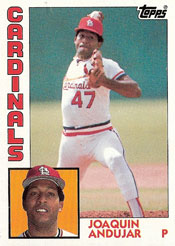
Two years after Mike Flanagan won the American League Cy Young Award, the Orioles were willing to trade him to the Cardinals.

The Orioles made Flanagan the centerpiece of a package they offered to the Cardinals in 1981. In exchange, the Orioles wanted two players the Cardinals were willing to trade, outfielder Sixto Lezcano and shortstop Garry Templeton.
The trade talks between the Cardinals and Orioles began in November 1981 and extended to the baseball winter meetings in December, but despite several attempts to structure a deal, the two sides couldn’t reach an agreement.

Neither club regretted the outcome. The Cardinals traded Templeton and Lezcano to the Padres for a future Hall of Famer, Ozzie Smith, who helped them win the World Series championship in 1982.

Rather than have Templeton at shortstop, the Orioles turned to an internal candidate, Cal Ripken, who, like Smith, developed into a Hall of Famer and helped them win the World Series championship in 1983.

Trade chip

A durable left-hander, Flanagan was 23-9 in 1979 when the Orioles won the American League pennant. Flanagan received 26 of 28 first-place votes in the Cy Young Award balloting.

In September 1981, Flanagan developed tendinitis in his left elbow and missed a turn in the rotation, ending a streak of 157 consecutive starts since 1977. “It’s just an oil change and a 30,000-inning checkup,” he told The Sporting News.

With Flanagan eligible to become a free agent after the 1982 season, the Orioles wanted to get him signed to a multiyear contract in November 1981. When he wouldn’t commit, the Orioles let it be known they were willing to deal him.

As the Baltimore Evening Sun noted, “Rather than take a chance on losing a pitcher of Flanagan’s caliber as a free agent, it is preferable to trade him.”

A player the Orioles wanted was outfielder Sixto Lezcano. Acquired by the Cardinals from the Brewers in December 1980, Lezcano asked to be traded after the 1981 season.

When he was with the Brewers, then an American League team, Lezcano had a .378 on-base percentage in games against the Orioles.

“The Orioles have coveted Lezcano almost since the day he broke in with Milwaukee,” The Sporting News reported, also noting that Orioles manager Earl Weaver “long has been a fan of Lezcano.”

Whitey Herzog, who had the dual role of Cardinals manager and general manager, wanted a pitcher in exchange for Lezcano. Orioles general manager Hank Peters “apparently is willing to part with Mike Flanagan,” according to The Sporting News.

Mix and match

A trade of Lezcano for Flanagan likely would have been made, but the Orioles opted to expand the deal to include Templeton.

Herzog wanted to trade Templeton, who was unhappy in St. Louis, and sought a shortstop in return. The shortstops the Orioles offered were veteran backup Lenn Sakata and rookie Bobby Bonner.

Jim Russo, who resided in St. Louis and scouted the National League for the Orioles, recommended Lezcano and Templeton. Russo was “instrumental in these discussions from the beginning,” the Baltimore Evening Sun reported.

In November 1981, the Baltimore Sun reported the proposed deal was Flanagan, outfielder Gary Roenicke and either Sakata or Bonner for Lezcano and Templeton.

Both sides were intrigued but agreed to suspend talks until the December baseball winter meetings in Hollywood, Fla.

At those meetings, the Baltimore Evening Sun reported, Orioles third baseman Doug DeCinces was added to the offer. The proposed trade was Flanagan, DeCinces, Roenicke and either Sakata or Bonner for Lezcano and Templeton.

The Orioles were willing to include DeCinces because they projected Cal Ripken, who debuted with them in August 1981, to be their third baseman, with either Sakata or Bonner playing shortstop.

The Cardinals, though, were not sold on having either Sakata or Bonner as their replacement for Templeton. A shortstop Herzog liked was Ivan DeJesus of the Cubs. Herzog also asked the Orioles for pitcher Sammy Stewart as a substitute for Flanagan. A right-hander who could start and relieve, Stewart had a 2.32 ERA for the 1981 Orioles. In 26 relief appearances that year, his ERA was 1.58.

“Herzog has a high regard for Flanagan,” the Baltimore Evening Sun reported, “but the pitcher he coveted most … was Sammy Stewart.”

Eager to make a deal, the Orioles tried to accommodate Herzog and the Cardinals. According to the Baltimore Sun, the Orioles, Cardinals and Cubs discussed a three-way trade. The Orioles would send Flanagan, DeCinces and Bonner to the Cubs for DeJesus and pitchers Mike Krukow and Lee Smith. Then the Orioles would swap DeJesus and Sammy Stewart to the Cardinals for Templeton, Lezcano and pitcher Bob Shirley.

“We’ve talked to the Cubs extensively, very extensively,” Hank Peters told the Baltimore Sun.

The Cubs, though, foiled the plan, trading Krukow to the Phillies on Dec. 8 for Keith Moreland, Dickie Noles and Dan Larson.

The Cardinals and Orioles continued to try to find the right combination of players to complete a deal. The Cardinals asked for outfielder John Shelby instead of Roenicke, the Baltimore Evening Sun reported, and the Orioles asked for outfielder Gene Roof.

According to the St. Louis Post-Dispatch, “one possible combination would have had Templeton and Lezcano going to the Orioles for pitchers Flanagan and Steve Stone and either Bonner or DeCinces.”

“Whatever the other teams offer St. Louis, we’ll make a better offer,” Earl Weaver said to the Baltimore Sun. “I’m definitely not against overloading the deal with pitchers if we can get a shortstop who bats .300 and a man who can go get fly balls like Sixto.”

On Dec. 10, the Baltimore Evening Sun reported, “The trade has been restructured so many times that the two teams have talked nine times in the last two days.”

Change in plans

By then, the Padres had entered the picture, and the Cardinals’ interest in the Orioles cooled considerably.

Before the winter meetings ended, the Padres agreed to trade Ozzie Smith and pitchers Steve Mura and Al Olmsted to the Cardinals for Templeton, Lezcano and pitcher Luis DeLeon.

A month later, in January 1982, the Cubs traded Ivan DeJesus to the Phillies for Ryne Sandberg and Larry Bowa, and the Orioles dealt DeCinces to the Angels for outfielder Dan Ford.

Ford became the Orioles’ right fielder in 1982, filling the role the team had envisioned for Sixto Lezcano.

The Orioles opened the 1982 season with Cal Ripken at third base and Lenn Sakata at shortstop. Ripken shifted to shortstop in July.

Mike Flanagan earned 15 wins for the 1982 Orioles.

In 18 seasons in the majors with the Orioles and Blue Jays, Flanagan had a record of 167-143.

Read Full Post »

In a move that was important to their bid for a 1982 World Series championship, the Cardinals kept the pitcher they wanted at the price they wanted.

On Nov. 13, 1981, Joaquin Andujar became a free agent after finishing the 1981 season with the Cardinals.
Though he preferred to stay with the Cardinals and they wanted him to return, a contract agreement was not a given.

The determining factor was salary, and, for a while, neither side was willing to compromise.

Good fit

Acquired from the Astros in June 1981 for outfielder Tony Scott, Andujar was 6-1 with a 3.74 ERA for the Cardinals that season.

Andujar liked playing for manager Whitey Herzog and for pitching coach Hub Kittle, who mentored him in the Dominican Republic winter league, but he also wanted to test his worth on the open market.

Represented by brothers Alan and David Hendricks, Andujar sought a contract of $2 million for three years. The Cardinals offered $1 million for the same time frame, according to the St. Louis Post-Dispatch.

Andujar figured he had leverage because the Cardinals needed another starter to bolster a rotation led by Bob Forsch and including the likes of John Martin and Andy Rincon.

Agent Alan Hendricks told the Post-Dispatch he “wanted to see Joaquin wind up with the Cardinals because Whitey Herzog and the club are good for him.”

Herzog’s assistant, Joe McDonald, said, “We’re still very keen on Andujar. We like the guy and he likes it here.”

Price isn’t right

The good vibes began to fade when neither Andujar nor the Cardinals budged on their salary number. The Sporting News reported Andujar “is likely to be gone” from the Cardinals.

Herzog told the Post-Dispatch he had a financial figure he was sticking with and “I’m not going to lose any sleep over it.”

Agent David Hendricks said six teams were interested in Andujar. It soon became evident to Herzog that the interest was tepid _ at least at the salary Andujar was seeking.

The Philadelphia Daily News accused Andujar of “harboring delusions of grandeur.”

According to the Oakland Tribune, Giants second baseman Joe Morgan, who was Andujar’s teammate with the 1980 Astros, lobbied for the Giants to sign Andujar, but it didn’t work out.

Bargaining power

David Hendricks said the Cardinals remained Andujar’s first choice and “the ingredients are still right” for a signing with them.

According to the Post-Dispatch, the Cardinals could get a deal done with Andujar for $1.5 million, splitting the difference between what Andujar was asking and what the club was offering, but Herzog stuck to a lower number.

Herzog, who had the dual role of manager and general manager, sized up the soft competition for Andujar and said, “I’m not going up on my offer. Nobody is higher than us. If he doesn’t like it, he can sit in the Dominican for a year.”

A couple of days later, Herzog turned up the heat again. “His agents keep asking me to raise my offer,” he told the Post-Dispatch. “Why should I outbid myself? I’ve got the best offer out there.”

With his options dwindling, Andujar and his agents lowered their asking price.

On Dec. 30, 1981, Andujar signed with the Cardinals for $1.2 million over three years. According to the Post-Dispatch, the $1.2 million figure was the amount Herzog and the Cardinals were prepared to settle for all along.

The signing took place at Andujar’s home in the Dominican Republic. Attending for the Cardinals was assistant general manager Joe McDonald and scout Willie Calvino. In 1969, when he worked for the Reds, Calvino was the scout who signed Andujar to his first professional contract.

Andujar rewarded the Cardinals with 15 wins, including five shutouts, during the 1982 season. He was the winning pitcher in their pennant-clinching game against the Braves in the National League Championship Series. Then he earned two wins versus the Brewers in the World Series, including the title clincher in Game 7. Boxscore and Video

Though a 20-game winner in both 1984 and 1985, Andujar was traded to the Athletics after he had a confrontation with umpire Don Denkinger during Game 7 of the 1985 World Series.


Read Full Post »

Like a fading supermodel, reliever Chuck Hartenstein found himself out of fashion soon after he joined the Cardinals.

Described by The Sporting News as “a little stick of a guy who stands 5 feet 10 and weighs 150 pounds” and who “doesn’t show anything in the way of muscles,” Hartenstein was given the nickname Twiggy by a teammate.

In the late 1960s, when Hartenstein was at his peak as a National League closer, British fashion model Twiggy, 5 feet 6 and 110 pounds, was a cultural icon among the hip crowd. About the time Twiggy retired from modeling, Hartenstein was struggling to remain in the majors.

A right-hander whose signature pitch was a sidearm sinker, Hartenstein had a short stint with the Cardinals in 1970. He had a second career as a coach and scout in the majors and instructor in the minors.

Thick and thin

Born and raised in Texas, Hartenstein went to the University of Texas and was a teammate of future Cardinals first baseman Joe Hague. Hartenstein earned a bachelor’s degree in business administration and marketing, but opted to pursue a professional baseball career, signing with the Cubs in May 1964.

Hartenstein became a protege of Cubs minor-league instructor Fred Martin, a former Cardinals pitcher, who taught him to throw the sinker. Years later, future Hall of Famer Bruce Sutter learned the split-fingered fastball from Martin.

“(Martin) taught me just about everything I know,” Hartenstein told The Sporting News.

Hartenstein had his breakout season in 1967. Called up to the Cubs in June, he became their closer, posting a 9-5 record and team-leading 11 saves.

Reliever Dick Radatz, dubbed “The Monster” because of his 6-foot-6, 230-pound frame, gave Hartenstein the Twiggy nickname, The Sporting News reported, but Hartenstein told the Society for American Baseball Research it was outfielder Billy Williams who came up with the tag.

According to the Pittsburgh Press, Hartenstein was so skinny “he could tread water in a test tube.”

Hartenstein entered 1968 as the Cubs’ closer, but his season quickly unraveled. In April, his errant fastball struck Braves batter Joe Torre in the head. “Torre went down like a fallen tree,” the Atlanta Constitution reported.

In his book, “Chasing the Dream,” Torre said, “I never saw it. It smashed against my cheek. It split my palate, broke my cheek and my nose. My teammates had to carry me off the field. I was in shock.”

Hartenstein told the Chicago Tribune, “I’m sorry it happened. I couldn’t believe the ball hit him. It was a fastball and it bore in on him. I had thrown two away from him for strikes, and this one was supposed to brush him back. I certainly didn’t want to hit him, but he just didn’t move.”

Hartenstein had a terrible April (0-2, 6.75 ERA) and was replaced as closer by Phil Regan. After clashing with manager Leo Durocher, Hartenstein was demoted to the minors in June.

“I found out one thing about Durocher: When you got in his doghouse, you never got out of it,” Hartenstein told the Pittsburgh Post-Gazette.

Snapped twig

The Cubs traded Hartenstein to the Pirates in January 1969. He led the 1969 Pirates in saves (10) and was 5-4. Hartenstein was effective against the Cardinals that year, yielding no hits or runs in four appearances totaling five innings.

In 1970, Hartenstein had another bad April (7.04 ERA) and was replaced as closer by Dave Giusti, who was acquired from the Cardinals.

Placed on waivers in June, Hartenstein was selected by the Cardinals. According to the Pittsburgh Press, when Pirates general manager Joe Brown called and told him he was going to the Cardinals, Hartenstein asked, “Football or baseball?”

The transaction made Hartenstein a teammate of Joe Torre, who was traded by the Braves to the Cardinals a year earlier. Hartenstein was thrilled to join a team that featured a lineup with hitters such as Torre, Dick Allen and Lou Brock. “This club could win it all,” he told the Pittsburgh Press.

The 1970 Cardinals could hit, but their bullpen was weak. The Cardinals would finish the season with the fewest saves (20) in the major leagues.

Manager Red Schoendienst said to the St. Louis Post-Dispatch, “Twiggy told me he’ll pitch everyday if we want him to,” but Hartenstein didn’t help. After pitching three scoreless innings against the Pirates in his Cardinals debut, he was shelled in his next five outings. Boxscore

In July, when Nelson Briles came off the disabled list, going into the starting rotation and bumping Chuck Taylor into the bullpen, Hartenstein was given his unconditional release.

In six appearances for the Cardinals, Hartenstein had an 8.77 ERA, surrendering 13 runs in 13.1 innings.

Hartenstein blamed the AstroTurf infields at Busch Memorial Stadium and other National League ballparks for his troubles.

“Sure, I’ve pitched some bad games,” he told the Boston Globe, “but almost everything hit on the ground was finding holes. An infielder playing on the AstroTurf has to be a step quicker than when he plays on a grass infield.”

In Hartenstein’s short time with the Cardinals, he wore three different uniform numbers (22, 26 and 50), according to baseball-reference.com.

The Red Sox, who played on a grass infield, signed Hartenstein for the remainder of the 1970 season and he flopped with them, too (0-3, 8.05 ERA).

Learning to teach

Hartenstein spent the next six seasons (1971-76) in the Pacific Coast League, pitching for farm clubs of the White Sox, Giants and Padres.

In 1977, Hartenstein, 35, returned to the majors with the Blue Jays, an American League expansion club. In May, Rod Carew hit a ball that struck Hartenstein, dislocating his right thumb. When he recovered, Hartenstein gave up four home runs _ to Bernie Carbo, Butch Hobson, Fred Lynn and Jim Rice _ in a July 4 loss to the Red Sox at Fenway Park. Boxscore

“It was great instruction for anyone who wants to be a pitching coach,” Hartenstein said to the Boston Globe. “I showed exactly what you shouldn’t do.”

After finishing 0-2 with a 6.59 ERA for the 1977 Blue Jays, Hartenstein became a minor-league instructor. In 1979, he got back to the majors as pitching coach for the Indians. The club’s bullpen coach was Dave Duncan, who years later was Cardinals pitching coach.

Hartenstein also was Brewers pitching coach from 1987-89 when Dan Plesac developed into a top closer.

In six seasons as a big-league pitcher, Hartenstein was 17-19 with 24 saves. In 13 appearances versus the Cardinals, he had a 1.96 ERA.

Read Full Post »

(Updated Dec. 8, 2024)

Bob Klinger, a good pitcher put into a bad spot by his manager, was involved in one of the most exciting plays in Cardinals lore.

On Oct. 15, 1946, Klinger was the Red Sox pitcher who gave up the winning run to the Cardinals in World Series Game 7.

Though he hadn’t pitched in a month, Klinger was brought into a situation packed with pressure: bottom of the eighth inning, score tied, a championship on the line.

Adding to the degree of difficulty, the first man Klinger, a right-hander, had to face was a fearsome left-handed hitter.

He almost completed the task unscathed, but Enos Slaughter’s daring dash from first base on a Harry Walker hit lifted the Cardinals to victory and made Klinger the losing pitcher.

Rescued by Pirates

Klinger was born in Allenton, Mo., before the small railroad town was annexed by Eureka, Mo., home to the Six Flags St. Louis amusement park.

The Cardinals signed him and he spent nine years in their farm system.

After posting a 16-12 record for Elmira, N.Y., in 1933, Klinger was called up to the Cardinals in September but didn’t get into a game, according to the Society for American Baseball Research. He was on the Cardinals’ roster at spring training in 1934, but was returned to the minors before the season started.

Selected by the Pirates in the Rule 5 draft for $7,500 in October 1937, Klinger, 29, made his major-league debut on April 19, 1938, pitching two scoreless innings of relief and getting the win against the Cardinals at St. Louis. Boxscore

Moved into the starting rotation at the end of May, Klinger had a splendid rookie season (12-5, 2.99 ERA) for the second-place Pirates. Against the Cardinals that year, he was 4-1 with a 1.66 ERA.

Klinger was 62-58 in six seasons with the Pirates before he entered the Navy in April 1944. Discharged in December 1945, Klinger was released by the Pirates before he got to pitch for them again in the regular season. The Red Sox signed him on May 9, 1946, hoping he would bolster their bullpen.

“Klinger has the reputation of being a fireball pitcher,” the Boston Globe reported, “and that is the kind of fellow any club needs … for relief work.”

Title contender

Klinger, 38, joined a smoking hot Red Sox team that won 21 of its first 24 games and cruised to the American League championship.

At a time when most starting pitchers took pride in completing games, Klinger contributed nine saves, tops in the American League in 1946, and was 3-2 with a 2.37 ERA, but his season ended on a downbeat note.

On Sept. 19, against the Browns at St. Louis, Klinger entered in the ninth inning to protect a 5-4 lead, but all four batters he faced reached base and two scored, giving the Browns a victory and Klinger a loss. He didn’t appear in any more games that month. Boxscore

Ten days later, before the Red Sox played their Sept. 29 season finale at home against the Senators, Klinger learned his 2-year-old son was seriously ill “with what was feared to be polio,” the Boston Globe reported. Klinger left immediately to return home to Pacific, Mo.

The Red Sox, who finished 12 games ahead of the second-place Tigers, waited to learn who they would play in the World Series. The Cardinals and Dodgers completed the National League schedule tied for first and needed a best-of-three playoff to determine the champion.

After the Cardinals clinched the pennant on Oct. 3, the World Series opened in St. Louis on Oct. 6. The Cardinals and Red Sox split six games, setting up the finale at Sportsman’s Park.

Trailing 3-1, the Red Sox rallied for two runs in the top of the eighth. Reliever Joe Dobson was lifted for a pinch-hitter during the inning, and Red Sox manager Joe Cronin had two possible replacements warming in the bullpen, Klinger and Earl Johnson, a left-hander.

Controversial choice

With Enos Slaughter, a left-handed batter who led the National League in RBI in 1946, due to lead off the bottom of the eighth, Earl Johnson seemed to some to be the obvious choice, but Cronin opted for Klinger.

“Why bring in Bob Klinger, a National League castoff, to pitch to the Cardinals in the eighth inning of the deciding game with the score tied?,” New York Sun columnist Herbert Goren wrote. “With Slaughter leading the inning, the percentage selection would have been Johnson.”

Others thought Cronin should have used right-hander Tex Hughson, a 20-game winner. Two days earlier, Hughson pitched 4.1 scoreless innings of relief in Game 6. As Sid Keener of the St. Louis Star-Times noted, Hughson held “a higher rating than Klinger in any manager’s book.”

Klinger hadn’t pitched in a game since his shelling against the Browns on Sept. 19, but Cronin apparently chose him because he was the club’s saves leader and had knowledge of National League hitters.

The problem with that logic was hitters were familiar with Klinger, too. Slaughter had a career batting average against Klinger of .338, with 23 hits. Harry Walker, who also batted left, had a career batting average versus Klinger of .300, with nine hits.

Hitting and running

Slaughter greeted Klinger with a sharp single to center. Whitey Kurowski, attempting to bunt Slaughter to second, popped out to Klinger.

Del Rice, a right-handed batter who had one home run for the season, hit “a towering fly to deep, darkest left field,” the Boston Globe reported, but Ted Williams caught it for the second out and Slaughter held at first base.

Harry Walker was up next. The Cardinals called for a hit-and-run. Slaughter started running as Klinger delivered a 2-and-1 pitch and Walker stroked it to the gap in left-center.

“Slaughter turned second base, approaching third base at full speed, and was hell-bent for home,” the St. Louis Star-Times reported.

Center fielder Leon Culberson, who had replaced an injured Dom DiMaggio, gloved the ball and threw to the cutoff man, shortstop Johnny Pesky. With Slaughter steaming toward home, Pesky threw to the plate “a looping toss with no oomph behind it,” the Star-Times noted.

Red Schoendienst, Slaughter’s teammate, recalled to Cardinals Yearbook, “If it had been a better throw, he would’ve gotten Enos.”

Slaughter slid in safely, giving the Cardinals a 4-3 lead. They survived a Red Sox threat in the ninth, clinching their third World Series title in five years. Boxscore and Video

Klinger pitched one more season in the majors, going 1-1 with five saves for the 1947 Red Sox. At 40, he returned to the Cardinals’ system in 1948, pitching for manager Johnny Keane at Houston.

Read Full Post »

If not for an injury, Cloyd Boyer might have been to Cardinals pitching what his brother, Ken Boyer, was to Cardinals hitting and fielding.

A right-handed pitcher, Cloyd Boyer had an exceptional fastball when he got to the big leagues with the Cardinals, drawing comparisons to ace Mort Cooper, but he wasn’t the same after hurting his shoulder.

Boyer pitched in four seasons for the Cardinals and had a record of 15-18 with a 4.24 ERA. After his playing days, he had a long career as a major-league pitching coach and minor-league manager.

Baseball family

Born in Missouri’s Jasper County near Joplin, Cloyd was the oldest son of the 14 children of Vern and Mabel Boyer.

Cloyd and his six brothers all became professional baseball players. Cloyd, Ken and Clete reached the majors. Wayne, Lynn, Ron and Len spent all their time in the minors.

Ken and Clete were standout third basemen. Ken earned five Gold Glove awards with the Cardinals and won the National League Most Valuable Player Award in 1964 when the Cardinals were World Series champions. Clete played for the Yankees in five World Series, including in 1964 against Ken and the Cardinals.

The Boyer boys got their passion for baseball from their father Vern, who worked a variety of jobs, including marble-cutter and blacksmith, and helped build a lighted baseball diamond across the street from the family house in Alba, Mo.

“He bought us a couple of gloves that were nothing bigger than your hand and we used corn cobs for balls,” Cloyd recalled to the St. Louis Post-Dispatch. “He loved the game. If it hadn’t been for him, I would have never been in baseball.”

In 1944, when Cloyd was 17 and working for a farmer, Vern learned the Cardinals were conducting a tryout camp at nearby Carthage, Mo. “My father came and took me off the hay baler and carried me to the tryout camp,” Cloyd said in the book “Ken Boyer: All-Star, MVP, Captain.”

Cardinals scout Runt Marr and administrator Walter Shannon, who were running the tryout camp, became impressed “the minute Boyer powered a throw to the plate from the outfield,” the Post-Dispatch reported. They met with Cloyd and his father in Alba that night and signed the teen to a contract.

Hard thrower

After his first season in the Cardinals’ farm system in 1945, Cloyd enlisted in the Navy when he turned 18 in September that year. He served for almost a year, including three months aboard the USS Iowa, and was discharged in time to pitch in five games in the minors at the end of the 1946 season.

Cloyd began an ascension in the Cardinals’ farm system with consecutive 16-win seasons in 1947 and 1948.

“Boyer has a terrific fastball,” Cardinals farm director Joe Mathes told The Sporting News in 1948.

Cloyd, 21, earned a spot on the Cardinals Opening Day roster in 1949.

Comparing Boyer to Johnny Beazley, who had 21 wins as a rookie for the 1942 Cardiinals, Bob Broeg of the Post-Dispatch wrote, “Cloyd was shy, almost bashful, when he came up to the Cardinals, but was not too shy to knock down a hitter who dug in too earnestly against his swift, side-armed fastball.”

Cloyd made his major-league debut on April 23, 1949, with two scoreless innings of relief against the Cubs, but was returned to the minors after three appearances. Boxscore

Tough guy

Boyer stuck with the Cardinals in 1950, beginning the season as a reliever and moving into the starting rotation in late July.

“There isn’t a veteran pitcher on my squad who can match the speed of Cloyd Boyer,” Cardinals manager Eddie Dyer told The Sporting News.

Dyer was impressed as much by Cloyd’s courage and poise as he was with his fastball.

On July 17, 1950, the Dodgers’ Carl Furillo lined a pitch that struck Boyer “hard on the right thumb, glanced off and slammed against his throat,” Dick Young of the New York Daily News reported.

Boyer retrieved the ball and threw to first base in time to get Furillo, but “almost fainted a moment later, gasping for breath,” the Daily News reported. “His mates had him lie on the hill for several minutes, regaining his wind.”

Once he could breathe freely, Boyer got to his feet and walked off the field. X-rays disclosed a ruptured blood vessel at the heel of his hand. “He’s lucky he’s alive,” the Daily News declared. “Getting his hand in the way of Furillo’s comeback bullet just in time to prevent it from tearing into his neck probably saved the guy’s life, or at least his voice.” Boxscore

Four days later, Boyer pitched 11 innings in a start against the Giants. Boxscore

On July 27, 1950, 10 days after being struck by the Furillo liner, Boyer faced the Dodgers again and pitched a complete game for the win, holding Furillo hitless. Boxscore

“The kid’s got moxie,” Cardinals scout Fred Hawn said to the Post-Dispatch.

Pitching in pain

Two months later, on Sept. 15, 1950, Boyer hurt his right shoulder on the last pitch of his warmup before a start against the Dodgers and couldn’t continue. Cardinals trainer Doc Weaver described the injury as “an inflamed nerve,” the St. Louis Globe-Democrat reported.

According to the book “Ken Boyer: All-Star, MVP, Captain,” Cloyd “likely damaged his rotator cuff, but the mentality of managers and pitching coaches at the time was to pitch through the pain.”

Incredibly, Boyer started against the Braves five days later, on Sept. 20, and pitched a four-hit shutout. Boxscore

The performance took a toll, though. On Sept. 29, while warming up before a start versus the Cubs, Boyer’s pitches “lacked the usual zip.” the Post-Dispatch reported.

He started the game and, “flinching on several throws,” got the count to 3-and-2 before yielding a double to leadoff batter Randy Jackson. Dyer ran to the mound and removed the ailing pitcher. Boxscore

Boyer finished the season 7-7 with a 3.52 ERA. He was 3-0 against the Dodgers.

Helping others

First-year Cardinals manager Marty Marion figured on Boyer for a spot in the starting rotation in 1951, but his arm wasn’t right. Ineffective, he was sent to the minors in July. Though brought back to the Cardinals at the end of the month, Boyer finished 2-5 with a 5.26 ERA for them in 1951.

“Boyer, until he suffered arm trouble, was considered another prospect like Mort Cooper,” The Sporting News noted.

Boyer was 6-6 with a 4.24 ERA for the Cardinals in 1952, then spent the next two seasons in the minors.

The Athletics acquired him and he pitched his last season in the majors for them in 1955, posting a 5-5 record and 6.22 ERA. 

Cloyd never got to play a big-league game with brother Ken, but he did with brother Clete, who was 18 when he made his debut in the majors with the 1955 Athletics.

Cloyd became a big-league coach for the Yankees (1975 and 1977), Braves (1978-81) and Royals (1982-83). Otherwise, from the 1960s to the 1990s, he was a scout, coach and manager in the minors.

Among the pitchers he managed in the minors were 17-year-old Pat Hentgen, who became an American League Cy Young Award recipient and a 15-game winner with the 2000 Cardinals.

Cloyd also managed a couple of 18-year-old pitchers, Steve Avery and Mark Wohlers, who became key members of 1990s pennant-winning Braves teams.

Read Full Post »

« Newer Posts - Older Posts »