(Updated May 28, 2026)
In their 1982 opener, the Cardinals beat Nolan Ryan, setting the tone for a championship season.
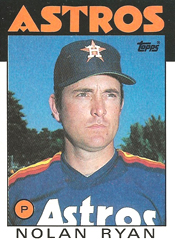 On April 6, 1982, the Cardinals scored six runs against Ryan, knocking him from the game after three innings, and rolled to a 14-3 victory over the Astros at Houston.
After losing their next three games, the Cardinals won 12 in a row. The fast start provided them an important boost in a season that resulted in a National League pennant and World Series title.
A dilly of a delivery
A right-hander who overpowered hitters for more than a quarter of a century, Ryan ranks as baseball’s all-time leader in strikeouts (5,714) and no-hitters (seven). He had 324 career wins, but was 10-13 versus the Cardinals. Ryan was 4-3 against them with the Mets and 6-10 with the Astros.
In 1968, when he was 21, Ryan’s reputation rocketed with a dazzling stint for the Mets against the Cardinals in a March 26 spring training game. He struck out six, including Orlando Cepeda, Johnny Edwards and Mike Shannon in succession, in four scoreless innings.
According to The Sporting News, Cepeda called Ryan “the best young pitcher I have seen since I came into the major leagues.” Cepeda’s teammate, Lou Brock, said Ryan “blew me away from the plate. He made me strictly a defensive hitter the second time up.”
Cardinals manager Red Schoendienst said to the St. Louis Post-Dispatch, “The kid threw harder than any pitcher I’ve ever seen.”
Schoendienst told Newsday, “Ryan throws harder than Bob Feller did. I hit against Feller. I saw Sandy Koufax and Bob Gibson break in. I saw Rex Barney, but, believe me, Ryan throws harder than all of them.”
Ryan literally experienced a blistering start to the 1968 regular season. Blisters developed on the fingers of his right hand and threatened to derail him until Mets trainer Gus Mauch came to the rescue. Mauch went to a New York delicatessen and asked for the brine from the sourest dill pickles available. He instructed Ryan to soak his fingers in the juice and, before long, the brine toughened the skin and the blisters healed.
Ryan “never is without his pickle brine,” The Sporting News reported. “He dips his fingers while sitting in his hotel room, while watching television and before he goes to bed at night. He even dips them in a plastic bottle of brine on the dugout bench between innings.”
“I can smell the brine when I’m pitching,” Ryan said.
Ryan faced the Cardinals for the first time in the regular season on May 7, 1968, at St. Louis. He pitched a three-hitter in a 4-1 victory for his first complete game in the majors. The Cardinals’ hits were singles by Curt Flood, Mike Shannon and Bobby Tolan. “He’s faster than Sandy Koufax and he’s the fastest I’ve seen in the major leagues,” Shannon told the Associated Press.
According to the Post-Dispatch, Ryan threw 125 pitches _ 98 fastballs and 27 curves. “He threw more good curves against the Cardinals tonight than he had all year,” said Mets manager Gil Hodges. Boxscore
Playing like champs
Ryan was 35 when he started the 1982 season opener, his first for the Astros, against the Cardinals inside the Astrodome. The year before, Ryan led National League pitchers in ERA (1.69).
Making their Cardinals debuts were center fielder Lonnie Smith and shortstop Ozzie Smith.
The Cardinals acquired Lonnie Smith to ignite the offense, and he did the job in his first plate appearance in the first inning of the first game. Awarded first base after a Ryan fastball grazed his jersey, Smith swiped second and continued to third when catcher Alan Ashby’s rushed throw bounced into the outfield.
After Tommy Herr struck out, Keith Hernandez drew a walk. Ryan got ahead of the count, 0-and-2, on the next batter, Darrell Porter. “I was looking for a fastball and I was going to adjust to everything else,” Porter told the Post-Dispatch.
Ryan threw a curve. “A hanger, very much a hanger,” said Porter. “I knew he might throw me a curveball, but I didn’t expect it to be there saying, ‘Hit me.’ “
Porter hit it over the wall in right for a three-run home run.
George Hendrick followed with a single and moved to third on Dane Iorg’s double.
Swinging at a 3-and-0 pitch, Steve Braun got the Cardinals’ fourth consecutive hit, a single, scoring Hendrick and advancing Iorg to third. Ozzie Smith’s grounder forced out Braun at second, but scored Iorg, giving the Cardinals a 5-0 lead. “After I hung the curve to Porter, I started over-striding,” Ryan told the Associated Press.
The Cardinals added another run in the second. Lonnie Smith singled, stole second and scored on Herr’s double.
For his career, Lonnie Smith hit .500 (12-for-24) versus Ryan. He also twice was hit by Ryan pitches and drew five walks against him. Smith’s on-base percentage versus Ryan is .613.
Ryan gave up singles to Ozzie Smith and Lonnie Smith in the third, but the Cardinals didn’t score. In the bottom half of the inning, Ryan was removed for pinch-hitter Danny Heep.
Ryan’s totals: three innings, eight hits, six runs, two walks, five strikeouts, one batter hit by pitch. “This was the worst I’ve ever been with the Astros,” Ryan told the Post-Dispatch.
In the book “Whitey’s Boys,” Cardinals pitcher Dave LaPoint recalled that he said to himself after witnessing his first season opener in the majors, “If Nolan Ryan gets beat 14-3, I don’t stand a chance in this game. I’m not even going to unpack.” Boxscore
A force in his 40s
The last time Ryan faced the Cardinals in a regular-season game was Sept. 3, 1988, when he was 41. He limited the Cardinals to four hits in seven innings and got the win. The Cardinals’ hits were a Steve Lake double and singles by Luis Alicea, Rod Booker and ex-Astro Denny Walling. “He’s just unbelievable … He’s got the best arm ever,” Walling told the Post-Dispatch. Boxscore
Ryan’s 61 shutouts rank seventh all-time, but in 26 starts against the Cardinals he never pitched a shutout.
In 1969, when the Mets became World Series champions, Ryan had more than one win in a season versus the Cardinals for the only time. He was 2-1 with a 2.20 ERA against them that year.
Two years later, Ryan was the starter when the Cardinals’ Joe Torre had a 22-game hitting streak snapped. Ryan’s last start for the Mets came in the game in which Steve Carlton also made his last start for the Cardinals.
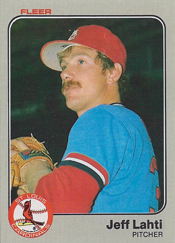 On April 1, 1982, the Cardinals acquired Jeff Lahti and another minor-league pitcher, Oscar Brito, from the Reds for big-league pitcher Bob Shirley.
 Terry’s heart may have been with the Cardinals, but he went on to pitch in five World Series with the Yankees and was involved in two of the most dramatic Game 7 finishes.
 With the designated hitter being used in the National League for the first time in 2022, it may be a while before the Cardinals pick a pitcher to be a pinch-hitter. Even if a pitcher was needed to bat, the odds would be against him getting a hit after a long layoff as a batter.
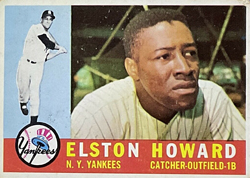 It was an audacious attempt, coming two months after a World Series in which Howard hit .462 and Ford pitched a pair of shutouts, but Cardinals general manager Bing Devine indicated the Yankees gave him reason to try.
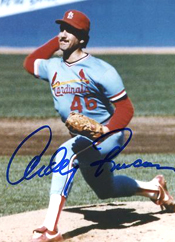 In March 1982, the Cardinals were counting on right-hander Andy Rincon to be a consistent winner.

