Feeds:
Posts
Comments

Archive for the ‘Prospects’ Category

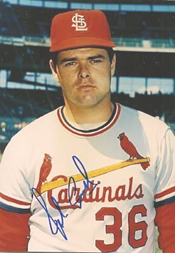
Being a Little League phenom is no guarantee of success at the professional level. The Cardinals made that costly discovery with Art Deras.

An exceptional Little League, Pony League and high school player, Deras was signed by the Cardinals, who outbid multiple teams with the intention of grooming him to replace Ken Boyer at third base.

A right-hander who threw hard and hit with power, Deras played five seasons in the Cardinals’ system, but never reached the majors.

Super powers

When Deras grew up in Hamtramck, Mich., near Detroit in the 1940s and 1950s, the town was a Polish-American enclave. His Polish grandmother nicknamed him Pinky. “I never did learn how she picked the name Pinky, but it stuck,” Deras said to the National Polish-American Sports Hall of Fame.

In 1959, when he turned 13, Deras led Hamtramck into the Little League World Series in Williamsport, Pa.

Against San Juan, Puerto Rico, in Game 1, Deras pitched a one-hitter and struck out 17 in a 5-0 victory. In Game 2, Deras played shortstop and hit a grand slam in Hamtramck’s 8-1 triumph versus Kailua, Hawaii.

For the Game 3 championship final, Deras pitched a three-hitter, struck out 14 and hit a three-run home run in Hamtramck’s 12-0 rout of Auburn, Calif. Among those in attendance were Baseball Hall of Famers Frank “Home Run” Baker and Frankie Frisch.

In the two six-inning games Deras pitched in the Little League World Series, 31 of the 36 outs he recorded were strikeouts. He allowed four total hits and no runs.

The Sporting News described him as “this super boy from Hamtramck.”

For the season, Deras pitched 10 no-hitters, including five in a row, struck out 296 in 108 innings, and had 18 wins, including 16 shutouts, The Sporting News reported. Video

Soon after the Little League World Series, Chrysler Corporation arranged for the team to be flown to California for an appearance on The Lawrence Welk Show. Michigan-based Chrysler was a sponsor of the television program.

“They introduced us, and at the end of the show I danced with the champagne lady,” Deras recalled to the Detroit Free Press. “Can you imagine that? Twelve years old and dancing with the champagne lady. Where do you go from there?”

The beat goes on

Deras advanced to Pony League and in 1961 he led Hamtramck to a national title. One of his teammates was Tom Paciorek, who went on to hit .282 during 18 seasons (1970-87) in the majors.

In an interview with the Free Press, Paciorek described Deras as “very, very talented. A tremendously gifted athlete. At his age level, from 12 to 14, I doubt if there is any question that he was the finest athlete in the country.”

Deras continued having success in high school sports. In addition to his pitching and hitting in baseball, he was a standout running back in football. In April 1964, he signed a letter of intent to play football at Michigan State.

Big-league baseball scouts had other plans for him.

Highest bidder

“Claimed by many to be the greatest natural hitter ever to come off the Detroit sandlots,” Deras received interest from at least 10 big-league teams, the Free Press reported.

Cardinals scout Mo Mozzali recommended the club go all-out to sign Deras. Knowing it would take a substantial offer to outbid others, the Cardinals sent their 82-year-old consultant, major-league legend Branch Rickey, to Hamtramck to see the 17-year-old amateur legend and determine whether he was worth the cash.

Rickey arrived at the Hamtramck high school ballfield in a black limousine and was escorted to a roped-off area behind home plate, according to the Free Press. Rickey was impressed with what he saw, and endorsed the Cardinals’ effort to pursue Deras.

On June 1, 1964, the Cardinals came to Detroit to play the Tigers in an exhibition game to benefit amateur baseball. Wearing a Cardinals uniform, Deras worked out with the team before the game at Tiger Stadium, the Free Press reported.

Two weeks later, on June 10, Deras graduated from high school. Attending the family graduation party that night at the home of Deras’ parents were the Cardinals’ scout, Mo Mozzali, and scouts for the Red Sox and Yankees. The hometown Tigers dropped out of the chase when Deras asked for $50,000.

According to the Free Press, Deras’ father was a security guard at General Motors. Deras’ mother worked in an auto supply factory. Deras saw a big-league signing bonus as a chance to help his parents, and decided to go with the team that made the highest offer.

On June 15, 1964, the same day the Cardinals traded for Lou Brock, Deras signed with them for $80,000, $20,000 more than the other finalist, the Red Sox, offered, the Free Press and St. Louis Post-Dispatch reported.

Attending the signing ceremony were Mozzali and Cardinals director of scouting George Silvey. Deras “has the talent to reach the majors in two years,” Mozzali told the Post-Dispatch.

Cavorting with champions

Though he primarily was a pitcher in high school, the Cardinals wanted Deras to play every day because of his bat. He hit .478 his senior season.

“The Cardinals have high hopes for him at third base” as the eventual replacement for all-star Ken Boyer, the Free Press reported.

The Sporting News designated Deras and Ed Spiezio as “the best bets as eventual successor to Ken Boyer.”

Assigned to Class A Rock Hill, Deras hit .208 in 51 games in 1964. He did better at the fall Florida Instructional League, attacking pitches the way the Cardinals hoped he would, and was invited to join the big-league club at spring training in February 1965.

Placed on the 40-man winter roster, Deras, 18, joined the reigning World Series champions at their St. Petersburg, Fla., training camp. He posed for pictures with club executive Stan Musial, took batting practice from Bob Gibson, and played cards with Mike Cuellar. “He used to cheat,” Deras told the Free Press. “Whenever you’d call him on it, he’d pretend he didn’t speak English.”

Deras returned to Class A in 1965 and hit .260 with 18 stolen bases, but the Cardinals decided to move him to the outfield. “We would have preferred to keep him at third base,” farm director Sheldon Bender told The Sporting News, “but the throwing from there to first base was bothering him.”

Peaked too soon

After two seasons at Class AA Arkansas, Deras was demoted to Class A Modesto in 1968. While Deras, 21, was on the way down, his Modesto teammate, Ted Simmons, 18, another Michigan high school standout who was signed by Mo Mozzali, was on the way up.

Deras hit .269 for Modesto, then walked away from the Cardinals. “I didn’t tell them I was retiring, and they didn’t ask why,” Deras told the Free Press. “I guess they knew.”

In five seasons in the Cardinals system, Deras hit .243 with 32 home runs.

Deras had invested part of his signing bonus in a Hamtramck sporting good store, but the business collapsed, according to the Free Press. In 1974, he joined the Warren, Mich., police force. He retired as a detective in 2001.

Looking back at Deras’ time in the Cardinals’ organization, the Free Press concluded, “It was never a question of ability. It was a question of desire _ and it was gone.”

Deras said, “By the time I was 21, I had already had a full career _ playing every day, two amateur championships, a room full of trophies. I should have been reaching my prime, and I was exhausted. Looking back on it, I guess it was just a problem of getting too much too soon.”
Read Full Post »

John Cumberland was a teenager from Maine who yearned to play professional baseball. A Cardinals scout took him to dinner and launched him on a path to becoming a big-league pitcher and coach.

A left-hander, Cumberland made his debut in the majors with the Yankees. He later joined Juan Marichal and Gaylord Perry as a starter for the division champion Giants, and got his last win in the big leagues as a reliever with the Cardinals.
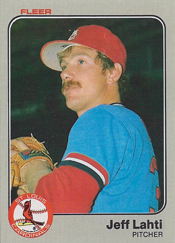
As a coach, Cumberland mentored 18-year-old Dwight Gooden in the minors, and was the first big-league pitching coach for Zack Greinke with the Royals. 

Bargain player

Born and raised in Westbrook, Maine, Cumberland was a high school baseball and football player. Though he wasn’t selected in the amateur baseball draft, Cumberland’s ability to throw hard impressed Cardinals scout Jeff Jones. According to the St. Louis Post-Dispatch, Jones bought Cumberland a steak dinner and got him to sign with the Cardinals in 1966.

“I got 52 scholarships out of high school, mostly for football, but the opportunity came up for baseball, so I signed for a steak dinner,” Cumberland recalled to the Clearwater (Fla.) Times. “What a dummy. If I’d waited a little longer, I could have gotten $30,000 or $40,000, even back then. I was anxious, though, for the publicity and all.”

Cumberland was assigned to the Eugene (Ore.) Emeralds, a minor-league club stocked with Cardinals and Phillies prospects. According to the Post-Dispatch, his roommate at Eugene was another future big-league pitcher, Reggie Cleveland.

After posting a 4-1 record for Eugene, Cumberland was taken by the Yankees in the November 1966 minor-league draft.

Two years later, he made his big-league debut for the Yankees against the Red Sox. The first batter he faced, Carl Yastrzemski, grounded a comebacker to Cumberland, who threw to first baseman Mickey Mantle for the out. Boxscore

After making two appearances with the 1969 Yankees, Cumberland got a chance to stick with them in 1970. He got his first big-league win, pitching 6.1 innings of relief against the Senators, and also stroked his first big-league hit, a single that scored Thurman Munson, in that game. Boxscore

The performance earned him a spot in the starting rotation. A month later, in a start against the Indians at Cleveland, Cumberland became the first Yankees pitcher to give up five home runs in a game. Ray Fosse and Tony Horton hit two apiece, and Jack Heidemann slugged the other. Boxscore

In his next start, against the White Sox at Yankee Stadium, Cumberland recovered and pitched his first complete game in the majors, a 3-1 victory. Boxscore

In July 1970, the Yankees traded him to the Giants for pitcher Mike McCormick.

Wakeup call

Soon after joining the Giants, Cumberland was demoted to the minors “with instructions to lose 15 pounds and gain a new pitch,” the New York Daily News reported.

“Getting sent down was the big blow,” Cumberland told reporter Phil Pepe. “It shook me up. I was kind of complacent until that happened. It made me think about my future.”

Cumberland worked on improving his curveball. Called up by the Giants in September, he was 2-0 with a 0.00 ERA in five relief appearances that month.

Pleasant surprise

In 1971, Cumberland entered spring training 15 pounds lighter than he was the previous year, and earned an Opening Day roster spot as a reliever.

When Frank Reberger got injured, Giants manager Charlie Fox chose Cumberland to start against the Cubs on June 22. He beat Ferguson Jenkins in a 2-0 duel. Boxscore

Cumberland remained in the rotation, and on July 3 he pitched a four-hitter, beating Steve Carlton and the Cardinals. Boxscore

“Cumberland is perhaps the most unartistic-looking left-handed pitcher since Hal Woodeshick went into retirement,” San Francisco columnist Wells Twombley observed.

The results, though, were effective. Cumberland was 9-6 for the 1971 Giants, who won a division title. He ranked second on the team in ERA (2.92) and third in innings pitched (185).

“He’s been the biggest surprise of the season,” Fox told United Press International. “What I like best about him is the way he battles the batters. He’s a real bulldog.”

Winding down

At spring training in 1972, teammate Juan Marichal worked with Cumberland on developing a screwball. After posting a 1.61 ERA in 28 exhibition game innings _ “My best spring training ever,” he told the Post-Dispatch _ Cumberland seemed poised to succeed in the regular season, but the opposite happened.

Cumberland was 0-4 with an 8.64 ERA for the Giants when they arrived in St. Louis on June 16, 1972, for a series with the Cardinals. Before the game that night, the Giants swapped Cumberland to the Cardinals for minor-league infielder Jeffrey Mason.

“He’s only 25 and has good control,” Cardinals manager Red Schoendienst told the Post-Dispatch. “If he can come along with that screwball, he could really help us.”

In his St. Louis debut, a start versus the Expos and former Cardinal Mike Torrez, Cumberland gave up six runs in 3.1 innings. Boxscore

After that, Schoendienst used Cumberland as a reliever.

On Aug. 19, facing the Giants in San Francisco, Cumberland pitched three innings and got the win, his last in the majors. Boxscore

“I can’t think of any club I’d rather beat,” Cumberland told the Oakland Tribune.

In 14 games with the 1972 Cardinals, Cumberland was 1-1 with a 6.65 ERA. After the season, they dealt him and outfielder Larry Hisle to the Twins for reliever Wayne Granger.

Helping hand

Cumberland’s final season in the majors was 1974. Eight years later, the Mets hired him to be a coach in the minors.

At the Lynchburg, Va., farm club in 1983, teen phenom Dwight Gooden got off to a mediocre start and was challenged by Cumberland.

“I just told him I didn’t think he wanted to win, and that he wasn’t much of a competitor,” Cumberland told the Newport News Daily Press.

According to Cumberland, Gooden responded, “You were right. I was too timid. That will never happen again.”

Gooden finished 19-4 with 300 strikeouts in 191 innings for Lynchburg.

At the Florida Instructional League after the season, Cumberland helped Gooden develop a changeup and worked with him to shorten his motion.

Cumberland coached in the Mets system from 1982-90. Others he mentored included Rick Aguilera, Randy Myers and Calvin Schiraldi.

“He was the best pitching coach we had in the minor leagues,” Mets scouting director Joe McIlvaine told the Boston Globe. “He toughened the kids up. He worked better with the mind of the player than with the body of the player. That’s a hard thing to get. When we sent a pitcher to John Cumberland in the minor leagues, he was always better for the experience.”

In addition to stints as a minor-league coach for the Padres and Brewers, Cumberland coached in the big leagues with the Red Sox and Royals.

When he was Red Sox pitching coach in 1995, the staff included Roger Clemens, and future Cardinals pitching coaches Derek Lilliquist and Mike Maddux. Derek Lowe transformed from starter to closer while Cumberland was Red Sox bullpen coach from 1999-2001.

Cumberland was Royals pitching coach for manager Tony Pena from 2002-04. When Zack Greinke, 20, made his big-league debut in 2004, he reminded Cumberland of Gooden at a similar age.

“Dwight was more of a power pitcher,” Cumberland told the Kansas City Star, “but the two have the same type of makeup: ‘Here I am. I’m not intimidated. Stand in the box. I’m going to get you out.’ That’s the way Dwight was at 18, just like this kid.”


Read Full Post »

A trade for a minor-league pitcher gave the Cardinals a lift in their quest for a World Series championship.

On April 1, 1982, the Cardinals acquired Jeff Lahti and another minor-league pitcher, Oscar Brito, from the Reds for big-league pitcher Bob Shirley.

Called up to the Cardinals two months later, Lahti added valuable depth to a bullpen featuring Bruce Sutter, Jim Kaat and another ex-Red, Doug Bair.

Promising prospect

Born and raised in Oregon, Lahti was taken by the Reds in the fifth round of the 1978 amateur baseball draft. A right-hander, he became a reliable reliever in the minors, posting ERAs of 2.67 in 1979, 2.77 in 1980 and 2.97 in 1981.

“Lahti has very good ability, and he has that intangible _ competitiveness,” Reds manager John McNamara told the Dayton Journal Herald in 1981.

After watching Lahti pitch for Class AAA Indianapolis in 1981, Cardinals scout Mo Mozzali recommended him.

A chance to acquire Lahti came during spring training in 1982 when left-hander Dave LaPoint earned a position on the Cardinals’ pitching staff as a spot starter and reliever.

LaPoint’s performance made left-hander Bob Shirley expendable. For the Cardinals in 1981, Shirley was 6-4, including 2-0 against the Reds. Including his four seasons with the Padres before being dealt to the Cardinals, Shirley had a 12-7 record and two saves versus the Reds.

When the Reds learned Shirley was available, they agreed to send Lahti and Brito, another right-hander, to the Cardinals.

“This was a big decision for us to make to give up two young prospects like this,” Reds general manager Dick Wagner told the Cincinnati Enquirer. “Brito is one of the highest-regarded prospects in the game, period. They were very important to us. It was a tough decision.”

Fired up

The Cardinals assigned Lahti and Brito to Class AAA Louisville to begin the 1982 season. In June, Lahti was called up when reliever Mark Littell accepted a demotion to Louisville.

Lahti, 25, brought a rookie’s enthusiasm that was embraced by the contending Cardinals. Between pitches, he “stomps around the mound like a bull protecting a pasture,” Hal McCoy wrote in the Dayton Daily News.

“I try to keep myself pumped up, but I’m not conscious of my actions,” Lahti told the St. Louis Post-Dispatch. “Maybe it’s my second being. They say there are two sides to everybody. Maybe that’s my second side. On the mound, I’m a monster.”

On July 16, 1982, in a game Shirley started for the Reds, Lahti won for the first time in the majors, pitching 3.1 innings in relief of Steve Mura before Bruce Sutter came in to close.

In the ninth, when Sutter got Paul Householder to ground into a double play, Lahti raced from the dugout onto the field. “He was halfway to the foul line before realizing there were only two outs,” the Dayton Daily News reported.

Lahti called his first big-league win “the thrill of my life.”

“I never thought my first victory would be against the Reds,” he said. “I always thought it would be for them.” Boxscore

Getting it done

On Aug. 9, 1982, Lahti pitched six scoreless innings in relief of Dave LaPoint for a win against the Mets. Cardinals manager Whitey Herzog told the Post-Dispatch, “I like him because he comes in and gets after people. He’s a good jam pitcher.” Boxscore

From then on, according to the Cardinals media guide, Herzog referred to Lahti as “Jam Man” for his ability to work out of tight situations.

A month later, on Sept. 18, Lahti again pitched six innings of relief for a win versus the Mets. Boxscore

In his last five regular-season appearances, totaling 4.1 innings, Lahti yielded one run, helping the Cardinals secure a division title for the first time.

Lahti was 5-4 with a 3.91 ERA in 33 games for the 1982 Cardinals. Excluding his one start, his season ERA as a reliever was 3.04.

Key contributor

Bob Shirley finished 8-13 in 1982, his lone season with the Reds. He went on to pitch for the Yankees and Royals.

Oscar Brito never made it to the big leagues.

Despite persistent shoulder pain, Lahti pitched well for the Cardinals from 1982 through 1985. He led them in saves (19) and ERA (1.84) in 1985, and was the winning pitcher in the pivotal Game 5 of the National League Championship Series which ended on Ozzie Smith’s iconic walkoff home run. Boxscore

After apearing in four games in 1986, Lahti underwent shoulder surgery. “The surgeon found a torn rotator cuff, with which Lahti had pitched for several years, and also bone chips that no one had detected before,” the Post-Dispatch reported.

The shoulder never regained full strength and Lahti’s pitching career was finished.

His career numbers with the Cardinals: 17-11 record, 20 saves and a 3.12 ERA. Against the Reds, Lahti was 4-1 with a save and a 1.66 ERA.

According to the Post-Dispatch, Lahti returned to Hood River Valley in Oregon, operated a bottling company, owned an apple orchard and coached baseball.

Read Full Post »

When it came time to select a team to sign with, the Cardinals were the first choice of teen pitching prospect Ralph Terry. Instead of beginning his baseball career with them, though, Terry ended up with the Yankees.

Terry’s heart may have been with the Cardinals, but he went on to pitch in five World Series with the Yankees and was involved in two of the most dramatic Game 7 finishes.
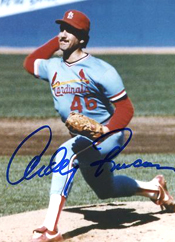
He also pitched against the Cardinals in the 1964 World Series and narrowly missed having a pivotal role in the crucial Game 4.

A right-hander who pitched 12 seasons in the majors, Terry achieved a 107-99 record, including 78-59 with the Yankees.

Deadly arm

Terry was born in Big Cabin, Okla., and raised in the nearby town of Chelsea in the northeastern section of the state.

According to the New York Times, “As the story goes, Terry first tested his pitching arm on his grandmother’s farm. He started throwing corncobs, then switched to rocks. One day, he killed grandma’s pet rooster with a rock. The next day, she gave him a baseball. After that, he terrorized only schoolboy batters.”

Terry excelled in sports for the Chelsea High School Green Dragons and in amateur baseball leagues.

In November 1953, when he was 17, Terry said he decided to accept an offer from Cardinals scout Fred Hawn, The Sporting News reported. The Yankees continued their pursuit, prompting a series of arguments between Hawn and Yankees scout Tom Greenwade. according to the New York Times.

On Nov. 19, 1953, Greenwade persuaded Terry to choose the Yankees. Greenwade prepared a telegram of acceptance to send to Yankees general manager George Weiss in New York. Terry signed it, but because he was younger than 18, the agreement needed the signature of a parent to be official.

According to J. Roy Stockton of the St. Louis Post-Dispatch, Terry said Greenwade had him sign his mother’s name to the telegram.

Weiss said he received the telegram, saw the signatures of Terry and his mother, and immediately sent back a confirmation of the acceptance, the New York Daily News reported.

“Confirmation by telegraph is an accepted way of doing business,” Weiss told United Press.

Dazed and confused

That night, Terry said, he changed his mind about joining the Yankees. He met with Hawn and Cardinals minor-league manager Ferrell Anderson in Joplin, Mo., and signed a Cardinals contract. Accompanied by Hawn, Terry went home to Chelsea, where his mother also signed the agreement, The Sporting News reported.

According to United Press, Terry’s mother denied she or her son had come to terms with the Yankees.

Terry told the wire service, “I definitely want to play with the Cardinals. I was confused for a time. There was a lot of fast talk on both sides, but I feel I’d be better off with the Cardinals.”

With both the Yankees and Cardinals claiming Terry, baseball commissioner Ford Frick was asked to settle the dispute.

“We’ll welcome any investigation,” Cardinals vice-president Bill Walsingham told the St. Louis Globe-Democrat. “We signed him first.”

To the Post-Dispatch, Walsingham said, “We are sure we are not only within our rights signing Terry, but also that the actions of our scout (Hawn) were entirely honest and above board.”

After meeting with Yankees and Cardinals officials, Frick ruled in favor of the Yankees, saying Terry accepted their terms before signing with the Cardinals.

Referring to Terry apparently forging his mother’s signature on the Yankees telegram at the suggestion of Greenwade, the Post-Dispatch dryly noted Frick’s ruling “surprised some observers,” but Cardinals vice-president John Wilson said, “Although we’re sorry and disappointed to lose Terry, there’s nothing to be done about it.”

Hype and hope

Noting that Greenwade was the scout who signed another prized prospect from Oklahoma, Mickey Mantle, the New York Daily News headline announcing Terry’s arrival with the Yankees declared, “Second Mickey?”

Terry, who turned 18 in January 1954, came to Yankees spring training camp a month later and dazzled manager Casey Stengel.

“I think he’s the greatest pitching prospect I’ve laid eyes on since I’ve been in baseball,” Stengel, 63, said to Dan Parker of the New York Daily Mirror.

Terry, 20, got to the majors with the Yankees in August 1956. They traded him to the Athletics in June 1957 and reacquired him in May 1959.

Goat and hero

In Game 7 of the 1960 World Series at Forbes Field in Pittsburgh, the score was tied at 9-9 when Bill Mazeroski led off for the Pirates in the bottom of the ninth against Terry, working in relief.

After the first pitch, catcher Johnny Blanchard went to the mound and said, “This guy is a high-ball hitter. Get the ball down,” Terry said to the Pittsburgh Post-Gazette.

Mazeroski walloped the next pitch, a slider, for a home run, clinching the championship.

“I knew it was high when I let it go,” Terry told the Post-Gazette. “I thought it might be hit off the wall for a double.” Boxscore and Video

Two years later, Terry again was pitching for the Yankees in the bottom of the ninth in Game 7 of the World Series. With the Yankees ahead, 1-0, at Candlestick Park in San Francisco, Terry, a 23-game winner during the season, faced Willie McCovey with two outs and runners on second and third.

“The first pitch was down the middle and it surprised me and I pulled it foul,” McCovey told the New York Times. “I figured it was a mistake, but the second was another strike.”

McCovey scorched a line drive at second baseman Bobby Richardson. If the ball rose, Richardson said, he would have been in trouble, but instead it started to sink and it landed with a thud into his mitt for the final out. Boxscore and Video.

Terry, who started and won Games 5 and 7 after losing Game 2, was named most valuable player of the 1962 World Series.

“I am a very lucky fellow,” Terry told the New York Times. “You don’t often get another chance to prove yourself in baseball or in life.”

Different story

The Cardinals were desperate for a win in Game 4 of the 1964 World Series at Yankee Stadium. The Yankees won two of the first three games, and a win in Game 4 would put them in a commanding position.

With the Yankees ahead, 3-0, in the sixth inning, the Cardinals had runners on first and second, one out, against starter Al Downing. Dick Groat hit a grounder that had the look of an inning-ending double play. Bobby Richardson gloved the ball, but his toss to shortstop Phil Linz, who was moving toward the bag at second, was late and off target. All runners were safe, loading the bases, and Richardson was charged with an error.

“If Groat gets a clean hit, then I’d have to pull Al Downing and go with Ralph Terry,” Yankees manager Yogi Berra told the Post-Dispatch.

Because Downing had induced a grounder that should have produced an out, Berra felt compelled to let Downing, a left-hander, pitch to Cardinals cleanup hitter Ken Boyer, who batted right-handed.

“Terry still was in the bullpen when Downing threw a waist-high changeup to Boyer,” the Post-Dispatch noted.

Boyer hit it over the fence in left for a grand slam and the Cardinals went on to a 4-3 victory, evening the Series. Boxscore and Video.

If Berra had brought in Terry to face Boyer, it’s impossible to say whether the result would have been different, but Terry did pitch two scoreless innings in the eighth (when he got Boyer to ground into a double play) and ninth.

National Leaguer

That was the last game Terry pitched for the Yankees. He went to the Indians and Athletics before finishing his career with the Mets.

Terry’s first appearance in the National League was a start against the Pirates at Forbes Field on Aug. 11, 1966. Facing Terry for the first time since the World Series home run, Mazeroski flied out in the first, singled in the third and popped out in the fifth. Boxscore

According to Dick Young of the New York Daily News, a month later, when Terry saw his 1960 Yankees manager, Casey Stengel, now retired, in Los Angeles, he said, “Hey, Casey, I got Mazeroski out. I pitched him low.”

Stengel replied, “It’s about time.”

During his stint with the Mets, Terry faced the Cardinals once and it didn’t go well for him.

On Aug. 14, 1966, the Mets led the Cardinals, 3-1, in the bottom of the ninth at St. Louis. With two outs and none on, reliever Jack Hamilton walked Curt Flood and yielded a single to Tim McCarver.

Orlando Cepeda hit a pop foul near the Cardinals’ dugout. The ball tipped off the mitt of Mets catcher Jerry Grote. Instead of a game-ending out, Cepeda got to continue the plate appearance and walked, loading the bases.

Mets manager Wes Westrum brought in Terry to face Mike Shannon. With the count 2-and-2, Terry threw a pitch low and away. Shannon reached out and stroked a two-run single, tying the score at 3-3.

“The ball I hit was a hell of a pitch,” Shannon said. “I don’t know whether the pitch would have been a strike or not, but I couldn’t take the chance.”

The next batter, Charlie Smith, stroked Terry’s first pitch for a single, driving in pinch-runner Bob Gibson with the winning run. Boxscore

Read Full Post »

A surprising aspect of the Cardinals’ 1982 season was they succeeded without a big contribution from a pitcher considered a key to the starting rotation.

In March 1982, the Cardinals were counting on right-hander Andy Rincon to be a consistent winner.
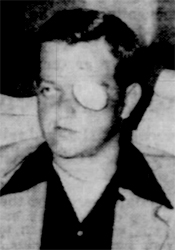
Instead, he spent much of the season in the minors and wasn’t with the Cardinals when they won the National League pennant and the World Series championship.

Ticketed for majors

Born and raised in California, Rincon played high school baseball in Santa Fe Springs, near Los Angeles, and was a teammate of Mike Gallego.

The Cardinals chose Rincon, 18, in the fifth round of the 1977 June amateur draft.

In 1980, Rincon pitched for Class AA Arkansas, earning 10 wins during the regular season and two in the playoffs for the Texas League champions. After the final game, he left Little Rock to drive home to California.

Cardinals general manager Whitey Herzog, who scouted the Arkansas team, wanted Rincon to join the Cardinals for the final month of the season. Herzog said “it looked like Andy had the best arm in the organization,” interim Cardinals manager Red Schoendienst told the St. Louis Post-Dispatch.

Hoping to contact Rincon before he got to California, the Cardinals alerted authorities in Texas to be on the lookout for him, The Sporting News reported.

Rincon was stopped for speeding in El Paso, Texas, and immediately brought to traffic court. According to the Post-Dispatch, when Rincon gave his name in court, the judge replied, “Oh, you’re the guy we’ve been looking for,” and told him to call the Cardinals.

Herzog informed Rincon to take a flight from El Paso to Philadelphia and join the team there. Rincon paid a $23 traffic fine, parked at the El Paso airport and boarded a plane. “All my stuff is in the car,” he told the Post-Dispatch.

From Philadelphia, the Cardinals went to Chicago and Rincon, 21, made his debut for them there, pitching a five-hitter in a win against the Cubs at Wrigley Field. Boxscore

“Who is he, anyway?” Cubs shortstop Ivan DeJesus asked the Post-Dispatch.

Rincon made three more starts for the 1980 Cardinals and finished 3-1 with a 2.61 ERA.

Bad break

Herzog, who returned to managing the Cardinals in 1981, had Rincon in the starting rotation to begin the season. After four starts, he was 2-1 with a 2.22 ERA. Rincon was the “Cardinals’ best pitcher in the first month of the season,” The Sporting News declared.

On May 9, 1981, in a start at St. Louis, Rincon was cruising to his third win. He shut out the Pirates for seven innings, drove in three runs and had a 13-0 lead.

In the eighth, Phil Garner led off and hit a line drive that struck Rincon in the throwing arm. The ball caromed to third baseman Julio Gonzalez, who fielded it and threw out Garner at first base. Rincon suffered a hairline fracture of the right forearm. Boxscore

Rincon (3-1, 1.77 ERA) was placed on the disabled list. Two days before the players went on strike on June 12, Rincon received medical clearance to resume pitching, The Sporting News reported. “He was throwing the hell out of the ball,” Herzog said. “I couldn’t see anything wrong with him.”

The Cardinals sent Rincon to their Class AAA Springfield (Ill.) farm club so that he could pitch during the strike, but it was too much too soon and he strained his right shoulder.

“Being weak in my forearm put more strain on my shoulder,” Rincon told The Sporting News. “If I’d just backed off and been more patient, things might have been better.”

In eight starts for Springfield, Rincon was 1-3 with a 6.55 ERA. Instead of helping the Cardinals after the strike ended in August, Rincon was reassigned to Arkansas and was 0-2 with a 6.75 ERA in two starts there.

“We wanted him to pitch, but he wasn’t worth a damn down there,” Herzog said to the Post-Dispatch.

Cardinals first baseman Keith Hernandez criticized Rincon for not working hard enough to come back from the injury and help the club in 1981, The Sporting News reported.

“He might be right,” Rincon said. “I feel like I did let the guys down.”

Missing out

Despite the setbacks encountered in 1981, Rincon was viewed by Herzog as “the key to the pitching staff” entering 1982 spring training, The Sporting News reported.

After working daily during the winter on a Nautilus machine and in aerobic exercises, Rincon, 23, reported to spring training fit and healthy. “I feel great,” he said. “I want to be the stopper of our staff. I want to pitch the tough games.”

The Cardinals entered the 1982 season with a starting rotation of Rincon, Bob Forsch, Joaquin Andujar, Steve Mura and John Martin.

“Rincon potentially is the Cardinals’ best starting pitcher,” The Sporting News declared.

In his first start of the season, Rincon pitched a three-hitter to beat Ferguson Jenkins and the Cubs at Wrigley Field, but his performances unraveled after that. Boxscore

Lacking command, he had more walks (25) than strikeouts (11). In his last start, against the Dodgers, Rincon “incurred Herzog’s displeasure for failing to hold runners on” and “missing a hit-and-run sign,” The Sporting News reported.

Rincon (2-3, 4.73 ERA) and Martin were sent to the minors, and John Stuper and Dave LaPoint replaced them in the Cardinals’ rotation.

At Class AAA Louisville, Rincon was 5-8 with a 5.09 ERA. When it came time to call up players to help the contending Cardinals, Louisville manager Joe Frazier told Herzog he didn’t think Rincon merited a chance.

“What Frazier said is good enough for me,” Herzog told The Sporting News.

Without Rincon, the Cardinals went on to win their first World Series championship in 15 years.

Still trying

Rincon never got back to the majors.

At spring training with the Cardinals in 1983, Herzog became unhappy with the number of runners stealing bases against Rincon and wanted him to change his pitching delivery. “I could steal on him, and I’m 51 years old,” Herzog told the Post-Dispatch.

Eric Rasmussen, 31, edged Rincon for the final pitching spot on the Cardinals’ Opening Day roster.

Rincon reported to Louisville, experienced elbow pain and was limited to 31 innings pitched in 1983. Granted free agency after the season, he signed with the Pirates and spent 1984 in their farm system, pitching a no-hitter for Hawaii.

Rincon went to spring training with the Orioles in 1985, but, when his arm didn’t respond, he went home. He sat out the 1985 and 1986 seasons, had shoulder surgery late in 1986, and was sidelined again in 1987.

In 1988, Rincon pitched in Mexico, then joined Fresno, an unaffiliated Class A club that had become a refuge for former big-leaguers seeking comebacks.

Cardinals scout Fred McAlister saw Rincon pitch at Fresno and signed him to a minor-league contract for 1989. “It’s a chance,” Rincon told the Post-Dispatch. “That’s all I want.”

Assigned back to Class AA Arkansas, from where he first made the leap to the majors nine years earlier, Rincon, 30, ended his playing days with a 1-0 record and 4.21 ERA in 11 relief appearances in 1989.

Read Full Post »

In his quest to pitch for the Cardinals, Bob Slaybaugh lost an eye, but not his determination.

On March 24, 1952, Slaybaugh was pitching batting practice at Cardinals spring training when he was struck in the head by a line drive. He suffered severe damage to his left eye and it had to be surgically removed.

A couple of months later, Slaybaugh was pitching again.

Promising prospect

Robert Slaybaugh was born and raised in the village of Hartville, Ohio, located about halfway between Akron and Canton. According to census records and his obituary, the family name was spelled Slabaugh. At some point, either intentionally or inadvertently, a “y” was added to the spelling of his last name.

Known as Bob or Bobby, Slaybaugh was stricken by rheumatic fever as a youth and had to use a wheelchair for a time, according to baseball-reference.com.

A left-handed pitcher who stood 5 feet 9, Slaybaugh developed into a pro prospect and was signed by the Cardinals. In his first season, 1950, he was 6-17 with a 4.85 ERA for Goldsboro, N.C., a Class D farm team. He returned to Goldsboro in 1951, became the ace (17-10, 2.33 ERA) and led the league in strikeouts (224 in 219 innings, according to the St. Louis Post-Dispatch).

The Cardinals rewarded Slaybaugh with an invitation to attend big-league spring training at St. Petersburg, Fla., in 1952. 

Described by the St. Petersburg Times as a “quiet, likeable, team-type player,” Slaybaugh roomed at the Bainbridge Hotel with another pitcher, Gary Blaylock.

“Residents along lower Second Avenue South became accustomed to seeing the two stroll toward the Bainbridge each evening after games, so absorbed in replaying the contest that they stopped from time to time to demonstrate by gestures what had occurred,” the St. Petersburg Times observed.

Slaybaugh got into two Cardinals exhibition games, pitching two innings against the Senators and three versus the Braves. He allowed one run, showing Cardinals manager Eddie Stanky enough to convince him “he was only a year or two away” from being ready for the majors, the St. Petersburg Times noted.

“Right back at me”

On March 24, 1952, it was Slaybaugh’s turn to pitch batting practice during morning drills for rookies and prospects. Jim Dickey, a power-hitting first baseman at the Class A level, stepped in from the left side of the plate. Slaybaugh threw a pitch on the outside corner.

“I was expecting it to be pushed down the left field line as usual,” Slaybaugh told Helen Popa for The Sporting News. “Instead, it shot right back at me. I watched it all the way and threw my gloved hand in front of my face for protection, but at the same moment I jerked my head. The ball tipped one of my gloved fingers and hit the left side of my face.”

Slaybaugh “dropped as though shot,” the St. Petersburg Times reported.

According to The Sporting News, “the line drive shattered the left cheekbone and forced the left eyeball partly out of the socket.”

Stanky and Don McGranaghan, a vacationing New York state police officer, rushed Slaybaugh to a hospital in McGranaghan’s car, Bob Broeg reported in the St. Louis Post-Dispatch.

“With a towel, Stanky literally held the eye in place,” according to Broeg.

Stanky told The Sporting News, “In the car on the way to the hospital, he talked about baseball. No whimper out of him, and the pain must have been terrific. He told me that, if they had to operate, for me to be sure to tell the surgeons that he had rheumatic fever when he was young, so they could be careful about the effect of anesthetic on the heart.”

Significant damage

A St. Louis ophthalmologist, Dr. S. Albert Hanser, happened to be vacationing in nearby North Reddington Beach. A police escort raced him to the hospital, according to the St. Petersburg Times.

Dr. Hanser joined St. Petersburg ophthalmologist Dr. Bernard Bell in treating Slaybaugh. They performed “a delicate operation” in an effort to save the left eye, the Associated Press reported.

In addition to the damaged eye, Dr. Hanser said Slaybaugh suffered a fracture of the left cheekbone, a fracture of a group of bones near the eye and multiple fractures of the nasal bones, the St. Louis Globe-Democrat reported.

Cardinals owner Fred Saigh called Slaybaugh’s parents in Ohio, informed them of their son’s injury and arranged for them and another son to travel by plane to St. Petersburg the next day, The Sporting News reported.

After a week in the St. Petersburg hospital, Slaybaugh, accompanied by his mother, took a flight to St. Louis on March 31 for further treatment at a hospital there. That same day, Jim Dickey, who hit the line drive, was assigned by the Cardinals to their Rochester farm team. He’d never make it to the majors.

On April 4, Slaybaugh’s damaged eye was removed in “an emergency operation,” the Associated Press reported. Dr. Hanser, who performed the operation, said, “A rupture at the rear of the eyeball forced the removal.”

Passing grade

Sometimes, good can come amid tragedy. While recuperating from his eye operation in the St. Louis hospital, Slaybaugh met a nurse, Joy, and she became his wife, according to The Sporting News.

In late April, Slaybaugh was cleared to practice with the Cardinals at Sportsman’s Park.

“When I first started working out, I was ready to give up,” he told The Sporting News. “I couldn’t do anything right. I was confused by distances and was just plain scared, but Eddie Stanky and the players kept encouraging me and gradually I started feeling better.”

In mid-May, Slaybaugh was discharged from the hospital. He made a brief visit home to Ohio, then reported to the Cardinals’ Omaha farm team, managed by George Kissell.

Ray Oppegard, business manager of the Omaha team, said, “(Slaybaugh) still thinks he can pitch and so do we and our doctors.”

Kissell wasn’t so sure. Asked in May by the Des Moines Tribune whether he’d let Slaybaugh pitch in a game, Kissell said, “Too dangerous. A one-eyed person has no depth perception.”

When Slaybaugh arrived in Omaha, he said to Kissell, “I didn’t come here to sit on the bench. Let me pitch.”

According to The Sporting News, Kissell set up a program to help determine Slaybaugh’s chances of playing again. He had Slaybaugh throw on the sideline. After several good sessions, Slaybaugh was allowed to stand behind the pitcher during batting practice to get used to batted balls again.

After that, Slaybaugh progressed to pitching in bunting practice, then batting practice.

“At first, he threw the ball only to the inside corner so that he knew when it was hit it wouldn’t come back at him,” Kissell told The Sporting News. “Now he throws all over the plate.”

Kissell then put Slaybaugh through fielding practices. “He had his players drive grounders straight at Slaybaugh and to both sides,” the Des Moines Tribune reported. “Then he tested him with line drives.”

Finally, Slaybaugh got to bat in batting practice. When he passed all the tests to Kissell’s satisfaction, it was time to play in games.

Quite a comeback

On June 22, in his first game since losing the eye, Slaybaugh allowed one run in 6.1 innings of relief against Colorado Springs.

His next appearance, on June 29, was a start against Des Moines in the first game of a doubleheader. Slaybaugh responded with a four-hit shutout in a 1-0 Omaha victory in seven innings.

“That shows you what determination and courage will do,” Des Moines manager Harry Strohm told the Des Moines Tribune.

Slaybaugh called it “the biggest game of my life.”

He pitched 31 innings for Omaha in 1952 and posted a 2-2 record, according to baseball-reference.

The next year, he was 2-9 for Columbus (Ga.) and Winston-Salem. On May 1, he tried to pitch for the first time without an eye patch, placing a strip of tape over the left optic. In the fifth inning, the artificial eye fell to the ground. “Unflustered, Bobby picked it up and stuck it in his pocket,” The Sporting News reported.

The 1954 season was Slaybaugh’s last as a pro. After brief stints with Columbus (Ga.) and Lynchburg (Va.), the Cardinals asked him to report to Winnipeg, Canada. “Instead, he went home and obtained a job as a bookkeeper with a produce firm,” according to The Sporting News.

Read Full Post »

« Newer Posts - Older Posts »