Feeds:
Posts
Comments

Archive for the ‘Trades’ Category

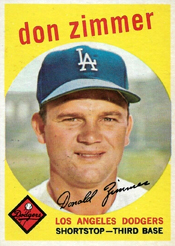
The Cardinals tried to acquire Don Zimmer to be their second baseman but were outmaneuvered by the Cubs.

On April 8, 1960, the Dodgers told Zimmer he would be traded later in the day to either the Cardinals or the Cubs. Zimmer said he preferred to go to the Cubs because they would play him at third base, his favorite position.

The Cardinals offered the Dodgers a pair of minor-league players and cash. The Cubs offered three minor-leaguers and cash.

After weighing both offers, the Dodgers chose the Cubs, dealing Zimmer for pitcher Ron Perranoski, infielder John Goryl and outfielder Lee Handley. Only Goryl had big-league experience, but Perranoski was the prize. The left-hander became a prominent reliever for the Dodgers.

The Cardinals’ failure to land Zimmer turned out to be fortuitous. A month later, they made a trade with the Pirates for Julian Javier, who developed into an all-star and was their second baseman on three National League championship clubs.

Hard knocks

In December 1959, the Cardinals traded second baseman Don Blasingame to the Giants for shortstop Daryl Spencer and outfielder Leon Wagner. With the acquisition of Spencer, the Cardinals planned to shift Alex Grammas from shortstop to second base.

Near the end of spring training in 1960, when the Dodgers started shopping Zimmer, the Cardinals saw an opportunity to upgrade at second base. Zimmer (29) was five years younger than Grammas (34). The Cardinals thought it would be better to have Grammas in a utility role.

Zimmer was available because Maury Wills had taken over the Dodgers’ shortstop job and Bob Lillis was a capable backup.

In 1953, Zimmer was beaned in a minor-league game, suffered a skull fracture and needed a plate inserted in his head. He made his debut in the majors with the Dodgers in 1954 and two years later suffered a broken cheekbone when beaned again by a pitch from Hal Jeffcoat of the Reds.

Zimmer “just doesn’t get out of the way,” pitcher Sal Maglie said to the Associated Press.

After being used primarily as a backup at second, third and short, Zimmer became the Dodgers’ starting shortstop in 1958 and hit .262 with 17 home runs.

“A colorful fielder, Zimmer looks like a chubby Nellie Fox, always yelling encouragement about the infield with a wad of chewing tobacco bulging in his jaw,” the Associated Press observed.

Zimmer returned as Dodgers shortstop in 1959, but struggled to hit for average. “Likable little Zimmer never has ceased stubbornly to swing for the fences,” Bob Broeg of the St. Louis Post-Dispatch noted.

In June 1959, the Dodgers called up Wills from the minors and the speedster supplanted Zimmer, who never got untracked and finished the season with a .165 batting mark for the National League champions.

Time to go

At spring training in 1960, Zimmer choked up on the bat and shortened his swing. “I’ve never seen Zimmer look better,” Dodgers manager Walter Alston told The Sporting News.

Alston may have been trying to prop up Zimmer’s trade value. He and Zimmer weren’t getting along.

“I wanted to get away, especially from Alston,” Zimmer told the Associated Press. “I know he doesn’t care for me. That’s because I’m always after him to play me or trade me.”

The Cardinals and Cubs were the most ardent suitors for Zimmer. The Cubs wanted him as the third baseman to replace Alvin Dark, who they traded to the Phillies in January 1960.

According to the Chicago Tribune, Zimmer “stated frankly he was not interested in going to the Cardinals when he learned they planned to play him at second base. He prefers third.”

The Dodgers “were understood to be seeking a suitable place for Zimmer in the major leagues,” the Tribune reported, “and his preference for the Cubs undoubtedly was taken into consideration.”

The Cardinals offered two minor-league players and cash to the Dodgers for Zimmer, the Post-Dispatch reported, adding the identities of the players were unknown. It’s possible pitcher Jim Donohue and outfielder Duke Carmel were the minor-leaguers offered because two months later the Cardinals dealt them to the Dodgers for outfielder John Glenn.

According to the Associated Press, Dodgers general manager Buzzie Bavasi told Zimmer, “You’re going to either the Cubs or the St. Louis Cardinals. I can’t tell you yet. I’ll be able to tell you later on.”

A few hours later, Zimmer learned he was a Cub.

“I would have liked to have had Zim because he can play three infield positions well and I like his fire,” Cardinals manager Solly Hemus told the Post-Dispatch.

Foiled in their attempt to acquire Zimmer, the Cardinals turned their attention to a Pirates prospect, Julian Javier, whose path to the majors was blocked by Bill Mazeroski, a future Hall of Famer. On May 28, 1960, the Cardinals dealt pitcher Vinegar Bend Mizell and infielder Dick Gray to the Pirates for reliever Ed Bauta and Javier, who became their mainstay at second base for more than a decade.

Crowd pleaser

Zimmer was the third baseman when the Cubs opened the season on April 12, 1960, against the Dodgers at Los Angeles. In his first at-bat as a Cub, Zimmer hit a home run against his former teammate, Don Drysdale.

“The crowd of 67,550 stood and cheered Don as he rounded the bases,” The Sporting News reported.

Zimmer told the Los Angeles Times, “I can’t think of anything that has happened to me in baseball that gave me a bigger thrill, and I hit it off one of my best buddies.” Boxscore

The next day, Zimmer was chatting with Drysdale at the ballpark when Dodgers outfielder Duke Snider approached and informed them his wife stood and applauded for Zimmer when he hit the home run.

Zimmer replied, “I can top that one. I saw Ginger Drysdale outside the dressing room after the game and she gave me a kiss and a hug.”

In June 1960, the Cubs called up prospect Ron Santo from the minors, put him at third base and moved Zimmer to second. Zimmer eventually played for the Mets, Reds, Dodgers again, and Senators before ending his playing career in 1965.

From 1971 through 2006, Zimmer was in the major leagues as either a coach or manager. He had a 906-873 record as manager of the Padres, Red Sox, Rangers, Cubs and Yankees.

Read Full Post »

The Cardinals had Willie Montanez in their organization, lost him, got him back, lost him again and made another attempt to reacquire him.

On April 8, 1970, the Cardinals sent Montanez to the Phillies as partial compensation for Curt Flood’s failure to report after being traded.
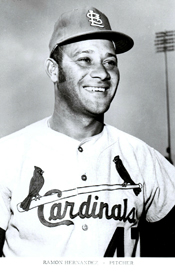
A first baseman and outfielder in the Cardinals’ farm system, Montanez became a prominent player for the Phillies.

He spent 14 seasons in the majors with nine teams, but not the Cardinals.

Big leap

Cardinals scout Chase Riddle, who signed Steve Carlton and who also opened the talent pipeline for the club in Latin America, discovered Montanez in Puerto Rico. Montanez signed with the Cardinals on March 1, 1965, a month before he turned 17. He spent the 1965 season with a Cardinals club managed by George Kissell in the Florida Rookie League.

Years later, Montanez admitted he too often flashed a temper in those development years. “I was really bad then,” Montanez said to the Philadelphia Daily News. He also told the St. Louis Post-Dispatch, “I wouldn’t take anything from anybody and I’m sure that’s what held me down in the minor leagues.”

Left off the Cardinals’ 40-man major-league roster, Montanez was selected by the Angels in the November 1965 Rule 5 draft. The move was a surprise because Montanez had little professional experience and, under the rules, would have to remain with the Angels throughout the 1966 major-league season or be offered back to the Cardinals.

Montanez, 18, was on the Angels’ Opening Day roster and made his debut in the majors on April 12, 1966, as a pinch-runner for Norm Siebern. Boxscore

He appeared in eight games for the Angels, had two at-bats and struck out both times. On May 5, 1966, the Angels returned Montanez to the Cardinals, who sent him to their farm club at Rock Hill, S.C. A month later, in June 1966, Rock Hill placed Montanez on a 10-day inactive list so he could return to Puerto Rico and graduate with his high school class, The Sporting News reported.

From 1966-69, Montanez made a steady rise through the Cardinals’ system. In 1969, he hit .375 in 14 games for Class AAA Tulsa before he fractured his right knee sliding into second base, ending his season.

Compromise solution

In October 1969, the Cardinals traded Flood, Tim McCarver, Joe Hoerner and Byron Browne to the Phillies for Richie Allen, Cookie Rojas and Jerry Johnson. Flood refused to report and filed an antitrust lawsuit, challenging baseball’s reserve clause.

At spring training in 1970, when it became obvious Flood wouldn’t reconsider, the Cardinals and Phillies opened talks regarding a player to replace him in the trade. The Phillies were interested in third baseman Mike Shannon, the Post-Dispatch reported, until medical tests revealed he had a kidney ailment.

With Shannon unavailable, the Cardinals submitted a list of players for consideration, but the Phillies rejected it because “we felt the players listed were no better than the players we already had,” Phillies general manager John Quinn told the Post-Dispatch. “In some cases, we felt they weren’t even quite as good as the players we had.”

The Phillies suggested to the Cardinals some alternative names, including Montanez. Phillies manager Frank Lucchesi had seen Montanez while managing winter baseball in Puerto Rico and urged the Phillies to take him, the Sporting News reported.

“Montanez was more or less a compromise name,” Cardinals general manager Bing Devine told the Post-Dispatch.

The Phillies got Montanez and the right to choose another Cardinals prospect. On Aug. 30, 1970, the Phillies took pitcher Jim Browning.

Fantastic Phillie

Montanez spent the 1970 season in the minors before being called up to the Phillies in September. He went to spring training in 1971 “with only an outside chance of winning a job as a utility man,” The Sporting News reported.

Instead, Montanez was the surprise of training camp and opened the 1971 season as the Phillies’ center fielder.

On April 25, 1971, when the Phillies were in St. Louis to play the Cardinals, Montanez made an over-the-shoulder catch of a Jose Cardenal liner and “collapsed to the warning track, the breath knocked out of him by the head-on collision with an unyielding wall,” the Philadelphia Daily News reported. Boxscore

Five months later, on Sept. 13, 1971, Montanez had five hits and a walk in six plate appearances against the Cardinals at St. Louis. Besides two singles and a double, Montanez hit two home runs. The first, against Reggie Cleveland, tied the score in the seventh and the second, against Don Shaw in the 10th, gave the Phillies a 6-5 victory. Boxscore

Montanez finished the 1971 season with 30 home runs and 99 RBI for the Phillies. The next year, he tied for the National League lead in doubles (39).

Near deal

In May 1975, the Phillies traded Montanez to the Giants for Garry Maddox.

Montanez didn’t like San Francisco’s weather or its stadium, Candlestick Park. He chose to play the 1976 season without a contract. The Giants, concerned Montanez intended to play out his option and become a free agent, decided to trade him. Montanez’s agent, Dennis O’Brien, told the Giants his client would play in St. Louis, Pittsbugh, Philadelphia or New York, the Post-Dispatch reported.

On June 12, 1976, the Cardinals and Giants made a deal “on the condition that Montanez would sign with the Cardinals,” the San Francisco Examiner reported, but the Cardinals backed out when Montanez indicated he would stay unsigned.

“Montanez’s agent called and said we appreciate the opportunity but we’ve decided to play out our option,” Devine told the Post-Dispatch.

Montanez said to the Examiner, “I never did say I’d sign with the Cardinals … I might have signed with St. Louis if the price had been right.”

According to the Examiner, the Cardinals intended to send Reggie Smith to the Giants for Montanez. The Post-Dispatch reported the Cardinals would have sent Smith or Keith Hernandez. Pitcher Lynn McGlothen told The Sporting News he was the player the Cardinals intended to swap for Montanez.

A year earlier, the Cardinals traded Ken Reitz, a San Francisco native, to the Giants. Hernandez, also a San Francisco native, told the Post-Dispatch he wouldn’t have been surprised if he had been dealt to the Giants for Montanez. “They’re looking for Bay Area products,” Hernandez said. “That’s why they got Reitzie. They’re looking for people who’ll bring fans into the park.”

The next day, June 13, 1976, the Giants traded Montanez to the Braves for Darrell Evans. Two days after that, the Cardinals swapped Smith to the Dodgers for Joe Ferguson.

Extra mustard

Montanez batted .275 with 1,604 career hits for the Angels, Phillies, Giants, Braves, Mets, Rangers, Padres, Expos and Pirates. He developed a reputation for flamboyant catches and bat flips.

Bill Conlin of the Philadelphia Daily News concluded Montanez “has all the subtlety of a peacock.”

“He walks toward the plate twirling his bat, almost like a baton,” The Sporting News noted.

Padres second baseman Tito Fuentes said, “He’s headed for the hot dog hall of fame. Nobody else is close to him.”

Said Montanez: “Some players do those things, they call them colorful. I do them, they say I am a hot dog.”

Read Full Post »

(Updated June 15, 2023)

The Cardinals couldn’t figure out Ramon Hernandez when he pitched for them any better than they could when he pitched against them.

On March 31, 1970, the Cardinals released Hernandez, a left-handed reliever who was on their roster in spring training. The Cardinals came to regret the move.
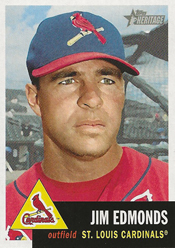
Hernandez and another ex-Cardinal, Dave Giusti, anchored a dependable bullpen for the Pirates and helped them become the dominant club in the National League East.

The Cardinals, who finished runner-up to the Pirates in 1971 and 1974, consistently were baffled by the effective relief work of Hernandez.

Traveling man

Hernandez was born in Carolina, Puerto Rico, the same hometown as future teammate Roberto Clemente, who was six years older.

Hernandez was 18 when the Pirates signed him as an amateur free agent. In 1960, his second season in their farm system, the Pirates dropped Hernandez from the Class C level to Class D. Miffed by the demotion, he sat out the 1961 season, according to The Pittsburgh Press.

In December 1961, the Pirates sold Hernandez’s contract to the Angels. He played five seasons (1962-66) in the Angels’ farm system and had his best year in 1966 when he posted a 2.16 ERA for an El Paso team managed by Chuck Tanner.

The Braves selected Hernandez in the Rule 5 draft in November 1966 and he made their Opening Day roster in 1967. Hernandez “might turn out to be the surprise hurler of the year,” The Sporting News predicted.

Hernandez made 46 appearances for the 1967 Braves and was 0-2 with five saves and a 4.18 ERA. Unimpressed, the Braves left him off their winter roster. Hernandez was chosen by the Cubs in the November 1967 Rule 5 draft at the request of manager Leo Durocher, who planned for Hernandez and Phil Regan to be the club’s top relievers in 1968. “I didn’t draft Hernandez to send him to Siberia,” Durocher told the Chicago Tribune.

The Cubs’ faith in Hernandez went unrewarded. He appeared in eight games for them and had a 9.00 ERA. Instead of Siberia, they sent him to the Cardinals.

Wrong fit

The Cardinals acquired Hernandez from the Cubs on June 14, 1968, and assigned him to their Class AAA Tulsa farm team.

Warren Spahn, baseball’s career leader in wins (363) by a left-hander, was Tulsa’s manager, but he and Hernandez clashed. “Hernandez admitted he had differences with Warren Spahn,” the St. Louis Post-Dispatch reported.

According to The Pittsburgh Press, Hernandez said Spahn “impeded his return to the majors by sending unfavorable reports back to St. Louis.”

Miserable at Tulsa, Hernandez was 2-5 with a 6.19 ERA. The Cardinals demoted him to Class AA Arkansas for 1969. At 28, his career appeared to be in decline.

On the outs

Playing for Arkansas manager Ray Hathaway, a former pitcher known for his instructional skills, Hernandez improved.

Used primarily as a starter, he was 10-10 with a 2.40 ERA. Among the wins was a no-hitter against El Paso on Aug. 17, 1969. Intrigued, the Cardinals put him on their winter roster and planned to give him a long look in spring training.

Cardinals director of player procurement George Silvey said, “Hernandez throws a screwball and has great control. He’s the kind of guy who maybe has to work every other day (to be effective).”

The good vibes the Cardinals had for Hernandez quickly faded at spring training in 1970 when “there were such problems as reporting late for practice sessions and not going all out in workouts,” the Post-Dispatch reported.

According to The Pittsburgh Press, the Cardinals “didn’t think he was putting out enough in the team running drills.”

Roberto Clemente later said, “Every place he went, they said he had a problem. I guess they didn’t understand him. The first tendency is to say that he is lazy.”

Regarding the decision by Cardinals general manager Bing Devine to release him, Hernandez, 29, told The Sporting News, “He thought I was too old.”

Finding a home

Hernandez signed with the Mexico City Reds of the Mexican League and pitched for them in 1970 before going home to Puerto Rico to play winter baseball. Pirates infielder Jose Pagan saw Hernandez pitch there and was impressed.

At Pagan’s urging, the Pirates acquired Hernandez on Feb. 10, 1971. He was assigned to the minors, but got called up in June for a weekend series versus the Cardinals at St. Louis.

On June 12, 1971, in his first Pirates appearance, Hernandez gave up a scratch single to the first batter he faced, Lou Brock. Boxscore

The Cardinals wouldn’t get another hit against Hernandez the rest of the season.

The next day, Hernandez earned a save against the Cardinals. Boxscore

As planned, he was returned to the minors but got called up again in September. With the Pirates and Cardinals battling for the division title, Hernandez faced the Cardinals twice and got saves both times.

For the season, Hernandez had three saves in four appearances versus the Cardinals and yielded no runs. He faced 19 batters and retired 18.

The Pirates finished seven games ahead of the second-place Cardinals in the East Division, won the pennant against the Giants in the National League Championship Series and prevailed in the World Series versus the Orioles.

Hernandez had seven saves and an 0.73 ERA in 10 appearances for the 1971 Pirates.

Working the angles

Hernandez became one of the National League’s top relievers, helping the Pirates win four division titles in a five-year span, and was especially effective against the Cardinals. In 1972, he was 5-0 with a 1.67 ERA and 14 saves, including four versus the Cardinals. In 1974, he was 2-0 with a 1.88 ERA against them.

Regarding his success with the Pirates, Hernandez told The Pittsburgh Press, “I do it with a bunch of garbage.”

Said Phillies manager Frank Lucchesi: “His motion has a lot to do with it. It’s very deceptive.”

Hernandez threw a variety of pitches from different angles and at varying speeds.

Dave Giusti, his bullpen mate, said of Hernandez, “The best I’ve ever seen at getting out left-handers _ and I mean ever.”

In his book, “Baseball for Brain Surgeons and Other Fans,” catcher Tim McCarver said, “(Outfielder) Rusty Staub and I agree that Ramon Hernandez was the toughest left-hander we faced in our careers. I’d have nightmares about him. He would ride the fastball up and in and then throw the sweeping curveball.”

(For their careers, McCarver hit .091, 1-for-11, versus Hernandez. Staub hit .056, 1-for-18, against him.)

Overall, left-handed batters hit .224 versus Hernandez in the majors. In six seasons (1971-76) with the Pirates, Hernandez was 23-12 with 39 saves and a 2.51 ERA.

Read Full Post »

Convinced center fielder Jim Edmonds would depart for free agency, the Angels were willing to deal him for the right offer.

On March 23, 2000, the Cardinals capitalized on the opportunity, trading pitcher Kent Bottenfield and second baseman Adam Kennedy to the Angels for Edmonds.

Bottenfield and Kennedy filled two holes in the Angels’ lineup, but Edmonds provided much more to the Cardinals.

With Edmonds producing Gold Glove-caliber defense in center and a power bat from the left side, the Cardinals became perennial contenders. They qualified for the postseason in six of the eight years Edmonds played for them, won two National League pennants (2004 and 2006) and earned a World Series championship (2006) for the first time in 24 seasons.

Angels fan

Edmonds grew up in the California town of Diamond Bar, 27 miles from where the Angels played in Anaheim. He was an Angels fan and admired Rod Carew.

Edmonds was about to turn 18 when he was chosen by the Angels in the seventh round of the 1988 amateur draft. An eye test revealed he had 20-15 vision, meaning he could see things at 20 feet that people with normal vision could see only at 15 feet, the St. Louis Post-Dispatch reported. Five years later, in September 1993, Edmonds made his major-league debut with the Angels.

Carew, a Hall of Famer and seven-time American League batting champion, was the Angels’ hitting coach and he and Edmonds bonded. In 1995, Edmonds had a breakout year, hitting .290 with 33 home runs and 107 RBI for the Angels. He twice won an American League Gold Glove Award (1997-98).

In 1999, Edmonds missed most of the season after tearing the labrum in his right shoulder while weightlifting. He had surgery in April and didn’t play until August.

Edmonds hit .250 with five home runs in 55 games for the 1999 Angels. He also was criticized for having a care-free attitude and lacking dedication. “Let’s just say he never would have been voted the most popular player on the team,” the Orange County Register reported.

Desire to deal

At spring training in 2000, Edmonds was heard telling Angels teammates about the clubs he expected to get offers from when he planned to enter free agency after the season.

Angels general manager Bill Stoneman was willing to trade Edmonds, but found his market value limited. The Yankees wanted Edmonds but wouldn’t part with the two players Stoneman sought, pitcher Ramiro Mendoza and second baseman Alfonso Soriano, the Post-Dispatch reported.

Talks between the Cardinals and Angels about a deal involving Edmonds stalled, the Los Angeles Times reported. According to the Post-Dispatch, the Angels wanted a pitching prospect, Rick Ankiel or Chad Hutchinson, but the Cardinals were unwilling.

Later, Bob Gebhard, an assistant to Cardinals general manager Walt Jocketty, was scouting Edmonds in Arizona and told Stoneman the Cardinals might be willing to include Kennedy with Bottenfield for Edmonds.

Stoneman called Jocketty and the deal was made.

“It became apparent we might be able to fill two needs,” Stoneman said. “It made so much sense that we had to do it.”

Bottenfield, an 18-game winner for the 1999 Cardinals, gave the Angels a potential staff ace. Stoneman was in the Expos’ front office when Bottenfield began his pro career with them.

“He could throw to a dime and hit it,” Stoneman said. “He understands pitching and has great control.”

The Orange County Regster concluded, “He might never win 18 games again but he is still so far above anything else in the Angels’ rotation at the moment that it doesn’t matter.”

Kennedy, a first-round selection by the Cardinals in the 1997 amateur draft, made his major-league debut with them in August 1999. The Angels projected him as their second baseman in 2000.

High marks

While the Angels viewed Bottenfield and Kennedy as solutions, the Cardinals saw them as players who didn’t fit their plans. Bottenfield was expendable because the Cardinals wanted to open a spot in the starting rotation for Garrett Stephenson, who allowed one earned run in 15 spring training innings. Concerned about Kennedy’s defense, the Cardinals had acquired Fernando Vina from the Brewers during the winter to play second base.

According to the Post-Dispatch, the Cardinals “didn’t think Kennedy would ever be their everyday second baseman” and “they doubted whether Bottenfield was more than a one-year wonder.”

Acquiring Edmonds enabled the Cardinals to move J.D. Drew from center to right and use Eric Davis as a role player.

“We added a player who is a major-league plus as a defensive outfielder with a major-league plus throwing arm, a guy who has been a productive major-league hitter,” said Cardinals manager Tony La Russa. “It seems to me we really helped our club.”

Said Jocketty: “He plays hard every day and he’ll sacrifice his body to play hard. That’s something St. Louis fans will enjoy. He’s as close to a five-tool outfielder as you will find.”

Post-Dispatch columnist Bernie Miklasz praised the Cardinals for making a deal “to stabilize the outfield and upgrade the offense.”

Return on investment

In May 2000, Edmonds agreed to a $57 million, six-year contract extension with the Cardinals, keeping him from becoming a free agent after the season.

Though he set a franchise record by striking out 167 times, Edmonds led the 2000 Cardinals in home runs (42), RBI (108), runs (129) and walks (103). He hit .295 with an on-base percentage of .411 and a slugging percentage of .583. The center fielder also won the first of six consecutive Gold Glove awards with the Cardinals.

Bottenfield, 31, went 7-8 with a 5.71 ERA for the Angels before they dealt him to the Phillies in July 2000 for another ex-Cardinal, outfielder Ron Gant.

Kennedy, 24, became the Angels’ second baseman in 2000 and was with them for seven seasons. In 2002, he hit three home runs in the pennant-clinching Game 5 of the American League Championship Series versus the Twins and helped the Angels prevail against the Giants for their only World Series crown. He returned to play for the Cardinals in 2007 and 2008.

Edmonds hit 241 home runs as a Cardinal. Only Stan Musial (475), Albert Pujols (445) and Ken Boyer (255) hit more as Cardinals.

Read Full Post »

In assessing Joe McEwing’s value to the club as a utility player, the Cardinals placed a premium on productivity instead of popularity.

On March 18, 2000, the Cardinals traded McEwing to the Mets for reliever Jesse Orosco.

The deal was disliked by Cardinals fans who rooted for McEwing when he unexpectedly emerged as an overachieving underdog to become the team’s second baseman in 1999.

Nicknamed “Super Joe” for his all-out hustle, McEwing established a Cardinals rookie record with a 25-game hitting streak in 1999. The feat earned him another tag, “Little Mac,” in relation to his slugging teammate, Mark McGwire, who was “Big Mac.”

Though McEwing endeared himself to the Cardinals, sentiment was shoved aside the following spring when he struggled in a bid to earn a role as a utility player.

Job search

McEwing, chosen by the Cardinals in the 28th round of the 1992 amateur draft, was in his seventh season in their farm system when he earned a call to the big leagues in September 1998.

Placido Polanco was the Cardinals’ Opening Day second baseman in 1999, but McEwing eventually emerged from the bench to replace him. A right-handed batter, McEwing hit .275 with 28 doubles for the 1999 Cardinals, splitting time between second base and the outfield.

After the 1999 season, the Cardinals acquired second baseman Fernando Vina from the Brewers and made him their leadoff batter in 2000. McEwing, 27, went to spring training as a candidate for a utility role.

The competition for bench spots was intense. McEwing hit .143 in spring training and was outperformed by fellow utility players Shawon Dunston, Craig Paquette and Polanco.

When left-handed reliever Scott Radinsky developed elbow trouble, the Cardinals went searching for a replacement and made the swap of McEwing for Orosco.

“It would have been tough for Joe to make the club based on what we’ve seen this spring and the other candidates,” Cardinals general manager Walt Jocketty told the St. Louis Post-Dispatch.

When McEwing left the Cardinals’ clubhouse in Jupiter, Fla., he wrote on a message board, “I love you guys, Joe Mac.”

Fond farewell

Most were sorry to see McEwing depart.

Cardinals manager Tony La Russa said he planned to keep a pair of McEwing’s cleats in his office “to remind me of what a professional ballplayer is supposed to be.”

Jocketty said when he got home after making the trade he found a McEwing baseball card belonging to his son, Joey, on a table. “I’m not popular with my son,” Jocketty told the Post-Dispatch.

Columnist Bernie Miklasz called McEwing “one of my favorite St. Louis athletes ever” and wrote, “Trading Joe McEwing is like being mean to a kitten.”

Miklasz concluded, “I didn’t want to admit it at first, but this trade makes sense.”

Warranty expires

Orosco, who turned 43 a month after joining the Cardinals, was a standout with the Mets in 1986 when they were World Series champions. In 1999, he pitched in 65 games for the Orioles.

He told the Post-Dispatch he was glad to be with the Cardinals. “Hopefully, I’m the piece to that puzzle that they needed in the bullpen,” Orosco said.

Before becoming a Cardinal, Orosco pitched in 1,090 major-league games and never was on the disabled list.

“Maybe he’s just got elastic bands for rotator cuffs,” said Cardinals pitcher Paul Spoljaric.

Turns out, the elastic was ready to snap.

Orosco pitched in three April games for the Cardinals, hurt his elbow and went on the disabled list. He returned in June, pitched in three more games, went back on the disabled list, had surgery to repair a torn elbow tendon and was done for the season.

Orosco faced a total of 16 batters for the Cardinals. He became a free agent after the season, signed with the Dodgers and continued to pitch in the majors until 2003 with the Twins at age 46. His 1,252 games pitched, including six with the Cardinals, are a major-league record

Switching sides

With Melvin Mora and Kurt Abbott in utility roles for the Mets, McEwing began the 2000 season in the minors. In mid-May, he got called up to the Mets and was in their lineup as an outfielder for all three games of a series May 26-28 against the Cardinals at St. Louis.

“I’m excited to come back,” McEwing told the Post-Dispatch before adding, “I’m a Met now. I’m happy to be a Met.”

Helped by McEwing and another ex-Cardinal, Todd Zeile, the Mets swept the three-game series. McEwing was 4-for-12 with one RBI and was warmly greeted by Cardinals fans. Zeile was 5-for-13 with three home runs and seven RBI and was booed.

After teasing McEwing about the fan reactions, Zeile told the New York Daily News, “I get excited to play back here. With every at-bat, the fans booed me a little louder and it motivated me a little more. I don’t think there’s any animosity though.”

McEwing hit .222 for the 2000 Mets, who won the pennant by prevailing against the Cardinals in the National League Championship Series.

McEwing played five season (2000-2004) with the Mets before finishing his career in the majors with the Royals (2005) and Astros (2006). He played every position in the majors except pitcher and catcher.

Read Full Post »

A trade to the Cardinals gave Omar Olivares the chance to start his major-league career with the same franchise his father did.

On Feb. 27, 1990, the Cardinals acquired Olivares, a right-handed pitcher, from the Padres for outfielder Alex Cole and reliever Steve Peters.

Six months later, Olivares made his big-league debut, following in the footsteps of his father, Ed Olivares, an outfielder and third baseman who got to the majors with the Cardinals in 1960.

Ed and Omar Olivares became the first father and son to play for the Cardinals.

Family ties

Ed Olivares appeared in 24 games for the Cardinals from 1960-61.

Omar Olivares was born in Puerto Rico in 1967, a year after his father finished his pro playing career in the farm system of the Tigers.

Ed Olivares became a sports and recreation director in Puerto Rico and helped his son develop baseball skills.

“He taught me everything I know,” Omar Olivares told the St. Louis Post-Dispatch. “He’s the one who thought about making me a pitcher. He knew I had a nice and loose arm, and he knew I was going to never get hurt. I was 16 years old. So I changed from an outfielder to a pitcher.”

In September 1986, Omar Olivares, 19, signed with the Padres. He earned 16 wins in the minors in 1988 and 12 at Class AA in 1989.

Special talent

Olivares caught the attention of Cardinals personnel, who urged general manager Dal Maxvill to acquire him.

“Six of our people had seen him pitch and they all liked him,” said Cardinals manager Whitey Herzog. “That’s unusual. The only other player that all our people had good reports on before we got him was Willie McGee.”

Though Olivares was assigned to start the 1990 season with the Cardinals’ farm club at Louisville, Herzog was impressed by what he saw in spring training. “He’s a great athlete,” Herzog told the Post-Dispatch. “I’d like to make an outfielder out of him. He could pitch every fifth day and play the outfield the other four.”

Herzog resigned in July 1990 before he could test his idea, but Olivares remained in the Cardinals’ plans. Cardinals director of player development Ted Simmons said Olivares was “a legitimate pitching prospect, make no mistake.”

During a visit to Louisville, Cardinals minor-league pitching instructor Bruce Sutter noticed Olivares had stopped throwing a forkball and asked him about it. “I threw it the other night and the guy hit it for a homer,” Olivares replied.

Said Sutter: “If he hit your fastball for a homer, would you quit throwing your fastball?” Olivares got the message and returned the forkball to his arsenal.

“I wasn’t too happy about it, but I kept throwing the forkball after that,” Olivares told the Post-Dispatch. “One night, I had 14 strikeouts and that’s the best I’d had my forkball. They told me they wanted me to throw it at least 20 times a game. I’ve got much better control of it than I used to have.”

Welcome to the bigs

in August 1990, Joe Torre replaced Herzog as Cardinals manager. Soon after, John Tudor went on the disabled list. Olivares, with a 2.82 ERA in 23 starts for Louisville, was called up to take Tudor’s spot in the rotation. “When they told me, I called home right away,” Olivares said. “My dad wasn’t there but my mother was … She’s more excited than I am, and I’m pretty excited.”

Torre never had seen Olivares, but he got good reports from those who had.

“He started learning that forkball because he needed another pitch,” said Cardinals pitcher Bob Tewksbury. “He’s got good mechanics and a good, live arm. He’s a good athlete. He swings the bat pretty good. He’s a good kid, too.”

On Aug. 18, 1990, Olivares, 23, made his major-league debut with a start at St. Louis and limited the Astros to a run and three hits in eight innings.

With the Cardinals ahead, 2-1, Torre lifted Olivares for closer Lee Smith, who gave up a home run to the first batter he faced, Franklin Stubbs, in the ninth, depriving Olivares of a win. The Astros prevailed, 3-2, in 11. Boxscore

“You have to go with your best,” Olivares said, defending Torre’s decision. “I’m not angry at all.”

Making his mark

According to the Post-Dispatch, Olivares was the first major-league player with the initials O.O. since Oswald Orwoll, a pitcher and first baseman for the 1928-29 Athletics. In 1993, Olivares switched to uniform No. 00 with the Cardinals.

Olivares got his first major-league home run before he got his first major-league win. On Sept. 8, 1990, Olivares hit a solo home run and a two-run double versus Rick Sutcliffe of the Cubs at Wrigley Field, but didn’t get the decision. Boxscore

His first win came in his next start, on Sept. 13, 1990, against the Expos at Montreal. Boxscore

Olivares finished 1-1 with a 2.92 ERA for the 1990 Cardinals. His best St. Louis season was 1991 when he was 11-7.

Olivares pitched five seasons for the Cardinals and was 29-24 with a 4.02 ERA. He batted .229 with three home runs.

The Cardinals released him in April 1995 and he signed with the Rockies.

In 12 seasons in the majors, Olivares was 77-86, including a combined 15-11 for the Angels and Athletics in 1999.

Read Full Post »

« Newer Posts - Older Posts »