Feeds:
Posts
Comments

Archive for the ‘Trades’ Category

(Updated Feb. 21, 2021)

The 1943 Cardinals figured they had plenty of quality left-handed pitching. What they needed most was cash.
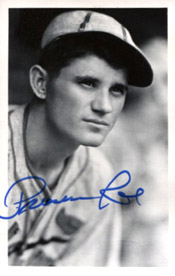
In September 1943, the Cardinals traded a top left-handed pitching prospect, Preacher Roe, to the Pirates for pitcher Johnny Podgajny, outfielder Johnny Wyrostek and “a big bundle of cash,” The Sporting News reported.

The Cardinals received “in the neighborhood of $25,000,” according to the Pittsburgh Press. They needed the money to offset financial losses in their minor-league system, The Sporting News reported.

Roe was well-regarded, but the Cardinals were stocked with left-handed pitchers such as Al Brazle, Harry Brecheen, Max Lanier and Ernie White and had another, Howie Pollet, in military service.

Several clubs made bids for Roe, but the Pirates won out because they offered the Cardinals the best combination of cash and players.

Name game

Elwin Roe was born in Ash Flat, Ark., and his father, Charles Roe, was a physician who played and coached semipro baseball.

When Elwin was 3 years old, he told an uncle he thought he should have a new name.

“What do you think it should be?” the uncle asked.

“Preacher,” replied the boy, who admired a local minister and his wife who took Roe for rides in their horse-driven buggy.

From then on, he was known as Preacher Roe, United Press reported.

Roe showed skill as a ballplayer and his father initially steered him toward being an outfielder. “I wanted to pitch,” Roe said, “but Dad wouldn’t let me until I was 16. I think that saved my arm and gave me the strength to throw my fast one.”

Roe eventually enrolled at Harding College in Searcy, Ark., and became a pitcher, posting a 24-4 career record there. In 1938, he struck out 27 in a 13-inning game for Harding. “It shows he has grasped the general idea of the fundamentals of pitching,” the St. Louis Post-Dispatch proclaimed.

Speedy trial

Roe attracted the attention of the Yankees, Tigers, Red Sox, Indians and Cardinals, according to the St. Louis Star-Times.

Columnist Red Smith described him as “an angular, drawling splinter of gristle.” In his book “The Era,” Roger Kahn called Roe “a left-handed stringbean, all bones and angles and Adam’s apple.”

On July 25, 1938, Cardinals scout Frank Rickey, brother of club executive Branch Rickey, convinced Roe to sign with the Cardinals for $5,000. “It’s understood he rejected offers from the Yankees and Tigers,” the Post-Dispatch reported.

Roe, 22, was placed on the big-league roster, joined the Cardinals in New York and spent the next few weeks watching and learning.

On Aug. 19, 1938, Cardinals manager Frankie Frisch gave Roe the start in an exhibition game against the semipro Belleville Stags at Athletic Park in Belleville, Ill. Roe pitched a three-hitter, striking out 11 and issuing no walks, in a 4-1 Cardinals victory.

Three days later, on Aug. 22, 1938, Roe made his major-league debut, pitching 2.2 innings of relief and yielding four runs to the Reds at St. Louis. Boxscore

That was Roe’s lone major-league appearance for the Cardinals.

Pirates prize

After the 1938 season, the Cardinals sent Roe to the minor leagues and he spent the next five years (1939-43) pitching for their farm clubs without getting another chance to return to the big leagues.

In 1943, Roe, 27, had his best minor-league season, posting a 15-7 record and 2.37 ERA for the Columbus (Ohio) Redbirds.

“The Preacher has speed, a fine curveball that he can operate on more than one speed and he flanks these orthodox offerings with a dandy screwball,” The Sporting News reported.

On Sept. 15, 1943, the Pirates obtained Roe from the Cardinals. Frisch, fired by the Cardinals in September 1938, was the Pirates’ manager and recommended they acquire Roe.

The Pirates got “one of the gems of the year,” the Pittsburgh Press reported. “Scouts believe he can’t miss in the majors this time.”

“In getting one of the real prize packages of the minors, Preacher Roe, the Pirates strengthened their pitching staff for next season,” the Pittsburgh Post-Gazette declared.

Big chance

Roe reported to spring training in 1944 at Muncie, Ind., where the Pirates were based because of wartime travel restrictions, and fulfilled expectations. Frisch gave the rookie the Opening Day start against the Cardinals in St. Louis on April 18, 1944.

“Frisch knows nothing would give the Preacher more pleasure than to show the Cardinals they made a mistake by letting him get away,” the Pittsburgh Press reported.

Roe limited the two-time defending National League champions to one hit in the first five innings. He also got the Pirates’ first hit, a single in the third. According to the Post-Dispatch, Roe “happened to meet a pitch with a feeble swing very much on the push side and the ball looped to center field.”

The Cardinals scored in the sixth and eighth innings and won, 2-0, behind Max Lanier’s two-hitter. Roe pitched a complete game, yielding seven hits, walking three and striking out two.

Roe’s father attended the game and Frisch told the physician, “Your boy certainly did a fine job this afternoon, but the breaks did not go his way.” Boxscore

Down, not out

Roe was 13-11 with a 3.11 ERA for the Pirates, who finished second to the champion Cardinals in 1944. He followed that with a 14-13 mark in 1945.

In February 1946, Roe was coaching a team in a high school basketball game in Arkansas when he was slugged by a referee during an argument. Roe’s head hit the floor and he fractured his skull. When he was able to pitch again, he no longer could throw a fastball with consistent effectiveness.

After posting records of 3-8 in 1946 and 4-15 in 1947, the Pirates soured on Roe. Again, the Rickeys played a pivotal role in Roe’s career. Branch Rickey, who’d left the Cardinals to join the Dodgers, acquired Roe after the 1947 season.

Determined to revive his career with the Dodgers, Roe began throwing a spitball and the illegal pitch worked wonders for him. He’d use ruses while on the mound to make batters think he was wetting the ball even when he wasn’t.

“I had a wet one and three fake wet ones,” Roe said, according to the Los Angeles Times. “You don’t have to throw it … Just make them think you’re going to throw it.”

Roe threw the best spitball of any pitcher he’d seen, the Cardinals’ Stan Musial told the Post-Dispatch.

“I’d never let the Preacher get two strikes on me because that’s when he liked to throw the spitter,” Musial said. “So I’d swing at the first good pitch and I did all right against him.”

Roe achieved a 28-20 career mark against the Cardinals, even though he couldn’t fool Musial, who hit .387 with 12 home runs against him. Asked about his strategy for pitching to Musial, Roe said, “I throw him four wide ones, then try to pick him off first base.”

Among Roe’s best seasons with the Dodgers: 1951 (22-3), 1952 (11-2) and 1953 (11-3). He earned World Series wins for the Dodgers against the Yankees in 1949 and 1952.

Roe finished his 12-year major-league career with a 127-84 record and 3.43 ERA.

Read Full Post »

Dean Stone earned a save in his Cardinals debut, flirted with a no-hitter in his lone start for them and was the victim of a rare hitting feat.

A left-hander, Stone pitched in 18 games for the Cardinals in 1959, spent the next two seasons in their minor-league system and did well enough to earn a return to the majors with the Houston Colt .45s when the National League expanded from eight teams to 10 in 1962.

Stone pitched eight seasons in the big leagues with the Senators (1953-57), Red Sox (1957), Cardinals (1959), Colt .45s (1962), White Sox (1962) and Orioles (1963), composing a 29-39 record, 12 saves and a 4.47 ERA.

He was 0-1 with a save and a 4.20 ERA for the 1959 Cardinals.

All-star quality

Stone had his best major-league season in 1954 with the Senators and was named to the American League all-star team.

In the eighth inning of the All-Star Game at Cleveland on July 13, 1954, the National League led 9-8 and had Red Schoendienst on third base and Alvin Dark on first with two outs and Duke Snider at the plate. Stone was brought into the game by manager Casey Stengel to face Snider, a left-handed batter.

As Stone was about to throw his third pitch to Snider, Schoendienst broke from third and attempted a steal of home. Stone made a quick throw to catcher Yogi Berra, who applied the tag on Schoendienst for the third out. National League coaches Leo Durocher and Charlie Grimm claimed Stone committed a balk in his rush to throw home, but umpire Bill Stewart rejected their argument.

In the bottom half of the inning, the American League rallied for three runs and an 11-9 lead. Virgil Trucks pitched a scoreless ninth, earning the save, and Stone was credited with a win, even though he didn’t retire a batter. Boxscore

Stone finished the 1954 season with a 12-10 record, 3.22 ERA and 10 complete games. He slipped to 6-13 in 1955 and 5-7 in 1956 and was dealt by the Senators to the Red Sox on April 29, 1957.

After posting a 1-3 record and 5.27 ERA for the Red Sox in 1957, Stone spent all of 1958 with their farm club at Minneapolis and was 13-10 with a 3.18 ERA and three shutouts.

Meet me in St. Louis

Minneapolis was in the American Association and so was Omaha, the Cardinals’ affiliate managed by Johnny Keane. When Keane became a Cardinals coach on manager Solly Hemus’ staff in 1959, he recommended Stone to general manager Bing Devine.

On March 14, 1959, the Cardinals traded pitcher Nelson Chittum to the Red Sox for Stone.

The Boston Globe described the trade as a “transaction of no great magnitude.” Devine agreed and told the St. Louis Post-Dispatch, “It’s not a sensational move, of course, but any time we get a chance to look at a pitcher who might augment our left-handed staff we’ve got to consider it … Johnny Keane thought he might help us.”

Stone, 28, was assigned to Omaha where he was managed by Joe Schultz. After losing his first three decisions, Stone won nine of his next 12 and had a 9-6 record and 3.87 ERA in 121 innings when he got called up to the Cardinals in July 1959.

Positive impression

Stone made his National League debut on July 11, 1959, pitching 3.2 scoreless innings in relief of starter Marshall Bridges in a 4-3 Cardinals victory over the Phillies at Philadelphia. Stone yielded two hits, walked none, struck out five and got a save in what the Post-Dispatch described as “a brilliant relief job.” Boxscore

Stone used an “overpowering fastball” against the Phillies, the Sporting News reported.

“Funny thing, when we talked about bringing up Dean from Omaha, Joe Schultz said he had the stuff to help, but questioned his ability to relieve because of only one thing _ control,” Cardinals business manager Art Routzong said.

Stone yielded one run over his first 10 innings of relief work for the Cardinals and after five appearances had an ERA of 0.90.

No mercy

When Cardinals starter Vinegar Bend Mizell developed an aching back, Hemus gave Stone a start against the Braves on July 31, 1959, at Milwaukee.

Stone held the Braves hitless for five innings and was locked in a scoreless duel with Braves starter Bob Buhl.

In the sixth, Del Crandall led off with the Braves’ first hit, a double. After Buhl struck out, Bobby Avila walked and Felix Mantilla dribbled a grounder past shortstop Alex Grammas and into left field for a single, scoring Crandall and advancing Avila to third. Grammas told the Post-Dispatch he should have fielded the ball. “I couldn’t make up my mind whether to backhand the ball,” Grammas said. “I don’t know whether I could have thrown him out, but I should have stopped the ball.”

Hank Aaron followed with a weak single to left, scoring Avila with the second run and moving Mantilla to second. “By this time, Stone couldn’t have been expected to keep holding off the mighty Braves any more than Custer was expected to keep cutting down the Indians,” the Post-Dispatch wrote.

Joe Adcock followed with a three-run home run, capping the Braves’ five-run sixth. Stone went seven innings, giving up five runs on five hits and two walks, and Buhl pitched a shutout in a 6-0 Braves triumph. Boxscore

Ups and downs

Two days later, on Aug. 2, 1959, Bill Bruton of the Braves hit a pair of bases-loaded triples, one against Mizell and the other off Stone. Bruton became the second big-league batter since 1900 to hit two three-run triples in a game, according to The Sporting News. Boxscore

After the 1959 season, the Cardinals removed Stone from their roster and assigned him to Rochester. He was 9-7 with a 3.67 ERA in 130 innings for Rochester in 1960 and 12-8 with a 2.73 ERA in 178 innings for the Cardinals’ affiliate in San Juan and Charleston, W.Va., in 1961.

On Nov. 27, 1961, the Colt .45s selected Stone in the Rule 5 minor-league draft. He opened the 1962 season in their starting rotation and pitched 21.1 consecutive scoreless innings, including back-to-back shutouts versus the Cubs, before the Cardinals scored four runs against him in the fourth inning on April 25. Boxscore

Read Full Post »

Johnny Lewis, a prospect considered to have more potential than Lou Brock, overcame personal tragedy, rebounded from setbacks in his playing career and became a pioneering coach for the Cardinals.

Lewis was an outfielder with a strong throwing arm, speed and a powerful hitting stroke. He got to the major leagues with the Cardinals in 1964 and was given prominent playing time in right field the first two months of the season, but by June he was back in the minor leagues.
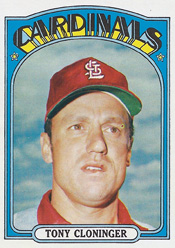
Traded to the Mets two months after the Cardinals won the 1964 World Series title, Lewis played three more seasons in the major leagues before returning to the Cardinals and building a second career with them as an administrator, coach, manager and instructor.

Heavy heart

Lewis was born in Greenville, Ala., and moved to Pensacola, Fla., as a toddler. At 19, he entered the Cardinals’ organization in 1959.

Advancing through the St. Louis system, Lewis played his best for manager Whitey Kurowski, a former Cardinals third baseman. Lewis played for Kurowski at Winnipeg in 1960 and at Tulsa in 1961 and 1962. In 1960, Lewis hit .299 with 23 home runs and 104 RBI for Winnipeg and he followed that with a .293 batting mark, 22 home runs and 85 RBI for Tulsa in 1961.

While in the minor leagues, Lewis got married and he and his wife, Ola Mae, began raising a family. In the winters, Lewis played baseball in the Dominican Republic and Venezuela.

Lewis, 22, was in Venezuela when his wife was killed in an automobile crash in the United States.

“My wife went to a church convention and on the way back the car she was in got into an accident and all five people in it were killed,” Lewis said to Milton Gross of the North American Newspaper Alliance. “I came back from Venezuela and there I was with two little babies, one wasn’t a year old, and I said to myself, ‘What do I do now?’

“I wasn’t going to quit baseball, get a job, stay home and take care of the babies, but my mother said she’d take care of them. She’s a good woman, my mother, and I got to keep remembering my babies are with somebody who loves them.”

Spring sensation

In 1964, Lewis, 24, reported to spring training with the Cardinals and competed with several other prospects, including Mike Shannon, for an outfield spot. Lewis played splendidly in the exhibition games, hitting .333, and was named the Cardinals’ top prospect in a poll of writers and broadcasters.

Stan Musial, who became a club executive after retiring as a player, called Lewis the Cardinals’ “best outfield prospect since Bill Virdon,” who won the National League Rookie of the Year Award in 1955.

The Sporting News described Lewis’ success as “the Cinderella epic of the spring.”

“I haven’t seen anybody like him in the last 10 years,” Cardinals manager Johnny Keane said.

Lewis “rates high in all five categories. He can run, throw, field, hit and also hit for power,” Keane said to the St. Louis Post-Dispatch.

According to Keane, the five-tool players in the National League in 1964 were Willie Mays, Hank Aaron, Frank Robinson, Vada Pinson and Roberto Clemente.

Learning curve

Lewis was shy and quiet and his teammates nicknamed him “Gabby” because he said so little, the Post-Dispatch reported.

Cardinals first baseman Bill White, who became Lewis’ mentor, said, “What we got to do is make Lewis think more aggressively, but it will take time. He knows nothing but Florida, where he’s lived, and Alabama, where he was born. Where could he have learned anything else?”

As the season neared, Keane decided to platoon Lewis and Carl Warwick in right field. Lewis, a left-handed batter, would play against right-handed pitchers and Warwick, who batted right-handed, would play against left-handers.

Though Lewis had the talent, some offered caution.

“Lewis has all the potential, but the boy has an inferiority complex,” Cardinals consultant Branch Rickey told The Sporting News. “I wish he’d believe in himself as much as all of us believe in him.”

Said third baseman Ken Boyer: “The kid should be a good player. I just hope they don’t expect him to break down the fences the first few years.”

Short stay

On April 15, 1964, Lewis got his first big-league hit, a RBI-single against Don Drysdale of the Dodgers. Boxscore Three days later, on April 18, Lewis slugged his first big-league home run, a solo shot against Bobby Bolin of the Giants. Boxscore

Lewis hit .207 in April and .278 in May. On June 10, he injured an ankle and had to leave the game. Three days later, on June 13, the Cardinals acquired outfielder Bob Skinner from the Pirates and sent Lewis to their Jacksonville farm team. Lewis hit .234 in 40 games for St. Louis, making 28 starts in right field.

On June 15, the Cardinals made another trade, getting outfielder Lou Brock from the Cubs.

“We hope Brock will fill the category of one of our regular outfielders until someone in the future, perhaps Johnny Lewis, comes along,” Cardinals general manager Bing Devine said to The Sporting News.

In an interview with the Post-Dispatch, Devine said, “I feel Lewis probably has more potential than Brock. He fields better and he throws better.”

Brock, however, took hold of the left field job and Shannon, recalled from the minors, became the right fielder. Meanwhile, Lewis floundered at Jacksonville until an X-ray on Aug. 6 revealed he had a hairline fracture of his ankle. Lewis “had been bothered by the ankle for some time,” The Sporting News reported.

In September, after Lewis returned to the lineup and helped Jacksonville win the International League title, he was called up to the Cardinals but didn’t get into a game. The Cardinals clinched the National League pennant on the last day of the season and won four of seven games against the Yankees in the World Series.

Meet the Mets

The Cardinals tried converting Lewis into a switch-hitter at the Florida Instructional League in October 1964, but the experiment failed. On Dec. 7, 1964, the Cardinals traded Lewis and pitcher Gordon Richardson to the Mets for pitcher Tracy Stallard and infielder Elio Chacon. Devine, fired by the Cardinals in August 1964, had joined the Mets as assistant to president George Weiss and advocated for Lewis.

“Playing with the Cardinals, it was a case of making good instantly or you were gone,” Lewis said. “I don’t blame them for that. They were pennant contenders and they couldn’t afford to wait, but for me it meant I always was more conscious of making mistakes. I couldn’t take chances. I was constantly tight.”

Lewis hit .245 with 15 home runs in 148 games for the 1965 Mets. On June 14, 1965, he broke up a no-hit bid by the Reds’ Jim Maloney with a home run in the 11th inning at Cincinnati. Boxscore

After the 1965 season, Lewis remarried. However, while his personal life improved, his playing career declined. He played parts of two more seasons with the Mets, batting .193 in 1966 and .118 in 1967, and finished with a year in the minors in 1968.

Second career

By 1970, Devine was back with the Cardinals as general manager and he gave Lewis a chance to return to St. Louis. Lewis was hired to be Cardinals assistant promotions and sales director and he spent two years (1970-71) in the role.

In 1972, Lewis became administrative coordinator of player development and scouting for the Cardinals.

After a year in that job, Lewis became the first African-American to serve on the Cardinals’ coaching staff. Lewis was the Cardinals’ first-base coach on manager Red Schoendienst’s staff for four seasons (1973-76).

For the next five years (1977-81), Lewis was a Cardinals’ minor-league manager at Calgary (1977-78), Gastonia (1979) and Johnson City (1980-81). Among the future major-leaguers managed by Lewis were pitchers Danny Cox and outfielders Curt Ford and Stan Javier.

From 1982-84, Lewis was a Cardinals’ minor-league hitting instructor.

In 1985, Lewis became the hitting coach for the Cardinals and was a special mentor to rookie speedster Vince Coleman. Lewis was the hitting coach on manager Whitey Herzog’s staff for five seasons (1985-89) and the Cardinals won two National League pennants in that time. Another Lewis pupil, Willie McGee, won the NL Most Valuable Player Award and the league batting title in 1985.

From 1990-98, Lewis was a Cardinals minor-league hitting instructor. He finished his career as the minor-league hitting coordinator for the Astros from 1999-2001.

Read Full Post »

Tony Cloninger, a prominent National League starting pitcher in the 1960s, was given an opportunity by the Cardinals to extend his major-league career as a reliever in the 1970s, but it didn’t work out.

Cloninger was acquired by the Cardinals from the Reds for second baseman Julian Javier on March 24, 1972.

A right-hander, Cloninger pitched well for the Reds in 1971, posting a 3.33 ERA in 20 relief appearances and a 3.88 ERA overall, but he didn’t fit into their plans in 1972.

The Reds showcased Cloninger, 31, in a spring training start against the Cardinals on March 23, 1972, and he delivered, yielding one hit in six innings. The next day, the Cardinals, seeking relief help, made the deal for him.

Reliable starter

The trade reunited Cloninger with his friend, Cardinals third baseman Joe Torre. They were teammates with the Braves from 1961-68 and Torre was Cloninger’s catcher during the pitcher’s heyday. Torre caught more of Cloninger’s games, 141, than any other catcher.

Cloninger signed with the Braves as an amateur free agent in May 1958 and, when he made his major-league debut with them at age 20 on June 15, 1961, in a start against the Giants at Candlestick Park, Torre was his catcher. Boxscore

A month later, on July 13, 1961, at St. Louis, Cloninger faced the Cardinals for the first time and catcher Tim McCarver, 19, hit his first big-league home run against him. Boxscore

The next year, on Sept. 5, 1962, Cloninger pitched his first major-league shutout in a 1-0 Braves victory over the Cardinals at St. Louis. Bill White, with a single and double, had two of the Cardinals’ five hits against Cloninger. Boxscore

On Aug. 11, 1963, at Milwaukee, Cloninger pitched another gem against the Cardinals, striking out 11 in a four-hitter won by the Braves, 9-1. Boxscore

From 1964-66, Cloninger was a productive, durable ace for the Braves. He was 19-14 with 242.2 innings pitched in 1964, 24-11 in 279 innings in 1965 and 14-11 in 257.2 innings in 1966. Cloninger was 3-0 against the Cardinals in 1965.

Cloninger also could hit. On July 3, 1966, he produced nine RBI, with two grand slams and a run-scoring single, in a game against the Giants at Candlestick Park. He hit the first grand slam against Bob Priddy and the second against Ray Sadecki, the former Cardinal, and pitched a complete game in a 17-3 Braves victory. Boxscore

In June 1968, the Braves traded Cloninger to the Reds and, though he no longer was an ace, he contributed, earning nine wins for the pennant-winning 1970 Reds. Cloninger also started and lost Game 3 of the 1970 World Series against the Orioles. Boxscore

Taking a chance

The 1972 Cardinals looked at another former Reds starter, Jim Maloney, in spring training, but didn’t like what they saw, released him and acquired Cloninger.

“Even though I like Cloninger personally and admire his perseverance, I can’t get excited over the addition of a struggling pitching veteran who has been beset by arm, eye and back troubles,” Bob Broeg wrote in the St. Louis Post-Dispatch.

Reds manager Sparky Anderson said if the Cardinals “pitch him enough so that he can keep his control, he’ll deliver for them.”

“He still throws hard and his attitude is the best,” Anderson added.

Cardinals manager Red Schoendienst said Cloninger told him he was “ready to start, to relieve or hit fungoes” to help.

“I’ve never talked to a ballplayer yet who played for the Cardinals organization who didn’t think it was fantastic,” Cloninger said to the Dayton Journal Herald.

In his first spring training appearance for the Cardinals, Cloninger yielded two hits in five innings against the Mets and ensured himself a spot on the Opening Day pitching staff.

The Cardinals opened the 1972 season with seven relievers: right-handers Moe Drabowsky, Dennis Higgins, Al Santorini and Cloninger, and left-handers Joe Grzenda, Don Shaw and Lance Clemons.

Gopher balls

Cloninger had a good outing on May 24, 1972, against the Pirates, pitching 3.2 scoreless relief innings, but five days later he took a big step backwards.

On May 29, 1972, the Cardinals carried a 6-3 lead into the ninth inning against the Mets at St. Louis and Schoendienst called on Cloninger to be the closer. After Jerry Grote singled and Bud Harrelson walked, Ken Bowell, batting with one out, hit a three-run home run, tying the score at 6-6. Tommie Agee followed with a single before Schoendienst lifted Cloninger. Agee eventually scored from third on a passed ball by Ted Simmons, the Mets won, 7-6, and Cloninger took the loss.

The home run was the first of the season for Boswell, who entered the game batting .177. Boxscore

Cloninger unveiled a knuckleball and experienced some good outings, including a three-inning scoreless stint against the Braves on July 11, 1972, at St. Louis.

His Cardinals career, however, came to a sudden close with one bad pitch.

On July 22, 1972, against the Braves at Atlanta, Cloninger entered in the 10th inning with the score tied at 7-7. His first pitch to the first batter, Dusty Baker, was belted for a walkoff home run and an 8-7 Braves victory.

Before going to the plate, Baker told teammate Oscar Brown, “I think I’ll take a pitch and see what he’s got.” Brown replied, “No, man, go up there swinging,” and Baker did.

Denny McLain, who pitched a scoreless top of the 10th, got his first National League win and the loss went to Cloninger. Boxscore

Four days later, on July 26, the Cardinals released Cloninger, who was 0-2 with a 5.19 ERA in 17 relief appearances. On Aug. 1, Cloninger signed with the Braves, who sent him to their minor-league club at Richmond, Va., where he became a teammate of second baseman Tony La Russa.

Cloninger was 1-1 in seven appearances for Richmond, ending his playing days. He had a 113-97 record in 12 big-league seasons.

Twenty years later, in 1992, Cloninger was hired to be a coach on the staff of Yankees manager Buck Showalter. In 1996, Showalter departed and Cloninger’s old friend, Torre, became Yankees manager. Cloninger was a coach for five pennant-winning teams and four World Series championship clubs with the Yankees under Torre.

In 2002 and 2003, Cloninger was a Red Sox coach for manager Grady Little.

Read Full Post »

With their third baseman, Gary Gaetti, about to turn 40, the Cardinals went looking for a successor and came up with Fernando Tatis.

On July 31, 1998, the Cardinals traded pitcher Todd Stottlemyre and shortstop Royce Clayton to the Rangers for Tatis, pitcher Darren Oliver and a player to be named, outfielder Mark Little.
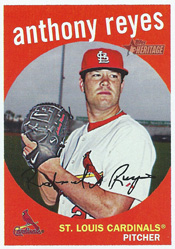
The move upset Gaetti, who wasn’t ready to give up his starting role, and surprised Tatis, who was happy being with the Rangers.

Though his stay in St. Louis turned out to be short, Tatis made it memorable, accomplishing an unusual feat within the most productive season of his career.

Vying for value

The 1998 Cardinals were 50-57 and out of playoff contention entering the last day of the interleague trade deadline on July 31. With Stottlemyre and Clayton eligible to become free agents after the season, the Cardinals looked to trade them rather than have them depart without getting any players in return.

The Cardinals tried to sign Stottlemyre to a long-term contract that summer, proposing three years for $21 million, but he wanted a four-year contract, according to the St. Louis Post-Dispatch. “The Cardinals don’t have to apologize for offering $7 million a season,” Post-Dispatch columnist Bernie Miklasz wrote.

Stottlemyre was sought by several contenders, including the Rangers, who were neck-and-neck with the Angels in the American League West Division. Stottlemyre had extensive postseason experience, pitching in the 1992 and 1993 World Series for the Blue Jays and the 1996 National League Championship Series for the Cardinals.

The Rangers offered Oliver, a left-hander, for Stottlemyre. Oliver, 27, was younger than Stottlemyre, 33, and wouldn’t be eligible for free agency until after the 1999 season. The Cardinals liked Oliver, but also wanted Tatis. Cardinals general manager Walt Jocketty told his counterpart, Doug Melvin, the Rangers would have to take Clayton, 28, in exchange for Tatis, 23, if they wanted Stottlemyre. Melvin agreed, projecting Clayton as an upgrade over Kevin Elster at shortstop.

After replacing Ozzie Smith as Cardinals starting shortstop in 1996, Clayton was a National League all-star in 1997, but he slumped in 1998 (.234 batting average) and the Cardinals weren’t interested in offering him a contract before he entered free agency.

“Clayton represented everything wrong with this disappointing team: moodiness and stubbornness,” wrote Miklasz. “He pouted when he didn’t bat leadoff. He never embraced the suggestions to hit smarter with two strikes. Clayton never tried to hit the ball the opposite way.”

All-star potential

While rating Oliver as “a solid third or fourth starter and probably better than that,” Jocketty acknowledged, “The guy we liked is Tatis. We needed to find a third baseman and he was the best guy available.”

Cardinals manager Tony La Russa said Tatis had “an above-average arm. He’s got the talent to become an impact-type third baseman.”

Said Melvin: “We don’t like giving him up because we really think he’ll be an all-star third baseman.”

Tatis made his major-league debut with the Rangers in 1997 and he was batting .270 in 95 games for them in 1998 when he was traded.

After joining the Cardinals, Tatis said of the trade, “When I knew about it, I felt really bad. I was just in shock … I loved it over there.”

Gaetti was unhappy about being benched for Tatis. Gaetti, 39, was batting .263 with 23 doubles and 10 home runs when Tatis was acquired. “The third baseman was not the weakest link on this team,” Gaetti said. “It’s just frustrating.”

On Aug. 14, the Cardinals released Gaetti and he signed with the Cubs five days later, on Aug. 19, his 40th birthday.

Ups and downs

Tatis got off to a terrible start with the Cardinals, committing three errors in his first three games and going hitless in his first 11 at-bats.

“It’s asking a lot for him to make plays like Brooks Robinson and hit like Mike Schmidt, but when he settles in he’ll be fine,” La Russa said.

Tatis got on track and batted .287 for the 1998 Cardinals. Oliver made 10 Cardinals starts that season and was 4-4 with a 4.26 ERA.

After dealing Tatis, the Rangers acquired Todd Zeile, the former Cardinal, from the Marlins to play third base. Stottlemyre (5-4), Clayton (.285) and Zeile helped the 1998 Rangers finish in first place in the AL West and reach the postseason.

In 1999, Tatis had the best season of his 11-year career in the big leagues. Tatis had single-season career highs in runs (104), hits (160), home runs (34), RBI (107), walks (82), stolen bases (21), batting average (.298) and on-base percentage (.404) for the 1999 Cardinals.

On April 23, 1999, he became the only major-league player to hit two grand slams in an inning, achieving the feat in the third against Chan Ho Park of the Dodgers. Boxscore

In 2000, Tatis was limited to 96 games, none from April 30 to June 29 because of a groin injury. With Placido Polanco available to play third base, the Cardinals traded Tatis and pitcher Britt Reames to the Expos in December 2000 for pitchers Dustin Hermanson and Steve Kline.

Oliver led the 1999 Cardinals in innings pitched (196.1) and was 9-9. He became a free agent after that season and returned to the Rangers.

Free agents Stottlemyre and Clayton took different paths after the Yankees eliminated the Rangers in the 1998 AL Division Series. Stottlemyre signed with the Diamondbacks and Clayton stayed with the Rangers.

Little, 26, the player to be named in the Rangers-Cardinals deal, made his major-league debut with St. Louis in September 1998 and had one hit in 12 at-bats. After spending 1999 and 2000 with minor-league Memphis, Little was granted free agency and signed with the Rockies.

Read Full Post »

Two years after he established the tone for the 2006 World Series, pitching a Game 1 gem and propelling the club toward a championship, Anthony Reyes and the Cardinals were eager for a divorce.

On July 26, 2008, the Cardinals traded Reyes to the Indians for minor-league reliever Luis Perdomo and cash.

Reyes, 26, was with the Cardinals’ farm club at Memphis when the deal was made. He began the 2008 season with the Cardinals, clashed with pitching coach Dave Duncan, sprained his right elbow and got demoted to the minor leagues.

Disillusioned, Reyes was ready to be traded and the Cardinals were prepared to accommodate him.

“He needs a change of scenery,” Cardinals outfielder Skip Schumaker said to the St. Louis Post-Dispatch.

Said Reyes: “When you get overlooked and you feel you’re pitching well, you want to go to a place that’s a better fit.”

Hot prospect

Reyes pitched at the University of Southern California and was selected by the Cardinals in the 15th round of the 2003 amateur draft. In 2004, Reyes pitched for two clubs in the Cardinals’ system and had an overall record of 9-2 with 140 strikeouts in 111 innings.

Before the 2005 and 2006 seasons, Reyes was named the top pitching prospect in the Cardinals’ organization by Baseball America magazine.

He made his major-league debut on Aug. 9, 2005, in a start against the Brewers at Milwaukee and got the win, yielding two runs in 6.1 innings of a 5-2 Cardinals victory. Boxscore On June 22, 2006, Reyes pitched a one-hitter for the Cardinals against the White Sox, but lost, 1-0, on a Jim Thome home run. Boxscore

Though he was 5-8 with a 5.06 ERA in 17 starts for the 2006 Cardinals, Reyes was the Game 1 starter in the World Series because veterans Chris Carpenter, Jeff Suppan and Jeff Weaver were unavailable after pitching in a seven-game National League Championship Series against the Mets.

Matched against Tigers ace Justin Verlander in Detroit, the odds didn’t favor Reyes, but he delivered a masterpiece, limiting the Tigers to two runs in eight innings and earning the win in a 7-2 St. Louis victory. Reyes retired 17 consecutive Tigers batters. Boxscore The Cardinals went on to win four times in five games and clinch their first World Series title in 24 years.

Steps backward

After the postseason, the Cardinals allowed Suppan, Weaver and another starter, Jason Marquis, to leave as free agents, figuring Reyes would help fill the void, but Reyes lost his first 10 regular-season decisions with the 2007 Cardinals and finished the season at 2-14 with a 6.04 ERA.

The Cardinals and Phillies discussed a trade of Reyes for outfielder Michael Bourne, but the proposed deal unraveled, the Post-Dispatch reported.

Reyes was prone to using high fastballs to entice batters to swing and miss. Duncan wanted him to pitch to contact rather than try for strikeouts. Reyes didn’t embrace the concept and “became a point of frustration” for Duncan, the Post-Dispatch reported.

Cardinals manager Tony La Russa said reports of a disconnect between Duncan and Reyes were “nonsense” and caused a distraction. “I regret the fact people mentioned he was not a Dave Duncan style of pitcher,” La Russa told the Post-Dispatch.

The Cardinals moved Reyes to a reliever role in 2008 and he was 2-1 with a save and a 4.91 ERA before spraining his right elbow. After a stint on the disabled list, Reyes was sent by the Cardinals to their Class AAA farm club at Memphis.

“Reyes came to represent the risks of holding on to a young player too long,” the Post-Dispatch reported. “Aware of Duncan’s frustrations with Reyes, some within the organization advocated trading the pitcher after his celebrated win in the first game of the 2006 World Series.”

Fresh start

After the Indians acquired Reyes from the Cardinals, they sent him to their Class AAA affiliate at Buffalo. Working with pitching coach Scott Radinsky, a former Cardinals reliever, Reyes was 2-0 with a 2.77 ERA in two starts for Buffalo before getting called up to the Indians.

Reyes made his Indians debut in a start on Aug. 8, 2008, against the Blue Jays at Toronto and got a win, yielding a run in 6.1 innings of a 5-2 Cleveland victory. Boxscore

“He had a good heartbeat, made pitches when he needed to and was very efficient,” Indians manager Eric Wedge said to the Akron Beacon Journal.

Reyes used the media attention his win attracted to express his frustrations with Duncan and the Cardinals.

“When I’d get sent down in St. Louis, no one ever told me what I was supposed to work on,” Reyes said to the Cleveland Plain Dealer. “It wasn’t like it was anything mean, but I was going crazy trying to figure out if I did something wrong. Did I step on someone’s toes?”

In comments to the Beacon Journal, Reyes said, “I felt like I didn’t fit in over there. They didn’t like anything I was doing. It made for some long years.”

After Reyes earned a win in a start at Cleveland against the Royals on Aug, 19, he told the Beacon Journal, “I think I’m getting there. I got in a lot of bad habits the last couple of years, so coming here gives me a chance to get rid of them.”

Elbowed out

Reyes continued pitching well for the 2008 Indians, but on Sept. 5 he was pulled from a start at Kansas City because of elbow pain. Sidelined for the remainder of the season, Reyes was 2-1 with a 1.83 ERA in six starts for the 2008 Indians.

In 2009, Reyes made eight starts for the Indians and was 1-1 with a 6.57 ERA before his right elbow gave out. On June 12, 2009, Reyes underwent reconstructive elbow surgery and never again pitched in the major leagues.

Reyes pitched in the Indians’ farm system in 2010 and 2011. At 30, his final professional season was in 2012 when he pitched for the Padres’ Class AAA Tucson club managed by former Cardinals catcher Terry Kennedy.

In 67 big-league games, Reyes was 13-26 with a 5.12 ERA.

Reyes became a firefighter for the Los Angeles County Fire Department in California in 2017, following in the footsteps of his father, also a firefighter.

Read Full Post »

« Newer Posts - Older Posts »