Feeds:
Posts
Comments

Archive for the ‘Trades’ Category

Convinced Bob Gibson no longer should be a starter, the Cardinals acquired Ron Reed from the Braves and put him in the rotation as the replacement for their long-time ace.
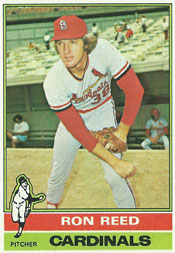
ron_reedOn May 28, 1975, the Cardinals traded relievers Ray Sadecki and Elias Sosa to the Braves for Reed and a player to be named. Five days later, the Braves sent Wayne Nordhagen, a minor-league outfielder, to the Cardinals, completing the deal.

At the time of the trade, the Cardinals’ rotation consisted of Gibson, Bob Forsch, Lynn McGlothen and John Curtis. With the May acquisitions of Reed from the Braves and Ron Bryant from the Giants, the Cardinals planned to move Gibson to the bullpen and go with a revamped rotation of Forsch, McGlothen, Reed, Curtis and Bryant.

Embarrassment to Bob

Gibson, 39, was upset with the decision.

“I think they’re making a mistake,” Gibson said to The Sporting News. “I still think I can throw better than 50 percent of the pitchers in the league. I think I’ve still got good stuff, not just competitive fire.”

Said Cardinals manager Red Schoendienst: “It was a tough decision to make. He’s still a good pitcher, but he’s not pitching as great as he has in the past.”

Gibson was a five-time 20-game winner and eight-time all-star with the Cardinals. He twice was named winner of the World Series Most Valuable Player Award and twice was named winner of the National League Cy Young Award.

In 1975, though, his record was 1-5 with a 4.80 ERA when he was dropped from the rotation on June 1. He yielded 71 hits in 65.2 innings and had more walks (33) than strikeouts (32).

Gibson was hampered by damaged knees. He also admitted he was reeling from a divorce.

In his 1994 book “Stranger to the Game,” Gibson said, “I didn’t conceal my anger at being sent to the bullpen, but I suspect now that some of it actually stemmed from my frustrations at home. There was a lot of pressure in suddenly being the primary parent for two teenage girls and a degree of devastation over the shattering of a family life that had been nearly 20 years in the making.”

Said Cardinals outfielder Reggie Smith: “When his body didn’t respond and then the club put him in the bullpen, it was an embarrassment to Bob.”

Two-sport standout

Reed, 32, was a good acquisition for the Cardinals. Bryant, 28, wasn’t.

Like Gibson, Reed was an outstanding basketball player. Gibson played basketball in college for Creighton and as a professional for the Harlem Globetrotters. Reed played basketball in college for Notre Dame and as a professional for the NBA’s Detroit Pistons.

A basketball and baseball standout at LaPorte (Ind.) High School, Reed was offered a contract by Athletics owner Charlie Finley, a LaPorte resident, after he graduated. Instead, Reed accepted a basketball scholarship from Notre Dame.

At 6 feet 6, Reed averaged 19 points and 14 rebounds per game in three varsity seasons at Notre Dame. He holds the Notre Dame single-season record for rebounding average at 17.7 per game.

After his senior season, Reed was selected by the Pistons in the third round of the 1965 NBA draft. Reed, who played baseball at Notre Dame only as a senior, wasn’t selected in the 1965 major-league amateur draft.

Looking for something to do in the summer before the start of the 1965-66 NBA season, Reed used a connection to contact Braves general manager John McHale, a fellow Notre Dame graduate. McHale signed Reed to a free-agent contract and assigned him to the minors.

The player-coach of the Pistons was Dave DeBusschere. He had pitched for the White Sox in 1962 and ’63. As a rookie, Reed averaged 7.5 points in 57 games for the Pistons. In his second season, Reed averaged 8.5 points in 62 games, including a 30-point performance on Dec. 16, 1966, versus the Baltimore Bullets.

At a crossroads, Reed opted for baseball. “At 6-foot-6, I was sort of caught in the middle (between forward and guard) and I doubt if I could have become anything more than a utility player in the NBA,” Reed told The Sporting News.

By 1968, Reed was in the Braves’ starting rotation. He achieved double-digit wins in five of his seven full seasons with the Braves.

Cardinals contributor

Reed was having breakfast when he learned he had been traded to the Cardinals. “I stood there with my mouth wide open,” Reed said. “I didn’t know how to react. I had never been traded before.”

In his Cardinals debut, on June 3, 1975, Reed got the start against the Braves and earned the win in a 4-2 Cardinals triumph. “When the game started, my knees began to shake,” Reed said. “I wasn’t scared … but my knees were just shaking.”

Reed won each of his first three starts with the Cardinals and had a 0.76 ERA.

Bryant, meanwhile, was a bust. A left-hander who had 24 wins for the 1973 Giants, Bryant was acquired by the Cardinals from San Francisco on May 9, 1975, for outfielder Larry Herndon and minor-league pitcher Tony Gonzalez.

In his first and only start for the Cardinals on June 16, 1975, Bryant gave up five runs in one inning against the Pirates.

Unimpressed, the Cardinals yanked Bryant from the rotation. Given a reprieve, Gibson replaced him and made four starts, winning one and losing three between June 21 and July 8. After the all-star break, Gibson was sent back to the bullpen, didn’t start again and retired in September.

John Denny and Harry Rasmussen were promoted from the minor leagues to join Forsch, McGlothen and Reed in the rotation, with Curtis being sent to the bullpen.

Reed won eight of his first 12 decisions with the Cardinals and finished 9-8 with a 3.23 ERA in 24 starts for St. Louis.

On Dec. 9, 1975, the Cardinals traded Reed to the Phillies for outfielder Mike Anderson. Converted to a reliever, Reed pitched for the Phillies in the 1980 and 1983 World Series.

Reed finished his career for manager Tony La Russa and pitching coach Dave Duncan with the 1984 White Sox. In 19 big-league seasons, Reed was 146-140 with a 3.46 ERA and 103 saves.

Previously: Bob Gibson and his final Opening Day with Cardinals
Read Full Post »

(Updated May 23, 2020)

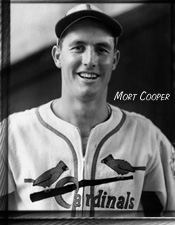
Convinced he had the leverage to demand a more lucrative contract, Cardinals ace Mort Cooper played hardball with Sam Breadon. The club owner responded by trading Cooper rather than negotiating with him.

mort_cooper4“In reckoning on his ability to outmaneuver Sam Breadon, Cooper encountered an old master who is familiar with a wide variety of curves,” The Sporting News reported.

On May 23, 1945, the Cardinals traded Cooper, 32, to the Braves for pitcher Red Barrett, 30, and $60,000. Three months later, Cooper had elbow surgery. Barrett earned 21 wins for the 1945 Cardinals.

Show me the money

Cooper was a key reason the Cardinals won three National League pennants and two World Series championships from 1942-44. He was named winner of the NL Most Valuable Player Award in 1942 when he was 22-7 with a 1.78 ERA. He followed that with a 21-8 record and 2.30 ERA in 1943 and a 22-7 record and 2.46 ERA in 1944.

Before the 1945 season, Cooper signed a one-year contract for $12,000. That amount, Breadon told Cooper, was the club ceiling on salaries. In spring training, Cooper learned the Cardinals made an exception for Marty Marion and signed the shortstop for $13,000.

Breadon offered to increase Cooper’s 1945 salary by $1,500, giving him a total of $13,500, but Cooper demanded $15,000, according to the St. Louis daily newspapers. Breadon refused. In protest, Cooper and his brother, catcher Walker Cooper, left the Cardinals’ spring training camp at Cairo, Ill., and threatened to boycott the club’s opening series against the Cubs.

The Cooper brothers eventually gave in and were with the club on Opening Day at Chicago. Soon after, Walker Cooper was inducted into the Navy. Mort Cooper made his first appearance of the season on April 22, pitching in relief against the Reds at St. Louis.

Cooper still was miffed about his contract and he didn’t show when the Cardinals left St. Louis by train for a series at Cincinnati. Instead, he arrived in Cincinnati the next day with his lawyer, Lee Havener, and demanded a salary increase.

Cooper started on April 29 against the Reds and earned the win. He also won his next start, versus the Cubs, on May 6 and got a no-decision in his third start on May 13 against the Giants.

With a 2-0 record and 1.52 ERA, Cooper appeared headed toward another big season. Because of injuries and commitments to military service, the Cardinals had little pitching depth. Sensing he had the upper hand, Cooper decided the time was right to force the issue of a new contract.

Jumping ship

In mid-May, while the Cardinals were in Boston, Cooper called traveling secretary Leo Ward about 3 a.m. at the team hotel and informed him he was leaving without permission and returning to St. Louis. Manager Billy Southworth suspended the pitcher indefinitely and fined him $500.

In St. Louis, Cooper and Havener asked Breadon to discuss a new contract. A meeting was scheduled for May 23 in Breadon’s office.

Secretly, Breadon began talking with clubs to gauge interest in Cooper. The Giants offered cash but no players. The Cubs and Phillies offered a combination of players and cash. The Braves offered the most cash, plus Barrett.

Cooper and Havener arrived at Breadon’s office, expecting to renegotiate a contract. Southworth was there with Breadon. After exchanging pleasantries, Breadon delivered his surprise, informing Cooper he was traded to the Braves.

“You could have floored Cooper and Havener with a feather,” the St. Louis Star-Times reported.

According to the St. Louis Post-Dispatch, Cooper “was shocked and crestfallen.”

“This is all a big surprise to me,” Cooper said to the Star-Times.

Deal of the year

“In disposing of Cooper, Breadon took the best course, since there was little chance of an amicable agreement,” The Sporting News opined.

Post-Dispatch columnist John Wray suggested “pitchers like Cooper today are rarer than banana trees in Iceland,” but added, “a disgruntled, malingering Cooper, forced to labor in a vineyard he hated, might have hurt the morale of the other players and done even greater damage.”

United Press called the transaction “the most important baseball deal of 1945” because the departure of a perennial 20-game winner gave hope to NL teams that the three-time defending champion Cardinals could be dethroned.

Cooper “almost overnight transformed (the Braves) into a pennant contender,” wrote The Sporting News.

Braves right fielder Tommy Holmes told the Boston Globe, “Brother, he’s got everything and he knows how to use it. I’m glad to have him on my side.”

Braves general manager John Quinn deemed Cooper “the best pitcher in the league.” The Braves reworked his contract and gave Cooper $15,000 for 1945.

Singing slinger

Barrett nearly was overlooked in most reviews of the trade. He was 2-3 with a 4.74 ERA for the 1945 Braves.

Informed of the trade by Braves manager Bob Coleman, Barrett said, “I didn’t give them a chance to change their minds. I was packed and ready to leave for St. Louis two minutes later. I’d have been ready sooner but I had difficulty in getting my suitcase closed.”

Breadon told the Post-Dispatch, “Barrett is not a star, but he’s an earnest, conscientious pitcher who will strive always for the best interests of his club.”

Barrett was almost as well-known as a singer as he was a pitcher. He sang a role in the opera “Narcissus” with the Los Angeles Philharmonic. He toured with bands during the off-season. “There is scarcely a big jazz band in the country that I haven’t sung with,” Barrett said. “Sammy Kaye. Tommy Dorsey. Skinny Ennis and the rest of them.”

No one expected Barrett would be the equal of Cooper. His career record in seven seasons with the Reds and Braves was 16-37.

Inserted into the rotation, Barrett produced a 21-9 record and 2.74 ERA for the 1945 Cardinals. Cooper was 7-4 with a 3.35 ERA for the 1945 Braves.

Final years

The 1945 Cardinals finished in second place at 95-59, three games behind the Cubs. The Braves finished sixth in the eight-team league at 67-85, 30 games behind Chicago.

With Breadon’s approval, Southworth left the Cardinals after the 1945 season and accepted an offer to manage the Braves. His replacement, Eddie Dyer, preferred using Barrett in relief and giving him spot starts. Barrett was 3-2 for the 1946 Cardinals. After the season, he was sent back to the Braves and pitched three more years for them.

Under Southworth, Cooper was 13-11 with a 3.12 ERA for the 1946 Braves. It was his last hurrah. In 1947, Cooper was a combined 3-10 with a 5.40 ERA for the Braves and Giants.

Previously: How Mort Cooper pitched 2 straight one-hitters for Cardinals


Read Full Post »

(Updated June 12, 2024)

With Vince Coleman offering a younger, less expensive and more productive alternative as a left fielder, the Cardinals deemed Lonnie Smith expendable.

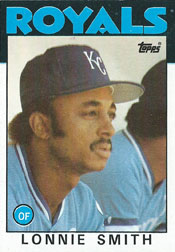
lonnie_smith5On May 17, 1985, the Cardinals dealt Smith to the Royals for John Morris, a minor-league outfielder.

Cardinals manager Whitey Herzog told a Kansas City reporter seeking a comment about the trade, “You’ve just won the damn pennant.”

Five months later, Smith played an integral role in the Royals defeating the Cardinals in seven games in the 1985 World Series.

St. Louis sparkplug

In four seasons with the Cardinals, Smith hit .292 with 173 steals and a .371 on-base percentage.

In 1982, his first season with the Cardinals, Smith ignited the offense, hitting .307, scoring 120 runs and stealing 68 bases. In the 1982 World Series, Smith hit .321 with six runs scored, helping the Cardinals beat the Brewers in seven games.

Smith underwent rehabilitation for drug abuse in 1983, missing about a month of the season, but hit .321 with 43 steals. In 1984, his batting average was .250.

Smith opened the 1985 season as the Cardinals’ left fielder, joining Willie McGee in center and Andy Van Slyke in right. When McGee was sidelined by an injury in April, the Cardinals promoted Coleman from Class AAA Louisville. The rookie speedster established himself as a force, hitting .300 with 12 steals in his first dozen games. When McGee returned to the lineup, Smith was odd man out.

“If the National League had a designated hitter, he would have died a Cardinal,” Herzog told the St. Louis Post-Dispatch.

Royals come calling

The Royals were among several clubs that expressed interest in Smith, Cardinals general manager Dal Maxvill said. According to the Post-Dispatch, Royals general manager John Schuerholz contacted Maxvill, who asked for Morris. “John Morris is the top prospect in their organization,” Maxvill said. “We’ve checked with tons of people to find out about the young man. All reports were excellent.”

Morris, 24, was the first-round choice of the Royals in the 1982 amateur draft. In 1983, he was named winner of the Southern League Most Valuable Player Award, hitting .288 with 23 home runs and 92 RBI for Jacksonville.

On May 13, 1985, four days before the trade was made, the New York Daily News reported a deal was in the works. Morris got a phone call from his mother, who informed him of the newspaper report. Stunned, Morris called Schuerholz and asked him about it.

According to Morris’ book “Bullet Bob Comes to Louisville,” Schuerholz told him, “The news about you being traded is strictly a rumor created by the St. Louis media. You have nothing to worry about. Everything will be fine.”

Hurt feelings

On the day of the trade, Morris was with the Omaha club in Buffalo when he got a call from Schuerholz. According to Morris’ book, the conversation went like this:

Schuerholz: “John, we just made a trade. You’ve been dealt to the St. Louis Cardinals for Lonnie Smith. I know we discussed this the other day, but at the time I couldn’t give you any information.”

Morris: “So, you knew all along that I was going to be traded. I think it’s unfortunate that I had to find out from my mom, who just happened to stumble upon it in the newspaper.”

Schuerholz: “You’re going to a first-class organization and we know you will do well with the Cardinals … Whitey Herzog is a great manager who thinks the world of you. He even told me that himself in spring training.”

Smith was upset about being traded and told the Post-Dispatch, “I had thought about quitting very seriously.”

Smith also said to Cardinals Magazine, “I didn’t want to leave St. Louis.”

Some Cardinals said they thought the club should have gotten more in return for Smith. Cardinals pitcher John Tudor said to the Post-Dispatch, “I think the deal stinks. I don’t think it helps the club … Lonnie always had a lot of spark, he was aggressive, he’d run into a wall for you if that was going to win you a game. I’m sorry to see him go.”

Said Van Slyke: “I wonder why we couldn’t get a pitcher in return?”

Maxvill told The Sporting News he expected to be criticized for trading Smith. “People are going to say that it’s a matter of economics, that the Cardinals don’t want to pay the salaries,” Maxvill said.

Coleman, 23, had a $60,000 salary. Smith, 29, was getting $850,000.

Cardinals management said playing time was a factor, too.

“We didn’t plan on Lonnie playing that much … I don’t think he would be satisfied as a utility player,” said Maxvill.

Herzog said, “I would venture to say there’s never been a better defensive outfield than Van Slyke, McGee and Vince.”

Royals benefit

The Cardinals assigned Morris to Class AAA Louisville. Smith became the Royals’ left fielder.

“Lonnie Smith adds the element of speed and run production to our lineup,” said Schuerholz. “When you start your lineup with Willie Wilson, Lonnie Smith and George Brett, it can be very exciting.”

Regarding Smith’s drug history, Royals manager Dick Howser told United Press International, “Our indications are _ and we’ve checked it out _ he’s very good. He’s done what he’s had to do. We feel comfortable with the fact he’s clean.”

Smith told the Post-Dispatch, “My doctor, my counselor and my wife know I’m clean … Knowing that I’m clean, I can deal with my problems a lot easier.”

(In his book “White Rat: A Life in Baseball,” Herzog said of Smith’s drug problem, “I admired him, and still do, for having the guts to ask for help.”)

Smith hit .257 with 40 steals for the 1985 Royals. In the World Series versus the Cardinals, he batted .333 with four runs scored, four RBI and two steals.

Morris played five seasons (1986-90) with the Cardinals, hitting .247.


Read Full Post »

(Updated Nov. 1, 2025)

Unwilling to bend on principle, Cardinals general manager Dal Maxvill reluctantly traded a slugger he wanted to keep. In a stroke of good fortune, he got in exchange a closer who would rank among the franchise’s all-time best.

On May 4, 1990, the Cardinals acquired Lee Smith from the Red Sox for outfielder Tom Brunansky.

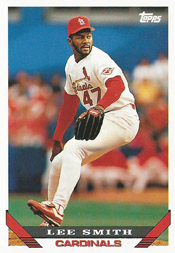
lee_smith3It was one of Maxvill’s best trades during his tenure (1985-94) as Cardinals general manager. On Dec. 9, 2018, Smith was elected to the National Baseball Hall of Fame.

The deal came about after Brunansky demanded a no-trade clause in exchange for waiving free agency and staying with St. Louis. “I haven’t been looking to trade him,” Maxvill told the St. Louis Post-Dispatch. “We wanted to keep Brunansky.”

Seeking security

The Cardinals had acquired Brunansky from the Twins for second baseman Tommy Herr on April 22, 1988, six months after Minnesota had prevailed in a seven-game World Series with St. Louis.

Early in the 1990 season, the Cardinals approached Brunansky about a three-year contract. Eligible to become a free agent after the 1990 season, Brunansky wanted a no-trade provision in any new contract. “We don’t have those in St. Louis,” Cardinals manager Whitey Herzog said.

Brunansky explained “my wife and I wanted to settle down and buy a house here,” but couldn’t commit to that without the no-trade clause, the Post-Dispatch reported. “For me to stay here, I would need some kind of security,” Brunansky said. “I wasn’t going to sign here for three years, buy a house and everything and keep hearing trade rumors … It was a big issue for me and, of course, it was a big issue for the ballclub.”

Motivated to act

The Red Sox were eager to deal because they needed a right fielder to replace Dwight Evans, who was restricted to designated hitter duties because of back problems. The Cardinals needed an established closer to replace Todd Worrell, who was recuperating from elbow surgery.

Herzog said to the Post-Dispatch, “We felt if we waited any longer, (Smith) wouldn’t be there.”

Smith became available when the Red Sox signed another closer, Jeff Reardon.

The Cardinals also had talked with the White Sox about closer Bobby Thigpen, according to the Post-Dispatch. The Red Sox, though, were motivated to act.

“They called us. It’s as simple as that,” Red Sox manager Joe Morgan said to the Worcester (Mass.) Telegram and Gazette. “Nobody would give us the kind of pitcher we wanted, so we went with the right-handed power.”

According to the Boston Globe, the Red Sox turned down a two-for-one swap with the Braves involving pitcher Tommy Greene and third baseman Jim Presley for Smith. “We offered them a heck of a deal.” Braves general manager Bobby Cox said to The Sporting News.

Reunited with Roarke

Brunansky hit 43 home runs in three years with the Cardinals, but only 11 at Busch Memorial Stadium in St. Louis. “He’ll hit homers in Fenway (Park),” said Red Sox catcher Tony Pena, a former Cardinal.

Smith posted a 2-1 record with four saves, a 1.88 ERA and 17 strikeouts in 14.1 innings for the 1990 Red Sox. In joining the Cardinals, he was reunited with coach Mike Roarke, who had been his coach as a rookie with the 1980 Cubs.

Smith welcomed the chance to be the Cardinals’ closer. With Reardon the primary closer in Boston, Smith said he “sort of felt like the odd man out” there.

“I’m going to get an opportunity to pitch in the situation that I’m used to,” Smith said to Boston reporters. “I’m really pleased.”

Smith earned his first save for the Cardinals on May 11, 1990, pitching a flawless ninth inning in relief of Bryn Smith in St. Louis’ 5-2 victory over the Braves. Boxscore Smith posted 27 saves and a 2.10 ERA for the 1990 Cardinals.

Brunansky played four years with the Red Sox and hit 56 home runs.

Smith played four years with the Cardinals and earned 160 saves. Only Jason Isringhausen (217) has more saves as a Cardinal.

Smith was the first Cardinal to record 40 saves in consecutive seasons. He twice had back-to-back 40-save seasons: 1991-1992 and 1992-1993. He had 47 saves in 1991, 43 in 1992 and 43 again in 1993.

In 1993, less than two hours before the Sept. 1 trade deadline, the Cardinals dealt Smith to the Yankees for pitcher Rich Batchelor, clearing the way to test Mike Perez as the closer the rest of the season. The trade “took me off the hook” from having to inform Smith he was being removed from the closer role, said Joe Torre, who’d replaced Herzog as Cardinals manager.

Read Full Post »

In theory, the trade for Scott Cooper appeared to be ideal for the Cardinals. Cooper was a St. Louis native, a Cardinals fan and a two-time all-star third baseman who looked to be entering his prime. In reality, the deal was a bust.

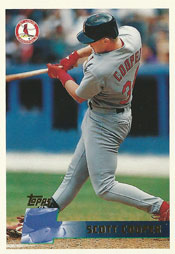
scott_cooper2On April 8, 1995, the Cardinals acquired Cooper and reliever Cory Bailey from the Red Sox for outfielder Mark Whiten and pitcher Rheal Cormier.

Cooper, 27, was thrilled to join his hometown team and the Cardinals were thrilled to get a player with a reputation for producing steady hitting and solid defense.

After a fairy tale debut _ he hit a two-run single in the bottom of the ninth to lift the Cardinals to a 7-6 victory over the Phillies in the season opener at St. Louis _ Cooper failed to meet expectations. He hit .230 with three home runs for the 1995 Cardinals and made 18 errors.

When the season ended, he became a free agent and went to Japan.

Replacing a legend

Cooper was 15 when the Cardinals won the 1982 World Series title. The exhilarating experience of seeing his favorite team become big-league champions “left a dent in my soul,” he told the Associated Press.

A standout player at Pattonville High School in the St. Louis suburb of Maryland Heights, Mo., Cooper was chosen by the Red Sox in the third round of the 1986 amateur draft. He signed with them and made his big-league debut with Boston in 1990.

When free-agent Wade Boggs left the Red Sox for the Yankees after the 1992 season, Cooper replaced the five-time American League batting champion as Boston’s third baseman.

Cooper responded splendidly to the challenge. He was named an AL all-star in 1993 and 1994. His batting average in five years with Boston was .284.

Cardinals calling

In April 1995, general managers Walt Jocketty of the Cardinals and Dan Duquette of the Red Sox discussed a deal. The Red Sox wanted Whiten and Cormier. Jocketty wanted Cooper.

Jocketty agreed to trade Whiten but offered pitcher Tom Urbani instead of Cormier.

“We needed Cormier in the deal to make it go,” Duquette said.

Talks stalled. Jocketty gave the Red Sox a deadline of April 8.

When it became clear the Red Sox wouldn’t make the deal without Cormier being included _ “They were pretty adamant about it,” Cardinals manager Joe Torre told the St. Louis Post-Dispatch _ Jocketty relented.

No joke

On the afternoon of April 8, Cooper and teammates Roger Clemens and Eric Wedge were golfing in Fort Myers, Fla. “I was getting ready to hit this ball and this guy in a cart comes barreling around the corner,” Cooper said.

“Are you Scott Cooper?” asked the man in the cart. “Mr. Dan Duquette wants you to call him immediately.”

Said Cooper: “My heart sank. I looked at Clem and said, ‘Are you messing with me?’ … Roger looked at me and he was real serious. He said, ‘I would never play that kind of trick on you.’ ”

Duquette told Cooper of the trade to the Cardinals.

Contacted soon after by Rick Hummel of the Post-Dispatch, Cooper said, “I can’t begin to describe the emotion I’m feeling right now. I’m numb all over. The Red Sox let me fulfill my dream. They gave me the opportunity to be a major leaguer. But my lifetime dream as a kid was to play for the St. Louis Cardinals.”

Asked about the pressure of playing at home, Cooper told The Sporting News, “If I can come in and take the place of Wade Boggs and play in front of that crowd in Boston and make two all-star teams, I can play in my hometown in front of my family and friends.”

Lineup shifts

The Cardinals moved Todd Zeile, a converted catcher, from third base to first base, replacing Gregg Jefferies, who had become a free agent and signed with the Phillies. Brian Jordan, a highly-regarded prospect, replaced Whiten in right field. Urbani took over for Cormier in the starting rotation.

“Cooper is known for his defense and that was one of the major reasons we wanted to get him,” Jocketty said. “Plus, he’s a good left-handed bat.

“We feel Zeile will be a better first baseman than Jefferies was and we feel Cooper will make us better defensively at third. He has good hands, a good arm. He’s a real third baseman.”

(Bailey, the other player acquired from Boston by the Cardinals, became a productive reliever. He spent most of the 1995 season as the closer at Class AAA Louisville, earning 25 saves, and was 5-2 with a 3.00 ERA in 51 games for the 1996 Cardinals.)

Plans unravel

By mid June, the 1995 Cardinals were scuffling. Torre got fired. Zeile was traded to the Cubs.

Cooper, hitting .310 as late as May 20, had a miserable summer. He batted .164 in July and .183 in August.

For the season, Cooper hit .210 (21-for-100) with runners in scoring position. He had almost as many strikeouts (85) as hits (86).

After spending the 1996 season in Japan (where he hit .243 in 81 games), Cooper returned to the big leagues with the 1997 Royals and batted .201.

That would be his final major-league season. At age 30, three years after being named an all-star, his big-league playing career was finished.

Previously: How Scott Cooper made memorable Cardinals debut

Previously: How a tragic accident brought Mark Whiten to Cardinals

Read Full Post »

When the Cardinals reacquired Ken Hill, they thought they’d found an ace. Instead, he was a dud.

ken_hillOn April 5, 1995, in one of the first big trades made by general manager Walt Jocketty, the Cardinals got Hill from the Expos for pitchers Bryan Eversgerd and Kirk Bullinger and outfielder DaRond Stovall.

The deal was considered a steal. Hill had 16 wins for the 1994 Expos, sharing the National League lead with Greg Maddux of the Braves.

A right-hander, Hill joined left-handers Danny Jackson, Allen Watson, Donovan Osborne and Tom Urbani in the rotation.

An intimidator

“In acquiring Kenny Hill, we’ve got probably one of the top two or three pitchers in the game today,” Jocketty said to the St. Louis Post-Dispatch. “I think we’re on our way to putting together the championship club we thought we could.”

Said manager Joe Torre: “Kenny Hill is the type of pitcher we really haven’t had. He’s the type of pitcher who can go out and dominate a game. He’s an intimidator, a guy who can go out and pitch a no-hitter.”

Hill, 29, became available because the Expos were slashing expense and general manager Kevin Malone was under orders to unload top-salaried players.

The Blue Jays and Rockies also made strong bids for him. “The Jays thought they had offered a better deal for Ken Hill than the one the Expos accepted with the Cardinals,” The Sporting News reported, adding that the cash-strapped Expos were in no mood to help their Canadian counterparts.

Jocketty was thrilled he didn’t have to trade to the Expos one of the Cardinals’ top three pitching prospects: Alan Benes, Brian Barber or John Frascatore.

Said Torre: “This shows how serious we are. It’s very exciting to me that the Cardinals have gone out and established themselves as helping the club _ right now. That should put to rest any question about the desire of the Cardinals to win.”

First time around

Hill was a prospect in the Tigers’ minor-league system when the Cardinals acquired him and first baseman Mike Laga from Detroit for catcher Mike Heath on Aug. 10, 1986.

Hill made his big-league debut with St. Louis in 1988 and in the next four seasons with the Cardinals he was 23-32. According to catcher Tom Pagnozzi, Hill and pitching coach Joe Coleman “didn’t get along.”

After the 1991 season, Cardinals general manager Dal Maxvill sought to acquire Expos first baseman Andres Galarraga. The Expos wanted pitcher Rheal Cormier, a Canadian, in return, but Maxvill instead offered Hill and the Expos accepted.

Plagued by injuries, Galarraga was limited to 95 games and hit .243 with 10 home runs and 39 RBI for the 1992 Cardinals. A free agent, he departed for the Rockies after the season. Hill had 16 wins for the 1992 Expos and in three years with Montreal he was 41-21.

When Jocketty brought back Hill to St. Louis, it was as if a wrong had been righted.

Welcome back

“The Cardinals made belated amends for one of their worst trades in recent years,” Rick Hummel wrote in the Post-Dispatch.

Hummel’s colleague, Bernie Miklasz, opined, “Walt Jocketty needed one long distance phone call to erase one of Dal Maxvill’s worst mistakes.”

In The Sporting News, Bob Nightengale offered, “The Cardinals, always regretting they traded Hill … made up by stealing Hill back.”

Mark Riggins, who coached Hill in the minors, was the Cardinal’ pitching coach in 1995 and Bob Gibson had been added to the coaching staff as well.

Said Hill: “I love the deal … I couldn’t stand it when they (the Cardinals) traded me out. But I think that change of scenery helped.”

Pitching potential

Hill won his first four decisions for the 1995 Cardinals, but lost his next four in a row. He said he wasn’t happy with Pagnozzi as his catcher and asked to be traded to a contender.

With a 6-7 record and 5.06 ERA, Hill was traded again by the Cardinals on July 27, 1995, to the Indians for infielder David Bell, pitcher Rick Heiserman and catcher Pepe McNeal.

“I was not happy with his performance or with his attitude,” Jocketty said.

In two stints with St. Louis over five seasons, Hill was 29-39 with a 4.23 ERA. He pitched in the big leagues until 2001. In 14 years with the Cardinals, Expos, Indians, Rangers, Angels, White Sox and Rays, Hill was 117-109 with a 4.06 ERA.


Read Full Post »

« Newer Posts - Older Posts »