Feeds:
Posts
Comments

Archive for the ‘Trades’ Category

(Updated Oct. 23, 2020)

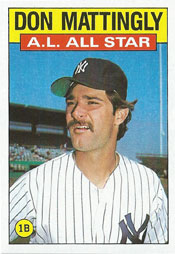
If general manager Dal Maxvill had been willing to part with pitcher Joe Magrane, Don Mattingly might have been a first baseman for the Cardinals instead of spending his entire playing career with the Yankees.

don_mattinglyIn 1988, Mattingly was feuding publicly with Yankees owner George Steinbrenner. That fueled media speculation the Yankees were willing to trade Mattingly, who expressed interest in the Cardinals because of the proximity of St. Louis to his hometown of Evansville, Ind.

“Growing up in Evansville, I was a fan of the St. Louis Cardinals,” Mattingly told the New York Daily News.

The Cardinals admitted interest in pursuing a deal. Media reports suggested the Yankees would want shortstop Ozzie Smith or center fielder Willie McGee in return, but the player New York apparently wanted most was Magrane, who at the time was St. Louis’ prized pitching phenom.

No respect

In August 1988, Mattingly, 27, was a five-time all-star who had earned an American League Most Valuable Player Award, one batting title and three Gold Glove awards, but he became disgruntled with the way he believed Steinbrenner was treating Yankees players.

“The players get no respect around here,” Mattingly said to the Associated Press. “They (management) give you money, that’s it. Not respect. Money is not respect.”

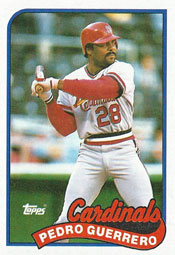
Reports spread quickly that an angry Steinbrenner intended to trade Mattingly. The Cardinals, who had just acquired first baseman Pedro Guerrero from the Dodgers, were willing to move Guerrero to left field and open the job at first base for Mattingly.

“I see where Mattingly wants to go to St. Louis,” Cardinals manager Whitey Herzog said to the St. Louis Post-Dispatch. “That takes care of us. Steinbrenner sure wouldn’t trade him where he wants to go. You know what I mean? He’d say, ‘I’ll show him. I’ll trade him to Seattle.’ ”

Still, baseball writers produced a stream of reports that speculated on a deal between the Yankees and Cardinals.

On Sept. 4, 1988, Rick Hummel of the Post-Dispatch wrote, “The Cardinals have some players in which the Yankees would seem interested. Certainly the Yankees would want a starting pitcher. Joe Magrane probably is unavailable. But Greg Mathews, if he shows he has recovered from elbow surgery, might be.”

Hummel suggested several possible packages to land Mattingly, including Mathews, McGee and catcher Tony Pena, or Mathews and Ozzie Smith.

About a month later, under the Post-Dispatch headline, “Maxvill Says He’ll Pursue Mattingly,” the general manager told Hummel, “I definitely want to talk to them.”

Wizard a Yankee?

Two days later, in a column that rocked Cardinals Nation, Tom Wheatley of the Post-Dispatch opined, “Ozzie Smith must go. And if the Wizard of Oz can be used as bait to land a whopper such as Don Mattingly, all the better.”

Maxvill said he made more inquiries about acquiring Mattingly, but he told Hummel, ‘I don’t think they’re interested in moving him as much as everybody thinks. That’s what I thought before and it’s been reinforced to me.”

Just when it appeared the possibility of a trade had waned, Murray Chass of the New York Times, citing an anonymous American League club executive, reported the Cardinals, Cubs, Padres or Giants were close to making a deal for Mattingly.

Wrote Chass: “If the Cardinals, for example, were really serious about the pursuit of Mattingly, they would have to offer the Yankees Joe Magrane … The Cardinals, however, will not offer Magrane; therefore, no deal.”

Magrane, 24, was the National League earned-run average leader (2.18) in 1988, his second season with St. Louis.

In December 1988, the Post-Dispatch reported why a deal for Mattingly appeared dead: “Maxvill said the New York Yankees never had asked seriously about acquiring (Ozzie) Smith in a Don Mattingly deal. Pitcher Joe Magrane’s name, on the other hand, did come up in discussions with the Yankees. But Maxvill said the Cardinals would be highly reluctant to part with him.”

Magrane achieved a career-high 18 wins for the 1989 Cardinals. Mattingly stayed with the Yankees and completed his 14-season big-league career with them in 1995. He finished with a .307 career batting mark and 2,153 hits.

Read Full Post »

(Updated Oct. 7, 2018)

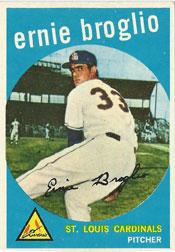
Ernie Broglio was a key player in two Cardinals trades _ the famous one involving Lou Brock and the largely forgotten one that led to him becoming a prominent part of the St. Louis rotation.

ernie_broglio3On Oct. 7, 1958, the Cardinals acquired Broglio and Marv Grissom from the Giants for Billy Muffett, Hobie Landrith and Benny Valenzuela.

The top names in the deal were relief pitchers Grissom and Muffett. Landrith was a backup catcher, Valenzuela a utility infielder and Broglio a minor-league pitcher.

Referring to managers Solly Hemus of the Cardinals and Bill Rigney of the Giants, columnist Dan Daniel of The Sporting News wrote, “Hemus wanted Grissom and Bill Rigney wanted Muffett, and the rest of it looks like parsley on the boiled potato.”

The St. Louis Post-Dispatch described the trade as “a can of salmon for a can of salmon.”

Regarding Ernest Broglio, he was “not to be confused either with movie Academy Award winner Ernest Borgnine or a plain old imbroglio,” the Post-Dispatch reported.

“Broglio must be suspect because he didn’t make it with the Giants last spring and no club needs pitching more than San Francisco,” the Post-Dispatch concluded.

Dixie delighted

Dixie Walker, who managed Broglio at Class AAA Toronto in 1958, was on good terms with the Cardinals. His brother, Harry Walker, was a Cardinals coach and Dixie worked with Cardinals general manager Bing Devine at Rochester in 1955.

It was on Walker’s advice that Devine pursued Broglio.

In the Giants’ organization since 1956, Broglio had opened the 1958 season with their Class AAA club at Phoenix and posted an 8-1 record. The Giants, though, were seeking a veteran pitcher and they made a deal with Toronto in July 1958 for former big-leaguer Don Johnson. The Giants sent Broglio, along with outfielder Jim King and pitcher Ray Crone, to Toronto.

Broglio, 23, apparently was loaned to Toronto, which wasn’t affiliated with any big-league club.

“Nobody said anything to me at Phoenix except when I was being shipped out,” Broglio said. “I was told I’d be back.”

Toronto throwback

Broglio was an immediate success with Toronto. In his first start for Dixie Walker, Broglio struck out a franchise-record 15 against Buffalo in 11.1 innings. Three days later, Broglio pitched a three-hitter against Montreal.

On Aug. 6, Broglio pitched a two-hit shutout against Havana. The next day, he pitched seven innings in relief.

“A throwback to pitchers of another era _ that is the reputation of Ernie Broglio, workhorse of the Toronto Maple Leafs’ mound corps, who appears to thrive on only two days rest,” Th Sporting News reported.

Broglio was 9-3 for Toronto in the regular season and 2-0 in the International League playoffs. For Phoenix and Toronto combined, Broglio had a 17-4 regular-season record.

Made in Japan

Two weeks after he was traded to St. Louis, Broglio was invited to join the Cardinals on their tour of Japan. The Cardinals were scheduled to play 16 games against Japanese teams in October and November. Broglio took full advantage of the chance to impress his new club.

Described by The Sporting News as “the big surprise,” Broglio was the Cardinals’ biggest winner on the tour, posting a 4-0 record and 1.55 ERA and striking out 30 in 28 innings.

Based on that showing, Hemus tabbed Broglio as the staff’s No. 4 starter entering spring training in 1959.

“I know that wasn’t big-league opposition,” Hemus said, “but he showed me enough to warrant this chance.”

Broglio further impressed the Cardinals by reporting to spring training three pounds under his assigned weight of 195.

“Wildness has been the bane of his six-year career (in the minors),” The Sporting News reported. “If pitching coach Howard Pollet can help Broglio with his control, the Cardinals might have their best rookie pitcher since Johnny Beazley in 1942.”

Broglio earned a spot in the 1959 Cardinals’ rotation and finished the season tied with Larry Jackson for the club lead in shutouts (three). Broglio also ranked second in strikeouts (133) and third in innings pitched (181.1) for the Cardinals.

After losing his first five decisions, Broglio completed the 1959 season at 7-12 with a 4.72 ERA. He was 7-9 in 25 starts and 0-3 in 10 relief appearances.

In six years (1959-64) with St. Louis, Broglio was 70-55, including seasons of 21 wins in 1960 and 18 wins in 1963.

When the Cardinals sent Broglio to the Cubs on June 15, 1964, in a deal involving Brock and others, most thought the transaction favored Chicago, but Broglio hurt his arm and went 7-19 with a 5.40 ERA in three years with the Cubs. Brock became a Hall of Fame player who broke stolen base records, achieved 3,000 hits and ignited the Cardinals to three pennants and two World Series titles.

Previously: Ernie Broglio built great home mark the hard way

Read Full Post »

Bob Forsch might have spent his entire playing career with the Cardinals if management had given him the opportunity. Instead, informed he wasn’t wanted, Forsch took the chance to extend his career with the Astros.

bob_forsch6On Aug. 31, 1988, the Cardinals traded Forsch to the Astros for utility player Denny Walling.

Forsch was 9-4 with a 3.73 ERA for the 1988 Cardinals. A fan favorite, he ranked second among all Cardinals pitchers in career games started (401) and third in career wins (163).

In his book “Tales from the Cardinals Dugout,” Forsch said general manager Dal Maxvill called him while the team was in Atlanta and said he planned to trade him to the Astros.

Under baseball rules, Forsch, 38, could have blocked a trade because he was a player with five years of service with one team and 10 years in the majors.

The second-place Astros, chasing the Dodgers in the National League West, were pressing for a decision before midnight on Aug. 31, the last date a player could be acquired and still be eligible for the postseason.

Encouraging him to accept the trade, Maxvill told Forsch he wasn’t in the Cardinals’ plans for 1989. Forsch said he wasn’t ready to quit. When the Astros sweetened the deal by guaranteeing Forsch a contract for 1989, he agreed to the trade.

Maxvill played hardball

“It was better than what I was offered here,” Forsch said to Rick Hummel of the St. Louis Post-Dispatch. “Maxvill made it pretty clear that I wouldn’t have a job here.

“I would have liked to have pitched here some more, but it didn’t look like it was going to work out … Maybe the decision would be easier if I felt they wanted me here.”

In his book, Forsch said manager Whitey Herzog told him he would have a chance to earn a spot with the Cardinals in 1989.

“(But) Dal told me, ‘Well, if you stay here (and reject the trade) you’re not going to pitch again,’ ” Forsch said. “When I heard that, I was a little shocked, to say the least.”

Maxvill said Forsch would be offered a job in the Cardinals organization if he didn’t pitch in 1989.

“Forschie has been great for the Cardinals for a lot of years,” Maxvill said. “He was a great teacher and a great person. We’re sorry to lose him, but I was happy to accommodate him and hopefully he’ll pitch next year.”

Tributes from teammates

A consistent winner and classy competitor, Forsch pitched two no-hitters and appeared in three World Series for the Cardinals. The right-hander produced 10 double-digit win seasons and was 163-127 in 15 years (1974-88) with the Cardinals.

Kevin Horrigan, sports editor of the Post-Dispatch, suggested the Cardinals should retire Forsch’s uniform number 31, but they didn’t. Shortstop Ozzie Smith called Forsch “the consummate professional.” Center fielder Willie McGee said Forsch is “a great person, a great leader and one of the best competitors I have ever played with in any place and at any level.”

Forsch said having former Cardinals coach Hal Lanier as Astros manager “made a lot of difference” in his decision to accept the trade. “I knew Hal real well and really liked him,” Forsch said.

Also, Ken Forsch, Bob’s older brother, pitched for the Astros from 1970-80.

Two days after Bob was dealt to the Astros, the Cardinals were in Houston to begin a three-game series.

When Cardinals broadcaster Jack Buck entered the Astros clubhouse, Forsch asked, “How do I look in blue?”

Replied Buck: “Like your brother.”

Previously: Forsch vs. Forsch: Bob had edge in brotherly matchup

Read Full Post »

In the summer of 1988, some looked at Pedro Guerrero and saw a first baseman who was a defensive liability, a star diminished by injuries and a perceived lack of desire.

lana_turnerWhitey Herzog looked at Guerrero and saw Lana Turner.

On Aug. 16, 1988, the Cardinals, desperate to bolster a pop-gun attack, traded pitcher John Tudor to the Dodgers for Guerrero.

Because Guerrero had tendinitis in both knees and had spent most of June and July on the disabled list while recovering from a pinched nerve in his neck, some questioned whether the Cardinals had acquired damaged goods.

Responding to Rick Hummel of the St. Louis Post-Dispatch about those concerns, Herzog, the Cardinals’ manager, said of Guerrero, “His lower body isn’t the best in the world. His upper body looks like Charlie Atlas and his lower body probably looks like Lana Turner.”

Fortunately for the Cardinals, Guerrero could hit better than Turner, the long-legged actress of the 1940s and ’50s who played sultry roles in films such as “The Postman Always Rings Twice” and “Peyton Place.”

At the time of the trade, critics, such as columnist Scott Ostler of the Los Angeles Times, saw Guerrero as a one-dimensional player.

pedro_guerreroWrote Ostler: “When Guerrero isn’t hitting home runs and doubles _ which he hasn’t been doing much of lately _ he hurts you more ways than he helps you. Defense, for instance … The most you can say is that Guerrero sometimes makes the routine plays.”

The next Jack Clark

The Cardinals, though, needed a run-producer and they saw Guerrero as one of their best options. “He’s one of the few hitters in baseball who fits our need,” Herzog said. “He’s an impact player, like Jack Clark.”

St. Louis had tried to replace Clark _ who, as a free agent, departed the Cardinals for the Yankees after the 1987 season _ with Bob Horner, but that didn’t work. With the Cardinals out of contention by August 1988, management devised a plan for how to boost the team’s offense.

They decided to pursue during the impending off-season a pair of players who appeared headed toward free agency: Guerrero and Tim Raines of the Expos.

Guerrero was eligible to become a free agent after the 1988 season and the Dodgers expressed little interest in keeping him. Meanwhile, it widely was anticipated an arbitrator would declare Raines a free agent after ruling that team owners had colluded to limit offers to him when he first became eligible for free agency in November 1986.

Two factors caused the Cardinals to change those plans. First, word leaked that Raines was preparing to accept a three-year contract extension from the Expos. Also, there was speculation the Dodgers might trade Guerrero to the Phillies if they could get left-handed pitcher Don Carman in return.

Dodgers want Tudor

Concerned they might miss out on both Guerrero and Raines, the Cardinals pursued trade talks with the Dodgers. Seeking a left-handed starter to replace the injured Fernando Valenzuela, the Dodgers wanted Tudor, who was the National League leader in ERA at 2.29.

Cardinals general manager Dal Maxvill asked Herzog who he would want in return.

Said Herzog: “There’s only one guy I’d consider trading (Tudor) for.”

Guerrero.

The Cardinals agreed to a deal under one condition: Guerrero would have to accept a contract extension and relinquish his right to become a free agent that winter. Guerrero agreed and got an extension for three seasons at $6.2 million, including a $400,000 bonus, the Los Angeles Times reported.

“Basically, it’s a premier pitcher for a premier hitter,” Herzog said to the Associated Press.

Guerrero, 32, batted .298, with a .374 on-base percentage, in 59 games for the 1988 Dodgers.

Maxvill called Guerrero “an everyday player with outstanding run-producing potential.”

Said Cardinals pitcher Bob Forsch: “If he comes over and wants to play, he can help.”

Guerrero told the Associated Press, “I never thought I’d be a Cardinal. But now I’m here and I’m very happy … I always wanted a chance to play for Whitey.”

Tudor, 34, was going from an also-ran to a contender. He was a key starter for the Cardinals’ pennant-winning teams in 1985 and 1987. “I’ve enjoyed my time here,” Tudor said. “The people have been great to me and, as far as I’m concerned, there are no better fans in the world.”

Tudor was 4-3 with a 2.41 ERA in nine starts for the 1988 Dodgers, who won the World Series championship that year. Injured most of 1989, Tudor became a free agent after that season and returned to the Cardinals in 1990.

Guerrero hit .268 with five home runs and 30 RBI in 44 games for the 1988 Cardinals. He was outstanding in 1989, hitting .311 with 42 doubles and 117 RBI for St. Louis. His on-base percentage that season was .391.

As a Cardinal from 1988 to 1992, Guererro produced 505 hits in 500 games, posting a .282 batting average and .348 on-base percentage, with 44 home runs.

Previously: Redbirds ripoff: How Bob Horner replaced Jack Clark

Read Full Post »

(Updated June 11, 2024)

Keith Hernandez was a World Series hero, the best-fielding first baseman in the sport, the most consistent hitter in the Cardinals’ lineup, winner of a league Most Valuable Player Award and a fan favorite.

keith_hernandez2To Whitey Herzog, none of that made up for what the Cardinals manager considered an unforgivable sin _ lack of maximum effort.

In a trade that remains one of the Cardinals’ most unpopular and contentious, Hernandez was dealt to the Mets on June 15, 1983, for pitchers Neil Allen and Rick Ownbey.

The deal, which Mets catcher John Stearns called “the biggest heist since the Thomas Crown Affair,” was made, in part, because of the Cardinals’ need for pitching. Their top two starters, Joaquin Andujar and Bob Forsch, were having subpar seasons and the Cardinals also lacked a reliable replacement for departed No. 5 starter Steve Mura. “Good arms are hard to come by,” Cardinals general manager Joe McDonald said to United Press International. “If Allen was not having a bad year, there’s no way we could have gotten him.”

Herzog told the St. Louis Post-Dispatch, “We had to decide if we were going to have enough hitting if we did this. Or did we have enough pitching if we didn’t do it? We need pitching.”

The primary reason for the deal, though, was the deteriorating relationship between Herzog and Hernandez.

Do the hustle

In his book “White Rat: A Life in Baseball,” Herzog was unsparing in his criticism of Hernandez, saying:

“Keith Hernandez was dogging it … He’s the best defensive first baseman I’ve ever seen. But on offense, he was loafing. He loafed down the line on ground balls and he wasn’t aggressive on the bases.

“What I couldn’t live with was his attitude. I’ve got two basic rules _ be on time and hustle _ and he was having trouble with both of them … His practice habits were atrocious. He’d come out for batting practice, then head back to the clubhouse to smoke cigarettes and do crossword puzzles … It was getting to the point where I was fed up with him.”

Herzog began clashing with Hernandez soon after taking over as Cardinals manager in June 1980. In a game at Atlanta during Herzog’s first series as manager, Hernandez didn’t run hard on a fly ball that was dropped. “Hernandez has the ability to be among the best players in the major leagues,” Herzog told The Sporting News, “but one little thing like that can make him a bad guy for a long time. When you’re out there, run hard.”

According to the Post-Dispatch, the Cardinals first offered Hernandez to the Mets after the 1980 season in exchange for Allen, second baseman Doug Flynn and pitcher Tim Leary, but the Mets declined.

Time to go

Early in the 1983 season, Hernandez came close to being dealt to the Astros. According to the Post-Dispatch, the Astros offered to swap first baseman Ray Knight and pitcher Vern Ruhle for Hernandez.

In an interview for the book “Whitey’s Boys,” Hernandez said, “I could tell a trade was coming (in 1983) because I knew I wasn’t in Whitey’s good graces.”

On June 15, 1983, Hernandez was taking batting practice at Busch Stadium when he was called into Herzog’s office. As he approached the office, Hernandez told the Post-Dispatch, “I knew I was gone.”

Herzog informed Hernandez of the trade to the Mets 20 minutes before it was announced. “It wasn’t an easy thing for him to tell me,” Hernandez said.

Hernandez called his agent to find out whether he could block the trade. “I wasn’t shocked I was traded,” Hernandez said. “I was shocked it was to the Mets.”

“I’m disappointed,” Hernandez told the Post-Dispatch. “I loved it here and the fans were great to me.”

When the deal was announced on the Busch Stadium scoreboard, fans booed.

Eight months earlier, Hernandez had produced seven hits and eight RBI in the last three games of the 1982 World Series. He sparked a Cardinals comeback in the decisive Game 7, driving in the tying run with a two-run single. He hit .299 in 10 years with St. Louis, won the 1979 National League batting title, shared the Most Valuable Player Award that year (with the Pirates’ Willie Stargell) and won five consecutive Gold Glove awards from 1978-82.

In a column about the trade, Kevin Horrigan of the Post-Dispatch wrote, “The Mets are getting a great hitter and a great first baseman, but they’re also getting a good guy, a man who has grown up a lot in the last three years.”

In exchange for Hernandez, the Cardinals got Allen (2-7, 4.50 ERA) and Ownbey (1-3, 4.67). Allen had told the Mets he thought he had an alcohol problem. Instead, he was diagnosed as suffering from stress.

“So the Cards had to enter the pitching market, which is so badly inflated it looks like it’s being run by an Argentinian junta,” Horrigan wrote in the Post-Dispatch. “Inflation touches us all. Ten grand for a Chevrolet? Outrageous. A buck for a hamburger? Absurd. Buck and a quarter for a gallon of gas? Ridiculous. A Keith Hernandez for Neil Allen and Rick Ownbey? Outrageous, absurd and ridiculous.”

Said Herzog: “If Allen falls on his butt, then we got jobbed, but everybody in the organization … were in agreement this had to be done.”

Hernandez told Cardinals Magazine, “Whitey was the best manager I ever played for. That’s not a criticism of the others. Whitey made me a better player … He just basically taught us how to win.”

Mets make out

Mets general manager Frank Cashen called the acquisition of Hernandez “the biggest deal” he had made since joining the club, the New York Daily News reported. Cashen said the Cardinals initiated the trade. “Joe McDonald told me right off we could have Hernandez if we were willing to give up Allen,” Cashen told the Daily News.

The Associated Press declared the trade “a total surprise.”

Second baseman Tommy Herr told the Post-Dispatch, “I really don’t understand why they had to trade Keith. It’s difficult taking his bat out of the lineup.”

In remarks to the Daily News, Mets pitcher Tom Seaver said, “This may be the best deal the Mets have ever made because of the overall reaction Keith’s presence will create … The one thing we have not had is a consistent third-place hitter. There are not many more consistent players in baseball than Keith.”

Herzog said to Cardinals Magazine, “He might have been the best hit-and-run man I ever managed. I thought George Brett was good when I managed him and he was very good, but Keith Hernandez never, ever swung and missed a (hit-and-run) ball. He loved to hit-and-run, and we used it an awful lot with him.”

John Stearns spoke for many when he told Frank Dolson of Knight-Ridder Newspapers, “Were they (the Cardinals) drunk when they made that deal? I just couldn’t believe it. I thought, ‘Do they know something about Hernandez that we don’t? Is there a problem somewhere?’ ”

Turns out there was more of a problem than most knew.

Drug deal

In testimony two years later in a federal court case, Hernandez said he had used “massive” amounts of cocaine, starting in 1980 after he was introduced to the drug by Cardinals teammate Bernie Carbo, and had developed an “insatiable desire for more.”

Hernandez testified he broke his cocaine habit on his own just before the trade to the Mets. Hernandez said what motivated him to stop using was seeing teammate Lonnie Smith have a “bad experience” with the drug after a game at Philadelphia.

Herzog said he didn’t know Hernandez had been using drugs, but that he had become suspicious.

Meet the Mets

Hernandez would thrive with the Mets. At the time of the trade, the Mets had the worst record in the major leagues. Hernandez helped transform them into contenders by 1984 and World Series champions in 1986.

In his book “Mookie,” Mets center fielder Mookie Wilson said of Hernandez, “One thing I didn’t envision was what kind of clubhouse presence he would bring. Even before we saw what he could do on the playing field every day, it was his mannerisms and professionalism that made him stand out. He didn’t come in with the rah-rah stuff or any glitter. Instead, it was clear that he was a student of the game and learned a lot about leadership from guys like Lou Brock and some of the other great Cardinals veterans he played with.”

Allen was 20-16 with five saves in three seasons with St. Louis. Ownbey was 1-6 in two Cardinals seasons.

Said Herzog: “People always say it’s the worst deal I’ve ever made, but I don’t believe that … Getting rid of Hernandez was addition by subtraction. I really feel that, if we had kept him, his attitude and his bull would have ruined our ball club. I know he never would have been as good for us as he has been with the Mets.”

Read Full Post »

Cot Deal spent 11 years in the Cardinals organization as a player, coach and manager. As a Cardinals pitcher, he yielded three consecutive home runs to the Reds in the ninth inning _ and won. In the minor leagues, he managed Bob Gibson.

cot_dealHis most memorable feat occurred in his first year in the Cardinals system with Columbus (Ohio) of the Class AAA American Association. In what The Sporting News described as “one of the greatest exhibitions of mound stamina in minor league history,” Deal pitched a 20-inning complete game.

Though his 50 years in pro baseball sent him across the country, Deal always returned to his native Oklahoma. He was born Jan. 23, 1923, in Arapaho, population about 400, in Custer County. His given name was Ellis Deal, but he was called Cot as a boy because of his cotton-top hair color.

Signed by the Pirates while in high school, Deal was a third baseman and outfielder for three years in the Pittsburgh system before he entered military service. After three years as a training instructor for the Army Air Corps, Deal was discharged, acquired by the Athletics and sent to Class AAA Toronto, where he was converted to a pitcher.

In 1947, the Red Sox acquired Deal and he spent parts of the 1947 and 1948 seasons with Boston, posting a 1-1 record and 7.02 ERA.

Deal, 26, opened the 1949 season with Louisville, a Class AAA affiliate of the Red Sox. In May, he was traded to the Cardinals for a minor-league infielder and assigned to Columbus.

Four months later, Sept. 3, 1949, Deal started against Louisville, pitched 20 innings and got the win in Columbus’ 4-3 victory. Deal also contributed four hits.

Columbus likely would have won in the 10th if not for a loose shoe. With the score 1-1 and Les Fusselman on first base, Deal doubled to right. As Fusselman rounded third, he lost a shoe, hesitated and hobbled on one shoe to the plate, where he was tagged out.

Each team scored twice in the 12th. Columbus snapped the 3-3 tie in the bottom of the 20th on an RBI-single by Roy Broome off Gordon Mueller, who pitched nine innings in relief of starter Jack Griffore.

During the Louisville-Columbus game the next afternoon, “Deal was applauded and cheered every time he stuck his head out of the dugout,” The Sporting News reported.

In 1950, Deal pitched in three games for the Cardinals, but spent most of the season at Columbus. A switch-hitter, Deal went back to being an outfielder for Columbus in 1951 and hit 18 home runs, but returned to pitching the following year. Sent to Class AAA Rochester, Deal was 14-9 in 1952 and 16-9 in 1953.

Deal opened the 1954 season with the Cardinals and was part of the bullpen that posted the worst ERA (5.46) in Cardinals history. He appeared in 33 games and had a 2-3 record and 6.28 ERA.

Deal’s first win for the Cardinals came on July 10, 1954, at St. Louis against the Cubs. He pitched two scoreless innings in relief of starter Vic Raschi and earned the win when Joe Frazier, pinch-hitting for Deal in the ninth, hit a two-run walkoff home run against Bob Rush for a 2-1 Cardinals triumph. Boxscore

Deal’s second and final win for the Cardinals occurred in a wild Sunday afternoon game at Cincinnati. Entering in the third inning, Deal held the Reds scoreless for five innings and St. Louis went into the ninth with a 14-8 lead.

After retiring the first batter in the ninth, Deal yielded consecutive home runs to Gus Bell, Ted Kluszewski and Jim Greengrass. Deal was lifted but got the win when the Cardinals held on for a 14-12 victory. Boxscore

In 1956, Deal was a player-coach for Rochester manager Dixie Walker. He replaced Walker as manager in 1957. In 1958, Bob Gibson was promoted from the Cardinals’ Omaha farm club to Rochester in June and thrived under Deal. Gibson, 3-4 at Omaha, was 5-5 with a 2.45 ERA in 20 games for Rochester.

On Aug. 3, 1958, Deal lifted starter Lynn Lovenguth after one inning and brought in Gibson, who pitched eight innings, holding Miami to three hits and earning his first win for Rochester.

In his book ‘Stranger to the Game,” Gibson said, “Just like that, I was in the rotation. With regrets to Lovenguth, it was a good situation for me. Deal was actually a terrific guy, and black players were nothing new or objectionable to either Rochester or the International League.”

Deal returned to Rochester for a third season as manager in 1959. On Aug. 1, he resigned after Rochester lost 20 of 25 and was replaced by Reds pitching coach Clyde King. Reds manager Fred Hutchinson then hired Deal to be Cincinnati’s pitching coach.

Deal coached for 15 years in the big leagues, including serving as pitching coach for manager Johnny Keane with the 1965 Yankees.

Read Full Post »

« Newer Posts - Older Posts »