For one glorious season, St. Louis Cardinals running back MacArthur Lane rumbled through defenses like a heavy-duty Mack truck and rushed for more touchdowns than anyone else in the NFL.
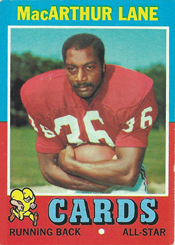 Lane played 11 NFL seasons with the Cardinals (1968-71), Green Bay Packers (1972-74) and Kansas City Chiefs (1975-78).
His most memorable year was 1970, his third Cardinals season, when his skills as a punishing rusher with a linebacker’s approach were in peak form. Lane, 6 feet 1 and 220 pounds, rushed for 977 yards and 11 touchdowns in 14 games that season. He also had 32 receptions, including two for touchdowns. Lane was the 1970 NFL leader in both rushing touchdowns and total touchdowns.
Born in Oakland in 1942 and named in honor of U.S. Army general Douglas MacArthur, Lane’s 1970 performance prompted Sports Illustrated to note, “MacArthur Lane gives St. Louis the most powerful ground attack since his namesake relieved Seoul.”
After spending most of his first two Cardinals seasons on the bench, Lane, like the famous general, said to Sports Illustrated, “I told everyone, ‘I shall return.’ Sure enough, I did.”
Pro potential
After graduating from high school, Lane worked as a machinist in Oakland for three years. When he earned enough income, he attended a junior college for a year and was a linebacker on the football team. Utah State took notice and granted Lane an athletic scholarship. He played linebacker as a sophomore at Utah State before converting to running back.
Lane averaged 6.9 yards per carry in his two seasons as a Utah State running back and was projected to be a pro prospect, even though he’d turn 26 two months after the 1968 NFL draft.
The Cardinals wanted to draft either offensive tackle Russ Washington of Missouri or linebacker Fred Carr of Texas-El Paso, the St. Louis Post-Dispatch reported, but Washington went to the San Diego Chargers and Carr to the Packers before the Cardinals got to pick 13th in the first round.
Cardinals head coach Charley Winner and his staff were considering Lane or his Utah State teammate, defensive lineman Billy Staley. “Swaying their decision was advice from Utah State coach Chuck Mills,” who told the Cardinals he thought Lane had more potential, according to the Post-Dispatch.
Lane was the second running back selected in the 1968 draft, following the Miami Dolphins’ choice of Syracuse fullback Larry Csonka, who was the eighth player taken overall.
Emerging force
Lane was 28 when the Cardinals’ gave him a chance to be a starter in 1970. His breakout performance came in the second game of the season when he rushed for 146 yards and two touchdowns against the Washington Redskins.
In October, he dazzled in consecutives games against the New Orleans Saints and Philadelphia Eagles. Lane had 132 yards rushing, 41 yards receiving and a touchdown versus the Saints on Oct. 11. The next week, he scored four touchdowns and rushed for 125 yards against the Eagles.
Lane and Cardinals fullback Cid Edwards “just might be the most formidable rushing combination in the country,” Post-Dispatch columnist Bob Broeg observed.
Lane appeared headed to a 1,000-yard rushing season, but in December he was limited to 10 carries against the Detroit Lions and nine versus the New York Giants. After averaging 17.5 rushing attempts per game in September, 14.8 in October and 15.2 in November, Lane got 12.0 carries per game in December.
According to the Post-Dispatch, Lane “ended the season angrier than ever after coaching strategy in the final games cost him his cherished goal of 1,000 yards rushing.”
Lane’s 977 yards rushing placed him third among 1970 NFL leaders, behind Larry Brown of the Redskins (1,125) and Ron Johnson of the Giants (1,027).
Money matters
The sour ending to Lane’s 1970 season carried over to training camp in 1971. Lane and the Cardinals couldn’t agree on contract terms and he was unsigned when President Nixon ordered a freeze on all prices and wages in the United States in August 1971 in response to increasing inflation.
According to the Post-Dispatch, “When the wage and price freeze went into effect, Lane and other unsigned players went into limbo. Lane had to play for his 1970 salary _ which was based on unproductive 1968-69 seasons _ minus a 10 percent cut he had to take to play out his option.”
Lane blamed Cardinals owner Bill Bidwill for not getting a contract done before the wage freeze occurred and he remained miffed at Bidwill throughout the season.
“I’ve been having my problems with him and we’ve been getting under each other’s skin,” Lane said.
Lane’s frustration boiled over on Dec. 12, 1971, after the Cardinals lost to the Eagles. Talking with writers when Bidwill entered the locker room, Lane pointed at the rotund owner and said, “All his money is in that money belt around his stomach.”
“He’s the cause of all this trouble,” Lane said.
Though Lane apologized to Bidwill, the Cardinals suspended him for the season finale against the Dallas Cowboys. The suspension “was a matter of principle,” Bidwill said.
“I just spoke before thinking,” Lane said. “I put my foot in my mouth. What I said was in a rage of anger. The whole damn season has been so frustrating.”
Lane finished the 1971 season with 592 yards rushing and three touchdowns for first-year head coach Bob Hollway.
Sent packing
In late January 1972, Lane and management had amicable contract discussions, but a month later the Cardinals traded him to the Packers for running back Donny Anderson.
“It was just a total surprise,” Lane told the Post-Dispatch. “I was baffled by it all because when I was in St. Louis recently we were very close to signing the contract … We had settled our disagreements when I was there and the Cardinals and I were both happy.”
Said Hollway: “As far as myself and management are concerned, we resolved any problems we had with Lane … The trade came about because we were able to get a more versatile running back.”
Lane and fullback John Brockington gave the Packers a powerful running attack. In 1972, with Lane rushing for 821 yards and three touchdowns, and Brockington rushing for 1,027 yards and eight touchdowns, the Packers were 10-4 in the regular season.
Lane also had success for Chiefs head coach Paul Wiggin in 1976, leading the NFL in receptions with 66. He gained 542 yards rushing and 686 yards receiving that season.
He finished his NFL career with 4,656 yards rushing, 2,786 yards receiving and 37 touchdowns _ 30 rushing and seven receiving.
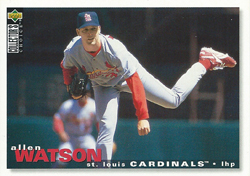 On May 22, 1994, Watson hit Destrade with a pitch, triggering a fight on the field at Joe Robbie Stadium in Miami.
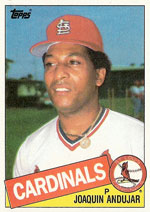 In May 1989, Andujar wrote to the Cardinals, apologized for his behavior and asked to come back.
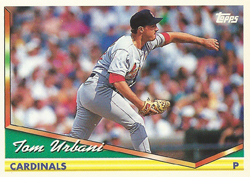 On May 17, 1994, Torre utilized six pitchers to achieve a shutout against the Pirates at Pittsburgh.
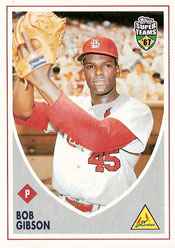 An immaculate inning is defined as using the minimum number of pitches, nine, to strike out the minimum number of batters, three.
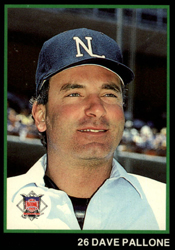 On May 9, 1979, Pallone, substituting for major-league umpires who were on strike, tossed manager Ken Boyer, first baseman Keith Hernandez and catcher Ted Simmons in the ninth inning of a game at Houston’s Astrodome.
 RetroSimba