Feeds:
Posts
Comments

(Updated April 2, 2023)

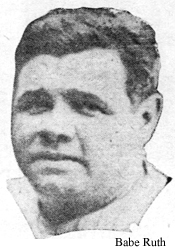
Three months after Babe Ruth powered the Yankees to a World Series sweep of the Cardinals, he experienced a shocking personal loss and became enmeshed in scandal with the death of his wife.

On Jan. 11, 1929, Babe’s wife, Helen Ruth, was killed in a house fire in Watertown, Massachusetts, near Boston.
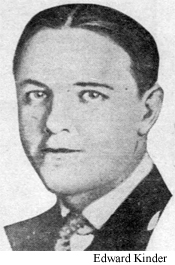
Helen resided in the house with a dentist, Edward H. Kinder. Helen and Babe were separated, but not divorced. Neighbors knew Helen as Mrs. Kinder, and had no idea she was Babe’s wife. Edward’s family thought Helen was Edward’s wife, but Helen and Edward weren’t married.

Helen was alone in the house when the fire started, and though authorities determined the fire and Helen’s death were accidental, the tragedy created suspicion and revealed stunning secrets about Babe and his wife.

Young love

Babe made his major-league debut as a pitcher for the Red Sox in July 1914. He rented a hotel room in Boston and frequently took his meals at a luncheonette around the corner. Helen Woodford was a waitress there and she and Babe connected.

Three months later, on Oct. 17, 1914, Babe, 19, and Helen, 16, were married by Rev. Thomas S. Dolan in St. Paul’s Catholic Church in Ellicott City, Maryland, near where Babe had attended boarding school.

Babe and Helen got an apartment in Boston’s Back Bay neighborhood and lived there until 1919 when they bought a 16-room house in Sudbury, Massachusetts, according to the Boston Globe.

In December 1919, the Red Sox sold Babe’s contract to the Yankees. Babe and Helen lived in an eight-room hotel suite in Manhattan during the baseball seasons and returned to their Sudbury estate in the winters.

In September 1922, Babe and Helen surprised the Yankees when they brought a 15-month-old girl named Dorothy to the Polo Grounds and introduced her as their daughter. “Not even his closest friend on the team had suspected Ruth was a father,” the Boston Globe reported.

Dorothy was raised to believe Helen was her biological mother. Years later, it was learned Babe and Helen adopted Dorothy in 1921. In a book she wrote, Dorothy revealed she discovered at age 59 in 1980 her biological mother was Juanita Jennings, a woman who had an affair with Babe in 1920. As a youth, Dorothy knew Juanita as “Aunt Nita,” a family friend.

Keeping up appearances

In 1923, Babe met Claire Hodgson, daughter of a Georgia attorney who did legal work for Ty Cobb. Claire and her daughter Julia moved to New York after Claire’s husband died in 1921 and she launched a career as a model and Broadway chorus line performer. Babe became a frequent visitor to Claire’s Manhattan apartment, the New York Daily News reported.

By August 1925, Helen and Dorothy went to live fulltime at the house in Sudbury and Babe remained in New York year-round.

In 1927, Helen moved into the Watertown house of dentist Edward Kinder. Helen and Edward had known one another since childhood and their families lived in the same South Boston neighborhood, according to the New York Daily News. Edward was a World War I veteran, graduated from Tufts dental school in 1924 and established a practice in Boston.

Neighbors said Helen was known to them as Mrs. Kinder and Dorothy went by the name of Dorothy Kinder. Edward’s brother William said the Kinder family was under the impression Edward and Helen were married in Montreal in 1927, the Boston Globe reported. The 1928 Watertown city directory listed: “Kinder, Edward H. (Helen M.), dentist.”

Tragic night

During the separation from his wife, Babe hit a record 60 home runs for the Yankees in 1927 and batted .625 versus the Cardinals in the 1928 World Series.
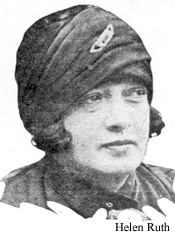
On Friday night, Jan. 11, 1929, Edward Kinder went to the boxing matches at Boston Garden. Seven-year-old Dorothy was at a Catholic boarding school in nearby Wellesley, Massachusetts. Helen settled in for the night at the Watertown house. She turned on the radio, took sleeping pills and fell asleep in a second-floor bedroom.

About 10 p.m., a passerby saw smoke seeping from windows. When firefighters arrived, flames had reached the second story. Helen was found dead on the bedroom floor. Because of the sleeping pills, she wasn’t awakened by the smoke and flames until it was too late, the New York Daily News reported.

Helen’s body was taken to a hospital and then to undertakers. Edward was paged at Boston Garden and told by telephone a woman died in a fire in his house, detectives said. “She is my wife. Her name is Helen Kinder,” Edward told medical examiner George West, the Boston Globe reported.

West did an autopsy, but his examination was limited because the corpse had been embalmed by undertakers. In his report to district attorney Robert Bushnell, West determined “there was no indication of violence and the condition of the body was consistent with a theory of death from suffocation in a fire,” the Boston Globe reported.

The state fire inspector filed a report, saying the fire was caused by overloaded electrical wires and there were traces of amateur repair work where wires had been fixed but not soldered, leaving the chance for a short-circuit and fire, according to the Boston Globe.

Bushnell concluded there was no evidence of anything criminal in the case and Helen’s body was released to Edward for burial. Based on Edward’s remarks, West prepared a death certificate identifying the deceased as Helen Kinder.

Edward, who spent the weekend in seclusion at the home of his parents in South Boston, arranged to have Helen buried on Sunday, Jan. 13, in the Kinder family plot at St. Joseph’s Cemetery in West Roxbury, Massachusetts.

Mistaken identity

In reading newspaper accounts of the fire, Helen’s relatives recognized published pictures of the victim as Helen Ruth and notified police, who put a halt to the burial plans, according to the New York Daily News.
Babe was contacted in New York and arrived in Boston by train on Jan. 13. “My wife and I have not lived together for the last three years,” Babe told reporters. “During that time, I have seldom met her. I have done all that I can to comply with her wishes. Her death is a great shock to me.”

The next day, Monday, Jan. 14, Edward Kinder, accompanied by an attorney, arrived at the Watertown police station and was questioned by a group led by police chief John Millmore. Edward told the police he and Helen weren’t married and claimed he never tried to convey to anyone Helen was his wife. When asked about telling the medical examiner the victim was Helen Kinder, Edward denied making the statement and later said he didn’t remember, the Boston Globe reported.

Police said they were satisfied with Edward’s explanations.

Helen’s mother, sisters and brothers, however, demanded a more thorough investigation. The family was suspicious of both Babe and Edward _ and for different reasons.

Motive for murder?

Helen’s sister, Nora Woodford, revealed she accompanied Helen to a meeting with Babe on Dec. 10, 1928, at Yankees headquarters, the New York Daily News reported. Nora said Babe asked Helen for a divorce so he could marry Claire Hodgson. When Helen demanded $100,000, Babe said no and stormed out of the meeting.

A month later, Helen was dead.

Meanwhile, federal narcotics agents were looking into reports Edward supplied Helen with opium, according to the New York Daily News. Helen’s family, including a brother, Thomas Woodford, a former Boston policeman, suggested Helen was drugged with opium and the house deliberately was set on fire.

In an effort to resolve the matter, district attorney Bushnell ordered a second autopsy and brought in an expert pathologist, George Magrath, and a team from Harvard.

Meanwhile, Babe met reporters in his suite at the Hotel Brunswick in Boston. With “red-rimmed eyes” and “quivering chin,” Babe spoke in “trembling tones” about the grief he felt, the Boston Globe reported.

“His great chest rose and fell, he gulped audibly and his eyes filled as he dabbed at them with his big hands,” according to the Boston Globe. “For fully five minutes, he struggled for control of his feelings and emotions.”

Rest in peace

On Jan. 16, the results of the second autopsy confirmed Helen’s death was by suffocation from a fire and there were no signs of foul play.

Also, narcotics agents came up empty in their search for opium at Edward’s office and found no evidence Helen was prescribed opiates. In addition, Ellis Dennis, a state electrical examiner, confirmed the fire started in a partition on the first floor near a wall receptacle. Dennis said original wiring in the house was excellent, but additional wiring installed later was of “a faulty and amateurish sort,” placing too great a load on the circuit wires and receptacle, the Boston Globe reported.

The district attorney declared the investigations closed and released Helen’s remains to the family.

A seven-minute funeral service was held at the home of Helen’s mother on Jan. 17, followed by burial at Old Calvary Catholic Cemetery in Dorchester, Massachusetts. Babe was present at the service and the burial; Edward did not attend either.

At the cemetery, “tears streamed down the Babe’s tanned cheeks as he saw the body of his wife lowered to its grave,” the New York Daily News reported. “Unmindful of the snow which fell from a gray sky, the Babe, hat clutched in his huge hand, stood among his wife’s relatives, sobbing.”

After the funeral, Babe returned to New York with his daughter Dorothy.

Three months later, on April 17, 1929, Babe and Claire married. The next day, the Yankees opened the season at home against the Red Sox. In his first at-bat, Babe hit a home run. Boxscore

“As he rounded second base,” the New York Times reported, “he doffed his cap with a great flourish in the direction of a box behind third base, where, huddled in fur, sat his bride of two days, the former Mrs. Claire Hodgson.”

Babe and Claire remained married until he died in 1948.

(Updated Nov. 27, 2021)

Before he gained fame with the Pirates for pitching 12 perfect innings against the Braves and earning two World Series wins versus the Yankees, Harvey Haddix began his career with the Cardinals and was their ace.

A left-hander at 5 feet 9, 160 pounds, Haddix “relied on technique instead of strength,” the Pittsburgh Post-Gazette reported.
On May 26, 1959, at Milwaukee, Haddix pitched 12 perfect innings, retiring the first 36 batters he faced, but lost when the Braves scored an unearned run in the 13th. Boxscore

The Pittsburgh Press called it “the greatest of all baseball tragedies” and, years later, Marino Parascenzo of the Post-Gazette hailed Haddix as “a little guy with a big heart, big enough to pitch baseball’s greatest game and absorb one of baseball’s greatest disappointments, both in the same day _ and come up smiling.”

A year after his Milwaukee masterpiece, Haddix started and won Game 5 of the 1960 World Series at Yankee Stadium, and he pitched the ninth inning of Game 7 and got the win when Bill Mazeroski hit a walkoff home run for the Pirates. Boxscore

Those feats overshadowed the achievements of his early years with the Cardinals when he had a 20-win season, led the National League in shutouts and was selected to three all-star teams.

Catapult to success

Haddix grew up on an Ohio farm and signed with the Cardinals in 1947 after attending a tryout camp in Columbus. He pitched four seasons in the Cardinals’ system and was 18-6 for Class AAA Columbus in 1950 before serving in the Army.

After military service, the Cardinals brought Haddix to the major leagues. In his debut in a start against the Braves on Aug. 20, 1952, at St. Louis, Haddix got the win, singled, stole a base, drove in a run and scored a run in a 9-2 victory. Boxscore

Haddix was matched in his debut against Braves starter Lew Burdette. Seven years later, Burdette was the opposing pitcher who held the Pirates scoreless for 13 innings while Haddix was perfect for 12.

Haddix “bears a strong resemblance” to teammate Harry Brecheen in “size, pitching technique and ability,” Bob Broeg of the St. Louis Post-Dispatch reported.

Brecheen, nicknamed “The Cat,” earned 128 wins in his Cardinals career and was the 1948 National League ERA leader. Because he appeared to be a younger version of “The Cat,” Haddix got tabbed “The Kitten.”

Years later, according to Broeg, Cardinals outfielder Enos Slaughter said, “You know how much I think about Brecheen. Harvey is even better.”

Big winner

Haddix was 2-2 with a 2.79 ERA in 42 innings for the 1952 Cardinals. He maintained his rookie status in 1953 because he had pitched fewer than 45 innings in the major leagues.

Haddix posted a 20-9 record for the 1953 Cardinals, led the league in shutouts (six) and finished second to Dodgers infielder Jim Gilliam in balloting for the Rookie of the Year Award. Haddix also batted .289 with 11 RBI.

Haddix’s best pitching performance in his 20-win season was a two-hit shutout of the Phillies in a 2-0 Cardinals triumph on Aug. 6, 1953, at St. Louis.

Haddix held the Phillies hitless for eight innings. Richie Ashburn, leading off the ninth, attempted to bunt Haddix’s first pitch, fouled it off and got booed. “That’s what he’s paid to do, try to win,” Haddix said.

With the count 1-and-2 on Ashburn, Cardinals catcher Del Rice called for a slider, but Haddix shook off the sign and threw a curve. Ashburn lined the pitch to right for a single.

“He wouldn’t have hit that curve if I had got it where I wanted it _ down,” Haddix said. “It was high, though, and he should have hit it.”

With one out, Del Ennis bounced a single into left, but Haddix got Granny Hamner to ground into a game-ending double play. Boxscore

Haddix got his 20th win of the season on Sept. 25, 1953, in an 11-2 Cardinals rout of the Cubs at Wrigley Field. Boxscore

He became the first Cardinals pitcher to achieve 20 wins in a season since Howie Pollet was 20-9 in 1949.

Master craftsman

In 1954, Haddix was 18-13 for the Cardinals. From May 8, 1954, to June 23, 1954, Haddix won 10 consecutive decisions and lowered his ERA from 4.17 to 2.85. He allowed one run in the last 36 innings of the streak.

On July 1, 1954, at Milwaukee, Haddix was struck on the left knee by a Joe Adcock liner and was carried off the field on a stretcher. “I never threw the same after that,” he told author Walter Langford.

Haddix was 12-16 for the 1955 Cardinals, but was chosen for the All-Star Game for the third consecutive year. He pitched three innings and retired Ted Williams on a groundout to end the fifth and got Mickey Mantle on a groundout to start the sixth. Boxscore

The next year, Haddix appeared ready to give the Cardinals another good showing. On April 25, 1956, he pitched a two-hit shutout in a 6-0 Cardinals victory against the Cubs at St. Louis. Boxscore

Two weeks later, the Cardinals traded Haddix and pitchers Stu Miller and Ben Flowers to the Phillies for pitchers Murry Dickson and Herm Wehmeier.

In five seasons with St. Louis, Haddix was 53-40 with a 3.65 ERA and 12 shutouts. “He had the misfortune to be the Cardinals’ best pitcher at a time they didn’t have enough,” wrote Broeg.

Haddix went on to pitch for the Phillies (1956-57), Reds (1958), Pirates (1959-63) and Orioles (1964-65). His pitching coach with the Orioles was Brecheen, a reunion of “The Cat” and “The Kitten.”

Haddix was 40 when he pitched his last big-league game and he finished with a career mark of 136-113.

Haddix became a pitching coach for the Mets (1966-67), Reds (1969), Red Sox (1971), Indians (1975-78) and Pirates (1979-84).

With the Mets, Haddix was the first big-league pitching coach for Nolan Ryan and Tom Seaver. When Frank Robinson became the first African-American manager in the big leagues with the 1975 Indians, he chose Haddix to be the pitching coach. In 1979, the Pirates won the World Series championship with Chuck Tanner as manager and Haddix as pitching coach.

In winters, Haddix returned to his Ohio farm near the village of South Vienna. “Haddix was a good rifle shot,” Broeg wrote. “Back home in Ohio, they considered him a hero after a neighbor’s bull went on a rampage and threatened life and property. Haddix delivered a bull’s-eye shot with only a .22-caliber.”

A year before he died at age 68 in January 1994, the Associated Press reported, Haddix, needing an oxygen tank, talked about his smoking habit.

“I was a three-pack-a-day man,” Haddix said. “That was my friend. My wife and kids didn’t travel with me. I could handle the drinking part of it, but not the cigarettes.

“I loved cigarettes, but they finally got to me.”

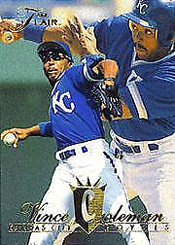
Six months after he damaged his personal reputation, Vince Coleman got a chance to extend his baseball career because he maintained a valued professional reputation.

On Jan. 5, 1994, the Royals traded one problem player, Kevin McReynolds, to the Mets for another, Coleman.
McReynolds was a bust in two seasons with the Royals, who got him from the Mets after the 1991 season, and they were glad to send him back. McReynolds was an underachiever, but, unlike Coleman, he didn’t get in trouble with the law for injuring people.

Coleman disgraced himself when, as a prank, he tossed an explosive device similar to a grenade toward a group of baseball fans, injuring three. He was charged with a felony and the Mets wanted no part of him.

The Royals took a public relations risk in acquiring Coleman, but justified the move because of their need for a premier leadoff batter.

Big trouble

Coleman made his major-league debut with the Cardinals in 1985, established a rookie record with 110 stolen bases, sparked the club to a pennant and won the National League Rookie of the Year Award. He led the league in stolen bases in each of his six seasons with St. Louis (1985-90).

After the 1990 season, Coleman became a free agent and signed with the Mets.

On July 24, 1993, Coleman tossed a M-100, described by authorities as a military device used to simulate grenades, into a Dodger Stadium parking lot where people gathered to seek autographs from players. The M-100, which packed the equivalent power of a quarter-stick of dynamite, exploded and injured a 2-year-old girl, an 11-year-old boy and a 33-year-old woman, according to the Los Angeles Fire Department.

A month later, on Aug. 26, 1993, the Mets cut their connection to Coleman. Club co-owner Fred Wilpon said Coleman “will not play here again as a Met” regardless of the legal outcome of the case.

On Nov. 5, 1993, Coleman pleaded guilty to a reduced charge of possession of an explosive device, a misdemeanor. A one-year jail term was suspended. He was given three years of probation and assigned 200 hours of community service. He also agreed to make restitution to the people he injured.

Limited market

After the plea bargain was reached, the Royals contacted the Mets about a trade, the New York Daily News reported. Felix Jose and Brian McRae were the Royals’ primary leadoff batters in 1993 but both were better suited for other spots in the order. The Royals saw Coleman, 32, as being similar to Willie Wilson, the leadoff man for their pennant-winning clubs in 1980 and 1985.

Until the Royals got interested in Coleman, “I didn’t think we would be able to trade him,” Mets general manager Joe McIvaine said to the Los Angeles Times.

Coleman’s former Cardinals manager, Whitey Herzog, who was in charge of baseball operations with the Angels, explored the possibility of acquiring him, but the Royals were more aggressive.

The Royals wanted the Mets take McReynolds, who was described by Kansas City Star columnist Jonathan Rand as a “sluggish underachiever” and “a player who didn’t seem to care how he looked on the field.”

When he played for the Mets from 1987-91, McReynolds was booed by fans and criticized by media. Before he was dealt to the Royals as part of a package for pitcher Bret Saberhagen, McReynolds, an Arkansas native, said New Yorkers “like to kick someone when they’re down.”

Eager to rid themselves of Coleman, the Mets agreed to take back McReynolds.

Opinions and explanations

Media mocked the trade. A headline in the New York Daily News called it, “Slop Swap,” and the New York Post countered with, “Tradin’ Fools.”

Daily News columnist Vic Ziegel declared the Mets got the best of the deal “because McReynolds will not have to spend the coming season splitting his time between the playing field and visits to his probation officer.”

“The Royals are the last organization in baseball you should have expected to obtain Coleman,” Jonathan Rand observed in the Kansas City Star. “Ever since their drug scandal of 1983, they have bent over backward to avoid problem players, and Coleman has the worst reputation of any player in the major leagues.”

Royals general manager Herk Robinson and vice president of baseball operations George Brett met with Coleman and talked with people who knew him before making the deal.

“We cannot condone Vince’s past conduct off the field, but George and I have spent a lot of time with Vince,” Robinson said. “We’re convinced Vince can be a solid citizen on the field and make a contribution in the community. We strongly believe he deserves an opportunity.”

Coleman “recognizes what he did was stupid and is genuinely sorry about it and highly motivated to resume his career,” Robinson said.

“We were convinced Vince Coleman is not a bad person,” Robinson said. “I think there’s a difference between somebody who’s a bad person and someone who made a mistake.”

Brett told The Sporting News, “If the reports had come back negative, I don’t think we would have made the trade.”

Coleman said, “What I did was wrong and I’m very sorry.”

At home in KC

Cardinals fans saw irony in Coleman landing with the Royals. During the 1985 National League Championship Series, an automatic tarpaulin at Busch Stadium in St. Louis accidently rolled over Coleman’s left leg and chipped a bone. The injury prevented Coleman from playing in the 1985 World Series against the Royals, who won four of seven from the Cardinals.

“I think if he’d have been healthy in the ’85 Series, we would have lost,” Brett said to the Kansas City Star on the day the Royals acquired Coleman.

The Royals opened the 1994 season with two games at Baltimore before playing their home opener on April 8 versus the Indians. Coleman “received a hearty welcome” from the 38,496 in attendance, according to the Kansas City Star.

Cheers grew louder in the fifth inning when Coleman got a single, his first hit as a Royal, and stole second base. In the eighth, Coleman hit a home run against Derek Lilliquist. Boxscore

“It was very special to hear the response from the fans,” Coleman said. “The way they cheered, it was all very motivating. Even when I was in left field, they were shouting encouraging things.”

Coleman batted .240 for the 1994 Royals and ranked second in the American League in both triples (12) and stolen bases (50) in the strike-shortened season.

McReynolds batted .256 with four home runs for the Mets in 1994, his final season as a player.

(Updated Jan. 22, 2019)

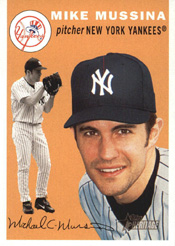
In his lone career appearance against the Cardinals, Mike Mussina gave them an understanding of why he is a Hall of Famer.

On June 15, 2003, Mussina limited the Cardinals to four hits in eight innings and earned the win in a 5-2 Yankees victory at New York.
Mussina, a right-hander who achieved a 270-153 record in 18 seasons with the Orioles and Yankees, was elected to the National Baseball Hall of Fame on Jan. 22, 2019.

Center stage

Mussina posted double-digit win totals in 17 consecutive seasons (1992-2008) and pitched in 537 regular-season games, all but one as a starter. He debuted with the Orioles in 1991, pitched 10 seasons for them and spent his last eight years with the Yankees.

In 2003, Mussina was 17-8 and one of his best performances was his start versus the Cardinals before 54,797 on a Sunday afternoon at Yankee Stadium.

The Yankees were going for a sweep of the three-game series and matched Mussina against Woody Williams.

Mussina retired 10 of the first 11 batters and had a 1-0 lead before the Cardinals scored twice in the fourth. With one out, Albert Pujols hit a home run, tying the score, Tino Martinez walked and, after Scott Rolen flied out to right, Mussina uncorked a wild pitch, moving Martinez to second. Edgar Renteria’s infield single advanced Martinez to third and Kerry Robinson’s single drove him in, putting the Cardinals ahead, 2-1.

Under control

The Yankees went up, 5-2, with a four-run sixth. Robin Ventura hit a two-run double and scored on a single by Hideki Matsui. Ruben Sierra’s double drove in Matsui.

The Cardinals didn’t get another base runner against Mussina after the fourth. He retired the last 13 batters in a row before Mariano Rivera relieved and pitched a scoreless ninth. Boxscore

“If you’re a control pitcher, things can come and go on you rather quickly,” Mussina said to the New York Daily News, “so you try to stay on top of it.”

Asked about being lifted for Rivera after eight innings, Mussina replied, “I had no problem with that. It would have had to be a much bigger lead for me to go back out there.”

Rivera, baseball’s all-time saves leader, also was elected to the National Baseball Hall of Fame on Jan. 22, 2019, the same day as Mussina.

(Updated Jan. 22, 2019)

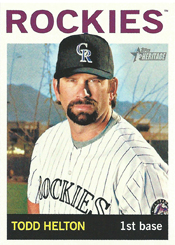
Todd Helton had a flawless game at the plate for the Rockies against the Cardinals, but Mike Matheny produced the most important at-bat.

On April 8, 2003, at Denver, Helton reached base safely seven times. Helton was 4-for-4 with three walks, a double, a home run, three RBI and three runs scored against six Cardinals pitchers. His home run tied the score, 12-12, in the seventh inning, but the Cardinals won, 15-12, when Matheny countered with a three-run home run in the 13th.
Helton, a first baseman, had 2,519 hits and 1,406 RBI in 17 seasons with the Rockies. A left-handed hitter, he had a .316 batting average and a .414 on-base percentage in a big-league career from 1997 to 2013.

Against the Cardinals, Helton had a .281 batting average and .386 on-base percentage and was especially strong versus them in these five seasons:

_ 2000: Batted .400 with 12 RBI and a .543 on-base mark.

_ 2001: Batted .324 with 12 RBI. Six of his 11 hits were home runs.

_ 2003: Batted .500. With 11 hits and seven walks in 29 plate appearances, his on-base mark was .621.

_ 2004: Batted .400 and hit a home run in five of six games.

_ 2009: Batted .421. With eight hits and seven walks in 28 plate appearances, his on-base percentage was .536.

Helton’s most impressive single-game performance against the Cardinals was when he reached base safely in all seven plate appearances.

Lucky seven

Here is a look at each plate appearance:

_ First inning: RBI-single against Jason Simontacchi.

_ Second inning: Drew a walk from Simontacchi with two outs and a runner on third.

_ Fourth inning: RBI-double to left versus Lance Painter.

_ Sixth inning: Led off with a single against Jeff Fassero.

_ Seventh inning: Solo home run versus Dustin Hermanson.

_ Ninth inning: Drew a walk from Russ Springer with two outs and a runner on first.

_ Eleventh inning: Drew a walk from Jose Jimenez with one out and runners on first and third.

Video of all seven plate appearances

Helton became the first big-league player to reach base safely seven times in a game since Sean Casey of the Reds did it in a nine-inning game May 19, 1999, against the Rockies at Denver. Boxscore

“I don’t ever remember getting up seven times in a game, much less getting on seven times,” Helton said to the Denver Post.

Said Rockies hitting coach Duane Espy: “What he did I can’t explain. The guy has the unique ability to hit what is there and leave alone what’s not. He continues to amaze me. He’s the first guy who I have been around when the count is 0-and-2, I am comfortable.”

Mike’s magic

Helton was deprived of an eighth plate appearance because Cal Eldred retired the Rockies in order in the 12th and 13th innings.

Eldred earned the win, his first in the major leagues in three years, because his friend, Matheny, hit his first regular-season home run in 12 months in the top half of the 13th.

With Scott Rolen on second, Eduardo Perez on first and one out, Matheny hit a pitch from Dan Miceli deep to left. Gabe Kapler leaped and appeared to make a catch, but when he fell back against the fence the ball came out of his glove and landed in the seats. Kapler “walked away, looking puzzled at his empty glove,” the Denver Post reported. Boxscore

The home run was Matheny’s first in the regular season since April 26, 2002, at Montreal. For Eldred, who missed most of two seasons because of elbow problems, the win was his first in the major leagues since June 28, 2000.

Matheny and Eldred became friends as Brewers teammates. After Matheny joined the Cardinals, he recommended the club take a chance on Eldred.

“Those two have such a special friendship,” Cardinals manager Tony La Russa told the St. Louis Post-Dispatch. “I don’t think you could have scripted it better.”

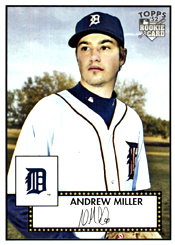
Andrew Miller made his first major-league start for the Tigers against the Cardinals, impressed Jim Leyland and Tony La Russa and helped his club achieve a measure of redemption against the defending World Series champions.

On May 18, 2007, three days before he turned 22, Miller pitched six scoreless innings and got his first big-league win against the Cardinals at Detroit.

The 6-foot-7 left-hander pitched with poise and skill and appeared to be headed toward a long, distinguished career as a starter.

Eleven years later, Miller, a free agent, joined the Cardinals with the expectation he would be their top left-handed reliever. He hadn’t made a start in seven years.

Escape artist

Miller was a standout pitcher at the University of North Carolina, establishing the school’s career strikeout record, and was selected by the Tigers in the first round of the 2006 amateur draft.

After making his major-league debut with the Tigers in 2006 and appearing in eight games, all in relief, Miller was at Class AA Erie in May 2007 when he got called up to Detroit to fill in for injured starter Jeremy Bonderman.

Miller’s first big-league start was the Tigers’ first game versus the Cardinals since losing four of five against them in the 2006 World Series.

Pitching before a sellout crowd of 40,816 at Comerca Park, Miller worked in and out of trouble in the first three innings.

The Cardinals loaded the bases in the first on singles by Albert Pujols and Juan Encarnacion and a walk to Scott Rolen, but with two outs Ryan Ludwick popped out to second baseman Placido Polanco.

In the second, the Cardinals had Yadier Molina on third with one out, but stranded him when David Eckstein grounded out to short and So Taguchi flied out to right.

The Cardinals put runners on first and second with one out in the third before Miller retired Rolen and Ludwick.

After that, Miller yielded no hits and walked two over his last three innings.

The Tigers scored seven runs against Cardinals starter Braden Looper and another seven against Kelvin Jimenez and won, 14-4. Miller’s line: 6 innings, 4 hits, 0 runs, 3 walks, 2 strikeouts, 1 batter hit by pitch. The Cardinals were 0-for-5 against him with runners in scoring position. Boxscore

Rave reviews

Under the headline, “Dandy, Andy,” the Detroit Free Press declared Miller “arrived amid some fanfare and delivered on cue, showing he might have as much to do with the team’s current fortunes as its future.”

Other comments about Miller after the game:

_ Tigers manager Jim Leyland: “This is real talent. He should have a very, very bright future.”

_ Cardinals manager Tony La Russa: “I was impressed with how often he was around the plate and how when he had the potential to throw a ball through the screen, he stayed within himself and didn’t try to strike out the side. Very impressive.”

_ Tigers pitching coach Chuck Hernandez: “I learned he’s got a little feel for pitching to go along with a good fastball.”

_ Free Press columnist John Lowe: “He confirmed anew that he will one day be a dominant big-league pitcher.”

Said Miller: “I know that I can do this.”

Bullpen specialist

Miller went on to have more bad outings than good ones as a starter in the major leagues. He finished 5-5 with a 5.62 ERA for the 2007 Tigers and was part of a package of prospects traded to the Marlins after the season for slugger Miguel Cabrera and pitcher Dontrelle Willis.

In three seasons with the Marlins, Miller was 10-20 with a 5.89 ERA. They traded him to the Red Sox and he was 6-3 with a 5.54 ERA in 2011 before being converted into a reliever.

Miller was consistently effective in relief roles for the Red Sox (2012-14), Orioles (2014), Yankees (2015-16) and Indians (2016-18). He earned 36 saves for the 2015 Yankees and was 4-0 with a 1.55 ERA for the 2016 pennant-winning Indians.

Miller was an American League all-star with the Indians in 2016 and 2017 and was named most valuable player of the 2016 AL Championship Series when he struck out 14 Blue Jays in 7.2 scoreless innings.

Through 2018, Miller had a 49-48 record, 3.98 ERA and 53 saves in 13 big-league seasons. He was 20-27 with a 5.70 ERA as a starter and 29-21 with a 2.56 ERA as a reliever.

On Dec. 21, 2018, Miller, 33, agreed to terms with the Cardinals on a two-year, $25 million contract with an option for 2021.

“Andrew Miller is one of the premier relievers in the major leagues,” said Cardinals president of baseball operations John Mozeliak.