Feeds:
Posts
Comments

(Updated Oct. 26, 2024)

Forced into action out of desperation, the Cardinals went looking for a starting pitcher three weeks before the opening of the 2008 season and, in a stroke of good luck, found someone who would become the staff ace.
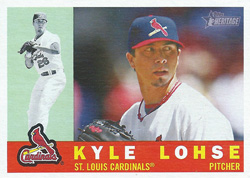
On March 13, 2008, the Cardinals, moving reluctantly but out of necessity, signed free agent Kyle Lohse to a one-year contract for $4.25 million.

The Cardinals didn’t want to invest in a free agent at that point in the year, but with four potential starters (Chris Carpenter, Matt Clement, Mark Mulder and Joel Pineiro) unavailable to open the season because of injuries, the club needed a veteran to bolster an unimposing rotation of Adam Wainwright, Todd Wellemeyer, Braden Looper and Brad Thompson.

Lohse, 29, wasn’t a sure bet, but he was the best available option.

Pricey pitcher

A right-hander, Lohse pitched for the Twins (2001-2006), Reds (2006-2007) and Phillies (2007) before becoming a free agent in October 2007.

A year earlier, in July 2006, the Cardinals expressed interest in acquiring Lohse for the pennant stretch, but the Twins traded him to the Reds instead. Lohse was a combined 9-12 with a 4.62 ERA for the Reds and Phillies in 2007, but against the Cardinals that season he was 2-1 with a 2.95 ERA.

After Lohse became a free agent, the Cardinals, like all other clubs, were scared off by his contract demands. Lohse’s agent, Scott Boras, sought a five-year, $50 million contract for the pitcher, the St. Louis Post-Dispatch reported.

With less expensive free-agent pitchers such as Jon Lieber and Bartolo Colon on the market, Lohse remained unsigned when spring training games began.

Help wanted

The Cardinals thought they had enough depth in their rotation, but Carpenter, Clement and Mulder still were not recovered from major surgeries, and when Pineiro developed tightness in his right shoulder, setting back his spring training work, manager Tony La Russa and pitching coach Dave Duncan pleaded for help.

Initially, the Cardinals considered bringing back Sidney Ponson, who pitched for them in 2006, but when the free agent signed with the Rangers on March 10, Lohse became the target.

Duncan met with Cardinals owner Bill DeWitt Jr. and explained to him why signing Lohse was necessary rather than looking to the bullpen or to the minor leagues for help.

“I don’t think we have to worry about having too much pitching,” La Russa said.

Cardinals general manager John Mozeliak added, “If it were a perfect world, we wouldn’t have had to go down this road, but it’s not and we’re going to need someone to pitch every fifth day.”

Good arsenal

Though Lohse was considered a Band-Aid for a tattered rotation _ “Lohse isn’t a star, but he can probably help prevent the destruction of your bullpen,” wrote columnist Bernie Miklasz _ he quickly impressed after arriving at Cardinals camp in Jupiter, Fla.

“He’s got a nice assortment, a lot of different ways to approach a hitter,” Duncan said after seeing Lohse pitch.

Said Lohse: “My slider has pretty much always been my go-to pitch. I can throw it for a strike at any count, or run it off the plate a little bit.”

Duncan worked with Lohse to use a two-seam sinking fastball almost exclusively.

“Once I started working with Duncan, he 100 percent changed my approach and was huge in showing me how to use the pieces I had to be successful more consistently,” Lohse told Stan McNeal of Cardinals Magazine.

“Duncan got it in my head: Throw the ball down with movement, and you’ll get a lot of ground balls. He explained what I took to be his philosophy: Get ahead in the count, then pound the bottom of the zone. If you make a mistake down, you’re not likely to give up as much damage. It made a lot of sense to me … Under Duncan, I learned how to be a pitcher instead of just a thrower.”

When the regular season began, Lohse posted a 3-0 record and 2.36 ERA in April.

He finished 2008 as the Cardinals leader in wins (15) and innings pitched (200) and was second on the club in strikeouts (119). He had a 15-6 record and 3.78 ERA in 33 starts.

In five seasons (2008-2012) with the Cardinals, Lohse was 55-35. His best season was in 2012 when he had a 16-3 mark and led the National League in winning percentage (.842).

(Updated Sept. 12, 2024)

Jack Hamilton was a hard-throwing Cardinals pitching prospect who left the organization after four seasons and went on to experience his best major-league moments against them.

Hamilton is most remembered as the pitcher who in 1967 beaned Red Sox slugger Tony Conigliaro, fracturing his cheekbone, dislocating his jaw and severely damaging his left eye.
Though wildness plagued him throughout his professional baseball career, Hamilton was capable of dominating a game. With the Mets in 1966, he pitched a one-hitter against the Cardinals. A year later, he surprised the Cardinals with his bat, hitting a grand slam.

Wild Thing

Hamilton, 18, attended a Cardinals tryout camp at Busch Stadium in St. Louis in 1957 and impressed. “There were a lot of kids there, but I believe only two of us signed contracts,” Hamilton said to the St. Louis Post-Dispatch.

The Cardinals gave Hamilton a $4,000 bonus and assigned him to Wytheville, Va., a Class D club in the Appalachian League. Hamilton posted a 7-0 record for Wytheville and pitched a no-hitter in a game scheduled for seven innings.

After that, though, he was erratic in pitching for other Cardinals farm clubs. Hamilton was 12-16 for Keokuk, Iowa, in 1958 and 6-10 for York, Pa., in 1959.

Assigned to Class AA Memphis in 1960, Hamilton was chosen by manager Joe Schultz to be the Opening Day starter against Nashville. “He shut them out for four innings and then he went wild,” Schultz said. “He kept hitting the backstop and a couple of balls almost hit my catcher, Tim McCarver, on the head.”

The Cardinals demoted Hamilton to the Class B Winston-Salem Red Birds and he was 6-9 with a 4.33 ERA. Despite an exceptional fastball _ “He could throw a ball through a brick wall,” said Cardinals icon Red Schoendienst _ Hamilton wasn’t protected on the St. Louis roster and he was chosen by the Phillies in the November 1960 minor-league draft.

“Jack always could throw hard, but he was too wild,” Schultz said.

Beware the bunt

Hamilton, a right-hander, got to the majors with the Phillies in 1962 and the rookie led the National League that season in walks (107) and wild pitches (22).

After stints with the Phillies (1962-63) and Tigers (1964-65), Hamilton landed with the Mets in 1966. “Spitball Jack, a card shark,” Mets first baseman Ed Kranepool told Dave Anderson of the New York Times. “He liked poker. He beat all of us young guys.”

On May 4, 1966, Hamilton started for the Mets against the Cardinals at St. Louis and was opposed by Ray Sadecki. Hamilton and Sadecki became friends when both were in the Cardinals’ minor-league system.

Hamilton held the Cardinals to one hit over nine innings in an 8-0 Mets triumph. The lone St. Louis hit was a bunt single by Sadecki with two outs in the third.

With the count at 1-and-1, Sadecki pushed a bunt toward the third-base side of the infield. “A bunt was the furthest thing from my mind in the third inning,” said Mets third baseman Ken Boyer, the former Cardinal.

Hamilton told The Sporting News, “He (Sadecki) caught me flat-footed.”

After the game, Sadecki came into the Mets’ clubhouse and congratulated Hamilton. “Ray and I … were old buddies,” Hamilton said. “He told me he was sorry he got the hit. I ribbed him about that, telling him how much money he cost me by preventing me from pitching a no-hitter.” Boxscore

Hard to believe

A year later, on May 20, 1967, Hamilton, a .107 career hitter in the big leagues, hit his only home run, a grand slam off the Cardinals’ Al Jackson in the second inning. Hamilton, however, yielded four runs in three innings and the Cardinals came back for an 11-9 victory over the Mets at New York. Boxscore

“We get the Cardinals games clear on radio from St. Louis to our home in Burlington, Iowa,” Hamilton said, “and my wife said right after I hit the home run she must have got 10 phone calls asking if it was really true.”

A month later, the Mets traded Hamilton to the Angels. He was 9-6 with a 3.24 ERA for the 1967 Angels, but his peformance was marred by the beaning of Conigliaro in August that year.

Hamilton, often accused of throwing a spitball, finished his major league career in 1969 with the Indians and White Sox. His big-league totals include a 32-40 record, 20 saves and almost as many walks (348) as strikeouts (357).

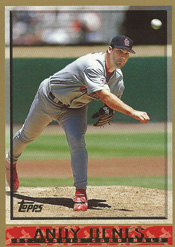
Andy Benes left the Cardinals and went to the Diamondbacks because he, his agent and general manager Walt Jocketty couldn’t follow baseball rules.

On Feb. 3, 1998, Benes, a starting pitcher, signed a three-year contract worth $18 million to play for the Diamondbacks, who joined the National League as an expansion team that season.
Benes had reached an agreement to stay with the Cardinals, but the deal came together after expiration of a deadline mandated by the baseball owners’ Player Relations Committee.

Instead of getting the Cardinals’ offer of a five-year contract worth $32.5 million, Benes settled for less with the Diamondbacks.

Deadline pressure

Benes joined the Cardinals as a free agent after the 1995 season. He was 18-10 with a 3.83 ERA in 1996 and 10-7 with a 3.10 ERA in 1997 before becoming a free agent.

The Cardinals wanted to re-sign him and Benes indicated he wanted to remain in St. Louis, but negotiations stalled.

Because the Cardinals hadn’t offered Benes salary arbitration, baseball rules established by the Player Relations Committee dictated he and the club had to reach a contract agreement by midnight on Dec. 7, 1997, or else Benes would not be eligible to re-sign with the Cardinals until May 1, 1998.

Benes didn’t want to wait until May to sign a contract, so it became imperative he and the Cardinals reach an agreement by the Dec. 7 deadline if he was to stay in St. Louis.

Breaking the rule

Jocketty and Benes’ agent, Scott Boras, went down to the wire in the negotiations. When it became apparent they needed more time, they asked Major League Baseball officials for an extension and were granted an additional 30 minutes to get a deal done.

The deadline extension passed without an agreement being reached. About two hours later, the sides settled on the five-year, $32.5 million contract.

The Player Relations Committee, however, ruled the agreement invalid because it hadn’t been reached in the allotted time.

Benes and the Cardinals initially appealed the ruling, but dropped the matter when it became clear baseball officials wouldn’t budge.

Bernie Miklasz, columnist for the St. Louis Post-Dispatch, questioned why the agreement wasn’t approved. “The bureaucrats who run baseball are poised to kill the deal and all of this good faith because of some arcane rule? Absurd,” Miklasz wrote.

Go west

With the Cardinals out of the picture, Benes and Boras negotiated with the Cubs, Mets and Indians, but got no offers, in part, because Boras wanted a contract clause that would allow Benes the option to leave his next team after one season.

With little bargaining leverage remaining, Benes agreed to the three-year offer from the Diamondbacks that gave him the option to depart after two seasons.

Though he could have waited until May and signed with the Cardinals, Benes feared he could suffer an injury during the wait and ruin any chance for a contract offer, so he opted to sign the guaranteed contract from the Diamondbacks.

“We made a very substantial offer, which unfortunately wasn’t able to get completed on time,” Jocketty said. “We can’t look back.”

Said Benes: “I was disappointed with the way things didn’t work out in St. Louis, but things sometimes don’t work out for a reason. Maybe (Arizona) is the place I was supposed to be after all.”

Post-Dispatch columnist Dan O’Neill described Benes’ departure as “a messy tale of a ballplayer burned by the system, a victim of bad timing, a casualty of miscommunication and red tape.”

In two seasons with the Diamondbacks, Benes was 14-13 with a 3.97 ERA in 1998 and 13-12 with a 4.81 ERA in 1999. After that, he exercised his option, departed and rejoined the Cardinals, playing his final three big-league seasons (2000-2002) with St. Louis.

(Updated Feb. 14, 2019)

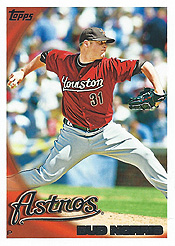
In his first major-league start, Bud Norris pitched against the Cardinals with the poise and skill of an established winner.

On Aug. 2, 2009, Norris, appearing in his second big-league game, started for the Astros at St. Louis, held the Cardinals to two hits in seven innings and earned the win.
Nine years later, on Feb. 14, 2018, Norris, a free agent, joined the Cardinals, signing a one-year contract for a base salary of $3 million after earning 19 saves for the 2017 Angels.

“I’m honored to be here,” Norris said to the St. Louis Post-Dispatch. “This is a world-class organization.”

With Luke Gregerson the projected closer, the Cardinals viewed Norris as a candidate for any number of roles, including starting. Though he succeeded as a reliever with the 2017 Angels, Norris told the Post-Dispatch he was excited about possibly having a chance to start for the Cardinals. “In my heart of hearts, I believe I can do that,” Norris said.

This Bud’s for you

David Norris, nicknamed “Bud” because at age 3 he imitated his father and ordered a beer in a restaurant, was selected by the Astros in the sixth round of the 2006 amateur draft.

After making his major-league debut in relief against the Cubs on July 29, 2009, Norris, 24, got the start four days later at Busch Stadium when Astros ace Roy Oswalt became sidelined with a bad back.

Norris, a right-hander, held the Cardinals hitless the first five innings.

In the sixth, the Cardinals appeared poised to strike when Adam Wainwright led off with a single and, one out later, Colby Rasmus walked. Norris got out of the jam by inducing Albert Pujols to pop out to third and striking out Matt Holliday.

“He kept his composure,” Wainwright said.

In the seventh, the Cardinals threatened again. With one out, Mark DeRosa walked and Yadier Molina singled, but Norris struck out Julio Lugo and Joe Thurston.

The Astros prevailed, 2-0. “I told him he had 299 (wins) more to go and he’d be in the Hall of Fame,” Oswalt said. Boxscore

Purpose pitches

Norris was 7-2 with a 2.17 ERA in his first 11 career appearances versus the Cardinals. Pujols took to calling him “Chuck Norris,” in reference to the tough-guy actor, Rick Hummel of the Post-Dispatch reported.

By the time Norris joined the Cardinals, his career mark against them was 8-7, but he maintained the reputation as a nemesis.

Perhaps Norris’ best outing came on June 8, 2011, when he limited the Cardinals to one hit in eight innings in a 4-1 Astros victory at Houston.

“Every pitch he threw had a purpose,” said Cardinals leadoff batter Ryan Theriot.

Wrote Post-Dispatch columnist Bernie Miklasz: “The Cardinals turn Norris into Bob Gibson, circa 1968.”

The lone hit allowed by Norris was a solo home run to former teammate Lance Berkman with two outs in the seventh. Noting how Norris effectively mixed sliders and changeups with fastballs, Berkman said, “He’s got a better feel for his off-speed stuff.” Boxscore

Norris had his best season as a starter (15-8, 3.65 ERA) with the 2014 Orioles.

In 2018, Gregerson was injured and Norris stepped into the role of closer. Norris led the Cardinals in saves (28) and posted a 3-6 record and 3.59 ERA in 64 relief appearances. In July 2018, a report by The Athletic indicated tensions had developed between Norris and rookie reliever Jordan Hicks, but Hicks told the Post-Dispatch that Norris “has the best intentions for me.”

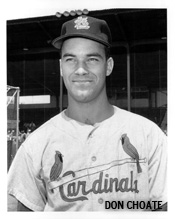
Along with Bob Gibson and Ray Sadecki, Don Choate was a prized pitching prospect who was projected to be in the Cardinals’ plans entering the decade of the 1960s, but he never got the chance to play for them in the regular season.

Instead, Choate went to the Giants in the trade that brought Bill White to the Cardinals.
Choate, a right-hander, reached the major leagues with the Giants in 1960.

A native of Potosi, Mo., Choate grew up in East St. Louis, Ill. He signed with the Cardinals in 1956, the year he turned 18, and made his pro debut that season with their minor-league club in Peoria, Ill. In February 1957, Cardinals general manager Frank Lane cited Choate as one of the “talented kids from the St. Louis area in the Cardinals organization,” The Sporting News reported.

Assigned to the Billings, Mont., team in the Cardinals’ farm system, Choate had a breakout season in 1957, posting a 19-8 record. At 19, he pitched 20 complete games and 240 innings. On successive days, Aug. 30-31, Choate pitched shutouts against Salt Lake City. He pitched a one-hitter in a 5-0 victory cut to five innings because of rain, and came back the next night with a three-hitter in another 5-0 triumph in the seven-inning opener of a doubleheader.

Choate pitched in spring training exhibition games for the Cardinals in 1958 and was touted by The Sporting News as an “impressive” prospect. He split the 1958 season between Cardinals farm clubs in Omaha and Houston. When Choate retired 19 consecutive batters in a game against Denver, The Sporting News reported he “scintillated on the mound.”

After producing a combined record of 12-11 in 34 games for Omaha and Houston in 1958, Choate played winter ball for the Licey team in the Dominican Republic. He won his first six decisions and had a 1.54 ERA. Choate “has developed into the Dominican loop’s leading hurler,” The Sporting News reported. Cardinals assistant farm director George Silvey said Choate “is sneaky fast and his curve has been improving. He’s a pitcher, not a thrower. A definite big-league prospect.”

Cardinals manager Solly Hemus and farm director Walter Shannon went to the Dominican Republic to see the top players. Hemus filed a favorable report on Choate. As the Cardinals prepared for spring training in 1959, Choate seemed a likely candidate to earn a spot on the big-league team.

While in the Dominican Republic, Hemus and Shannon also saw Bill White, who was in the Giants’ organization, and were impressed by his power, run production and versatility at first base and in the outfield. Eddie Stanky, a Cardinals scout who managed White in the minor leagues, also recommended him.

On March 25, 1959, the Cardinals traded Choate and a starting pitcher, Sam Jones, to the Giants for White and utility player Ray Jablonski. Most analysts said the deal favored the Giants. Bob Broeg of the St. Louis Post-Dispatch predicted Choate “eventually might make the grade” as a major-league pitcher.

“There’s no doubt in my mind we’ve improved our pennant chances tremendously with Jones coming to our team,” Giants manager Bill Rigney told United Press International. Rigney added, “It was the most important pitching deal we’ve made since I’ve been manager.”

Said Bing Devine, who replaced Lane as Cardinals general manager, “We believe White will solve our outfield problem and give us the added power at the plate we have been looking for.”

White became one of the Cardinals’ best players and a premier first baseman in the National League.

Choate was assigned to the Giants’ farm club at Phoenix in 1959 and was 4-7 in 22 appearances.

In 1960, after posting a 10-15 record for Tacoma, Choate was called up to the Giants in September. He made four relief appearances, including a one-inning scoreless stint against the Cardinals at St. Louis on Sept. 17, and had a 0-0 record and 2.25 ERA.

Choate pitched one more season, 1961, with Tacoma, hurt his arm and was finished as a pro player at 23. He had a second career as a firefighter.

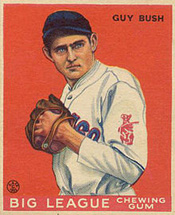
During his prime years with the Cubs, pitcher Guy Bush was an archrival of Cardinals ace Dizzy Dean. Later, within a span of two months, Bush joined the Cardinals and Dean went to the Cubs.

On Feb. 5, 1938, Bush was acquired by the Cardinals from the Braves in a cash transaction. Two months later, in April 1938, the Cardinals dealt Dean to the Cubs.

Bush, nicknamed the Mississippi Mudcat, was among the best pitchers in the National League in the 1930s. For 10 consecutive years (1926-1935), he achieved double-digit win totals each season. His peak years with the Cubs were 1932 (19-11, 3.21 ERA) and 1933 (20-12, 2.75 ERA).

Dean, the Cardinals’ brash future Hall of Famer, and Bush were matched in intense duels during their primes. In 1933, Bush challenged Dean to a fight during a game, according to the Society for American Baseball Research. “I get more satisfaction out of beating that guy once than I do winning from anyone else twice,” Bush said.

When Bush joined the Cardinals, he was on the back end of his career. Bush, 36, was 8-15 for the 1937 Braves. Dean, 28, also was in decline, losing the zip on his fastball after getting injured in the 1937 All-Star Game.

As spring training approached in 1938, the Cardinals were looking for a reliever who could make spot starts. They acquired Bush “for protection around the edges of our pitching staff,” Cardinals executive Branch Rickey told The Sporting News.

Dean and Bush pitched in the Cardinals’ second spring training exhibition game, a 8-1 victory over the Yankees. The Sporting News wrote of Bush, “He hasn’t the stuff that once made him one of the stars of the Cubs, but he knows the hitters in the league and has developed a fairly effective slow ball.”

Once the regular season began, the Cardinals soured on Bush. He made six relief appearances, posting an 0-1 record and 4.50 ERA, before he was released on May 7. Seven years later, with rosters depleted by calls to military service during World War II, Bush, 43, surfaced again in the major leagues for a stint with the Reds.

Bush achieved a big-league career record of 176-136, including 19-23 versus the Cardinals.