Feeds:
Posts
Comments

Though he hadn’t pitched in the major leagues since having shoulder surgery, the Cardinals signed Matt Clement with the expectation he would be on their Opening Day roster and ready to contribute as part of their 2008 starting rotation.

On Jan. 3, 2008, the Cardinals signed Clement, a free agent right-hander, to a one-year contract with a club option for 2009. The Cardinals guaranteed Clement, 33, a $1.5 million base salary for 2008 and a spot on their 40-man major-league roster, even though he had sat out the 2007 season while recovering from an operation that reconstructed his right shoulder.

Many hailed the move as a worthy experiment.

Seven months later, it was deemed a failure.

Clement never pitched for the Cardinals. He did walk away, however, with nearly $2 million.

Leap of faith

Clement began his big-league career with the Padres (1998-2000) and also pitched for the Marlins (2001), Cubs (2002-2004) and Red Sox (2005-2006). His best pitches were a heavy sinker and a slider. His best attribute was his reliability. Clement made at least 30 starts in each of seven straight seasons (1999-2005).

His top years were 2003, when he earned 14 wins for the National League Central Division champion Cubs, and 2005, when he was named to the American League all-star team and was 13-6 for the defending World Series champion Red Sox. Overall, though, his career marks were insipid: an 87-86 record and a 4.47 ERA.

In 2006, with his shoulder in tatters, Clement was 5-5 with a 6.61 ERA when the Red Sox sent him for surgery in August. He didn’t pitch in 2007 and he became a free agent after the season.

The Cardinals decided to invest in Clement after he passed a team physical performed by Dr. George Paletta. Cardinals general manager John Mozeliak declared Clement “100 percent healthy” and said he expected the pitcher to be ready by Opening Day, the St. Louis Post-Dispatch reported.

“It just made sense that we take this leap of faith,” Mozeliak said.

Claiming he had interest from other clubs, Clement said he chose the Cardinals because “they stepped up and believed in me right away.”

High hopes

The Cardinals projected Clement would join a 2008 rotation with Adam Wainwright, Joel Pineiro, Braden Looper and Mark Mulder. Like Clement, Mulder underwent shoulder surgery. The Cardinals expected Mulder to be ready in May.

Skeptics scoffed the Cardinals were depending too much on a retread (Pineiro), a converted reliever (Looper) and two pitchers with shredded shoulders (Clement and Mulder).

Mozeliak, however, repeatedly said he was comfortable with the composition of the starting staff as well as with the backups the Cardinals had in Todd Wellemeyer, Brad Thompson and Anthony Reyes. Of Clement, Mozeliak said, “He has high expectations, as do we.”

Bryan Burwell, a Post-Dispatch columnist, called Mozeliak’s move to acquire Clement “a calculated hunch” and a “vastly intriguing trinket to their already burgeoning Island of Misfit Toys.”

In a February Post-Dispatch poll asking “How many games will Matt Clement win this season?,” 46 percent responded 10 to 12, and 24 percent said 13 to 15. Only 6 percent said 0 to 5.

Weak arm

The breezy blather regarding Clement came to a halt as soon as Cardinals pitching coach Dave Duncan got his first look at him in spring training camp at Jupiter, Fla. Duncan determined Clement lacked arm strength. “I will be surprised if he’s ready for Opening Day,” Duncan said.

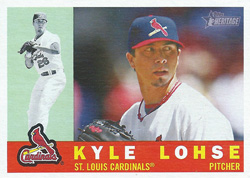
Duncan put Clement on a program of long tosses rather than throws from the mound. Meanwhile, Pineiro developed an injury and his status for Opening Day was in doubt. With the rotation at risk of unraveling, the Cardinals on March 13, 2008, signed free agent Kyle Lohse and plugged him into a rotation with Wainwright, Looper, Wellemeyer and Thompson.

On March 25, 2008, Clement pitched in a minor-league scrimmage at Jupiter. His fastest pitch was 86 mph. Clement “was not throwing with the strength or control needed to be effective,” the Post-Dispatch reported.

The Cardinals placed Clement on the 15-day disabled list and said he would begin the 2008 season in extended spring training.

Comeback aborted

At the end of May 2008, the Cardinals said Clement would begin a minor-league rehabilitation assignment. Mozeliak said the move “starts the clock” on a return to the majors for Clement.

In a June 3, 2008, start for Class A Palm Beach, Clement pitched six shutout innings. He was advanced to Class AA Springfield and in two starts was 1-0 with a 5.40 ERA.

Clement was moved up to Class AAA Memphis and in his first start for them he gave up six runs in three innings. The Cardinals decided to convert Clement into a reliever. “It seems to be clear it’s going to be difficult for Matt to contribute as a starter,” Mozeliak said.

In 13 games with Memphis, Clement was 1-0 with a 7.02 ERA.

On Aug. 2, 2008, the Cardinals released Clement. “We didn’t feel like he was going to contribute to our major-league team, so we didn’t want him to block our younger guys coming up,” Mozeliak said.

The Cardinals paid Clement the remainder of his $1.5 million salary, plus a $250,000 buyout on his 2009 option, according to the Post-Dispatch. In all, Clement got $1.75 million from the Cardinals.

Because of strong seasons from Lohse (15-6), Wellemeyer (13-9) and Wainwright (11-3), the 2008 Cardinals overcame the failures of Clement and Mulder (who made three appearances for them) and finished 86-76.

“If you want to harangue Mozeliak for taking one gamble that blew up _ spending $1.5 million on rehabbing pitcher Matt Clement _ then go right ahead, but it’s inconsequential” wrote Post-Dispatch columnist Bernie Miklasz. “Mozeliak has moved the Cardinals into a surprising position: that of a contender.”

The Blue Jays signed Clement to a contract in December 2008, but he didn’t stick with them. At 34, his pitching career was finished.

Desperate to fill the cleanup spot in the order with a potent bat, Cardinals rookie manager Red Schoendienst turned to Curt Flood, a player better known for scoring, not driving in, runs.

In 1965, Flood was the Cardinals’ No. 4 hitter in the lineup for most of July. It was the only time in 15 major-league seasons Flood batted cleanup. Flood appeared in the cleanup spot as a defensive replacement or pinch-runner four times in 1958 and once in 1959, but didn’t get any at-bats then.

Schoendienst, in his first season as a manager, chose Flood to bat fourth in 1965 because Ken Boyer, bothered by a bad back, wasn’t producing at his usual level and Bill White had an injured foot. Boyer had opened the 1965 season as the cleanup hitter and White largely had taken over the role in June.

Flood had led the Cardinals in runs scored in 1962 (99) and 1963 (112) and was second in 1964 (97), but he never had produced more than 12 home runs and 70 RBI in a season. He appeared to be better suited for one of the top two spots in the order, not the cleanup position usually filled by sluggers.

Mike Shannon and Tim McCarver could have been options to bat cleanup, but Flood was having a better season than either of them.

Schoendienst was rewarded for his faith in Flood.

In 13 games batting fourth for the 1965 Cardinals, Flood hit .345 (19-for-55) with nine RBI. The Cardinals had a 9-4 record with Flood as their cleanup hitter.

Winning combination

On June 30, 1965, White injured his right heel. The injury “has him moving like television’s Chester (Dennis Weaver’s character from “Gunsmoke”) and Grandpa McCoy (Walter Brennan’s character from “The Real McCoys”),” the St. Louis Post-Dispatch reported.

The next night, the first five batters in the Cardinals’ order against the Pirates were: Phil Gagliano, Dick Groat, Lou Brock, Flood and Boyer. Unimpressed, the Post-Dispatch wrote, “The Cardinals presented one of the lightest 3-4 punches in any batting order, Brock and Flood.”

Flood drove in two runs and the Cardinals won, 7-6. Boxscore

In seven games, from July 1 through July 7, Schoendienst kept the top five in his batting order the same. The Cardinals won six of the seven. Batting cleanup, Flood hit safely in all seven games and produced at least one RBI in four. He delivered hits that drove in the winning runs in consecutive games against the Giants July 5-6.

After July 7, over the next five games, Schoendienst used Boyer, White and Tito Francona in the cleanup role and batted Flood third or first. The Cardinals lost three of the five.

Hitting leader

Flood returned to the No. 4 spot on July 16 and remained there for four consecutive games. Flood had hits in all four games and at least one RBI in two. The Cardinals won three of the four, making their record 9-2 in games with Flood as the cleanup hitter.

On July 20, White batted fourth and the Cardinals beat the Phillies. Flood was back in the cleanup spot for the next two games, July 21-22 against the Astros, and the Cardinals lost both.

For the rest of the season, Flood mostly batted in the No. 2 or No. 3 spots. Boyer went back to being the primary cleanup hitter.

The Cardinals, defending World Series champions, finished in seventh place in the National League at 80-81 in 1965. Boyer finished with 75 RBI and White had 73. Both were traded after the season.

Flood won a Gold Glove Award for his fielding and led the 1965 Cardinals in hits (191), RBI (a career-best 83), batting average (.310) and on-base percentage (.366). He did best from the No. 2 spot, batting .360 in 30 games.

Previously: The day Curt Flood got 8 straight hits against Dodgers

Frank Lary, who mastered the Yankees during his prime with the Tigers, couldn’t beat the Cardinals when he was near the end of his pitching career with the Mets.

In the 1950s and early 1960s, Lary was a durable and consistent winner in the American League.

When he got sent by the Tigers to the Mets in May 1964, Lary no longer was an elite pitcher, but he still had the guile and ability to be effective as a starter and in relief.

In two starts for the Mets versus the Cardinals _ one in 1964 and another in 1965 _ Lary was matched against Bob Gibson. Lary was poised to win the first matchup until the Cardinals rallied in the ninth inning. In the second matchup, Lary hit against Gibson better than he pitched against the Cardinals.

A right-hander, Lary pitched 12 years (1954-1965) in the major leagues and posted a career record of 128-116 with a 3.49 ERA. He was 28-13 versus the Yankees, including 7-1 in 1958.

Throwback to Gashouse Gang

Lary led the American League in wins (21) in 1956 and was second (with 23) in 1961. He three times was the AL leader in innings pitched and in complete games. Unafraid to pitch inside, Lary four times led the AL in batters hit by pitch.

“He is a throwback to the Cardinals of the ’30s, a cotton-pickin’, gee-tar-strummin’, red clay Alabama farm boy, unspoiled by a little college and a lot of success,” Sports Illustrated wrote of Lary in 1961. “He is mean on the mound and a joker off it.”

In June 1963, Chuck Dressen replaced Bob Scheffing as Tigers manager. Lary and Dressen clashed. On May 30, 1964, before a game against the White Sox at Detroit, Dressen informed Lary, 34, his contract had been sold to the Mets.

“Dressen was hurting me,” Lary said to The Sporting News. “He gives up on a pitcher too soon.”

The uniform No. 17 Lary wore was inherited by a future Tigers ace, Denny McLain.

On May 31, the day after the trade, Lary arrived at Shea Stadium in New York during the first game of a doubleheader between the Giants and Mets. Lary made his Mets debut in the second game, pitching the sixth and seventh innings and retiring all six batters he faced, including Willie Mays and Orlando Cepeda. The Giants won, 8-6, in 23 innings. Boxscore

Cardinals comeback

Lary made his first career appearance against the Cardinals on July 19, 1964, at St. Louis. The Cardinals scored twice in the first and once in the second. Lary held them scoreless over the next six innings.

At one point, Lary “cheated a bit” on a pitch to Dick Groat, according to the St. Louis Post-Dispatch. Lary delivered a pitch “while standing a couple of feet short of the pitcher’s rubber,” the Post-Dispatch reported. “Third base umpire Chris Pelekoudas spotted the infraction and called it no pitch.”

The Mets took a 6-3 lead into the ninth. The Cardinals sent six batters to the plate against three Mets pitchers and each got a hit.

Carl Warwick, batting for Gibson, led off the ninth against Lary and laced a line drive into the left-field corner for a double. “He threw me a slider that broke over the plate and I was able to pull it,” Warwick said.

Curt Flood followed with his fourth single of the game against Lary.

Willard Hunter relieved and gave up three hits _ singles by Lou Brock and Bill White and a double by Ken Boyer. Each hit drove in a run, tying the score at 6-6.

With White on third, Boyer on second and Groat at the plate, Darrell Sutherland relieved. “I was surprised they didn’t walk me,” Groat said.

Mets manager Casey Stengel said he considered having Sutherland intentionally walk Groat, loading the bases and setting up a force at any base, but instead “I just told him to pitch the way he wanted to.”

With the infield playing in, Groat looped a single over the outstretched glove of second baseman Ron Hunt, scoring White from third and giving the Cardinals a 7-6 victory. Gibson, who struck out 11, got the win. Boxscore

From foe to friend

Seven days later, on July 26, Lary sparked a brawl in a start against the Braves at New York. After Denis Menke led off the game with a home run, Lary hit the next batter, Lee Maye, in the back of the neck with a pitch. Maye yelled, “That’s a lousy thing to do,” and headed toward the mound. Catcher Chris Cannizzaro grabbed Maye before he could reach Lary, but both benches emptied and fights broke out.

“I don’t know what I would have done if Cannizzaro hadn’t grabbed me,” Maye said.

Said Lary: “I was just pitching him inside. Sometimes a ball goes more inside than you want it.” Boxscore

Two weeks later, on Aug. 8, Lary was traded to the Braves.

Encore performance

Near the end of spring training in 1965, the Braves dealt Lary back to the Mets. He made his final Mets appearance on July 2, 1965, in a start against the Cardinals at Shea Stadium.

The Cardinals, who had Phil Gagliano batting leadoff and Curt Flood in the cleanup spot, scored six runs against Lary _ two each in the second, third and sixth. Flood, who batted .714 (5-for-7) in his career against Lary, had a single and a sacrifice fly.

Lary did more good with his bat than his arm. He singled twice and scored twice against Gibson. The Cardinals won, 6-3. Gibson struck out 13, hit a batter and threw a wild pitch. Boxscore

“Gibson’s ball was moving so much he couldn’t control it,” said Cardinals manager Red Schoendienst.

Said Gibson: “I didn’t know where half of the pitches were going.”

Previously: Phil Regan talks Lou Brock, Roger Maris, Al Hrabosky

When the Cardinals signed free agent Kent Mercker, they figured him as a candidate for the back end of their starting rotation in 1998. What they didn’t project is that he would be their top winner and most prolific starter.

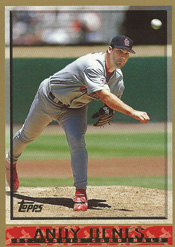
Seeking a replacement for Andy Benes, who departed to the Diamondbacks after being declared a free agent, the Cardinals signed Mercker on Dec. 16, 1997.

Though he had an 8-11 record with the 1997 Reds, Mercker was in demand as a free agent. He got one-year offers from multiple clubs. The Cardinals gave him a two-year contract for $5.5 million.

The Cardinals envisioned Mercker, 29, joining a rotation of Todd Stottlemyre, Matt Morris, Donovan Osborne and Alan Benes.

Investing in potential

Mercker, a left-hander, debuted in the major leagues with the 1989 Braves. He spent seven seasons (1989-1995) with the Braves and was a reliever for the first five. Used primarily as a starter in 1994, Mercker pitched a no-hitter versus the Dodgers.

In 1996, Mercker pitched for the Orioles and Indians. He joined the Reds in 1997. Two of his eight wins that season were against the Cardinals.

Cardinals general manager Walt Jocketty aggressively pursued Mercker when he became available.

“He’s a guy we feel has a great upside,” Jocketty said to the St. Louis Post-Dispatch. “He wasn’t going to be on the market long and we had to act quickly.”

Said Mercker: “I love St. Louis. I love that team. I’m not just saying that because I’m there. I’ve always loved playing there. The city is loyal. As long as you give an effort, they’re on your side.”

Best of the bunch

Mercker didn’t pitch well in 1998 spring training, but when the season opened he was in the rotation with Stottlemyre, Cliff Politte and Manny Aybar. Morris, Osborne and Alan Benes were sidelined because of injuries. Morris and Osborne returned later in April, but Benes sat out the season.

The 1998 Cardinals had a power-packed lineup with Mark McGwire, Ray Lankford, Ron Gant and Brian Jordan. McGwire hit 70 home runs that season; Lankford, Gant and Jordan each hit 25 or more.

Pitching, however, was a problem. Stottlemyre was traded to the Rangers in July. Morris was limited to seven wins in 17 starts. Osborne had five wins in 14 starts. Aybar (six wins, 14 starts) and Politte (two wins, eight starts) spent part of the year in the minor leagues. The Cardinals eventually moved relievers Mark Petkovsek and Kent Bottenfield into the rotation.

Mercker was the one constant. He was durable, though too often ineffective. Mercker was 8-11 with a 5.40 ERA before winning his last three decisions _ he helped himself by hitting a grand slam against the Marlins on Sept. 2 _ and finishing 11-11.

Left-handed batters hit .316 against him and right-handers, .309.

Still, Mercker led the Cardinals staff in wins (11), starts (29) and innings pitched (161.2). For Mercker, 1998 was the only one of his 18 major-league seasons in which he achieved a double-digit wins total.

In 1999, Mercker was 6-5 with a 5.12 ERA for St. Louis. In August, the Cardinals traded him to the Red Sox for two minor-leaguers, pitcher Mike Matthews and catcher Dave Benham.

Mercker’s two-year totals with the Cardinals: 17-16 with a 5.09 ERA.

Previously: Cardinals pitchers enjoy grand slam streak

(Updated Dec. 14, 2023)

After eight years as the center fielder for the Cardinals, Jim Edmonds had no intention of taking a reduced role with the team. If the Cardinals couldn’t commit to him, Edmonds told them, he’d rather play somewhere other than St. Louis.

Concerned Edmonds no longer was durable and convinced they had candidates within the organization to replace him, the Cardinals decided the time was right to part with a player who had been among their most popular and productive.

In December 2007, John Mozeliak made his first trade as Cardinals general manager, sending Edmonds to the Padres for minor-league third baseman David Freese.

The deal sent away a player who had performed a key role in helping the Cardinals win a World Series title in 2006 and brought them a player who would perform a key role in helping them win another World Series championship in 2011.

Special talent

Edmonds, acquired by the Cardinals from the Angels in March 2000, was a central figure in the franchise’s success from 2000 to 2007. In that period, the Cardinals won a World Series crown and two National League pennants and qualified for the postseason six times.

With the Cardinals, Edmonds won the Gold Glove Award six times and was named an all-star three times.

In his eight seasons with St. Louis, Edmonds produced 1,033 hits and batted .285. He had an on-base percentage of .393.

Edmonds hit 241 home runs for St. Louis, placing him fourth all-time among Cardinals. Only Stan Musial (475), Albert Pujols (469) and Ken Boyer (255) hit more. Musial is the lone left-handed batter with more career home runs as a Cardinal than Edmonds.

Also, Edmonds had a .555 slugging percentage for St. Louis. Only six others _ Mark McGwire, Pujols, Johnny Mize, Chick Hafey, Rogers Hornsby and Musial _ have higher slugging percentages as Cardinals than Edmonds.

“If we consider the combination of offense and defense, Edmonds was the best overall center fielder in Cardinals history,” wrote Bernie Miklasz, columnist for the St. Louis Post-Dispatch.

That’s high praise considering the franchise has had standout center fielders such as Curt Flood, Ray Lankford, Willie McGee and Terry Moore.

Time takes toll

In 2007, however, Edmonds showed signs his health and his skills were eroding. He had surgery on his right shoulder and left foot after the 2006 World Series. During the 2007 season, Edmonds was on the disabled list from June 16 to July 18 because of back problems. Late in the season, he had a groin injury and made one start after Sept. 17.

Edmonds played in 117 games in 2007 and batted .252 with 12 home runs and 53 RBI. He hit .198 against left-handers.

In the off-season, Edmonds, 37, heard speculation the Cardinals might reduce his playing time in 2008 and shift him to right field.

“After running down all of those line drives in the gaps, he couldn’t outrun his age,” Miklasz wrote of Edmonds.

Edmonds approached Cardinals management and asked about their plans for him. “Basically, the feedback wasn’t so great, and they couldn’t guarantee anything,” Edmonds said to the Associated Press.

The Cardinals believed Rick Ankiel, the converted pitcher, was ready to take over in center field. “I think Rick Ankiel has emerged as a force,” said Cardinals owner Bill DeWitt Jr. The Cardinals thought their top minor-league prospect, Colby Rasmus, could compete for the center field job, too.

Edmonds, believing he still could be a starter in center, agreed to relinquish the no-trade clause in his contract. He gave the Cardinals a list of teams. His preference was a Southern California club because he had a home in Irvine, Calif.

“I wanted a chance to play every day,” Edmonds said.

California dreaming

The Padres were in the market for a center fielder. Their 2007 starter, Mike Cameron, had become a free agent. San Diego was interested in Japanese League import Kosuke Fukodome, but he signed with the Cubs. Cameron went to the Brewers.

Edmonds became the Padres’ best option. “We felt it was a risk worth taking,” said Padres general manager Kevin Towers.

The Cardinals and Padres agreed to a deal on Dec. 14, 2007. The Post-Dispatch broke the news on its Web site that night. The trade formally was announced the next day, Dec. 15.

“I’m kind of shocked but excited because I get to be in Southern California next to my family and play for a contending team in a beautiful ballpark,” Edmonds said.

Towers predicted to the San Diego Union-Tribune that Edmonds would bat .270 and hit 15 to 20 home runs for the Padres in 2008.

Return on investment

The Cardinals were glad to get a player for Edmonds before he became eligible for free agency after the 2008 season.

Freese, who grew up in St. Louis and graduated from Lafayette High School, had been chosen by the Padres in the ninth round of the 2006 amateur draft. In 2007, playing for the Lake Elsinore Storm of the Class A California League, Freese batted .302 with 96 RBI and scored 104 runs.

Asked his reaction to being traded for Edmonds, Freese said, “It’s been a dream of mine to play for the Cardinals. Now it may become a reality.”

Freese debuted with the Cardinals in 2009 and became their primary third baseman in 2010.

Ankiel was the Cardinals’ primary center fielder in 2008 and Rasmus became the starter in 2009.

Edmonds played in 26 games for the 2008 Padres, batted .178 and was released in May. He spent the rest of the season with the Cubs and hit 19 homers for them.

After sitting out the 2009 season, Edmonds played for the Brewers and Reds in 2010, producing 11 home runs and 23 RBI. He attempted a comeback with the Cardinals the following year at spring training, but announced his retirement on Feb. 18, 2011.

Freese earned a permanent place in Cardinals lore with his postseason performance in 2011. He had 21 RBI _ five in the NL Division Series versus the Phillies, nine in the NL Championship Series against the Brewers and seven in the World Series versus the Rangers.

With the Cardinals on the brink of elimination in the World Series, Freese’s two-run triple with two outs in the ninth inning of Game 6 tied the score and his home run leading off the 11th gave St. Louis the win.

(Updated Sept. 17, 2022)

From a Cardinals perspective, Mark Littell was a younger, clean-cut, right-handed version of Al Hrabosky. When given the chance to swap Hrabosky for Littell, the Cardinals acted.

On Dec. 8, 1977, the Cardinals traded left-handed closer Hrabosky to the Royals for Littell and catcher Buck Martinez.

Littell, 24, was nicknamed “Country.” He had a low-key personality, an all-American look and excelled at striking out batters.

Hrabosky, 28, was nicknamed “Mad Hungarian.” He was a high-strung showman who grew a Fu Manchu, performed self-psyching theatrics on the field and excelled at striking out batters.

Both relievers became available on the trade market for different reasons.

Littell slumped in the second half of the 1977 season and lost the closer role.

Hrabosky feuded throughout the year with Cardinals manager Vern Rapp and openly defied team owner Gussie Busch on the club’s facial hair ban.

Made in Missouri

Littell was born in Cape Girardeau, Mo., and grew up in the town of Gideon in the southeast corner of the state. “Population 800,” Littell told The Sporting News. “Soy beans, cotton and wheat.”

His father was a farmer and his mother was a nurse. Littell worked on his father’s farm and developed strength. “I plowed, planted and loaded soy beans _ 60-pound sacks, 500 or 600 a day,” Littell recalled. “I liked farm work.”

As a youth, Littell went to Cardinals games in St. Louis with his family. Among the players who made the most memorable impression on him were Stan Musial, Bob Gibson, Curt Simmons, Minnie Minoso and Bill White.

“We used to come to see the Cardinals six, maybe 10, times a year,” Littell told the St. Louis Post-Dispatch. “… I saw Musial get a game-winning hit with two out in the ninth inning … I can still visualize him hitting that ball. He went the opposite way with it, between shortstop and third base.”

Ups and downs

Littell, 20, debuted in the major leagues with the 1973 Royals. He was the closer in 1976 when the Royals won the American League West title under manager Whitey Herzog. Littell was 8-4 with 16 saves and a 2.08 ERA.

“Without Mark Littell, we never would have made it as far as we did,” Herzog told the Kansas City Star. “He is the first relief pitcher in Royals history who was consistently able to come in and really slam the door.”

Littell suffered a setback in the 1976 American League Championship Series against the Yankees. With the score tied 6-6 in the decisive Game 5, Littell yielded a ninth-inning home run to Chris Chambliss that clinched for the Yankees their first pennant since 1964.

Undaunted, Littell was dominant in the first half of 1977, posting a 2.59 ERA with 12 saves.

He struggled, however, in the second half of the season. Littell had a 5.20 ERA and no saves after the all-star break and was replaced as the closer by Doug Bird.

Still, in 104.2 innings, Littell struck out 106 batters and yielded 73 hits.

“His ratio of strikeouts and hits to innings pitched is remarkable,” said Cardinals general manager Bing Devine.

Quality swap

At the 1977 baseball winter meetings, the Royals were seeking a left-handed power pitcher to pair with Bird in the bullpen. The Cardinals were willing to trade Hrabosky, who was 6-5 with 10 saves and a 4.38 ERA in 1977.

“I talked to all the National League managers and they told me Hrabosky was messed up last season because of his troubles with Rapp,” Herzog said. “They told me he still is an outstanding pitcher. We think he is.”

When the Royals offered Littell for Hrabosky, the Cardinals agreed.

“Now we have a left-hander coming out of the bullpen who can blow people away,” Herzog said.

Admitting he and Rapp “definitely had personality conflicts,” Hrabosky said of the trade, “The only sad thing about the whole thing is I’m leaving St. Louis as a bad guy.”

Asked his reaction to the deal, Cardinals catcher Ted Simmons told columnist Dick Young, “In the past, when there was a personality difference, this team would unload a man for a song and a prayer. This time we at least got value for Hrabosky.”

Said Devine of Littell: “If we need a strikeout, he’s the man to bring in.”

Results are in

“Going from the Royals to the Cardinals shook me up a little,” Littell said to the Kansas City Star, “but at least I stayed in the same state and around an area I’m familiar with. The cities are a little different, but I still see a lot of my friends at both places. St. Louis is a little conservative and Kansas City is more progressive.”

Littell requested uniform No. 17 from the Cardinals, but the club had retired that number in honor of Hall of Fame pitcher Dizzy Dean. Littell took No. 32 instead.

In 1978, Littell was 4-8 with 11 saves and a 2.79 ERA for the Cardinals. In 70 relief appearances, he had 120 strikeouts in 97.1 innings, becoming the first Cardinals reliever with 100 strikeouts in a season.

Hrabosky was 8-7 with 20 saves and a 2.88 ERA for the 1978 AL West champion Royals.

In 1979, Littell was 9-4 with 13 saves and a 2.19 ERA for the Cardinals. Hrabosky was 9-4 with 11 saves and a 3.74 ERA for the Royals.

After that, the careers of both pitchers declined.

Hrabosky ended his playing days with the Braves, totaling seven saves in three years (1980-1982).

Littell, who underwent elbow surgery in 1980, had four total saves in his final three seasons (1980-1982) with the Cardinals.

Overall, in five years with St. Louis, Littell was 14-18 with 28 saves, a 3.31 ERA and 233 strikeouts in 261 innings.