Feeds:
Posts
Comments

Paired with an innovative coach who provided a seal-tight offensive line, reliable running backs and sure-handed receivers, Jim Hart was among the NFL’s top quarterbacks in the mid-1970s and secured his place as the best who played for the St. Louis football Cardinals.

The Cardinals played 28 seasons (1960-1987) in St. Louis and Hart was a quarterback for them for 18 of those years (1966-1983).

Like the franchise, Hart had many ups and downs. When he came to the Cardinals as an undrafted prospect from Southern Illinois University, Hart competed with another underrated quarterback, Charley Johnson, for the starting job.

Hart prevailed when Johnson was traded to the Oilers after the 1969 season, but when Bob Hollway became Cardinals head coach in 1971 he soured on Hart. By 1972, Hart was a reserve behind Gary Cuozzo and Tim Van Galder.

The arrival of Don Coryell as Cardinals head coach in 1973 revived Hart’s career. Coryell recognized Hart as a special talent and named him the starter.

Coryell also supported Hart with a cast that included offensive linemen Dan Dierdorf, Conrad Dobler, Bob Young, Tom Banks and Roger Finnie; running backs Terry Metcalf and Jim Otis; and receivers Mel Gray, Jackie Smith, Earl Thomas and Ike Harris. As Dobler told Sports Illustrated in July 1977, “I’ll do anything I can get away with to protect my quarterback.”

Hart led the Cardinals to their best St. Louis seasons. The Cardinals finished in first place in the NFC East Division in 1974 (10-4) and 1975 (11-3) and in second place in 1976 (10-4). They got to the playoffs in 1974 and 1975, years when only four teams from the NFC qualified for the postseason.

Here are 10 facts to know about Hart based on research, most especially from Pro Football Reference:

1. Leader of the pack

Hart is the Cardinals franchise leader in passing yards (34,639), completions (2,590) and touchdown passes (209). That’s no small feat. The franchise has been in the NFL since 1920. The Cardinals started in Chicago (1920-1959) and relocated to St. Louis (1960-1987) and Phoenix (1988-present). Hart highlight video

2. Best in class

In 1974, Hart led the NFL in pass attempts (388) and ranked first in the NFC in both completions (200) and touchdown passes (20). Hart was named 1974 NFC Player of the Year by United Press International.

3. Tough to beat

Hart threw more career touchdown passes (35) against the Cowboys than he did against any other foe. The Cardinals, however, had a 7-17 record versus the Cowboys in games in which Hart played.

In 1975, Hart threw seven touchdown passes in two games against the Cowboys. On Sept. 28, Hart connected on two touchdown passes to Gray and one each to Thomas and Smith, but the Cowboys beat the Cardinals, 37-31. On Dec. 7, the Cardinals defeated the Cowboys, 31-17, with Hart completing two scoring strikes to Gray and one to Metcalf. The victory gave the Cardinals control of the NFC East.

4. Playing long ball

Hart had an exceptionally strong arm and was effective at completing long passes, or bombs. Forty-one percent of his career touchdown throws (87 of 209) were of 30 yards or more.

In his 1977 book, “The Jim Hart Story,” Hart said, “The bomb is partly feel and partly luck. The feel is knowing where to throw it. You want to get it over the receiver’s outside shoulder, so the defender can’t get to it. The luck is having the right speed, the right velocity. You can’t always control that.”

5. Longest yard

Hart’s longest completion didn’t produce a touchdown.

On Dec. 10, 1972, against the Los Angeles Rams, Hart completed a 98-yard pass to Bobby Moore (later named Ahmad Rashad). The play went from the Cardinals’ 1-yard line to the Rams’ 1-yard line. It’s the NFL’s longest non-scoring play.

“If I scored, it wouldn’t have been a record,” Moore told the St. Louis Post-Dispatch.

Hollway sent in the play _ a fly pattern _ figuring the Rams expected the run.

Moore snared Hart’s pass at the Cardinals’ 40-yard line and cut downfield. He was caught from behind by Al Clark. Video

On the next play, Donny Anderson ran for the touchdown.

6. Productive target

Gray was the receiver who caught the most touchdown passes from Hart. Gray and Hart connected for 38 touchdowns.

The most famous came on Nov. 16, 1975, against the Redskins. On fourth down, Hart completed a seven-yard scoring pass to Gray. Officials initially disagreed on whether Gray maintained possession, but the call went in the Cardinals’ favor. Some refer to it as the “Phantom Catch.” Video

St. Louis won in overtime, 20-17, and earned the label “Cardiac Cardinals.”

7. Welcome to the NFL

Hart played in his first regular-season Cardinals game on Dec. 17, 1966, against the Browns.

Appearing in relief of starter Terry Nofsinger, Hart completed four of 11 passes for 29 yards. The Browns won, 38-10.

Asked about Hart’s debut, Cardinals head coach Charley Winner said, “Most of those passes he completed were short and to the sidelines. You’re supposed to complete those passes.”

8. On-the-job training

The first regular-season touchdown pass thrown by Hart was 12 yards to Prentice Gautt on Sept. 17, 1967, against the Giants.

Hart, making his first start, was intercepted four times. The Giants won, 37-20.

“After that loss, I felt so poor that I didn’t want to look anybody in the eye,” Hart said.

9. On the run

Hart had 16 career rushing touchdowns. The longest was his first, a 23-yard run on Sept. 24, 1967, versus the Steelers.

“I had to run with it,” Hart said. “The play was a fake up the middle and a pitch to the fullback. (Linebacker) Andy Russell made a good move to get in the way of the pitch. I was going to throw it, but with our linemen already down the field I couldn’t. I had to run.”

Jim Bakken kicked seven field goals and St. Louis won, 28-14.

10. Picked off

In 1967, Hart was intercepted 30 times in 14 starts.

George Blanda of the 1962 Oilers holds the single-season record. He was intercepted 42 times.

Previously: Football Cardinals finally got it right with Don Coryell
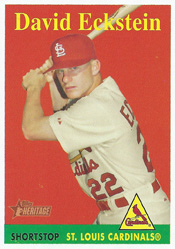
David Eckstein wanted to stay with the Cardinals. For a while, the Cardinals wanted him to stay, too. Instead, the Cardinals ended up with Cesar Izturis at shortstop and Eckstein was exiled to Canada.

A productive and popular Cardinals player, Eckstein was an effective leadoff batter who earned a special spot in franchise lore when he won the World Series Most Valuable Player Award for his performance with the 2006 champions.
After the 2007 season, Eckstein became a free agent, though he hoped to remain with the Cardinals. His departure from St. Louis was an example of the consequences of poor communication and bad decision-making.

Motivated to find a shortstop in a limited market and uncertain of Eckstein’s intentions, the Cardinals turned to Izturis, a free agent, and signed him on Nov. 30, 2007.

With Izturis in the fold, Eckstein no longer fit the Cardinals’ plans and he accepted from the Toronto Blue Jays a less lucrative offer than what St. Louis first proposed.

Waiting game

After four seasons with the Angels, including a World Series title in 2002, Eckstein became a free agent and signed with St. Louis in December 2004. At 5 feet 6 and with the look of a schoolkid, Eckstein appeared to be the ultimate underdog and he won the hearts of Cardinals fans with his hustle and skill.

In 2005, Eckstein batted .294 with 90 runs scored for a Cardinals club that reached the National League Championship Series. The next year, he hit .292 for the 2006 NL champions. In the five-game World Series versus the Tigers, Eckstein batted .364, drove in four runs and scored three.

At spring training in 2007, the Cardinals approached Eckstein and offered him a three-year, $20 million contract, the St. Louis Post-Dispatch reported. Eckstein decided to discontinue contract talks until the season was completed.

It was a decision he would regret.

All talk, no action

Because of injuries, Eckstein was limited to 112 starts at shortstop in 2007. He committed a career-high 20 errors. The year before, he made six miscues.

Eckstein batted .309 for the 2007 Cardinals, but management was alarmed by his lapses on defense. With Eckstein turning 33 before the start of the 2008 season, the Cardinals became concerned about committing to him beyond a year or two.

After the 2007 season, Eckstein told the Post-Dispatch, “I instructed my agent to tell (the Cardinals) of my desire to stay. They knew of my desire.”

The message was delivered, but without details.

“It was never defined by either party what ‘staying in St. Louis’ looked like,” said Cardinals general manager John Mozeliak.

Said Eckstein: “I was not looking for anything specific. I was willing to look at anything.”

While the Cardinals waited for Eckstein to say what he wanted, Eckstein waited for the Cardinals to respond to his expressed desire to stay.

It was a communication breakdown.

As time ticked away, the Cardinals decided it was in their best interests to fill the shortstop spot before their options evaporated.

Playing the field

The Cardinals had trade discussions with the Astros regarding shortstop Miguel Tejada and with the Pirates regarding shortstop Jack Wilson, according to the Post-Dispatch, but nothing developed.

“When you look at the shortstop market, there are not a lot of options,” Mozeliak said.

Izturis emerged as the Cardinals’ top choice.

In 2001, at age 21, Izturis made his major-league debut with the Blue Jays. After the season, he was dealt to the Dodgers and developed into a premier shortstop. In 2003, he led NL shortstops in assists (481). The next year, he batted .288 with 193 hits, led NL shortstops in putouts (234) and earned a Gold Glove Award. Izturis was selected to the NL all-star team in 2005.

In July 2006, Izturis was traded by the Dodgers to the Cubs for pitcher Greg Maddux. He split the 2007 season with the Cubs and Pirates, batting .258, and became a free agent.

The Cardinals signed Izturis to a one-year contract for $2.85 million with incentives. Izturis turned 28 before the start of the 2008 season.

One-year rental

“He’s looking for a challenge,” Mozeliak said. “We wanted somebody ready to take the challenge … One of the things we needed to address in support of pitching was our defense. I think we accomplished that.”

Media reaction to the Izturis signing was mixed.

_ Bernie Miklasz, Post-Dispatch columnist: “The Cardinals like his glove, but others say he’s slipped defensively.”

_Dan O’Neill, Post-Dispatch columnist: “Why do people get bent out of shape about the Cardinals’ signing of Cesar Izturis? It’s not like winning championships with a light-hitting, sharp-fielding shortstop is a foreign concept. For reference, see Dal Maxvill, 1967 and 1968.”

With the door closed to the Cardinals, Eckstein signed a one-year deal with the Blue Jays for $4.5 million.

Izturis, a switch-hitter, batted .263 with 24 stolen bases for the 2008 Cardinals. He hit .304 against left-handers.

Izturis started 110 games at shortstop for the Cardinals _ Brendan Ryan and Aaron Miles also got playing time _ and ranked third among NL shortstops in fielding percentage at .980.

After the 2008 season, Izturis became a free agent and signed with the Orioles for two years at $5 million.

The Cardinals went with Ryan, who was developed in their farm system, at shortstop in 2009.

Previously: Why David Eckstein was perfect fit for Cardinals

In November 1947, Sam Breadon, 71, was thinking about mortality. He had been principal owner of the Cardinals for 27 years, operating the club with a hands-on approach, and he didn’t think he could do the job much longer.

Though his heart favored keeping the business he loved, Breadon chose the path that made the most sense to him. He decided to sell.

By selling, Breadon would acquire the cash to ensure financial security for his wife and two daughters.

A sale also would enable Breadon to handpick buyers who were willing to keep the club in St. Louis and protect the jobs of his top employees.

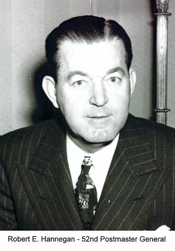
On Nov. 25, 1947, Breadon sold the Cardinals to Robert Hannegan and Fred Saigh. Hannegan, 44, a St. Louis native, was Postmaster General of the United States. Saigh, 42, was a St. Louis lawyer.

“It is unpleasant for me to dispose of the Cardinals,” Breadon told reporters, “but I believe, in the interest of the Cardinals, a man of the character and ability of Bob Hannegan, a younger man, will be able to do more in keeping the Cardinals in the position they are today than I could do from now on. This is the main reason for disposing of my interests.”

Two years later, both Breadon and Hannegan would be dead and Saigh would be the Cardinals’ majority owner.

Buy low, sell high

Breadon, a car dealer, was part of a group that bought the Cardinals in the spring of 1917. Three years later, he became majority owner and club president.

Together with his top baseball executive, the innovative Branch Rickey, Breadon brought the Cardinals from the brink of bankruptcy to top-tier status as one of baseball’s most successful franchises. From 1926 to 1942, the Cardinals won six National League pennants and four World Series titles.

When Rickey left in late 1942 and joined the Dodgers, Breadon didn’t replace him. Determined to show he could succeed without Rickey, Breadon took on many responsibilities of the top baseball executive. Over the next five seasons, the Cardinals finished first (1943), first (1944), second (1945), first (1946) and second (1947) and won two World Series crowns.

With the franchise’s value at a peak, Breadon made plans to sell. He and Hannegan began negotiations after the 1947 season, Breadon told the St. Louis Post-Dispatch.

Big deal

The purchase price, estimated by the Post-Dispatch and St. Louis Star-Times to be about $4 million, was the “biggest financial transaction in baseball history,” according to United Press.

The buyers agreed to pay all Cardinals shareholders $400 per share. Breadon owned 77 percent of the stock.

“Sam said he would sell at a certain figure and, naturally, it was up to us to accept that price. We did,” Hannegan said to the Star-Times.

By what Saigh termed a “gimmick” in the tax law, he and Hannegan were able to make the transaction for a cash outlay of only $60,800, according to the Associated Press.

In addition to the major-league franchise, the sale included the Cardinals’ 16 minor-league clubs and property in St. Louis on Chouteau Avenue at Spring Avenue. Breadon had purchased that land as a possible site to build a ballpark for the Cardinals, who rented Sportsman’s Park from the American League Browns.

As majority owner, Hannegan “personally will have controlling interest” in the Cardinals, Breadon told the Star-Times. Hannegan was named club president and chairman of the board of directors. Saigh was given the titles of vice president and treasurer.

Well-connected

Hannegan, son of a St. Louis police captain, grew up a Cardinals fan. As a youth, he sold peanuts at Cardinals games and he was a member of the club’s original Knothole Gang.

After he was graduated from St. Louis University, where he played football and baseball, Hannegan became a lawyer and got into local politics as a ward boss for the Democratic Party.

From there, Hannegan steadily grew his political stature at the state level and became friends with Harry Truman. President Franklin Roosevelt named Hannegan chairman of the Democratic National Committee in 1944. A year later, Hannegan was appointed Postmaster General in the Cabinet of President Truman. Hannegan also stayed involved in sports as a stockholder and board member of the Browns.

On the day he purchased the Cardinals, Hannegan resigned as Postmaster General. “The country is losing the services of a most efficient public servant,” Truman said.

Saigh, whose father operated groceries and department stores in northern Illinois, developed a law practice in St. Louis and “figured in several important real estate deals involving downtown office buildings,” the Post-Dispatch reported.

Unhealthy situation

Hannegan said leaving Washington, D.C., and returning to St. Louis to run the Cardinals was “the happiest homecoming of my life.”

“From my boyhood, I have held fast to the belief that Sam Breadon and the Cardinals were champions, not only of a clean sport but in the eyes of the nation,” Hannegan said. “They have become, like our churches, schools, hospitals, parks and press, one of St. Louis’ finest civic assets.”

Good to their word, Hannegan and Saigh made no major changes for the 1948 season. The Cardinals again placed second with basically the same roster that had finished second in 1947, featuring manager Eddie Dyer and players such as Stan Musial, Red Schoendienst, Enos Slaughter, Terry Moore and Marty Marion.

Hannegan, however, was in poor health. He had a history of high blood pressure.

By 1949, both Hannegan and Breadon, who had prostate cancer, were in rapid decline. In January 1949, Hannegan sold his shares to Saigh, giving him total control of the franchise.

Breadon, 72, died on May 8, 1949. Five months later, on Oct. 6, Hannegan, 46, died of heart disease.

In April 1952, Saigh was indicted on federal charges of income tax evasion. After being sentenced to 15 months in prison, Saigh sold the club to Anheuser-Busch.

Previously: How close did Cardinals come to moving to Milwaukee?

(Updated Feb. 17, 2022)

Seventeen years after he left Chicago as a player, Lou Brock returned as a broadcaster.

Brock, who transformed from an underachiever to a Hall of Famer after his trade from the Cubs to the Cardinals in 1964, joined the White Sox as a television analyst in 1981.

Brock, 42, was paired with broadcaster Harry Caray to call games for a White Sox team managed by Tony La Russa.

In seeking a role that would keep him involved in baseball two years after he had retired as a Cardinals player, Brock discovered that being a White Sox broadcaster wasn’t right for him.

Idea develops

After playing his last game for the Cardinals in 1979, Brock got involved in several business ventures, including a role doing promotional, marketing and sales work for Anheuser-Busch.

Brock also tried broadcasting. In 1980, he briefly was an analyst on national games for ABC-TV. He also did occasional Cardinals games.

In spring 1981, while in Chicago to present an award to White Sox outfielder Ron LeFlore, Brock met Eddie Einhorn, according to the Chicago Tribune.

Einhorn and Jerry Reinsdorf, co-owners of the White Sox, had plans to launch a subscription-based televised sports service in Chicago and were on the lookout for former professional players with broadcasting talent. Einhorn talked with Brock about working White Sox games.

“I listened to some tapes he did for the St. Louis Cardinals and I was impressed,” Einhorn said.

Reinsdorf added, “When we hit on the idea of Brock, I thought it was sensational.”

At that time, Anheuser-Busch was a sponsor of televised White Sox games. According to columnist Dick Young in The Sporting News, “Anheuser-Busch, feeling pressure from Old Style beer in that area, got up the dough for (Brock) to join the ChiSox air crew.”

Softer approach

On June 20, while the 1981 season was on hold because of a players strike, the White Sox announced Brock would join their broadcast team when play resumed.

“We feel very fortunate,” Einhorn told the Associated Press. “We said we had been planning to enlarge our announcing team and this seemed a good time to do it.”

Said Reinsdorf: “I didn’t want to get caught short on announcers. We started looking for someone with stature and credibility. Brock has both.”

Brock’s hiring broke up the White Sox’s television broadcast team of Caray and Jimmy Piersall. The White Sox said Piersall would move to the radio side and work with Joe McConnell.

Caray and Piersall were popular and controversial. Both were critical of La Russa, irritating the manager. Though Einhorn and Reinsdorf denied Brock’s hiring was intended to change the tenor of the telecasts, many thought otherwise.

“It’s obvious why they’re doing it,” wrote Ron Maly of the Des Moines Register. “They’re tired of hearing Caray and Piersall bombard the Sox manager and players with criticism.”

In his book “The Truth Hurts,” Piersall said, “La Russa went to Einhorn and Reinsdorf and told them that the problem with the White Sox … was the announcers, Harry and myself.

“La Russa had Reinsdorf wrapped around his little finger … If La Russa was as good a baseball man as he was a politician, the White Sox would have been a lot better for it. I understood that in early 1981.”

Regarding Piersall, La Russa later told The Sporting News, “He’s an entertainer. He’s not a baseball man.”

Cardinals reunion

Caray had been the voice of the Cardinals when St. Louis acquired Brock in June 1964. As Brock sparked the Cardinals to three National League pennants (1964, 1967 and 1968) and two World Series titles (1964 and 1967), Caray described the speedster’s exploits to the club’s vast audience. To the White Sox owners, pairing them seemed natural.

“He’s a good friend,” Caray said of Brock. “He is an intelligent, articulate man. There’s no way I can object to a Lou Brock in the booth.”

Brock told the Chicago Sun-Times he looked forward to partnering with Caray “because I can learn an awful lot working with him.”

“I’ve always had a good rapport with Harry,” Brock said. “He’s one of the best and most knowledgeable play-by-play men in the country.”

Bad reviews

When the players’ strike ended in August 1981, viewers tuned in to discover the tandem of Caray and Brock was not what they wanted. They missed Piersall’s brashness and the playful exchanges he had with Caray. Brock was measured in his remarks.

“If he were any good, he’d still be behind the mike for the Cardinals, right?” Maly said of Brock in the Des Moines Register.

Ron Alridge, Chicago Tribune TV-radio critic, called Brock “inexperienced and inarticulate.”

Said Caray: “Poor Lou Brock. I feel sorry for him … I just don’t think people are buying Brock.”

Feeling like an outsider on the announcing crew, Brock told Rick Hummel of the Post-Dispatch, “I’m the fifth wheel out of four.”

After the 1981 season, the White Sox broadcast team got a shakeup. Caray left and joined the crosstown Cubs. Piersall was fired. The club was “disappointed” in Brock’s performance, the Chicago Tribune reported.

For 1982, the White Sox went with a revamped broadcast team of Don Drysdale and Ken “Hawk” Harrelson on television and McConnell and Early Wynn on radio.

With the exception of a few appearances on Cardinals telecasts through 1984, Brock’s broadcasting career basically was finished.

Previously: How Harry Caray survived near-fatal car accident

Previously: Cubs knew Lou Brock was on verge of stardom in 1964

Though knowing Gerry Staley was committed to a stint in the Army during World War II, the Cardinals went ahead and acquired him anyway. The investment paid a significant dividend when Staley emerged as the ace of the Cardinals’ staff in the early 1950s.

In 1942, Staley was in his second season as a pitcher for the Boise (Idaho) Pilots of the Class C Pioneer League. Boise wasn’t affiliated with any major-league organization.
In September 1942, Staley, 22, was inducted into the Army. Two months later, on Nov. 24, the Cardinals selected Staley in the minor-league draft and assigned him to their Columbus (Ga.) farm club in the Class B South Atlantic League.

By then, Staley was deep into military service. He would spend three years in the Army. Most of that time, he was stationed in the South Pacific.

The Cardinals, though, didn’t forget him.

Military veteran

A native of Brush Prairie, Wash., Staley was working in an aluminum plant and playing sandlot baseball when he was signed by Boise in 1941, according to a biography by the Society for American Baseball Research.

A right-handed pitcher, Staley quickly developed into a standout for Boise. He was 22-8 with a 2.79 ERA in 1941 and 20-10 with a 2.73 ERA in 1942.

St. Louis had a farm club, the Pocatello (Idaho) Cardinals, in the Pioneer League. Pocatello and Boise were matched in the league championship series in 1942. Staley won Game 2 of the series just before reporting to the Army. He impressed the Cardinals with his ability.

When the minor-league draft was held, the Cardinals chose Staley and assigned him to Columbus for the 1943 season, The Sporting News reported.

Staley never got to pitch for Columbus. Still in the Army as a sergeant with an evacuation hospital on Bougainville Island of New Guinea, the Cardinals assigned him to their Class AAA Sacramento Solons farm club in the Pacific Coast League in 1944, according to The Sporting News.

Staley continued his active duty in the military in 1945. When the war ended and he was discharged, Staley, 25, reported to Sacramento for the 1946 season.

Impressive return

By then, Sacramento no longer was a Cardinals affiliate. Local owners had purchased the franchise. Though independent of any big-league affiliation, Sacramento maintained a working agreement with the Cardinals.

Staley got off to a strong start in the 1946 season. On April 18, he pitched a three-hitter and singled in the winning run in Sacramento’s 2-1 triumph over Oakland. His best performance occurred on May 28 at Portland, Ore., just across the Columbia River from his home in Vancouver, Wash. Staley pitched all 14 innings and limited Portland to four hits in Sacramento’s 1-0 victory.

Under terms of the working agreement, the Cardinals had the right to purchase the contract of one of Sacramento’s returning servicemen for $5,000.

On Aug. 22, 1946, the Cardinals selected Staley (13-12 with a 2.94 ERA) and invited him to their spring training camp in 1947.

Making the grade

The Cardinals went to spring training in 1947 as the defending World Series champions. Staley, 26, wasn’t intimidated. He earned a spot on the Opening Day roster and made his major-league debut on April 20, 1947, with two innings of scoreless relief against the Cubs. Boxscore

Used exclusively in relief, Staley slumped during the summer and had a 5.54 ERA when the Cardinals sent him to their Class AAA Columbus (Ohio) Red Birds club in the American Association in late July.

Staley was 6-1 for Columbus and was called back to the Cardinals in September.

On Sept. 25, 1947, in the second game of a doubleheader at Pittsburgh, Staley got his first major-league start. He pitched a complete game and earned the win in the Cardinals’ 3-1 victory over the Pirates. Boxscore

Staley finished his rookie season with a 1-0 record and 2.76 ERA in 18 appearances for St. Louis. He was on his way to becoming a prominent member of the Cardinals’ staff.

Big winner

Staley pitched eight seasons (1947-54) for the Cardinals and was 89-76. He twice was all-star with the Cardinals (1952 and 1953).

In 1949, Staley ranked second in the National League in ERA at 2.73. He led the Cardinals in wins in 1951 (19) and 1952 (17) and was second in 1953 (18).

After a 1954 season when his wins total fell to seven, the Cardinals traded Staley, 34, and third baseman Ray Jablonski to the Reds for pitcher Frank Smith.

Staley eventually became a top relief pitcher. In 1959, he helped the White Sox to an American League pennant, with eight wins, 15 saves and a 2.24 ERA in a league-leading 67 appearances.

He earned a save in Game 1 of the 1959 World Series against the Dodgers, but was the losing pitcher in Game 4 when he gave up a game-winning home run to Gil Hodges in the eighth inning.

Staley pitched 15 seasons in the major leagues for six clubs _ Cardinals, Reds, Yankees, White Sox, Athletics and Tigers. He has a career record of 134-111 with 61 saves and a 3.70 ERA.

Seeking a return to professional baseball after a stint in a hospital rehabilitation facility to treat his depression, Jimmy Piersall was given a chance to manage a group of players in the Cardinals’ organization.

The man who hired Piersall to manage the Orangeburg (S.C.) Cardinals in 1973 didn’t know the former big-league outfielder was being treated for a mental health issue at that time, though Piersall’s history certainly was no secret. In 1952, while playing for the Red Sox, Piersall suffered a nervous breakdown. He wrote a book, “Fear Strikes Out,” about that experience and Hollywood made it into a film, starring Anthony Perkins.

Piersall played 17 years in the major leagues, twice won a Gold Glove Award and was notorious for his on-field antics and feuds with umpires.

He never managed a team until getting the chance with the Cardinals prospects.

It would be his only season as a manager.

Road to recovery

In 1972, Piersall worked for the Athletics in group ticket sales and promotions. The 1972 Athletics won the World Series championship and Piersall earned a ring, but he clashed with club owner Charlie Finley. Piersall also disclosed in his second book, “The Truth Hurts,” he was having marital problems at the time.

“So between my wife and the Finley situation, it really hit me, and I got very depressed, into crying and all that, and I went to see a psychiatrist,” Piersall said.

Piersall was admitted to a rehabilitation center at a hospital in Roanoke, Va., and stayed for about a month. “Finally I got back in shape,” Piersall said. “I felt strong and the attitude was good again.”

As his stay at the treatment center neared its end, Piersall said, he got a call from a friend, Red Dwyer, who was president and general manager of the Orangeburg Cardinals, a fledgling franchise in the Class A Western Carolinas League.

Dwyer, who asked Piersall to manage the club, “didn’t know I was in the rehab center,” Piersall said. “He just thought I was in the hospital for some minor thing.”

Piersall, 43, accepted the offer and on March 13, 1973 _ a month before the season opener _ he was named manager.

Bad behavior

Orangeburg hadn’t had a minor-league team since 1908. The 1973 Orangeburg Cardinals were not officially affiliated with the St. Louis Cardinals. The club was a co-op, meaning its roster was composed of players from several big-league organizations. St. Louis, though, supplied the majority of players.

“By the time I linked up with the Orangeburg team, spring training was already over,” Piersall said. “When I got a look at the team, I knew I had a bunch of guys who just weren’t good enough to be professional baseball players … Most of them were getting their last shot at the game.”

On the eve of the opener, Piersall told the Orangeburg Times-Democrat, “I know that I’m going to have to conduct myself properly and make the right decisions.”

Naturally, Piersall got involved in several scrapes with umpires. In June, he was suspended for two games by the league after he reportedly pushed umpire Bob Nelson, causing him to fall backwards.

Soon after his return, police were called to escort Piersall from the ballpark when he continued to argue with umpires after a game.

“When he gets vehemently loud, he detracts from the concentration of his own players, the guys on the other teams and from the umpires,” said umpire Dave Slickenmyer.

Said Piersall: “What I try to do is fight for my players. I don’t look to get into a show with a hundred people in the stands.”

Handle with care

Piersall took seriously the responsibilities of working with his players and managing games.

“The kids make mistakes _ chiefly in fundamentals _ but they are sharp, have ability and want to learn,” Piersall told the Associated Press.

Piersall said he was learning “how to cope with young people without blowing my top. It’s something I have learned day by day. I keep notes during games to point out to the kids in practice the next day mistakes they have made. With no coaches to help, it’s hard giving instruction.”

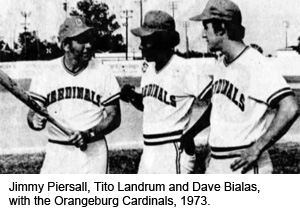
The best prospect on the club was 18-year-old outfielder Tito Landrum. “He has all the tools to become a big leaguer,” Piersall said. “He has a lot to learn, but his attitude is good, he has a great arm and speed.”

Landrum told the Times-Democrat how Piersall helped him become a better hitter by having him place more weight on his front foot and less on his back foot.

(Landrum batted .279 in 70 games for Orangeburg. He would be the only member of the Orangeburg Cardinals to play in the major leagues. He spent nine seasons in the majors _ eight with St. Louis _ and played in two World Series.)

Three other players of note on the Orangeburg roster:

_ Dave Bialas, who would become a manager in the Cardinals’ farm system.

_ Rob Sievers, son of former big-league slugger Roy Sievers.

_ Randy Poffo, who would become the professional wrestler known as Macho Man Savage.

One and done

National media _ including the Washington Post and Heywood Hale Broun of CBS News _ came to Orangeburg to do stories on Piersall.

In August, Piersall experienced chest pains, was taken to a hospital and was diagnosed with bronchitis, Dwyer said, before returning to the team. (Two years later, Piersall was found to have blocked arteries and underwent heart surgery.)

Orangeburg finished in last place with a 50-72 record.

In 1974, Orangeburg became an affiliate of the Dodgers and Bart Shirley, a former major-league infielder, was named manager. Among the prospects on the 1974 Orangeburg Dodgers were Pedro Guerrero and Jeffrey Leonard.

With no other offers to manage, Piersall contacted his friend, Billy Martin, who’d replaced Whitey Herzog as Rangers manager, and Martin helped Piersall get a job in group ticket sales and promotions with the 1974 Rangers.

Previously: Jimmy Piersall and his NL debut against Cardinals