Feeds:
Posts
Comments

Rod Brewer and Stan Royer, corner infield prospects, each had his best performance in one of the Cardinals’ most productive games.

On Sept. 20, 1992, Brewer had five hits, a walk, four runs scored and a RBI, and Royer had four hits, a walk, four runs scored and four RBI, in the Cardinals’ 16-4 victory over the Cubs at Wrigley Field in Chicago.

Brewer, a first baseman, and Royer, a third baseman, combined for nine of the Cardinals’ 22 hits.

Rather than launch them into starting roles the next season, the performances represented the pinnacles of the short Cardinals careers of Brewer and Royer.

By July 1994, neither remained in the Cardinals’ organization.

Getting a look

Brewer and Royer came to the Cardinals by different paths. Brewer was taken by them in the fifth round of the 1987 amateur draft. Royer was one of three players acquired by the Cardinals in the August 1990 trade of Willie McGee to the Athletics.

In 1992, Brewer and Royer were standouts with Louisville, the Cardinals’ top farm club. Brewer, 26, batted .288 with 18 home runs and 86 RBI for Louisville. Royer, 25, hit .282 with 31 doubles and 77 RBI.

Both were called up to the Cardinals in September 1992 when rosters expanded. Manager Joe Torre started them in the Sunday afternoon series finale against the Cubs. Brewer played first base and batted fifth in the order. Royer played third base and batted sixth.

They would be facing Cubs starter Shawn Boskie, who had won his first three decisions and four of his first six before fading.

Head scratcher

Boskie faced seven Cardinals batters in the first inning without getting an out. He yielded six hits and a walk and was charged with six earned runs. Brewer and Royer each singled and scored in the inning. Royer’s hit drove in a run.

“My main problem is all in my head,” Boskie said to the Chicago Tribune. “That’s the last thing I want to admit _ that I’m a head case _ but if I was looking at it from the outside, that’s what I’d have to say.”

The Cardinals totaled 22 hits and five walks against five Cubs pitchers.

“The Cubs not only embarrassed themselves _ they humiliated everyone who paid to watch them wallow through perhaps their most wretched loss of the season,” wrote the Tribune.

Royer hit his first major-league home run, a two-run shot, in the sixth against Jeff Hartsock, who was making his second appearance in the big leagues. There to witness it was Royer’s father, Harold, who coached him at Charleston (Ill.) High School.

“I love this ball park,” Royer told the St. Louis Post-Dispatch. “It’s bricks and grass _ what a ball park should be.” Boxscore

Decisions, decisions

The breakout game for Brewer and Royer naturally raised questions about where they fit in the Cardinals’ plans for 1993.

“It was a good day,” said Torre, “but when you play 162 games you don’t get overly excited about one day. You’ve got to watch a number of at-bats and then make up your mind. That’s like a guy hitting two home runs on Opening Day and thinking he’s going to hit .320.”

Cardinals instructor George Kissell had called Royer “a Ken Boyer type” _ referring to the Cardinals’ standout third baseman of the 1950s and 1960s _ but Torre added, “Not that he has Boyer’s ability, obviously, but just the way he carries himself.”

The 1992 Cardinals had Andres Galarraga at first base and Todd Zeile at third base. Galarraga was an impending free agent, creating a potential opening at first in 1993, but Zeile was entrenched at third.

“It’s tough to see where he fits in,” Torre said of Royer, “but if you hit, they will find a place for you.”

Regarding the status of he and Brewer, Royer said, “If we both play well, something is going to happen. Somebody is going to want us. I would love to play for the Cardinals. I grew up watching them and St. Louis is close to my family (in Illinois), but I can’t say that if I had a chance to go somewhere else I wouldn’t be excited.”

Not in the Cards

Brewer and Royer both made the most of their opportunities with the 1992 Cardinals. Brewer hit .301 (31-for-103) in 29 games. Royer hit .323 (10-for-31) in 13 games.

Neither, though, won a starting job in 1993. After Galarraga departed for the Rockies, the Cardinals acquired Gregg Jefferies from the Royals to play first base. Zeile remained at third base.

Brewer spent 1993 as a Cardinals reserve. He hit .286 with two home runs and 20 RBI. After the season, he signed with a team in Japan.

Royer spent most of the 1993 season with Louisville. In 24 games for St. Louis, he hit .304 (14-for-46).

In 1994, Royer stuck with the Cardinals as a reserve, but hit .175 (10-for-57). He was released in July, picked up by the Red Sox and ended his big-league career with them that year.

Previously: Why Cardinals traded Willie McGee to Athletics

Though they entered September with a 10-game lead over their closest pursuer, making a pennant a virtual given, the Cardinals reacted with an outpouring of giddy wonderment on the night they clinched the 1967 National League pennant.

The 1967 Cardinals were a diverse blend of proud, talented professionals who liked and respected one another. They played smart, tough, fundamentally sound baseball. Winning a title together unleashed a flow of emotions.

On Sept. 18, 1967, the Cardinals, behind the pitching of Bob Gibson, beat the Phillies, 5-1, at Philadelphia. The victory gave the Cardinals a 95-56 record with 11 games left. Even if the Cardinals lost all 11 and the second place Giants (81-68) won all 13 of their remaining games, the Cardinals couldn’t be caught.

“It’s been a great-spirited club,” Cardinals general manager Stan Musial told Philadelphia Daily News columnist Stan Hochman. “It never gave up. It met all the challenges.”

Winning combination

The Cardinals went into the Monday night game at Connie Mack Stadium knowing a win would secure a pennant. Gibson, making his third start since recovering from a broken bone in his right leg, was matched against Dick Ellsworth and they engaged in a scoreless duel through five innings.

Dal Maxvill got the Cardinals’ first hit, a leadoff single in the sixth, moved to second on Gibson’s sacrifice bunt and scored on Lou Brock’s double.

Julian Javier followed with a single to left, driving in Brock and putting the Cardinals ahead, 2-0. When the throw from left fielder Tony Gonzalez carried to the plate in an unsuccessful bid to nail Brock, Javier moved to second. After Curt Flood struck out, Ellsworth issued an intentional pass to Orlando Cepeda.

Mike Shannon foiled that strategy with a double down the left-field line. Javier scored and Cepeda went to third. Gonzalez threw to second, trying to nab Shannon, but second baseman Cookie Rojas cut off the throw and fired to third, hoping to catch Cepeda. The peg was wild and sailed past third baseman Tony Taylor. Cepeda scored, giving the Cardinals a 4-0 lead.

Gibson retired the last nine consecutive Phillies batters, completing a three-hitter. Boxscore

Letting loose

Inside the cramped visitors’ clubhouse, the Cardinals uncorked bottles of Great Western champagne. They drank from paper cups and doused each other with champagne and beer.

“They looked like college kids after an upset victory, not pros at the end of a runaway pennant race,” observed columnist Frank Dolson of the Philadelphia Inquirer. “Geysers of champagne soaked players and visitors. The new National League champions screamed and chanted and went berserk.”

As the champagne flowed, players carried onlookers, fully clothed, into the showers. Broadcaster Jack Buck and manager Red Schoendienst were among the first to get impromptu showers. Then it was Musial’s turn. With Roger Maris grabbing one arm and Phil Gagliano gripping the other, Musial, wearing a suit, was lifted into the showers as he pleaded, “No, no.”

“He emerged moments later drenched from head to foot,” Dolson wrote.

The revelry lasted more than an hour before the Cardinals gathered themselves and headed to a post-game dinner and party hosted by team owner Gussie Busch at Old Bookbinders restaurant in downtown Philadelphia.

Unity and likeability

Cardinals players cited three factors for the success of the 1967 team: 1. Unity and likability. 2. Fundamental soundness in all skillsets. 3. Contributions from younger, or less experienced, pitchers.

“I can’t remember ever having as much fun in my life playing baseball as this year,” Flood said.

Said Cepeda: “I never had so much fun in my life. Never. There are a lot of beautiful people on this ball club.”

Cepeda, acquired from the Giants in May 1966, and Maris, acquired from the Yankees in December 1966, fit well with key holdovers from the 1964 World Series champion Cardinals: Brock, Flood, Gibson, Javier, Maxvill, Tim McCarver and Shannon.

“Orlando has helped to make this ball club jell _ out on the field and in here (the clubhouse),” Flood said. “He fit in so well it is hard to remember what it was like when he wasn’t here.”

Regarding Maris, Flood said, “He’d offer you the shirt off his back and be mad if you didn’t take it. Roger is not an introvert by any means. He’s fun. A lot of fun.”

Fundamental soundness

“This club has pitching, defense, offense, speed,” Cepeda told Bill Conlin of the Philadelphia Daily News. “We can beat you so many ways.”

Flood: “We were very versatile. We didn’t have to wait around for someone to hit a home run. Lou Brock could walk, steal second and someone would single him home and we had a run.”

Maris: “The biggest thing was attitude. We had guys who felt they could hit any pitcher, any time.”

McCarver: “We had unselfish hitters and selfish pitchers. That’s right. They refused to give up any runs.”

Emerging pitching

Among the young pitchers who delivered for the 1967 Cardinals were Nelson Briles, 24, (14 wins); Steve Carlton, 22, (14 wins); Larry Jaster, 23, (nine wins); and Ron Willis, 24, (10 saves and six wins). Also, Dick Hughes, 29, a rookie, had a team-high 16 wins.

Cardinals reliever Hal Woodeshick credited pitching coach Billy Muffett.

“It was Muffett who changed Dick Hughes and Nellie Briles to the no-windup delivery,” Woodeshick said to the St. Louis Post-Dispatch. “Muffett brought along Steve Carlton, too, and he changed Ron Willis to sidearm. He had to have the young pitching come through after we left spring training, or we had nothing. They ought to triple Muffett’s pay.”

Said Musial: “The young pitching made the difference.”


Attempting to hit a home run at the most urgent point in the most crucial game of the season, Terry Pendleton had the presence of mind to make an adjustment in the middle of his at-bat and accomplished his mission.

Delivering one of the most improbable home runs in franchise lore, Pendleton revived the Cardinals and deflated the Mets.

On Sept. 11, 1987, Pendleton hit a two-run homer with two outs in the ninth inning against Roger McDowell, tying the score. The Cardinals won in the 10th, a victory that propelled them on a path to a National League pennant.

“A big morale boost for us,” second baseman Tommy Herr said to the St. Louis Post-Dispatch. “We got some of the spunk back that we had early in the season.”

Tight race

The 1987 Cardinals entered September in first place in the NL East Division, 5.5 games ahead of the second-place Mets.

However, the Mets, defending World Series champions, appeared to have regained their swagger as they opened a three-game series with the Cardinals at New York’s Shea Stadium. The Cardinals had lost three in a row, and four of their last five, and their lead had shrunk to 1.5 games ahead of the Mets.

Game 1 of the series matched John Tudor of the Cardinals against Ron Darling of the Mets. Before a raucous crowd of 51,795, the Mets scored three in the first against Tudor and carried a 4-1 lead into the ninth. A victory would move the Mets to within a half-game of the Cardinals and put them in position to secure first place with a series sweep.

The Cardinals were held to one hit through eight innings. Vince Coleman got a bunt single in the sixth. Darling, trying to field the ball, stumbled, attempted to break his fall with his right hand and jammed his thumb, tearing ligaments.

The injury foreshadowed the trouble to come in the ninth.

Handling heat

McDowell, the third Mets pitcher in the game, worked a scoreless eighth.

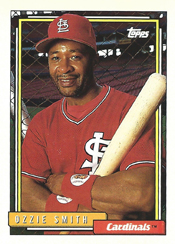
In the ninth, he walked the first batter, Ozzie Smith. Herr grounded out to first, with Smith moving to second. Dan Driessen struck out.

“It didn’t look very good,” Cardinals manager Whitey Herzog said.

McDowell got ahead in the count, 1-and-2, to the next batter, Willie McGee. With the Mets one strike away from victory, the crowd rocked the stadium.

“I wasn’t really worried about the pressure,” McGee said to the Hartford Courant. “When you’ve been there after a while, you learn how to deal with it.”

McGee swung at a pitch up in the strike zone and grounded a single into center field, driving in Smith and making the score 4-2.

Pendleton plan

Next up was Pendleton. He hadn’t hit a home run in a month _ Aug. 11 versus the Pirates _ and McDowell hadn’t yielded a home run in more than a month.

Yet, Pendleton went to the plate with the intent of hitting a home run.

“That’s all I was thinking,” Pendleton said. “I knew that’s what we needed.”

The first pitch from McDowell was a sinker. Pendleton grounded it foul.

“So I decided to move up (in the batter’s box) a little bit and see if I could catch one before it sank,” Pendleton said.

McDowell threw another sinker. “It was down,” McDowell said. “I thought it was a pretty good sinker.”

Pendleton connected with the pitch before it dipped too low and drove it to straightaway center. Center fielder Mookie Wilson moved back toward the wall. “I knew he hit it well,” Wilson said, “but the wind was blowing in.”

The ball carried over the wall at the 410-foot mark for a two-run home run, tying the score at 4-4 and stunning the crowd.

“He is not a home run hitter,” Mets first baseman Keith Hernandez said, “but that’s what it called for _ and he got it. He probably got the biggest hit of the year for them. If they win it, that will be the hit that did it.” Video

David Green followed with a double, but Tom Pagnozzi struck out, ending the Cardinals’ half of the ninth.

Ken Dayley, the Cardinals’ fifth pitcher of the game, held the Mets scoreless in the bottom of the ninth.

Wakeup call

Mets manager Davey Johnson brought in Jesse Orosco to pitch the 10th. With one out, the Cardinals got consecutive singles from Coleman, Smith and Herr. Coleman scored on Herr’s hit, giving the Cardinals the lead. Driessen grounded out, scoring Smith from third and putting St. Louis ahead, 6-4.

Dayley retired the Mets in order in the 10th, sealing the win and sending the Mets reeling. Boxscore

“It was another chance for us to go for the jugular and we weren’t able to do it,” said Hernandez, the former Cardinal. “That’s a big, big win for them. It has to be very uplifting.”

Said Pendleton to the Associated Press: “This will wake us up.”

The victory stretched the Cardinals’ lead over the Mets to 2.5 games.

The next day, Sept. 12, the Mets started their ace, Dwight Gooden, against the Cardinals’ Greg Mathews. Herr produced three RBI, Mathews pitched a complete game gem and the Cardinals won, 8-1, extending their lead to 3.5 games. “Doc was wild,” Johnson said of Gooden, “and he didn’t have very good stuff either.”

Said Mets second baseman Tim Teufel: “We had the momentum going into this series and they took it away from us.”

The Cardinals went on to finish 95-67 _ three games ahead of the Mets _ and clinch the division title. They also won the pennant, beating the Giants in the NL Championship Series, before losing to the Twins in a seven-game World Series.

Previously: Top 10 facts about 1987 NL champion Cardinals

Heading into the final month of the season in pursuit of a second consecutive National League pennant, the Cardinals sought an upgrade to their infield defense. They took a chance on a light-hitting shortstop with a history of alcohol problems.

Rabbit Maranville fielded with flair. Pairing Maranville at shortstop with Frankie Frisch at second base gave the Cardinals a keystone combination of future Hall of Famers.

On Sept. 2, 1927, the Cardinals rescued Maranville from exile, acquiring him from the minor-league Rochester Tribe and inserting him at shortstop for the stretch run.

The move didn’t pay immediate dividends. Maranville was injured soon after he joined the Cardinals and was sidelined for three weeks. The defending champion Cardinals finished a close second to the 1927 pennant-winning Pirates. However, Maranville returned to the Cardinals in 1928 and helped them win their second NL championship.

Battle with bottle

Walter Maranville got the nickname “Rabbit” when he was in the minor leagues with the New Bedford Whalers. There are two versions regarding the nickname’s origin, according to a biography by the Society for American Baseball Research. One cites Maranville’s big ears. Another claims the nickname developed because of the way Maranville scurried about the field.

Maranville, 5 feet 5, 155 pounds, debuted in the major leagues with the 1912 Braves. He fielded well, had good range and was skilled at turning a double play. He was a key player for the 1914 NL champion Braves. Though he never batted .300 during a full season, his defensive abilities elevated him to elite status among big-league shortstops.

By 1926, though, Maranville, 34, appeared to be finished as a player. He admitted to having a drinking problem and he no longer performed at a top level on the field. In August 1926, the Dodgers released him and he went unclaimed.

Three months later, in November 1926, Maranville accepted an offer to join Rochester. The minor-league team was managed by George Stallings. He had been Maranville’s manager with the Braves from 1913-20.

Staying sober, Maranville, 35, excelled for Rochester in 1927. He batted .298 with 151 hits in 135 games and looked sharp again in the field.

On Sept. 1, 1927, the Cardinals went to Rochester to play an exhibition game against the minor-league team. Maranville played well. After the game, the Cardinals purchased his contract.

Maranville was returning to the big leagues.

Rabbit redux

The Cardinals’ starting shortstop, Tommy Thevenow, broke an ankle in June and he was projected to be sidelined until at least mid-September. A rookie, Heinie Schuble, replaced him.

Entering September in the thick of the pennant race _ 1.5 games behind the NL co-leading Pirates and Cubs _ the Cardinals determined they could enhance their bid for a championship by getting a veteran shortstop.

After seeing Maranville in the exhibition game, the Cardinals were convinced he would fulfill their need.

“He is one of the best fielders in the game,” declared the St. Louis Post-Dispatch.

With Maranville at shortstop, Frisch “will no longer have to carry the men on his right and can now devote his entire attention to his own responsibilities,” wrote Post-Dispatch columnist John Wray.

On its editorial page, the Post-Dispatch gushed, “We expect great things of the Rabbit. At Frankie Frisch’s side, he adds another brilliant spot to the infield … When everything is said and done, the Rabbit will go home with his pockets full of World Series cash.”

That’s a winner

After the Sept. 1 exhibition game at Rochester, the Cardinals departed for Pittsburgh. Maranville took a later train and arrived in the Cardinals clubhouse in time for the Sept. 2 afternoon game against the Pirates. Manager Bob O’Farrell put Maranville in the lineup and batted him eighth in the order. Maranville handled nine chances (four putouts and five assists) and got a hit in three at-bats. Boxscore

“We were pretty well sold on the purchase of Maranville. We could see where he would fit nicely and be mighty helpful,” St. Louis Star and Times columnist James Gould opined.

Four days later, on Sept. 5, in the second game of a Labor Day doubleheader against the Cubs in Chicago, Maranville and center fielder Ernie Orsatti collided while pursuing a ball hit by Woody English. Maranville was injured. Boxscore

Sidelined for three weeks, Maranville returned to the lineup on Sept. 26, with the Cardinals two behind the front-running Pirates.

The Pirates finished in first at 94-60. The runner-up Cardinals were 1.5 games behind at 92-61. Maranville appeared in nine games, including eight starts at shortstop, and hit .241.

Thevenow opened the 1928 season as the Cardinals’ starting shortstop, with Maranville on the roster as a reserve. Thevenow struggled to hit, batting .202, and was replaced as the starter by Maranville on May 26.

Cardinals manager Bill McKechnie, who had been Maranville’s manager for three years with the Pirates, kept Maranville, 36, as the starter for the remainder of the 1928 season. The Cardinals won the pennant, with Maranville making 105 starts at shortstop. He batted .240 with 14 doubles and 10 triples. In the four-game World Series against the Yankees, he hit .308.

After the season, the Cardinals sold Maranville’s contract to the Braves.

Maranville, who played 23 years in the big leagues, including 15 seasons with the Braves, was elected to the National Baseball Hall of Fame in 1954. Frisch was elected seven years earlier, in 1947.

Previously: Ozzie Smith tops NL shortstops for durability

Juan Encarnacion was where he was supposed to be, but it was the wrong place at the wrong time.

In the on-deck circle at Busch Stadium, waiting to enter the game as a pinch-hitter for pitcher Randy Flores, Encarnacion was struck in the left eye by a foul ball lined off the bat of Cardinals teammate Aaron Miles.

Encarnacion had no time to react. The ball hit him with full force, shattering his eye socket and injuring the eye.

“If he was looking elsewhere and not paying attention, he might have gotten killed,” Cardinals manager Tony La Russa said to the St. Louis Post-Dispatch.

The accident happened on Aug. 31, 2007, in a game between the Reds and Cardinals at St. Louis.

Encarnacion never would play baseball again.

Fear factor

Encarnacion entered the big leagues with the 1997 Tigers and went on to play for the Reds, Marlins and Dodgers. In January 2006, Encarnacion, a free agent, signed with the Cardinals. He became their starting right fielder and batted .278 with 19 home runs and 79 RBI for the 2006 World Series champions.

In 2007, Encarnacion hit .283 with nine home runs and 47 RBI. In August, the Cardinals called up Rick Ankiel from the minors and the former pitcher shared time with Encarnacion in right field.

Ankiel got the start in right for the Cardinals’ game versus the Reds on Aug. 31.

The Reds led, 4-3, when Miles led off the bottom half of the sixth. Batting from the right side, Miles swung at an outside pitch from left-hander Jon Coutlangus and lined it foul. The ball sliced over the first-base line and directly toward the on-deck circle.

When the ball struck Encarnacion, he collapsed onto the ground. La Russa was one of the first to reach him. “I’ve seen guys smoked in the dome (head), but not dead center,” La Russa told the Associated Press.

A stretcher was brought onto the field, but Encarnacion, who remained conscious, preferred to stand and was helped off the field by trainers and teammates.

“It’s about as bad as it gets as far as what you can see on a baseball field,” said Cardinals center fielder Jim Edmonds. “I think it’s everybody’s biggest fear.”

When the game resumed, Miles struck out. So Taguchi batted for Flores and the Reds replaced Coutlangus with Gary Majewski. Taguchi doubled, Brendan Ryan got an infield single and David Eckstein was hit by a pitch. Eddie Guardado relieved and the first batter he faced, Ankiel, hit a grand slam, giving the Cardinals a 7-4 lead. Boxscore

Thinking of others

Encarnacion was taken to a hospital. In addition to the shattered eye socket and eye injury _ it was thought damage had been done to the optic nerve _ Encarnacion suffered a concussion.

Said Dr. George Paletta, the Cardinals’ medical supervisor: “This is the worst trauma I’ve seen.”

After the game, several Cardinals players and personnel visited Encarnacion at the hospital. Albert Pujols, Yadier Molina, Joel Pineiro and Miles kept watch over Encarnacion that night.

“We’re all pulling for him,” Miles said. “Hoping for the best.”

Pujols told Post-Dispatch columnist Bernie Miklasz that Encarnacion was alert and responsive. “He was trying to make us feel better,” Pujols said. “He was making jokes. He was worn out, but he talked and was in pretty good spirits. He didn’t want anyone to feel sad.”

The next day, members of Encarnacion’s family arrived at the hospital from the Dominican Republic.

The Cardinals moved the on-deck circle to a spot a few feet farther from the dugout.

On Sept. 4, Encarnacion was released from the hospital. Two weeks later, he was driven to Boston to see an eye specialist. Surgery was scheduled to repair the eye socket fractures. A month later, it was determined Encarnacion had 20/400 vision in his left eye.

At 31, his playing days were done.

Previously: Why Cardinals were impressed by Juan Encarnacion


Twelve years after the Cardinals and Royals opposed one another in the World Series, the teams were matched for the first time in the regular season. Two constants linked those events: Willie McGee played and tempers flared.

In the seven-game 1985 World Series, McGee fielded flawlessly in center field for the Cardinals and produced seven hits, including two doubles and a home run.

When the Cardinals and Royals met for the first time in the regular season, on Aug. 29, 1997, at Kansas City, McGee was the only player in either lineup who had participated in the 1985 World Series.

Playing as the designated hitter in 1997, McGee hit a three-run triple, breaking a 6-6 tie and carrying the Cardinals to victory.

The next night, Aug. 30, in the second game of the regular-season series, players and coaches brawled on the field after Cardinals pitcher Mark Petkovsek plunked Johnny Damon with a pitch. Petkovsek and Damon were ejected.

The skirmish brought back memories of Game 7 of the 1985 World Series when Cardinals manager Whitey Herzog and pitcher Joaquin Andujar were ejected for arguing with umpire Don Denkinger.

Oldie but goodie

Major League Baseball began interleague play in the regular season in 1997. The Cardinals and Royals had met in exhibition games and the World Series, but not in the regular season since Kansas City joined the American League as an expansion franchise in 1969.

A crowd of 36,006 filled Kauffman Stadium for the series opener.

The Royals led, 6-5, through seven innings.

In the eighth, with reliever Hector Carrasco pitching for the Royals, Tom Lampkin singled. After Phil Plantier flied out, Delino DeShields tripled, driving in Lampkin and tying the score.

Gregg Olson relieved and struck out Royce Clayton.

Mark McGwire was up next. The Royals opted to walk him intentionally and take their chances with Ray Lankford.

The strategy backfired. Lankford worked a walk, loading the bases.

That brought McGee to the plate. A switch-hitter, McGee batted from the left side against Olson. He got a curve and slashed it down the first-base line. All three runners scored, putting the Cardinals ahead, 9-6, and McGee raced to third with a triple.

“He’s better than ever,” Cardinals manager Tony La Russa said of McGee, 38. “He just gets a little bit achier.”

Asked about the 1985 World Series, when the Royals won Game 6 after Denkinger’s botched call at first base and then routed the Cardinals in Game 7, McGee told the St. Louis Post-Dispatch, “I’ll never forget it. I was heartbroken.”

Closer Dennis Eckersley yielded a run in the ninth, but the Cardinals held on to win the first regular-season showdown versus the Royals, 9-7. Boxscore

Frustration shows

The Royals quickly took control of Game 2 of the series. They led 6-1 after three. In the fourth, the Royals scored eight runs against Petkovsek, who had relieved starter Manny Aybar, and went ahead, 14-1. Jermaine Dye capped the outburst with a grand slam.

Petkovsek’s first pitch to the next batter, Damon, hit him on the right ankle. Damon charged the mound. Petkovsek threw one punch _ and it clipped his catcher, Tom Pagnozzi, who had chased after Damon. Both benches and bullpens emptied.

Coaches Dave Duncan of the Cardinals and Jamie Quirk of the Royals wrestled on the ground. “We were talking about pitching rotations,” Quirk quipped to the Post-Dispatch.

Royals pitcher Tim Belcher had his uniform jersey shredded. He blamed Cardinals counterpart Andy Benes, whom he called “Sasquatch.”

“His hands are like feet,” Belcher said.

Macho men

Petkvosek said he didn’t intend to hit Damon with a pitch and La Russa added, “I don’t know what Petkovsek was doing except trying to get the ball down.”

In the sixth inning, Belcher hit Plantier with a pitch. “The pitch got away from me,” Belcher said.

The Royals won, 16-5. Boxscore

Asked his thoughts on the action-packed start to the rivalry, Royals catcher Mike Macfarlane said,  “These are two of the funnest games I’ve ever played in.”

Previously: Cardinals were Royals’ first opponent in Kansas City