Feeds:
Posts
Comments

Lee May, one of the National League’s most consistent sluggers in the late 1960s and early 1970s, hit for both average and power against the Cardinals.
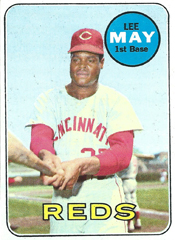
A first baseman known as “Big Bopper,” he played for the Reds (1965-71) and Astros (1972-74) in the National League before going to the American League with the Orioles and Royals.

In 103 games versus the Cardinals, May had 128 hits, 26 doubles, 16 home runs and 63 RBI. His career .327 batting average against the Cardinals is 60 points higher than his career major-league mark of .267.

A standout high school athlete in Birmingham, Ala., May was offered a football scholarship to play fullback at the University of Nebraska, but he elected to sign a baseball contract with the Reds. He modeled his swing after his boyhood idol, American League slugger Harmon Killebrew.

“May was a husky bear of a man with the disposition of a newborn cub, a guy with a wondrous sense of humor, a guy loved by everybody who came into contact with him,” wrote Hal McCoy in the Dayton Daily News.

From 1969-74, May ranked among the top 10 in the NL in home runs each year. In 1970, when he hit 34 home runs for the pennant-winning Reds, May delivered one of his most memorable long balls _ a grand slam against the Cardinals.

Keep swinging

On July 20, 1970, the Reds and Cardinals had a Monday twi-night doubleheader at Busch Stadium in St. Louis.

May was in a slump. He had batted .304 in May but .220 in June. Hitless in his three previous games, he entered the doubleheader with a .246 batting average.

“I’ve been pressing a little,” May said to the Associated Press. “It’s always natural for a guy in a slump to press. When you’re in a slump, you look at it like the other team has about 20 infielders and 20 outfielders. So it really doesn’t make any difference who is pitching.”

In the opener, May was 1-for-4. His two-out double in the eighth against Jerry Reuss drove in Tony Perez from second base. When left fielder Lou Brock bobbled the ball, Johnny Bench raced from first to home, tying the score at 3-3. A run-scoring single by Bobby Tolan in the ninth lifted the Reds to a 4-3 victory. Boxscore

Reds manager Sparky Anderson intended to rest May in the second game. “He’s been in a little slump,” Anderson said. “I was going to get him away from the field and give him a chance to relax. Then he said, ‘I don’t need mental help. I just need my swings.’ ”

Winning wallop

May started Game 2 and was in his usual fifth spot in the batting order.

The starting pitchers, Tony Cloninger of the Reds and Chuck Taylor of the Cardinals, engaged in a scoreless duel. Cloninger shut out the Cardinals for eight innings before being relieved by Wayne Granger. Taylor shut out the Reds through nine.

Taylor faced the minimum 27 batters before he was lifted for a pinch hitter. He yielded three singles, but two of the runners were erased on double play grounders and the other was caught by catcher Joe Torre attempting to steal second.

With the score at 0-0, a rookie, Bob Chlupsa, was chosen by Cardinals manager Red Schoendienst to pitch the 10th.

The Reds loaded the bases with one out on singles by Pete Rose and Bernie Carbo and a walk to Perez.

May stepped to plate and drove a pitch 400 feet over the wall in left-center for a grand slam.

“It was a fat pitch _ fastball, high _ and that’s what he gets paid to hit,” Chlupsa said to the St. Louis Post-Dispatch.

Said May: “I feel a little confidence coming back. I feel like I’m going to shake this thing.”

Granger retired the Cardinals in order in the bottom half of the 10th, giving the Reds a 4-0 victory and a sweep of the doubleheader. Boxscore

The Reds set a NL record in the game by playing 10 innings without leaving a runner on base.

Fast learner

Three months later, May hit .389 (7-for-18) with two doubles and two home runs against the Orioles in the 1970 World Series.

“He might get fooled on a pitch, but on that same pitch, the next time he sees it, he’ll knock it out of the park,” said Reds hitting coach Ted Kluszewski.

After the 1971 season, May was sent to the Astros in the trade that brought future Hall of Fame second baseman Joe Morgan to the Reds.

May played 18 seasons in the big leagues and produced 354 home runs and 1,244 RBI.

His brother, Carlos May, played 10 seasons (1968-77) in the big leagues as an outfielder for the White Sox, Yankees and Angels.

Previously: Johnny Bench was nemesis of Steve Carlton
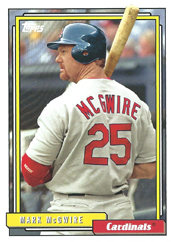
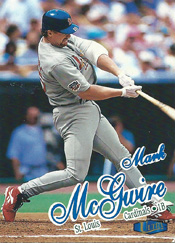
Expected to supply power and run production, Mark McGwire was a dud in his first 10 games with the Cardinals.

Slow to adjust to National League pitching, McGwire batted .088 in 10 games after being acquired by the Cardinals from the Athletics on July 31, 1997.
McGwire had three hits and one RBI in his first 34 at-bats for the Cardinals. He produced two singles in seven games before hitting a home run in his eighth. He was hitless in the next two.

The Cardinals lost eight of those 10 games.

After that, McGwire recovered from his slump and delivered the offense most expected. In light of subsequent revelations, the question of whether performance-enhancing drugs aided his breakout cannot be dismissed.

In 2010, McGwire told the Associated Press he used steroids on and off for nearly a decade, beginning after the 1989 season.

“I remember trying steroids very briefly in the 1989-1990 offseason and then after I was injured in 1993, I used steroids again,” McGwire said. “I used them on occasion throughout the 1990s, including during the 1998 season.”

McGwire told Bob Costas of MLB Network that studying pitchers and making his swing shorter _ not performance-enhancing drugs _ led to his increase in home runs, but skeptics weren’t convinced.

“I think that’s a lot of horse muffins,” Hall of Fame pitcher Bob Feller said. “If it didn’t help him any, what the hell was he taking them for? Of course it helped him.”

Singles hitter

McGwire, acquired for pitchers T.J. Mathews, Eric Ludwick and Blake Stein, went hitless with a walk in his first Cardinals game on Aug. 1, 1997, at Philadelphia.

The next day, Aug. 2, he got his first Cardinals hit, an infield single against the Phillies’ Matt Beech.

McGwire was hitless over the next three games _ one at Philadelphia and two at New York versus the Mets.

On Aug. 6, he got his second Cardinals hit, a bloop single to center against the Braves’ Greg Maddux.

McGwire was hitless the next night, Aug. 7, versus the Braves. His batting average after seven road games versus the Phillies, Mets and Braves was .080.

“I’m big into visualization,” McGwire told the St. Louis Post-Dispatch. “You have to visualize how the pitch is going to come and what kind of pitch he has. When I’m facing a guy for the first time … they’re getting me out before I really see what they have.”

Cardinals manager Tony La Russa noted that Ray Lankford had been sidelined because of a hamstring injury since McGwire joined the team. La Russa had planned to bat Lankford third in the order. Without Lankford, McGwire, in the cleanup spot, batted behind a rotation of No. 3 hitters _ Phil Plantier, John Mabry, Willie McGee and Ron Gant.

Still, it was surprising, if not concerning, that McGwire, acquired to provide instant offense, was without an extra-base hit after seven games.

“All I can say is this is very humbling,” McGwire said.

Welcome home

McGwire’s eighth Cardinals game, on Aug. 8, was his first home game. He hadn’t been in St. Louis since playing there in an exhibition game for Team USA in 1983.

Lankford returned to the lineup for that night’s game against the Phillies at Busch Stadium. La Russa batted Lankford third and McGwire fourth in the order.

When McGwire came to the plate in the first inning, with runners on first and second, one out, most among the crowd of 38,300 gave him a standing ovation. McGwire popped out to the second baseman.

In the third, with the Cardinals ahead, 2-0, Lankford hit a solo home run against Mark Leiter. Two pitches later, McGwire followed with his first Cardinals home run. The ball, which barely avoided hooking into foul territory, traveled 441 feet before slamming into the glass exterior of the Stadium Club dining area above the left field bleachers.

The crowd roared its approval. After returning to the dugout, McGwire emerged onto the top step and waved to the fans. Video

“I don’t think I’ve ever heard a crowd so loud in a regular-season game,” McGwire said.

In his last two at-bats of the game, McGwire flied out to right and walked. The Cardinals won, 6-1. Boxscore

Many homers, no pennants

After the feel-good home debut, McGwire went hitless against the Phillies in the remaining two games of the series. The Cardinals lost both.

In the Aug. 10 game, the Busch Stadium scoreboard, at La Russa’s request, displayed McGwire’s combined 1997 batting average with the Athletics and Cardinals (.267) rather than just his St. Louis mark.

After 10 games with the Cardinals, McGwire had an .088 batting average, two singles, one home run, one RBI and 12 strikeouts in 34 at-bats. It also didn’t go unnoticed that Mathews had three wins for the Athletics since being dealt for McGwire.

On Aug. 12, McGwire hit a double and a home run against the Mets’ Dave Mlicki. From then on, he improved his production.

In 25 games in August, McGwire hit nine home runs with 18 RBI and had an on-base percentage of .408.

In 26 games in September, McGwire hit 15 home runs with 24 RBI and had an on-base percentage of .413.

Overall for the 1997 Cardinals, McGwire hit 24 home runs with 42 RBI in 51 games. The Cardinals finished 73-89.

He had two epic seasons for the Cardinals in 1998 and 1999. McGwire hit 70 home runs with 147 RBI in 1998 and 65 home runs with 147 RBI in 1999, but the Cardinals failed to qualify for the postseason both years.

Previously: How Cardinals were able to acquire Mark McGwire

(Updated Jan. 9, 2019)

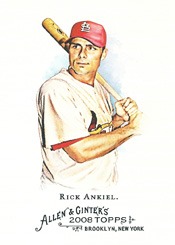
Early in the 2007 season, the Cardinals had a plan to call up Rick Ankiel from the minor leagues in September to see what he could do. By mid-summer, when Ankiel continued to clout home runs at a consistent clip for Memphis, the plan changed and the Cardinals moved up their timetable.

On Aug. 9, 2007, Ankiel returned to the big leagues with the Cardinals after a three-year absence.
When he had left, he was a pitcher.

He came back as an outfielder.

Arriving in St. Louis from Memphis late that Thursday afternoon, Ankiel was inserted in the starting lineup for that night’s game against the Padres.

It was a memorable return. Ankiel hit a three-run home run, signaling that his transformation from pitcher to slugger was no stunt.

Something to consider

In 2000, his first full season with the Cardinals, Ankiel was a starting pitcher. The left-hander earned 11 wins and struck out 194 in 175 innings. His career quickly unraveled during the 2000 postseason when he suddenly lost the ability to pitch in the strike zone.

Frustrated by injuries and unhappy with his career path, Ankiel decided during spring training in 2005 to give up pitching and become an outfielder.

Assigned to the minor leagues, Ankiel played for two Cardinals farm clubs _ Quad Cities and Springfield, Mo., _ in 2005. His combined statistics that season included 21 home runs and a .275 batting average.

Injured, Ankiel sat out the 2006 season.

In 2007, the Cardinals assigned him to their top farm team, Memphis, where he produced 104 hits in 102 games, with 32 home runs and 89 RBI.

Lineup upgrade

On Aug. 8, when asked by the St. Louis Post-Dispatch about Ankiel, Cardinals manager Tony La Russa said, “We’re talking about when is the right time” for a call-up.

Later that day, as the Memphis team was in Tacoma, awaiting a flight back home, Memphis manager Chris Maloney informed Ankiel the Cardinals wanted him to report to St. Louis the next day because a roster spot opened when Scott Spiezio went on leave to address a substance abuse problem, Ankiel said in his 2017 book “The Phenom.”

Ankiel arrived at Busch Stadium at 4 p.m. on Aug. 9, 2007.

“I pulled open the door to a major-league clubhouse I’d sometimes wondered if I’d ever see again,” Ankiel said in his book.

La Russa put Ankiel in the lineup as the right fielder and batted him second in the order, behind David Eckstein and ahead of Albert Pujols.

“It’s very overwhelming,” Ankiel admitted.

Ankiel, 28, hadn’t appeared in a major-league game since Oct. 1, 2004.

“If I didn’t think having him in the lineup gives us a better chance to win, he wouldn’t be here,” La Russa said.

Home sweet home

Ankiel received a standing ovation when he stepped to the plate in the first inning. Facing Chris Young, the Padres’ 6-foot-10 pitcher, Ankiel popped out to shortstop.

Young struck out Ankiel in the second and again in the fifth.

In the seventh, the Cardinals led, 2-0, and had runners on second and third, two outs, when Ankiel came to bat against Doug Brocail.

“I just hope people have patience and realize he’s still not a polished major-league hitter,” Cardinals television broadcaster Al Hrabosky said to viewers.

Broadcast partner Dan McLaughlin replied, “Chance here to make an impression, though.”

Ankiel pulled a 2-and-1 slider over the right-field wall, thrilling the crowd and his teammates.

In the dugout, La Russa beamed and applauded. Ankiel raised his right fist in triumph as he reached first base. Video

“Almost seven years after it had happened the first time, I felt as though I’d left my body again,” Ankiel said in his book. “This time, however, there was no panic. My breaths were short _ not out of fear but in celebration, in joy. I could feel the game in my heart, in my soul.”

Ankiel got a curtain call from the crowd of 42,848. Boxscore

“I’m happy to be home,” Ankiel said.

Power supply

Declaring Ankiel’s home run the “best single moment in St. Louis sports in 2007,” Post-Dispatch columnist Bernie Miklasz also wrote, “It was great theater and it moved anyone who witnessed it. Most of all, the homer gave us another indication of Ankiel’s strong, competitive character. He didn’t give up on himself after a barrage of misfortune that would have ruined many athletes. Ankiel deserved the joy and happiness that came his way.”

Jim Riggleman, the Cardinals’ minor-league field coordinator, said, “The moment he stopped pitching is the same moment he became the No. 1 power bat in the system.”

Ankiel had hit two home runs as a Cardinals pitcher in 2000. He became the first big-league player since Clint Hartung to hit his first big-league home run as a pitcher, return to the majors as a position player and hit a home run again. Hartung pitched for the Giants from 1947-50 and he was an outfielder for them in 1951 and 1952.

Before Hartung, the last major-league player to hit his first home run as a pitcher, change positions and hit a home run again was Babe Ruth.

On Aug. 11, two days after his dramatic return to the big leagues, Ankiel again dazzled. He hit two home runs _ a two-run shot off starter Derek Lowe and a solo blast off Roberto Hernandez _ in a 6-1 Cardinals triumph over the Dodgers at St. Louis.

In 47 games for the 2007 Cardinals, Ankiel produced 49 hits, with 11 home runs and 39 RBI.

The next year, Ankiel had his best season as a hitter, with 25 home runs and 71 RBI in 120 games for the 2008 Cardinals.

Previously: Pitching or hitting, Rick Ankiel was marvel and mystery

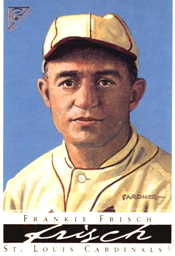
The last hit of the Hall of Fame career of Frankie Frisch completed a ninth-inning comeback that carried the Cardinals to a walkoff victory and inspired his teammates to carry Frisch off the field.

In 1937, Frisch, 40, was manager of the Cardinals. He also was in his last season as a player.
Frisch had been a standout second baseman for the Giants from 1919 to 1926. After he was dealt for Rogers Hornsby, Frisch continued his success with the Cardinals, helping them to four National League pennants and two World Series titles. He became their player-manager in 1933.

As late as 1936, Frisch played 59 games at second base and 22 at third base for the Cardinals, batting .274 with an on-base percentage of .353.

In 1937, however, Frisch seldom appeared in the lineup.

His last game at second base was on May 29, 1937. Over the next two months, he had five at-bats as a pinch hitter. Frisch failed to reach base in any of those plate appearances.

So it was a bit of a surprise when, with the outcome on the line in the Cardinals’ game against the Braves on Aug. 4 at St. Louis, Frisch put himself at the plate as a pinch hitter.

Keep the line moving

The Braves led, 6-2, entering the bottom of the ninth inning of the Wednesday afternoon game before 2,303 spectators at Sportsman’s Park.

Braves starter Lou Fette, who had a 13-3 record, appeared to be in control. The rookie from Alma, Mo., retired two of the first three batters in the ninth. Terry Moore, who had walked, was on first base when Johnny Mize came to the plate, representing the Cardinals’ last hope.

With a four-run lead, the Braves weren’t holding Moore at first. So, he went to second base uncontested while Fette focused on Mize.

Mize singled to right, scoring Moore and cutting the Braves’ lead to 6-3.

Joe Medwick followed with a double to left-center, driving home Mize and making the score 6-4.

Braves manager Bill McKechnie, the former Cardinals skipper, brought in Guy Bush to relief Fette. Bush had a 2.76 ERA.

Don Padgett greeted him with a single to right, scoring Medwick and reducing the Braves’ lead to 6-5.

Don Gutteridge got the Cardinals’ fourth consecutive hit _ a single to left. When Padgett advanced from first to third on the play, drawing the throw from the outfield, Gutteridge alertly took second.

With runners on second and third, Pepper Martin, sent to pinch-hit for Leo Durocher, received an intentional walk, loading the bases.

Stout heart

Mickey Owen was due up next for the Cardinals. A rookie catcher, Owen was the Cardinals’ eighth-place batter. He was 1-for-4 in the game, giving him a .214 batting mark for the season.

Frisch, who was batting .194 and hadn’t produced a hit since May 28, grabbed a bat and stood in at the plate for Owen.

“I felt I was the right man in this spot,” Frisch said to the St. Louis Star-Times. “I believed I could deliver the much-needed hit in the pinch … Why should I put some other man in that spot when I figured I could get a hit myself?”

Frisch, a switch hitter, batted from the left side against Bush, a right-hander. Swinging at the first pitch, Frisch “slashed it down the first-base line like a shot out of a howitzer,” the Star-Times reported.

The ball eluded first baseman Elbie Fletcher and bounded into right field. Padgett scored from third with the tying run and Gutteridge raced from second to the plate with the winning run for a 7-6 Cardinals victory. Boxscore

Frisch’s teammates rushed toward him, lifted him onto their shoulders and carried him triumphantly to the dugout.

“The best pinch-hit I’ve ever seen,” Medwick said.

Frisch, the Star-Times observed, “still packs a pretty stout heart beneath those red birds on his Cardinals uniform shirt.”

The hit gave Frisch 2,880 for his big-league career.

The next day, Frisch batted for the final time. Pinch-hitting in the ninth for Moore, Frisch grounded into a double play in a game the Cardinals lost 4-1 to the Braves.

Frisch finished with a career batting mark of .316 and 1,244 RBI. He was inducted into the National Baseball Hall of Fame in 1947.

Previously: Kolten Wong, Frankie Frisch gave Cards pop at 2nd

(Updated on July 31, 2018)

Unwilling to part with Manny Aybar, the Cardinals almost didn’t make the trade for Mark McGwire.

In July 1997, the Cardinals went in search of a power hitter. They had discussions with the Blue Jays about Joe Carter and with the Tigers about Travis Fryman. The slugger they wanted most was McGwire.

For the Cardinals to get him, the Athletics demanded a package that included Aybar, a top pitching prospect.

With the trade deadline of midnight July 31 fast approaching, the Cardinals held firm in their refusal to part with Aybar. As late as 6:30 p.m. on July 31, Cardinals general manager Walt Jocketty said he thought the deal wouldn’t happen.

When the Athletics relented and settled instead for Eric Ludwick, the trade was made. The Cardinals got McGwire for three pitchers: T.J. Mathews, Blake Stein and Ludwick.

Thumbs up

On July 25, after losing to the Marlins at St. Louis, the Cardinals fell to 48-53, six games behind the first-place Astros in the National League Central Division.

Unwilling to concede, the Cardinals determined what they needed most was another run producer in a lineup that included Ray Lankford, Ron Gant and Gary Gaetti.

Two days later, on July 27, McGwire told reporters he strongly would consider a trade to the Cardinals.

McGwire was eligible to become a free agent after the 1997 season, so the Athletics were open to trading him if they could get a good return. Because McGwire was a 10-year veteran who had played five consecutive seasons with his current team, the Athletics needed his approval before they could deal him. That’s why it was significant when McGwire went public with his consent of a possible trade to St. Louis.

Art of the deal

Initially, the Athletics inquired about the availability of two of the Cardinals’ most promising starting pitchers, Alan Benes and Matt Morris.

When Jocketty made it clear neither would be traded, the Athletics set their sights on two prospects in the Cardinals’ minor-league system: Aybar and catcher Eli Marrero.

Jocketty didn’t want to trade them either.

On July 29, Jocketty rated the Cardinals’ chances of acquiring McGwire as 50-50, according to the St. Louis Post-Dispatch.

Looking to keep options open, Jocketty spoke with the Blue Jays about Carter, but they wanted outfielder John Mabry. Jocketty said no.

The Tigers were willing to deal Fryman, but they wanted starting pitcher Todd Stottlemyre. Again, Jocketty said no.

McGwire remained the best option.

The Angels also had pursued McGwire, but when they dropped out of the bidding it left the Cardinals as the lone suitor and gave Jocketty leverage.

Holding firm

With their negotiating hand weakened, the Athletics ended their demand for Marrero _ they also had asked about two other prospects, pitcher Braden Looper and infielder Brent Butler _ but still insisted on Aybar being in the deal. Jocketty wouldn’t budge. “We couldn’t give up Aybar and Mathews,” he said.

Athletics general manager Sandy Alderson indicated to Jocketty the deal could be dead. “At one point,” Jocketty said, “I thought we weren’t going to be able to get it done.”

Faced with the likely prospect of getting nothing in return for McGwire if he departed as a free agent after the season, Alderson relented and took Ludwick instead of Aybar when he realized Jocketty wouldn’t change his stance.

“Sometimes free agency forces your decisions,” Alderson said.

On July 31, 1997, four days after talks began, the deal for McGwire was completed.

It takes a village

“We were determined to get a quality bat in the middle of our lineup and I think we got the best hitter we could,” Jocketty said.

McGwire twice led the American League in home runs and three times was the league leader in slugging percentage.

“He’s probably the greatest power hitter of his time,” said Stottlemyre.

Tony La Russa, who managed McGwire with the Athletics before joining the Cardinals after the 1995 season, was happy to have the slugger on his team again, but cautioned that McGwire alone couldn’t lift the Cardinals into first place.

“The quality of everything else we do has to raise itself a couple of levels for us to win a lot of games,” La Russa said.

For McGwire to be most effective, La Russa said, “we have to get on base in front of (him).”

Bernie Miklasz, Post-Dispatch columnist, acknowledged McGwire “will provide entertainment” and “will be a menacing presence” in the lineup, but expressed concern McGwire would depart as a free agent after the season. The Cardinals would have done better to trade for an emerging talent such as Jose Cruz, 23, of the Mariners, Miklasz wrote.

Slugging and scandal

Asked why he approved the trade, McGwire said, “I decided to do this because I needed a change and I needed a challenge.”

On Aug. 1, McGwire traveled from California to Philadelphia and joined the Cardinals 90 minutes before their game that night with the Phillies.

Put into the cleanup spot between Phil Plantier and Gant, McGwire was 0-for-3 with a walk against Garrett Stephenson and Ricky Bottalico.

On Sept. 16, 1997, the Cardinals signed McGwire to a three-year contract extension through 2000 worth $28.5 million. The deal included an option for a fourth year at $11 million. McGwire went on to hit 24 home runs with 42 RBI in 51 games for the 1997 Cardinals, but they finished 73-89.

McGwire hit 70 home runs with 147 RBI in 1998 and 65 home runs with 147 RBI in 1999, but the Cardinals failed to qualify for the postseason both years.

McGwire and the Cardinals got into the postseason in 2000 and 2001 but didn’t reach the World Series.

In five years with St. Louis, McGwire had 220 home runs and 473 RBI, but the achievements were tainted by his subsequent admission of using banned performance-enhancing drugs.

Previously: Mark McGwire had hot start to 1998 Cardinals season

Seeking to bolster their rotation and add a role model to mentor their young starting pitchers, the Cardinals wanted to bring back Matt Morris.

Confident in the offer they made to the Giants for Morris, the Cardinals were astonished when he was traded instead to the Pirates.

At the trading deadline on July 31, 2007, the Cardinals did acquire a starting pitcher, Joel Pineiro, from the Red Sox. At that time, though, Pineiro was in the minor leagues and his career appeared to be trending downward. Morris would have been a more prominent acquisition.

As it turned out, Pineiro became a productive starter for the Cardinals. Morris was out of the big leagues less than a year after the Cardinals tried to re-acquire him.

Learning to lead

The Cardinals, 2006 World Series champions, had a 49-53 record at the trade deadline on July 31, 2007. They were in third place in the National League Central, six games behind the front-running Brewers, but were determined they might make a run for the division title if they could improve their starting rotation.

Morris, who would turn 33 in August 2007, was their primary target.

He had pitched eight years for the Cardinals, posting a 101-62 record, before signing with the Giants as a free agent after the 2005 season.

Morris’ record with the 2007 Giants was 7-7 with a 4.35 ERA. The Cardinals saw him as someone who still could pitch effectively and help in the development of starters such as Adam Wainwright and Anthony Reyes.

“With us, he learned from guys like Darryl Kile about how to be a leader on a pitching staff,” Cardinals general manager Walt Jocketty said to the Pittsburgh Post-Gazette. “He was always a guy we felt was good with young pitchers and led on the mound and off the mound. He was a guy who would provide whatever assistance and advice he could with young pitchers.”

Caught by surprise

The Giants, in last place in the NL West, were willing to deal Morris. The Cardinals and Mariners were the most aggressive suitors.

Jocketty told the St. Louis Post-Dispatch the Cardinals had agreed to send two minor-league players to the Giants and would absorb most of Morris’ contract. “From our standpoint, money was never an issue,” Jocketty said.

On the afternoon of the trade deadline, Jocketty said, he was confident the Cardinals and Giants had a deal. At the 11th hour, though, the Pirates contacted the Giants and offered to take on Morris’ entire contract. With bonuses, Morris had $13.8 million remaining on his total package.

“Pittsburgh stepped up to take the player as is, with the contract,” said Giants general manager Brian Sabean.

The Giants sent Morris to the Pirates for outfielder Rajai Davis and a player to be named (minor-league pitcher Steve MacFarland).

When Sabean “called back to say he had moved Morris, Jocketty was stunned,” the Post-Dispatch reported.

Said Jocketty: “We were never told we had to take the whole contract.”

Oquendo approves

The consolation prize for the Cardinals was Pineiro. The Cardinals sent Sean Danielson, a minor-league outfielder, to the Red Sox for him.

Pineiro, 28, made 31 relief appearances for the 2007 Red Sox, posting a 1-1 record and 5.03 ERA, before he was sent to the minors. At Class AAA Pawtucket, he made two starts and had a 2.25 ERA before he was acquired by the Cardinals.

Before joining the 2007 Red Sox, Pineiro had been a starter for the Mariners. He was 14-7 in 2002 and 16-11 in 2003, but had losing records for the Mariners in each of the next three seasons.

At the World Baseball Classic in 2006, Pineiro pitched for Team Puerto Rico. His manager was Jose Oquendo, a Cardinals coach, and his catcher was Yadier Molina. Oquendo recommended Pineiro to the Cardinals.

“He has a good arm,” Oquendo said. “What he probably needs is a philosophy about pitching.”

Dave Duncan, Cardinals pitching coach, figured to be an ideal candidate to help Pineiro develop that philosophy.

“I think this is a good situation for him,” Duncan said. “I’m expecting to see good things … Yadi will be catching him and I think that works in his favor, too.”

Pineiro produces

In his second start for St. Louis, Pineiro pitched seven shutout innings and got the win against the Padres. That was the game Rick Ankiel returned to the Cardinals as an outfielder and hit a three-run home run.

Pineiro was 6-4 with a 3.96 ERA in 11 starts for the 2007 Cardinals. He was 7-7 with a 5.15 ERA in 2008 and 15-12 with a 3.49 ERA in helping the Cardinals win a division title in 2009.

After that, Pineiro became a free agent and signed with the Angels. In three seasons with the Cardinals, Pineiro was 28-23 with a 4.14 ERA.

Meanwhile, Morris struggled with the Pirates. He was 3-4 with a 6.10 ERA in 2007 and 0-4 with a 9.67 ERA the next season before he was released in April 2008.