Feeds:
Posts
Comments

The relationship formed by Ozzie Canseco and the Cardinals was based on mutual need rather than mutual affection. Neither expected it to last long.

ozzie_cansecoCanseco, after flopping during a stint in Japan, was looking to revive his career in the United States in order to make himself appealing in the National League expansion draft.

The Cardinals were seeking a slugger to generate fan interest at their top farm club in Louisville.

In January 1992, the Cardinals signed Canseco, a free agent, to a minor-league contract. It was the start of a relationship that would take several twists and turns.

Changing roles

Ozzie and his twin brother Jose were born in Cuba on July 2, 1964. Jose, an outfielder, became a standout on three pennant-winning Athletics teams managed by Tony La Russa. Ozzie entered the Yankees organization in 1983 as a pitcher.

“He had a good breaking ball and he could throw hard,” Bucky Dent, Ozzie’s manager with the Class A Fort Lauderdale Yankees, told the St. Louis Post-Dispatch. “We liked him a lot as a pitcher, but he was always wanting to switch over (to outfield).”

Said Ozzie: “I asked them every year, ‘Please let me make the transition from pitching to hitting.’ ”

In 1986, Ozzie got his wish. Released by the Yankees, he signed with the Athletics and became an outfielder. In 1990, Ozzie made his major-league debut with the Athletics as a teammate of Jose. Appearing in nine games, Ozzie batted .105.

Oh, brother

Jose was one of baseball’s top players. In 1988, when he won the American League Most Valuable Player Award, Jose became the first big-league player to have 40 home runs and 40 steals in a season.

“Jose cast a tremendous shadow over me because of who he is, because we’re identical twins,” Ozzie told Scripps Howard News Service. “… When I was trying to make the transition from pitcher to hitter, people expected me to hit like Jose did and I had a problem with that.”

Released by the Athletics after the 1990 season, Ozzie signed with the Kintetsu Buffaloes of the Japanese Pacific League.

“I basically went over there to learn how to hit the breaking ball,” Ozzie told the Post-Dispatch. “The forkball, the slider _ that’s all you see over there if you’re a power hitter.”

However, Ozzie never made it to the majors in Japan. The Buffaloes assigned him to their minor-league club at Osaka and, after 38 games, Ozzie returned home to Miami.

Louisville lumber

When the NL announced plans to expand in 1993 to Miami and Denver, Ozzie saw opportunity. If he could have a strong season in 1992, he believed the Marlins, with a large fan base of Cuban-Americans, would select him in the expansion draft. First, though, he needed to find a team to play for in 1992.

Ted Simmons, Cardinals player development director, was seeking veterans to stock the Louisville roster and offered Ozzie a contract.

“This is purely a ‘Come to spring training and show me what you got’ type of deal,” Simmons said.

Ozzie showed enough to make Louisville’s Opening Day roster and began belting home runs, many prodigious.

In July 1992, the Post-Dispatch reported Ozzie “is drawing fans and drawing respect as one of the most feared power hitters in the American Association.”

Cardinals management took notice. Though Ozzie struck out 96 times in 98 games with Louisville, he slugged 22 home runs. When big-league rosters expanded on Sept. 1, 1992, Ozzie, 28, was one of the players the Cardinals promoted.

Ozzie got into nine games with the 1992 Cardinals, hit .276 with no home runs and made several fielding mistakes before he injured his right shoulder, but the club saw enough to view him as a potential contributor in 1993.

“He has raw power,” said Cardinals hitting coach Don Baylor.

In November 1992, Ozzie was one of 15 players the Cardinals protected from the expansion draft.

Spring disappointment

Ozzie’s hopes of sticking with the Cardinals got a boost in February 1993 when they traded starting right fielder Felix Jose to the Royals for first baseman Gregg Jefferies. The Cardinals declared Brian Jordan and Ozzie the candidates to compete in spring training for the starting right fielder job.

“I want to see them both play and see who wins it,” said manager Joe Torre. “I don’t think it’s Jordan’s job to lose.”

Cardinals general manager Dal Maxvill said of Ozzie, “What we saw at the Triple-A level was that he could hit the ball out of any ballpark … We don’t have anybody with that kind of power and really haven’t had in the organization for a long time.”

Asked about Ozzie’s outfield skills, Maxvill replied, “He’s no Willie McGee or Willie Mays … but he did a very adequate job.”

“Mainly,” Maxvill concluded, “he needs to whack the ball for us.”

After hitting .192 in his first 10 spring training games, Ozzie finished as the 1993 Cardinals’ Grapefruit League leader in home runs (four) and RBI (14), but neither he nor Jordan won the job.

On March 31, 1993, the Cardinals traded pitcher Mark Clark to the Indians for Mark Whiten and named him their starter in right field.

Ozzie was demoted to Louisville.

“I thought I did well enough to make the team,” Ozzie said. “I’m disappointed.”

Farewell, St. Louis

Ozzie went on a tear at Louisville, hitting nine home runs, and on May 5, 1993, he was brought back to the Cardinals.

He floundered in the field, however, and hit .176 with no home runs in six games, so the Cardinals returned him to Louisville.

Ozzie continued to slug home runs for Louisville _ 13 in 44 games _ but he also struck out 59 times. On June 11, 1993, Ozzie informed the Cardinals he was quitting.

“It got to a point where I was miserable and it seemed like I was constantly fighting an uphill battle,” Ozzie said.

Said Maxvill: “He definitely had gone backwards in all aspects and complained the whole way. So I guess he needs a career change and, quite frankly, it’s probably a good idea.”

Ozzie sat out the rest of the 1993 season. On Dec. 14, 1993, the Cardinals traded him to the Brewers for minor-league outfielder Tony Diggs.

Ozzie played professional baseball for several more seasons, including a stint in the Mexican League, but he never returned to the majors after his trials with the 1992-93 Cardinals.
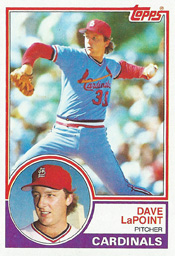
Looking to rebuild his reputation, Dave LaPoint returned to the organization where he felt the most comfortable and had enjoyed his greatest success.

dave_lapointOn Jan. 19, 1987, LaPoint, a free agent, signed with the Cardinals, who expected him to compete for a spot in their starting rotation.
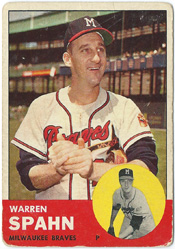
At 27, his career was at a crossroads.

Five years earlier, LaPoint, a left-hander, helped the Cardinals win the 1982 National League pennant and World Series championship.

After the Cardinals traded him in February 1985, LaPoint’s career spiraled. He pitched for three teams in two years, posting losing records at each stop, got traded twice and released once.

Out of shape and labeled a clubhouse jester, LaPoint said he was committed to rededicating himself to becoming a winner and was seeking a nurturing environment in which to attempt that comeback.

The 1987 Cardinals and manager Whitey Herzog provided the setting LaPoint sought.

Cards contributor

LaPoint’s tenure with the Cardinals began in December 1980 when he was acquired from the Brewers in a deal engineered by Herzog. The Cardinals traded Rollie Fingers, Ted Simmons and Pete Vuckovich for Sixto Lezcano, David Green, Lary Sorensen and LaPoint.

LaPoint’s breakthrough year was 1982. He began the season as a reliever and joined the starting rotation in May. LaPoint appeared in 42 games, including 21 as a starter, for the 1982 Cardinals and had a 9-3 record and 3.42 ERA. He started Game 4 of the 1982 World Series against the Brewers, yielded one earned run in 6.1 innings and got no decision in a 7-5 Milwaukee victory.

LaPoint earned 12 wins for the Cardinals in both 1983 and 1984.

When the Cardinals, seeking a run producer to replace George Hendrick, had a chance to get Jack Clark before the start of the 1985 season, they sent LaPoint, Green, Jose Uribe and Gary Rajsich to the Giants.

Rick Hummel of the St. Louis Post-Dispatch later reported the Cardinals parted with LaPoint because they “thought he might be influencing young players unduly.”

Hummel described LaPoint as a “leader in clubhouse revelry” and “a top consumer of the owner’s (Anheuser-Busch’s) product.”

Prodigal son

LaPoint had a 7-17 record for the 1985 Giants, who traded him to the Tigers after the season.

LaPoint and Tigers manager Sparky Anderson were a bad match. “I couldn’t get along with Sparky,” LaPoint said. After posting a 3-6 record and 5.72 ERA for the Tigers, LaPoint was traded to the Padres in July 1986. He was 1-4 for the Padres, who released him after the season.

LaPoint decided to make changes. Weighing between 230 and 240 pounds, he dropped to 220.

The Expos and Giants wanted to sign LaPoint, but he chose the Cardinals, whose offer of a base salary of $125,000 was a cut from his $550,000 contract in 1986.

“It feels finally that I’m back where I belong,” LaPoint said. “… In talking to Whitey, he said he would use me like he did in ’82. That’s fine with me. It got me a World Series ring.”

Asked his reaction to LaPoint rejoining the Cardinals, center fielder Willie McGee said, “I like him … He’s kind of a clown, but that’s Dave LaPoint.”

It’s a reputation LaPoint said he was determined to change.

“I used to mess around during drills and I don’t do that anymore,” LaPoint said after reporting to Cardinals camp. “… It was time to put a stop to it.”

Redbird reliever

LaPoint had a successful spring training. He was 2-0 with a 2.34 ERA in 15.1 innings pitched in Grapefruit League exhibition games.

The Cardinals opened the 1987 regular season with five left-handers: starters John Tudor and Greg Mathews and relievers Ricky Horton, Pat Perry and LaPoint. (Ken Dayley, another left-handed reliever, was on the disabled list.)

In his first appearance for the 1987 Cardinals, on April 10 against the Pirates at Pittsburgh, LaPoint took the loss when he yielded a RBI-double to Sid Bream in the bottom of the ninth. Boxscore

LaPoint was scheduled to make a start April 25, 1987, versus the Mets at New York, but that plan was scratched when the Cardinals called up Joe Magrane from the minors and put the rookie left-hander into the rotation.

LaPoint remained in the bullpen and largely was ineffective.

He got a win on April 18, 1987, against the Mets at St. Louis, but didn’t perform well. In the 10th, LaPoint threw a wild pitch, enabling Al Pedrique to score from third with the go-ahead run. LaPoint was rescued when the Cardinals scored five times off Jesse Orosco in the bottom half of the inning. Tom Pagnozzi’s RBI-single tied the score at 8-8 and Tommy Herr’s grand slam made LaPoint the winner. Boxscore

On the road again

With his ERA at 6.75 after four relief appearances, LaPoint was demoted to Louisville on April 27, 1987. LaPoint had the option of declaring himself a free agent, but agreed to return to the minor leagues for the first time since 1981.

Placed in the starting rotation by Louisville manager Dave Bialas, LaPoint lost his first three decisions, but found his groove. He completed four of his last five starts for Louisville and had a 5-5 record when he was recalled by the Cardinals on July 8, 1987.

“It was the best thing in the world for me,” LaPoint said of his stint in the minors. “… I’ve learned to pitch a little different style.”

LaPoint made two July starts for the Cardinals and got no decision in either.

On July 30, 1987, the Cardinals traded LaPoint to the White Sox for minor-league pitcher Bryce Hulstrom.

“LaPoint’s main problem has been control,” the Post-Dispatch reported. “If he gets the ball up, he gets hammered. It usually takes him a couple of innings to find the strike zone and by then the game usually is out of control.”

After posting a 1-1 record and 6.75 ERA for the 1987 Cardinals, LaPoint was 6-3 with a 2.94 ERA for the 1987 White Sox.

The Cardinals, helped by a combined 30 wins from left-handed starters Mathews, Tudor and Magrane, finished 95-67 and won the pennant.

Previously: Trade for Jack Clark shook Cards from their slumber

(Updated Feb. 26, 2023)

Given a choice of facing Del Ennis or Stan Musial with runners in scoring position and the game on the line, Warren Spahn did what no other big-league pitcher had done before him: He opted to pitch to Musial.

warren_spahnIt was the only time in Musial’s illustrious 22-year Cardinals career that a pitcher intentionally walked a batter in order to get to him.
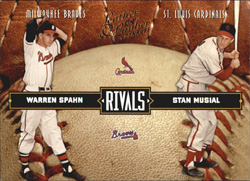
It happened on Aug. 17, 1957, when the Cardinals and Braves played at Milwaukee’s County Stadium.

Pennant race

The slumping Cardinals, who had lost nine in a row, were fighting to remain in the 1957 National League pennant race when they went to Milwaukee for a four-game series in August. The Braves, riding a 10-game winning streak, were in first place, 7.5 games ahead of the Cardinals.

St. Louis won the series opener, 6-2, behind the slugging of Ennis, who hit a three-run home run off Juan Pizarro.

Game 2 of the series matched Larry Jackson of the Cardinals against Lew Burdette. The Cardinals jumped ahead with three runs in the first, but the Braves came back with two in the sixth and one in the eighth, tying the score at 3-3.

Managerial moves

Don McMahon, a rookie, relieved Burdette in the ninth. After Eddie Kasko grounded out, Jackson hit a broken-bat pop fly to right that fell safely in front of Bob Hazle for a single. The next batter, Ken Boyer, reached base when shortstop Felix Mantilla booted a grounder for an error.

With Wally Moon at the plate, McMahon’s first pitch eluded catcher Del Crandall for a passed ball. Jackson advanced to third on the play and Boyer to second.

Braves manager Fred Haney lifted McMahon and brought in Spahn, a left-hander, to face Moon, a left-handed batter, with the count at 1-and-0.

Two nights earlier, on Aug. 15, Spahn started against the Reds at Cincinnati and pitched a complete game in an 8-1 Braves victory. With one day of rest, the Braves ace was making his fourth and final relief appearance of the season.

Unforgettable ploy

Cardinals manager Fred Hutchinson countered by bringing in Ennis, who batted from the right side, to replace Moon.

Ennis, batting .275 with 17 home runs, was a threat, but he was no Musial. At 36, Musial was batting .333 and would finish the year at .351, earning his seventh National League batting crown.

With first base open, Spahn issued an intentional walk to Ennis, loading the bases with one out and bringing Musial, a left-handed batter, to the plate.

In his autobiography “Stan Musial: The Man’s Own Story,” Musial said the sight of Spahn walking Ennis to face him is one “I’ll never forget.”

Musial rapped a groundball to the second baseman, friend and former teammate Red Schoendienst, who fielded the ball and flipped it to Mantilla for the force of Ennis at second. Mantilla’s relay throw to first baseman Frank Torre was in time to retire Musial, completing the inning-ending double play.

“He’s the only pitcher ever to walk a batter to face me,” Musial said in his book.

Musial told writer Roger Kahn, “Spahnie knew everything about his profession, and he was smart enough to change before he had to … He began tinkering with a screwball, and as the fastball began to go, he’d come at you with the screwgie. Then came the slider.”

Back and forth

The drama wasn’t over. Braves center fielder Hank Aaron had a large role to play in the outcome.

In the 11th, with Spahn pitching, Don Blasingame led off and stretched a single into a double. Kasko grounded out to second, advancing Blasingame to third.

Jackson was due up next, but Hutchinson sent Walker Cooper, 42, to bat for the pitcher. Cooper lifted a sacrifice fly to left, scoring Blasingame and giving the Cardinals a 4-3 lead.

Billy Muffett, a rookie, was Hutchinson’s choice to pitch the bottom half of the inning. Muffett retired the first batter, Schoendienst, on a pop-up.

The next batter, Frank Torre, hit a low line drive to left. Ennis lumbered in, got a glove on the ball and dropped it. Torre, credited with a single, was replaced by pinch-runner Hawk Taylor.

Eddie Mathews followed with a single to center and Taylor advanced to third.

That brought Aaron to the plate.

Hank hammers

Aaron was angry. In the ninth, Jackson moved Aaron off the plate with a high, tight pitch. Aaron, in comments to the Associated Press, accused Jackson of “trying to stick one in my ear.”

“It’s on purpose,” Aaron said. “I can tell when they’re throwing at me.

“If that’s the only way they can win a ballgame, they ought to get other jobs. I don’t mind being brushed back _ you expect that _ but I don’t like them balls aimed at my head. We don’t knock Stan Musial down, so why do they do it to me?”

Aaron hit Muffett’s first pitch into right-center for a two-run double, giving the Braves a 5-4 victory and making a winner of Spahn. Boxscore

The Braves went on to clinch the pennant Sept. 23 on Aaron’s 11th-inning walkoff home run against Muffett. Boxscore

Previously: Del Ennis provided power in Cardinals lineup

(Updated Feb. 27, 2023)

In a union of Hall of Famers, Stan Musial hired Warren Spahn to be a manager in the Cardinals organization.

spahn_musialOn Feb. 25, 1967, a month after he was named Cardinals general manager, Musial bypassed Sparky Anderson and selected Spahn to be manager of Class AAA Tulsa.

Anderson had managed the Cardinals’ Class A St. Petersburg club to a league championship in 1966 and reportedly was the top internal candidate for the Tulsa opening.

Spahn, who never had managed, was the recommended choice of Tulsa owner A. Ray Smith.

Though Cardinals executives such as farm director George Silvey had input, Musial, as general manager, had the final decision regarding who to hire as manager for the Cardinals’ top affiliate.

Matchup of marvels

In Spahn, Musial chose the candidate who had been his respected nemesis during their Hall of Fame playing careers.

Spahn, who pitched 21 seasons in the major leagues, primarily with the Braves, is the all-time leader in career wins (363) among left-handers. Musial, who played 22 seasons in the major leagues, all with the Cardinals, is the all-time leader in total bases (6,134) among left-handed batters.

Their matchups spanned the 1940s to 1960s. Musial has a career .318 batting average and .412 on-base percentage against Spahn, according to the Web site retrosheet.org. Musial has more hits (104), doubles (23), triples (6) and walks (50) versus Spahn than any other player. Only Willie Mays (18) hit more home runs against Spahn than Musial (17) did.

In his 1964 book “Stan Musial: The Man’s Own Story,” Musial called Spahn “the best National League pitcher of my era.”

“Spahnie was more than a student of pitching,” Musial said. “He was a scientist.”

Musial concluded, “It was a great challenge to hit against this cunning guy … and I’m proud to have done well.”

Spahn told writer Roger Kahn, “Musial was just the hardest man to fool … I tried to upset Stan’s timing with breaking stuff and changeups. Once Musial started timing fastballs, your infielders’ lives were in jeopardy.”

Pressure on Stan

If not for Bob Howsam’s departure, Musial and Spahn might never have worked together and Anderson might not have left the Cardinals.

On Jan. 22, 1967, Howsam resigned as Cardinals general manager and became executive vice president and general manager of the Reds. Musial, a Cardinals vice president, took on the additional role of general manager.

One of Howsam’s cronies was Tulsa manager Charlie Metro, who was waiting in the wings in case Cardinals manager Red Schoendienst faltered. Metro followed Howsam to the Reds, accepting a job as a scout.

With spring training close to opening, Musial and the Cardinals had to scramble to find a replacement for Metro in Tulsa.

Spahn, 45, was residing on his 2,800-acre cattle ranch in Hartshorne, Okla., about 120 miles from Tulsa. He made it known he wanted to get back into baseball. Smith was thrilled by the possibility of having a baseball icon manage his club, so the Oilers owner went to work on trying to convince Musial to make it happen.

On Feb. 20, 1967, Musial said Smith’s request was under review and he hoped to announce a choice soon, The Sporting News reported.

Musial was pressured to select a candidate from within the Cardinals’ organization, “but we fought a hard fight” for Spahn, Smith told the Associated Press.

Though Anderson was “first choice for the position,” according to The Sporting News, Spahn got the Tulsa job. Anderson was assigned to manage the Cardinals’ Class A club at Modesto, Calif.

Rookie manager

Spahn’s hiring was announced by Smith at a news conference at Tulsa’s prestigious Southern Hills Country Club.

“The Oilers and Tulsa are mighty lucky to get a man of Spahn’s caliber,” Smith said.

Said Spahn: “I’ve always wanted an opportunity to manage. The ranch is great, but it’s more like a plaything. I’d like to manage in Tulsa for 10 years. Naturally, I’m for a major-league job someday, but first I’ve got to earn that.”

Tulsa opened the 1967 season with a roster featuring pitchers Tracy Stallard and Wayne Granger; catchers Pat Corrales and Sonny Ruberto; infielders Elio Chacon, Bobby Dews and Coco Laboy; and outfielder Danny Napoleon.

Other managers in the Pacific Coast League in 1967 included Chuck Tanner of the Seattle Angels, Whitey Lockman of the Tacoma Cubs, Bob Skinner of the San Diego Padres and Mickey Vernon of the Vancouver Mounties.

Under Spahn, Tulsa had a dismal 1967 season (65-79), though he did receive high marks for helping to develop starting pitchers Mike Torrez (10 wins) and Hal Gilson (15 wins). Silvey noted Spahn “must have helped Torrez quite a bit. Mike has added a curve and he’s faster.”

Anderson led Modesto to a 79-61 record and a league championship in 1967. After the season, Anderson joined the Reds as manager of their Class AA Asheville club.

Anderson “was so upset at being bypassed (for the Tulsa job) that he quit the Cardinals organization,” The Sporting News reported.

Two years after leaving the Cardinals, Anderson was named manager of the Reds and went on to build a Hall of Fame career.

Ups and downs

In 1968, Spahn took Tulsa from worst to first. The Oilers finished 95-53 and won the league championship.

Spahn managed Tulsa in 1969 (79-61), 1970 (70-70) and 1971 (64-76) before he was fired by Cardinals general manager Bing Devine.

“Devine said I had been here five years and there were young prospective managers in the organization who needed to move up,” Spahn said.

Though Spahn went on to work as a coach and instructor with other organizations, Tulsa would be the only team he would manage.

Previously: Warren Spahn and his Cardinals connection


Three days after making his major-league debut with his hometown team, infielder Bob Sadowski was traded by the Cardinals for a player they thought could challenge Curt Flood for the center field job.

robert_sadowskiThe deal sent Sadowski on an odyssey during which he played for three big-league clubs in the next three years before returning to the minors, including a second stint in the Cardinals system.
Talented infielder

Born and raised in St. Louis, Sadowski played baseball at Webster Groves High School and with the Maplewood American Legion team. A teammate on both clubs was future Cardinals outfielder Charlie James.

In 1955, when Sadowski was 18, he impressed the Cardinals at a tryout camp and they signed him to a contract.

A left-handed batter who could play multiple positions, especially third base and second base, Sadowski established himself as a prime prospect with a strong season for the Billings Mustangs of the Class C Pioneer League in 1957. Sadowski batted .302 and produced 20 doubles, 13 triples and 15 home runs for Billings.

Sadowski caught the attention of the Cardinals again in 1959 when he batted .290 with 24 doubles and 12 triples for Omaha of the Class AAA American Association.

Omaha manager Joe Schultz tabbed Sadowski as a player with a bright future. The Sporting News declared him “a talented infielder.” After the 1959 season, the Cardinals put Sadowski on their big-league roster.

Cardinals call

At Cardinals spring training camp in 1960, Sadowski developed astigmatism, making objects at a distance appear blurry or wavy, and eyeglasses were prescribed for him, The Sporting News reported.

He opened the 1960 season with the Cardinals’ affiliate at Rochester in the Class AAA International League. Batting .223 after 51 games, Sadowski was loaned to the White Sox Class AAA farm club in San Diego. He revived his career with the Pacific Coast League team, batting .340 in 64 games.

Impressed, the Cardinals promoted Sadowski to the big leagues in September 1960.

Debut at home

On Sept. 16, 1960, a Friday night at Busch Stadium in St. Louis, Sadowski, 23, lived a dream by making his major-league debut for the Cardinals.

After five innings, in a game delayed an hour and 32 minutes by rain, the Giants led, 6-0. Cardinals manager Solly Hemus made several substitutions, including putting in Sadowski at second base to replace Julian Javier.

Sadowski led off the St. Louis half of the sixth against reliever Stu Miller, formerly of the Cardinals, and grounded out to third baseman Jim Davenport.

In the eighth, Orlando Cepeda reached on an error by Sadowski. In the Cardinals’ half of the inning, Sadowski reached on a walk. He was stranded when Miller struck out Bill White and got Stan Musial and Ken Boyer on pop-outs. Boxscore

That one game would be Sadowski’s lone appearance with the Cardinals.

Trade bait

With Javier at second and Boyer at third, the Cardinals were strong in the two positions Sadowski played best. What the Cardinals thought they needed was to bolster the center field position. Flood, the everyday center fielder, hit .237 for the 1960 Cardinals. Hemus was seeking better production from that position.

On Sept. 19, 1960, the Cardinals acquired center fielder Don Landrum from the Phillies for Sadowski and four players on their Rochester roster _ outfielder Jim Frey, second baseman Wally Shannon, infielder Billy Harrell and pitcher Dick Ricketts.

Landrum, 24, had spent the 1960 season with the Phillies’ Class AAA farm club at Buffalo, where he batted .292 and led the International League in hits (178), doubles (35) and runs scored (112).

The Sporting News praised Landrum as being “a capable fly chaser who can also swing the bat.”

On the day of the trade, Landrum joined the Cardinals in time for their game that night against the Dodgers at St. Louis. He produced three singles and a stolen base. Two nights later, Landrum hit a home run and a triple off the Dodgers’ Don Drysdale.

Versatile prospect

Like the Cardinals, the Phillies had an established starter at second base in Tony Taylor. Sadowski was acquired to be a backup.

Under the headline “Phils Bolster Infield, Land Keystone Kid,” The Sporting News reported: “Because of his versatility, it is possible Sadowski might land a utility infield spot” with the 1961 Phillies.

Sadowski batted .130 in 16 games for the 1961 Phillies. He was traded to the White Sox after the season and hit .231 with six home runs for them in 79 games in 1962. Selected by the Angels in the Rule 5 draft, Sadowski hit .250 in 88 games for them in 1963.

Back where he began

Sadowski spent the rest of his playing days in the minor leagues. After starting the 1968 season with the Syracuse Chiefs, Sadowski rejoined the Cardinals’ organization and was assigned to the Class AAA Tulsa Oilers of the Pacific Coast League.

Playing for manager Warren Spahn, Sadowski, 31, filled a utility role and helped Tulsa to the league championship. “Sadowski’s hitting perked up the Oilers, especially over short stretches,” The Sporting News noted.

In 1969, his last season in organized baseball, Sadowski returned to the Angels’ organization as an infielder for the Class AA El Paso Sun Kings, who were managed by former Cardinals catcher Del Rice.

The Cardinals reacquired Sadowski in June 1969 and he finished the season with Class AA Arkansas and Class A Cedar Rapids.


(Updated July 6, 2024)

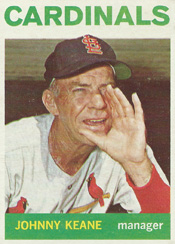
After being fired from his job as Yankees manager in 1966, Johnny Keane was looking forward to rebuilding his career in 1967. The Angels had hired him to be a special assignment scout. Keane hoped that role would position him to become a big-league manager again and provide him the chance to replicate the success he had when he led the 1964 Cardinals to a World Series title.

johnny_keane3The spirit was willing, but the body was not.

On Jan. 6, 1967, Keane, 55, died of a heart attack at his home in Houston.

Code of honor

Keane, a St. Louis native who studied for the priesthood at St. Louis Prep Seminary, abided by a principled personal code of fair play, dignity and loyalty.

In August 1964, Cardinals owner Gussie Busch violated that code by firing Keane’s friends, general manager Bing Devine and business manager Art Routzong, and plotting to replace Keane with Leo Durocher. Unwilling to continue working for Busch, Keane resigned following the Cardinals’ World Series triumph over the Yankees. Five days later, he became Yankees manager, inheriting a club of fading, injury-prone players.

When the Yankees finished with a 77-85 record in 1965 and followed that by losing 16 of their first 20 games in 1966, Keane took the fall.

Some believed the emotional toll of Keane’s departures from the Cardinals and Yankees within a span of 19 months contributed to his death.

In a less romanticized view, St. Louis Post-Dispatch sports editor Bob Broeg, knowing Keane’s resiliency, wrote, “There is a tendency among the poets in the press box to suggest (Keane) died of a broken heart. Possibly, but not probably.”

Career Cardinal

Keane devoted most of his professional career to the Cardinals, working for them in four decades. He joined their farm system as a shortstop in 1930. Five years later, he was struck in the head by a pitch from Sig Jakucki and suffered a fractured skull.

“It happened in Houston,” Keane recalled to the Philadelphia Daily News. “I hit a home run off a pitcher the night before. The next night he came back in relief and he hit me. Crazy pitcher.”

In 1938, Keane became player-manager for the Cardinals’ farm club in Albany, Ga. He spent 21 seasons as a manager in the St. Louis farm system and had winning records in 17 of those years.

Keane was a candidate to become Cardinals manager in 1951, but the job went to Marty Marion. Twice after that, Keane rejected offers to become a Cardinals coach because, “I wanted to go up as a manager,” he told The Sporting News.

In 1959, Keane, on the advice of Devine, reconsidered his stance and made it to the major leagues for the first time as a coach on the staff of Cardinals manager Solly Hemus. Keane replaced Hemus in July 1961 and led the Cardinals to a 47-33 record. The Cardinals also produced winning records in Keane’s three full seasons as their manager: 84-78 in 1962, 93-69 in 1963 and 93-69 again in 1964.

My way

With players such as Mickey Mantle, Roger Maris and Tony Kubek sidelined by injuries, the Yankees under Keane went from champions to also-rans.

Mantle didn’t like Keane’s attempt to instill discipline among the Yankees. In his autobiography, “The Mick,” Mantle called Keane “a drill sergeant” with “silly little high school rules.”

“I kept my distance,” Mantle said. “When we did talk, there were no arguments. More often than not, we had staring contests. Eventually the situation got so bad that if I had been financially set, I would’ve retired at the end of the (1965) season.”

When the Yankees decided Keane no longer should be their manager, they offered to make a deal with him to prevent the move from being announced as a firing. Keane refused to go along with the scheme.

“Yes, that’s what happened,” Keane said to Chuck Fierson of the Oneonta (N.Y.) Star. “The Yanks told me that if I said I was retiring because of my health they would give me a job in the front office. But my health is OK and I don’t want a front office job. Besides that, I didn’t like the idea of making up excuses.”

New York columnist Red Smith wrote, “There is something depressing about a business that makes a gentleman of John Keane’s dignity and integrity a victim of the system.”

Three months later, in July 1966, the Braves fired manager Bobby Bragan. Keane was their choice to replace him, according to columnist Dick Young in The Sporting News, but Keane didn’t want to step in until the season was completed.

“He preferred to start fresh,” Young said.

Billy Hitchcock, a Braves coach, was named interim manager. When Hitchcock led the Braves to a 33-18 mark to finish the season, the interim tag was removed from his title and Keane was out of the picture.

True gentleman

By December 1966, Keane, eager to get back into baseball, was grateful to receive the offer to scout for the Angels.

To prepare for his role, Keane bought a car on Jan. 6, 1967, so that he’d have a reliable vehicle to take him on scouting trips.

After dinner that evening, Keane told his wife he was feeling ill. At 10:30, Keane collapsed and died.

Dr. William Sutton, Keane’s physician, said Keane “had been under treatment for heart trouble and high blood pressure, but had not suffered a previous heart attack,” the Post-Dispatch reported.

Reacting to news of Keane’s death, Ken Boyer, third baseman for the 1964 Cardinals, said Keane was the type of person “you would be proud to have for a brother or father.”

Yankees pitcher Whitey Ford said Keane “was the first person to visit me in the hospital after my operation last season _ and that was after he had been dropped as manager.”

In his book “Whitey and Mickey,” Ford said, “I liked Johnny Keane. He was a great man, a decent man, and I pitched a lot for Keane. He just got there at the wrong time.”

Yankees president Michael Burke noted Keane “won everyone’s respect” and “his own self-respect and quiet sense of personal dignity was never compromised.”

In his book “From Ghetto to Glory,” Cardinals pitcher Bob Gibson called Keane “one of the nicest people I ever met in my life” and said Keane’s death “probably affected me as much as anybody’s I’ve ever known.”

Faithful friends

The funeral for Keane was held in Houston three days after his death. Among the pallbearers were Devine, Routzong and two of Keane’s coaches from his Cardinals staff, Vern Benson and Howie Pollet.

Milt Richman of United Press International wrote that Keane “had more friends than he knew” and Keane and Devine “were almost like brothers.”

Keane was survived by his wife, daughter and two grandsons.

Three months after the funeral, Young reported that, although Keane had been employed by the Angels for only one month, the club honored him by paying his widow the year’s salary Keane would have received as special assignment scout.