Feeds:
Posts
Comments

(Updated June 12, 2024)

With Vince Coleman offering a younger, less expensive and more productive alternative as a left fielder, the Cardinals deemed Lonnie Smith expendable.
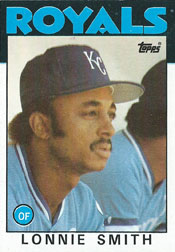
lonnie_smith5On May 17, 1985, the Cardinals dealt Smith to the Royals for John Morris, a minor-league outfielder.

Cardinals manager Whitey Herzog told a Kansas City reporter seeking a comment about the trade, “You’ve just won the damn pennant.”

Five months later, Smith played an integral role in the Royals defeating the Cardinals in seven games in the 1985 World Series.

St. Louis sparkplug

In four seasons with the Cardinals, Smith hit .292 with 173 steals and a .371 on-base percentage.

In 1982, his first season with the Cardinals, Smith ignited the offense, hitting .307, scoring 120 runs and stealing 68 bases. In the 1982 World Series, Smith hit .321 with six runs scored, helping the Cardinals beat the Brewers in seven games.

Smith underwent rehabilitation for drug abuse in 1983, missing about a month of the season, but hit .321 with 43 steals. In 1984, his batting average was .250.

Smith opened the 1985 season as the Cardinals’ left fielder, joining Willie McGee in center and Andy Van Slyke in right. When McGee was sidelined by an injury in April, the Cardinals promoted Coleman from Class AAA Louisville. The rookie speedster established himself as a force, hitting .300 with 12 steals in his first dozen games. When McGee returned to the lineup, Smith was odd man out.

“If the National League had a designated hitter, he would have died a Cardinal,” Herzog told the St. Louis Post-Dispatch.

Royals come calling

The Royals were among several clubs that expressed interest in Smith, Cardinals general manager Dal Maxvill said. According to the Post-Dispatch, Royals general manager John Schuerholz contacted Maxvill, who asked for Morris. “John Morris is the top prospect in their organization,” Maxvill said. “We’ve checked with tons of people to find out about the young man. All reports were excellent.”

Morris, 24, was the first-round choice of the Royals in the 1982 amateur draft. In 1983, he was named winner of the Southern League Most Valuable Player Award, hitting .288 with 23 home runs and 92 RBI for Jacksonville.

On May 13, 1985, four days before the trade was made, the New York Daily News reported a deal was in the works. Morris got a phone call from his mother, who informed him of the newspaper report. Stunned, Morris called Schuerholz and asked him about it.

According to Morris’ book “Bullet Bob Comes to Louisville,” Schuerholz told him, “The news about you being traded is strictly a rumor created by the St. Louis media. You have nothing to worry about. Everything will be fine.”

Hurt feelings

On the day of the trade, Morris was with the Omaha club in Buffalo when he got a call from Schuerholz. According to Morris’ book, the conversation went like this:

Schuerholz: “John, we just made a trade. You’ve been dealt to the St. Louis Cardinals for Lonnie Smith. I know we discussed this the other day, but at the time I couldn’t give you any information.”

Morris: “So, you knew all along that I was going to be traded. I think it’s unfortunate that I had to find out from my mom, who just happened to stumble upon it in the newspaper.”

Schuerholz: “You’re going to a first-class organization and we know you will do well with the Cardinals … Whitey Herzog is a great manager who thinks the world of you. He even told me that himself in spring training.”

Smith was upset about being traded and told the Post-Dispatch, “I had thought about quitting very seriously.”

Smith also said to Cardinals Magazine, “I didn’t want to leave St. Louis.”

Some Cardinals said they thought the club should have gotten more in return for Smith. Cardinals pitcher John Tudor said to the Post-Dispatch, “I think the deal stinks. I don’t think it helps the club … Lonnie always had a lot of spark, he was aggressive, he’d run into a wall for you if that was going to win you a game. I’m sorry to see him go.”

Said Van Slyke: “I wonder why we couldn’t get a pitcher in return?”

Maxvill told The Sporting News he expected to be criticized for trading Smith. “People are going to say that it’s a matter of economics, that the Cardinals don’t want to pay the salaries,” Maxvill said.

Coleman, 23, had a $60,000 salary. Smith, 29, was getting $850,000.

Cardinals management said playing time was a factor, too.

“We didn’t plan on Lonnie playing that much … I don’t think he would be satisfied as a utility player,” said Maxvill.

Herzog said, “I would venture to say there’s never been a better defensive outfield than Van Slyke, McGee and Vince.”

Royals benefit

The Cardinals assigned Morris to Class AAA Louisville. Smith became the Royals’ left fielder.

“Lonnie Smith adds the element of speed and run production to our lineup,” said Schuerholz. “When you start your lineup with Willie Wilson, Lonnie Smith and George Brett, it can be very exciting.”

Regarding Smith’s drug history, Royals manager Dick Howser told United Press International, “Our indications are _ and we’ve checked it out _ he’s very good. He’s done what he’s had to do. We feel comfortable with the fact he’s clean.”

Smith told the Post-Dispatch, “My doctor, my counselor and my wife know I’m clean … Knowing that I’m clean, I can deal with my problems a lot easier.”

(In his book “White Rat: A Life in Baseball,” Herzog said of Smith’s drug problem, “I admired him, and still do, for having the guts to ask for help.”)

Smith hit .257 with 40 steals for the 1985 Royals. In the World Series versus the Cardinals, he batted .333 with four runs scored, four RBI and two steals.

Morris played five seasons (1986-90) with the Cardinals, hitting .247.


Earning wins in his first two appearances for the Cardinals, Troy Percival went from being perceived as a risk to being viewed as a valuable reliever.

troy_percivalA closer with the Angels and Tigers, Percival sat out the 2006 season because of persistent arm ailments.

In 2007, Percival, 37, found he was able to throw effectively again. He was in contact with several former Angels teammates who had become Cardinals and they put in a good word for him. Percival threw for the Cardinals during a workout and impressed. The Cardinals signed him on June 8, 2007, and sent him to their minor-league Memphis club to get into game condition.

Percival posted a 1.35 ERA in six appearances for Memphis and was called up by St. Louis before a weekend series against the Reds at Cincinnati.

In his Cardinals debut, on June 29, 2007, Percival earned a win with a flawless inning of relief in the Cardinals’ 4-2 victory over the Reds.

“It’s a dream come true,” Cardinals manager Tony La Russa said to the Associated Press. “He gets three outs and gets the winning decision. That’s movie material.”

Said Percival: “I didn’t come back for myself. A lot of friends on this team called me and said they needed pitching help. My arm felt good enough to do it.” Boxscore

Two days later, on July 1, Percival made his second Cardinals appearance. With the Cardinals ahead, 8-5, in the fourth, Percival relieved starter Mike Maroth with two runners on base and no outs. Percival got out of the mess by retiring all three batters he faced without allowing either base runner to advance. The Cardinals won, 11-7, and Percival was credited with the win in a scorer’s decision for his successful rescue effort in the fourth. Boxscore

Percival contributed a 3-0 record and 1.80 ERA in 34 appearances for the 2007 Cardinals. Granted free agency after the season, he signed with the Rays and finished his career with them in 2009.

Previously: The story of how the Cardinals acquired Lee Smith


Rescued from the minors and given the chance for a final fling with the franchise he rooted for as a boy in Illinois, T.J. Mathews delivered his longest and most impressive big-league performance for the Cardinals.

tj_mathewsOn Sept. 9, 2001, Mathews pitched 4.1 flawless innings of relief for the Cardinals and got the win in an 8-1 St. Louis victory over the Dodgers at Busch Memorial Stadium. Mathews retired all 13 batters he faced, striking out five.

Baseball pedigree

Mathews, a Belleville, Ill., native, grew up as a Cardinals fan. His father, Nelson Mathews, had been an outfielder with the Cubs and Athletics in the 1960s. In 1992, T.J. Mathews was selected in the 36th round of the amateur draft by the Cardinals.

A right-hander, Mathews debuted with the Cardinals in 1995 and pitched effectively for them in relief. On July 31, 1997, Mathews was one of three players traded by the Cardinals to the Athletics for first baseman Mark McGwire.

Four years later, on June 22, 2001, Mathews, 31, was released by the Athletics. The Cardinals signed him two weeks later. After three appearances for St. Louis, Mathews was sent to Class AAA Memphis. In September, when the minor league seasons ended and big-league rosters expanded, the Cardinals brought him back.

Postseason quest

On Sept. 9, 2001, the Cardinals entered the day tied for second place with the Cubs in the National League Central Division at 77-64, 5.5 games behind the Astros. With 21 games remaining, the Cardinals needed a strong finish to have a chance at earning a postseason berth as either division champion or the wild-card entry.

Matt Morris, seeking his 20th win, was the Cardinals’ starter that Sunday afternoon against the Dodgers. After an inning, the game was halted by rain. The delay lasted two hours and four minutes.

Morris wanted to continue. Cardinals manager Tony La Russa, concerned the long delay could hamper Morris’ ability to properly loosen his arm, sent Luther Hackman to pitch the second.

“That was a real tough decision,” La Russa said to the St. Louis Post-Dispatch.

Said Morris: “When they make a decision that benefits your future, you can’t really complain.”

Hackman pitched a scoreless second. In the third, with the Cardinals ahead, 2-0, Hackman lost command. With one on and two outs, he walked three consecutive batters, forcing in a run and enabling the Dodgers to get within a run, 2-1.

La Russa lifted Hackman and brought in Mathews to face Adrian Beltre with the bases loaded. Mathews got Beltre to fly out, ending the threat.

Untouchable

Mathews retired the Dodgers in order in the fourth through seventh innings. He was lifted for a pinch hitter with the Cardinals ahead, 7-1. Mike James and Mike Timlin mopped up, pitching an inning apiece. Boxscore

Mathews got the win, the last of his 32 in an eight-year major-league career. The win also was his first since 2000 with the Athletics and his first as a Cardinal since 1997.

“He’s hard (for batters) to pick up,” said Cardinals catcher Mike Matheny. “Even catching him is tough. The ball comes right out of his jersey. His release point is kind of funny.”

Said Mathews: “Somebody had to go out and give us some innings. I thought maybe I’d go three at the most. After that third one, I thought, ‘Aw, what the heck.’

“I haven’t thrown that much since I was in the starting rotation in (Class AAA) Louisville in ’95. I wasn’t tired. When you get outs early, you can stay out there a little bit longer.”

Said La Russa to the Associated Press: “It’s kind of hard to believe he could throw that many pitches and keep his effectiveness.”

The win by Mathews sparked a stretch in which the Cardinals won 16 of their last 21 games, tying the Astros for first place in the NL Central at 93-69 and qualifying for the postseason as the wild-card entry.

Mathews became a free agent after the season and signed with the Astros. His 2002 season with Houston would be his last in the big leagues.

Previously: Deal for Woody Williams sparked 2001 Cardinals

Previously: Matt Morris close to perfect at home in 2001

(Updated Feb. 2, 2022)

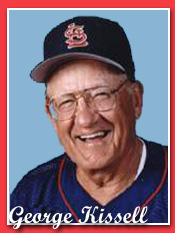
Whether mentoring a future Hall of Famer or helping a prospect change positions, George Kissell compiled a string of impressive successes as a minor-league manager in the Cardinals system.

george_kissellKissell worked in the Cardinals organization from 1940 (when he started as a player in Class D) until his death at 88 in 2008. He was a Cardinals coach from 1969-75 and a longtime instructor. He also managed Cardinals minor-league clubs from 1948-57 and 1961-68.

The top 5 most interesting facts about George Kissell as a manager in the St. Louis system:

Educating Earl

Earl Weaver, the St. Louis native who was elected to the National Baseball Hall of Fame after managing the Orioles to four American League pennants and a World Series championship, played three seasons for Kissell in the Cardinals’ organization.

A second baseman, Weaver, 19, hit .276 with 20 doubles in 127 games for a 1950 Winston-Salem team managed by Kissell. Winston-Salem won the Carolina League championship with a 106-47 record.

In 1951, Kissell managed Weaver at Omaha. Weaver hit .279 with 35 doubles in 142 games. Omaha won the Western League title with a 90-64 mark and Weaver was named to the league’s all-star team.

Kissell and Weaver returned to Omaha in 1952. Weaver hit .278 with 15 doubles in 97 games. Omaha finished 86-68 under Kissell.

Weaver played in the Cardinals’ system from 1948-53. With three consecutive seasons playing for Kissell, it’s reasonable to assume the lessons and fundamentals Weaver learned from Kissell helped him become one of the game’s best managers.

Pitcher to third

Ken Boyer began his first two minor-league seasons, 1949-50, as a pitcher in the Cardinals’ system. During the 1950 season, he became a third baseman.

In 1951, Boyer, 20, played his first full season as a third baseman for an Omaha club managed by Kissell. Boyer hit .306 with 28 doubles and 14 homers, launching him on a path that would lead to him winning five Gold Glove awards and a 1964 National League Most Valuable Player Award with the Cardinals.

When Boyer missed some games with Omaha because of an injury, Kissell, 30, filled in for him at third base.

Power prospect

Playing for Kissell with the 1957 Winston-Salem team, Gene Oliver, 22, established himself as a Cardinals power-hitting prospect. Oliver, a first baseman and catcher, hit 30 home runs, breaking the Winston-Salem club record held by Steve Bilko.

Two years later, Oliver was called up by the Cardinals. beginning a 10-year career in the major leagues, including four seasons with St. Louis.

Comeback trail

After the Giants released minor-league third baseman Coco Laboy, he was signed by the Cardinals. Playing for Kissell at Raleigh in 1964, Laboy revived his career, hitting .340 with 29 doubles and 24 home runs in 112 games.

Chosen by the Expos in the 1968 expansion draft, Laboy was the starting third baseman for Montreal in its first two National League seasons, 1969 and 1970.

Prized potential

In 1967, Kissell managed a pair of teenagers in their first year as professional players: catcher Ted Simmons, 17, and pitcher Jerry Reuss, 18. Simmons was selected by the Cardinals in the first round of the June 1967 draft; Reuss was a second-round choice.

The first place the Cardinals sent them was to their Gulf Coast League club managed by Kissell.

Simmons hit .350 in six games for the Gulf Coast League Cardinals. He would go on to a 21-year big-league career, collecting 2,472 hits and 1,389 RBI.

In his Hall of Fame induction speech, Simmons said, “It was George Kissell, the Cardinals’ Mr. Everything, who had the greatest impact on me. He taught me fundamental baseball and how to play to win. I also learned from George how to win and lose with grace. He gave me my first taste of humility.”

Reuss was 0-0 with a 5.14 ERA in two appearances for Kissell’s team. Reuss would go on to a 22-year big-league career, earning 220 wins.

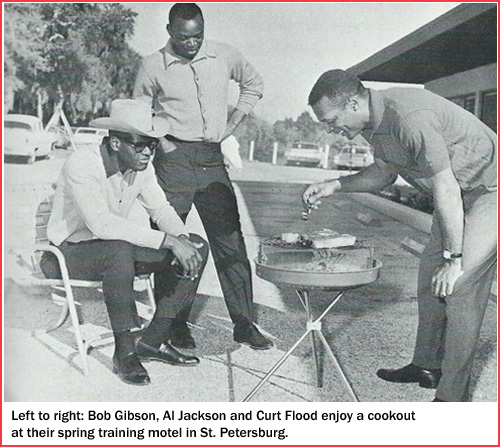
On the field, pitcher Bob Gibson and center fielder Curt Flood were all-star players who exceled for a Cardinals club that won two World Series titles and three National League pennants in the 1960s. Off the field, Gibson and Flood were road roommates and confidantes.

In his book “Stranger to the Game,” Gibson called Flood “my best friend in baseball.”

In 12 years (1958-69) with the Cardinals, Flood batted .293 (1,853 hits in 1,738 games) and three times led the NL in singles. He also won the Gold Glove Award seven times and was named an all-star three times.

“Curt Flood was more than my best friend on the ballclub,” Gibson said in his book. “To me, he personified what the Cardinals were all about. As a man and teammate, he was smart, funny, sensitive and, most of all, unique. As a ballplayer, he was resourceful, dedicated and very, very good.”

After being traded by the Cardinals to the Phillies in October 1969, Flood refused to report and challenged baseball’s reserve clause, opening the path to free agency for players.

“As Flood’s suit made the judicial circuit, Curt waited it out in Copenhagen, Denmark,” Gibson recalled. “I received long, philosophical letters from him every now and then. I missed him.

“At the ballpark, I missed Flood in center field, where his remarkable catches would often bring his cynical teammates to the top step of the dugout in applause. But I also missed his discussions about the latest works of (writer) James Baldwin and I missed his play on words. When, for instance, he took his place in the outfield between Stan Musial and Minnie Minoso, he referred to the alignment as Old Taylor and Ancient Age with a little Squirt for a chaser.

“I especially missed him as a roommate. By that time, Curt and I understood each other so well that we no longer had to talk to communicate.”

Regarding Flood’s self-sacrifice in challenging the reserve clause and, by so doing, shortening his playing career, Gibson said in his 1994 book, “The modern player has gotten fat from the efforts of Curt Flood and has returned him no gratitude or any other form of appreciation.

“I’ve often thought of what an appropriate and decent thing it would be if every player in the major leagues turned over 1 percent of his paycheck just one time to Curt Flood. They certainly owe him that much and more.”

gibson_jackson_flood


Previously: George Crowe was Cardinals mentor to Curt Flood

Joining a starting rotation that featured future Hall of Famers Jesse Haines and Grover Cleveland Alexander, rookie Fred Frankhouse strung together a September winning streak that nearly lifted the Cardinals to a second consecutive National League pennant.

fred_frankhouseFrankhouse, 23, won each of his first five starts after being promoted from the minor leagues to the Cardinals in September 1927.

Stretch run

Frankhouse, 5 feet 11 and 175 pounds, was the ace of the Cardinals’ minor-league Houston affiliate in the Texas League in 1927. The right-hander with the sidearm delivery was 21-9 with a 3.24 ERA in 261 innings for Houston.

The defending World Series champion Cardinals, in a four-way race with the Pirates, Giants and Cubs for the 1927 pennant, called up Frankhouse and gave him a start in his big-league debut in the opener of a doubleheader against Chicago on Sept. 7 at St. Louis. The Cardinals started the day in third place, 2.5 games behind the Pirates, 1.5 behind the Giants and a half-game ahead of the Cubs.

Using a sweeping curve, Frankhouse held the Cubs to two runs in seven innings before being relieved by Haines. A 24-game winner in 1927, Haines, making his second and last relief appearance of the season, shut out the Cubs over the final two innings, earning the save and preserving the win for Frankhouse in a 6-2 Cardinals victory. Frankhouse also contributed two hits in three at-bats. Boxscore

Four days later, on Sept. 11, Frankhouse got his second start. He responded with a four-hit shutout, pitching the Cardinals to a 5-0 victory over the Dodgers at St. Louis. The game finished in 1:48. Left fielder Harvey Hendrick got three of the Dodgers’ hits (two singles and a double). The win lifted the Cardinals into a second-place tie with the Giants, two games behind the Pirates. Boxscore

On a roll

Cardinals manager Bob O’Farrell started Frankhouse for the third time on Sept. 15 in the second game of a doubleheader against the Giants at St. Louis. The Giants had five future Hall of Famers in the No. 2 through No. 5 spots in the batting order: Freddie Lindstrom, Edd Roush, Rogers Hornsby, Bill Terry and Travis Jackson.

Frankhouse yielded five runs, but got the win and his second consecutive complete game in an 8-5 Cardinals victory. The game was called after the top of the eighth because of darkness. Frankhouse retired another future Hall of Famer, Mel Ott, with a runner on base to end the game. The Cardinals, who had lost the opener, closed the day still tied with the Giants for second place, but 4.5 behind the Pirates. Boxscore

The Pirates, featuring a lineup with Pie Traynor and brothers Paul and Lloyd Waner, were distancing themselves from the Cardinals and Giants, winning 11 in a row from Sept. 9 through Sept. 17.

On Sept. 19, Frankhouse made his fourth start and pitched his third consecutive complete game, a 12-5 Cardinals victory over the Phillies at St. Louis. Backed by five RBI from his catcher, Frank Snyder, Frankhouse improved his record to 4-0, even though he yielded nine hits and walked five. The Cardinals trailed the Pirates by four with 10 to play. Boxscore

Five days later, on Sept. 24, the Giants beat the Pirates. The Cardinals, behind a fourth consecutive complete game by Frankhouse, defeated the Braves, 4-3, at St. Louis. With Frankhouse improving to 5-0, the Cardinals were within two of the Pirates. Boxscore

NL staple

St. Louis won five of its last six _ the lone loss was by Frankhouse, a 3-2 setback at Cincinnati against the Reds _ and finished the season in second place at 92-61, 1.5 behind the champion Pirates (94-60). The Giants (92-62) finished third, a half-game behind the Cardinals, and the Cubs ended up fourth at 85-68.

In six starts for the 1927 Cardinals, Frankhouse was 5-1 with a 2.70 ERA. The Sporting News called him a “sensational flash.” He pitched a total of 311 innings that season, including 50 for the Cardinals.

Frankhouse was 3-2 in 21 games for the NL champion 1928 Cardinals and 7-2 in 30 games for the 1929 Cardinals. After a rough start to the 1930 season (2-3 with a 7.32 ERA in eight games), Frankhouse and pitcher Bill Sherdel were shipped to the Braves for pitcher Burleigh Grimes on June 16. In four years with the Cardinals, Frankhouse was 17-8 with a 4.05 ERA.

The trade was significant for the Cardinals. Grimes helped them win consecutive pennants and a World Series title. Grimes was 13-6 for St. Louis in 1930 and 17-9 in 1931. He also earned two wins against the Athletics in the 1931 World Series, including the decisive Game 7.

Frankhouse pitched seven years with the Braves (63-61) and three years with the Dodgers (26-28). In 13 big-league seasons, his overall record was 106-97 with a 3.92 ERA.

He died on Aug. 17, 1989, at 85.

Previously: Cardinals home opener links Michael Wacha, Jerry Reuss