Feeds:
Posts
Comments

(Updated Oct. 30, 2024)

In January 1985, the Cardinals forced out general manager Joe McDonald, friend and working partner of Whitey Herzog. The move signaled to Herzog, the Cardinals’ manager, that he, too, was vulnerable and could be ousted if his club didn’t contend in 1985.

joe_mcdonaldHerzog responded by leading the Cardinals to National League pennants in two of the next three seasons (1985 and 1987), securing his reputation as an innovative winner and capping a managerial career that would lead to his election to the National Baseball Hall of Fame.

Front office upheaval

On Jan. 3, 1985, Cardinals owner Gussie Busch said McDonald, the franchise’s general manager since 1982, had resigned and would remain with the club as a consultant. While vaguely acknowledging McDonald had made “a number of contributions to the team,” Busch also said “a change was needed to build the club into a pennant winner.”

In The Sporting News, Rick Hummel noted Busch’s statement “did not sound as if the move (by McDonald) was voluntary.” McDonald, 55, confirmed as much, telling the Associated Press he’d “look for another job” and was “too young to retire.”

Internal strife

After the Cardinals won the World Series championship in 1982 with Herzog as manager and McDonald as general manager, they finished fourth in the six-team NL East in 1983 and third in 1984.

Expectations were the Cardinals would finish out of contention in 1985, too. After the 1984 season, closer Bruce Sutter became a free agent and bolted the Cardinals for the Braves and McDonald dealt the club’s top run producer, right fielder George Hendrick, to the Pirates.

Concern about the direction the Cardinals were headed was one reason Busch was unhappy with McDonald. Another: Busch was irked McDonald hadn’t informed him about personal problems plaguing Cardinals outfielder David Green, who was entering a treatment center.

In his book, “That’s a Winner,” Cardinals broadcaster Jack Buck wrote, “McDonald made the mistake of not informing Mr. Busch before the story was in the news. Busch had made it clear he did not want to be surprised by anything he heard about his team. He wanted the information first _ and that was one of the reasons McDonald was fired as general manager.”

Committee rules

In a story headlined “Herzog’s Future Could Be In Doubt,” Hummel wrote, “Now that Joe McDonald has resigned, or been fired, as the St. Louis Cardinals general manager, what will become of manager Whitey Herzog, McDonald’s close friend? … Herzog couldn’t be blamed for wondering what the future of the Cardinals is … His input in the organization seems to have been lessened considerably in the past couple of years.”

A three-man executive committee of Busch, attorney Lou Susman and chief operating officer Fred Kuhlmann played a larger role in key Cardinals decisions.

Wrote Hummel, “Herzog and McDonald found it increasingly difficult to work within that framework because they had to get approval from the executive committee on most proposed transactions and, as often as not, they could not find all three members of the committee in town at the same time.”

In his book “White Rat: A Life in Baseball,” Herzog said, “I’d never seen an organization that was as screwed up as ours was when 1985 began.”

Met as Mets

McDonald and Herzog worked together in the Mets organization from 1966-72. In 1967, Bing Devine, the former Cardinals general manager who had become a Mets executive, named McDonald director of scouting and Herzog director of player development.

Herzog went on to become a big-league manager. McDonald became general manager of the Mets in 1975, replacing Bob Scheffing, and held that position through 1979 until new ownership replaced him with Frank Cashen.

McDonald and Herzog were reunited in 1980 when McDonald joined the Cardinals as assistant to Herzog, who was both general manager and manager.

In February 1982, Herzog, tired of negotiating player contracts, suggested to Busch that McDonald should become general manager. Busch agreed and the announcement was made in April 1982.

(Years later, in recalling how he relinquished the general manager job, Herzog said to Cardinals Yearbook, “He (Busch) tore up my contract and gave me a $75,000 raise. I gave up one job and got a $75,000 raise. Pretty good deal, huh?”)

Life after Cardinals

After the Cardinals ousted McDonald, they contracted with consultant Tal Smith to assist them in a search for a replacement. On Feb. 25, 1985, Dal Maxvill, the former Cardinals shortstop, was named general manager.

Meanwhile, McDonald pursued his plan to find another front-office job.

In 1987, McDonald joined the Tigers as director of player development. He replaced Bill Lajoie as Tigers general manager in 1991 and held that position for two years before he was replaced by Jerry Walker.

After leaving the Tigers, McDonald became a scout for the Angels, Rockies and Red Sox. He was a Red Sox scout when they won World Series championships against the Cardinals in 2004 and 2013.

Previously: Why Gussie Busch fired Bing Devine in championship year
(Updated Jan. 6, 2015)

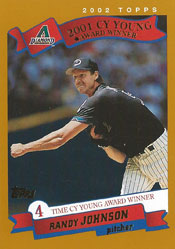
The Cardinals were a tough opponent for Randy Johnson.

randy_johnsonThe 6-foot-10 left-hander had a 7-7 record and 4.17 ERA versus the Cardinals in 16 regular-season career starts. He also was 0-2 against them in two postseason starts.

Johnson, who has 303 wins, five Cy Young awards and ranks second all-time in strikeouts (4,875), was elected to the National Baseball Hall of Fame on Jan. 6, 2015.

Cardinals slugger Albert Pujols was a Johnson nemesis, batting .458 (11-for-24) against him in the regular season, with five home runs and 13 RBI. He also hit a home run versus Johnson in the postseason.

Here is a look at some memorable matchups between Johnson and the Cardinals:

Roughed up by Redbirds

Mike Matheny and Eli Marrero hit solo home runs on consecutive pitches off Johnson in the third inning and Edgar Renteria knocked him from the game with a three-run homer in the sixth, powering the Cardinals to a 9-4 victory over the Diamondbacks on April 8, 2001, at Phoenix.

Johnson yielded 11 hits and nine runs in 5.2 innings. He also walked two and hit two with pitches. Pujols, batting fourth for the first time in the big leagues, had a two-run double off Johnson and Fernando Vina contributed a two-run single. Rick Ankiel got the win, his last as a big-league starter. Boxscore

The nine earned runs were the most Johnson had yielded in a game since April 10, 1994, when the Blue Jays scored 10 in 2.1 innings against him.

“A game like this will stick with you a little while … I pitched real bad,” Johnson said to the Arizona Daily Star after the loss to the Cardinals.

Johnson, 38, recovered from the pounding and posted one of his best seasons. He was 21-6 with a National League-leading 2.49 ERA for the 2001 Diamondbacks. He struck out a career-best 372 and earned his third consecutive NL Cy Young Award.

Pujols delivers

In Game 2 of the NL Division Series at Phoenix on Oct. 10, 2001, Pujols hit his first postseason home run, a two-run shot off a high fastball from Johnson in the first inning, and sparked the Cardinals to a 4-1 victory over the Diamondbacks.

“I wish I could have that pitch back,” Johnson said to the St. Louis Post-Dispatch.

Said Pujols: “That was my pitch.”

Johnson also yielded a run in the third. Pitcher Woody Williams doubled, advanced to third on a bunt by Vina and scored on a sacrifice fly by Placido Polanco.

Johnson went eight innings, surrendering three runs on six hits and two walks. He struck out nine. Boxscore

“He made two mistakes the whole game, to Pujols and Woody Williams,” said Diamondbacks catcher Damian Miller. “The only two bad pitches.”

Good game plan

Jim Edmonds and Scott Rolen each hit a two-run home run off Johnson, leading the Cardinals to a 12-2 triumph against the Diamondbacks in Game 1 of the 2002 NL Division Series on Oct. 1 at Phoenix. Matheny contributed a RBI-single and a double against Johnson.

In six innings, Johnson allowed 10 hits, six runs and two walks. Boxscore

The Cardinals benefitted from a disciplined approach, laying off sliders and waiting for fastballs, according to Joe Strauss of the Post-Dispatch.

“We did a great job of sticking to our game plan,” said Edmonds. “We made him pitch and tried to hit strikes instead of being overaggressive and trying to match his power.”

Said Diamondbacks manager Bob Brenly: “It appeared to me that he was rushing a little bit. When he does that, his velocity drops (and) his slider is not quite as sharp as it usually is. They were a very unforgiving team to him.”

Escape act

The Cardinals hit four home runs off Johnson, but he escaped with a no-decision in an 8-6 Diamondbacks victory on Sept. 1, 2008, at Phoenix.

Pujols hit a two-run home run and Yadier Molina, Joe Mather and Felipe Lopez each hit solo shots against Johnson. He gave up six hits and five runs in 3.2 innings. Eight of the 11 outs Johnson recorded were on strikeouts. Boxscore

Last win

In his last career appearance against the Cardinals, Johnson gave up two home runs to Pujols but earned the win _ the last of his big-league career _ in a 6-3 Giants victory on June 30, 2009, at St. Louis.

Johnson gave up four hits, four walks and three runs in 5.1 innings. Pujols hit a solo home run in the fourth and a two-run shot in the sixth. Ryan Ludwick accounted for the other two hits off Johnson: a double and a triple. Boxscore

The first home run by Pujols carried an estimated 445 feet. “I didn’t make the pitch I wanted to make,” Johnson said to the San Jose Mercury News. “I think it will probably be landing sometime shortly.”

Johnson has the most career strikeouts of any left-hander. Only right-hander Nolan Ryan (5,714) has more. Johnson and Steve Carlton (4,136) are the only left-handers with more than 3,000 strikeouts.

Johnson ranks fifth all-time among left-handers in wins, trailing Warren Spahn (363), Carlton (329), Eddie Plank (326) and Tom Glavine (305).

Previously: Rick Ankiel and his last hurrah as a pitcher

(Updated March 13, 2023)

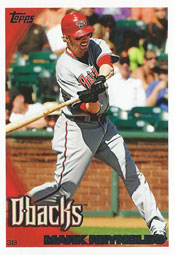
While facing the Cardinals at St. Louis in 2008, Mark Reynolds of the Diamondbacks became the first big-league player to strike out 200 times in a season.

mark_reynoldsSix years later, Reynolds joined the Cardinals as a role player.

A free agent who played for the 2014 Brewers, Reynolds signed a one-year, $2 million contract with the Cardinals on Dec. 11, 2014. The Cardinals hoped he would provide right-handed power. They knew, though, he also would strike out a lot.

Starting in 2006, total strikeouts in the majors increased regularly, according to The Sporting News. Reynolds was the model for that trend.

Poor plate discipline

On Sept. 25, 2008, Reynolds struck out in the second inning against Cardinals starter Joel Pineiro. It was Reynolds’ 200th strikeout that season. He struck out again in the seventh. Boxscore

After the game, Reynolds told Rick Hummel of the St. Louis Post-Dispatch, “It’s obviously something I have to work on for next year. It’s not the greatest of records to have. It’s a matter of pitch recognition and being more patient and more selective. I can’t tell you how many times I’ve gotten to 3-and-2 and swung at ball four.”

Reynolds finished the 2008 season with 204 strikeouts, breaking the big-league record of 195 set by Adam Dunn of the 2004 Reds. The record had been 189 strikeouts by Bobby Bonds of the 1970 Giants until Dunn topped the mark 34 years later.

“Records are made to be broken. Maybe somebody will come along and break my record,” Reynolds told Hummel.

Instead, Reynolds broke his own record the next season.

Whiffs pile up

In 2009, Reynolds struck out 223 times. That remains the big-league record.

“Deep down inside, I’m sure it bothers him more than he likes to portray,” said 2009 Diamondbacks manager A.J. Hinch.

Reynolds reached 200 strikeouts in a season three times: 204 in 2008, 223 in 2009 and 211 in 2010. He was with the Diamondbacks all three seasons.

Tyler O’Neill holds the Cardinals club record for striking out the most times in a season. O’Neill fanned 168 times in 2021, breaking the franchise mark of 167 set by Jim Edmonds in 2000.

Power potential

The reason Reynolds remained in the majors was he hit home runs. In 2009, when he established the strikeout record of 223, Reynolds produced 44 home runs and 102 RBI for the Diamondbacks. Reynolds hit 22 home runs in 378 at-bats for the 2014 Brewers.

“When that production is coming with the strikeouts,” Hinch said, “it (the record) is almost a moot point.”

Paul Molitor, who produced 3,319 hits and never struck out 100 times in a season, told The Sporting News in 2014, “Guys that are good hitters and hit for a high average should probably be striking out 10 percent of the time.”

Reynolds hit 13 home runs and struck out 121 times in 382 at-bats for the 2015 Cardinals. He became a free agent after the season and went to the Rockies.

In 13 seasons in the majors, Reynolds had 1,283 hits (298 for home runs) and 1,927 strikeouts.

“I don’t know if it’s the mentality of the players,” said Molitor, “but they’re definitely not concerned about it.”

david_ecksteinIn December 2004, the Angels did the Cardinals a favor, opting not to re-sign their shortstop, David Eckstein, making him a free agent.

The Cardinals, needing to replace shortstop Edgar Renteria, a free agent who signed with the Red Sox, hardly could believe their good fortune.

Eckstein filled two needs. He replaced Renteria at shortstop and he also batted leadoff. Like Renteria, Tony Womack, who batted leadoff for the 2004 Cardinals, became a free agent. Womack signed with the Yankees.

Pouncing on the opportunity to acquire a player described by general manager Walt Jocketty as “a perfect fit,” the Cardinals signed Eckstein on Dec. 23, 2004, two days after he became available.

It was a move that felt right from the moment it occurred.

Eckstein ignited the Cardinals with his hustle, heart and smarts, leading them to two postseason appearances and a 2006 World Series championship.

Shortstop roulette

Though Eckstein had sparked the Angels to their only World Series title in 2002 and had led American League shortstops in fielding percentage in 2004, the Angels sought an upgrade, citing Eckstein’s lack of arm strength as a liability.

Meanwhile, Renteria, a three-time all-star with the Cardinals, had bolted to the Red Sox, who gave him a four-year, $40 million contract.

With Renteria joining Boston, Orlando Cabrera, the shortstop who helped the Red Sox sweep the Cardinals in the 2004 World Series, declared for free agency. The Angels pursued him, offering a four-year, $32 million deal. When Cabrera accepted, Eckstein became expendable.

According to the Associated Press, the Cardinals, unable to find a suitable replacement for Renteria, were considering signing shortstop Barry Larkin, 40, who had become a free agent after 19 seasons with the Reds. When Eckstein became available, the Cardinals called with a three-year, $10.2 million offer.

Eckstein, 29, accepted and it was a bargain for the Cardinals.

“They were very aggressive,” Eckstein said to the St. Louis Post-Dispatch. “They were pretty much the first team to call … It was clear that this was a good fit. The best fit.”

John Mozeliak, the Cardinals’ assistant general manager, said, “David was the player we focused on right away after Cabrera signed.”

Said Jocketty: “We felt this was the guy, the perfect fit for our club for a lot of reasons. For his personality, for the way he goes about playing the game. He’s a gamer through and through. He’s the kind of player St. Louis will embrace. I think he will become a cult hero with our fans. He’s a hustler.”

Disappointed with the decision to discard a player popular with the team based near Disneyland, San Bernardino Sun columnist Paul Oberjuerge wrote, “The Angels just shot Bambi.”

Size doesn’t matter

Eckstein, 5 feet 6, 170 pounds, had 156 hits in 142 games for the 2004 Angels. He seldom struck out (49 times in 637 plate appearances) and fielded effectively (six errors).

In the 2002 World Series against the Giants, Eckstein batted .310 with nine hits, three walks and six runs scored for the Angels.

Post-Dispatch columnist Bernie Miklasz wrote, “Eckstein is the kind of old-school player who commands such great respect and appreciation in St. Louis, a traditional baseball town.”

Rex Hudler, an Angels broadcaster who had been a hustling utilityman for the Cardinals from 1990-92, told Miklasz he’d named his son, David, in honor of Eckstein.

“He’s going to be revered as the new Huckleberry Finn of St. Louis and Missouri,” Hudler said of Eckstein.

Hudler said his 8-year-old daughter cried when she learned Eckstein was leaving the Angels. “Kids are his biggest fans,” Hudler said. “The children look up to him and relate to him because he’s so small … He inspires all of those kids who have been told they aren’t good enough.”

Asked about Eckstein’s subpar arm, Hudler replied, “He’s so smart. Extremely intelligent. He studies the hitters. He positions himself perfectly. He’s always in the right place. The ball comes right to him. I’ve never seen him make a mental mistake.”

Said Eckstein: “I don’t really look like your typical pro athlete. It means I always have to prove myself … I don’t want to lose that edge.”

St. Louis sparkplug

Cardinals manager Tony La Russa was delighted by the acquisition, calling Eckstein “a winning player.”

After speaking with La Russa, Eckstein told the Associated Press, “Mr. La Russa just said to play my game, be a pest at the plate and play solid defense.”

That’s exactly what Eckstein did for the Cardinals.

In three seasons (2005-07) as the St. Louis shortstop, Eckstein twice was named an all-star. He batted .297 with 465 hits in 398 career games for the Cardinals. He had a .357 on-base percentage with them. In 2005, Eckstein ranked second among National League shortstops in both assists (517) and double plays turned (123).

His crowning achievement came in 2006 when he was named winner of the World Series Most Valuable Player Award. Eckstein hit .364 in the five-game series versus the Tigers, with four RBI and three runs scored.

“He’s the heart and soul of this ball club,” Cardinals second baseman Aaron Miles said to Sports Illustrated.


(Updated Jan. 21, 2026)

Branch Rickey is well known for being the Dodgers executive who broke baseball’s color barrier by bringing Jackie Robinson to the major leagues. What is less known is Rickey was the Cardinals executive who made Mike Gonzalez the first Cuban manager in the major leagues.

mike_gonzalezGonzalez, a Havana native, had three stints with the Cardinals as a catcher: 1915-18, 1924-25 and 1931-32. He also played for the Braves, Reds, Giants and Cubs.

During his 17-year playing career in the majors, Gonzalez developed a reputation for his baseball savvy. It was while scouting for the Giants that Gonzalez wired a report to manager John McGraw about a prospect: “Good field, no hit.” The phrase became part of baseball’s lexicon.

Shrewd strategist

In 1934, Gonzalez became a coach on the staff of Cardinals manager Frankie Frisch. Four years later, when Frisch was fired on Sept. 11, 1938, Rickey chose Gonzalez to manage the Cardinals.

Though it was a stopgap measure _ most reports indicated Rickey would hire someone from within the minor-league system to manage the 1939 Cardinals _ the move was significant.

In reporting that Gonzalez, 47, was the first Cuban to manage in the big leagues, The Sporting News described him as “a shrewd diamond strategist, a keen judge of talent and a capable instructor.”

Frisch called Gonzalez “a great guy, loyal and true and one of the smartest birds I ever knew.”

Citing his stellar reputation as a coach for the Cardinals, The Sporting News wrote of Gonzalez, “The athletes who have played under his coaching direction have learned to respect his judgment and to take his orders implicitly.”

Gonzalez also had the ability to decode signs flashed by opponents. “One year, the Cardinals won almost all their games with one of the second-division clubs, largely because Gonzalez was able to call virtually every pitch and tell exactly when the enemy was going to hit-and-run or try to steal,” The Sporting News noted.

In the book “Baseball’s Greatest Teams,” author Tom Meany noted that, in addition to his cagey baseball skills, Gonzalez was “a most remarkable poker player.”

Successful start

Gonzalez made his debut as Cardinals manager on Sept. 14, 1938, in the first game of a doubleheader at Philadelphia. Despite yielding nine runs and 13 hits, starter Max Macon pitched a complete game and got the win in a 12-9 Cardinals victory. Boxscore

The Cardinals swept the doubleheader, winning the second game, 3-2, behind Mort Cooper, who pitched a three-hitter while walking eight in his big-league debut. Boxscore

Gonzalez led the Cardinals to wins in his first five games as manager, then lost six in a row. He finished with an 8-8 record.

Ray Blades became manager of the 1939 Cardinals and kept Gonzalez as a coach.

Second stint

In June 1940, Blades was fired and Gonzalez was named to his second stint as Cardinals manager. Again, it was an interim role. The Cardinals were 1-5 under Gonzalez in 1940 before Billy Southworth took over as Cardinals manager. Gonzalez stayed as a coach.

The Cardinals won two World Series titles and three pennants under Southworth, who earned election to the National Baseball Hall of Fame.

In 1946, Southworth left the Cardinals to become manager of the Braves. He was replaced by Eddie Dyer, who maintained Gonzalez as a coach.

The 1946 season was the 13th and final season for Gonzalez as a Cardinals coach. It ended memorably. In Game 7 of the 1946 World Series, Enos Slaughter scored the winning run on a dash from first base on a hit by Harry Walker. Slaughter credited Gonzalez, the third-base coach, for waving him to home plate as soon as he reached third. It was redemption for Gonzalez, who was criticized after Game 4 when two baserunners he waved home were thrown out at the plate.

Cuban managers

Gonzalez was the first of seven Cubans who managed in the majors, according to baseball-reference.com. The others:

_ Preston Gomez: 1969-72 Padres, 1974-75 Astros and 1980 Cubs.

_ Marty Martinez: 1986 Mariners (one game).

_ Cookie Rojas: 1988 Angels and 2001 Marlins (one game).

_ Tony Perez: 1993 Reds and 2001 Marlins.

_ Carlos Tosca: 2002-04 Blue Jays.

_ Fredi Gonzalez: 2007-10 Marlins and 2011-16 Braves.

On Oct. 25, 2021, Oliver Marmol became the first minority manager of the Cardinals since Mike Gonzalez. Marmol, born and raised in the United States, traces his lineage to the Dominican Republic.

(Updated Dec. 18, 2018)

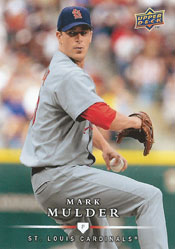
Seeking a starter to replace Woody Williams in the rotation, the Cardinals used a prospect, Dan Haren, to help land an ace, Mark Mulder.

mark_mulderOn Dec. 18, 2004, the Cardinals acquired Mulder from the Athletics for Haren, reliever Kiko Calero and first baseman Daric Barton.

The Cardinals were praised for adding Mulder to a rotation of Chris Carpenter, Jason Marquis, Jeff Suppan and Matt Morris.

Haren, though, turned out to be more durable than Mulder.

Mulder had one strong season for the Cardinals, suffered shoulder ailments and pitched his final game for them in 2008 at age 31.

Haren was 6-10 in two seasons (2003-2004) for St. Louis, but developed into one of the most consistent pitchers in the majors. Haren had 11 seasons in a row of double-digit wins and made 30 starts or more in each of those years.

Haren, whose last season was 2015, posted a career record of 153-131. He was 147-121 after leaving St. Louis. The right-hander pitched for eight teams: Cardinals, Athletics, Diamondbacks, Angels, Nationals, Dodgers, Marlins and Cubs.

After compiling an 81-42 record in five years with the Athletics, Mulder was 16-8 in 32 starts for the 2005 Cardinals. The left-hander went a combined 6-10 for the Cardinals from 2006 to 2008.

Making a splash

After they were swept by the Red Sox in the 2004 World Series, the Cardinals had four prominent players depart as free agents _ Woody Williams (11-8 in 2004), shortstop Edgar Renteria, catcher Mike Matheny and second baseman Tony Womack.

Eager to make a splashy move to show the Cardinals would fight to repeat as National League champions, general manager Walt Jocketty spoke with his Athletics counterpart, Billy Beane, about Mulder and starting pitcher Tim Hudson.

On Dec. 16, 2004, the Athletics dealt Hudson to the Braves for pitchers Juan Cruz and Dan Meyer and outfielder Charles Thomas. Two days later, the Cardinals got Mulder.

Elite starter

“This is something we’ve been working on for two or three weeks,” Jocketty said to the St. Louis Post-Dispatch. “We’ve been going back and forth between Hudson and Mulder and we felt like, in our case, we had control of Mulder for an extra year (on his contract) … Both are quality, top of the rotation starters.”

Post-Dispatch columnist Bernie Miklasz described Mulder as “an elite starting pitcher” and “a legitimate front-of-rotation starter.”

From 2001-2004, only Curt Schilling had more wins (74) than Mulder (72).

“He’s an intelligent guy, a great athlete, a great fit,” Jocketty said of Mulder.

Red flag

Miklasz and his colleague, reporter Derrick Goold, did note, however, Mulder had faltered in the second half of the 2004 season after starting the All-Star Game for the American League. Mulder was winless in his last seven 2004 starts, posting an 0-4 record and 7.27 ERA. Overall, Mulder was 17-8 in 2004 but with a 4.43 ERA.

Wrote Miklasz: “Is he wearing down after averaging 212 innings over the past four seasons?”

Mulder denied he was weakened or injured.

“We took our time and thoroughly researched this … As far as we’re concerned, he’s fine,” Jocketty said. “There are no physical problems at all. We made sure.”

Said Mulder: “I wasn’t hurt at all … There was nothing wrong with me.”

Asked to explain why Mulder was ineffective in the second half of 2004, Jocketty replied, “He put a lot of pressure on himself … He tried to do too much.”

Swift start

Any concerns about Mulder were erased early in the 2005 season. He won seven of his first nine decisions for the Cardinals. After stumbling in June (2-3, 7.18 ERA), Mulder recovered and was a combined 7-3 over the last three months of the season. He was especially effective against left-handed batters, limiting them to a .191 average in 2005.

Haren, meanwhile, had 14 wins for the 2005 Athletics, posting a 3.73 ERA in 34 starts. Calero contributed four wins and a save in 58 relief appearances.

In 2006, Mulder won five of his first six decisions for St. Louis before the shoulder woes began. Mulder made two starts after June 20 and finished the 2006 season at 6-7 with a 7.14 ERA. He was 0-3 with a 12.27 ERA for the 2007 Cardinals; 0-0 with a 10.80 for the 2008 Cardinals.