Feeds:
Posts
Comments

(Updated April 19, 2025)

After Stan Musial retired, Charlie James was chosen to replace him as the Cardinals’ left fielder in 1964.

Three months into the season, James was replaced by Lou Brock.
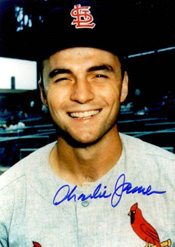
charlie_james2 A St. Louis native, James was a standout athlete at Webster Groves High School and went on to play halfback for the University of Missouri football team and outfield for the baseball team. After his junior season in football, James chose to pursue a career in baseball. The Cardinals signed him in January 1958 and, after a stint in the minors, he was promoted to the big leagues in August 1960.

While playing professional baseball, James earned a bachelor of science degree and a master’s degree in electrical engineering from Washington University in St. Louis.

During the winter, before reporting to spring training with the 1964 Cardinals, James taught electrical engineering courses as an instructor at Washington University. Cardinals infielder Dal Maxvill, also a Washington University graduate in electrical engineering, was moonlighting as a recruiter for the school’s engineering department and Charley Johnson, starting quarterback for the NFL St. Louis Cardinals, was working on his doctorate in chemical engineering there, The Sporting News noted.

Endorsed by Stan

James hit .268 with 10 home runs and 45 RBI in 116 games for the 1963 Cardinals. With Musial retiring and right fielder George Altman traded to the Mets, the Cardinals talked with the Giants about a trade of James and pitcher Ray Sadecki for outfielder Felipe Alou, The Sporting News reported.

Instead, the Cardinals went into 1964 spring training with James as the popular choice to replace Musial in left.

“Altman and I drove in 105 runs last year,” Musial said, “but I’m sure that James and (right fielder Carl) Warwick can do better than that playing all the time. I’m sure they’ll do much better.”

The Sporting News observed, “James, in particular, has been groomed to take Stan the Man’s place ever since he joined the varsity in 1960. Musial, in fact, back in 1959 pin-pointed the former Missouri gridder as the next major outfield star for the Cardinals.”

(According to the Houston Post, when reporters asked how he got along with Musial, James would grin and say, “Just fine. Stan goes his way and I go mine. He goes to the deposit window and I go to the withdrawal window.”)

James hit .320 in 20 spring training games in 1964 and appeared to validate the Cardinals’ confidence in him.

“Charlie is responding well to the challenge,” said manager Johnny Keane. “He knows it is his job and he’s going to keep it.”

Said Musial: “Charlie will get 15 to 20 homers for us.”

Goodbye, Charlie

The Cardinals opened the 1964 season with James in left, Curt Flood in center and Carl Warwick in right.

James, 26, had some big games early in the 1964 season:

_ April 22: He hit a three-run home run off Sandy Koufax in the Cardinals’ 7-6 victory over the Dodgers. Boxscore

_ May 8: He had three hits off Jack Fisher and scored twice in the Cardinals’ 5-4 loss to the Mets. Boxscore

_ May 15: He hit two home runs, one off starter Denny Lemaster and the other against Bobby Tiefenauer, in the Cardinals’ 10-6 victory over the Braves. Boxscore

A right-handed batter, James was hitting .281 on May 19 before he slumped, producing two hits in his next 22 at-bats and dropping his batting mark to .246. By June 15, the day the Cardinals acquired Brock from the Cubs, James was hitting .238.

James was limited to six starts after July 4. He ended the season with a .223 batting average, five home runs and 17 RBI in 88 games. He struggled to hit right-handed pitching, producing a .196 batting average, and was unproductive with runners in scoring position (.183).

With his hitting (.348) and speed (33 steals), Brock was the catalyst in propelling the Cardinals to the National League pennant.

James went hitless in three pinch-hit appearances against the Yankees in the 1964 World Series. After the season, he was traded to the Reds, played one season with them and launched a successful business career, eventually becoming president of Central Electric Co. in Fulton, Mo.

Previously: Gibson vs. Koufax: A grand game for Charlie James

Thinking they had the next Bo Jackson, the Cardinals turned down the chance to draft Frank Thomas.

paul_colemanIn the first round of the June 1989 baseball draft, the Cardinals, with the sixth pick, selected outfielder Paul Coleman of Frankston (Texas) High School.

With the next pick, No. 7, the White Sox chose Thomas, a first baseman from Auburn University.

Thomas, a two-time winner of the American League Most Valuable Player Award, was elected to the National Baseball Hall of Fame on Jan. 8, 2014. Playing for the White Sox, Blue Jays and Athletics from 1990-2008, Thomas hit .301 with 521 home runs and 1,704 RBI in his big-league career.

Coleman never reached the major leagues.

The top seven selections in the first round of the 1989 draft:

1. Ben McDonald, pitcher, Orioles.

2. Tyler Houston, catcher, Braves.

3. Roger Salkeld, pitcher, Mariners.

4. Jeff Jackson, outfielder, Phillies.

5. Donald Harris, outfielder, Rangers.

6. Paul Coleman, outfielder, Cardinals.

7. Frank Thomas, first baseman, White Sox.

All except Jackson and Coleman played in the big leagues. Only Thomas made the Hall of Fame.

Sure bet

The Cardinals rated Coleman the fifth-best player in the draft, the St. Louis Post-Dispatch reported, and felt fortunate he was available at No. 6.

“We’ve been looking for a power hitter and we think Coleman is the type of guy who is going to come through,” Fred McAlister, Cardinals director of scouting, told Vahe Gregorian of the Post-Dispatch. “He’s built along the lines of a Bo Jackson.”

Coleman, 5 feet 11 and 215 pounds, hit .498 with 39 home runs in his high school career.

A right-handed batter, Coleman had 119 RBI in 93 high school games. As a senior, he was successful on all 25 of his stolen base attempts. He was 63-for-67 in steal attempts during his prep career.

“We’ve had five of our people look at him,” McAlister said. “I’ve seen him three times myself. He’s an outstanding individual. We’re very fortunate to have had the opportunity to select him.”

Cardinals scout Hal Smith, a former big-league catcher with St. Louis, saw Coleman hit a home run that soared more than 500 feet. “It just went on into the night and you never saw it again,” Smith said. “It left everything.”

Local hero

Coleman, the first outfielder chosen by the Cardinals in the first round since Andy Van Slyke in 1979, was delighted to be taken so early by St. Louis. “I lost my breath when I heard,” he said.

Said Sonny Perry, baseball coach at Frankston High School: “It’s the biggest thing that’s ever happened to this town. It’s the biggest thing that ever will happen to this town.”

Coleman spent five years in the Cardinals’ minor-league system, never advancing beyond Class AA.

His best professional season was in 1993 with the Cardinals’ Arkansas club in the Texas League. Playing for manager Joe Pettini as part of an outfield with John Mabry and Allen Battle, Coleman hit .244 with 24 doubles, seven home runs and 30 RBI in 123 games.

Big Hurt

Thomas, 6 feet 5 and 240 pounds, hit .403 with 19 home runs and 83 RBI for Auburn in 1989.

“He’s strong with outstanding power and not that bad defensively,” Al Goldis, White Sox scouting director, said to the Chicago Sun-Times on draft day. “He does need to lose weight, though.”

A year later, Aug. 2, 1990, Thomas made his big-league debut with the White Sox.

Previously: Frank Thomas let his bat do talking vs. Cardinals

(Updated June 16, 2023)

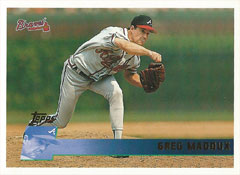
Cardinals players once offered to defer payments on their salaries in order to help management find the money to sign free-agent pitcher Greg Maddux.

greg_maddux2Despite mutual interest between Maddux and the Cardinals, a deal couldn’t be reached.

Instead, Maddux signed with the Cubs in February 2004.

Elected to the National Baseball Hall of Fame by the Baseball Writers Association of America on Jan. 8, 2014, Maddux earned 355 wins, four Cy Young Award trophies and 18 Gold Glove honors in a 23-year big-league career with the Cubs, Braves, Dodgers and Padres.

After the 2003 season, when Maddux left the Braves and became a free agent, he was among the pitchers the Cardinals pursued.

Right pitcher at right price

In 2003, St. Louis snapped a streak of three straight years in the playoffs. The problem was the pitching. After the season, general manager Walt Jocketty strengthened the staff by acquiring Jason Marquis, Ray King and Adam Wainwright from the Braves and signing free agents Jeff Suppan and Julian Tavarez.

King and Tavarez bolstered the bullpen. Marquis and Suppan joined Matt Morris and Woody Williams in the starting rotation. The Cardinals were hopeful Chris Carpenter, who sat out the 2003 season because of an injury, could become the fifth starter in 2004.

Maddux offered an enticing option. Though 37, he remained effective. He won 16 for the Braves in 2003, his 16th consecutive season with at least 15 wins.

In his book, “Baseball for Brain Surgeons and Other Fans,” broadcaster and former Cardinals catcher Tim McCarver said, “Greg Maddux gets into the mind of a batter and can stay one step ahead of him, and he also has extraordinary control over all his pitches. Every time he throws the ball, he affirms that velocity is less important than movement and location plus deception.”

Jocketty met with Scott Boras, the agent representing Maddux, on Dec. 12, 2003, and spoke by phone with him three days later, Joe Strauss of the St. Louis Post-Dispatch reported. Jocketty “refused to rule the Cardinals out” of the bidding for Maddux, Strauss wrote.

A month later, Maddux remained unsigned. At the Cardinals’ January 2004 Winter Warmup event in St. Louis, team owner Bill DeWitt Jr. told fans, “We’re not real sure what Greg Maddux wants to do. He’d be a welcome addition to any staff. At the right price, we’d be interested.”

Stars offer to help

In early February 2004, Morris told his hometown newspaper in Middletown, N.Y., he called Jocketty and offered to “take less money this season” if the Cardinals signed Maddux, reported Rick Hummel of the Post-Dispatch.

On Feb. 8, 2004, in a column headlined “Ownership Must Listen to Players’ Pitch for Maddux,” Bernie Miklasz of the Post-Dispatch revealed Jim Edmonds, Jason Isringhausen and Scott Rolen had joined Morris in offering to restructure their 2004 contracts to provide the Cardinals money in the budget to sign Maddux.

“According to media reports, several Cardinals stars have signaled to management their willingness to defer salary and assist the team’s effort to sign Greg Maddux,” Miklasz wrote. “This is a significant development. If crucial franchise pieces such as Edmonds, Morris, Izzy and Rolen want to rearrange dollars to give the Cardinals short-term financial flexibility, the owners should play ball.”

Just before spring training began, though, Maddux accepted the Cubs’ offer of a three-year contract for $24 million.

In the end, the Cardinals prevailed.

Maddux was 16-11 in 33 starts for the 2004 Cubs. Morris, Williams, Marquis, Suppan and Carpenter all posted double-digit wins for the 2004 Cardinals. St. Louis had the best record in the National League at 105-57 and finished 16 games ahead of the third-place Cubs.

Previously: How the Cardinals battled Greg Maddux

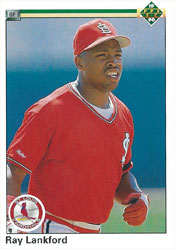
After sitting out the 2003 baseball season, Ray Lankford worked on his hitting with the help of outfielders Carlos Beltran of the Royals and Moises Alou of the Cubs. At 36, Lankford was plotting a comeback to the big leagues.

ray_lankford5Cardinals general manager Walt Jocketty, who traded Lankford to the Padres in August 2001, was looking for a left-handed batter to bolster the bench in 2004. He called Lankford and liked what he heard.

“A couple weeks ago, I was asking anybody if they’d seen or heard from Ray,” Jocketty said to the St. Louis Post-Dispatch. “He’d just dropped out of sight. I got a call from his agent and was told (Lankford) missed playing. I talked to (Lankford) a while and got the sense he had a desire to come back home to St. Louis. I think he’s highly motivated.

“He’s had a year away from the game. Sometimes that will change a guy’s outlook toward things to the positive.”

On Jan. 9, 2004, the Cardinals signed Lankford to a minor-league contract and invited him to spring training as a non-roster player with no guarantee of earning a job.

Lankford, a prominent part of the Cardinals’ lineup from 1990-2001, was grateful for the opportunity. He hit .224 in 81 games for the 2002 Padres. “Weight issues and complications from knee surgery conspired to sap his productivity,” the Post-Dispatch reported.

Be a man

When Lankford was dealt to the Padres for pitcher Woody Williams on Aug. 2, 2001, his attitude toward the Cardinals, particularly manager Tony La Russa, was negative. “Lankford had voiced displeasure over what he termed La Russa’s lack of communication about his limited playing time,” wrote Rick Hummel of the Post-Dispatch. “La Russa wondered if Lankford’s dedication had waned in the midst of a multiyear deal that paid him $35.5 million over five years.”

Said La Russa: “Ray got comfortable more than anything else.”

In the Jan. 21, 2004, Post-Dispatch, in a story headlined “Lankford is eager to show he still has something left,” Hummel asked, “Will we see a different Lankford from the one who left the Cardinals bitter at manager Tony La Russa?”

Lankford responded, “I’ve moved on. What’s in the past is in the past. Kids hold grudges. Grown men move forward. I’m moving forward. I’m sure Tony’s doing the same thing. I want to win. He wants to win.

“I’m going to camp with eyes wide open and try to make the team. I’ve never been in a situation where I had to try to make a team.”

Back in business

The improbable turned into the remarkable. Lankford made the team and was named the 2004 Cardinals’ Opening Day left fielder.

He hit .280 in April and remained the Cardinals’ starter for the first three months of the season in an outfield with Jim Edmonds in center and Reggie Sanders in right. Lankford’s batting average through June was .266.

In July, though, he developed a sore right wrist and it hurt his swing. Lankford batted .154 in July and the Cardinals placed him on the disabled list on July 25. Three weeks later, they acquired slugger Larry Walker from the Rockies.

Walker took over the right field job, with Sanders moving to left. Lankford sat out all of August. When he returned in September, he was ineffective, hitting .083 in a reserve role.

Still, his surprise contributions in the first half of the season helped the Cardinals start strong on their way to a 105-57 record and first-place finish in the National League Central Division.

Lankford played more games in left field (66) and made more starts at that position (43) than anyone else on the 2004 Cardinals. In 92 games, he batted .255 with six home runs.

(Updated Dec. 20, 2019)

Dick Groat and Roger Maris, players who helped the Cardinals win World Series championships in the 1960s, might never have played for St. Louis if the Pirates and Athletics had completed a proposed trade involving them.

maris_groatIn December 1959, the Pirates were close to dealing Groat to the Athletics for Maris but backed off at the last moment. Spurned, the Athletics turned to the Yankees and traded Maris to New York.

The decisions worked out well for the Pirates and Yankees _ and, eventually, for the Cardinals.

Groat, the Pirates’ shortstop, won the 1960 National League Most Valuable Player Award and helped the Pirates win the pennant and World Series championship, their first since 1925. Maris, the Yankees’ right fielder, won the 1960 American League Most Valuable Player Award and helped the Yankees win their 10th pennant in 12 seasons under manager Casey Stengel.

Two years later, in December 1962, the Pirates traded Groat to the Cardinals and he helped them win the 1964 World Series title, their first in 18 years. In December 1966, Maris was dealt by the Yankees to the Cardinals and he helped them win consecutive pennants and the 1967 World Series championship.

If Groat had been traded for Maris in December 1959, the chances of both landing with the Cardinals likely would have been diminished.

Pirates wanted power

Pirates general manager Joe L. Brown went to the 1959 baseball winter meetings determined to trade for a slugger. He told The Sporting News he made offers for Tigers outfielder Al Kaline, Indians outfielder Rocky Colavito, Senators third baseman Harmon Killebrew and Maris, an outfielder for the Athletics.

“Cleveland turned us down quickly for Colavito, but Detroit, Kansas City and Washington considered our propositions,” Brown said.

The Athletics wanted a shortstop because their starter, Joe DeMaestri, was considering retirement. If the Pirates would deal Groat, the Athletics were willing to send them Maris. Brown and Athletics general manager Parke Carroll agreed to make the trade.

Interviewed for the book “Roger Maris: Baseball’s Reluctant Hero,” Groat recalled, “I heard it was cut-and-dried.”

George Weiss, general manager of the Yankees, told The Sporting News in January 1960 that the Pirates came close to completing the deal for Maris.

The proposed deal was for the Athletics to send Maris, DeMaestri and catcher Hal Smith to the Pirates for Groat, center fielder Bill Virdon, pitcher Ron Kline and catcher Hank Foiles, The Sporting News reported. According to the Pittsburgh Press, the deal was Groat, Kline, outfielder Roman Mejias and pitcher Dick Hall to the Athletics for Maris, Smith and pitcher Ned Garver.

Under the headline “Swap Groat? Very Thought Jars Bucs Fans,” The Sporting News wrote, “The shocker developed when Dick Groat’s name bobbed up in discussions with several American League teams, notably the Senators and Athletics … Word from Kansas City has revealed that Groat’s name also was bandied about when the Pirates sought outfielder Roger Maris.”

Pirates manager balks

According to the Maris biography by co-authors Tom Clavin and Danny Peary, Brown and Pirates manager Danny Murtaugh stepped out of the room during a break in the talks with the Athletics.

Said Groat: “When they got out in the hallway, Danny said, ‘I don’t want to trade Groat.’ And they called it off.”

In a slightly different version, Brown told The Sporting News, “I believe we could have completed the deal for Maris, but the more I thought it over I felt perhaps we were giving up too much.”

“If we had gone through with this trade,” Brown added, “it would have been Page One in Pittsburgh and Kansas City.”

Wrote The Sporting News: “Chances are that thoughts of operating next season without Groat were the factor in casting the negative vote in Brown’s scheme. Brown and his aides probably couldn’t have visualized a Pirates team without the steadiness of Groat and thus backed out on the trade talk.”

On Dec. 11, 1959, the Athletics swapped Maris, DeMaestri and first baseman Kent Hadley to the Yankees for outfielders Hank Bauer and Norm Siebern, pitcher Don Larsen and first baseman Marv Throneberry.

“Had I gone to Kansas City, I’d have been buried for my career,” a grateful Groat told the Maris biographers.

Groat was the 1960 National League batting leader at .325 and paced the Pirates in hits (186).

Maris was the 1960 American League RBI leader with 112. He slugged 39 home runs and topped the league in slugging percentage (.581).

Previously: Cardinals nearly traded Bob Gibson to Senators

(Updated April 5, 2018)

The lineup of luminaries who participated in the first event held at San Francisco’s Candlestick Park included Stan Musial, Willie Mays and Richard Nixon. The story of the day, though, wasn’t created by ballplayers or politicians. Instead, the wind, sweeping across San Francisco Bay and swirling throughout the $15 million stadium, produced the most attention.

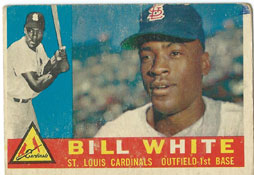
bill_white2Candlestick Park was dedicated on April 12, 1960, when the Cardinals played the Giants in the National League season opener for both clubs. Video

After two years at Seals Stadium in San Francisco’s Mission District, the Giants played at Candlestick Park from 1960 through 1999 before moving into a ballpark in the China Basin section of San Francisco in 2000.

Tricky winds and Tricky Dick

Vice President Nixon took part in the Candlestick Park dedication ceremonies before the start of the Cardinals-Giants game and called the facility “the finest baseball park in America,” the Associated Press reported. “It is truly a magnificent stadium,” Nixon said.

The sun shined brightly that Tuesday afternoon, but those among the 42,269 seated in the shade, especially in the lower level underneath the overhang of the upper deck, were chilled blue by the wind which relentlessly rolled in from left field.

Ray Haywood of the Oakland Tribune wrote, “Although Candlestick Park undoubtedly is the Taj Mahal of baseball _ a beautiful, commodious creation in steel and concrete _ it might not be a fit place either for shirtsleeves or right-handed hitters aiming for the left field fence. A spring wind, eager and brisk from the north, put the air brakes on everything hit toward left and boosted balls hit to right.”

Wrote Art Rosenbaum in The Sporting News: “It was like a Sierra winter day, warm in the sunshine but freezing under the trees. The coffee sales at Candlestick more than doubled the pre-game estimate of concessions experts.”

Musial, playing first base for the Cardinals, told the Oakland Tribune, “This wind will force teams to change their style of play. Right-handed power will be neutralized and clubs will have to go more for running and stealing bases.”

Future and former Cardinals

Bill White, the Cardinals’ center fielder, got the first hit in Candlestick Park, a two-out single in the first inning off Sam Jones. A year earlier, White and Jones were traded for one another.

Orlando Cepeda of the Giants hit a two-run triple in the bottom of the first off Larry Jackson, giving San Francisco a 2-0 lead. Cepeda’s sinking line drive darted wickedly in the wind and eluded White about 15 feet from the center field fence. “I should have had it, wind or not,” White said.

In the third, Cepeda increased the San Francisco lead to 3-0 with a single, scoring Mays from third.

Leon Wagner, traded by the Giants to the Cardinals four months earlier, hit the first Candlestick Park home run on a curve from Jones in the fifth. In the book “The Original San Francisco Giants,” Wagner recalled, “He threw me one of his long, hooking curveballs, the ones that broke about eight feet, and I just waited on it and hit it into the bay … I had the breeze blowing with me at Candlestick. I just had to get it up in the wind.”

Jones threw 121 pitches and finished with a three-hitter (the Wagner homer and two singles by White) in the Giants’ 3-1 victory. Boxscore

It was Jones’ fifth consecutive win against St. Louis since his trade to the Giants.

“I was more impressed with Jones than the wind,” Cardinals manager Solly Hemus said. “Sam was as good out there today as I’ve ever seen him.”

Musial went hitless in three at-bats. Mays and Willie McCovey each was 1-for-3 (each hit a double) with a walk apiece.

White works wonders in wind

One more wind story from that game:

In the eighth, with McCovey on first and no outs, Cepeda crushed a pitch into center field. White, still burning from failing to catch the Cepeda rocket in the first, raced after the ball as the wind pushed it away from him. White tracked it, grabbed it, crashed into the fence, 420 feet from home plate, and rolled on the ground without dropping the ball.

“That ball was my best shot,” Cepeda said. “I just can’t hit it any better.”

Said Wagner, who watched from left field: “If it hadn’t been for the wind, it would have gone 700 feet.”