Feeds:
Posts
Comments

(Updated Nov. 24, 2024)

In 1948, Stan Musial became the first Cardinals player to hit walkoff home runs in consecutive games.

No other Cardinal matched the feat until Albert Pujols did it June 4 and June 5 in 2011 against the Cubs at St. Louis, according to the Elias Sports Bureau.

On Aug. 26, 1948, in the second game of a doubleheader against the Giants at St. Louis, Musial batted in the ninth inning with a runner on first, one out and the score tied at 5-5.

Facing Ken Trinkle, a right-handed reliever, Musial launched a home run, giving the Cardinals a 7-5 walkoff victory. Boxscore

In the next game, Aug. 28 against the Giants at St. Louis, Musial batted in the 12th with one out, the bases empty and the score tied at 4-4. Facing starter Monty Kennedy, a left-hander, Musial cracked a home run, giving the Cardinals a 5-4 victory. Boxscore

In his autobiography, “Stan Musial: The Man’s Own Story,” Musial indicated the Cardinals turned up their intensity when playing the Giants because of the presence of manager Leo Durocher, a relentless antagonist. In July 1948, in a move that shocked the baseball world, Durocher left the Dodgers and became manager of the Giants, replacing Mel Ott.

The 1948 Cardinals were 11-1 against the Giants after Durocher joined them.

“Leo liked to play the game rough, liked to make it a game of intimidation,” Musial said in his autobiography. “His tactics turned us from tabbies into tigers.”

For the book “Voices From Cooperstown,” Musial told author Anthony J. Connor, “Durocher tried to intimidate the other team with this kind of rough stuff, but I think it backfired on him more than not. He was just stirring up a nest of hornets. When Durocher came to town, I was so charged up before the game, man, I could go out there and climb six fences. I wasn’t the only one. Our whole team was up.”

The game-winner on Aug. 28 was Musial’s 33rd home run of the season. Since arriving in the big leagues in 1941, Musial never had hit as many as 20 homers in a season. In 1948, he would finish with a career-best 39. It began a 10-year stretch in which Musial hit 20 or more home runs each season, including six years with 30 or more.

“The power surge felt good, mighty good,” Musial said.

In his book “Musial: From Stash to Stan the Man,” author James N. Giglio wrote of Musial’s home run production: “Always able to smack outside pitches to left field, Musial nevertheless became a smarter and more confident hitter in 1948. His greater sensitivity to the strike zone made him even more dangerous with two strikes. Instead of trying to protect the plate, he bore down harder and took his customary swing.”

Musial won the National League Most Valuable Player Award in 1948. He hit .376 with 131 RBI, 230 hits and 135 runs scored. His slugging percentage (.702) was the first above .700 in the NL since Hack Wilson (.723) of the Cubs in 1930, and his 103 extra-base hits were four shy of the NL record established by Chuck Klein of the Phillies in 1930.
(Updated July 20, 2024)

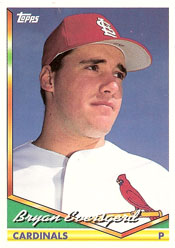
In April 1994, with injuries taking a toll on Cardinals pitchers, manager Joe Torre let two rookies, Frank Cimorelli and Bryan Eversgerd, make their big-league debuts in the same game.

On April 30, 1994, before a Saturday night crowd of 49,927 at Houston’s Astrodome, the Astros jumped on St. Louis starter Allen Watson for a 5-1 lead through four innings.

Cimorelli, 25, a 37th-round pick in the 1989 draft, entered in the fifth and yielded a run after Jeff Bagwell and Ken Caminiti opened the inning with consecutive singles. In the sixth, the Astros scored four runs on RBI-doubles by Steve Finley and Bagwell, and Caminiti’s two-run single, before Cimorelli recorded an out.

Torre replaced Cimorelli with Eversgerd, 25, who signed with the Cardinals as an undrafted free agent in 1989. Eversgerd finished the inning without allowing a run.

Houston went on to a 15-5 victory. Boxscore

When the Cardinals returned to Houston in July, Cimorelli and Eversgerd were involved in one of the franchise’s most embarrassing losses.

On July 18, 1994, at the Astrodome, the Cardinals led 11-0 in the third inning. In the sixth, with the score 11-4, Cimorelli again relieved Watson. The Astros scored 11 runs in the inning _ including four against Cimorelli (who retired one batter) and four against Eversgerd (who faced four batters and retired none).

Houston won, 15-12, and tied a National League record for overcoming the largest deficit. Eversgerd took the loss, though there was plenty of blame to share. Boxscore

“I just pitched the wrong pitchers,” Torre said to the Associated Press. “It’s my fault we lost.”

Cardinals catcher Tom Pagnozzi told the wire service, “I don’t think anyone in the ballpark could have dreamed this. We couldn’t get anybody out. I was involved in a game like this when I was 8 years old, but not in the big leagues.’

Cimorelli pitched in 11 games for the 1994 Cardinals, compiling an 0-0 record, one save and a 8.77 ERA. The save was earned when he pitched three scoreless innings in St. Louis’ 11-4 win over the Rockies on July 1, 1994. It was his only big-league season.

Eversgerd pitched in 40 games for the 1994 Cardinals. He was 2-3 with a 4.52 ERA.

In April 1995, the Cardinals traded Eversgerd, along with pitcher Kirk Bullinger and outfielder DaRond Stovall, to the Expos for pitcher Ken Hill.

Eversgerd pitched for the 1995 Expos (0-0) and 1997 Rangers (0-2).

In January 1998, Eversgerd, a free agent, signed with the Cardinals and ended his big-league playing career with them. He was 0-0 in eight appearances for the 1998 Cardinals.

Eversgerd became a Cardinals minor-league coach in 2001, took a two-year hiatus (2002-03) and returned to the organization in 2004. He was pitching coach at Class AAA Memphis from 2013-17. Among the Cardinals pitching prospects Eversgerd has been credited with helping during his minor-league coaching career: Michael Wacha, Shelby Miller, Seth Maness and Jack Flaherty.

In 2012, Eversgerd received the organization’s George Kissell Award for coaching excellence.

Eversgerd was named Cardinals bullpen coach on Oct. 26, 2017, and remained in that position through the 2022 season. He was the bullpen coach on the staffs of three Cardinals managers: Mike Matheny (2018), Mike Shildt (2018-21) and Oliver Marmol (2022).

On May 7, 1940, the Cardinals raked Dodgers starter Hugh Casey for 15 hits, 13 runs and five home runs in seven innings during an 18-2 victory at St. Louis.

The Cardinals also hit two home runs against reliever Max Macon, giving them a total of seven for the game.
The outburst came against the hottest team in the National League. The 1940 Dodgers, managed by Leo Durocher, entered the Tuesday game at Sportsman’s Park with an 11-1 record. The Cardinals were 5-10.

Brooklyn featured a lineup of Dolph Camilli and Dixie Walker, and rookie shortstop Pee Wee Reese.

Casey, 26, was one of their top pitchers. The right-hander recorded 15 wins and a 2.93 ERA for the 1939 Dodgers.

Casey earned complete-game wins against the Giants and Phillies in his first two starts of 1940 before he stumbled against the Reds, yielding eight runs in four innings in Brooklyn’s first  loss.

In the series opener against the Cardinals on Sunday, May 5, Casey entered in relief, pitched a scoreless ninth and earned the save in Brooklyn’s 9-6 victory. Boxscore

Two days later, he was the starting pitcher, bringing a 2-1 record and 3.52 ERA against a Cardinals lineup that included three future Hall of Fame players: Joe Medwick, Johnny Mize and Enos Slaughter. All-star shortstop Marty Marion was unavailable because of a knee injury.

After a scoreless first inning, the Cardinals went to work against Casey. Don Padgett, Stu Martin and Eddie Lake hit solo home runs, and Medwick and Mize each launched a two-run homer. The home run by Lake, a slight second baseman, was the first of his big-league career.

Casey knocked down several Cardinals batters and hit three, the St. Louis Post-Dispatch reported.

Macon, a former Cardinal, relieved Casey in the eighth and yielded five runs, including another homer apiece by Mize and Lake. Boxscore

The Cardinals collected 49 total bases, topping the league mark of 47 established by the Giants in 1931. Their seven total home runs tied a league record shared by five others.

The Associated Press reported Durocher kept Casey in the game for seven innings “to save wear and tear on his other pitchers.”

“It was at his own request” that Casey remained in the game through seven innings, The Sporting News reported.

According to The Brooklyn Daily Eagle, Casey said to Durocher after giving up five runs in the third inning, “Let me keep pitching. I need the work.”

Casey’s performance got the headlines, but the game featured another significant development.

In the ninth inning, the Cardinals sent in Bill DeLancey to replace Padgett at catcher, drawing a big cheer from the few remaining in the announced crowd of 2,298. It was DeLancey’s first big-league appearance since 1935. He was attempting a comeback after more than four years spent in Arizona to overcome a lung ailment, The Sporting News reported.

(DeLancey would appear in 15 games for the Cardinals in 1940, his last big-league season. He died on his 35th birthday, Nov. 28, 1946).

After their sizzling start, the 1940 Dodgers finished in second place at 88-65, 12 games behind the champion Reds and four ahead of the Cardinals (84-69).

Casey was moved to the bullpen in early June and finished the 1940 season with an 11-8 record and 3.62 ERA.

Casey befriended the writer, Ernest Hemingway, pitched for Dodgers pennant winners in 1941 and 1947, earned two wins and a save in the 1947 World Series against the Yankees, and finished a nine-year big-league career with a 75-42 record, 55 saves and a 3.45 ERA.

On July 3, 1951, Casey, 37, died from a self-inflicted shotgun blast to the neck. The suicide occurred seconds after he had assured his wife in a telephone call he was innocent of a charge he fathered a son out of wedlock, according to the Associated Press.

The 1973 Cardinals eventually reached first place after losing 12 of their first 13 games of the season.

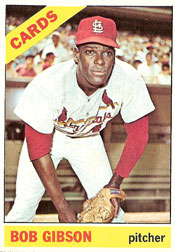
On April 22, 1973, the Cardinals lost both games of a doubleheader, dropping their record to 1-12. Rookie Mike Schmidt’s home run off Bob Gibson with two outs in the bottom of the ninth in Game 2 broke a 1-1 tie and gave the Phillies a sweep. “I never remember being this excited about anything,” Schmidt told the Associated Press. Boxscore
St. Louis’ slow start attracted national attention. An editorial in The Sporting News noted, “There was the Card record _ won 1, lost 12, pct. .077 _ jumping out from the standings like a stink weed at a flower show. Not surprisingly, the critics were in full cry. Their blasts flooded a nightly sports talk show on a St. Louis radio station.”

Noting that the 1951 Giants started 2-12 and recovered to win the pennant, the editorial concluded, “All of which indicates it may be a little early to consign the Redbirds to the wait-til-next-year category.”

Cardinals general manager Bing Devine asked for patience. “This is a young club that will make mistakes,” he said.

St. Louis correspondent Neal Russo wrote, “There were concerns because of the early leaks in the defense, especially the outfield. In three different losses, an outfield failure proved costly. There was concern because the pitching was porous in the early going. And there was concern because of the lack of timely hitting.”

By the end of May, the Cardinals had climbed ahead of the Phillies and into fifth place at 19-25. The Cardinals won eight of their final nine games in May.

They began June by winning their first five. By June 30, the Cardinals reached .500 (37-37) and moved into second place, seven games behind the Cubs. Gibson and Reggie Cleveland each went 4-1 in June. Ted Simmons hit .333 with five home runs during the month. Joe Torre batted .302 with five homers in June.

On July 22, a Sunday afternoon, the Cardinals erased a 4-2 deficit by scoring three runs in the bottom of the eighth against Dodgers reliever Jim Brewer. Simmons tied the score with a two-run single and Bernie Carbo’s RBI-double was the game-winner. The 5-4 victory moved St. Louis (51-45) into first place, a half-game ahead of the Cubs. Boxscore

Russo wrote in The Sporting News, “Excellent pitching and brilliant defense were the keys to the rebounding by a club that had been booed and vilified for the first five weeks of the season.”

Shortstop Mike Tyson, second baseman Ted Sizemore, center fielder Luis Melendez and right fielder Jose Cruz were singled out for steadying the defense.

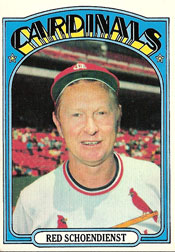
Said manager Red Schoendienst: “Defense makes pitching.”

It appeared the Cardinals, Cubs and Pirates would battle for the division title. On the day the Cardinals moved into first place, the Mets (42-51) were in last place, 7.5 games behind St. Louis.

The Cardinals (56-48) ended July with a two-game lead over the second-place Cubs.

On Aug. 4, at New York’s Shea Stadium, Gibson injured his right knee while running the bases. He required surgery and didn’t pitch again until Sept. 29, when he beat the Phillies.

Without their ace, the Cardinals stumbled, losing 11 of 12 from Aug. 6 to Aug. 18. Yet, on Sept. 11, the Cardinals (72-72) still clung to first place by a half game over the Pirates.

The Mets, however, surged, winning 20 of their final 28. The Cardinals went 13-15 over the same period. A seven-game losing streak, during which they scored a total of 14 runs, from Sept. 7 to Sept. 15 was the Cardinals’ undoing.

Even though St. Louis finished the season with a five-game winning streak, the Mets, who took over first place Sept. 21, won the division championship with an 82-79 mark, 1.5 games ahead of the runner-up Cardinals (81-81).

Russo spoke for many when he wrote, “You could spend all fall and winter replaying those nightmarish giveaways, the games that made the difference between winning and finishing second.”

Eight times during his Cardinals career Bob Gibson had three hits or more in a game in which he pitched and earned the win.

Here are the eight games Gibson won while collecting at least three hits:

_ July 8, 1962, Cardinals 15, Mets 1, at New York: Gibson pitched a three-hitter for his 10th win of the season, and went 3-for-5 to improve his batting mark to .300 for the year. One of the hits was a leadoff home run in the third inning off Jay Hook, giving St. Louis a 3-0 lead. Boxscore

_ Sept. 29, 1965, Cardinals 8, Giants 6, at San Francisco: In a matchup of future Hall of Famers, Gibson belted an eighth-inning grand slam against Gaylord Perry.

It was Gibson’s fifth homer of the season, the first grand slam of his professional career and his third hit of the game.

“I knew it was going to the fence, but I didn’t think it was going over,” Gibson told the Associated Press.

With the Cardinals ahead 8-0 entering the bottom of the ninth, the Giants rallied for six runs against Gibson and Curt Simmons. With two on and two out, Hal Woodeshick struck out Willie McCovey on a 3-and-2 curve a foot outside the plate, ending the game and preserving Gibson’s 19th win of the season. Boxscore

_ May 12, 1969, Cardinals 6, Dodgers 2, at St. Louis: Gibson hit three singles, including one with the bases loaded that knocked in two runs in the fourth against Claude Osteen.

His seven-hitter earned Gibson his fourth win of the season. Boxscore

_ Sept. 10, 1969, Cardinals 11, Pirates 2, at Pittsburgh: Gibson stroked four hits, including a double and a single against Steve Blass, and notched his 17th win of the season with a six-hitter in the opener of a doubleheader. Boxscore

_ June 3, 1970, Cardinals 6, Giants 5, at St. Louis: With the score 5-5 in the seventh, Gibson gave the Cardinals the lead with his third hit, a two-out single to right against Frank Reberger that scored Ted Simmons from third.

In pitching an eight-hitter for his fifth win of the season, Gibson retired Willie Mays and Willie McCovey with two on in the ninth. Mays and McCovey went a combined 0-for-9 against Gibson. Boxscore

_ June 26, 1970, Cardinals 7, Phillies 0, at St. Louis: Gibson went 3-for-4 with a RBI and pitched a four-hit shutout for his 10th win of the year. He limited the Phillies to one hit over the last five innings. Boxscore

_ July 1, 1972, Cardinals 6, Phillies 4, at Philadelphia: In the opener of a doubleheader, Gibson hit a double and two singles, and pitched a seven-hitter, leading St. Louis to its fourth consecutive victory and its 11th in its last 12 games. Boxscore

_ Sept. 1, 1974, Cardinals 8, Giants 1, at San Francisco: Gibson, who had lost three of his previous four starts, pitched a seven-hitter and led all St. Louis batters with his three hits. Boxscore

In 1950 and again in 1958, Stan Musial entered June with a batting average above .400.

Musial hit .415 entering June 1950.

“It had been agreed that the only sure way of getting Stan Musial out was to get him out of town,” New York columnist Red Smith wrote.

Musial’s hot start sparked talk of whether he could become the first big-leaguer since Ted Williams of the Red Sox in 1941 and the first National League player since Bill Terry of the Giants in 1930 to hit .400 for a season.

Bill Terry told a New York publication he would be rooting for Musial to hit .400 for the season. “My advice would be for Stan to take each game as it comes along and not even start thinking about the .400 average,” Terry said.

Musial agreed. “I’m not going to even think about a .400 year, much less talk about it,” Musial told St. Louis writer Bob Broeg.

Musial said it would take 250 hits to achieve a .400 season. “That’s why I couldn’t seriously think about .400 until August or September,” Musial said. “Averages fluctuate too much at this stage of the game.”

Sure enough, the arrival of June sent Musial into a slump. From June 1 through June 8, 1950, he hit .130 and his batting average dropped 42 points to .373.

As late as Sept. 6, 1950, Musial was hitting .363. He finished the 1950 season at .346, earning the fourth of his seven National League batting crowns and finishing 18 points ahead of the runner-up, the Dodgers’ Jackie Robinson (.328).

In 1958, Musial, 37, got off to an even more sizzling start than he did in 1950.

He ended May hitting .431. Included in that stretch was his 3,000th career hit on May 13, 1958, sparking speculation about whether Musial would threaten Ty Cobb’s career hits record.

In a May 1958 interview with San Francisco writer Jack McDonald in The Sporting News, Cobb said of Musial, “He would be a superstar in any era of baseball. Stan is a little different from some of the other fellows playing today. He’s a shining example of the old-style player. He is a clever hitter who can play anywhere … He hits to all fields, can hit the ball where it is pitched, and he doesn’t clog up the bases when he gets on.”

Musial was hitting .406 as late as June 11, 1958, before he went into a 4-for-33 slump from June 12 through June 22. His batting average fell to .360, a 71-point decrease from where it was when he entered June.

Musial finished the 1958 season with a .337 batting mark, good for third in the National League behind the Phillies’ Richie Ashburn (.350) and the Giants’ Willie Mays (.347).
