Less than a year after offering him their big-league pitching coach job, the Cardinals fired Hall of Fame left-hander Warren Spahn as manager of their Class AAA team.
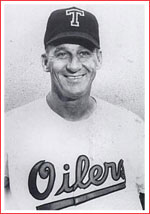 The Tulsa Oilers were 15 games below .500 and in last place when Spahn was fired. The Cardinals said Spahn’s dismissal was based on a desire to give other managers in their system a chance to advance.
On Aug. 27, 1971, Cardinals general manager Bing Devine arrived unannounced in Tulsa, met with Spahn and told him his contract would be terminated after the completion of the American Association season.
Spahn responded he wouldn’t manage the remaining seven games. Tulsa outfielder Gary Geiger, a former big-leaguer, filled in for Spahn.
“I certainly respect Bing for flying to Tulsa to tell me,” Spahn said to The Sporting News. “He could have as easily picked up a phone and told me.”
Spahn, 50, said Devine informed him there were no other jobs for him with the Cardinals and “there were young prospective managers in the organization who needed to move up.”
Jack Krol, 35, who managed Class AA Arkansas in 1971, replaced Spahn at Tulsa for the 1972 season.
According to The Sporting News, Spahn had been offered the job of pitching coach on Cardinals manager Red Schoendienst’s staff in October 1970 after Billy Muffett was fired. Spahn chose to remain Tulsa manager.
Clyde King, a former Cardinals minor-league manager and pitching instructor, also was considered to replace Muffett, but King became manager of the Class AAA Richmond Braves, and the Cardinals settled for former reliever Barney Schultz as their pitching coach.
A day after Spahn’s firing, Aug. 28, 1971, Tulsa general manager Hugh Finnerty quit in protest, saying he hadn’t been consulted.
“I haven’t felt like I was general manager,” Finnerty said. “I felt like the releasing of Spahn was ill-timed, coming just seven days before the end of the season.”
Oilers owner A. Ray Smith told The Sporting News the Cardinals had contacted him two weeks before Spahn’s firing to advise him of their decision.
“The Cardinals pay 100 percent of the manager’s salary and I think that gives them the right to do what they want _ although they have never tried to cram anything down our throats,” Smith said.
Spahn had been Tulsa’s manager for five seasons _ the longest stint in franchise history. When he became Tulsa manager in 1967, it was at the urging of Smith and at great cost to the Cardinals.
According to The Sporting News, the Cardinals’ first choice to manage the 1967 Tulsa team was Sparky Anderson, who managed the Cardinals’ Class A St. Petersburg club to a Florida State League championship in 1966. Smith wanted Spahn, who never had managed. The Cardinals relented and assigned Anderson to manage their Class A Modesto team in 1967.
Upset he had been passed over for the Class AAA job, Anderson left the Cardinals’ organization after the 1967 season and accepted a minor-league managing job in the Reds’ system. In October 1969, Anderson was selected manager of the Reds and embarked on his Hall of Fame career.
After the Cardinals fired him, Spahn became pitching coach of the 1972 Cleveland Indians. Gaylord Perry earned 24 wins and received the Cy Young Award with Spahn as his coach that season, and the Indians had a 2.92 team ERA.
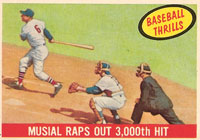 On Jan. 29, 1958, Musial, 37, became the first National League player with a six-figure salary when the Cardinals agreed to pay him $100,000 to play first base.
 Spahn, who had 363 big-league wins, primarily with the Braves, got his first try at being a manager in 1967 with the Cardinals’ Class AAA Tulsa Oilers.
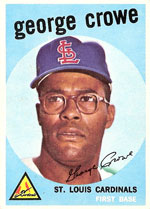 Acquired by the Cardinals from the Reds in an October 1958 trade, Crowe was 37, a veteran who had played in the Negro National League and who broke into the majors in 1952 with the Boston Braves.
 Against teams whom he faced at least 10 times in his career, Hoffman’s ERA was highest vs. St. Louis (4.09 in 51 regular-season games).
 RetroSimba