Feeds:
Posts
Comments

About the same time that fans of Milwaukee baseball learned the Braves planned to abandon them, the club’s most prominent pitcher, Warren Spahn, got cast aside, too.

So, when Spahn returned to Milwaukee for the first time as a member of the Mets, the fans there came out to cheer for him and against the Braves.

The drama didn’t end there. Spahn was matched that night against his protege and former road roommate, Wade Blasingame. Both were destined to wind up with a Cardinals farm team.

Mr. Brave

A left-hander who developed into a consistently big winner, Spahn began his major-league career with the 1942 Boston Braves (managed by Casey Stengel), served in combat during World War II, and moved with the club to Milwaukee in 1953. He was revered in Milwaukee for being the staff ace and for helping the Braves win two National League pennants (1957 and 1958) and a World Series title (1957).

“No individual made a greater contribution to the fabulous Milwaukee baseball story,” The Sporting News reported on Spahn. “He was truly Mr. Brave.”

Spahn won 20 or more 13 times, including six years in a row (1956-61). He was 42 when he won 23 for the 1963 Braves.

Trouble developed for both Spahn and the Milwaukee fan base in 1964. Spahn quit winning, and was shifted to the bullpen against his wishes by manager Bobby Bragan. Spahn finished the season at 6-13 with a 5.29 ERA.

“He was dead on his feet,” Bragan told The Sporting News. “His legs were gone. He couldn’t get off the mound, and they were bunting him silly.

“If any other pitcher had been shelled the way he was,” Bragan said, “he would have been shipped to (minor-league) Denver.”

The Braves wanted Spahn to stop pitching and offered him several jobs in the organization, including a radio broadcasting gig, The Sporting News reported. Spahn wanted to play instead.

Then the Braves delivered a double salvo of damaging decisions to the fans of Milwaukee baseball:

_ In October 1964, the Braves’ board of directors voted to approve a move of the franchise to Atlanta. The Braves were ready to go, but the National League ordered them to play one more season in Milwaukee in 1965, putting them in a lame-duck position with a furious fan base.

_ A month later, the Braves sold Spahn’s contract to the Mets, a move the scorned fans viewed as thankless.

“They got rid of me because of the money, my salary,” Spahn told The Sporting News. According to the New York Daily News, Spahn was paid $85,000 in 1964.

Double duty

The Mets’ manager, Casey Stengel, gave him the dual role of pitcher and pitching coach. “Pitching is first, then coaching,” Spahn told The Sporting News. He said to Dick Young of the Daily News, “I think I’m still a 20-game winner.”

Whitey Ford, who attempted to be both pitcher and pitching coach for manager Yogi Berra’s 1964 Yankees and found it daunting, delivered a message to Spahn through The Sporting News: “You’ll be sorry.”

(Berra, who was fired by the Yankees after the club was defeated by the Cardinals in the 1964 World Series, joined Spahn as a coach on Stengel’s 1965 Mets staff. Berra played in four May games for the 1965 Mets, then stuck solely to coaching.)

Spahn, 44, won his first two decisions with the 1965 Mets. Both were complete games _ one against the Dodgers Boxscore and the other versus the Giants. Boxscore

(In his first start versus the Cardinals as a Met, Spahn was matched against Bob Gibson. Lou Brock hit a two-run home run and the Cardinals won, 4-3. Boxscore and radio broadcast)

Out for revenge

Spahn was 3-3 with a 3.51 ERA heading into his return to Milwaukee to oppose the Braves. The fans there were showing their contempt about the impending move to Atlanta by staying away from County Stadium. 

After a paid crowd of 33,874 attended the 1965 home opener, subsequent April and May Braves home games drew an average paid attendance of 3,000. Paid attendance figures for the Cardinals’ three-game series at Milwaukee April 27-29 were 1,677, 1,324 and 2,182.

The turnout for the Thursday night game with the Mets on May 20, 1965, was a lot bigger _ 19,140 total (17,433 at full price, 1,707 youngsters admitted for 50 cents each) _ and most were there to pay tribute to Spahn.

“They made no secret of the fact they were rooting not for the Braves but for Spahn,” The Sporting News reported. “They cheered when his name was announced, when he took the mound and when he threw so much as a strike. They gave him a standing ovation when he went to bat.”

Dick Young of the Daily News observed, “He was to be their instrument of revenge. They came just for him, hoping, praying, he would beat the Braves.”

Several brought homemade banners and placards, including one with the message, “Down the Lousy Saboteurs. C’mon, Spahn, Mow Down the Betrayers,” the Daily News reported.

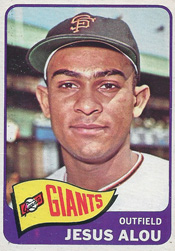
The Braves’ lineup that night featured Hank Aaron, Eddie Mathews, Joe Torre, Felipe Alou and 21-year-old starting pitcher Wade Blasingame. A left-hander, Blasingame got called up to the Braves in June 1964 and roomed on the road with Spahn, who became a mentor. Blasingame was 9-5 (including a shutout of the pennant-bound Cardinals Boxscore) for the 1964 Braves.

“There is a growing feeling (Blasingame) is about to become the new Spahn,” The Sporting News reported.

Spahn “taught me more in a year than I ever knew before,” Blasingame told United Press International.

All business

Blasingame and Spahn waged a scoreless duel for four innings. Then, in the fifth, Spahn became unglued. The Braves scored twice, then loaded the bases for Eddie Mathews, the left-handed slugger who was, according to George Vecsey of Newsday, “one of Spahn’s closest friends.”

When the count got to 1-and-1, “I couldn’t afford to get behind,” Spahn explained to United Press International. “He had been looking bad on the slider all night, but I second-guessed myself and threw him a fastball. Trouble was, I was indecisive about whether to throw it down and in, or down and away. So I came right over the plate.”

Mathews clobbered it _ “a mile past the bleachers in right,” the Daily News reported _ for a grand slam, giving the Braves a 6-0 lead.

“Spahn kicked the top of the mound to dust, and picked up the resin bag and slammed it down,” Dick Young noted.

Mathews said to Newsday, “If I felt something special about hitting a home run against Spahn, I’d tell you. I didn’t. He’s just another pitcher.”

In his book, “Eddie Mathews and the National Pastime,” Mathews said, “Spahnie and I went out and drank together after the ballgame, but there was no sentiment while he was on the mound.”

Hank Aaron followed with a single, stole second and eventually scored on Rico Carty’s second double of the inning, capping the seven-run outburst.

Spahn completed the inning, then was lifted for a pinch-hitter.

Blasingame held the Mets hitless until the seventh when, with two outs, Ron Swoboda singled, scoring Billy Cowan, who had walked and moved to second on a wild pitch.

Blasingame, who finished with a one-hitter, told George Vecsey he felt bad for Spahn: “I know he wanted to beat us very much _ maybe more than I wanted to beat them.” Boxscore

Tulsa time

Four days after his loss at Milwaukee, Spahn pitched a complete game, beating Jim Bunning and the Phillies. Boxscore Then he lost eight in a row, and the Mets placed him on waivers. In 20 games with the Mets, Spahn was 4-12.

The Giants claimed him and he finished the 1965 season, his last, with them, going 3-4. Spahn’s 363 career wins are the most by a left-handed pitcher. 

“I never did retire from pitching,” Spahn told writer Roger Kahn. “It was baseball that retired me.”

Wade Blasingame was 16-10 for the 1965 Braves, but never achieved another double-digit win season. In 10 years with the Braves, Astros and Yankees, he was 46-51.

(Blasingame and Jim Bouton were Astros teammates in 1969. In his book, “Ball Four,” Bouton wrote, “Today, Blasingame was wearing a blue bellbottom suit, blue shirt, a blue scarf at his throat and was smoking a long thin cigar, brown. Teammate Fred Gladding said, ‘Little boy blue, come blow my horn.’ Everybody on the bus went ‘Oooooh.’ Blasingame feigned indifference.”)

In 1967, Cardinals general manager Stan Musial hired Spahn to be manager of the Tulsa farm club. Spahn held the job for five years, but was gone by March 1973, when the Cardinals acquired Blasingame from the Yankees and assigned him to Tulsa.

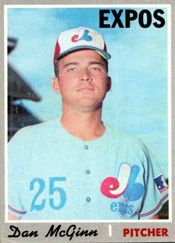
Blasingame was 1-0 with an 0.90 ERA in two months with Tulsa before being traded to the Cubs’ Wichita farm team for another left-hander, Dan McGinn.

Manager Whitey Herzog had a major influence on Jamie Quirk. Even on his honeymoon, Quirk had Herzog on his mind.

In February 1983, Quirk reported to spring training with the Cardinals after eight seasons in the American League, mostly with the Royals. The Cardinals signed the free agent to be a backup to catcher Darrell Porter, a former Royal.

It was Herzog who convinced Quirk, when both were with the Royals, that he’d help his playing career by becoming a catcher, and it was Herzog who wanted Quirk to come to the Cardinals.

Quirk, who got married in January 1983, was on his honeymoon in Hawaii when he reached agreement on a contract with the Cardinals.

He was the second former Royals catcher Herzog landed for the Cardinals during a honeymoon bliss. In December 1980, Darrell Porter was on a honeymoon cruise when the free agent agreed to move from the Royals to St. Louis.

Calling an audible

Quirk, 6-foot-4, was a standout athlete at St. Paul High School in Santa Fe Springs, Calif., the alma mater of two other future Cardinals, pitcher Andy Rincon and infielder Mike Gallego.

University of Notre Dame football coach Ara Parseghian ranked Quirk, a quarterback, No. 1 on the school’s recruiting list and got him to sign a national letter-of-intent to play for the Fighting Irish, the Kansas City Star reported.

The Royals wanted him, too. A left-handed batter, Quirk was a shortstop in high school, and the Royals sent assistant scouting director Herk Robinson (later their general manager) to California to convince Quirk to play for them.

“I was not optimistic,” Robinson told the Star. “He just didn’t ask enough questions about baseball and the Royals.”

Undeterred, the Royals chose Quirk in the first round of the 1972 amateur draft, then brought him to Kansas City for a red carpet tour. After Quirk, 17, signed with them, Royals director of scouting Lou Gorman told the Star, “He perhaps is the most sought-after high school athlete in the last decade and has a chance to be a star. He’s the kind of player you can build a championship team around.”

As it turned out, Quirk didn’t have the range of Royals shortstop Fred Patek, and his next-best position, third base, was claimed by a better prospect, George Brett.

(Quirk became Brett’s best friend on the Royals _ “He knows me best,” Brett told the Kansas City Times _ and Brett was best man at Quirk’s wedding.)

Able to play multiple infield positions and the outfield, Quirk became a utilityman.

On-the-job training

In December 1976, Quirk was sent to the Brewers in the trade that brought Darrell Porter to Kansas City. After an unsatisfying season in Milwaukee (.217 batting average and almost as many strikeouts, 47, as hits, 48), Quirk was returned to the Royals.

Late in the 1978 season, Royals manager Whitey Herzog suggested to Quirk he should try catching _ the former quarterback had the strong arm for the job _ but Quirk disliked the idea. “I was hardheaded,” he told the St. Louis Post-Dispatch. “I thought, ‘I’m a good infielder.’ “

Herzog eventually convinced Quirk that becoming a catcher would help his chances of staying in the majors. “I don’t want to be a superstar,” Quirk said to the Star. “I’ve never wanted to be one. I just want to stay in the majors a long time and contribute any way I can.”

Quirk went to the Royals’ Florida Instructional League camp after the 1978 season and developed into a capable catcher. “It’s the best thing that’s happened to me,” Quirk told the Post-Dispatch.

At Royals spring training in 1979, Herzog named him a backup to Darrell Porter.

“Jamie has made great progress as a catcher,” Herzog told the Star. “He has good instincts and pitchers like to throw to him. I believe he can eventually become a first-string catcher in the majors.”

Looking good

Herzog was fired after the 1979 season, but became Cardinals manager in June 1980, replacing Ken Boyer. One of his first moves was to acquire Darrell Porter.

Two years later, Herzog managed the Cardinals to a World Series championship and Porter was named World Series Most Valuable Player. Afterward, Porter’s backup, Gene Tenace, became a free agent and signed with the Pirates.

The Cardinals contacted Quirk about replacing Tenace. After Quirk got married in Kansas City, he and his bride were honeymooning in Hawaii when he agreed to a two-year contract offer from Herzog and the Cardinals, the Star reported.

Quirk said the Cubs and Mets were interested in him, too, but he chose the Cardinals because, “Whitey is the only guy who has expressed confidence in me by putting me in (during) tough situations,” he told the Post-Dispatch.

Herzog said to the Star, “I’ve always liked having Jamie around because he’s always ready to play, he plays hard, and he can play almost anyplace. Besides, he looks good in a uniform.”

The reigning World Series champions opened the 1983 season with three catchers _ Porter, Quirk and Glenn Brummer _ and it soon became evident Quirk wouldn’t get much playing time. He sat for two weeks before he appeared in his first Cardinals game and he didn’t make his first start at catcher until May 1. 

Idle time

Quirk’s highlight as a Cardinal came on May 29, 1983, when he produced four RBI, including a three-run home run, against the Astros’ Mike Scott. “I finally got a chance to pull my weight and get some respect from my teammates,” Quirk told the Post-Dispatch. Boxscore

As the season wore on, Quirk played less and less. In a stretch of nearly two months (July 28-Sept. 21), he made two starts. In August, he had a mere 11 plate appearances. “This is not what I expected when I came here,” Quirk told the Post-Dispatch. “I was playing more than that in Kansas City.”

To break up the boredom, Quirk pretended to pursue Roger Maris’ record, setting a goal of trying to hit more than 61 batting practice home runs before the season ended. “The other Cardinals have gotten so caught up in it that the regulars occasionally have given up their time in the cage so Quirk can get more swings,” the Post-Dispatch reported.

The Cardinals finished with a losing record (79-83) and Quirk hit .208 overall and .059 (1-for-17) as a pinch-hitter. He caught in 22 games, including 16 as a starter, and threw out 26 percent (8-of-31) of runners who attempted to steal.

Breaking up

Because he had signed a two-year contract in February 1983, Quirk went to spring training in 1984 expecting to have a spot with the Cardinals, so he was stunned when in late March he was told he wasn’t in their plans. Given a choice of being released or getting assigned to the minors, Quirk chose to be released, hoping he could catch on with another big-league team.

“Hindsight is always 20-20,” Quirk told the Post-Dispatch, “but I probably never should have left Kansas City.”

Herzog told the newspaper, “If we hadn’t made a catcher out of him, he probably wouldn’t have been in the big leagues the last five years.”

When no offer came Quirk’s way, Herzog invited him to rejoin the Cardinals as their bullpen coach. The Cardinals were obligated to pay Quirk the second year on his contract, and this way they could continue to get a return on the investment.

Quirk, 29, was with the Cardinals as a coach until late May, when he signed a player’s contract with the White Sox, who sent him to their Denver farm club.

The honeymoon, at least with Herzog and the Cardinals, was over.

Moving on

Except for a brief call-up to the White Sox in July, when he made three plate appearances, Quirk spent most of the summer of 1984 with Denver. On Sept. 24, he was picked up by the Cleveland Indians. In his only plate appearance for them, he hit a game-winning home run against the Twins. “After I hit the ball,” Quirk told United Press International, “I really was in shock for a moment.” Boxscore

Quirk’s baseball odyssey continued with a return to the Royals in 1985. He didn’t appear in the World Series that year against the Cardinals, but he did play in the 1990 World Series for manager Tony La Russa’s Athletics.

Because of his ability to catch, Quirk played 18 years in the majors with the Royals, Brewers, Cardinals, White Sox, Indians, Yankees, Athletics and Orioles.

He spent another 19 seasons in the majors as a coach with the Royals, Rangers, Rockies, Astros and Cubs.

(Updated June 12, 2023)

John Roseboro of the Dodgers and Tim McCarver of the Cardinals were opposing catchers with similar styles. Both were former football players who viewed baseball as a contact sport.

As a standout high school athlete in Memphis, McCarver had football scholarship offers from the likes of Alabama and Notre Dame. Roseboro played football at Central State, a historically black college, in Ohio.

According to the Los Angeles Times, Roseboro was “generally recognized as the toughest plate blocker” in baseball. When he and McCarver collided one day at the plate, the force was unlike any they’d experienced on a baseball field.

Matter of pride

The Dodgers came to St. Louis in June 1963 for a three-game weekend series with the first-place Cardinals. A sweep could vault the Dodgers from 2.5 games behind into the lead.

In the June 21 opener, Sandy Koufax was on the verge of pitching his third consecutive shutout when McCarver, batting with two outs in the ninth, slammed a three-run home run onto the pavilion roof in right. A left-handed batter, it was McCarver’s first big-league home run against a left-handed pitcher.

The Dodgers escaped with a 5-3 victory. Boxscore

Full impact

The next day’s pitching matchup on June 22 featured rookie left-hander Nick Willhite for the Dodgers against Bob Gibson. In his Dodgers debut six days earlier, Willhite shut out the Cubs. Gibson was riding a streak of four wins in a row.

With the score tied at 1-1 in the fifth inning, McCarver was on third, one out, when Curt Flood tapped the ball toward third baseman Maury Wills. McCarver broke for the plate, but Wills got to the ball and tossed it to Roseboro. “I foolishly tried to score against him,” McCarver recalled in his autobiography, “Oh, Baby, I Love It.”

Roseboro, mentored by Roy Campanella, “was the best in baseball at blocking the plate,” pitcher Johnny Klippstein said in the book “We Played the Game.” “He was tough.”

McCarver knew that, too. In his autobiography, he said Roseboro “was as intransigent at home plate as a derrick.”

Favoring what The Sporting News described as a “rock-’em, sock-’em type of play,” McCarver gave no thought to turning back. As Roseboro protected the plate, bracing for a collision, McCarver barreled into him.

“He stood his ground, as always, his knee digging into me,” McCarver recalled in his book, “and the whole right side of my face opened up like a can of tomatoes. I had a long burn along one side of my face and he knocked my neck into a stiff state.”

According to the Los Angeles Times, McCarver came out of the crash with “a shiner, the size of a dollar.”

Roseboro lost a lens from his eyeglasses, but held onto the ball and tagged out McCarver. The impact “jammed Roseboro’s shoulder, hurt his knee and spiked his left ankle,” the Times reported. Roseboro told the newspaper it was the hardest he’d ever been hit _ “and I’ve got the bruises to prove it.”

In his 1987 book, McCarver said, “I still suffer from nerve damage in my neck, more than 20 years after that Roseboro collision. (Dodgers coach) Leo Durocher said it was the worst collision he’d ever seen.”

Another jolt

Both Roseboro and McCarver stayed in the game. Charlie James broke the tie with a solo home run for the Cardinals in the sixth.

In the seventh, McCarver batted for the first time since the collision at the plate. In his 1998 book, “Baseball for Brain Surgeons and Other Fans,” McCraver recalled, “Roseboro says through his mask, ‘Are you all right?’ “

McCarver replied, “Yeah, I’m fine. Are you?”

Roseboro said, “Oh, fine.”

After a pause, McCarver said that Roseboro, referring to the collision, told him, “That’s the way you’ve got to do it, you know.”

Like McCarver, Roseboro batted left-handed. With left-hander Bobby Shantz pitching in the ninth, Dodgers manager Walter Alston sent Doug Camilli to bat for Roseboro. Camilli singled, but the Cardinals held on for a 2-1 triumph, evening the series. Boxscore

Though the Cardinals started a right-hander, Ernie Broglio, in the series finale, Alston gave Roseboro the day off. McCarver was in the Cardinals’ lineup and tripled, but the Dodgers prevailed, 4-3. Boxscore

Roseboro didn’t start a game for more than a week because of the damage caused by the crash with McCarver.

The day after the Dodgers left town, the Giants began a series at St. Louis. In the June 24 opener, after leadoff batter Harvey Kuenn tripled, Chuck Hiller grounded to second. When Kueen broke for home, Julian Javier threw to McCarver.

“As I took the throw, I looked to my left, and Kuenn’s belt buckle was about two inches from my face,” McCarver said in his book.

Kuenn crashed into McCarver, then reached over him, trying to touch the plate, but McCarver held him off and made the putout. Boxscore

“I believed in denying the runner the plate on bang-bang, very close plays,” McCarver said in his autobiography. “That was the way I was taught, and I continued to think that’s what I was being paid to do.”

Playing to win

The Dodgers and Cardinals turned out to be the two best teams in the National League in 1963. The Dodgers took control of the pennant race in late September when they swept a three-game series in St. Louis. They also swept the Yankees in the World Series. The Cardinals, with 93 wins, placed second to the 1963 Dodgers. They won the pennant with the same number of wins in 1964.

Roseboro and McCarver were the catchers for the National League champions in seven of the 10 World Series played between 1959 and 1968, the last year the best team in the league automatically went to the World Series.

Roseboro started in all 21 games the Dodgers played in four World Series in that stretch (six in 1959, four in 1963, seven in 1965 and four in 1966). McCarver also started in all 21 games the Cardinals played in three World Series during that period (seven apiece in 1964, 1967 and 1968).

After Don Coryell left the NFL Cardinals, he appeared in St. Louis one time as an opposing head coach. It was an experience he could have done without.

On Nov. 20, 1983, Coryell brought the San Diego Chargers to Busch Stadium to play the Cardinals.

This was no tender homecoming. Too much weird mojo, and too many factors Coryell couldn’t control, not the least of which was an injured quarterback.

Air Coryell

In five seasons with Coryell as their head coach, the Cardinals were 42-27-1 and reached the playoffs twice. “We weren’t the best football team when Don was here,” his quarterback, Jim Hart, said to the St. Louis Post-Dispatch, “but we were the most exciting. We did the unexpected.”

Coryell departed following the 1977 season after a falling out with club owner Bill Bidwill. Subsequently, the Cardinals had four consecutive losing seasons before going 5-4 in strike-shortened 1982.

The Chargers had winning records in Coryell’s first five seasons as their head coach, leading the NFL in passing each of those years. In the words of Sports Illustrated, Coryell masterminded “revolutionary game plans, new formations every week and unrelenting air attacks,” building a resume that earned him election to the Pro Football Hall of Fame.

Chargers challenges

A torn muscle in the right shoulder of Dan Fouts, the quarterback who put the air in Air Coryell, changed the course of the Chargers’ season in October 1983. His replacement, Ed Luther, was in his fourth season with the Chargers but never had started a NFL game.

After Luther took over, the Chargers lost three of his four starts before heading to St. Louis. Fouts remained unavailable, and the Chargers also were without another injured player, James Brooks, a multiple threat as a rusher, receiver and kick returner.

The Chargers still had running back Chuck Muncie, receivers Wes Chandler and Charlie Joiner, and tight end Kellen Winslow, a St. Louis native who was raised in East St. Louis, Ill., and attended the University of Missouri.

With that talent, coached by Coryell, the Chargers were formidable. “He instills pride in all of us,” Muncie told The Sporting News. “We don’t ever think about not winning. He won’t let us.”

Friends and enemies

Jim Hanifan was head coach of the 1983 Cardinals. He and Coryell first met in 1956 at Fort Ord in California. Coryell coached the football team on the Army post and Hanifan was a player.

They became friends and colleagues. Hanifan was an assistant coach for Coryell with San Diego State in 1972 and in all five seasons Coryell was in St. Louis. He also was Coryell’s assistant with the 1979 Chargers before becoming Cardinals head coach in 1980.

Coryell had no desire to coach against him. “Jim Hanifan and I are buddies,” Coryell told the Post-Dispatch. “I’d rather play against somebody I hate.”

On the eve of his return to St. Louis, Coryell said to the Los Angeles Times, “I don’t like this game at all. I am coaching against Jim Hanifan, a good friend, and this is where I started coaching in the pros. I have a lot of emotional ties in St. Louis. Heck, I even love that emblem they have with the little ornery bird on the helmet. He sort of has that mean look in his eye, and I think he’s kind of cute. I would just much rather be playing somebody else.”

Hanifan told the Times, “As a coach you try to go into a ballgame like always. When you know the guy across the field is a dear friend, it does make it difficult. I imagine it will be a weird feeling with him coming back to St. Louis and looking at him across the field.”

Told that Coryell said, “I have nothing but warm, wonderful feelings of St. Louis,” Bidwill replied to the Post-Dispatch, “I guess he doesn’t remember the snowstorms.”

Hostile territory

Most of the 40,644 spectators booed the mention of Coryell’s name in pregame introductions, the Times reported. Then the Chargers imploded. They committed six turnovers, four in the second quarter, and the relentless Cardinals cruised to a 37-0 lead. “A nightmare,” Luther told The Sporting News.

Ahead, 10-0, Hanifan called for an onside kick and the Cardinals recovered, surprising the Chargers and sending them reeling. “It was a great call,” Coryell told the Los Angeles Times.

The Cardinals sacked Luther six times and intercepted three of his passes. David Galloway and Curtis Greer had two sacks each. Bubba Baker had an interception and recovered a fumble.

Cardinals quarterback Neil Lomax threw for two touchdowns and ran for two touchdowns. Ottis Anderson rushed for 113 yards and a score.

The final was 44-14. “San Diego is still a fine team,” Hanifan told the Times, “but it is not the same without Fouts.” Game stats and Video

Coryell “looked as if he were in shock, although it might be argued that is his usual appearance,” Post-Dispatch columnist Kevin Horrigan wrote.

Denver Broncos head coach Dan Reeves told The Sporting News, “Don Coryell must be dying inside. He’s such a competitive person.”

In remarks to the Post-Dispatch, Coryell congratulated the Cardinals, then added, “We should have made a better game of it.”

The Los Angeles Times called the rout “the club’s low point under Coryell.”

The loss dropped the Chargers’ record to 4-8. They finished 6-10, Coryell’s first losing season since his first year with St. Louis in 1973.

The Cardinals improved to 5-6-1 and jump-started their season. They won three of their last four, finishing 8-7-1, their most wins since Coryell’s 1976 team had 10.

From his first regular-season game as a head coach in the NFL with the St. Louis Cardinals, Don Coryell showed signs of being special. He got the Cardinals to play with confidence and collective pride.

When he was elected to the Pro Football Hall of Fame on Feb. 9, 2023, Coryell correctly was hailed as an innovator whose offenses with the Cardinals, and later the San Diego Chargers, were thrilling to watch and nerve-wracking to defend.

Those progressive schemes were just part of his skillset. Coryell also was an effective leader who got players to buy into his philosophies and to execute consistently within a framework of selfless collaboration.

Meet the new boss

The season opener between the Cardinals and Eagles on Sept. 16, 1973, at Veterans Stadium in Philadelphia marked the NFL head coaching debuts of Coryell and Mike McCormack.

Coryell came to the Cardinals from the college coaching ranks. In 15 years as a college head coach, Coryell never had a losing season. His record was 127-24-3, including 104-19-2 in 12 seasons at San Diego State.

Like Coryell, McCormack would be elected to the Pro Football Hall of Fame, but, unlike Coryell, he got in as a player, not as a coach. An exceptionally quick and strong right tackle on the Cleveland Browns’ offensive line, McCormack protected quarterback Otto Graham and blocked for running back Jim Brown. In his autobiography, Browns head coach Paul Brown said, “I consider McCormack the finest offensive tackle who ever played pro football.”

(Paul Brown told the story of how another Browns quarterback, Milt Plum, had trouble staying in the pocket before releasing the ball. At practice one day, a frustrated McCormack picked up Plum by the neck, shook him, cursed him and put him back down. After that, “our passing game improved considerably,” Brown told The Sporting News.)

McCormack had been an assistant coach for seven seasons with the Washington Redskins, but never a head coach.

The 1973 opener also was the Eagles debut of quarterback Roman Gabriel, 33, who got traded to Philadelphia after 11 seasons with the Los Angeles Rams.

(Gabriel, a glamour boy in Los Angeles, still was effective. He would lead the NFL in passing yards, completions and touchdown passes as an Eagle in 1973.)

During training camp, Coryell made a favorable impression as a coach of “unquenchable spirit and unflagging energy.” The Sporting News reported. Cardinals director of operations Joe Sullivan told the publication, “He’s one of the best teachers I’ve ever seen.”

On the eve of the season opener, Coryell said to the St. Louis Post-Dispatch, “I think we’ll be pretty darn potent this season. We’ll have the capability of breaking things open.”

Will to win

The fired-up Cardinals charged out to a 21-0 lead in Coryell’s debut. Jim Hart threw touchdown passes to Donny Anderson and Mel Gray, and Anderson also rushed for a score.

“The Eagles came after Hart with a vengeance, and the veteran quarterback proceeded to waste them with draws and screens,” the Philadelphia Inquirer reported.

Cardinals turnovers (two fumbles and an intercepted pass) helped the Eagles rally. They got within a point, 24-23, in the fourth quarter.

Recent Cardinals clubs might have panicked, but the Coryell Cardinals kept their poise. Hart moved them into position for a Jim Bakken 20-yard field goal, extending the lead to 27-23 with 1:10 to play. When the Eagles’ Tom Sullivan fumbled the ensuing kickoff, the Cardinals recovered. Anderson capped a 34-23 victory with another scoring run, his third touchdown of the game.

Though describing the Eagles as “a poor team,” the Post-Dispatch noted that the Cardinals “showed the ability to move under pressure, to capitalize on opposition mistakes and to make the big offensive play, three areas sadly lacking for them in recent years.”

Anderson, the former Green Bay Packer acquired in a trade for MacArthur Lane, had 66 yards receiving, 58 yards rushing and also was praised by Coryell for his blocking. “He has such a great understanding and concept of our offense,” Coryell told the Post-Dispatch.

Terry Metcalf, a third-round draft choice making his NFL debut, rushed for 133 yards and added another 25 yards with a catch. Plus, “he was blocking on me all afternoon,” Eagles linebacker Dick Cunningham told the Inquirer. “He will stick his head into you.” Video

Coryell said to the Philadelphia Daily News that Metcalf “is quick, tough, agile and has a heart as big as a lion.” Game stats and Game video

In a “rah-rah-sis-boom-bah” locker room celebration after the victory, the Inquirer reported, tight end Jackie Smith presented Coryell with the game ball and said, “This is for the man with the most enthusiasm.”

High praise

After the Cardinals scored 34 points again in winning their home opener against the Redskins, defensive tackle Bob Rowe said to the Post-Dispatch, “We have a confidence in ourselves, a confidence that Coach Coryell built. He has made us believe we’re football players. He has made us respect one another.”

Recalling his days playing for Packers head coach Vince Lombardi, Donny Anderson told Rich Koster of The Sporting News, Lombardi “was more than a coach. He was a man who taught you to become a man. You seemed to grow up faster and accept the responsibilities that you have as a player. In Coach Coryell, I think we have a man who in many respects is like Lombardi. Both loved people, and that’s the biggest thing in relating to players.”

Though the Cardinals faded, finishing 4-9-1 in Coryell’s first season, the players recognized he had changed the clubhouse culture for the better.

“We’ve got great life on our team, as opposed to what it used to be,” linebacker Jamie Rivers said to The Sporting News.

Jim Hart told the publication, Coryell “is a great man. He won’t pull any punches with you privately, but he’ll defend you to the letter publicly.”

In five seasons with Coryell, the Cardinals posted a 42-27-1 record and twice qualified for the playoffs. Those were the Cardinals’ first playoff berths since 1948 and their first division titles since moving from Chicago to St. Louis in 1960.

Coryell continued to have success with the Chargers in San Diego. His overall record as a NFL head coach is 115-89-1. According to the College Football Hall of Fame, Coryell was the first head coach to win 100 games at both the college and pro levels.

Following a formula that worked well for them before, the Cardinals went looking for an old pro who was trying to cap his career with a championship. The character they found was as charismatic as he was competent.

On Feb. 8, 1933, the Cardinals acquired pitcher Dazzy Vance and shortstop Gordon Slade from the Dodgers for pitcher Ownie Carroll and infielder Jake Flowers.

Vance was a strikeout artist who dominated National League batters in the 1920s with a fastball the New York Times described as on par with Walter Johnson’s in the American League.

Though a month away from turning 42 when the Cardinals obtained him, the club was hoping Vance could replicate the success achieved from the acquisitions of pitchers Grover Cleveland Alexander, 39, in 1926 and Burleigh Grimes (nearly 37) in 1930. Alexander helped the Cardinals win two National League pennants (1926 and 1928) and a World Series title (1926). With Grimes, the Cardinals won two more pennants (1930 and 1931) and another World Series crown (1931).

Worth the wait

Dazzy Vance was born in Orient, Iowa, a town that also was the birthplace of Henry Wallace, vice president of the United States during the third term of President Franklin Roosevelt.

Reports vary about whether Vance was named Arthur Charles Vance, Charles Arthur Vance or Clarence Arthur Vance. When he was 5, he moved with his family to Nebraska and eventually settled in Hastings, according to the New York Daily News. As a boy, Vance got his nickname because of his mimicry of a neighboring plainsman who pronounced “Daisy” as “Dazzy,” the New York Times reported.

He was 21 when he entered pro baseball in 1912 with the York Prohibitionists of the Nebraska State League. Vance got to the majors with the Pirates in April 1915, pitched in one game and was sent to the Yankees. He appeared briefly with them but spent much of the next seven seasons in the minors until he was acquired by the Brooklyn Dodgers.

A right-hander, Vance was 31 when he got his first big-league win with the Dodgers in April 1922. Manager Wilbert Robinson, the convivial former catcher, “doted on big pitchers who could throw hard. The Dazzler qualified,” the New York Times noted.

“When he pitched, he kicked his leg high in the air and leaned back as far as possible, then released either a fastball or a hard curveball, with the same motion, making it next to impossible for a batter to ascertain which was bearing down on him,” David Hinckley wrote in the New York Daily News.

“He wore a chopped up undershirt under his uniform, and its tatters would flutter as he threw. In that same spirit, his favorite day to pitch was Monday, when the housewives in the apartment houses behind Ebbets Field hung out the wash and provided one more waving white element to camouflage the ball.”

Vance was the National League strikeout leader seven straight seasons (1922-28). In 1924, he topped the league in wins (28), ERA (2.16), strikeouts (262) and complete games (30). Rogers Hornsby hit .424 for the Cardinals that year, but Vance beat him out for the National League Most Valuable Player Award and, according to The Sporting News, the $1,000 in gold that went with the honor.

In a game at Brooklyn in 1925, Vance struck out 17 Cardinals, including Hornsby and Jim Bottomley three times each, hit a homer and drove in the winning run.

Described by the New York Times as a “hard and shrewd businessman” and “one of baseball’s most stubborn (contract) holdouts,” Vance negotiated a 1929 salary of $25,000, the highest paid a pitcher.

Dazzy with daffies

The Brooklyn ballclub sometimes was known during Dazzy’s days there as the Daffy Dodgers. The New York Times described them as an “assortment of crackpots,” but pointed out that Vance “was not a screwball.”

Vance was “a natural schmoozer and raconteur,” David Hinckley observed.

Arthur Daley of the New York Times described him as “a whimsical, homespun philosopher with the dry wit of a Will Rogers.”

On Aug. 15, 1926, at Ebbets Field, the Dodgers loaded the bases against the Braves. With Hank DeBerry on third, Vance on second and Chick Fewster on first, Babe Herman smacked a ball to deep right. Vance and Fewster hesitated, making sure the drive wasn’t caught.

The ball crashed against the fence, and DeBerry scored easily. According to the New York Daily News, Vance rumbled around third, then turned back. Vance slid into the third-base bag as Fewster arrived there from first. Herman, running full steam, slid into third, too. Ed Taylor, the Braves’ astonished rookie third baseman, tagged “everyone in sight, including the umpire,” the New York Times reported.

Vance was ruled safe, but Fewster and Herman were called out, resulting in Herman having doubled into a double play. Boxscore

A month later, against the Cubs, Vance became the first National League pitcher to strike out the first five batters in a game, a feat later matched by the Cardinals’ Bob Gibson. One of Vance’s strikeout victims that day was slugger Hack Wilson, “the Dazzler’s favorite pigeon,” the New York Times reported. Wilson whiffed 45 times in his career versus Vance. Boxscore

Veteran presence

After the Cardinals acquired Hack Wilson from the Cubs in December 1931, they attempted to flip him to the Dodgers for Vance or pitcher Watty Clark. When the Dodgers balked, the Cardinals sent them Wilson for cash and a prospect.

The next winter, the Cardinals again shopped for Vance. Max Carey had replaced Wilbert Robinson as Dodgers manager in 1932 and was willing to deal Dazzy, who, at 41, was 12-11 that year.

After Vance was traded to St. Louis, published reports predicted the Cardinals would send him to the Giants before spring training. The St. Louis Post-Dispatch reported the Giants agreed to pay $15,000 for Vance, but then called off the deal.

Cardinals manager Gabby Street didn’t want Vance either. “I figured he’d be a terrible load on my team and I was eager for a trade that would get him off my squad,” Street said to the Post-Dispatch.

However, Cardinals executive Branch Rickey told the St. Louis Globe-Democrat, “If Dazzy Vance shows that he wants to pitch for us to the best of his real ability, we’ll keep him. I think he’s still a great pitcher.”

The relationship teetered when the Cardinals asked Vance to accept a $5,000 salary. “I wrote Branch Rickey that I couldn’t be bothered with any $5,000 offer,” Vance told the Post-Dispatch.

When he finally signed on March 17, terms were not disclosed.

The addition of Dazzy gave the 1933 Cardinals a colorful cast that included a Dizzy (Dean), a Ducky (Medwick), a Pepper (Martin), a Rajah (Hornsby), a Flash (Frankie Frisch) and a Rip (Collins).

Vance, 42, also joined a pitching staff that would come to include two others who turned 40 during the 1933 season, Burleigh Grimes and Jesse Haines.

Gabby Street soon changed his mind about Vance. “There ain’t a man on the club with a better spirit … He’s worked as hard as any man on the roster,” Street told the Post-Dispatch. “He’s done everything he’s been asked to do and a lot more.”

Dazzy delivers

Vance got a mix of starts and relief stints with the Cardinals, even though, as the New York Times noted, “he abhorred” pitching in relief. In August, he pitched a four-hitter against the Reds. Boxscore In September, he struck out nine in a complete game against the Cubs, fanning his former Dodgers crony, Babe Herman, three times. Boxscore

In 28 appearances, including 11 starts, for the 1933 Cardinals, Vance was 6-2 with three saves. Despite his distaste for the role, he was quite good as a reliever (3-0, 2.97 ERA).

The Cardinals, who finished fifth in the league at 82-71, placed Vance on waivers after the season and he was claimed by the Reds. The Cardinals got him back in June 1934 and he contributed to the pennant-winning Gashouse Gang, posting a 1-1 mark and a save. The win was a complete game against the Braves in which he retired the last 10 batters in order. Boxscore

At 43, Vance got to pitch in a World Series for the only time in his 16 years in the majors, appearing in relief in Game 4 versus the Tigers. Vance is one of five players 40 or older to appear in a World Series for the Cardinals. 

Vance, 44, went back to Brooklyn for a last hurrah with manager Casey Stengel’s Dodgers in 1935. His final win, No. 197 of his career, came against the Cardinals, a relief stint in which he allowed one run in 5.1 innings. Boxscore

Vance was elected to the Baseball Hall of Fame in 1955.