Feeds:
Posts
Comments

(Updated Jan. 20, 2025)

Toward the end of his Hall of Fame career, Fred McGriff gave the Cardinals something to remember him by.

A left-handed power hitter, McGriff grew up in Tampa, four blocks from Al Lopez Field, spring training home of the Reds, and sold soft drinks at Tampa Stadium during NFL Buccaneers games as a youth.

McGriff slugged 22 regular-season home runs against the Cardinals and two more in the playoffs. The very last two came on June 21, 2002, in a Cardinals-Cubs classic at Wrigley Field in Chicago.

The Friday afternoon game matched right-handers Woody Williams, 35, of the Cardinals and Jon Lieber, 32, of the Cubs. Both pitched with precision and smarts.

J.D. Drew, the second batter of the game, slammed a home run, giving the Cardinals a 1-0 lead, before Lieber settled into a groove.

Williams retired the first 12 Cubs batters.

McGriff, who struck out his first time at the plate against Williams, led off the bottom of the fifth.

Traded by the Rays to the Cubs the year before (he made his Cubs debut against the Cardinals), McGriff, a first baseman, had led both the American League and National League in home runs (1989 with the Blue Jays and 1992 with the Padres), and had helped the Braves win two pennants and a World Series title.

At 38, he still was a force. (McGriff would produce 30 homers and 103 RBI for the 2002 Cubs, giving him 10 seasons with 30 homers and eight with 100 RBI.)

After McGriff worked the count to 3-and-1 in his at-bat in the fifth, Williams challenged him with a fastball. McGriff drove it out of the park for a home run, tying the score at 1-1.

When he came to bat again in the seventh, Williams jammed him with a fastball, but McGriff got around on it and belted another home run, which turned out to be the game-winner.

The Cubs won, 2-1. Williams pitched seven innings, walked none and allowed three hits _ the two McGriff home runs and a single by Lieber.

Lieber pitched a three-hit complete game and also walked none.

The game was played in one hour, 49 minutes _ the fastest involving the Cardinals since a May 1981 game against Steve Carlton and the Phillies that was completed in one hour, 45 minutes, according to the St. Louis Post-Dispatch. “Several times, Williams and Lieber used more pitches while warming between innings than in securing their next three outs,” Joe Strauss reported. Boxscore

Williams told the newspaper, “It’s the way the game is supposed to be played … The way baseball is today, it’s set up for a three-hour game, which is a crock.”

Asked about his decision to throw a fastball to McGriff with the score tied in the seventh, Williams told Strauss, “I threw exactly the type of pitch that I wanted to throw when it was a 1-1 game. I got beat.”

Cardinals manager Tony La Russa wanted Williams to work around McGriff and take his chances with other batters. Referring to the fastballs McGriff hit for home runs, La Russa told the Post-Dispatch, “We made a couple of pitching mistakes.”

Williams saw it differently: “I go right at him … I’m not pitching around him.” Boxscore

McGriff hit .389 versus Williams in his career. Four of his seven hits against him were home runs.

Gaylord Perry had a career record of 14-14 versus the Cardinals, but there was nothing mundane about the night-and-day seasons he experienced against them in consecutive years during the 1960s.

In four starts against the Cardinals in 1966, Perry was 4-0 and didn’t walk a batter.

The next year, Perry was 0-5 in five starts versus the Cardinals.

Perry pitched well against the Cardinals in both seasons (1.06 ERA in 1966) and (2.23 ERA in 1967), but one of the big differences between the two years was the blistering bat wielded by his ex-teammate, St. Louis slugger Orlando Cepeda.

On-the-job training

Relying on a fastball and curve, Perry reached the majors with the Giants in 1962. After four seasons with them his record was 24-30. His breakthrough came in 1966 when he mastered the spitball taught two years earlier by Bob Shaw.

Acquired by the Giants from the Braves in January 1964, Shaw was throwing at spring training when Perry observed how his pitches dipped sharply. Asked how he did it, Shaw showed Perry how to throw a spitball, a pitch banned in the majors.

In his book “Me and the Spitter,” Perry said Shaw told him, “It takes a lot of work. You got to know how much to apply, where, how to hold the ball and control it, and, most important, how to load it up without anybody seeing you.”

From then on, “Shaw and I were inseparable, spitball buddies, so to speak,” Perry said in his book.

According to Perry, “Most pitchers experiment with a spitter but soon give it up. If you don’t throw it correctly, it is just a hanging curveball, a gopher pitch. It took me the rest of that (1964) season and the next (1965) to master it in every way.”

At the same time, Perry also worked on developing a slider, and on learning to control his emotions on the mound.

Big winner

“By Opening Day, 1966, I had my spitter, my slider and my temper in good shape,” Perry said in his book.

The results were spectacular: Perry won 20 of his first 22 decisions and finished with 21 wins for the 1966 Giants.

His four wins against the Cardinals were by scores of 2-0, 4-2, 3-2 and 3-1.

Perry was 2-0 for the season when he entered a May 1, 1966, start against Bob Gibson and the Cardinals at Candlestick Park in San Francisco.

Limiting the Cardinals to four singles, including two infield hits, in the 2-0 shutout, Perry credited the slider. Cardinals manager Red Schoendienst said to the San Francisco Examiner, “Slider? I didn’t see anything but fastballs.” Boxscore

Five days later, at St. Louis, Perry again beat Gibson and the Cardinals. Gibson pitched a three-hitter, struck out 14 but lost, 4-2. Boxscore

On July 4 at San Francisco, Perry got the game-winning hit, a single versus Nelson Briles, in a 3-2 victory over the Cardinals. Boxscore

A week later, in the All-Star Game at steamy St. Louis, Perry was the winning pitcher for the National League with two scoreless innings of relief. Boxscore

Facing the Cardinals for the final time in 1966, Perry ran his season record to 19-2 with a 3-1 win at San Francisco on Aug. 16. A key moment came in the sixth inning when, with one out and the Giants ahead, 2-1, the Cardinals put runners on first and third. Perry struck out Orlando Cepeda and got Mike Shannon to end the inning with a grounder. Boxscore

The four wins over the Cardinals in 1966 gave Perry a career record of 6-0 against them.

Give and take

Cepeda was the Giants first baseman the first time Perry threw a spitter in a game, May 31, 1964, in an epic 23-inning marathon with the Mets at Shea Stadium in New York. Perry pitched 10 scoreless innings of relief.

One of the first batters he threw the spitter to was Mets pitcher Galen Cisco, who, with two on and one out in the 15th, grounded into a double play. After snaring the relay throw, Cepeda “rolled the ball along the grass, tumble-drying it by the time it reached the mound,” Perry recalled in his book. “Everybody protects a spitball pitcher.” Boxscore

Two years later, in May 1966, Cepeda was traded to the Cardinals. In his first full season with them, he won the 1967 National League Most Valuable Player Award and the Cardinals won a World Series title. He also beat up on Perry and the Giants that year.

Perry’s five losses to the 1967 Cardinals were by scores of 2-1, 4-1, 3-1, 2-1 and 2-0. Cepeda had the game-winning hit in three of those.

The first came on April 18 at San Francisco. After Roger Maris reached second on an error with two outs in the 11th, Cepeda got jammed by a Perry pitch but muscled it into right-center for a RBI-single, breaking a 1-1 tie. Boxscore

Two months later, on June 18 at San Francisco, Cepeda’s two-run home run against Perry snapped a 1-1 tie in the eighth and carried the Cardinals to victory. Boxscore

“Cepeda especially enjoyed beating Perry because Gaylord and Orlando weren’t always the best of friends when they were Giants teammates,” The Sporting News reported.

According to the St. Louis Post-Dispatch, Cepeda said Perry charged him with not putting out 100 percent when they were teammates.

On June 26, 1967, the Cardinals beat Perry and the Giants at St. Louis. Boxscore When the Giants returned two months later, Cepeda slammed another two-run home versus Perry in a 2-1 Cardinals triumph. Boxscore

For the 1967 season, Cepeda hit .471 versus Perry and .419 with 11 RBI versus the Giants.

In his book “Baby Bull,” Cepeda said of the 1967 season, “I saved some of my best hitting exploits for the Giants … Roger Maris said he had never seen any one player so single-handedly beat another team like I beat the Giants that year.”

Spit and polish

In Perry’s fifth loss to the 1967 Cardinals, on Aug. 24 at San Francisco, Dick Hughes pitched a four-hit shutout and delivered a run-scoring single in the 2-0 triumph. (“Hughes, by the way, threw a pretty good spitter,” Perry said in his book.) Cepeda had a single and two walks, and was almost flattened by a Perry pitch, The Sporting News reported.

After the game, Cepeda said in mocking fashion to the Post-Dispatch, “Poor Gaylord Perry. He pitched a good game again.” Boxscore

Cepeda’s success against Perry in 1967 didn’t last. He hit .217 against him for his career.

Other career batting marks versus Perry among 1967 Cardinals regulars: Lou Brock (.212), Curt Flood (.171), Julian Javier (.169), Roger Maris (.273), Dal Maxvill (.111), Tim McCarver (.186) and Mike Shannon (.190).

Perry was tough on the Cardinals when they repeated as National League champions in 1968. He pitched a no-hitter against them and was 3-1 with an 0.82 ERA.

In Perry’s last career appearance against the Cardinals, at Atlanta in 1981, he faced the likes of Keith Hernandez, Tommy Herr and Garry Templeton. Perry, 42, started for the Braves and Jim Kaat, 42, relieved for the Cardinals. Boxscore

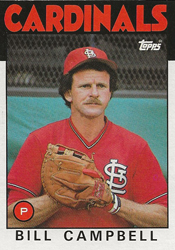
Rescued from the Reds farm system, where he languished as a reliever, Kurt Kepshire developed into a starter for a Cardinals contender.

On Dec. 6, 1982, Kepshire was chosen by the Cardinals in the Rule 5 draft after being left off the Reds’ big-league winter roster.

The Cardinals might have kept Kepshire in a relief role as well if not for a fluke incident involving an Army tank.

Smashing success

A right-hander, Kepshire was a standout pitcher his senior season at Bridgeport Central Catholic High School in Connecticut. Five days before he was to start in a state quarterfinal playoff game, a careless classmate accidently pounded Kepshire’s pitching hand with a sledgehammer, breaking his index and middle fingers, the St. Louis Post-Dispatch reported.

“My coach said, ‘You can’t pitch,’ ” Kepshire recalled to The Sporting News. “I said, ‘Watch me warm up.’ “

Given the start, Kepshire struck out 17 and got the win. A few days later, he started and won the state championship game. “I pitched in pain, I’ll tell you that,” Kepshire said to The Sporting News. “It was pride. I love to pitch and I love a challenge.”

Kepshire enrolled at the University of New Haven and signed with the Reds after being selected in the 25th round of the 1979 amateur draft.

Used primarily as a reliever, Kepshire pitched four seasons in the Reds organization before he was drafted by the Cardinals on the recommendation of their Louisville farm club manager, Joe Frazier, according to the Post-Dispatch.

Ready, aim, fire

Assigned to the Cardinals’ Class AA Arkansas team in 1983, Kepshire made 19 relief appearances before being promoted to Class AAA Louisville.

Soon after Kepshire arrived in Louisville, Jim Fregosi, who had replaced Frazier as manager, approached him an hour before a game versus Omaha and asked if he could start. “I was shocked,” Kepshire told the Louisville Courier-Journal.

Fregosi made the request because Louisville’s scheduled starting pitcher, Todd Worrell, sprained his back “when he slipped off a tank that he was inspecting” while visiting a military museum at Fort Knox earlier that day, the Louisville newspaper reported.

Under the headline “Tanks A Lot,” the Courier-Journal reported that Kepshire pitched six scoreless innings in his surprise start and got the win in Louisville’s 2-0 triumph over Omaha.

“He threw great,” catcher Tom Nieto told the Louisville newspaper. “His fastball was just taking off and he was spotting pitches and keeping the ball down, going right at them.”

In 21 appearances, including 10 starts, for Louisville in 1983, Kepshire was 6-2.

Big-league stuff

Sent back to Louisville to begin the 1984 season, Kepshire was in the starting rotation from the first day. Relying on a fastball and slider, he was 7-5 in 16 starts when the Cardinals called him to the big leagues in July to replace John Stuper in the starting rotation.

“Kepshire wasn’t ready (for the majors) at the beginning of the season, but he’s come into his own,” Fregosi told the Post-Dispatch. “He has a better idea of how to pitch.”

Making his debut in a start against the Giants the day after his 25th birthday, Kepshire allowed one run in 8.1 innings and got the win. “He challenges those guys,” Herzog told The Sporting News. “He’s got guts. I love it.” Boxscore

A month later, Kepshire prevailed in a start against Nolan Ryan and the Astros. Boxscore

Praising Kepshire for his willingness to pitch inside to batters, Herzog told The Sporting News, “He’s got nerve. Of all the kid pitchers, he’s going to be the best.”

The rookie capped his season with shutouts of the Cubs and Expos, finishing 6-5 with a 3.30 ERA. Boxscore and Boxscore

Cardinals pitching coach Mike Roarke said Kepshire “made tremendous progress” since spring training and adjusted to a change in his delivery that enabled him “to throw downhill,” the Post-Dispatch reported.

Falling out

Kepshire went to spring training in 1985 assured of a spot in a Cardinals starting rotation with Joaquin Andujar, John Tudor and Danny Cox. “He goes after hitters and he doesn’t rattle easily,” Herzog told the Post-Dispatch in March 1985. “Right now, I’m looking at him as a good No. 3 starter.”

After beating the Pirates on Aug. 15, Kepshire had a season record of 9-6, but then staggered down the stretch, winning one of his next six starts.

In his last start, Sept. 14 versus the Cubs, Kepshire threw 14 pitches and 13 were out of the strike zone. After walking the bases loaded, he was lifted with the count 1-and-0 count on the next batter. Boxscore

Kepshire finished the season 10-9. His wins were important for a division champion that finished just three games ahead of the Mets, but he walked more (71) than he struck out (67) and gave up more hits (155) than innings pitched (153.1). The Cardinals left him off their playoff roster.

“I still think he can be a hell of a pitcher,” Herzog told the Post-Dispatch. “He needs an off-speed pitch, and he’s got a good one in the bullpen, but he can’t get it over in a game.”

Kepshire said to the newspaper, “I stunk it up the second half of (the) season. That’s my fault. It was a mental thing. I was in a rut.”

Different direction

The Cardinals tried to trade Kepshire after the season but didn’t get any takers, the Post-Dispatch reported.

“The Cardinals are dead wrong on me,” Kepshire said to the Springfield (Ill.) State Journal-Register. “I can throw strikes.”

He opened the 1986 season with them, made two appearances, including a start, and was demoted to Louisville.

“I don’t ever see myself coming back here,” Kepshire said to the Post-Dispatch as he left St. Louis.

Herzog responded, “If he has that attitude, he’ll never come back.”

Kepshire spent what he described to United Press International as “a miserable year” in the Cardinals farm system in 1986, signed with the Cleveland Indians after the season, got released in spring training, pitched in Mexico and in the minors for Expos and Twins affiliates, but never got back to the majors.

His career record with the Cardinals was 16-15, including marks of 4-1 against the Cubs and 3-0 versus the Giants.

Ken Griffey Jr. should have been in the lineup for the Padres when the Cardinals faced them in the 2005 and 2006 National League playoffs. Instead, Griffey remained with the Reds, a team that never reached the playoffs during his nine seasons with them.

In November 2002, the Reds and Padres agreed to a trade of Griffey for Phil Nevin. Griffey would have been a Padre if Nevin hadn’t blocked the deal by invoking a no-trade clause in his contract.

The idea of trading Griffey for a journeyman such as Nevin would have been deemed preposterous a few years earlier, but the Reds were ready to cut their ties with a player once considered to be the best in baseball.

Special treatment

With the Mariners from 1989 to 1999, Griffey four times led the American League in home runs, and won 10 Gold Glove awards and a Most Valuable Player honor, but he wanted out of Seattle.

Born in the the same town (Donora, Pa.) and on the same date (Nov. 21) as Stan Musial, Griffey grew up in Cincinnati, where his father played for the Reds, and eventually relocated to Orlando. After the 1999 season, he rejected an eight-year, $140 million offer from the Mariners, saying he wanted to play for a team closer to his Florida home.

Though the Cardinals tried to acquire him, Griffey was traded to the Reds. According to Bill Madden of the New York Daily News, Reds general manager Jim Bowden “made no secret of the fact that Griffey was going to get special treatment, a grievous mistake … Numerous Reds, past and present, have blasted Griffey as being self-absorbed and an island unto himself in the clubhouse.”

Limited to 70 games because of leg injuries in 2002, Griffey produced eight home runs and 23 RBI.

Content in California

A few days after Griffey turned 33, the Reds agreed during the Thanksgiving weekend to swap him to the Padres for Nevin, the Associated Press reported.

Primarily a third baseman and first baseman, Nevin had come to the Padres after stints with the Astros, Tigers and Angels. After producing 41 home runs and 126 RBI for the 2001 Padres, Nevin, 31, totaled 12 homers and 57 RBI in 2002.

The Reds viewed Nevin (due $31 million for the next four years) as a less expensive alternative to Griffey (due $86 million for the next six years). Also, Nevin was friends with Reds manager Bob Boone.

“Boone and Nevin have a longstanding friendship dating to Nevin’s childhood, when he grew up in the same Southern California neighborhood where Boone lived,” The Cincinnati Post reported.

Nevin’s agent, Barry Axelrod, said his client rejected a trade to the Reds because he wanted to remain on the West Coast, The Cincinnati Post reported.

Acting on orders from the Reds’ front office, Boone met with Nevin for lunch and tried to convince him to change his mind, but was unsuccessful, according to the Dayton Daily News.

Bargain basement

The Reds initially denied trying to trade Griffey, but came clean after Nevin confirmed to reporters he had blocked the deal.

Reds chief operating officer John Allen said the trade, orchestrated by Bowden, had the support of team owner Carl Lindner, The Cincinnati Post reported.

According to USA Sports Weekly, after the proposed deal with the Padres collapsed, the Reds offered Griffey to the White Sox for outfielder Magglio Ordonez, but were quickly turned down.

Among the reactions to the Reds’ attempts to peddle Griffey:

_ Mike Anthony, Hartford Courant: “How quickly Griffey has fallen off the map of baseball stars in three years with the Reds. The minute he left Seattle, he got old. He’s been injured and, at times, unhappy.”

_ Dan O’Neill, St. Louis Post-Dispatch: “Seems hard to believe Ken Griffey Jr., considered hands-down the best player in the game a few years back, is now being shopped like a used lawn mower.”

_ Bill Simmons, ESPN.com: “He’s 33, plagued by injuries, miserable and bitter, on the downside of his career, and his team can’t even give him away.”

_ Paul Daugherty, Cincinnati Enquirer: “Griffey can be paranoid when he has no reason. Now, he has plenty of reason.”

Still got game

Three years later, in July 2005, the Padres traded Nevin to the Rangers. He went on to play for the Cubs and Twins, too. In 12 years in the majors, Nevin hit 208 home runs. During the 2022 season, he replaced Joe Maddon as Angels manager.

Griffey had more injury-marred seasons in 2003 and 2004 (when he hit his 500th career home run versus the Cardinals), but returned to form in 2005, when he was named the National League Comeback Player of the Year with the Reds.

Griffey produced 35 home runs and 92 RBI for the 2005 Reds. If he had been with the Padres that season, he would have been their team leader in home runs and RBI. The 2005 Padres, with top producers Ryan Klesko (18 home runs) and Brian Giles (83 RBI), qualified for the playoffs but were eliminated by the Cardinals in the first round.

In 2006, Griffey slugged 27 home runs for the Reds, three more than the Padres’ team leader, Adrian Gonzalez. The Padres again were eliminated by the Cardinals in the first round of the playoffs.

The Reds traded Griffey to the White Sox in July 2008. Granted free agency after the season, he returned to the Mariners for two more years. In 22 seasons in the majors, Griffey batted .284 with 2,781 hits, 630 home runs and 1,836 RBI, but never played in a World Series.

In the early days of baseball on television, Cardinals owner Fred Saigh was one of the first to go dialing for dollars.

In November 1952, Saigh tried to get a form of revenue sharing started among National League franchises regarding broadcast rights fees.

To Saigh, baseball’s television audience was an extension of the ballpark audience, and he wanted a split of the television money that home teams were getting for broadcasting Cardinals road games.

If Saigh was denied a share of those television revenues, he threatened to unplug the broadcasts.

On the air

The first televised major-league game was Aug. 26, 1939, when New York’s NBC station aired the Reds versus the Dodgers from Brooklyn, but it wasn’t until after World War II ended that TV sets became widely available and more affordable to mass markets.

The first television station in St. Louis, and the 13th in the United States, was KSD-TV, Channel 5. A NBC affiliate, the station was owned by Pulitzer Publishing, also the owners of the St. Louis Post-Dispatch. Pulitzer became the first to own both a newspaper and a television station.

(In 1979, when Pulitzer sold the station, its call letters were changed to KSDK.)

KSD-TV began broadcasting on Feb. 8, 1947, with a 90-minute local information afternoon program. In one of the program’s segments that day, Post-Dispatch sports editor J. Roy Stockton interviewed Cardinals catcher and future broadcaster Joe Garagiola.

The KSD-TV studio was located with the Post-Dispatch building on Olive Street in St. Louis. According to the station, the newspaper’s press operators also handled the studio lights. Sometimes, when needed to put out the latest edition of the afternoon paper, they’d leave the studio, delaying the start of a local program.

Show time

KSD-TV management recognized immediately the potential audience and advertising value of baseball programming, and entered into agreements with the Browns of the American League and the Cardinals of the National League to televise some of their games.

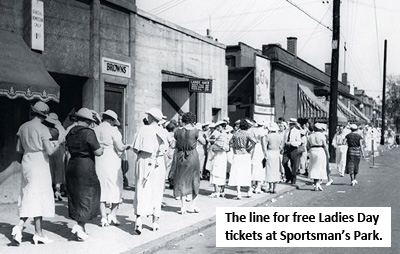
The first televised games in St. Louis were KSD-TV broadcasts of two Browns versus Cardinals exhibitions at Sportsman’s Park in St. Louis on April 12-13, 1947, just before the start of the regular season.

KSD-TV also broadcast the Browns’ season opener against the Tigers on April 15 in St. Louis, and the Cardinals’ home opener against the Cubs on April 18.

From then on, Browns and Cardinals games in 1947 were a programming staple on KSD-TV.

Rights and wrongs

Sam Breadon, who made the deal with KSD-TV for the Cardinals, sold the club to Robert Hannegan and Fred Saigh in November 1947. Hannegan died in 1949, leaving Saigh as majority owner.

Saigh had no options in negotiating a local TV deal for the Cardinals. By 1952, St. Louis had 372,000 TV sets but still only one television station, KSD-TV. According to The Sporting News, the franchises reaping the most in broadcast rights fees then were all in New York _ the Yankees ($500,000), Giants ($375,000) and Dodgers ($300,000).

Baseball had no unified television policy then. “Each team signs private agreements with the others, giving the home club permission to televise the games,” Saigh explained to The Sporting News.

In the summer of 1952, a Cardinals versus Giants series became a flashpoint for a broadcasting battle.

“We signed an agreement permitting the Giants to televise our games at the Polo Grounds in New York,” Saigh told The Sporting News, “but were turned down by the Giants when we asked to televise our games in New York back to St. Louis. Our reaction was to prohibit the Giants from televising our two remaining games in New York. The Giants said they would televise anyway. So we threatened to keep our team off the field. The commissioner (Ford Frick) stepped in and warned us that these games would be forfeited if our team failed to take the field.”

Saigh stewed about what he viewed as bullying by the Giants to control broadcast revenue, and was determined to fight back.

Show me the money

In November 1952, Saigh said he would seek compensation from the Giants for the two home games they televised without the Cardinals’ permission.

Saigh also said he would refuse to allow any team to televise a Cardinals road game in 1953 unless the home club agreed to share its broadcast revenue with the Cardinals. At that time, a home club received all revenue from its telecasts.

“Saigh proposed to the National League that television and radio revenues be regarded as part of the gate receipts and that visiting clubs be cut in on these funds as they had been on the box-office takes,” The Sporting News reported.

Predictably, most team owners called Saigh’s idea “socialism,” The Sporting News noted.

One exception was maverick Browns owner Bill Veeck, who usually was in conflict with Saigh in competing for a chunk of the St. Louis baseball market. Veeck supported Saigh’s suggestion that visiting teams share in the broadcast revenue. “It is odd to find Veeck and Saigh on the same side of any campaign, but they are fighting for a split of the TV and radio money,” The Sporting News reported.

Saigh suggested a visiting team get 30 percent of a home team’s broadcast revenue, or 50 percent when the home team was the Giants or Dodgers.

Meet the new boss

Saigh succeeded in changing some minds. The Cubs and Reds agreed to share broadcast revenues with the Cardinals. The Phillies were close to joining in, too, the Associated Press reported.

Owners of the Giants and Dodgers “were aghast” and showed “no intention of backing down on their determination not to pay Saigh a dime for permitting the telecasts of Cardinals games at their parks,” The Sporting News reported.

Saigh had a bigger problem than broadcast revenue rights. On Jan. 28, 1953, he was sentenced to 15 months in prison and fined $15,000 for federal income tax evasion. Unable to keep the team, he apparently considered an offer from buyers who wanted to move the franchise to Milwaukee, but sold the Cardinals to St. Louis brewery Anheuser-Busch, which was run by Gussie Busch

Eager to ingratiate himself into the old boys network of club owners, Busch reversed the revenue sharing stance of Saigh. Busch said he would not demand a share of TV revenue for any Cardinals road game televised by a home club. “Anything we can do to bring the game to more and more people, we hope to be able to do,” Busch told The Sporting News.

Busch had a business reason for his decision. He viewed televised baseball games as an outlet for pitching Anheuser-Busch products to a broad audience. “Under the new ownership, Cardinals television will become a vital asset,” Dan Daniel wrote in the New York World-Telegram and Sun.

Learning to share

In 1966, Major League Baseball sold its first national television package, netting $300,000 per team.

Soon after the players’ strike in 1994, the capitalists who own Major League Baseball and its franchises entered into a comprehensive revenue sharing arrangement. It eventually included the evenly split sharing of revenue from sources such as broadcasts, merchandising and Internet.

Baseball socialism wasn’t so bad, management discovered. In 2022, each team got $110 million from revenue sharing.

Given a chance to become a division rival of the Cardinals, the Royals balked. 

In November 1997, the Brewers moved from the American League to the National League, joining the Cardinals, Astros, Cubs, Pirates and Reds in the Central Division.

The Brewers went because the Royals said no.

Musical chairs

After deciding to expand by adding the Tampa Bay Rays for the 1998 season, the American League had a geography problem. The Rays, naturally, belonged in the East Division, but five teams already were situated there. Same with the Central. The West had four teams, but putting the Rays there wasn’t practical.

Major League Baseball officials, of course, devised a convoluted solution.

To open a spot for the Rays in the East, the plan was to shift the Detroit Tigers to the Central. To create a spot for the Tigers, it was decided to move a franchise from the American League Central to the National League Central.

Because the Royals were strong proponents of realignment, the American League invited them to be the franchise that moved to the National League.

What appealed to the Royals was the possibility of an in-state division rivalry with the Cardinals, a scenario that had Royals chief executive officer David Glass “picturing a happy life in the National League,” the Kansas City Star reported.

In 1997, baseball had interleague play for the first time, and “our three best gates were when the Cardinals were here Labor Day weekend,” Glass told the Kansas City newspaper.

The Royals “agonized over their decision,” but opted to remain in the American League for two reasons:

_ Public sentiment, including among season ticket-holders, was for the Royals to stay put, general manager Herk Robinson told the Kansas City Star.

_ The Royals, run by a five-person limited partnership since the death of owner Ewing Kauffman in 1993, were for sale and the “timing wasn’t right” to switch leagues, Glass told the Kansas City newspaper. “It would be most helpful if we had an owner in place that could help in this decision,” Glass said.

When the Royals, who had played in the American League since 1969, opted to stay, the Brewers volunteered to be the franchise that switched leagues.

Turn back the clock

On Nov. 5, 1997, Major League Baseball’s executive council voted unanimously to move the Brewers to the National League.

Milwaukee had experienced many changes as a major-league franchise. In 1901, the Milwaukee Brewers were an original American League member. After one season, they became the St. Louis Browns.

In 1953, after unsuccessfully trying to lure the Cardinals from St. Louis, Milwaukee became a National League city when the Braves moved there from Boston. The Milwaukee Braves won two National League pennants and a World Series title before the franchise moved again to Atlanta for the 1966 season.

Big-league baseball returned to Milwaukee in 1970 when the Seattle Pilots of the American League relocated there and were renamed the Brewers. In 1982, the Brewers won their only American League pennant, but the Cardinals prevailed in the World Series.

Having the Brewers become a National League team was a hit with those who appreciated Milwaukee’s years as a Braves franchise.

Brewers owner Bud Selig, who also was the acting baseball commissioner, told the Associated Press, “Those of us old enough to remember the glory days of Hank Aaron, Eddie Mathews, Johnny Logan, and Warren Spahn and Lew Burdette, we view this as coming home.”

Aaron called it “a great day for Milwaukee.”

The Brewers became the first major-league team to switch leagues in the 1900s.

Polling found that 75 percent of fans in Milwaukee favored realignment, the Associated Press reported, and Selig said such overwhelming public support was an important factor in the Brewers volunteering to move to the National League.

Roots of a rivalry

Asked about the Brewers transferring rather than the Royals, Cardinals owner Bill DeWitt Jr. said to the St. Louis Post-Dispatch, “Either one would have been a good choice. They’re cities which have good baseball histories and which are good Midwestern markets. Both would have fit into the Central Division.”

Five months earlier, the Brewers and Cardinals played a regular-season interleague game against one another for the first time.

Played at County Stadium in Milwaukee on a Monday night before 23,503, the Brewers arranged for four players from the 1982 World Series (Cecil Cooper and Gorman Thomas of the Brewers, and Bob Forsch and Darrell Porter of the Cardinals) to sign autographs before the game. Porter caught the ceremonial first pitch from Selig, no small feat because Selig threw the ball in the dirt, five feet from the plate.

The Brewers won the game, 1-0, with Mike Matheny catching the combined shutout of Ben McDonald and Bob Wickman. Boxscore

The next night, 38,634 came to watch, with the teams wearing replicas of their 1982 World Series uniforms (Brewers in pinstripes and Cardinals in robin-egg blue). The Cardinals’ left fielder was Willie McGee, 38. As a rookie, he had hit two home runs and made a leaping catch against the wall in Game 3 of the 1982 World Series at Milwaukee. McGee had two hits in the regular-season interleague game, but the Brewers won, 4-3, beating Fernando Valenzuela. Boxscore

In the series finale, after franchise icon Robin Yount made the ceremonial first pitch, the Brewers completed the sweep, winning 8-4. Boxscore

Win some, lose some

The first time the Brewers faced the Cardinals as National League rivals was at St. Louis in May 1998. Spectators received pins recognizing the Brewers’ first season in the league. Todd Stottlemyre and Jeff Brantley pitched a combined shutout, and Ron Gant, Brian Jordan and Ray Lankford hit home runs in a 7-0 Cardinals triumph. Boxscore

The Cardinals were 8-3 versus the Brewers in 1998, the most wins they had against any opponent that season, but the Astros won the Central Division title. (The Astros switched to the American League starting with the 2013 season, reducing the National League Central to five teams.)

Since joining the National League, the Brewers have not won a pennant.